Of Brutish Museums and Modern Parallels

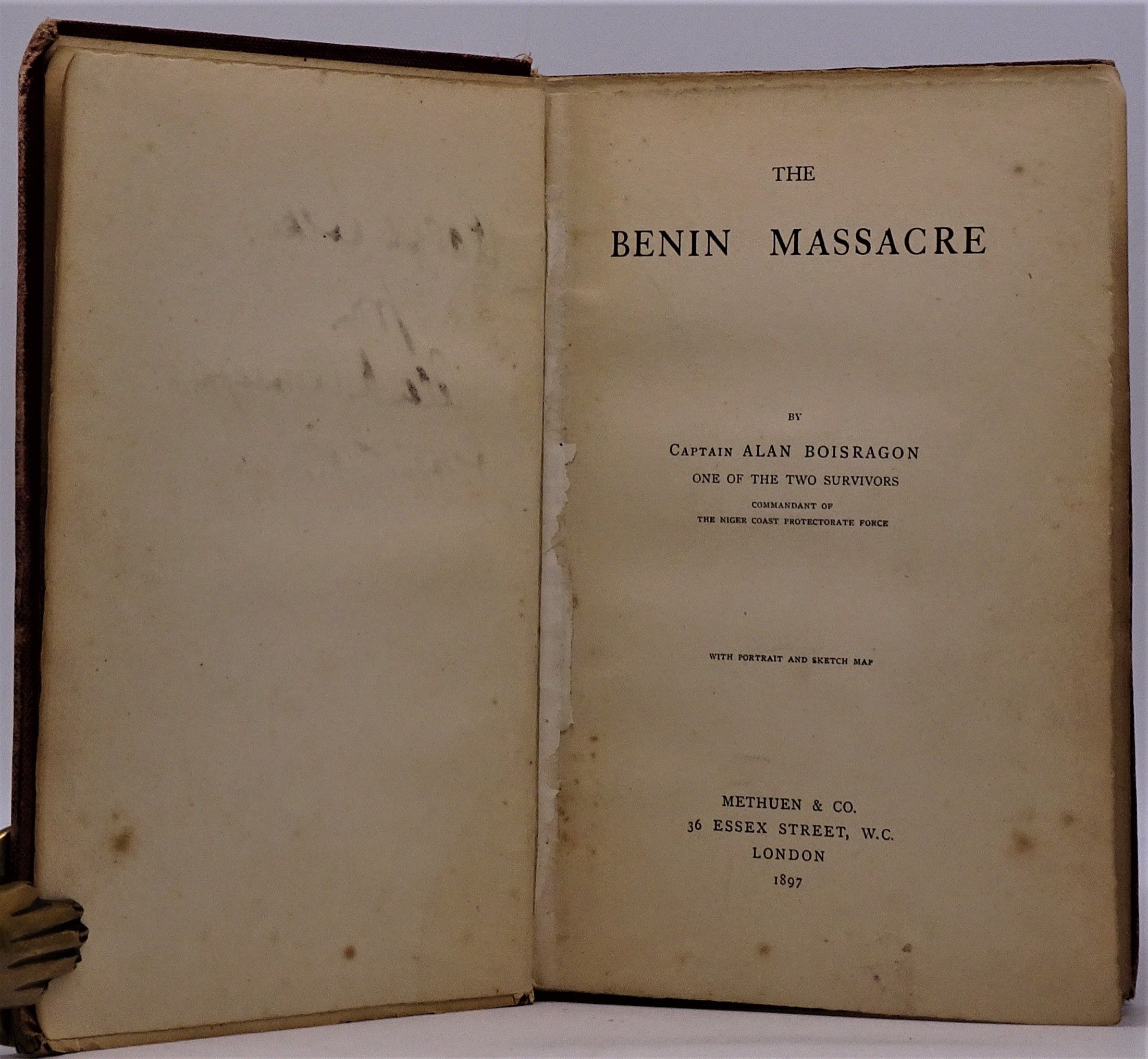
In September, I read Alan Boisragon’s The Benin Massacre (1898). 

The author, a British army officer, was one of the two survivors of the ill-fated trip into Benin City of Nigeria in late December of 1896, which led to the death of seven British officers and dozens of other Africans. Three months later, in February of 1897, about 1200 armed men from the colonial navy descended on Benin and sacked the city, displacing the king, and bringing it under the British Empire. 

The book focused mostly on the initial ill-fated trip that led to the original set of deaths, but also offered relevant insight into the “punitive expedition” that followed. According to Boisragon, and many other accounts since, there was no clear indication that the visit had been sanctioned by London or was there any indication that Benin was prepared to welcome them. The Ọba (king), according to local customs, had been forbidden to welcome any foreign visitors during the period, and said so in many messages sent ahead to the Acting Consul-General James R. Philips, whose grave remains today in Ugboneh, near Benin City. In ignoring that and all other signs of hostility, they encountered tragedy, and so did the city. Benin, in British lore, had been called “the city of blood” before, and since, then.

I found the book significant because all I’d known until then about the ill-fated British colonial adventure and the following “Punitive Expedition” had come from third-party sources. Reading the words of one of the members of the military party on the initial trip filled in a lot of history, not just from the British side, and their empire-coloured narrative, but also of the Benin side and their last-ditch attempt at national autonomy. To the British, Benin was filled with brutes who engaged in reckless human sacrifices (mostly true); and to Benin, the British were a greedy force not to be trusted with the resources of the state (also true). But in reading both sides of the conflict, one sees a clearer picture of an unavoidable tragedy. The 1897 expedition brought an end to the Benin monarchy, at least temporarily, and engineered the largest-scale looting of traditional artefacts in Nigeria. Many of those works are now exhibited around Europe with a large number locked behind walls at the British Museum.

There was one unintended consequence of the violent migration of these artworks to Europe, though. For the first time, Europeans got to see up close the amazing artistry in bronze of these once-thought-of brutes from the heart of Africa. Intricate works created over centuries to memorialize Benin history in plates, bronze heads, ivory carvings and other decorative items were studied to provide important insights into 12th-century African metal and bronze technology.

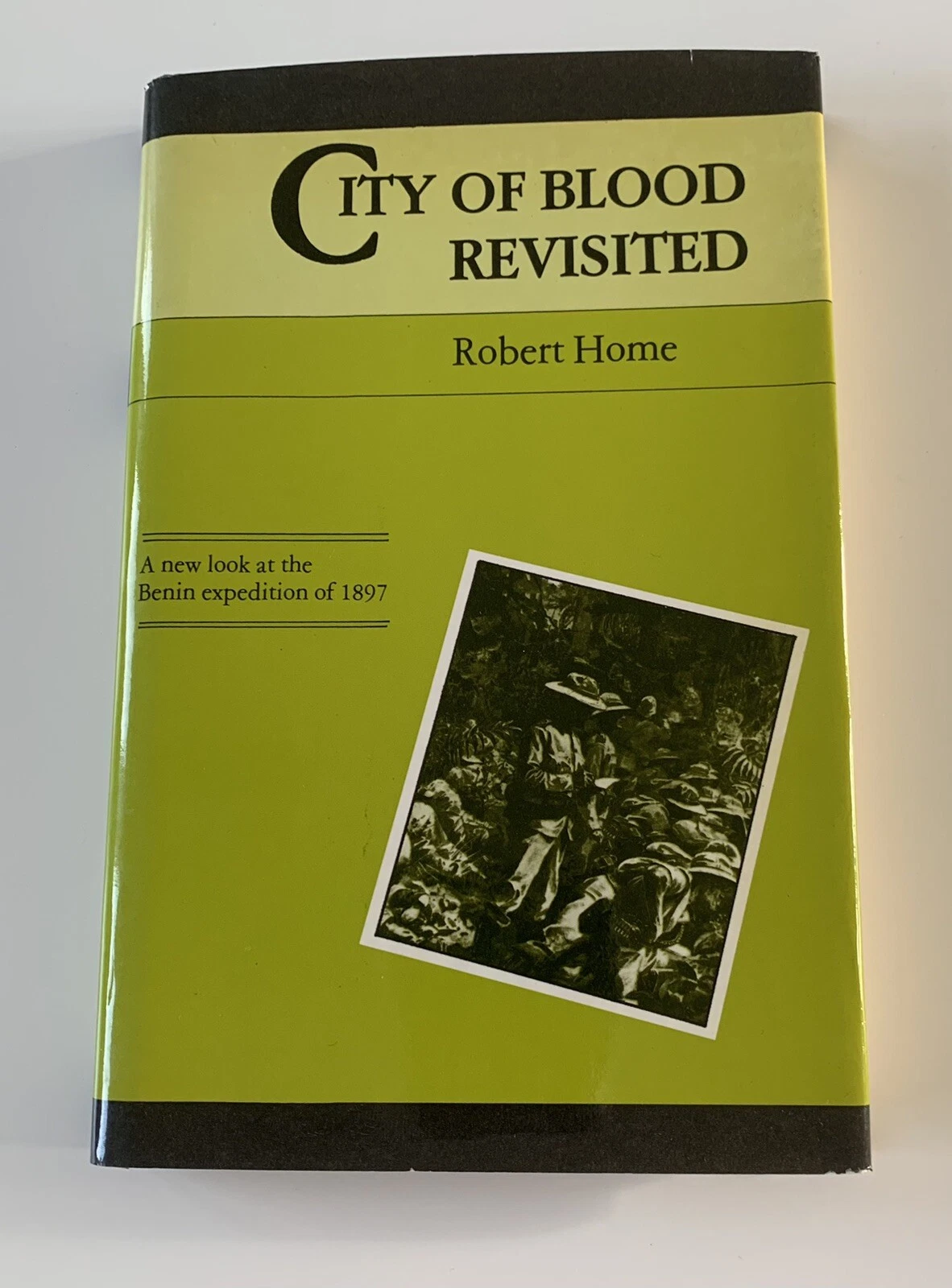
So intrigued had the story made me that I went on a buying spree, sharing copies with friends and searching for all other relevant reports from the time. Benin, The City of Blood was another one, written in 1897 by Sir Reginald Bacon, a soldier who accompanied the punitive expedition. It chronicles the first-hand account of the expedition including the looting of Benin’s treasures. For a propaganda piece of material from the perspective of the victor, it still provided a number of important historical details that showed the British in unkind lights. Later, City of Blood Revisited (1982) was published by Robert Home, to fill in other perspectives on British Colonialism. 

The story of the massacre and expedition has come back to the fore of my mind a few days ago because of the news in the Nigerian and international media, that the new Museum of West African Arts (MOWAA) in Benin had its opening/preview scuttled by disruptive protests of citizens allegedly connected to the Ọba of Benin. Video reports from the unfortunate event, while pretty mild compared to what one imagines was real violence that met the uninvited British party in the winter of 1896 in the forests of Ughoton, still calls to mind the presence of an unresolved cycle of historical trauma. This time, thankfully, no one was killed, precipitating another disastrous invasion (which Trump and his Secretary of War would have relished under the excuse of “saving Christians”). The dignitaries from many foreign embassies, and the many local visitors who had flown in to see the magnificent edifice were reportedly scurried away to safety, and the edifice remains closed. 

Three days ago, new reports came out that the Certificate of Occupancy of the museum has now been revoked by the state government, thus— at least for now — rendering the project effectively stopped. A project, reportedly supported by local and foreign funders to the tune of tens of millions of dollars.

The story of how we got here leads back to the Palace of the Ọba of Benin, the custodian of both the memory of the 1897 trauma and the modern returns that have trickled in over the years through pressures of restitution

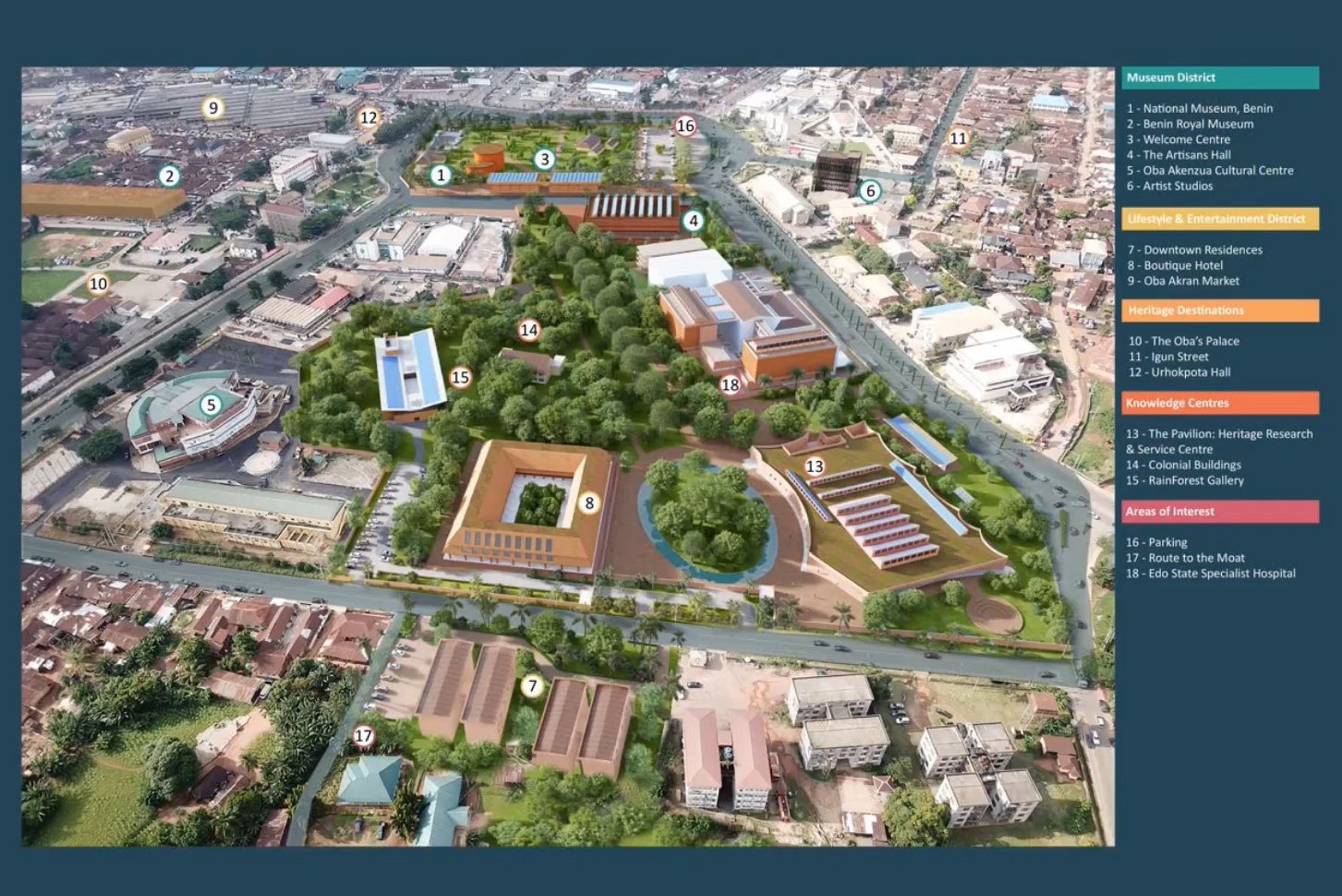
The original Benin Cultural District, as envisaged by the Obaseki administration — shared in a recent Facebook Live interview. #13 indicates what has now become MOWAA, while #2 is the designated site of the BRM

***

In 2020, British historian Dan Hicks published a book that “changed the conversation on contemporary museum.” Brutish Museums, as he called it, argues that museums are not neutral institutions but rather extensions of colonial violence and trauma and tools for perpetuating white supremacy. That museums should prioritize people over objects, and acknowledge the histories of violence behind their collections. The work fed, in a timely manner, into the push that had by then gained currency around the world to return all of the stolen objects back to their original spaces, or at least work with original custodians to establish ownership and parameters of restitution. In October of that year, the then Governor of Edo State Godwin Obaseki shared a tweet congratulating Sir David Adjaye, a famous Ghanaian-British architect, for an award he’d just won, and confirming his presence on what the governor referred to as “the Benin Royal Museum Project”. BRM, for short. That name will come in handy later. 

[Watch Adjaye admit to the project by this BRM name in a CNN interview]

Long before this — in 2007 precisely — a group which called itself “the Benin Dialogue Group” was formed with the aim to “facilitate a permanent display for reuniting Benin works of art dispersed in collections around the world”. On its board were members of the Edo State Government, the Royal Court of Benin, the Nigerian National Commission of Museums and Monuments, a number of foreign museums including the British Museum, Pitt Rivers Museum, others from Germany, Netherlands and Sweden, and a number of Nigerian stakeholders in academia and civil society. Over the years, this group shepherded the conversation about the restitution of looted artefacts, and had representatives at public events where some of these artefacts were publicly returned. Their work, according to reports, was what led to the selection of David Adjaye as the proposed architect behind what would be the Benin Royal Museum to eventually house the returned artefacts, according to Governor Obaseki.

This is where the facts and passions get murky. Before the Edo State Government tenure of Godwin Obaseki ran out, the project had secured free government land across from the Ọba’s Royal Palace to house this future museum that had apparently secured the buy-in from a number of global museums and institutions, who promised funds. The land, reported to occupy a significant portion of the old palace grounds that was destroyed in 1897, was fitting if the returned artefacts were to live there as a testament to repair. But somewhere between the end of Obaseki’s government and last week’s proposed opening, the name of the project changed from “Benin Royal Museum” — whose name pays both homage to the community and the provenance of the items — to “Edo Museum of West Africa Arts” (EMOWAA) and later “MOWAA” with the Edo name dropped off without explaination. And instead of an ownership structure that embodied the initial plans, a new Legacy Restoration Trust (LRT) nonprofit was registered, with an Executive Director, Philip Ihenacho, who is reportedly an old business partner of the former governor. 

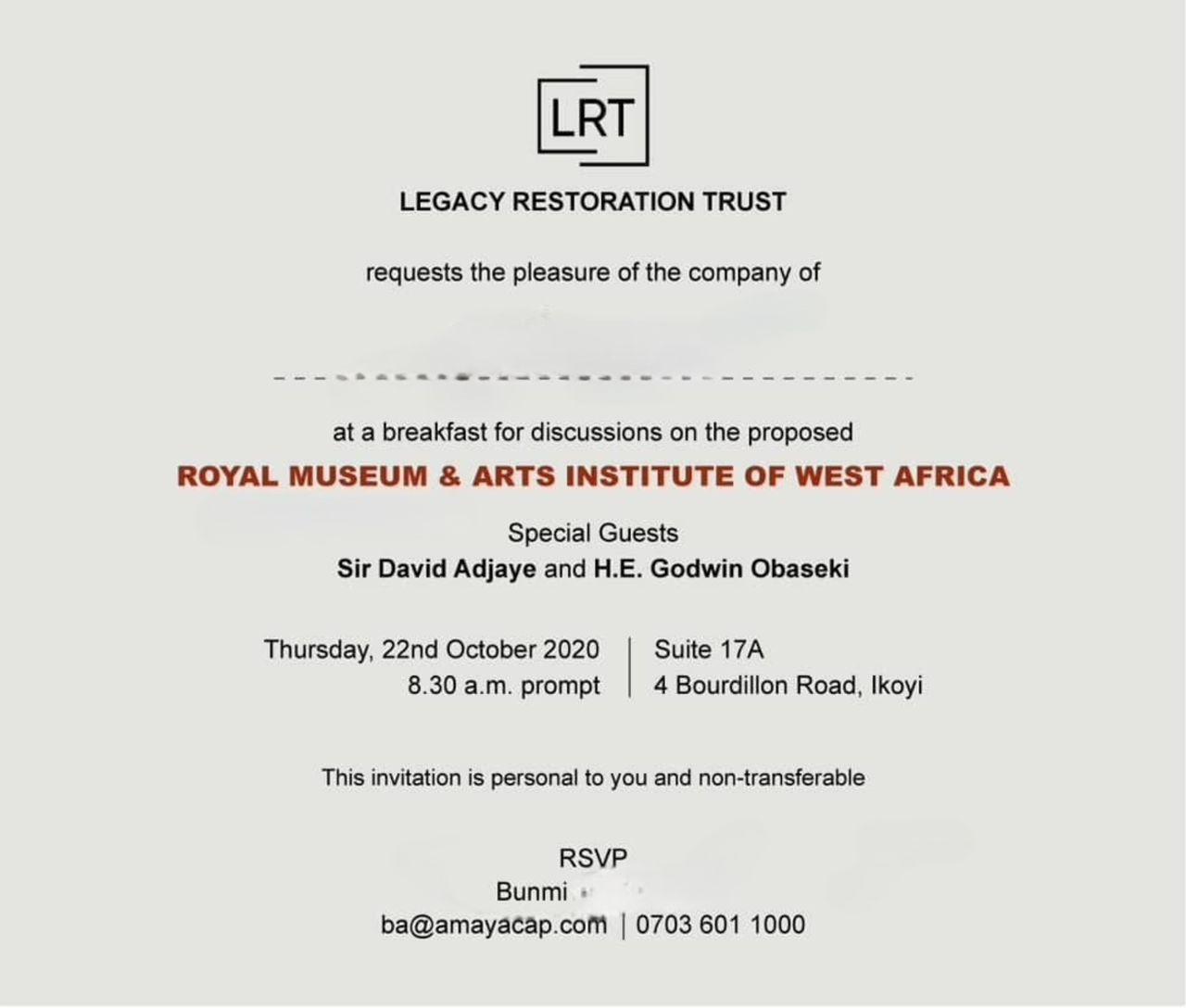
A fundraising card from 2020 from LRT inviting people to discuss the proposed Royal Museum, with Adjaye and Obaseki as guests.

A fundraising card from 2020 from LRT inviting people to discuss the proposed Royal Museum, with Adjaye and Obaseki as guests.

As at June 2020 when Governor Obaseki was disqualified from contesting for reelection under his former party, rumours had begun to circulate that it could cause a rupture in his work on the proposed museum. He eventually won under the PDP, and left office in 2024. The current governor was elected under the APC. 

So, who owns MOWAA? The organisation’s website says it is “an independent, non-profit institution, of which the former governor has no interest, financial or otherwise.” On Wikipedia, it is described as a museum built “to show over 300 items on loan from European museums.” To the current state government, it is a project whose founding has been marred by some type of misrepresentation, particularly in funding. By using the “Benin Royal Museum” name and the restitution movement to secure funding for an ostensibly state project and then rerouting them into a private foundation where neither the state nor the palace has any say or stake, something had gone awry and accountability is needed.

The impressive structure that is MOWAA in Benin today sits on about fifteen acres of land, part of which used to be the Edo Specialist Hospital built by the British in 1905, just eight years after sacking the city — a work of rammed earth architecture by Adjaye. Much of what the land it sits on, however, includes royal burial sites, old palace yards, homes of important chiefs, and many more. In the last couple of years, excavations have happened there, reportedly without permission from the Ọba or any royal interests, but supervised/supported by the British Museum, adding to the ire of the community. If ancestral traumas that had befallen this land had a name, they always came with a “British” label and “the memories and trauma associated with the looted artifacts are still etched in the memory of the Benin royal family” according to Peju Layiwola, an art historian and cousin of the current Ọba.

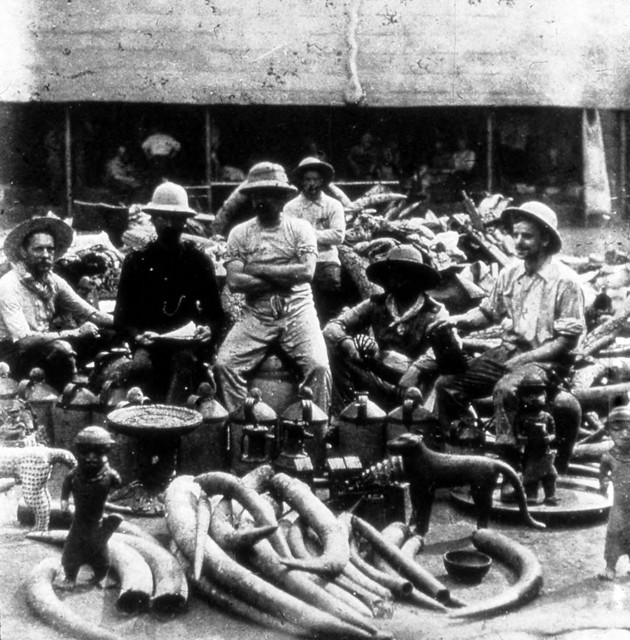
Photos from the aftermath of the punitive expedition in 1897.

So when the rift threatened to spill open a few years ago, the Ọba’s palace got the federal government to declare that all returned artefacts belong to the Royal Palace, and not to any particular individual or group. And when representatives from MOWAA, according to the Ọba, sent documents to him requesting his relinquishing of his rights to them for the use of the museum, he declined. Last October, news came out that the Museum had decided to showcase clay replicas instead, and observers wondered what was going on. Conversations with people familiar with the conflict shed light on some of these subjects, and many retained hope that cool head will prevail to bring all the relevant interests to the table. Until then, the returned artefacts remained in the palace. 

They remained there when MOWAA tried to open on November 7 and was prevented by the mob.

MOWAA said it has never have “claimed nor presented itself as the Benin Royal Museum in order to secure funding. We would suggest that the relevant authorities confirm directly with any and all of our donors that we have never misrepresented our status” a recent press release read. The panel set up by the federal and state governments seem focused on that central question, while the museum remains closed, and the old governor is in Oxford. Some of the foreign dignitaries whose countries are involved in this project continue to take sides in a conflict whose roots go deep.

*** 

In Ovonramwen Nogbaisi, a 1974 play by Ola Rotimi, which dramatized the 1897 tragedy for the stage using the Benin Ọba’s name as title, much focus was given to the internal divisions within Benin Kingdom that made it easy, and possible, for the community to be so-invaded and destroyed. A certain Agho Obaseki, a powerful chief and prime minister of the kingdom at the time, who reportedly signed the initial treaty with the British when Henry Gallwey first visited in 1892, has been historically blamed for much of the division that led the British in.

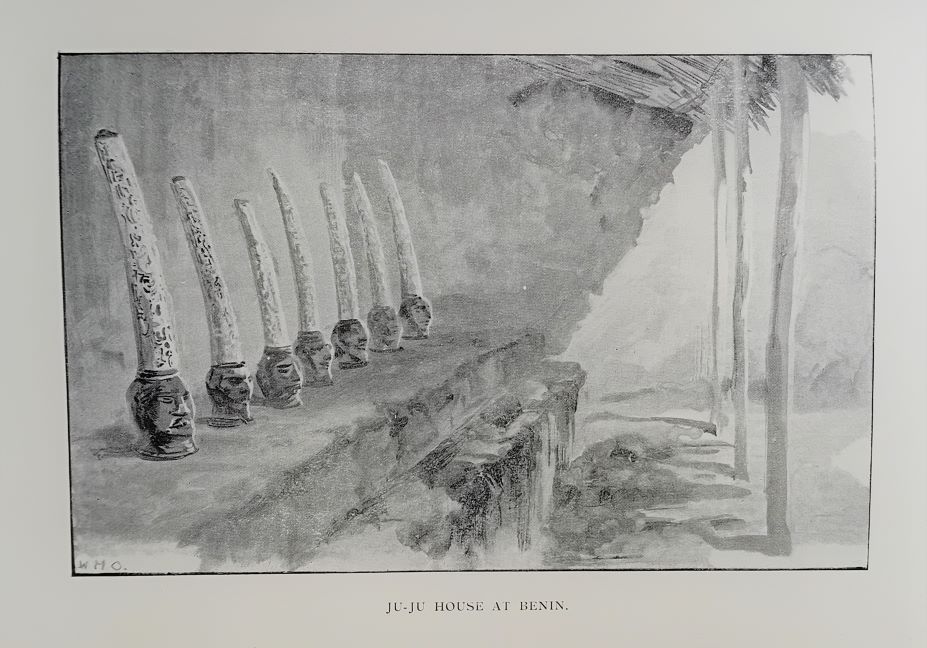
Photo from Bacon’s 1897 book.

The current Ọba of Benin, Ewuare II (CFR), is the great great-grandson of Ovonramwen Nogbaisi under which Benin first fell, while Godwin Obaseki descended from the famous prime minister Agho. Ancient rivalries continue to rhyme across the ages, along with it the shadows of external powers with the means, interest, and ability to cause further destruction. “The past is not past,” Dan Hicks wrote in Brutish Museums. “It is present, and it is violent. The past is a place of trauma, a place of violence, a place of dispossession. And it is a place that is still with us, still affecting us, still shaping our world.”

“The Benin Bronzes are not just objects,” Hicks continues, “they are instruments of continuing colonial violence.” Many of them remain around the world, in private hands and institutional museums. Many are now at risk of permanent disappearance if the events in Nigeria continue to create a pretext to not return them. The victims: art, heritage, and memory.

___

This piece was first published on FlamingHydra on November 14, 2025.

Crossing Borders: A Spotlight on Literary Translation

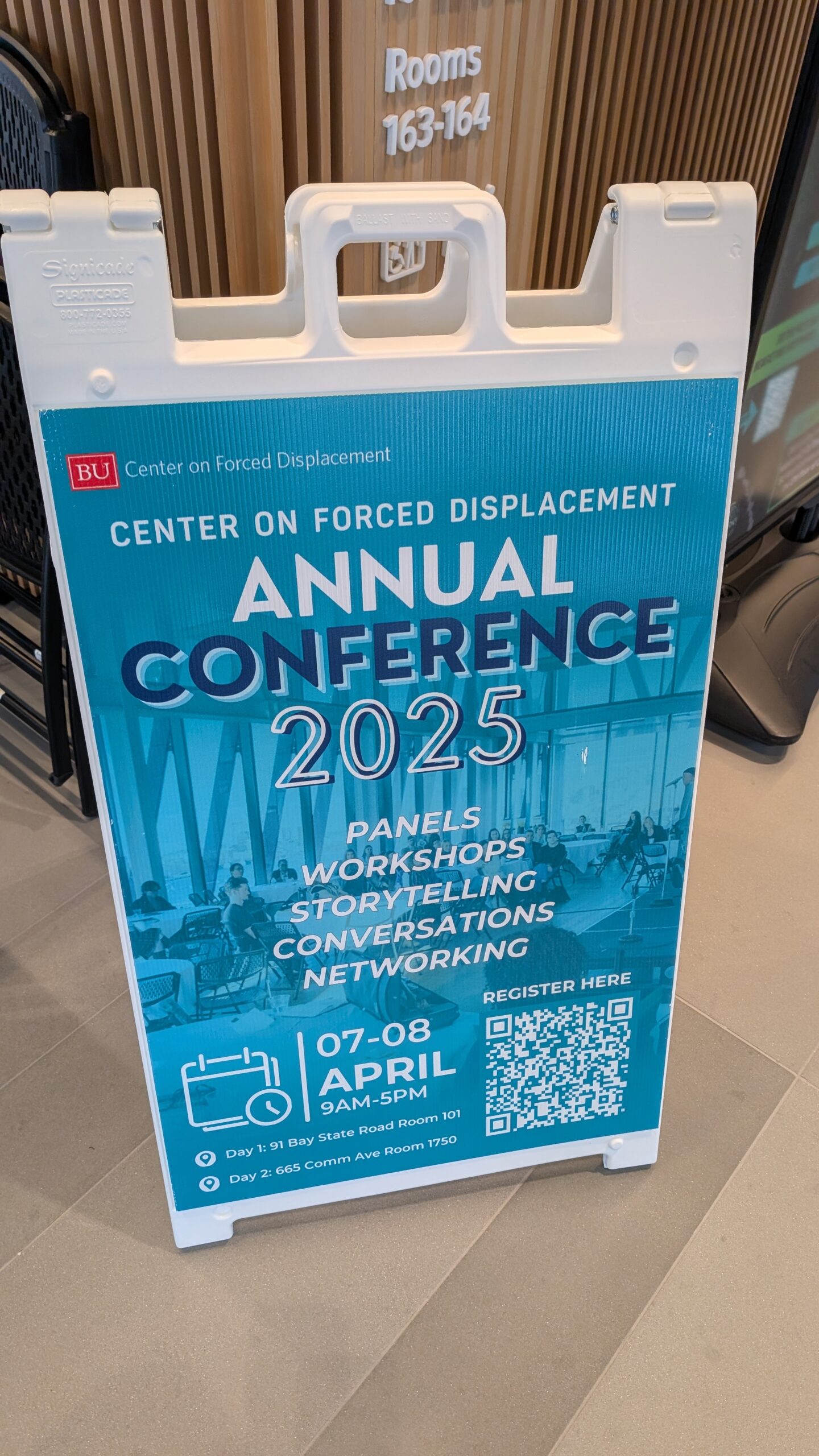
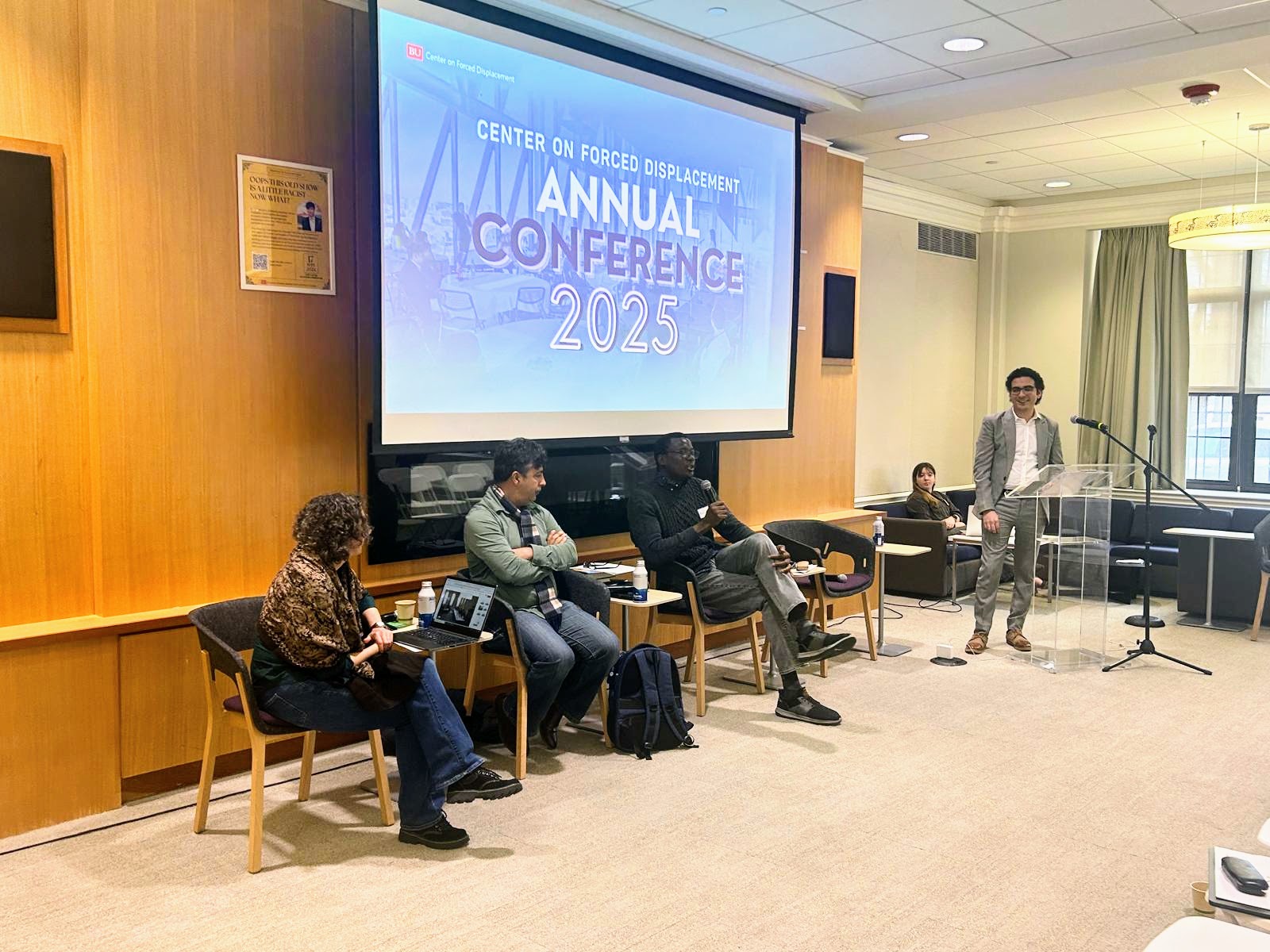
Talk given at Boston University’s annual conference on Forced Displacement. April 7, 2025

____

Good afternoon everyone. 

Like you, I’ve been watching the news. 

And when I got the invitation to participate in a conference on forced displacement, I was convinced that someone had planned with some invisible force to get me into government trouble. I went online to search, just to be sure that it was not an elaborate prank. Look and behold, it’s real. It’s a real place, on campus, and the conference does indeed seek input from a writer and linguist about how violent conflicts affect language. Or, at least as I see it, how language adapts or survives in spaces of armed conflict and forced displacement.

So thank you for inviting me.

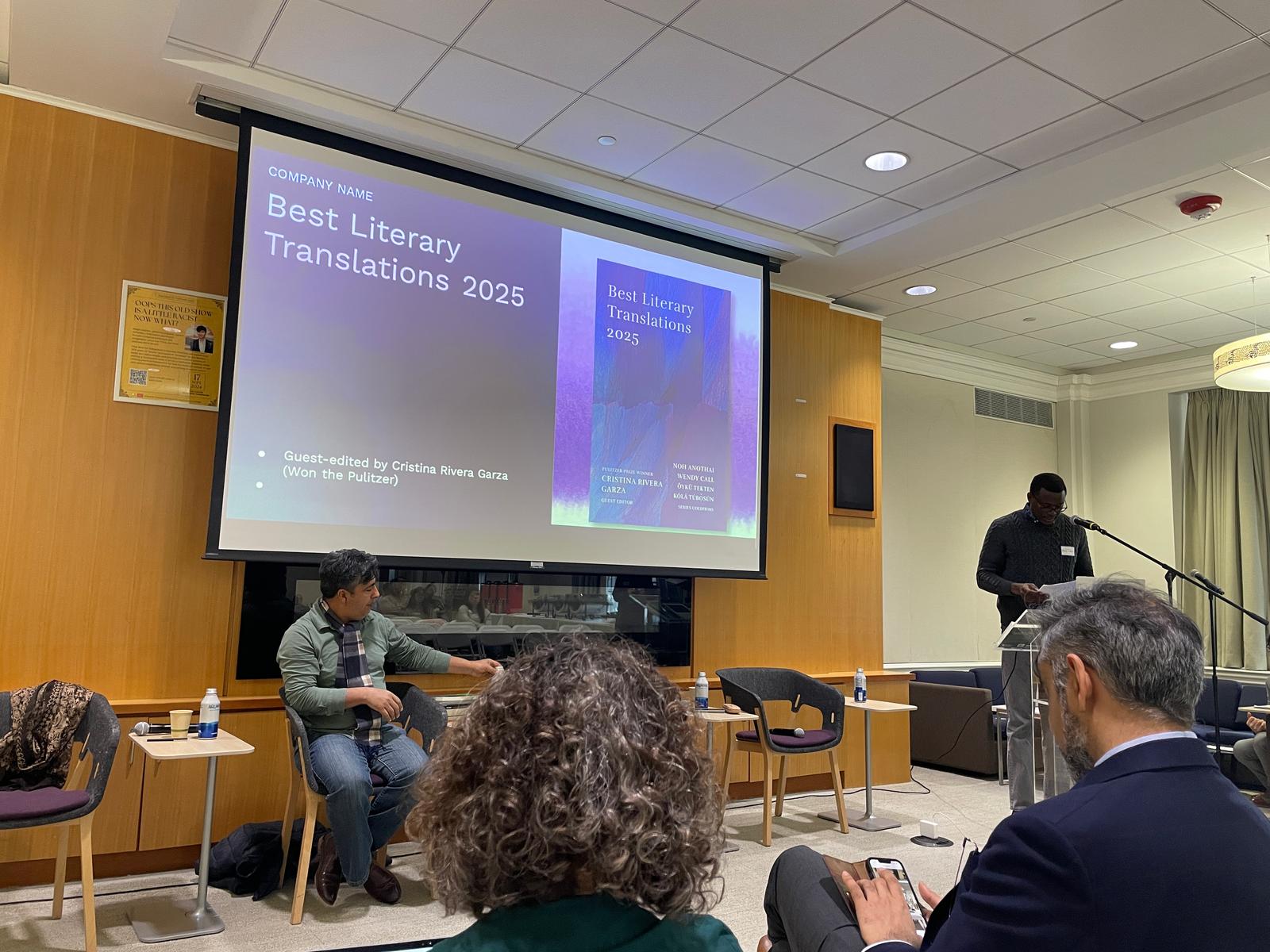
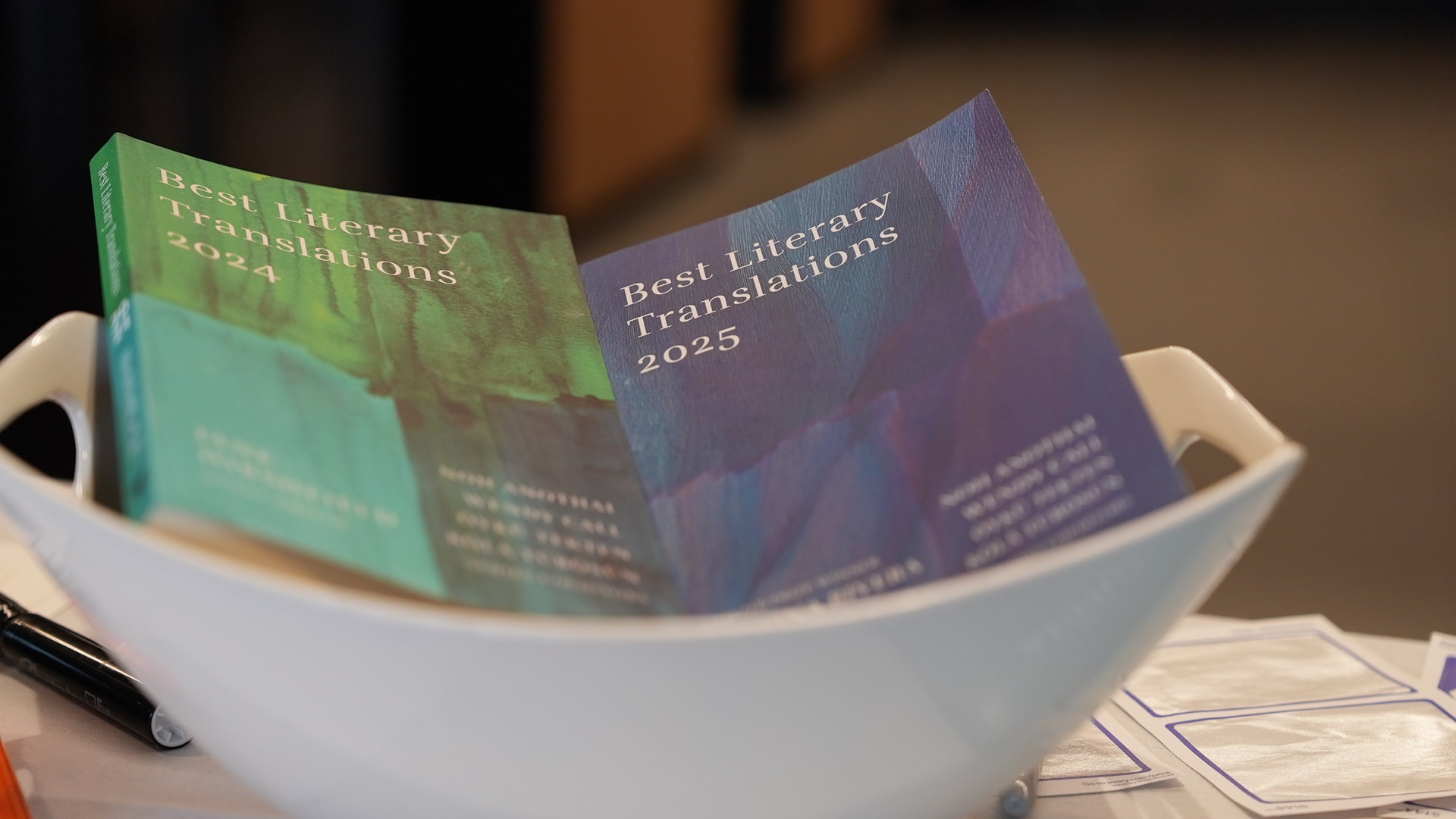
I’m a writer, the co-editor of Best Literary Translations, now in its third year. There are copies of the book for sale if you’re interested in them. The 2025 edition will be out at the end of this month, guest-edited by Cristina Rivera Garza, but we have copies here. 

I’m also a linguist, by training. In other lives, I’m a language activist in Nigeria with interest in the ways that technology hinders or enhances the use and vitality of languages across the country and across the continent. I’m also a creative writer, usually poetry. So, you see language is very important in my trade.

At Columbia University a few weeks ago, I spoke about a professor mentor of mine, Ron Schaefer who shared with me the language of his childhood in St. Cloud Minnesota. Like most people who grew up in the frontiers, his grandparents had come from Europe and brought their languages with them, so the lingua franca at the farm was German. I knew that most families at those times spoke their languages at home, but it was interesting to hear it again. Ron himself, now a professor of linguistics, had achieved success in his career by helping to revitalize and document a language of Nigeria called Emai, and had retired as the Director of International Programmes at Southern Illinois University. 

We were having this conversation online during the time when the government was declaring English as the official language of the US. I used his story in that talk to illustrate a problem of amnesia but also of displacement. Something many of us can relate to in some way, since every immigrant to the US comes from somewhere and carries with them some of that culture and tradition and, of course, language. What do we lose? How do we carry these senses of displacement to each generation through our language competence and lack thereof.

Nigeria, my primary example, offers many more instances. Even when there are no obvious conflicts, a country of about 520 languages hoping to make a nation out of the many will eventually run into a number of issues. Many of these involve technology, which is my primary interest. But many are merely sociological. Some conditioned by politics, globalisation, educational or government policies. The official language of Nigeria too, is English, and this has affected the growth and capability of many Nigerian languages. There are still no schools in the country today where you can learn in any Nigerian language. Literature is still mostly in English. Governance is in English. And many Nigerian languages are dying as a result. Many languages in the country and on the continent are endangered because of this historical and ongoing event. What globalization has done on the African continent and elsewhere is present English as the only viable means of communication while making other languages irrelevant. And with the language loss, we lose different ways of looking at the world. 

And then throw in conflict, conquest, forced and unforced displacement, and you have a different story. We had a Civil War between 1967 and 1970, but some fissures remain. Look around the continent today; heck look around the world: Ukraine, Gaza, Sudan, the Congo, Korea, etc. Each of those conflict spaces present not just the tragedy of human displacement, but also of language. 

During my grad school, I worked part-time at the International Institute of St. Louis. It was an institution set up to help displaced people from all around the world fit into the American society. We taught them not just English language but American culture. Many of them came from places where they had spoken no other language but their mother tongue. Due to war and displacement, they were now here in a place where English language was the only means of communication. Working with adults who had never heard the song “A for Apple, B for Ball” was a moment in humility. It was easy to imagine, in my own bubble in Nigeria where English dominated most of the public interactions that it was a language that everyone spoke or had some experience with.

This is where translation comes in, or multilingualism. 

By providing a chance for cultures to travel from one language to another, we bring people into comfort with their surroundings. While we may not always be able to get into their heads and understand the depth of their predicaments, we can help them get a comfort with their new environment enough to give their lives a second chance.

My experience at the International Institute always filled me with that sense of profound awe  at what it must take for someone to leave their old lives for a chance to start again, trusting that all they know and have left behind will be enough to get them through the new and challenging experience.

Where communication happens, and relevant messages transmit successfully from teacher to student, colleague to colleague, neighbour to neighbour, life goes on as it should, and community is healed. When it is not, or when translation breaks down enough to transmit ambiguity or other unwanted additions to conversations, the purpose is defeated.

I’d like to quote from the talk I gave at Columbia, regarding a YouTube video I saw earlier in the year, this time about an ongoing global conflict.

I had seen an interview, a few weeks ago, between President Zelensky and Lex Friedman which had — in the space of an hour or so that the interview lasted — the two speakers speaking English, Russian, and Ukrainian. But due to the help of technology, speech synthesis, voice cloning, translation, and artificial intelligence, I could watch the whole interview in English, without even knowing when the switch happened between languages. Someone else could view the same interview in Russian or Ukranian and have the same experience. Technology has been trained to understand which language is spoken, and adjust it to the listener as necessary. This wasn’t possible for any language in 2005 when I left the university, but now it’s almost commonplace. And yet, it still isn’t possible today in Yorùbá, a language that I speak, or any African language I know. If I had my way, it would. One day, our experience of the internet will be tailored to our language competence. But to make African languages like Yorùbá participate, we need a lot of clean Yorùbá data, and resources to train models that can make it happen. The continent of Africa has about 2000 languages. Where do we begin?

Technology has been helpful, in many ways, in helping us cross language barriers, even in times of war. But, as I said in that talk, some languages have been luckier than others. Because of a combination of factors: political, social, economic, some of the languages most efficient to use in technology, in translation, and now in AI are some of the same languages that have advanced features in the earlier internet age, and in the earlier print age. Some of those obstacles to the smaller languages have followed them into this new generation. 

Imagine a situation in which someone being evacuated from Gaza or Sudan or Ukraine into the United States can just communicate immediately through the use of technology, with instantaneous translations? 

Literature is one great way to bridge the gulf. The larger the corpora in the language, created by literature or just regular language use in technology, the more likely the language is to be aided by technology in the future, to be useful in modern speech tech. But like I also mentioned, literature has followed the rest of the hegemonic institutions in favouring only big languages with powerful tools and powerful cultures. A lot of systemic issues have mitigated against the production of literature publication in underserved languages. So English, Mandarin, German, Korean, French etc continue to lead in the tech age as they do in the artificial intelligence age. 

Literature in a small African language doesn’t always stand a good chance to be read anywhere but in the village where the language is spoken, if it’s written at all. And when it’s written, the chance to publish is small. When it’s published, it might not get widely distributed. With the internet, the audience can grow a bit. So a speaker of that language who lives in a corner of Germany or Japan or Indiana can read that story in his language published on a widely read literary platform. This was the thinking behind our project at OlongoAfrica, where we got a select number of stories by African writers translated into ten different African languages, and then get native speakers to read and record them. We put these on a website for people to read and listen to and share. 

What Best Literary Translations does is provide a place for many of the translations from these languages can gather and travel together across the world in English, in a book form. As editors, we collect, read, edit, and present some of the best translation entries we receive which have been translated into the English language. We thus engage readers in English who may not otherwise have access to these works, or these writers. 

What we can do is to hope that the availability of these opportunities for creative exchange does something to mitigate the pain and suffering that necessitate translation in the first place, though we know innately that it can never be fully sufficient. The world is a complex place, with a variety of unpredictable events moving us to the other.

I’m a speaker of Yorùbá, a language I know that I speak with full native competence, but which I haven’t had to speak over the last couple of years as I’d have loved, because I’m surrounded by people who speak different languages. When I am in Lagos, Nigeria, where I lived for ten years, I’m surrounded by other Nigerians who speak Igbo, Hausa, Ibibio, Efik, Berom, etc. To communicate with each other in a modern metropolis, we speak English, or Pidgin. And as a result of this though important contingency, we put our own native languages to the back, and it recedes by itself over the years into places from where we sometimes need sharp tools and hours of labour to rescue them.

In 2021, I published my Yorùbá translation of a collection of English poems, written by a professor from the University of Pennsylvania. In retrieving words from my native language to render from English the creative endeavour of another person, I ran into a wall, many times, and I’m reminded of the saying that the best way to lose one gift is to refuse to use it. Words I once took for granted took many hours of thinking and trying to retrieve. It was no different when, in 2022, I translated a short story by Haruki Murakami into Yorùbá. Very exciting process in both cases, but no less tasking in reaching words I used to never have to look for, in my own language.

So perhaps, this is one of the benefits of translation: giving us a chance to reach into parts of ourselves that we may have forgotten exists, to find the part of ourselves that was always there, and in a language we speak in the depth of our soul. The difference is that in my own case, it is voluntary. The many people who have to go into exile, who are forcibly displaced from their homes, who have to live in places where their native languages do not serve them in any capacity, do not have the choice as to whether to forget. The new societies often force that condition on them, sometimes suddenly, sometimes gradually, but always eventually. 

Translations, technology, and literature can only mitigate what is a fundamental alienation.

During the work for our 2024 edition of Best Literary Translation, we ran into a dilemma. Some of the Ukrainian translators selected for the edition wrote to us to request that they not be published beside Russian ones, because of the ongoing conflict. Not being able to resolve the conflict in a way that does not disenfranchise the work of translators we had diligently selected, the writer elected to withdraw her poem, highlighting some of the issues that translation in itself can’t always solve.

At a language conference at Brown University’s Translation Across Disciplines last year, I was on a panel on Translation and social justice. One of the speakers spoke about her work at Guantanamo Bay in Cuba where US has a base, which holds hundreds of detainees considered too dangerous to put on the mainland or sent back to their countries. Some of the translators at the base come from Cuba — the base provides regular job for them — while some actually live on the base. One of the things I was so curious about, and I asked the speaker, was what did she notice was the change in the Spanish of those who are condemned to live on the Island not because they’re detainees, but because they are employees of the government. They can’t go back to Cuba, they work for the US government, and they don’t have a chance to interact daily with people who come from the US mainland. But their language is Spanish. I was really curious whether the Spanish they spoke evolved over the years to a point where it is so different from that on the mainland. I don’t remember what the answer is now, but I find things like this quite curious — the ways in which our language competence evolves over the years, either because of our deliberate actions, or because of forces beyond our control.

I’m rounding off now. Let me quote from the introduction to our first issue BLT2024:

Best Literary Translations strives to be a curative to parochial thinking. We present voices from around the world, paying special attention to lesser-known literatures and languages. The guiding vision of Best Literary Translations is to offer a counterpoint to the xenophobia and racism that have marked the last decade— and, truly, the entire history — of this country.”

And from BLT 2025, rightly dedicated to Refaat Alareer (a Palestinian writer, poet, and victim of the Israeli bombing of the Gaza Strip in December 2023) and Jerome Rothenberg, an American poet, translator and anthropologist, we have the following:

“Despite the many difficulties that can hinder their translation, twenty-three languages are represented here in Best Literary Translations 2025. Featured in these pages are not only works from languages that have been underrepresented in U.S. publishing, but some that have been actively persecuted, such as the Uyghur of Adil Tunaz (translated by Munawwar Abdulla), the Faroese of Kim Simonsen and Lív Maria Róadóttir Jæger (translated by Randi Ward and Bradley Harmon), the Tu’un Savi of Florentino Solano (translated from Spanish by Arthur Malcolm Dixon), and the Ukrainian of three different authors, among others. That some of these works made it to publication at all—much less into our nominations and eventually into the pages of this anthology is a testament to steadfastness of the authors continuing to write in those languages, the dedication of the translators working urgently to amplify their voices, and the solidarity of the editors who published this work. Best Literary Translations celebrates their successes and honors their ongoing struggles.”

In conclusion, language loss can be as much a marker of displacement as incarceration or loss of land. But I’m a linguist so my work is about the language, and not the politics. Occasionally, they intersect, sometimes so personally. And occasionally, literature is there to provide some succor in those liminal spaces. 

Thank you for listening

The Orthographies of Our Discontent

 One of the things that was always hard to ignore, while I was growing up, was that some teachers wrote my last name with an extra “n”. And while the parents had insisted that it was “Túbọ̀sún” and not “Túnbọ̀sún” we often had to correct the befuddled outsider that their version was incorrect and needed to be changed. Sometimes militantly, as the ‘misspellings’ began to appear as deliberate attempts by strangers to modify our identity, even when the offending user harboured no such intentions.

It took many years for me to accept that other versions of my name even deserved to exist. And then one day I met someone who shared an equal but opposite conviction about retaining the second ‘n’ in the spelling of his name, and after a few back-and-forths that veered between militancy and levity, we resolved to agree to disagree.

Of course, none of us were ‘righter’ than the other. The word “túbọ̀” or “túnbọ̀” mean exactly the same thing: “continue to”, depending on your dialect of Yorùbá, with the former more common among the Ọ̀yọ́/Ìbàdàn while the latter is more Ìjẹ̀ṣà/Èkìtì. What began to surprise me was my own father’s non-challance when we lived in Àkúrẹ́ and people who wrote about him as “Ọlátúnbọ̀sún” did not get immediate censure. 

Perhaps all of these various childhood memories contributed to why I found myself later in linguistics, where the nuances, use, and mechanics of language define the trade, and where I found confidence, one day on Twitter, to challenge an Igbo speaker who had insisted that the name “Anwuli” should ONLY be written as “Añuli”. I’d encountered many of these kinds of conversations before (sometimes with the spelling of Chidinma/Chidimma, nyash/yansh, jaiyé/jayé, Sọlá/Shọlá, Akpata/Apáta, among many others that occupied that cerebral section of social media. In most cases, it has remained a conversation about language, orthography, tone, and phonology. But on this day, the response my interlocutor gave was not just that I was wrong, but that I was Yorùbá, therefore unworthy of the conversation at all. Nothing I mentioned about my work as a linguist, my interest in Nigerian languages, and my experience with language technology projects at various levels made any difference. It quickly became an ethnic-based conversation, and all hope was lost.

I’ve paid some attention, since then, to many language-related conversations in Nigeria and watched them similarly devolve into dark corners. And when, a few weeks ago, someone tagged me to weigh in on the “correct” spelling of the “Ówàḿbẹ̀”, a now popularized term for loud colourful parties in Lagos and elsewhere, I did my usual analysis of both the origin of the word, the morphological breakdown, and different acceptable ways of writing it around the country. Yes, the original components were “Ó wà ní ibẹ̀” (“It’s there” or “It’s happening there”), but it is acceptable to write it as “Ówàńbẹ̀” as it was originally written, and “Ówàḿbẹ̀” as is now very commonly spelt. 

I thought nothing more of it until I started seeing more of related responses on the timeline, usually in increasingly militant tones. Eventually, I found the source of the melée. A young Nigerian-American artist Uzo Njoku had conceptualized an art show which used the “m” spelling of the word, and had not only rebuffed all public insistence by those who said that it had to be an “n”, but had stood by her right to use whatever word she wanted for an exhibition that tried to incorporate different elements of city life, not particular to one ethnic group.

And I watched as the conversation grew wings, sometimes into ridiculous directions. A group calling itself the “Yorùbá Youths Council” subsequently filed a petition to the Lagos State Ministry of Tourism, Arts and Culture to prevent Njoku’s exhibition from taking place. As at today, words continue to fly in both directions, with the group threatening to disrupt the event until the artist either changes the name to suit the “accepted” spelling, and apologise for what is said to be an affront on Yorùbá culture. “In promotional materials, the artist repeatedly mispronounces the word, stripping it of its cultural weight.” the petition said, among other claims.

A quick google search will show that the word has existed in both spellings over the years, with only mild eyerolls by Yorùbá language speakers observing the homorganic nasalization turning the /n/ to /m/ because of the presence of the /b/ nearby. It’s a feature not peculiar to this word either — as I pointed out with “Ọlúwaḿbẹ” and “Olúwańbẹ”, which are two varying spellings of the name with the same meaning “God exists”. It’s not peculiar to Yorùbá language either — the homorganic nasal rule has every amorphous nasal sounds taking on the shape of their nearest consonant. So when you pronounce “input”, it sounds like “imput”, and when the word “impossible”, which combines an amorphous negative morpheme “in” with “possible”, the resulting pronunciation adopts the shape of the “p”, as it adopts the shape of a ‘k’ in “incorrect”. It is why “Bá mi délé” is pronounced as /Bándélé/ rather than /Bámdélé/, which is harder to pronounce. For linguists, these are merely fun observations that provide stimulation for our quiet times. Not national crises-points that need police petitions, twitter fights, and civil wars.

And yet, this is what the Ówàḿbẹ̀ crisis seems to have caused.

The last I checked, the Wikipedia page for “Ówàḿbẹ̀”, first created in October 2023, had suddenly turned into a hive of frantic mass-editing, countereditings, and reversals that has, as at today, erased all acknowledgments of the popular spelling at all. And when the artist was invited to a television interview, suddenly the old, long-dispensed spelling, appeared, as if it had always been there. The police guardians of Yorùbá language and culture will give no quarter to anyone intent on giving validation to natural phonological processes.

And yet, as I asked myself when I look back at all I know about language and the faux outrage of prescriptivists everywhere, none of these has done anything to address some of the biggest issues in language endangerment: funding for language courses in high schools, investment in orthography and script development, support for language-medium schools and other relevant research, translations, and other forms of mass adaptation. The last I checked, Nigeria just added Mandarin to its school curriculum.

The dark underbelly of an uncompromising nativism that rejects not only language evolution and variations in orthography, but also cultural mix and adaptation, is hard to ignore here. But the facts remain: Yorùbá and Igbo belong to the Kwa Group under the Niger Congo language family. They share a number of word cognates from ẹnu/ọnu (mouth), eku/oke (rodent), etí/nti (ear), imú/imi (nose), omi/miri (water) and countless others. Not only through language but through trade, migration, intermarriage, etc., the two cultures are irrevocably intertwined, a part of one another: the idea of Nigeria as a nation in development thrives on the vision of a future that accepts and encourages that intermixture and indissoluble connection.

Before Ajayi Crowther published the first dictionary of Yorùbá in 1843 (and his dictionary of Igbo in 1882), all our words were sounds alone. Crazier to think that this was how Crowther first wrote the Yorùbá word for “back” (Ehhin), “tooth” (Ehin/Eyin), “you” plural (Ehnyi) and “egg” (Ehyin) in 1843. While the pronunciations of these words haven’t changed since then, the spellings and the writing systems have, and no earthquakes have happened as a result. 

To think that this new technology of writing has become a cause of strife rather than help is ridiculous to contemplate.

Without Latin-based orthography, which had, for about 140 years, defined how we wrote these languages, you could almost not be able to tell the difference when some of these words are pronounced. Writing, as I’ve always insisted, is a secondary technology. Perhaps a new orthography designed with tonal African languages in mind would better accommodate these variations, I argued in 2020. But someone saying “Ówàńbẹ̀” and another saying “Ówàḿbẹ̀” can’t tell apart any perceptible difference. The difference is only in the writing. 

It’s worth remembering that language is a living, growing thing, and prescriptivists will never therefore get the final word. I recall a number of years ago, when Reuben Abati — then the spokesperson for Nigeria’s president — took umbrage with young people’s use of “Naija” to refer to the country. With AI and speech technologies, word spellings will become even less and less relevant as we gradually revert to sound.

An Igbo colleague once told me that the Yorùbá word “agbèrò”, which was invented to describe the old Lagos bus conductor, is pronounced “agboro” in the Igbo areas of the country, likely by people who don’t know its origin. As a lexicographer, this only delights me in the mutability of language. Fufu, a Nigerian delicacy, is spelt “foufou” in Francophone areas of West Africa. Nigeria Pidgin, the most contemporary laboratory of such experiments, has moved a word like “biko” from Igbo into every part of Nigeria, “ọ̀gá” from Yorùbá into the depths of the Delta, and words like “chikena” from the North into popular usage. This, along with its creolization, has created a new and resilient language capable of carrying our music and entertainment industries across the world. No one seems to mind that.

Many words in Yorùbá today were originally Arabic, from àdúrà to àlùbọ́sà, arriving in Yorùbá through our contact with the Hausa in the north. Many words from Yorùbá today exists in Igbo and other Nigerian languages, words like ẹ̀gúsí, moin-moin or aṣọ ẹbí, even if they’re not always spelt or pronounced the same way. This is part of the evolution of not just language but nationhood. But even at the very minimum, even in the absence of any altruistic aspirations to unity, the inevitability of language change, evolution, and growth through varying uses across the boundaries beyond our reach should teach us something profound. 

None of this, to be clear, is to say that standards don’t exist. As a lexicographer, I am interested in providing language learning materials to support users as well as support opportunities to track the changes in word usage over the years. The reason you’ll find both “Délànọ̀” and “Délànà” at YorubaName.com is because people exist today who use either spelling, and my preference for the latter should not necessarily prevent those searching for the former from seeing it. Same for Shadé/Ṣadé, Olúwańbẹ/Olúwaḿbẹ, Adéshínà/Olúṣínà, etc. Good dictionaries of English will make space for both “specialize” and “specialise”, while noting which is typically used where, and other notes about the spelling evolution.

It is to say that in spite of any human intervention (see the Academie Francaise), language evolves; it’s an organic force as powerful and unstoppable as the tides. 

It’s also to say that how native speakers speak or write their language should not necessarily bind everyone else who finds association with it helpful or useful to their own creative ends, especially outside of the classroom. The reason why Nigerian English, American English, Indian English, Nigerian Pidgin, Jamaican Patois etc exist is the permission taken by users which eventually redounds to the strength and resilience of the original language. (Tiger; trigritude?) Part of the growth of the English language across the world today comes from accepting these many variations, arrived at from language borrowing, adaptation, and creativity. Without it, what would hip-hop sound like? If we can accept new words entering the Oxford Dictionaries every year from Nigerian words, celebrating it across national headlines, then we can perhaps abide slight variations that come from popular acceptance and language dynamism. 

___

A version of this was first published on FlamingHydra on September 26, 2025

Ebrohimie Road: A Museum of Memory

In 2024, I wrote and directed my first documentary film titled Ebrohimie Road: A Museum of Memory.

It is a story about a house at the University of Ibadan where Wole Soyinka lived and worked between 1967 and 1971 as the first indigenous director of the School of Drama (later Theatre Arts Department). The film is now on Vimeo, pending general distribution. See below.

Ebrohimie Road premiered in Ibadan on July 12, 2024. Since then, it has travelled the film festival circuits making new friends, gathering laurels, and generally exploring the world as a new creative work.

It examines not just the events surrounding Soyinka’s 1967 arrest, but also the lives of other members of that neighbourhood, and their interwoven lives. For the first time, it also documents the issues surrounding why Soyinka left the University of Ibadan and went into excile. “How do we preserve not just what we remember, but the physical markers of such transient memory?” we ask.

Thanks to family members, colleagues, and generous funding from Open Society Foundations and Sterling Bank Nigeria, the film continues to travel, and to engage with the question of memory, heritage, home, and history.

You can read more about it at ebrohimie.olongoafrica.com

Are We Past the Height of Culture?

The current play on my phone at this moment is a tribute ewì album to the departed Tìmì of Ẹdẹ (Febryary 1899 – May 16, 1975), a literate Yorùbá king in both the western and traditional sense. He was a drummer and a prominent culture custodian. There’s a documentary about him on YouTube as well, which you can see here.

The album was done by Lánrewájú Adépọ̀jù, a prominent Yorùbá poet and contemporary of my father’s — both foremost practitioners of the oral poetic form. Likely released in 1975 or shortly after, to mark the death of the king.

Earlier this morning, I was listening to another work by the same ewì exponent. This time, it was the album he waxed for the coronation of the Aláàfin of Ọ̀yọ̀, Làmídì Adéyẹmí who passed away at 83 in 2022. Adépọ̀jù himself died at 83 two years ago. What was common to both works was the depth of the poetry, the thoughtfulness of the work, and the significance of the documentation that the work have come to represent for those of us not privileged to have occupied the same lifetime as some of these prominent Yorùbá kings.

A few weeks ago, the selection of a new Aláàfin Ọ̀yọ́, in the person of Akeem Abímbọ́lá Ọ̀wọ́adé, was announced. It was, perhaps, that singular event that brought me to contemplation about what we may have lost. Along with the album by Lánrewájú in 1975, the poet Odòlayé Àrẹ̀mú did one titled Aládé Ọ̀yọ́, which I haven’t been able to date. There, too, the lineage of the then newly-selected young Aláàfin was poetically preserved.

In 1977, a new Olúbàdàn was crowned — the third Christian king of the military town. Ọba Daniel Táyọ̀ Akínbíyìí. His reign lasted for five years, ending in 1982. But at the time he was crowned, also one of the Western-educated kings of his time — Odòlayé Àrẹ̀mú waxed poetic in his honour. It’s still one of my favourite albums of his to return to once in a while, produced by Ọlátúbọ̀sún Records.

What the naming of the new Aláàfin Ọ̀yọ́ brought to me in sadness was the absence of any capable cultural practitioner of the type of Odòlayé, Adépọ̀jù, and Ọládàpọ̀ to put the new king in context, and in poetry, for a generation that desperately needs it. Look, for instance, at this collaboration between Túbọ̀sún Ọládàpọ̀ and the aforementioned Odòlayé Àrẹ̀mú when the Ṣọ̀ún Ògbómọ̀ṣọ́ was crowned.

or to mark the demise of the Premier Samuel Ládòkè Akíntọ́lá…

Or Àlàbí Ògúndépò’s panegyric tribute to the crowning of the Ọọ̀ni of Ifẹ̀, Okùnadé Ṣíjúwadé in 1980…

Over the last five years, prominent Yorùbá stools have been filled. The King of Ìwó has become a crusader for the Islamic Religion, while the new Ṣọ̀ún of Ògbómọ̀ṣọ́ was chosen from a Redeemed Church in the United States. There have been at least four Olúbàdàn of Ìbàdàn kings over the last ten years, none of which have had any contemporary poet, musician, or artists do noteworthy commemorative albums in their honour. It is not just for the royal personalities themselves, mind you. My worry is what this represents for what goes for public art performance today in the Yorùbá culture.

Here are two albums created by Adépọ̀jù and Ọládàpọ̀ to mark the passing of Ọbáfẹ́mi Awólọ́wọ̀.

Adépọ̀jù:

and Ọládàpọ̀:


Recently, I asked Mọlará Wood, a culture critic, about this phenomenon. What was it, I wondered, that made those times welcoming of these kinds of artistic expression? Obviously, the characters that were celebrated in these notable poetic expressions were important and remarkable characters themselves. Could it be that we have only found mediocre personalities to replace them? Or, also more likely, could we also have run out of original creative thinkers able to wrought remarkable pieces of art in memorial for our departed or emerging culture heroes? Her response, in brief, was that perhaps those were the days of the height of culture.

And that is a depressing thought; that we have indeed peaked, and what is left are the dregs of society with values at variance with the collective need of a society that once thrived on intellection, art, and original creative expression and documentation. While society is being replaced by the sugar-high of popular culture — Afrobeats, Amapiano, Alte, and the rest of the modern saccharine — what is being lost is the worldview and values that once kept our head high, where entertainment was deeply embedded with information, community, and knowledge-sharing, where art was meant to last and to engage, and not just to vainly move.

Shortly before the pandemic, I started work with the Poetry Translation Centre in London to translate a number of important Nigerian oral poetry into English. One of the subjects was Lánrewájú Adépọ̀jù — a natural choice, considering his status in the genre. But what I later found was equally challenging: the near impossibility of translating what makes poetry beautiful in Yorùbá to English. Ocassionally, as you’d see in the excerpt below, the poetry manages to cross over mainly through the strenuous wringing of meaning through English prosody. But for most of his work — and those of his contemporaries — the beauty remains only when the work remains in their source language. This presents the key challenge to those who might respond to the main thrust of this blog with “Perhaps globalization is the saviour, come to save us from traditional Yorùbá poetry; so the dearth of new work should be seen through that lens, and their transmutation through modern music rather than a sign of a confirmed path to extinction. As long as we can write and express ourselves in English, and translate works from and into it, then what’s the problem?”

Well, the problem exists in the lack of new original work. If we were to agree that the culture has become confirmed to a fossilized state where all we have are nostalgic longing for what used to be, and no new creative ferments burst in to shake us out of our complacency, inspire us to new heights, and codify for us in poetic language what the moment means, then maybe we have lost something irretrievable.

I did find, at last, a contemporary work that could perhaps compete with some of the old. It was Kwam 1’s tribute to the departed Aláàfin (see below). Even if the rest of the work didn’t always engage much beyond the deeply moving poetic introduction (a result of my own taste, perhaps), it is heartening that it exists.

But how many more of these do we have before the culture is declared functionally dead?