A Night in Wales: Pursuing The “English Not”

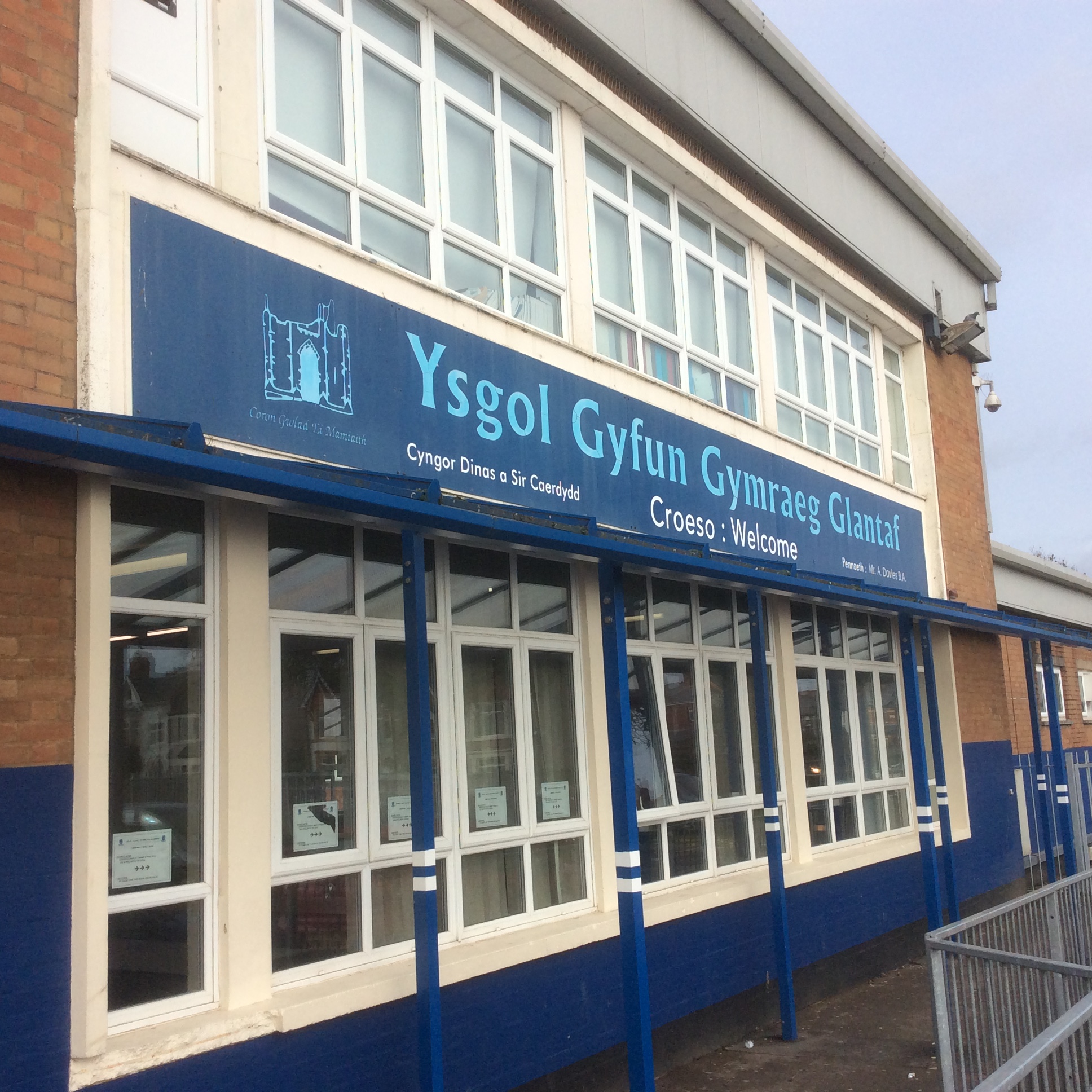
IMG_4076 The curious linguist in me was on high alert during my tour of the Ysgol Glantaf Welsh-medium School in Cardiff where every subject but English itself is taught in Welsh. I spotted, quite early, that the word Ysgol in the name referred to “school” and was pronounced almost the same way (thanks to my guide Jeremy); that “alright” was used a lot in the classes, perhaps because of a lack of a common Welsh equivalent that could do the job better; and – as was called to my attention while at Radio Cymru – the word “lot” remained the same in English as in Welsh, to the consternation of many conservative Welsh speakers concerned about the dilution of the language. I picked up a few more new knowledge: the “f” sound is pronounced as “v” so “Glantaf” is actually [glantav], and whenever “d” is doubled as “dd”, the sound is the voiced dental fricative, as we have in “those” and “them”. And finally, to my delight, I realised that “Cymru”, the native word for “Wales” is pronounced more like “Camry.”

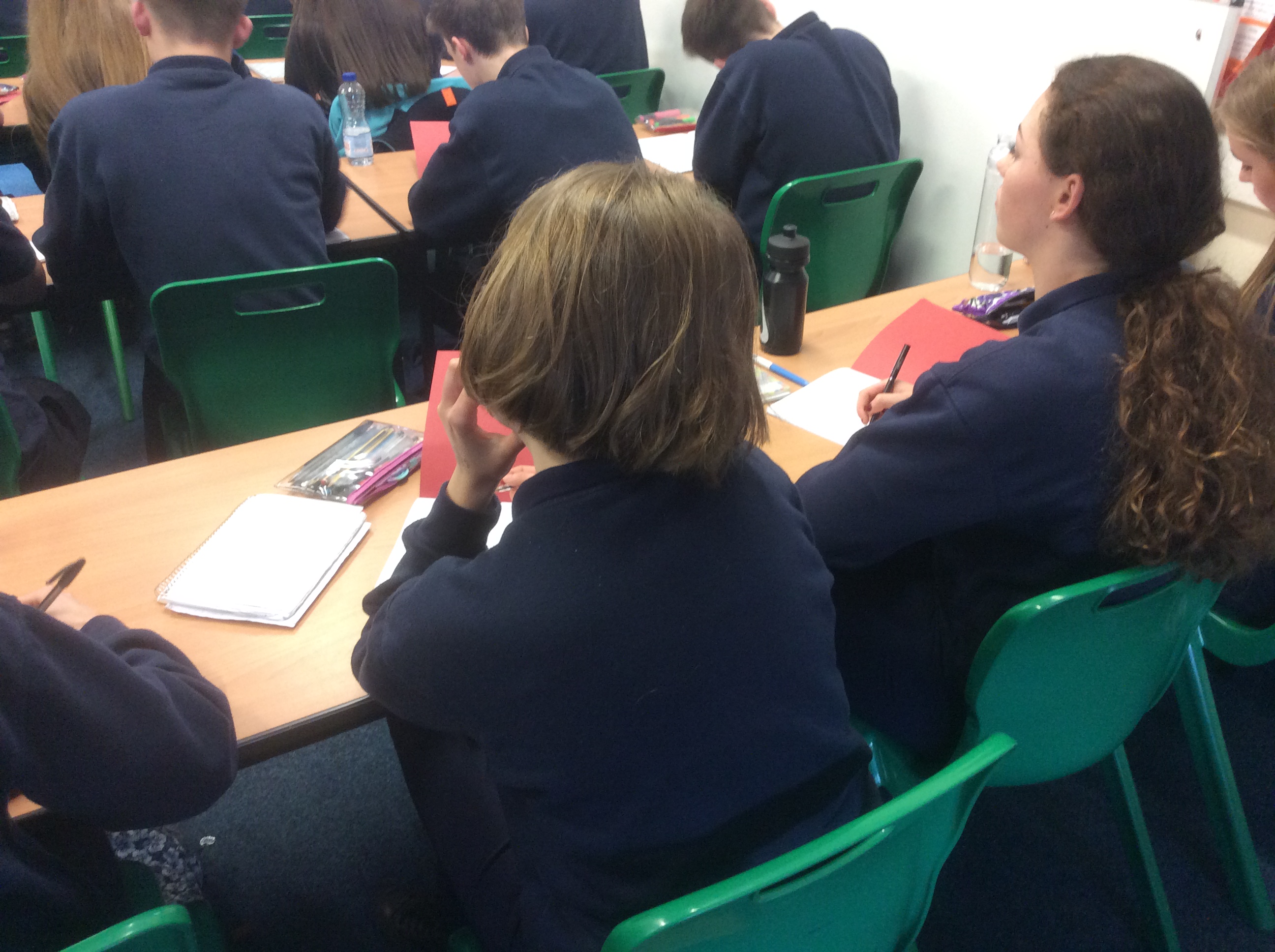
Walking around a few classes I was privileged to attend as an observer, one of the questions I put to the students was what language they would prefer to learn in if they had a choice. The overwhelming response was “Welsh”. This came not just from native Welsh students but also from students of English-speaking homes. “Why?” I followed up, now genuinely curious as to whether this was just a way to impress this visitor from Nigeria. One of the reasons I remember is that “it is easy to read and spell. The sounds correspond more to the spelling.” I remember this because it refers to one of the famous complaints about the nature of English, but also because it made me acknowledge the role of accessibility in the assessment of a language as a tool for learning. As a Nigerian with a life-long tussle with the English language and a fairly competent grasp of its grammar, the claim of a one-to-one correspondence between the spelling of Welsh and its pronunciation is a little curious (See: “Cymru” above), but the enthusiasm of the student was hard to ignore.
IMG_4088In the end, the idea of a thriving culture of mother tongue education in a language not English – in a British country, no less – impressed me more than anything else I came across in my ten days in Britain. From the days of the Treachery of the Blue Books to the period of the Welsh Not, the country of Wales seems to be back on its footing on the way to a truly vibrant cultural identity. See what happened when one British journalist mistakenly spited Welsh-medium education through a carelessly worded phrase!

In Nigeria, the policy of mother tongue education is scoffed at with one common argument, notable in its emptiness when applied to the Welsh example: “Using the mother tongue to educate a child in a country of so many languages will lead to a fractured and disunited country in the future, a drawback to true national development.” Well, the United Kingdom almost got fractured last year, and the Welsh weren’t the culprit! Scotland, which spearheaded the move, isn’t as big on its indigenous language use (with less than 2% of its population speaking Scottish Gaelic), and perhaps even fewer speaking Scots as a first language. Wikipedia says none of these languages has formal recognition nor is used as a medium of instruction in Scottish schools. So, there goes the argument for language as the only means of national integration!

I note, with sadness, the absence of any school in Nigeria today where any Nigerian language is used as a medium of instruction from start to finish. Nowhere where Physics, Chemistry, Mathematics, or any other technical discipline is taught in a Nigerian language. Could that have contributed to the 70.67% failure rate of English and Mathematics at last year’s year-end results? Your guess is as good as mine. But we have ourselves to blame for not looking for new ways to change a system that is obviously not working as expected. What is education, after all, if not a means of empowering the child?


A Challenge of Fourteen Year Olds

The transition from teaching a set of kids already out of their teens in a university environment into teaching those just entering it in a high school, is not small, as I’ve realized. One set is mature (or maturing) while the other set is a horde of immature ones with an unrealistic appraisal of their own invincibility. Being all boys adds an interesting dynamic or a strong peer influence, less moderating influence of a female peer, and testosterone. At fourteen, I was probably just as terrible, and impressionable.

The memories are gone now, of the tiny youth that I was as a fourteen year old, but little bits of it remains in the marks that my teachers put on my flesh with the cane. The biggest offence then, of course, was disturbing the class. Overall, it stood almost on par with not getting the class notebooks up to date, or missing a crucial class period. There was one period when late-coming carried an equally grave consequence. A military administrator of the state came to the school, rounded up all the late-coming students, and made them do push-ups on the lawn, supervised by military men holding guns and live ammunition.

And so, back in the position as a teacher – no longer the willowy kid at the back of the class trying to get through the day in the best (and most fun) ways possible without getting into trouble – reality beckons: to treat these little ones as I would have loved to be treated, with respect and firmness, or with an attitude commensurate to the behaviour exhibited by individual student. This helps, to think of them as one would younger nephews at home to whom one has a limited responsibility of care. Like the principal of the school opined earlier in the week, the parents are the first and most important teachers.

Three weeks have now gone past, along with a series of classroom exercises, conversations, comprehension passages, question and answers about their new English teacher, sentence and essay types, and few confrontations with individually stubborn students to whom a new teacher is someone to test to the limit of his patience. I would ask, I said to myself some nights ago, if there are particularly helpful ways of dealing with students of this particular age.

Nerd Propriety

I realized, just a few minutes ago, the uselessness of question marks in short text messages. In a world where everything has already progressed towards simplification – with “you’re” becoming “your”, “with” becoming “wit” and “you” ending up simply as “u” for the ease of typing, it just seems perfectly fine that we should just do away completely with the other superfluous punctuations. In any case, the words “who”, “where” or “how” or “what” at the beginning of English questions already tell us that whatever follows will be a question. And so, what I sent in the text was: “where’s my cake”. (And while we’re at it, we may as well get rid of the full stop as well, especially if the text message contains just one sentence.

I realize also that I may actually be the last person in the world who still held on to this piece of peskiness until now. But I should be grateful. It could be worse: I could be writing in Spanish, where exclamation and question marks still come at both ends of the sentence.

Amercia’s Language Problem

It made news sometime last week that Mitt Romney’s campaign app spelt the name of the country he is aspiring to lead as “Amercia”. A likely honest mistake, perhaps, but an unfortunate one for someone who “believes in America” and wants to “restore” it. Yesterday, they also misspelt “sneak-peek” as “sneak-peak”. One thing I’ve noticed for a long time in my internet interaction with fervently patriotic citizens of the country is how they have consistently been the most grammatically incapable. I have not been able to wrap my head around it.

On the one hand, a case can be made for the laziness of online forums, and the ease of textspeak in most cases, but when those who consistently want to “take the country back” from foreigners and immigrants are the ones most unlikely to speak the language correctly, it gets worrisome. I was old enough to remember the days of Bushisms and the profundity of ungrammaticality. Somehow, it is just seemed unbelievable that the leader of a country is not able to speak the language of its people. Yesterday, I found this, from the Mitt Romney website (emphasis, mine):

As president, Mitt will work to expand and enhance access and opportunities for Americans to hunt, shoot, and protect their families, homes and property, and he will fight the battle on all fronts to protect and promote the Second Amendment.

There was something similar said by George W. Bush sometime in the early 2000s:

Our enemies are innovative and resourceful, and so are we. They never stop thinking about new ways to harm our country and our people, and neither do we. — Washington, D.C., Aug. 5, 2004

Politicians are the easiest to make fun of, not just because they are the most visible, but because they represent the collective culture of a people. I imagine that if the Queen of England made a statement of stylistic or grammatical importance on television, it will either spur a flurry of linguistic dialogue all around the academic circles of the world, or just get accepted into popular usage just on the basis of the reputation of its user . What goes on in online forums (and Tea Party rallies) however is more inexcusable. It is either that the standard of English usage in America has gone horribly low among “native speakers”, or that it has always been like that, and other world users of the language have just been fooled for centuries that a mere access to the language equals proficiency, and is also a symbol of prestige and access. After all, the same Tea Party folks (think Rick Santorum, Herman Cain, Rick Perry) are the same ones with the hardest policy positions against immigration and multicultural education.

To be clear, I have nothing against the tendency of language to move towards simplification. Heck, I even favour pidgins and creoles. It’s just a little interesting that in a world where being a native speaker of English today is still defined more by where you’re born than your level of proficiency, as many ESL teachers not from the US (who have tried unsuccessfully to get a job here and elsewhere) have sadly discovered, those people who have fought the most to keep the language/culture pure are the ones most publicly embarrassed by the repercussions. That is some poetic justice, I think, pun intended.

Re: Spotting Nigerians

I got this mail from Nick about another personal peculiarity in English pronunciation in response to my recent post. Enjoy.

_______________________

I enjoyed your post about spotting Nigerian accents by the pronunciation of “man/men”

(https://www.ktravula.com/2011/08/spotting-nigerians/).

This doesn’t have anything to do with Nigerian English, but I know you like American English accents, so I thought I’d write.  I ran into something similar to the “man/men” issue when I moved from my home town of Portland, Oregon to Pittsburgh, Pennsylvania (you should visit both cities if you get a chance).  Having lived in Pittsburgh for ten
years I still find myself having to consciously use more of a “aa” sound, particularly with the word “bag”, which my wife tells me I pronounce too much like “beg”.  I do it pretty automatically now, but I actually find myself exaggerating it to prevent comments.  I think I sound like a sheep, going “baaaaaa-g”.  The vowel sounds more open and I hold my tongue farther back in my throat than I would naturally.

This might not be exactly the same as the “men/man” thing, but it seems similar.

This is just my experience and not evidence of a regional accent issue, but at least one of my friends reported something similar after moving from Portland to the east coast.  Other significant factors are that I may have picked up a bit of my mom’s New England accent, and also that Pittsburgh is home to a slight local accent and some cool local vocabulary like “yinz” instead of “y’all”.

Thanks for your always-interesting blog,

Sincerely,

Nick.

_____________________

Notes

This mail reminds me of one other distinct pronunciation difference in Nigerian and Ghanaian English. Growing up in the early to late eighties, I remember a common assumption that Ghanaian English sounded closer to the British standard than Nigerian English, and Nigerian parents paid more to send their children to private schools that had Ghanaian teachers rather than ones that didn’t. And though they paid so much for the “privilege” for us, we never understood much of the obsession beyond the fact that our teachers insisted on pronouncing “Church” as “cherch” (as it rhymes with “perch”), the as “the” (as rhyming with the “e” in “wet”, hamburger as “hamberger”, luck as “lack”, and but as “bat” rather than the Nigerian “bot” among very many others that I can list if I get the time. We students also didn’t gain much from the hubris that the teacher brought with them either. It however provided plenty moments of comic relief in classroom sessions when it didn’t come along with punishments for deviation. We had some good laughs as I am sure did Ghanaians who had listen to us speak English as well.  I have been to East African and I think that the English there – along with its own amusing peculiarities that knocked Nigerian and Ghanaian versions to a corner – comes the closest to British English pronunciation standard in all of the Englishes I’ve heard on the continent. But then, I’ve never been everywhere.

Thank you Nick.

Sincerely,

KT