Ten Years and the Reflections of A Prodigal

Guest post by Ìbùkún Babárìndé

Congratulations to those of you- young, male, Nigerian, and travelling alone, who were able to reach your destinations with(out) molestations, after flying out of Lagos airport in the wake of that failed underwear bombing of December 25, 2009.?

O ye travellers of hope, I hope you have all found your dreams, did you find home, did you find love, did you find happiness? This is a moment of reflection for us, I am one of you. I think we need to gather somewhere and celebrate a decade of surviving what was to become hostile treatment for young Nigerians travelling in the west.

As I write, I recollect all the fears and apprehension that followed the tragedy of young Umar Farouk Abdulmutallab, and the recrimination that was unleashed on innocent young travellers from Nigeria by border forces across the world.  My own maiden flight was slated for the middle of January 2010, just 3 weeks after the near-tragic incident that involved a bomb on a plane. Those who believe that the USA and the western governments took undue advantage of the incident to heighten security vetting and high-handedness towards travellers from a certain part of the world may not be wrong, as we became legitimate targets for extra checks in frontiers across the world.

I was freshly 29, at a turning point in my life, a make or break moment, a moment that I made one of the most difficult choices. I chose to leave my father’s home, and headed out to the foreign land.

H:\Pictures\Ibukun 2009.jpg
Taken in 2009.
(credit: Fèyíṣọlá Babárìndé. Telford, 2010)

I was coming to the UK to start my master’s degree. But the marks of ‘slaves’ were all written on my passport…. ‘no recourse to public funds’, ‘restricted work’, má j’ata, má jẹ iyọ̀, and many other repressive immigration controls on the unsuspecting prodigal son. But unlike the biblical prodigal son, I did not go away with any inheritance to squander, I had less than £100 in my pocket, and owó onírú, owó aláta, owó alájẹṣẹ́kù paid the bulk of the cost… but like the real prodigal son, I went away from home, joyfully.

Before my flight, I had taken all additional precautions, booked a direct flight- avoided ‘Amsterdam’, the bad boy had connected a targeted flight via Schiphol airport. The scheduled landing time at Heathrow must be during the daytime, such that even if I was delayed in London, my onward journey to Wolverhampton would still happen during the day.

I made sure I had ‘no goatee’, no mustache, I identified as a Christian, from the south — it was necessary at the time in order to survive. So I thought I would be no easy target for any overzealous Islamophobic- steroid charged security operative. On the morning of my flight, I was briefly pulled aside to be interviewed by two middle-aged white operatives in Lagos airport before I was allowed to board, that should be it, I have been cleared — I thought, but I was wrong.

The flight itself was safe, and full of anxiety. I was waiting to meet my wife — we had just been married for less than 4 months before the affairs of this world separated us — I became home, she had become exiled. As planned, she was to collect the ‘JJC’ in London, and we would move to the midlands, where we would live for the next decade or so.

I left Lagos around 10am, it was around 33′ C, and London was waiting for me already blanketed by heaps of snow. Snow was something I had only seen in movies. London was in sub-zero temperature, and freezing. So I prayed that our plane would be able to land without diversion, as we were warned that many flights had been cancelled in previous days. 

As the plane was landing, I felt coldness creeping up my spine, clearly all my preparation for the cold had proved unhelpful. I was already wearing two pairs of socks, before I left Lagos. To keep warm, I reached for the fairly used unlined ‘Ògùnpa-gbà-mí-ọyẹ́-dé’ jacket that I bought at Dùgbẹ̀ market. My fine boy shoes, I was told were no use for the wintering London.

We landed safely, and I followed the signs towards the bagging area. In one of my luggage bags was gari, ẹ̀wà, irú woro (which had a tipper load of sea sands in it), èlùbọ́, gala, and other women things that I had bought for Fèyíṣọlá at Alẹ́shinlọ́yẹ́ market in Ibadan.

In the other bag, I had some mainframe movie CDs. ‘They will certainly be reminding me of home,’ I had assured myself. Then in 2009, YouTube was still in its infancy, and had not been populated by Nollywood-advert invested contents. I had copies of some Nigerian books too, there was a feeling that I was going to be gone for a very long time, and I had to prepare for them days. I had some Ọ̀ṣúndáres, Akeem Làsísì’s Ìrèmọ̀jé, some copies of my own ‘failed anthology’, some Fálétí’s works, and some other copyright infringed photocopied books. Amazon and Netflix have reversed all these worries today’s maiden travellers.

So I got my luggage, and I headed out into the hands of my new set of friends.  I had met a party of them in Lagos, but to be faced with another security men in London… I was waived into a little huddle of fellow young travellers, at this point we were not all Nigerians in that holding, but we were all single travellers. I was taken in for checks… of course I was punctuating them with my ‘pardon’, ‘pardon me’, ‘and excuse me please’ (s), which would become part of my hurriedly developed survival phonetics in the Un-queenly many regional-accented spoken English language that I would later be exposed to, particularly in the black countries of the west midlands.

I was left in a room, with no shirt on, the machines came up to my chest- I knew they would find nothing. No powders, no tuberculosis, no typhoid- there was no ebola then (thank goodness), and no bombs. 

Outside the room, I heard chatters, I could hardly understand what was been said, then footsteps fainted away from the door to the room, and everything fell silent for an eternity.

After some 45minutes, it dawned on me that I have been abandoned in the room. I waited for no further instructions, I dressed myself up, and I was posing for what I truly believed was a camera as if to tell them that I was already yielding myself to the 11th commandment (‘do they own will’)… I was no international security threat to nobody, I was just a young Nigerian happening to be travelling alone after a failed bomb attack on a plane. 

I later understood what had happened to me that evening, the poor immigration staff had been understaffed, and I was not properly handed over, I must have arrived mid-shift change. 

I pulled myself and my luggage out into a narrow corridor, I approached a table at the other end of the corridor, and I asked whether I could leave. Yes…yes…yes… someone said to me. And I stepped into the arrival lobby, even within the foyer, the winter breeze was already lapping up my face.

Fèyíṣọla was already waiting for me, and she was wondering and fearing the worst. There was a possibility of being refused entry, the whole process of delay, checks, and the disappearance of the security/immigration staff took almost 3 hours. We had no time for hugs and kisses, I was herded like a sheep towards the car park by the invisible winter-rod, and we headed north. 

The following months were very cold, it was my very first ever winter experience. The days were very short, I was going to bed with the setting of the sun, and over-sleeping, waiting to wake with sunrise that never happened in the morning. I became bitter with the elements, particularly with the sun, I angrily wrote in a poem about the sun… ‘do not rise today,/ if you will not make me warm’… I nearly became clinically depressed. I contemplated going back home.

Every day of the last 10 years, I have remembered the words of Ìyá Àyọ̀ká- as she is fondly called by the name of one of my sisters. ‘Please do not forget home, I hope to see you again’ 

Her words had reverberated in my head as I drove myself from Ibadan to Lagos on the morning of my departure. I have since made several other return flights to and from Nigeria in the last 10 years, the feelings of my first flight and the words of my mum always return to me on each occasion. Though the definition of both home and exile has changed for me, there is a part of me that now (sadly) sees exile in every thought of the place that used to be home, and there is another part of me that sees new home in my exile.

H:\Pictures\Ibukun 2020.jpg
Selfie. (September, 2019)

There is no way I could explain my new philosophies to Ìyá-Àyọ̀ká — It will never help. I have joined myself with foreigners, all in the name of citizenship integration. All the things I should never eat, nor drink have become regulars at every dinner, and I know that I have changed and become different.

My muse left me at the depth of my depression. This is one reason for which I must return. I have failed to see any inspiration in the burgundy of autumn leaves, the white winter fields only depress me, and the sun-shined summer’s meadows would not compare with the poetry of Bẹẹrẹ, or with melodies of Bódìjà market. 

______

Ìbùkún Babárìndé, author of Running Splash of Rust and Gold (poetry; Kraftgriot, 2008), writes this as a reflection to commemorate the 10th anniversary of his ‘exile’ in England.
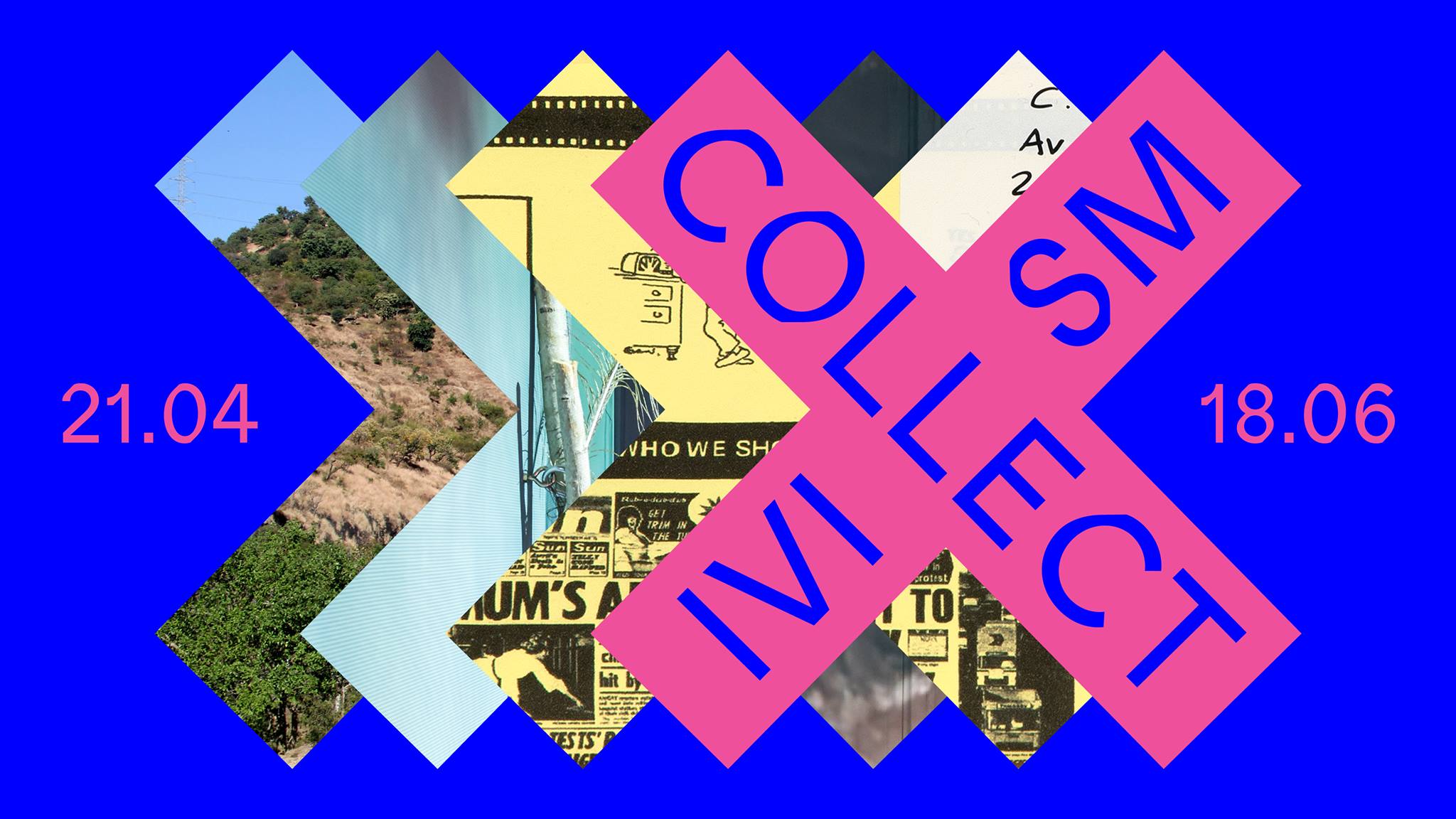
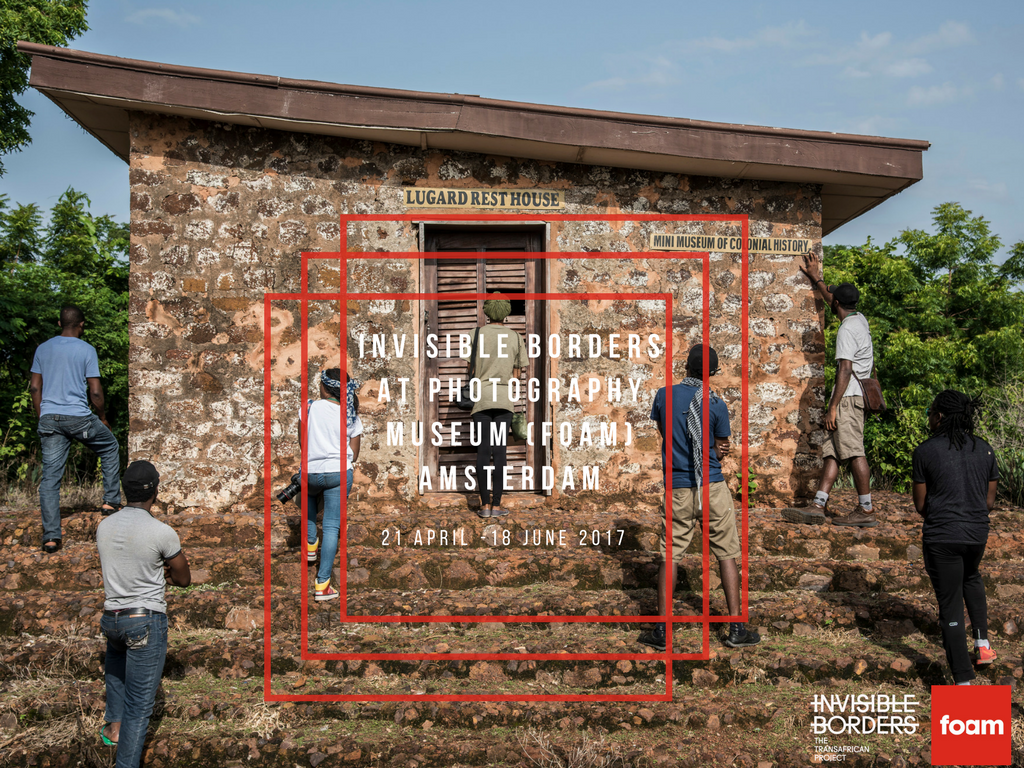
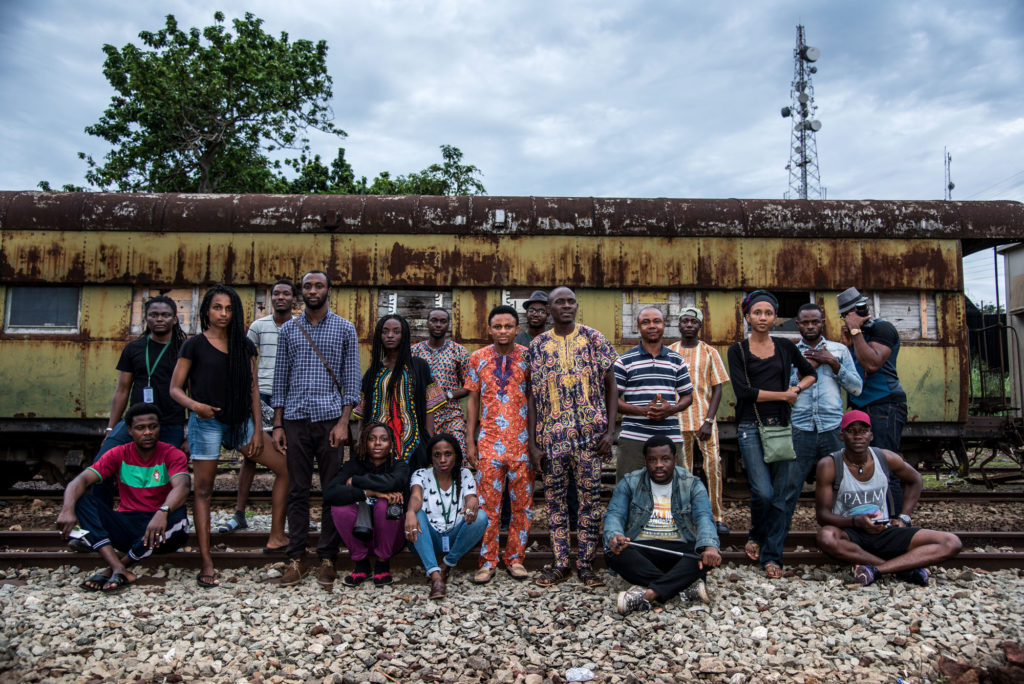
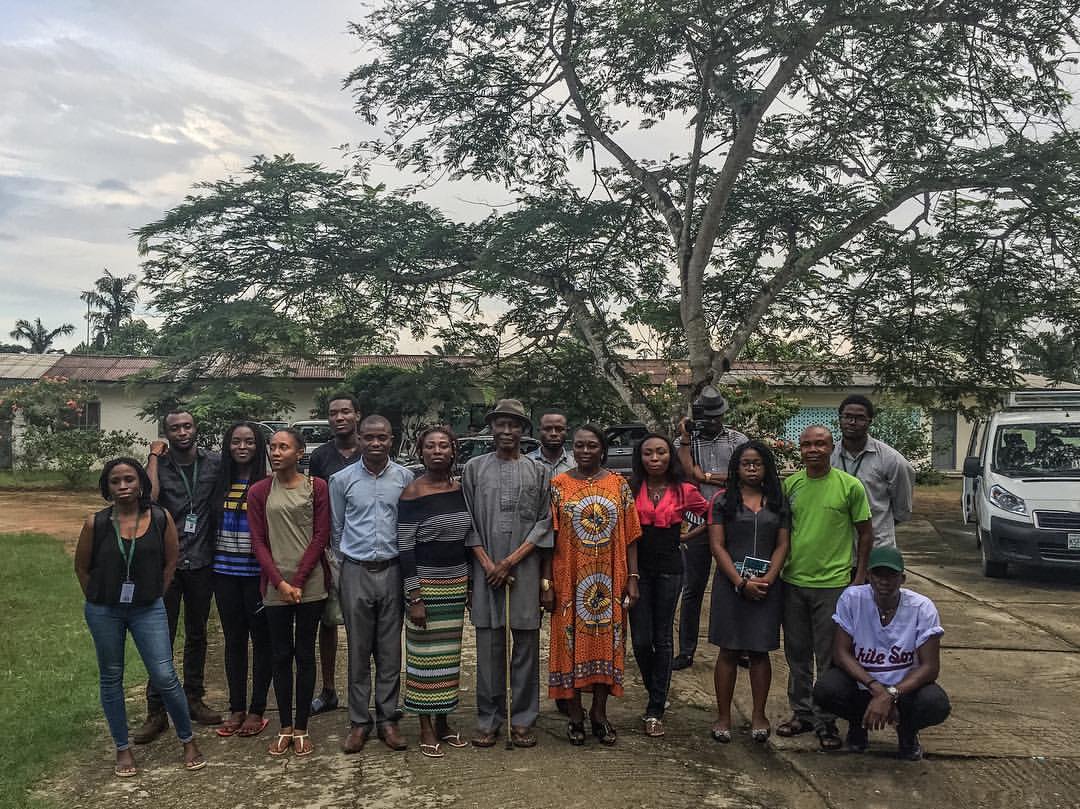
Invisible Borders at Photography Museum of Amsterdam

Over recent years, in all kinds of places around the globe, collectives have been formed that are not tied to specific institutes or to ways of organising activities that are imposed from above. There is a growing tendency among photographers and artists as well to join forces and organise themselves. Many such collectives are based on do-it-yourself principles of ‘cut out the middleman’.

Although their points of departure, artistic strategies, processes and visual end products are extremely diverse, they have in common an enthusiasm for interdisciplinary collaboration and an open view of the world. The collectives differ in organization and form: some are no more than loose associations of varying composition without an agenda, while others operate as far more business-like undertakings. One collective might present itself as an auction house, another as a shop, digital flower-power movement or tirelessly travelling caravan.

The digitalisation of photography and the rise of social media have unleashed a huge flood of images. The immense quantity and the transience of photos may make it hard to attribute more significance to photography than is intrinsic to a quick glance at yet another picture on Instagram. Working together to attach value and meaning to images is the central theme of the exhibition Collectivism. Collectives And Their Quest For Value. Some collectives investigate the mechanisms and distributions systems that cause financial values to be attributed to images. Others operate as social agents, bringing people together by means of images and creating communities, online or otherwise. The exhibition also presents collectives that concern themselves with the value of images in the media and the organisation of dissenting voices to challenge the mainstream media.

In a world obsessed with artefacts – the physical, final object – as the preferred form of artistic outcomes, Invisible Borders shifts the gaze to emphasise the never-ending, evolutive nature of Process. No distinction, hence, is made between the value of images showing the work-process and images showing the outcome; they are complementary. The artist’s presence on the road is as important as the work that commences from that presence.

Central to the Invisible Borders Installation in the exhibition Collectivism. Collectives and Their Quest For Value is the idea of the collective as a platform for the nurturing of mindsets and perceptions that offer alternative methodologies and ways of being in an increasingly narrow and enclosed notion of place, territory, and identity. As such, we shall employ as a metaphor the Road ‘s unending nature. The project will be presented as a work-of-process, an interminable voyage so to speak.

Thus, the works of the participating artists will be presented as a complimentary association between process and precipitated outcome, consisting of images, texts, sound, and videos.

Artists whose works make up the Invisible Borders exhibition are: Ala Kheir, Amaize Ojeikere, Jídé Odùkọ̀yàLilian Novo IsioroTeresa Meka, Tom SaaterVanessa PetersonJùmọ̀kẹ́ Sanwó, Charles Okereke, Uche Okpa Iroha, Emmanuel Iduma, Ray Daniels Okeugo, Uche OkonkwoLucy Azubuike , Yínká ElújọbaEmeka Okereke. 

Contributing collectives of the entire exhibition are 8Ball Community (USA), Dead Darlings (NL), # Dysturb (FR), The Eternal Internet Brother/ Sisterhood (GR), De Fotokopie (NL), InvisibleBorders (NG), and Werker Magazine (ES/NL).

###

For more information, visit: https://www.foam.org/museum/programme/collectivism

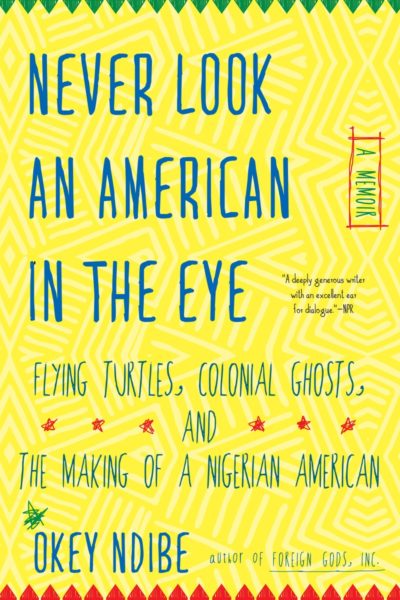
“Never Look An American In the Eye”

In my last book review, I lamented the dearth of travel writing books by African authors. I have since been scolded for failing to reference a number of other old and new works that tackle the subject matter, so I’m currently looking for Isaac Delano’s The Soul of Nigeria, Babatunde Shadeko’s The Magic Land of Nigeria, Noo Saro Wiwa’s Transwonderland, and Eavesdropping, a collection of essays and travelogues in America by Deji Haastrup.

But one of the example works I pointed to as examples of contemporary works detailing honest and intimate travel experiences of travel was Okey Ndibe’s Never Look An American In the Eye (Soho Press. October, 2016). I have now finished reading a review copy of the work and I can say that it was a thoroughly delightful experience. Having lived in America for a while myself, I am always interested in reading accounts of others who have lived in the country, experienced in ways similar to or different from mine. But with this book, except that both of us had entered the United States for the first time at twenty-eight years old, the experiences could not be any dissimilar, which added a lot of excitement to its reading.

okey

Out October 11, 2016

The title comes from a piece of advice given to the author by his uncle in the village. He, the uncle, not having experienced America in any other way except from the plot of Westerns shown on Nigerian screens where eye contact was the ostensible cause of major conflicts that resulted in lots of gunfire, decided that his nephew on the way to America needed such a good prep. As we know now, from our experience with Americans, the opposite turns out to be true. This leads to a number of awkward, interesting, and hilarious scenarios, one including contact with law-enforcement.

The book is a collection of connected stories about the author’s life in Nigeria and his migration to America. Okey Ndibe is currently a columnist for a number of Nigerian publications. He is also the author of two well-received novels Arrows of Rain (2000) and Foreign Gods Inc (2014). He had arrived in the United States first as a maiden editor of a new international magazine, in the late eighties, before he achieved these later successes, but during which time he was already an accomplished reporter for a major Nigerian publication. In the US, after his stint as an editor, he became a student, and later, a reluctant but ultimately appreciative citizen. The book covers all these periods in his life with tales that paint the picture of an individual with an expansive curiosity and a healthy sense of humour towards misfortunes and uncertainties. The stories follow each other in an unsual order which was slightly disorientating, but ultimately successful in pushing the story forward towards a fitting end. Read to find out why.

As a memoir, it’s an engaging work filled with optimism, written in a style that is neither pretentiously grand nor mindlessly plain. As literature, it is clever in its deceiving simplicity. As travel writing, it is a welcome addition to a trove of like-minded works by Africans traveling around the world. It is a work accessible without being insipid, serious without being morose, and honest without being overexposing or patronising. The handling of his contact and relationships with legends of African literature Wọlé Ṣóyínká and Chinua Achebe deserves credit for its normalcy and honesty. We see them both as humans, chasing human pursuits, and vulnerable to human frailties and human disappointments.

It balances an important narrative about migration, culture, disappointments, love, and restlessness with an outlook that is both sunny and measured. I don’t want to say “circumspect” because that presupposes an unwillingness to take risks. What the work is is the opening of doors into a time in the life of its author which also coincides with a significant time in the life of a country he was leaving behind and the one he eventually adopts. There was no risk to be taken or avoided as far as the writing goes. The story needed to be told well, and it was.

___

The hardcover is 224 pages long, but doesn’t feel like it. The book will be released on October 11, 2016 and can be pre-ordered here. I will be speaking with the author in a public Book Chat in the next Aké Festival in Abẹ́òkuta this November. If you’re in the area, do drop by to hear him answer a number of questions I’m deliberately keeping away from this review :). Go buy/pre-order the book.

Travel as Life: A Review of Route 234

I haven’t read many books about travelling around Nigeria written by Nigerians. No doubt they exist (and readers should please recommend some for me in the comment section). I have however read many about traveling in other parts of the world. Tẹ́jú Cole’s (2016) essay collection comes to mind as well as Wọlé Ṣóyínká’s memoir You Must Set Forth At Dawn (2006). There is also America Their America (1964), an “autotravography” by J.P. Clark which caused controversy for what critics thought was a narrow and judgmental view of American values. Recently, there is Okey Ndibe’s Never Look An American In the Eye (2016), an autobiography, and many more.

There are however many more narratives written about the country, and about the continent, by visiting (foreign) journalists, writers, novelists over the years. Karen Blixen‘s Out of Africa (1937), JMG Le Clezio’s Onitsha (1991) and VS Naipaul’s The Masque of Africa (2010) come to mind easily. But so does this one. The overall impression of such books has always been the worry that they rarely depict reality as is, but only as perceived by the visiting foreigner, which – to be fair – is the whole purpose of the subjective narrative. I expect that the impression of America I’ll get from reading travel notes from an African visiting the US in the 1960s will give me an idea of America through that writer’s perspective of events as they unfold to him/her.

fullsizerender-6-1

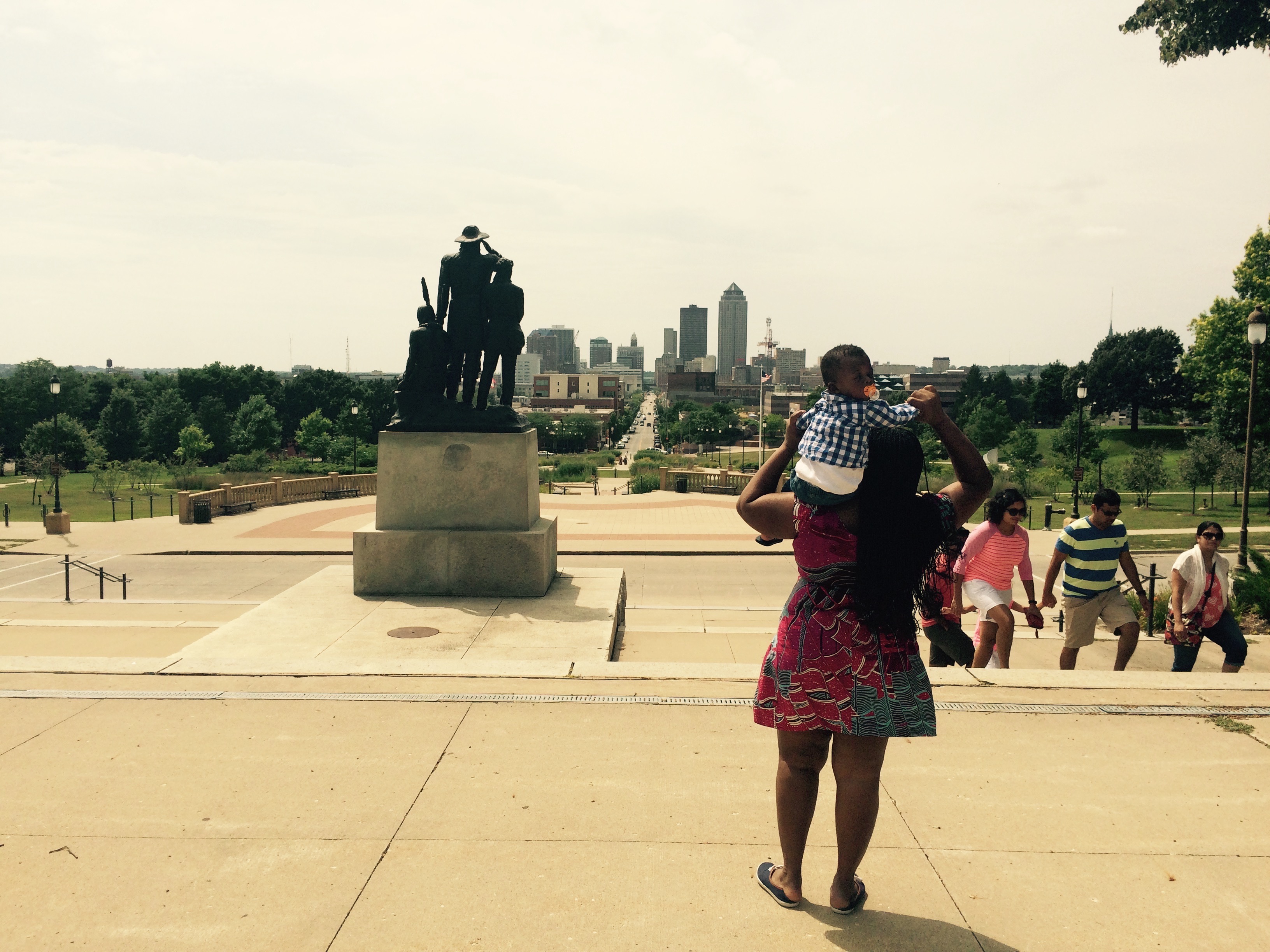
At the Des Moines Capitol, Iowa (2015)

Even in the online space, one might easily find blogs written by foreigners about travel around the continent than one might of blogs by Africans of travel experiences in their own continent. (This is changing, of course. You’re reading this on a travel blog managed by an African, after all). But why is this the case? Human civilization itself is an experiment in travel, documentation and adventure conditioned by necessity, curiosity and sometimes nationalism. We have always left our comfort zones for new experiences. And, as archaeology and anthropology tell us, we have always documented those movements, even unconsciously, in hieroglyphics, and oral poetry, tribal marks, and lately in writing. In the 21st century Africa, the prevailing narrative is that travel for leisure and travel writing is a Western chore, done by the privileged few, and those conditioned to it by their profession in journalism.

Reality, unfortunately, seems to bear it out for the most part except in some rare cases. Olábísí Àjàlá was a Nigerian student who found himself in the United States at age 18 in the late 1940s. Having failed to succeed as a medical student at DePaul University, Chicago, he decided to travel through the country to Los Angeles, on a bicycle and document his experiences along the way. Through deportations, skirmishes with authorities, short Hollywood career (including meeting then actor Ronald Reagan), many short-lived marriages, children, and global fame, through the fifties, sixties, and seventies, he became the patron saint of all adventurers, and an icon in popular culture for African travel. Being called Ajàlá Travels in Nigeria today is a homage to his larger-than-life reputation. He also wrote a book An African Abroad.* 

So why is it that unless in rare cases Africans are not known globally to document our adventures in writing, or is it that we are just generally averse to travelling for its own sake? My friend and scholar Rebecca Jones has been asking this question for a while. In a conference she facilitated in Birmingham earlier in the year, the Call observed:

“For a long time study of African travel writing in the West has focused on Western-authored travel writing about Africa. But this has ignored both the long heritage of the genre amongst African and diaspora authors. African travel writers have traversed both the African continent and the rest of the world, writing about encounters and differences they meet in their own societies and others. They have engaged with colonialism and the post-colonial world, have produced ethnographic description, reportage, poetry, humour and more. They have traversed genres and forms, from the Swahili habari written at the turn of the twentieth century to Yoruba newspaper travel narratives of the 1920s, from accounts of students and soldiers abroad, to newspapers and today’s online travel writing.”

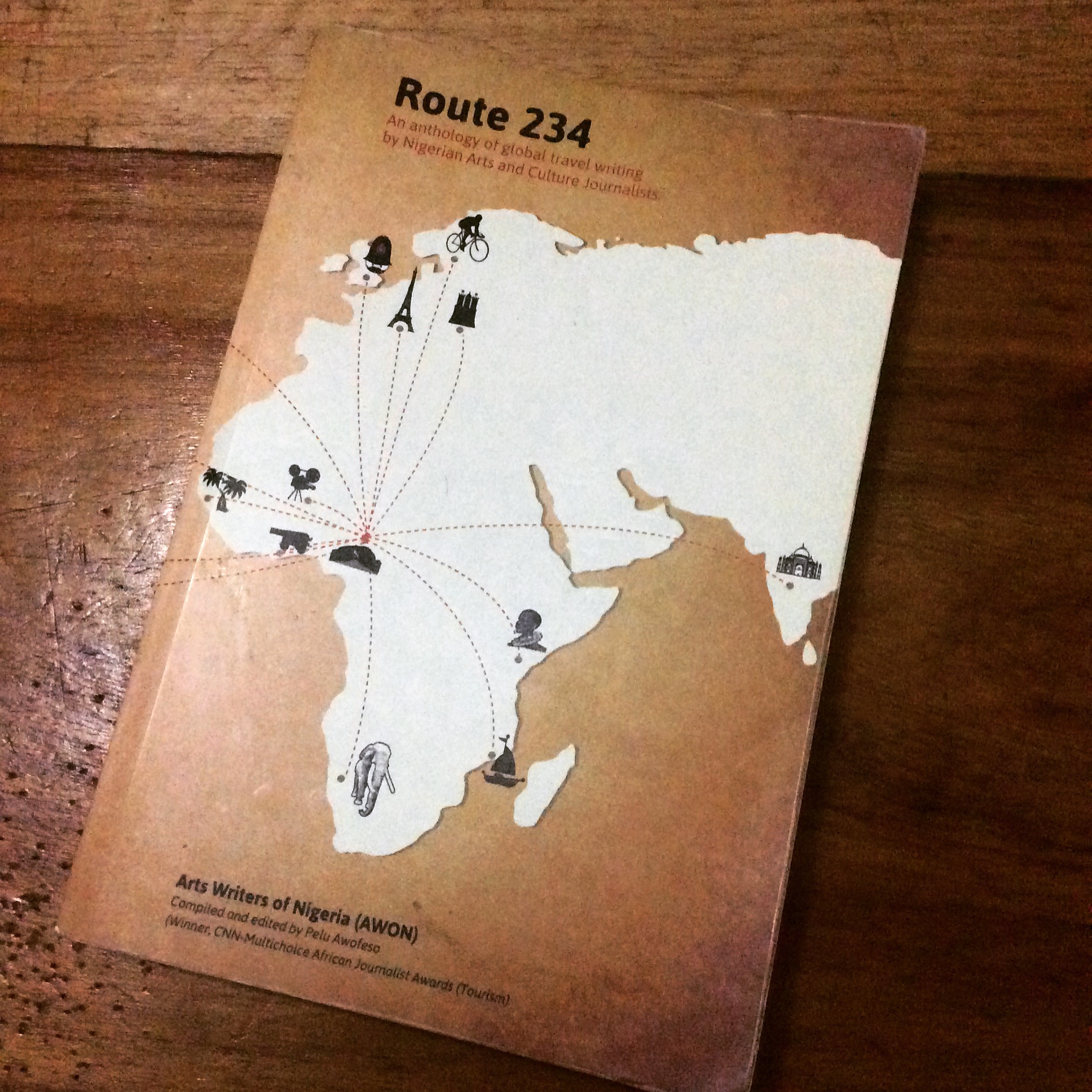
Aside from this blog, there are quite a few other ones online with focus on travel as an African hobby, done especially without the express purpose of becoming a travel “journalist” working for a media house, but for its own sake. Why are there not more. Africans, after all, travel as much as everyone else. Is it that we don’t care about documenting our experiences the way that others do? I have just finished reading Route 234 (2016), an anthology of global travel writing by Nigerian arts and culture journalists, compiled and edited by Pẹ̀lú Awófẹ̀sọ, an award-winning culture journalist. It is a delightful read of many fun, scary, heartwarming, and diverse experience of Nigerians in many different local and international situations. The contributors are however many of the continent’s known arts and culture journalists. This fact will not help our subject matter, but it shouldn’t remove from the value of the book as a necessary work and a delightful read.

image

Route 234(2016), edited by Pẹ̀lú Awófẹ̀sọ̀

According to the editor, the idea for the book came from a private listserve conversation among these culture/travel writers earlier in the decade about documenting some of their travel experiences. It took many years before the idea finally became concrete.  The 211-paged book lists Kọ́lé Adé-Odùtọ́la, Olúmìdé Ìyàndá, Ọláyínká Oyègbilé, Èyítáyọ̀ Alọ́h, Mọlará Wood, Steve Ayọ̀rìndé, Pẹ̀lú Awófẹ̀sọ̀, Jahman Aníkúlápó, Túndé Àrẹ̀mú, Nseobong Okon-Ekong, Akíntáyọ̀ Abọ́dúnrìn, Ayẹni Adékúnlé, Fúnkẹ́ Osae-Brown, Sọlá Balógun and Ozolua Uhakheme as contributors. The scope of the travel experiences documented therein covers Los Angeles, Atlanta, Bahia, Juffureh, Accra, Plateau, Nairobi, Durban, Pilanesberg, India, London, France, Frankfurt, Nice, and Holland.

One of my favourite narrative in the work is Mọlará Wood’s “Farewell Juffureh” (page 35), covering a visit to Alex Haley’s ancestral hometown in the heart of Gambia as well as Nseobong Okon-Ekon’s “Trekking the Mambilla Plateau” (page 93). In both, the reader is vividly guided through experiences that must have been much more intense and affecting than words could capture. Some of the others detail culture shocks at visiting a new place for the first time and re-setting their opinions and expectations preconceived from a distance (“Accra Mystic” by Jahman Anikulapo, page 79) while some focus on their immediate task; covering a film festival, for instance (“Film, FESPACO, Ezra” by Steve Ayọ̀rìndé, page 61). A heartwarming one by Ṣọlá Balógun (“The Good Samaritans of Nice”, page 181) describe an experience common to many frequent travellers: being stranded in a strange city after a missed flight.

What the book represents overall is an intervention in a space where much more effort of this nature is needed. But travel isn’t, and shouldn’t be, the preserve of just culture writers and journalists. Writing about it shouldn’t be either. Tourism isn’t a big deal in Nigeria today because of lack of government (and private sector) care, yes, but also because of a seeming lack of interest in the populace itself. As I argued in this recent piece on a visit to historical locations in Ìbàdàn, commercial attention will come when governmental and private sector intervention takes the first step:

“I think back to a recent experience, in Italy, where tourism has built a thriving industry of restaurants, malls, and gift shops around notable structures that tell the country’s history, real and fictional, and how much value that attention (and tourist dollars) has brought to the country. Old churches and abbeys, ancient arenas in Verona and the Colosseum in Rome, among others, are all just ruins of a certain past. But they have been preserved and well branded in order to attract foreigners and their resources. Even a fictional character, Juliet, from Shakespeare’s Romeo and Juliet, has a touristy structure built in her honour, called Casa di Giulietta.”

Travel is fun. And even when it is not, it is always an enlightening exercise. As Mark Twain said in The Innocents Abroad (1869), “travel is fatal to prejudice, bigotry, and narrow-mindedness, and many of our people need it sorely on these accounts. Broad, wholesome, charitable views of men and things cannot be acquired by vegetating in one little corner of the earth all one’s lifetime.” That same perhaps can be said about travel writing, if not as a way to reflect on one’s adventures, as a way to keep said experiences in the memory of the world.

The book is a delightful read, but much more is needed.

_________

There are many other stories like this, no doubt. Ravi on twitter has pointed me out to “Sol Plaatje’s sea travel piece” (by which I assume he means this bookMhudi, an epic of South African native life a hundred years ago), and Rebecca, in the comment section, to a few more published narratives, also of a few years back. Their input also reminded me of Olaudah Equiano’s  equally notable memoir. There are many more like these, I agree. My point is that there are not many more, and certainly not as many notable ones as there should be).

For more reading

“There’s a lot of ignorance amongst ourselves.” Interview with Uche Okonkwo

Uche Okonkwo is one of the participants in the ongoing Invisible Borders road trip. Born in September 1988, she has an MA in Creative Writing from the University of Manchester, UK. Her short stories have been published in print anthologies and online. She lives in Lagos, Nigeria where she works as a Managing Editor at Farafina. In 2014 she won the first ever Etisalat Prize for Flash Fiction for her story, ‘Neverland’. Her work is forthcoming in Ploughshares, Per Contra and ellipsis. I caught up with her for a brief chat about her work and her experience on the road.

___________

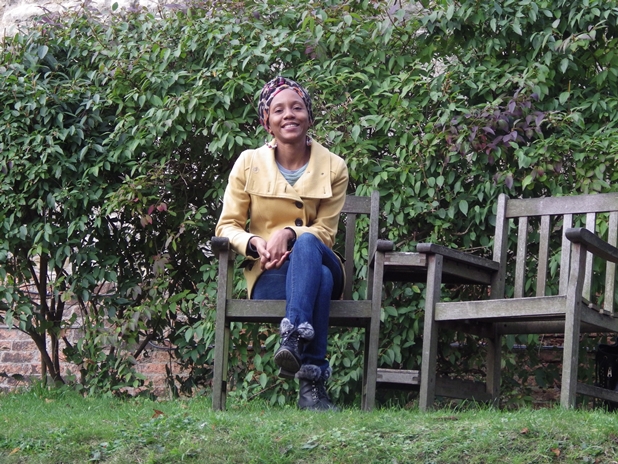
Uche-Okonkwo2Do you hear this question “Is ‘Uche’ a female name?” very often?

I think Uche is a fairly common female name. I know more female Uches than male actually. But, strangely enough, I get this question often.

You currently work as a managing editor in Lagos. What does a managing editor do?

A managing editor manages an editorial department. So, along with actual editing, a managing editor manages other editors, graphics designers, authors, illustrators and freelancers. A managing editor also decides (or plays a key role in deciding) what gets published by the publication or publisher.  

Your interest in this trip, you mentioned, is to explore this same issue of identity with the people you meet, trying to understand how their language competence affects the way they look at the country. I’m very interested in this. What have you found so far?

Well, I’ve shifted the core focus of my work on this trip from language. Now my focus is on questioning the idea of ‘unity in diversity’. Language will become secondary to my work, one of the ways through which I will look at the idea of diversity in the various locations where we visit.

I’ve chosen to shift focus in this way because I realize that this (the subject of Nigeria’s diversity and how we are able or unable to be unified because of or in spite of it) is actually the big question behind my thoughts, and it then leads into language, identity and so on.

What informs your artistic and creative interests, besides the multiethnic nature of your upbringing – which many Nigerians share? And how long have you had these curiosities?

Simple answer: anything can and does inform my artistic and creative interests. I cannot name one thing. Books, movies, other writers, places, my faith, romance and heartbreak, human behaviour, it could be anything. But more specifically, I tend more toward exploring human relationships in my writing.

As far as “the multi-ethnic nature of my upbringing” goes, it’s not something that I can say has been of particular or special interest to me with my writing. It’s just the thing that sparked my interest in looking at identity and diversity, for this particular Invisible Borders road trip.

But relationship with Asaba must also play a role. It was moving to read your account of your father’s recounting of growing up in Asaba during the Nigerian Civil War.

I wasn’t brought up in Asaba. My family moved to Lagos when I was about three years old, and we’ve been there since. Which is why, even though I have visited Asaba over the years (though not very often), the story of the place and its history are not very familiar to me. Uche3

Who are your biggest artistic/creative influences?

The writers that I read (of which there are many). And the people in my life: friends, family, relatives.

Your story “Neverland” which won the first Etisalat Prize for Flash Fiction is a beautiful tale of love, heartbreak, vengeance, mischief, and redemption, in under 500 words. You said it was inspired by nostalgia, and that was evident. How many more like that have you written, and when should we expect a book?

I’ve written many pieces of flash fiction, a lot of which appear on my blog. I’ve also written many short stories, some of which have been published or are forthcoming in magazines and journals. I’m currently working on putting together a collection of short stories, but it’s not something I’m in a big hurry about.  

What do you remember most fondly about the Etisalat Prize experience?

I think my fondest memory of the experience was the awards ceremony itself, when Ama Ata Aidoo announced my name. She went, ‘oh, it’s a girl!’ and there was such happiness in her face and tone. I liked how pleased she’d seemed.

How did you get into the Invisible Borders project?

I heard through a friend that Invisible Borders was looking for a writer for this road trip. I had heard about Invisible Borders before and had always been intrigued by the idea. And so when I heard this I told my friend I was interested, and I sent a sample of my writing, which she passed on to Emmanuel Iduma, and that was how it began. It’s been a great experience so far, working with these wonderful artists and learning so much. And the people from the Diamond Bank team (who are travelling with us) have been amazing as well.

Uche2I got on this road trip because I recognized it as something important and timely. I think that as much as we say that Nigeria is one country, there’s a lot of ignorance amongst ourselves; about our past, about the country’s different ethnicities. There’s also a lot of uncertainty about our future as a nation. Projects like this road trip help us to explore and ask questions and start necessary conversations about our identity, as individuals and as a people.

On a more personal note, I enjoy travelling, and road trips more so. No way was I going to pass up on this opportunity, in spite of my fears about visiting a place like Maiduguri.

Considering your experience for the last couple of weeks on the road, what would you describe as your most memorable experience?

I think that so far my most memorable experience has been in Asaba. Hearing my dad talk about his experience of the civil war was particularly powerful for me. Besides that, there have been many other precious moments during the trip: from visiting with Pa Ayomike in Warri to meeting the Iyase of Asaba, and the many serendipitous encounters with strangers that ended up having such a profound impact. Even just sitting and talking with the other participants of the road trip is often enriching and insightful.

What are your plans for the nearest future?

My plans are to keep writing and finding ways to do (or keep doing) the things that I enjoy, and to take life one day at a time.

Thank you for talking to me.

Thank you for your time as well. It’s been a pleasure.

__________

Photos from Invisible-Borders.com and KonnectAfrica.net.

You can read interviews of other current participants on the trip here and here and here.