Crossing Borders: A Spotlight on Literary Translation

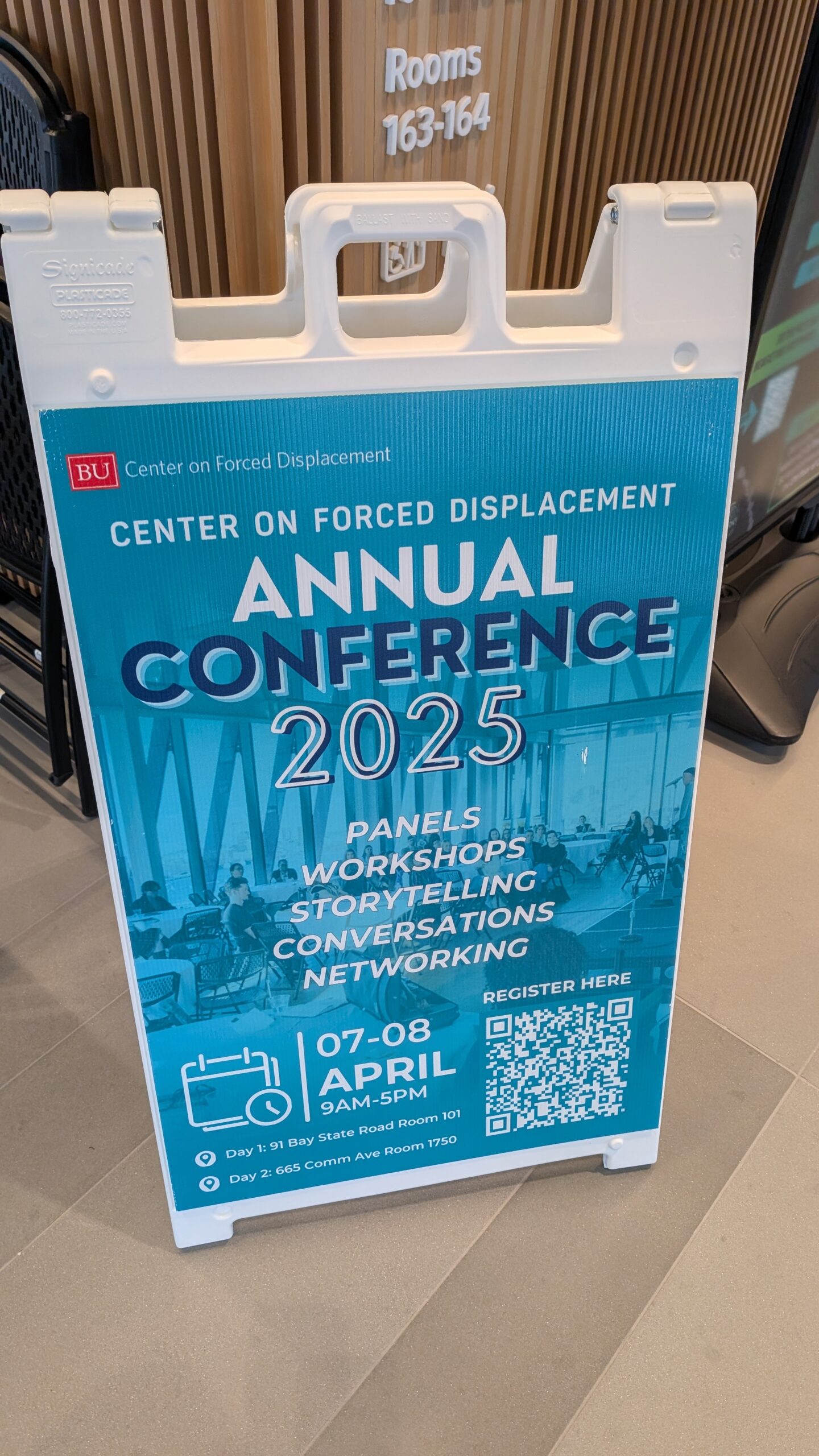
Talk given at Boston University’s annual conference on Forced Displacement. April 7, 2025

____
Good afternoon everyone. 

Like you, I’ve been watching the news. 

And when I got the invitation to participate in a conference on forced displacement, I was convinced that someone had planned with some invisible force to get me into government trouble. I went online to search, just to be sure that it was not an elaborate prank. Look and behold, it’s real. It’s a real place, on campus, and the conference does indeed seek input from a writer and linguist about how violent conflicts affect language. Or, at least as I see it, how language adapts or survives in spaces of armed conflict and forced displacement.

So thank you for inviting me.

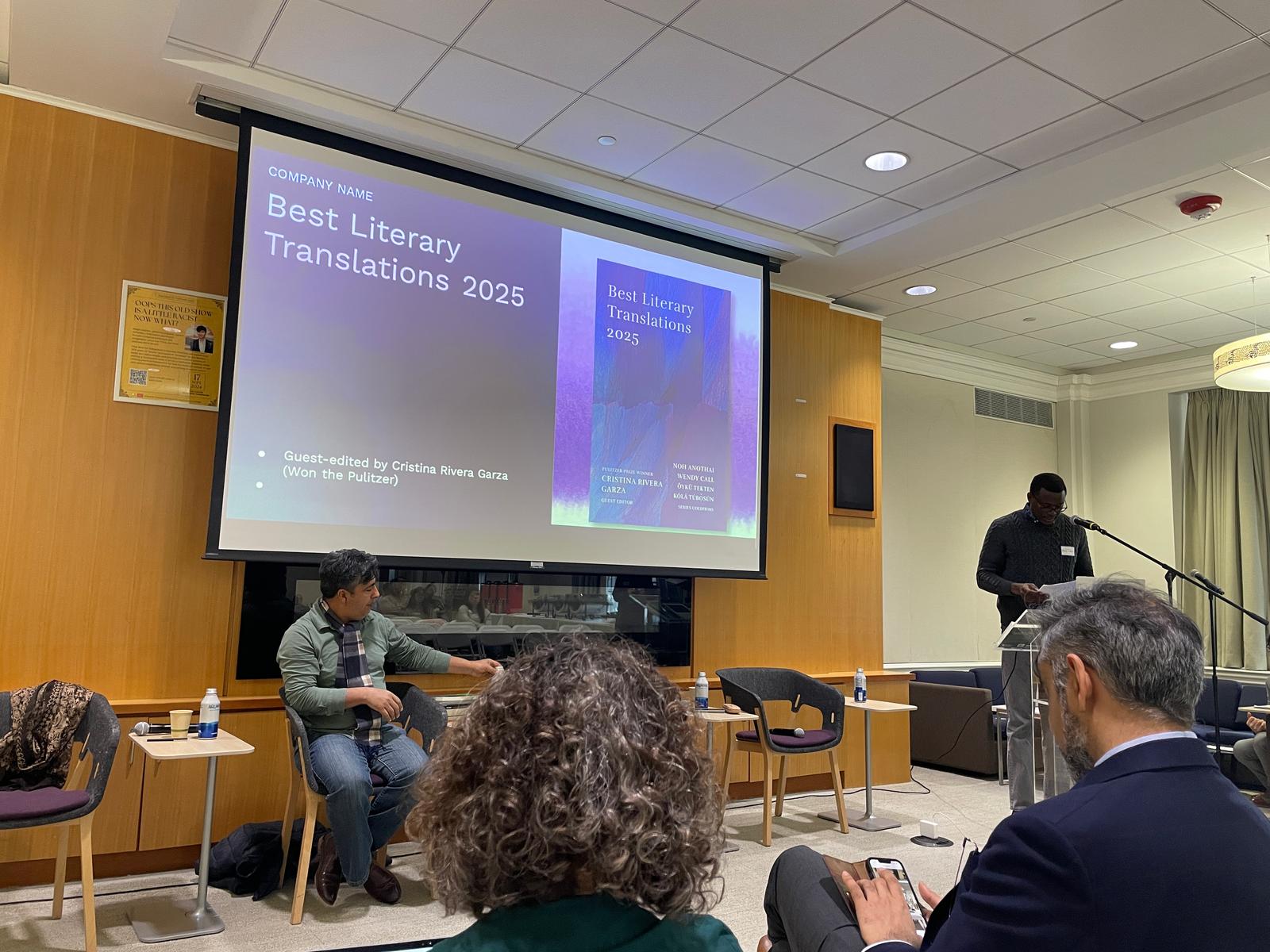
I’m a writer, the co-editor of Best Literary Translations, now in its third year. There are copies of the book for sale if you’re interested in them. The 2025 edition will be out at the end of this month, guest-edited by Cristina Rivera Garza, but we have copies here. 

I’m also a linguist, by training. In other lives, I’m a language activist in Nigeria with interest in the ways that technology hinders or enhances the use and vitality of languages across the country and across the continent. I’m also a creative writer, usually poetry. So, you see language is very important in my trade.

At Columbia University a few weeks ago, I spoke about a professor mentor of mine, Ron Schaefer who shared with me the language of his childhood in St. Cloud Minnesota. Like most people who grew up in the frontiers, his grandparents had come from Europe and brought their languages with them, so the lingua franca at the farm was German. I knew that most families at those times spoke their languages at home, but it was interesting to hear it again. Ron himself, now a professor of linguistics, had achieved success in his career by helping to revitalize and document a language of Nigeria called Emai, and had retired as the Director of International Programmes at Southern Illinois University. 

We were having this conversation online during the time when the government was declaring English as the official language of the US. I used his story in that talk to illustrate a problem of amnesia but also of displacement. Something many of us can relate to in some way, since every immigrant to the US comes from somewhere and carries with them some of that culture and tradition and, of course, language. What do we lose? How do we carry these senses of displacement to each generation through our language competence and lack thereof.

Nigeria, my primary example, offers many more instances. Even when there are no obvious conflicts, a country of about 520 languages hoping to make a nation out of the many will eventually run into a number of issues. Many of these involve technology, which is my primary interest. But many are merely sociological. Some conditioned by politics, globalisation, educational or government policies. The official language of Nigeria too, is English, and this has affected the growth and capability of many Nigerian languages. There are still no schools in the country today where you can learn in any Nigerian language. Literature is still mostly in English. Governance is in English. And many Nigerian languages are dying as a result. Many languages in the country and on the continent are endangered because of this historical and ongoing event. What globalization has done on the African continent and elsewhere is present English as the only viable means of communication while making other languages irrelevant. And with the language loss, we lose different ways of looking at the world. 
And then throw in conflict, conquest, forced and unforced displacement, and you have a different story. We had a Civil War between 1967 and 1970, but some fissures remain. Look around the continent today; heck look around the world: Ukraine, Gaza, Sudan, the Congo, Korea, etc. Each of those conflict spaces present not just the tragedy of human displacement, but also of language. 

During my grad school, I worked part-time at the International Institute of St. Louis. It was an institution set up to help displaced people from all around the world fit into the American society. We taught them not just English language but American culture. Many of them came from places where they had spoken no other language but their mother tongue. Due to war and displacement, they were now here in a place where English language was the only means of communication. Working with adults who had never heard the song “A for Apple, B for Ball” was a moment in humility. It was easy to imagine, in my own bubble in Nigeria where English dominated most of the public interactions that it was a language that everyone spoke or had some experience with.

This is where translation comes in, or multilingualism. 

By providing a chance for cultures to travel from one language to another, we bring people into comfort with their surroundings. While we may not always be able to get into their heads and understand the depth of their predicaments, we can help them get a comfort with their new environment enough to give their lives a second chance.

My experience at the International Institute always filled me with that sense of profound awe  at what it must take for someone to leave their old lives for a chance to start again, trusting that all they know and have left behind will be enough to get them through the new and challenging experience.

Where communication happens, and relevant messages transmit successfully from teacher to student, colleague to colleague, neighbour to neighbour, life goes on as it should, and community is healed. When it is not, or when translation breaks down enough to transmit ambiguity or other unwanted additions to conversations, the purpose is defeated.

I’d like to quote from the talk I gave at Columbia, regarding a YouTube video I saw earlier in the year, this time about an ongoing global conflict.

I had seen an interview, a few weeks ago, between President Zelensky and Lex Friedman which had — in the space of an hour or so that the interview lasted — the two speakers speaking English, Russian, and Ukrainian. But due to the help of technology, speech synthesis, voice cloning, translation, and artificial intelligence, I could watch the whole interview in English, without even knowing when the switch happened between languages. Someone else could view the same interview in Russian or Ukranian and have the same experience. Technology has been trained to understand which language is spoken, and adjust it to the listener as necessary. This wasn’t possible for any language in 2005 when I left the university, but now it’s almost commonplace. And yet, it still isn’t possible today in Yorùbá, a language that I speak, or any African language I know. If I had my way, it would. One day, our experience of the internet will be tailored to our language competence. But to make African languages like Yorùbá participate, we need a lot of clean Yorùbá data, and resources to train models that can make it happen. The continent of Africa has about 2000 languages. Where do we begin?
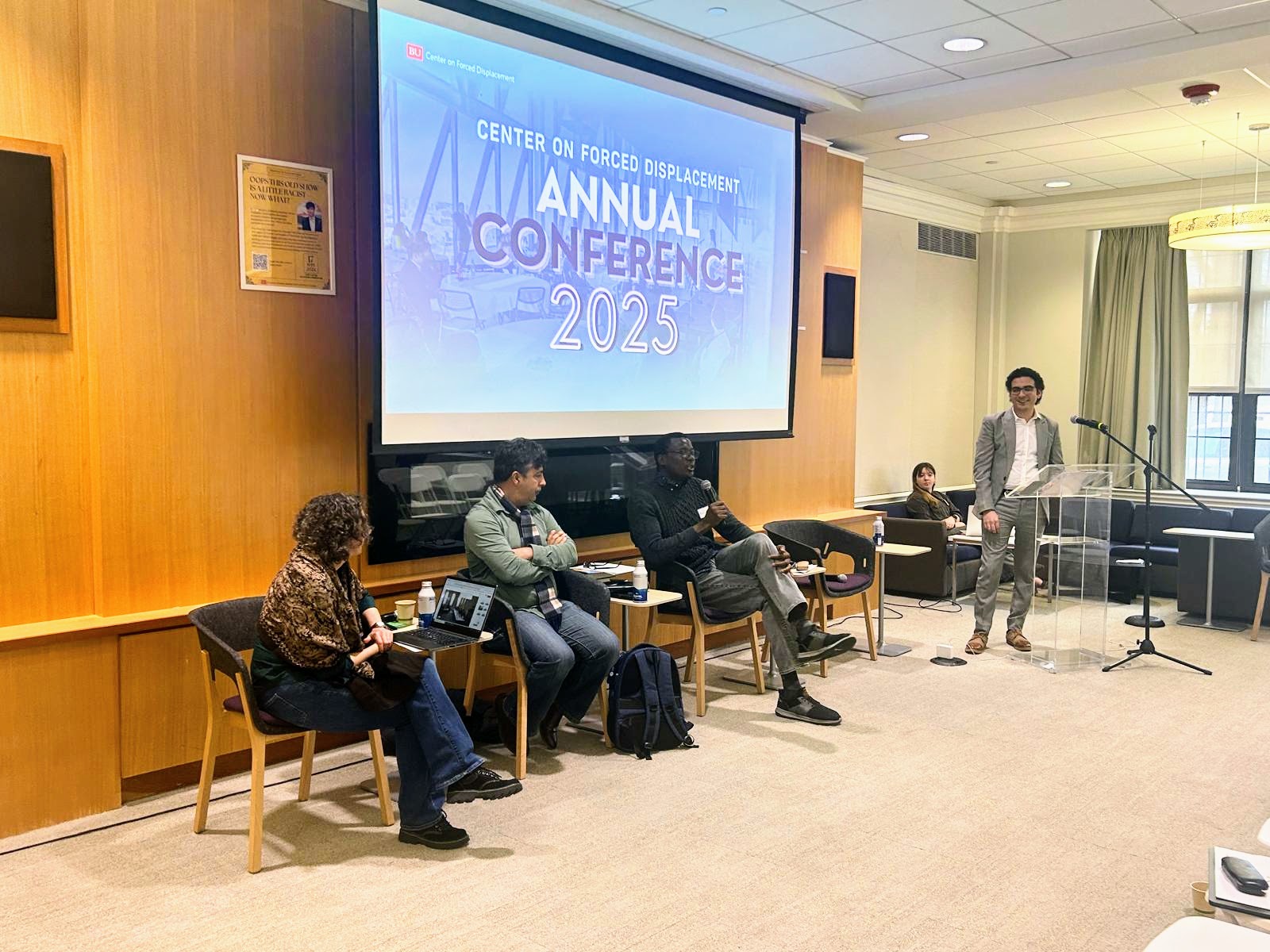
Technology has been helpful, in many ways, in helping us cross language barriers, even in times of war. But, as I said in that talk, some languages have been luckier than others. Because of a combination of factors: political, social, economic, some of the languages most efficient to use in technology, in translation, and now in AI are some of the same languages that have advanced features in the earlier internet age, and in the earlier print age. Some of those obstacles to the smaller languages have followed them into this new generation. 

Imagine a situation in which someone being evacuated from Gaza or Sudan or Ukraine into the United States can just communicate immediately through the use of technology, with instantaneous translations? 

Literature is one great way to bridge the gulf. The larger the corpora in the language, created by literature or just regular language use in technology, the more likely the language is to be aided by technology in the future, to be useful in modern speech tech. But like I also mentioned, literature has followed the rest of the hegemonic institutions in favouring only big languages with powerful tools and powerful cultures. A lot of systemic issues have mitigated against the production of literature publication in underserved languages. So English, Mandarin, German, Korean, French etc continue to lead in the tech age as they do in the artificial intelligence age. 

Literature in a small African language doesn’t always stand a good chance to be read anywhere but in the village where the language is spoken, if it’s written at all. And when it’s written, the chance to publish is small. When it’s published, it might not get widely distributed. With the internet, the audience can grow a bit. So a speaker of that language who lives in a corner of Germany or Japan or Indiana can read that story in his language published on a widely read literary platform. This was the thinking behind our project at OlongoAfrica, where we got a select number of stories by African writers translated into ten different African languages, and then get native speakers to read and record them. We put these on a website for people to read and listen to and share. 

What Best Literary Translations does is provide a place for many of the translations from these languages can gather and travel together across the world in English, in a book form. As editors, we collect, read, edit, and present some of the best translation entries we receive which have been translated into the English language. We thus engage readers in English who may not otherwise have access to these works, or these writers. 

What we can do is to hope that the availability of these opportunities for creative exchange does something to mitigate the pain and suffering that necessitate translation in the first place, though we know innately that it can never be fully sufficient. The world is a complex place, with a variety of unpredictable events moving us to the other.
I’m a speaker of Yorùbá, a language I know that I speak with full native competence, but which I haven’t had to speak over the last couple of years as I’d have loved, because I’m surrounded by people who speak different languages. When I am in Lagos, Nigeria, where I lived for ten years, I’m surrounded by other Nigerians who speak Igbo, Hausa, Ibibio, Efik, Berom, etc. To communicate with each other in a modern metropolis, we speak English, or Pidgin. And as a result of this though important contingency, we put our own native languages to the back, and it recedes by itself over the years into places from where we sometimes need sharp tools and hours of labour to rescue them.

In 2021, I published my Yorùbá translation of a collection of English poems, written by a professor from the University of Pennsylvania. In retrieving words from my native language to render from English the creative endeavour of another person, I ran into a wall, many times, and I’m reminded of the saying that the best way to lose one gift is to refuse to use it. Words I once took for granted took many hours of thinking and trying to retrieve. It was no different when, in 2022, I translated a short story by Haruki Murakami into Yorùbá. Very exciting process in both cases, but no less tasking in reaching words I used to never have to look for, in my own language.

So perhaps, this is one of the benefits of translation: giving us a chance to reach into parts of ourselves that we may have forgotten exists, to find the part of ourselves that was always there, and in a language we speak in the depth of our soul. The difference is that in my own case, it is voluntary. The many people who have to go into exile, who are forcibly displaced from their homes, who have to live in places where their native languages do not serve them in any capacity, do not have the choice as to whether to forget. The new societies often force that condition on them, sometimes suddenly, sometimes gradually, but always eventually. 

Translations, technology, and literature can only mitigate what is a fundamental alienation.

During the work for our 2024 edition of Best Literary Translation, we ran into a dilemma. Some of the Ukrainian translators selected for the edition wrote to us to request that they not be published beside Russian ones, because of the ongoing conflict. Not being able to resolve the conflict in a way that does not disenfranchise the work of translators we had diligently selected, the writer elected to withdraw her poem, highlighting some of the issues that translation in itself can’t always solve.
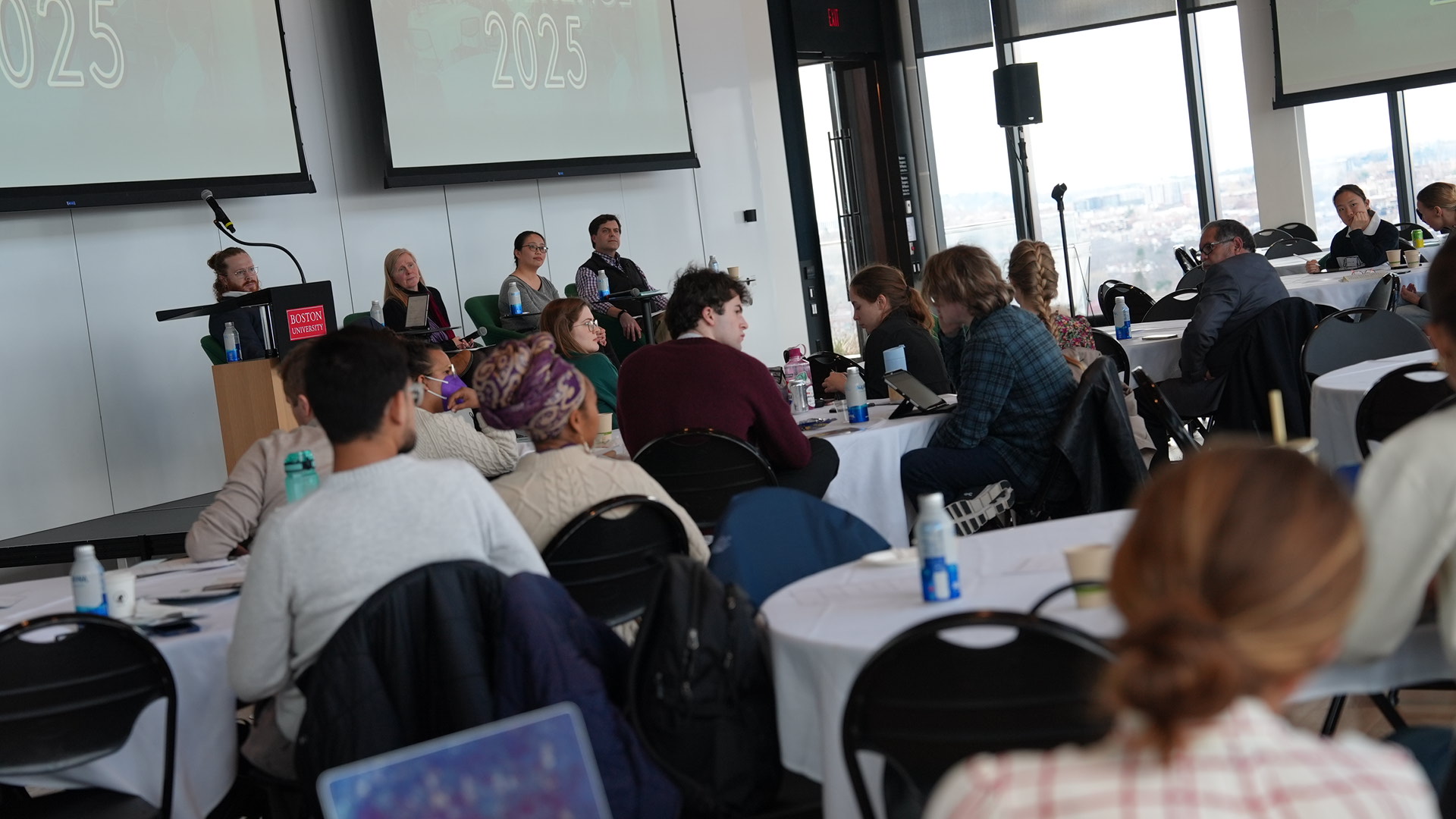
At a language conference at Brown University’s Translation Across Disciplines last year, I was on a panel on Translation and social justice. One of the speakers spoke about her work at Guantanamo Bay in Cuba where US has a base, which holds hundreds of detainees considered too dangerous to put on the mainland or sent back to their countries. Some of the translators at the base come from Cuba — the base provides regular job for them — while some actually live on the base. One of the things I was so curious about, and I asked the speaker, was what did she notice was the change in the Spanish of those who are condemned to live on the Island not because they’re detainees, but because they are employees of the government. They can’t go back to Cuba, they work for the US government, and they don’t have a chance to interact daily with people who come from the US mainland. But their language is Spanish. I was really curious whether the Spanish they spoke evolved over the years to a point where it is so different from that on the mainland. I don’t remember what the answer is now, but I find things like this quite curious — the ways in which our language competence evolves over the years, either because of our deliberate actions, or because of forces beyond our control.

I’m rounding off now. Let me quote from the introduction to our first issue BLT2024:

Best Literary Translations strives to be a curative to parochial thinking. We present voices from around the world, paying special attention to lesser-known literatures and languages. The guiding vision of Best Literary Translations is to offer a counterpoint to the xenophobia and racism that have marked the last decade— and, truly, the entire history — of this country.”
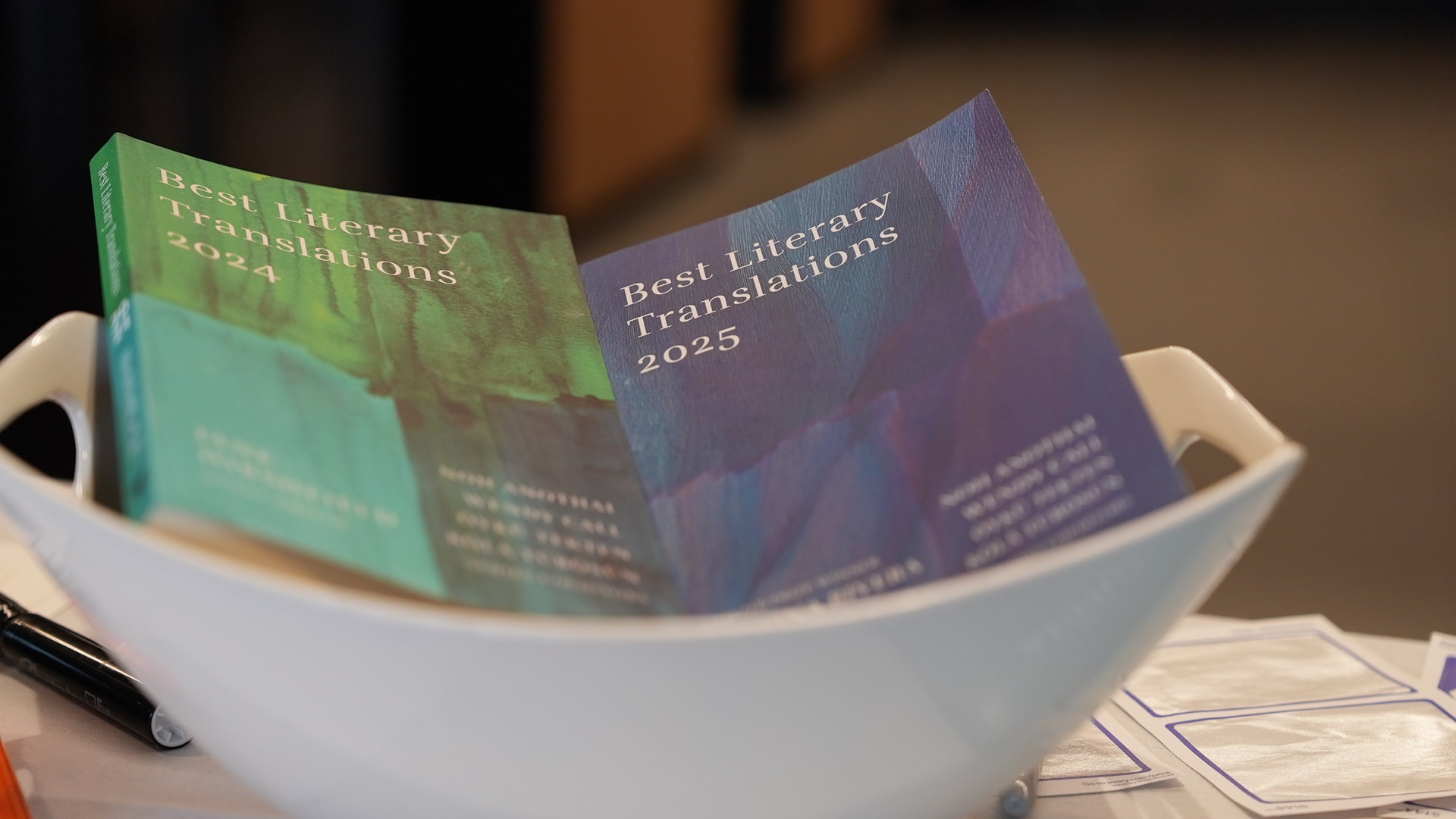
And from BLT 2025, rightly dedicated to Refaat Alareer (a Palestinian writer, poet, and victim of the Israeli bombing of the Gaza Strip in December 2023) and Jerome Rothenberg, an American poet, translator and anthropologist, we have the following:

“Despite the many difficulties that can hinder their translation, twenty-three languages are represented here in Best Literary Translations 2025. Featured in these pages are not only works from languages that have been underrepresented in U.S. publishing, but some that have been actively persecuted, such as the Uyghur of Adil Tunaz (translated by Munawwar Abdulla), the Faroese of Kim Simonsen and Lív Maria Róadóttir Jæger (translated by Randi Ward and Bradley Harmon), the Tu’un Savi of Florentino Solano (translated from Spanish by Arthur Malcolm Dixon), and the Ukrainian of three different authors, among others. That some of these works made it to publication at all—much less into our nominations and eventually into the pages of this anthology is a testament to steadfastness of the authors continuing to write in those languages, the dedication of the translators working urgently to amplify their voices, and the solidarity of the editors who published this work. Best Literary Translations celebrates their successes and honors their ongoing struggles.”

In conclusion, language loss can be as much a marker of displacement as incarceration or loss of land. But I’m a linguist so my work is about the language, and not the politics. Occasionally, they intersect, sometimes so personally. And occasionally, literature is there to provide some succor in those liminal spaces. 

Thank you for listening
The Orthographies of Our Discontent

 One of the things that was always hard to ignore, while I was growing up, was that some teachers wrote my last name with an extra “n”. And while the parents had insisted that it was “Túbọ̀sún” and not “Túnbọ̀sún” we often had to correct the befuddled outsider that their version was incorrect and needed to be changed. Sometimes militantly, as the ‘misspellings’ began to appear as deliberate attempts by strangers to modify our identity, even when the offending user harboured no such intentions.

It took many years for me to accept that other versions of my name even deserved to exist. And then one day I met someone who shared an equal but opposite conviction about retaining the second ‘n’ in the spelling of his name, and after a few back-and-forths that veered between militancy and levity, we resolved to agree to disagree.

Of course, none of us were ‘righter’ than the other. The word “túbọ̀” or “túnbọ̀” mean exactly the same thing: “continue to”, depending on your dialect of Yorùbá, with the former more common among the Ọ̀yọ́/Ìbàdàn while the latter is more Ìjẹ̀ṣà/Èkìtì. What began to surprise me was my own father’s non-challance when we lived in Àkúrẹ́ and people who wrote about him as “Ọlátúnbọ̀sún” did not get immediate censure. 

Perhaps all of these various childhood memories contributed to why I found myself later in linguistics, where the nuances, use, and mechanics of language define the trade, and where I found confidence, one day on Twitter, to challenge an Igbo speaker who had insisted that the name “Anwuli” should ONLY be written as “Añuli”. I’d encountered many of these kinds of conversations before (sometimes with the spelling of Chidinma/Chidimma, nyash/yansh, jaiyé/jayé, Sọlá/Shọlá, Akpata/Apáta, among many others that occupied that cerebral section of social media. In most cases, it has remained a conversation about language, orthography, tone, and phonology. But on this day, the response my interlocutor gave was not just that I was wrong, but that I was Yorùbá, therefore unworthy of the conversation at all. Nothing I mentioned about my work as a linguist, my interest in Nigerian languages, and my experience with language technology projects at various levels made any difference. It quickly became an ethnic-based conversation, and all hope was lost.

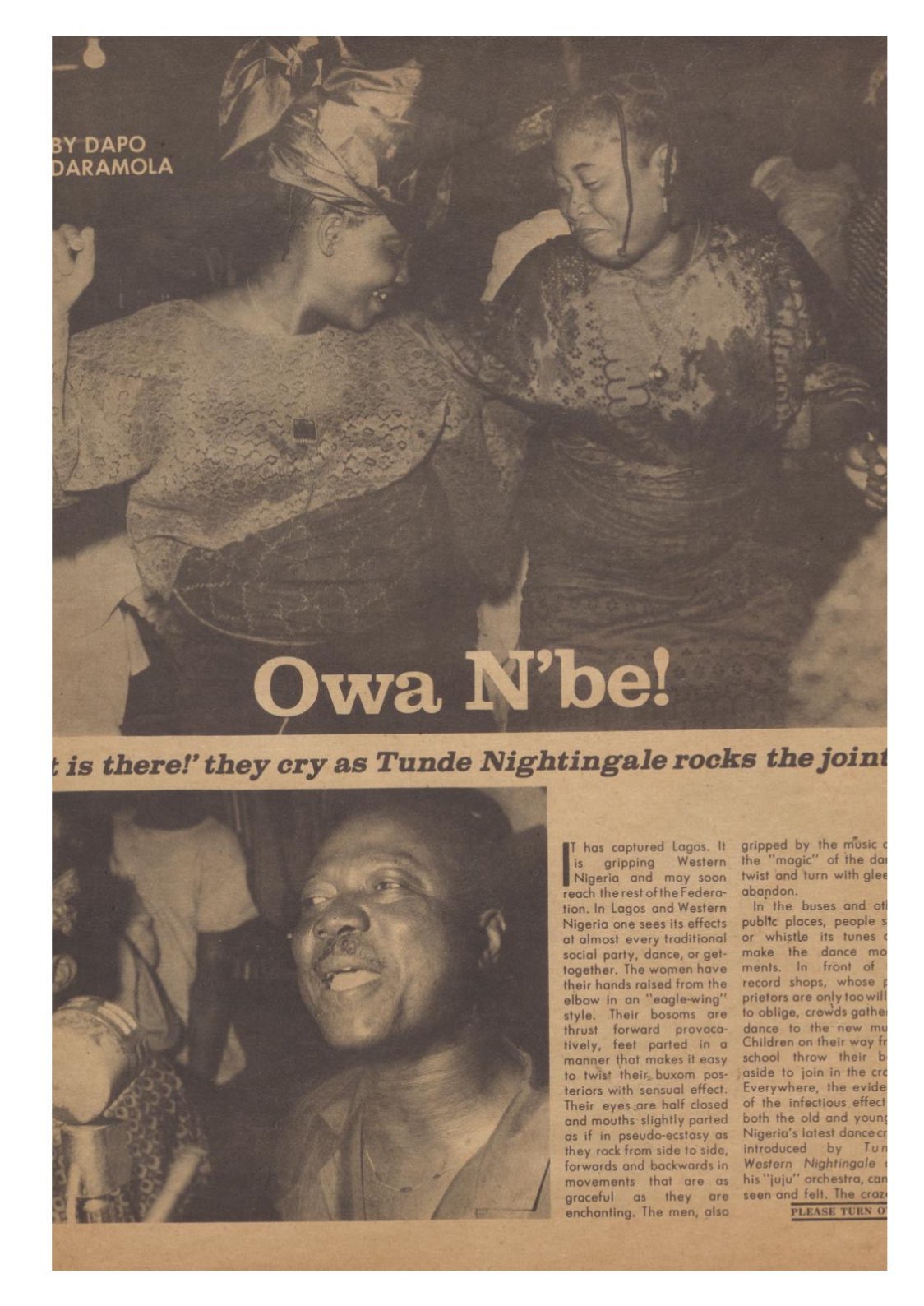
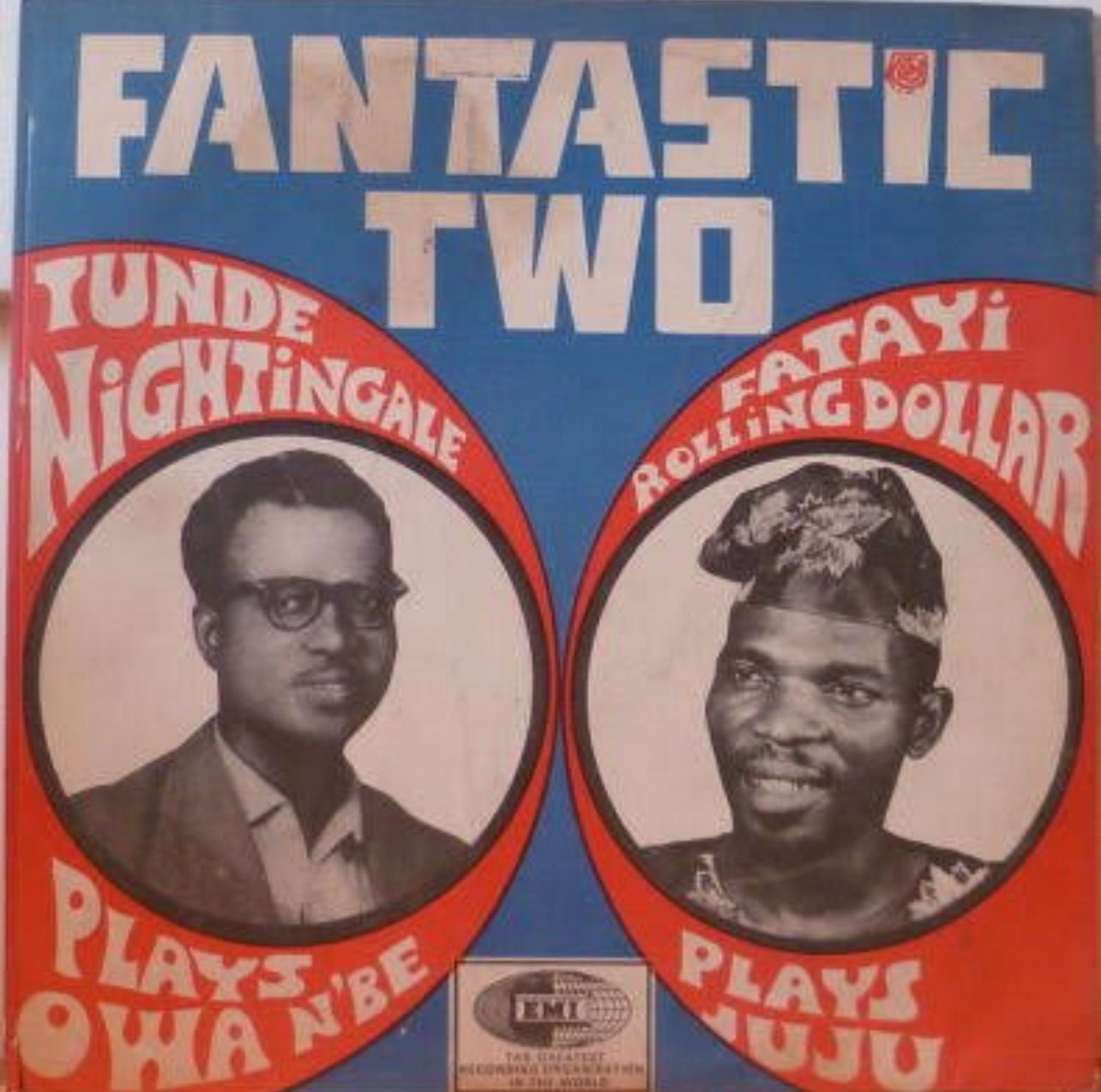
I’ve paid some attention, since then, to many language-related conversations in Nigeria and watched them similarly devolve into dark corners. And when, a few weeks ago, someone tagged me to weigh in on the “correct” spelling of the “Ówàḿbẹ̀”, a now popularized term for loud colourful parties in Lagos and elsewhere, I did my usual analysis of both the origin of the word, the morphological breakdown, and different acceptable ways of writing it around the country. Yes, the original components were “Ó wà ní ibẹ̀” (“It’s there” or “It’s happening there”), but it is acceptable to write it as “Ówàńbẹ̀” as it was originally written, and “Ówàḿbẹ̀” as is now very commonly spelt. 

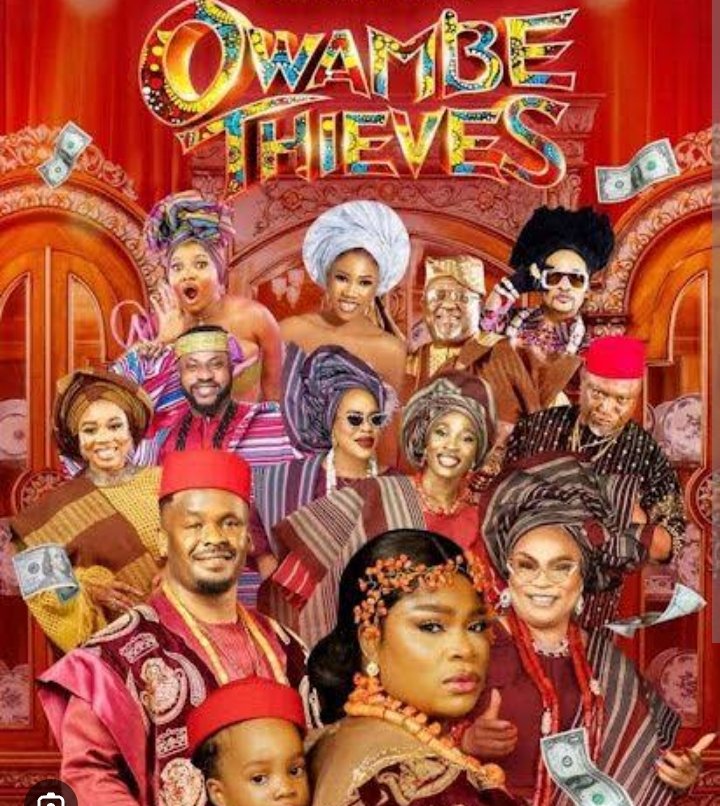
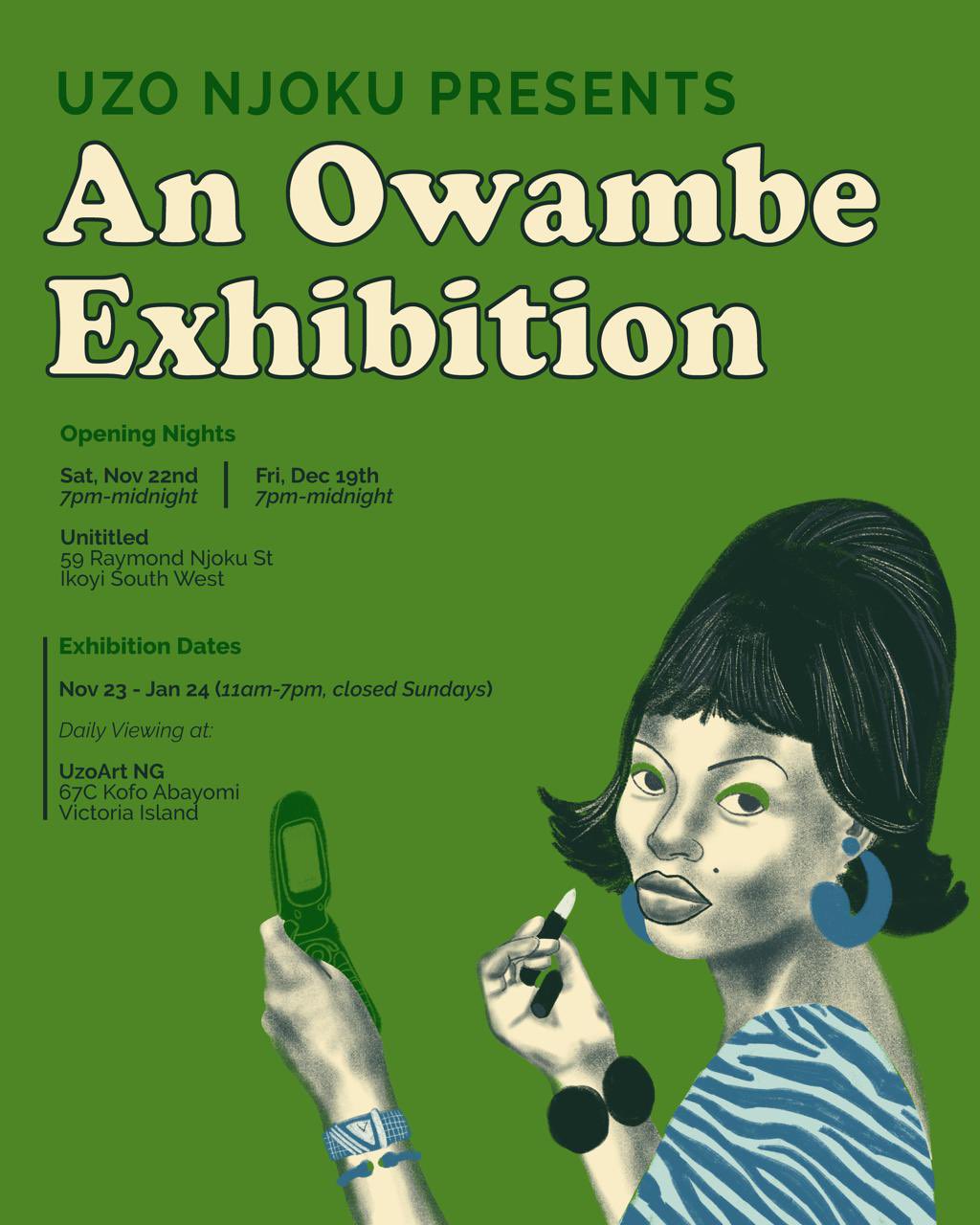
I thought nothing more of it until I started seeing more of related responses on the timeline, usually in increasingly militant tones. Eventually, I found the source of the melée. A young Nigerian-American artist Uzo Njoku had conceptualized an art show which used the “m” spelling of the word, and had not only rebuffed all public insistence by those who said that it had to be an “n”, but had stood by her right to use whatever word she wanted for an exhibition that tried to incorporate different elements of city life, not particular to one ethnic group.

And I watched as the conversation grew wings, sometimes into ridiculous directions. A group calling itself the “Yorùbá Youths Council” subsequently filed a petition to the Lagos State Ministry of Tourism, Arts and Culture to prevent Njoku’s exhibition from taking place. As at today, words continue to fly in both directions, with the group threatening to disrupt the event until the artist either changes the name to suit the “accepted” spelling, and apologise for what is said to be an affront on Yorùbá culture. “In promotional materials, the artist repeatedly mispronounces the word, stripping it of its cultural weight.” the petition said, among other claims.

A quick google search will show that the word has existed in both spellings over the years, with only mild eyerolls by Yorùbá language speakers observing the homorganic nasalization turning the /n/ to /m/ because of the presence of the /b/ nearby. It’s a feature not peculiar to this word either — as I pointed out with “Ọlúwaḿbẹ” and “Olúwańbẹ”, which are two varying spellings of the name with the same meaning “God exists”. It’s not peculiar to Yorùbá language either — the homorganic nasal rule has every amorphous nasal sounds taking on the shape of their nearest consonant. So when you pronounce “input”, it sounds like “imput”, and when the word “impossible”, which combines an amorphous negative morpheme “in” with “possible”, the resulting pronunciation adopts the shape of the “p”, as it adopts the shape of a ‘k’ in “incorrect”. It is why “Bá mi délé” is pronounced as /Bándélé/ rather than /Bámdélé/, which is harder to pronounce. For linguists, these are merely fun observations that provide stimulation for our quiet times. Not national crises-points that need police petitions, twitter fights, and civil wars.

And yet, this is what the Ówàḿbẹ̀ crisis seems to have caused.

The last I checked, the Wikipedia page for “Ówàḿbẹ̀”, first created in October 2023, had suddenly turned into a hive of frantic mass-editing, countereditings, and reversals that has, as at today, erased all acknowledgments of the popular spelling at all. And when the artist was invited to a television interview, suddenly the old, long-dispensed spelling, appeared, as if it had always been there. The police guardians of Yorùbá language and culture will give no quarter to anyone intent on giving validation to natural phonological processes.

And yet, as I asked myself when I look back at all I know about language and the faux outrage of prescriptivists everywhere, none of these has done anything to address some of the biggest issues in language endangerment: funding for language courses in high schools, investment in orthography and script development, support for language-medium schools and other relevant research, translations, and other forms of mass adaptation. The last I checked, Nigeria just added Mandarin to its school curriculum.

The dark underbelly of an uncompromising nativism that rejects not only language evolution and variations in orthography, but also cultural mix and adaptation, is hard to ignore here. But the facts remain: Yorùbá and Igbo belong to the Kwa Group under the Niger Congo language family. They share a number of word cognates from ẹnu/ọnu (mouth), eku/oke (rodent), etí/nti (ear), imú/imi (nose), omi/miri (water) and countless others. Not only through language but through trade, migration, intermarriage, etc., the two cultures are irrevocably intertwined, a part of one another: the idea of Nigeria as a nation in development thrives on the vision of a future that accepts and encourages that intermixture and indissoluble connection.

Before Ajayi Crowther published the first dictionary of Yorùbá in 1843 (and his dictionary of Igbo in 1882), all our words were sounds alone. Crazier to think that this was how Crowther first wrote the Yorùbá word for “back” (Ehhin), “tooth” (Ehin/Eyin), “you” plural (Ehnyi) and “egg” (Ehyin) in 1843. While the pronunciations of these words haven’t changed since then, the spellings and the writing systems have, and no earthquakes have happened as a result. 

To think that this new technology of writing has become a cause of strife rather than help is ridiculous to contemplate.

Without Latin-based orthography, which had, for about 140 years, defined how we wrote these languages, you could almost not be able to tell the difference when some of these words are pronounced. Writing, as I’ve always insisted, is a secondary technology. Perhaps a new orthography designed with tonal African languages in mind would better accommodate these variations, I argued in 2020. But someone saying “Ówàńbẹ̀” and another saying “Ówàḿbẹ̀” can’t tell apart any perceptible difference. The difference is only in the writing. 

It’s worth remembering that language is a living, growing thing, and prescriptivists will never therefore get the final word. I recall a number of years ago, when Reuben Abati — then the spokesperson for Nigeria’s president — took umbrage with young people’s use of “Naija” to refer to the country. With AI and speech technologies, word spellings will become even less and less relevant as we gradually revert to sound.

An Igbo colleague once told me that the Yorùbá word “agbèrò”, which was invented to describe the old Lagos bus conductor, is pronounced “agboro” in the Igbo areas of the country, likely by people who don’t know its origin. As a lexicographer, this only delights me in the mutability of language. Fufu, a Nigerian delicacy, is spelt “foufou” in Francophone areas of West Africa. Nigeria Pidgin, the most contemporary laboratory of such experiments, has moved a word like “biko” from Igbo into every part of Nigeria, “ọ̀gá” from Yorùbá into the depths of the Delta, and words like “chikena” from the North into popular usage. This, along with its creolization, has created a new and resilient language capable of carrying our music and entertainment industries across the world. No one seems to mind that.

Many words in Yorùbá today were originally Arabic, from àdúrà to àlùbọ́sà, arriving in Yorùbá through our contact with the Hausa in the north. Many words from Yorùbá today exists in Igbo and other Nigerian languages, words like ẹ̀gúsí, moin-moin or aṣọ ẹbí, even if they’re not always spelt or pronounced the same way. This is part of the evolution of not just language but nationhood. But even at the very minimum, even in the absence of any altruistic aspirations to unity, the inevitability of language change, evolution, and growth through varying uses across the boundaries beyond our reach should teach us something profound. 

None of this, to be clear, is to say that standards don’t exist. As a lexicographer, I am interested in providing language learning materials to support users as well as support opportunities to track the changes in word usage over the years. The reason you’ll find both “Délànọ̀” and “Délànà” at YorubaName.com is because people exist today who use either spelling, and my preference for the latter should not necessarily prevent those searching for the former from seeing it. Same for Shadé/Ṣadé, Olúwańbẹ/Olúwaḿbẹ, Adéshínà/Olúṣínà, etc. Good dictionaries of English will make space for both “specialize” and “specialise”, while noting which is typically used where, and other notes about the spelling evolution.

It is to say that in spite of any human intervention (see the Academie Francaise), language evolves; it’s an organic force as powerful and unstoppable as the tides. 

It’s also to say that how native speakers speak or write their language should not necessarily bind everyone else who finds association with it helpful or useful to their own creative ends, especially outside of the classroom. The reason why Nigerian English, American English, Indian English, Nigerian Pidgin, Jamaican Patois etc exist is the permission taken by users which eventually redounds to the strength and resilience of the original language. (Tiger; trigritude?) Part of the growth of the English language across the world today comes from accepting these many variations, arrived at from language borrowing, adaptation, and creativity. Without it, what would hip-hop sound like? If we can accept new words entering the Oxford Dictionaries every year from Nigerian words, celebrating it across national headlines, then we can perhaps abide slight variations that come from popular acceptance and language dynamism. 

___

A version of this was first published on FlamingHydra on September 26, 2025

Living the Toulousain life: My French Integration Experience

By Tolúlọpẹ́ Ọdẹ́bùnmi

In the culture I grew up in, you were trained to look out for a signal from God, nature, the gods or whatever (you choose) especially when you are making and taking a serious decision. My move to Toulouse (Midi-Pyrenees), a southern city in France was one of such decisions I needed to consider carefully. I had been studying in Houghton Michigan for a few years, so it felt like a needed a new adventure.

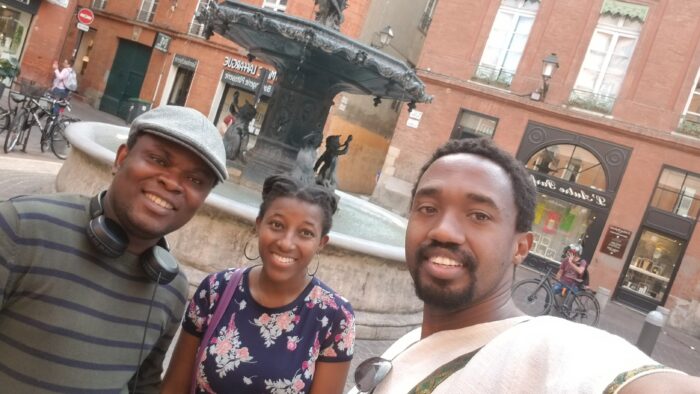
With friends in downtown Toulouse

As a Nigerian, I needed a visa to live and work in France. My visa got approved so I took that as a good sign only for me to miss my flight on the day of departure because I had overslept having spent the previous night doing some last-minute packing for the trip. As if that wasn’t bad enough, I almost got on the flight out of the little old town I lived in the following day although I arrived late again. But alas, I was told that the flight attendant would be needing my seat as hers was damaged so “we’re sorry you can’t get on the flight, but you might still be able to fly out to Chicago from a neighboring city.” I was angry, confused and wondered why life had to be so unfair! My dear friend who dropped me off at the airport had left, but luckily enough I got a ride back home from a stranger. Did I mention that the neighboring city was almost 4hrs away? We made it to Central Wisconsin Airport, Wausau in good time for my flight. Upon arriving in Chicago, I thought to myself, “now you are finally on your way to France.” However, I was told by Aer Lingus Airlines that I needed a transit visa to travel through Ireland which I didn’t have thanks to my travel agent who thought that I was American 😊. My world almost came crashing down, I couldn’t believe that the ‘village people’ (a Nigerian term for negative spiritual forces) were still trying to come after me. I didn’t burst out crying but I shed a tear or two as I walked away from the airlines counter at O’Hare airport. I made some calls and the situation got fixed. My sponsors had to buy me a new flight and this time, I would be travelling through Germany and not Ireland. I thought that I might avoid Ireland for a while, little did I know that an Irish man was waiting for me in Toulouse.

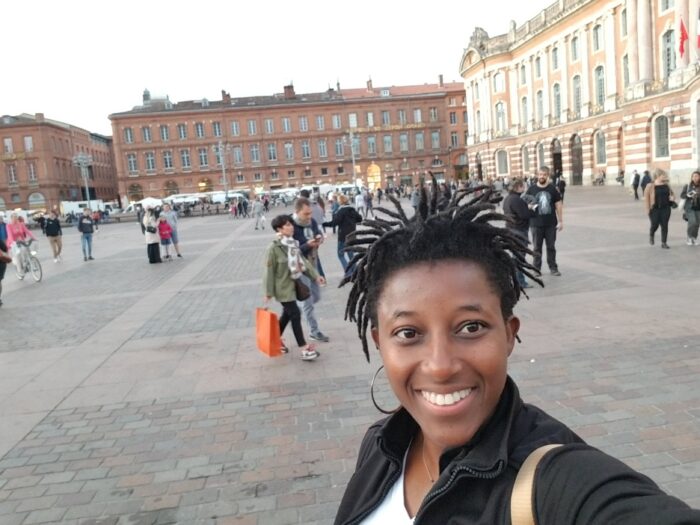
At place du Capitole

On August 26, 2019, I arrived in Toulouse. It was a warm evening, the airport was moderately busy considering the time of the day it was, French was flowing all around me, but I couldn’t swim in it. That was when it suddenly dawned on me that I had set myself up for something wild. I boarded the tram from la aéroport to Palais de justice. From there, I got a bus to my final destination. Right from when I arrived my broken French was tested, and I also pushed my luck because in my imagination most French people should understand some English expressions so I should be just fine. How wrong was I? The lady who directed me to the bus stop at Palais de justice had been on the tram with me, a young French-Arabic who spoke no words of English but still bothered to speak French to me and used a lot of gestures. Someone else who spoke English on the tram had explained my ordeal to her and so my co French-Arabic passenger had taken it upon herself to help me. I was glad for their kindness but frustrated as I could see a glimpse of what the life of an Anglophone might look like here.

From day 2 in France, google translate became my best buddy. I listened to the voice translation and practiced expressions ahead of a potential interaction in French. Every so often, I blurted out “Tu parles anglais?” Or “Vous parlez anglais s’il vous plaît?” (in a formal context) = Do you speak English? Hoping to be transported back into my Anglophone world. My cliche expression worked sometimes but not nearly enough to make me let my hair down.  

A few days upon my arrival, when I showed up for work, my hopes were renewed because my team was made up of native English speakers. Once again, I could express myself freely without feeling inept. Work turned out to be my safe haven since my job was to speak and teach English. The experienced members of my team were very helpful in guiding me and the other newbies into the expatriate resources in Toulouse. The word expatriate had never been associated with me but now as a Nigerian studying in America, I was considered as an expatriate in France where I was offering my English communication skills to French university students. I joined different English-speaking community groups on Facebook, such groups were a constant reminder that many people out there were trying to figure out the French system just like me and I didn’t feel all alone.

The reality of English language in France

Pont Saint- Pierre

The truth is, France is a rich country that educates its citizens entirely in French at all levels of education but can also afford to teach students English starting from primary school. However, many students do not get the opportunity to use and practice their English beyond the classroom so many of them are not likely to improve their English skill to a comfortable intermediate level. Except for kids who were raised bilingual (often with one English parent, or kids of English origin living in France). A good question to ask is why should the average French person care about the English language when they have all that they need available to them in French? A lot of resources are pumped into translation efforts in the French society. Many books, novels, journals, movies, news gets translated into French. Furthermore, prolific dubbing of French over English digital materials makes Grey’s Anatomy (the dubbed version) readily available on TV. I once turned on the TV, saw Johnny Depp’s Pirates of the Caribbean was being aired, only for me to hear some strange voice when Johnny Depp was supposedly speaking. That was when I realized that it was the dubbed version. Another time, I walked into a lovely librairie (bookstore), in Montauban (a neighbouring town from Toulouse). This store was well furnished with print, digital and multimedia resources of various genres, of course all in French. It was fascinating to see the French version of some novels written by Nigerian authors. 

English is used in addition to French

Despite the large number of English speakers in major cities like Paris, Lyon,Toulouse, Bordeaux, Marseille etc. The English as a Foreign Language (EFL) status undermines the visibility of English in the French society. One might expect that major companies and businesses would have English services just like services in Spanish is a norm in the USA but that is not the case. As an Anglophone, I get lucky every once in a while, when I come across a service provider who is willing to use their English. It doesn’t help that there is a subtle resistance to the English language and in some cases overt resistance. For example, Académie Française is responsible for keeping the French language updated and relevant. They constantly work on metalanguage, hoping to reduce the influence of English on French. The interesting thing is that the English language has borrowed so much from French, the two languages even share some cognates. For this reason, faux amis (literally meaning false friends) is a challenge for English speakers learning French and vice-versa. Yourdictionary.com defines faux amis as “one of a pair of words in different languages or dialects that look related but differ significantly in meaning. Some common examples are jolly in English and jolie (pretty), medicine and médecin (doctor), actually and actuellement (at present) among others.

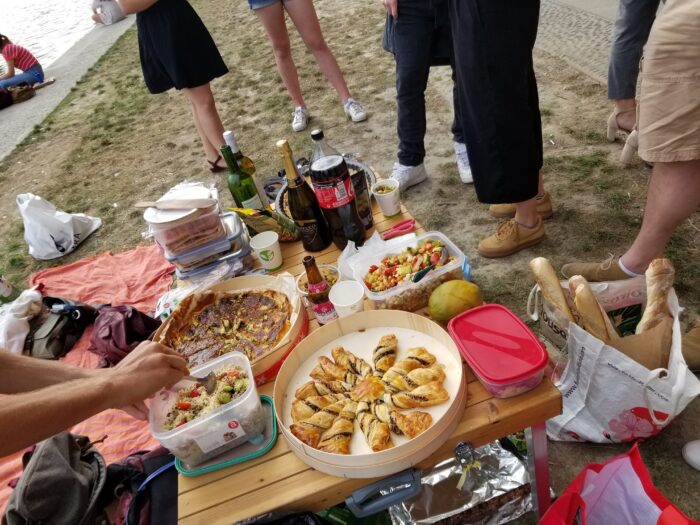
Picnic by the garonne

For sure, English seems to thrive in the French advertisement channels especially in print ads and display ads with English words embedded in them, English phrases somehow find their way into advertisements. Many young French people love English movies. They are quick to mention Neftlix when you ask how they have been working to progress their English skills. The problem is Netflix feeds you movies that do not necessarily engage you. I suggested to a few students that a better way to get more out of Netflix was to see an English movie and then talk to someone about it in English or even write about it in English. In the language acquisition process listening comes before speaking, so you can watch a foreign movie with or without subtitles if you’ve got some level of competence in it and understand most of the storyline. The actors’ gestures as well as other actions or movements you see give you a hint of what’s happening.

The Attitude

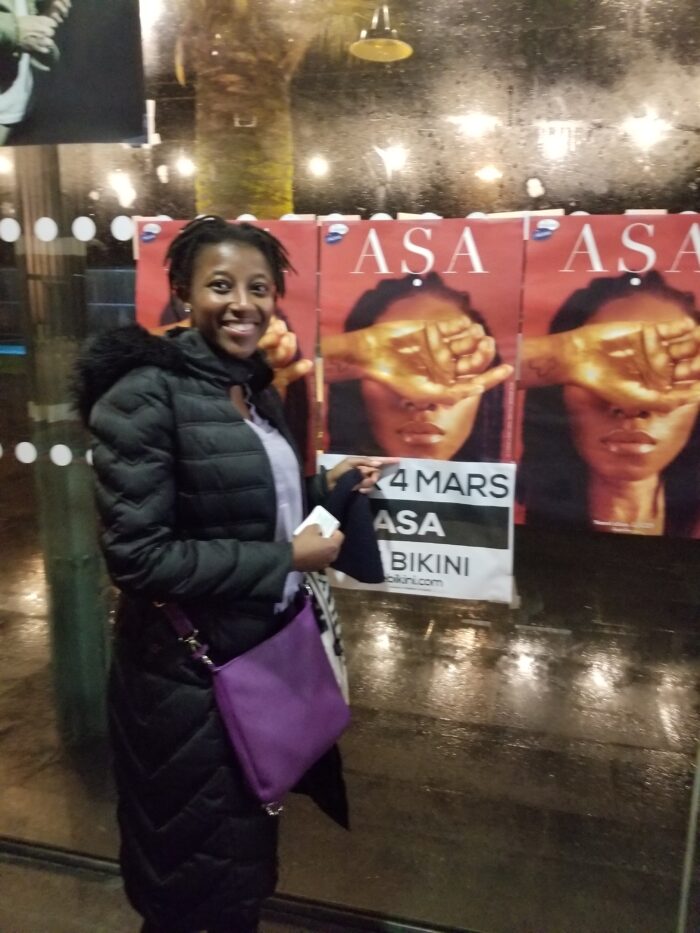
At Asa’s concert

The general attitude towards the English language is positive among the young people (especially students since they have to learn it at school anyway) Interestingly, the Macron administration seem pro-English such that the President has been criticized for embracing “English too much.” For instance, the President Macron tweets in English when abroad, grants interviews in English which offends the French language purists. In fact, the French language conservatives believe that the English language is a big threat to the French Language. Afterall, the English language has been called ‘the killer language’ by some Linguists. This fear of French going into extinction is outrageous in my opinion considering that it is a language spoken by about 300 million people (mostly in Africa), serves as the official language in 29 countries and is the sixth most widely spoken language in the world after Mandarin Chinese, English, Hindi, Spanish and Arabic. Maybe this fear keeps the French on their toes and gives them a reason to continue to perpetuate language imperialism or do some people call that globalization? 😉 

The fact that some universities in France offer programs in English, such as an MBA program among others is undoubtedly a friendly gesture to encourage Anglophone students in France. But what is the point not being unemployable upon completing one’ studying and because of deficiency in French language? This has been the experience of several students The pickup line is that you can study in private universities in English, but no one tells you your lack of French will lead to no “good” except you plan to leave the country immediately after your studies. Honestly, graduates in Engineering or STEM fields have higher chances of getting jobs that doesn’t require speaking French.

Graphical user interface, text, application, email

Description automatically generated

 Portraying a positive attitude towards English language

Conclusion

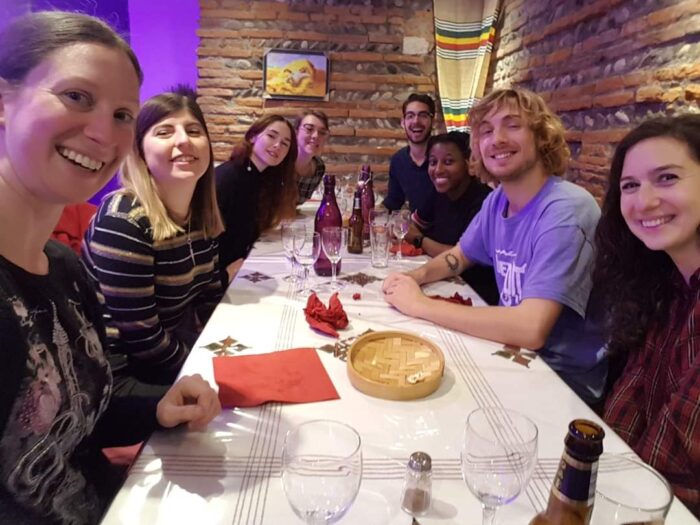
With colleagues at an Ethiopian restaurant

France is culturally rich, has a diverse immigrant population and stands as an imperial force in the world today. My appreciation for good cuisine or gastronomy, nature and openness to pets increased from living and experiencing the French way of life. I enjoy baguette, croissant nature but not chocolatine a specialty in Toulouse because I am not a chocolate person. Now, I can properly ask to buy something at the boulangerie without being corrected for wrong grammar – I now say “bonjour, une baguette s’il vous plait and not un baguette ☺ I have also learned about the galettes du fête among other French food and pastry traditions.

Living in Toulouse has helped me reflect on questions like who has the privilege of resisting a (foreign) language, as in the case of English in France. Many people around the world never learn to read and write their mother tongue because of scarce resources but globalization order ensures that some countries remain wealthy while others scramble for leftovers from the wealthy ones. France continues to reassert her dominant power structure and culture on its residents both directly and indirectly. Who is to blame? Those who succumb to linguistic oppression like me? Another thing is does merely speaking the French language make one French? 

I consider myself privileged to have my level of education and access to opportunities allowing me to master the English language (especially the Nigerian variant). With my international exposure and education, I have observed the fascinating nature of other Englishes like the American, Indian, Ghanaian, British among others. In the same way, I have been exposed to varieties of French dialects and accents from the Caribbean or French Islands, Africa, Italy, Latin America. These varieties have become music to my ears since I am only aware of the mixed melodies but can’t really join in the conversation and interact casually with strangers except in simple sentences. This loss of meaningful interaction, feelings of isolation when surrounded by people speaking, laughing out their hearts be it at the park, the busy streets of downtown Toulouse, or on the metro sends my mind to translation mode especially if I am perceiving connected speech which I struggle to catch up with so that the rhythm around me brings a longing of the faraway atmosphere that I once knew- what home was felt like, at least the romanticized version. In spite of the daunting disconnect due to the language barrier, my love for language keeps me motivated to learn French, thanks to my companion Duolingo. Living in a Francophone country as an Anglophone made me realize that being fluent in three languages may not be enough, it just depends on where you find yourself. My multilingual identity is submerged by my baby French level.  What is the point of language without the freedom to rap out your soul, say something pressing on your mind, engage in and with your community, feel heard, help out a lost stranger on the street etc?

__________

Tolulope Odebunmi is a communications strategist, a trained linguist and an educationist from Toulouse, France. Her interests include geopolitics and globalization, development issues and popular culture. She was a Fulbright Foreign Language Teaching Assistant (FLTA) at Michigan State University, USA. She enjoys learning, travelling and problem solving. 

Is Akátá a Bad Word?

Every once in a while, a conversation returns to my timeline about the meaning of ‘akata’, the origin, the use, and other social dimensions of its existence in the relationship between Africans on the continent and those in America. Discussions are had and the issue goes away, only to return in another form at another time. Yesterday was one such event when, shortly before going to bed, someone tagged me on Twitter about the meaning of the word again. I shared photos of the entries in two of my dictionaries and thought that was all. 

I found out, later, that the invitation came from a bigger context: an apology by my colleague and language professor, Uju Anya, for using the word in the past in different twitter contexts. The debate that followed was whether the word was a slur in the first place, whether she had the reason to apologise, whether those calling for her resignation were overplaying their hand about an issue of no relevance, or whether certain words are allowed a pass if the intentions are pure. 

This time, I thought it best to put my thoughts down on what I know about the word, what I think about the perennial controversy. This essay draws from my experience as a linguist and lexicographer, native speaker of Yorùbá, and a scholar of history, especially of transatlantic slavery and attendant consequences.

What is akata?

Let’s start with the three meanings recorded in the Yorùbá dictionary:

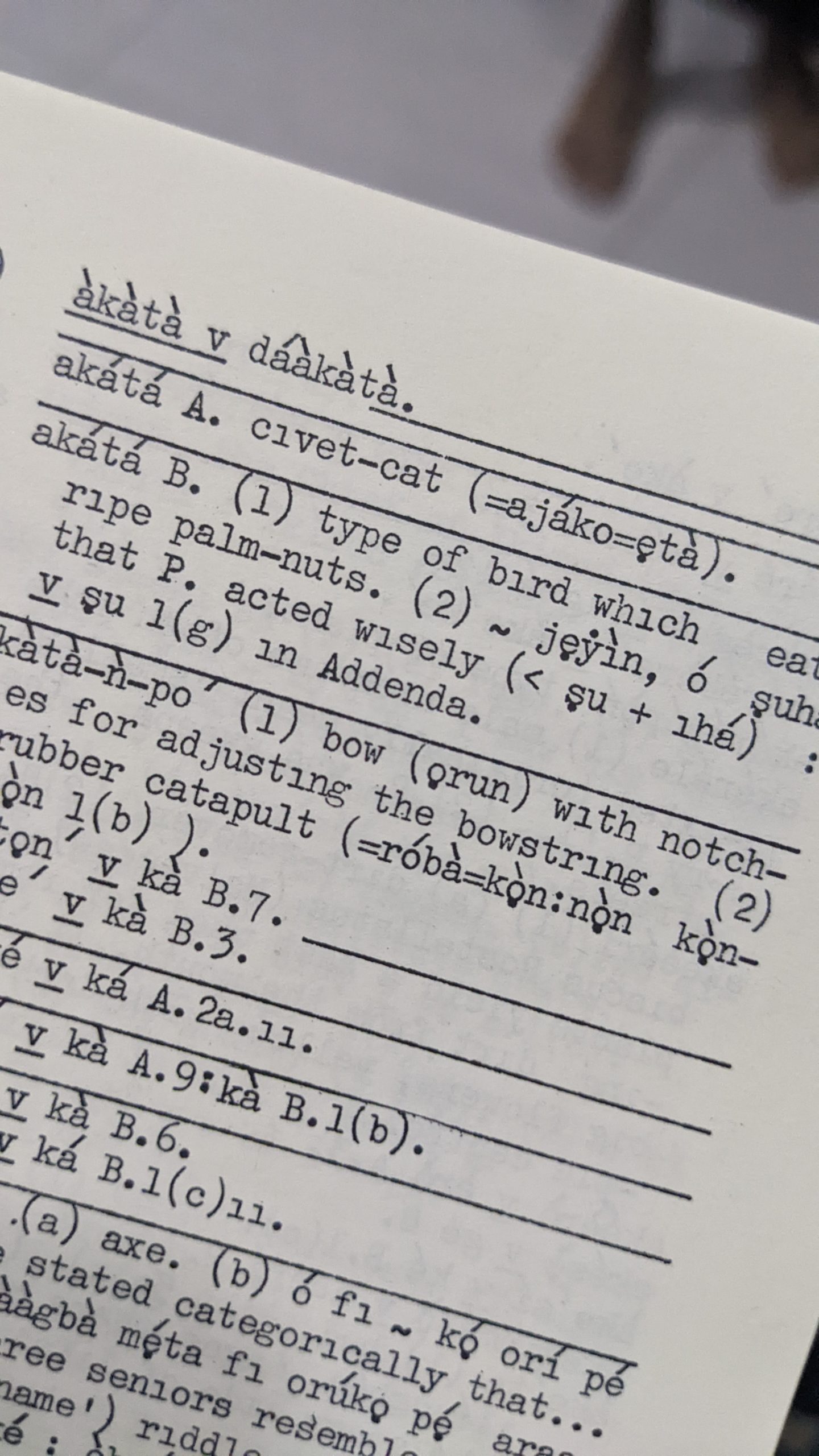
From the CMS dictionary from 1913
  1. n. Jackal, same as ‘Ajako’. Source: A Dictionary of Yorùbá Language by CMS (1913).
  2. n. Civet-cat. Also “ajáko ẹtà”. Source: Dictionary of Modern Yorùbá by R.C Abraham (1958)
  3. n. A type of bird which eats ripe-palm nuts. Source: Dictionary of Modern Yorùbá by R.C Abraham (1958)

As far as we know, the word doesn’t exist in any other Nigerian language.* It is a Yorùbá word — at least in its origin.

Is it a slur? 

First, let’s start with history. Growing up in the eighties in Nigeria, I heard the word only as a descriptive term with no pejorative intent. 

It was just any word, to refer to a certain demographic. We had òyìnbó for ‘white people’ (similar to muzungu in Swahili or onyi ocha in Igbo, or  gringo in Spanish/Portuguese); we had akátá for Black Americans; we had Gambari for northerners in Nigeria (Sulu Gambari was the name of a famous Yorùbá-Fulani king in Ìlọrin); we had Tápà for Nupe people many of whom had intermarried with Yorùbá people; and we had kòbòkóbò for almost everyone else that didn’t speak Yorùbá.

Of all the terms, kòbòkóbò was the only one that seemed to carry a negative intent, because it referred to someone who, in the imagination of the Yorùbá person using the word, was not cultured enough to understand the language. The people we referred to with those words knew they were called that, and it never — to my knowledge — carried any negative blowback. It was used in film and popular culture.

There was a famous fuji music album by Àyìndé Barrister from the late eighties or early nineties in which he sang the following lines:

Akátá gba ‘jó

Òyìnbó gba ‘jó

Yorùbá gba ‘jó o

Translated:

American blacks danced to my song

American whites danced to my song

Yorùbás also danced to my song. 

The album was one he waxed shortly after returning from an American tour, so it was a celebration of his popular appeal across different demographics. No slur in sight.

How did akátá even come to refer to African Americans?

No one has found any verifiable answer, but a plausible one goes like this:

In the sixties and seventies, African Americans channelled their social and political rebellion through the Black Panther movement, claiming an African cat as a symbol of their struggle for self-actualization. Yorùbá Nigerians in the States at the time, perhaps happy to participate, referred from then on to African Americans as akátá. It was not the exact Yorùbá word for panther**, but it was close. Whether that initial use was meant to be derogatory is something that needs to be researched, but there is no substantive proof of that, and many notable African scholars of Yorùbá extraction have written favourably about the Civil Rights Movement and all that came with it in the African-American struggle.

When/How did it become a slur?

It was when I became an adult that I started noticing different ways in which the word was used. Not just akátá, by the way, but also gàm̀bàrí and the others. You would hear someone being called gàmbàrí because he didn’t pay attention to instructions or appeared slow to act. Or for any random reason. This would be in-group conversations, particularly when no northerner was in sight. So it was not directed at the outsider, but at a Yorùbá person as an insult. The insult was to the Yorùbá target, not the northerner (even though the secondary insult to the northerner is also implied, but not overt). It is possible that akátá also then took on this character as time went on.

Such that almost every time I heard it from the early 2000s, it had a non-positive character. It was not a slur in a way that the n-word or even gàmbàrí was, that is, it was not a word that was used to insult a person to their face. In fact, I don’t think I recall any instance in which someone used akátá as a weapon. You can’t stand in front of someone and say “you bloody akátá”, it doesn’t quite work. But when it was used to refer to African-Americans, the meaning seemed to have changed. It could be about crime rates in the US, about any other unsavoury characteristic, or even about a normal or even friendly conversation. Which of those black people standing there do you want me to call? The akáta one? Okay. In fact, not many people today even know that it referred to a certain cat or bird — either of which are likely extinct anyway. You hear akátá and you think African-American. Not Obama, but Jesse Jackson. African parents could mention not wanting their children to “behave like those spoilt akátá kids” Or a man could tell his friend that his new girlfriend is an akátá; not as a pejorative but as a descriptor. Maybe it was the fact that such a word exists at all that referred to our black cousins on the other side of the Atlantic that brought the pejorative colouring; or maybe because people started saying it meant “wild animal” or maybe it was because of the conspiratorial way in which I’ve heard people use it as if in a secret code to prevent the subject of the conversation from knowing that it’s them to whom the word refers. There was just some othering seemingly implied in the common contemporary usage that perceptive listeners started to decry. The word itself had not changed, but it was no longer possible to call it just a descriptor.

But as with when meanings of words change everywhere, there are still people in Nigeria today who knew the word only in its first cross-continental non-negative use. People of my parent’s generation fall into this category. In normal everyday conversation, they will use akátá to demarcate an African in America from an African-American. They do not know it any other way, because we never found another word for that demographic. There are also other people, who don’t speak Yorùbá, who have only encountered the word from other Nigerians or from other Africans, and just continue to use it. 

Does intention matter?

This is where the debate gets interesting: the question of whether one should mean to denigrate before the meaning of a word is called into question. This is a big ongoing debate. Not just with the n-word but also with words in other domains. Even the word ‘òyìnbó’, which I mentioned earlier, got me thinking a few years ago, after a white student asked me in class if it was a slur. I knew that it was not, but I realized, in explaining to her, that I couldn’t successfully convey all the contexts in which we use it without raising her suspicion that I was hiding something. I wrote an essay instead, but the response I got to it, especially from Nigerians, showed me that even the question of whether the word could be derogatory in certain contexts was not one that people wanted to have. “If we don’t mean it to be offensive, then why should we listen to you who say you find the usage uncomfortable?” the argument went. If you told my mother that akátá was derogatory, when she had not used it in that way, she would strongly object. I can point her to African-Americans finding it objectionable, so she might not use the word in public, but it won’t be because she believes that she’d done something wrong.

Recently, Beyoncé conceded that her use of spazz was ableist and she had it removed from an album — even when she didn’t have such an intention from the start. The word ‘negro’, which started as being just descriptive, is no longer in fashion today, because of the other connotations it took on in the hands of a more powerful culture. Shouldn’t akátá suffer the same fate?

I’m of the opinion, knowing how I’ve seen the word used, that we lose nothing by no longer using it for anything other than the animals. But I am also sympathetic to those who recognize their past usage, and apologise for doing so. I don’t expect that every Nigerian knows the origin of the word or the ways in which modern usage seems to have perverted it. The only thing we know is that African-Americans do not like it as well, and that should be enough, especially if the purpose of the conversation is to improve relations across the pond. 

But the word won’t go away, because not every Yorùbá speaker lives on the internet or care about language-based social crusades, and because words don’t just disappear. Gringo and mzungu will continue to be in use, even if we can point to instances in which their usage is problematic. All we can do is continue to have the conversation. 

Should anyone who uses it be cancelled?

No. As with many things, intent matters. So does knowledge, and one’s response to new information. We continue to evolve as a society, and so will our use of language and interaction with each other. Not every African-American is insulted by akátá either, perhaps because not every one of them has heard it, and some who have don’t care, unless they encounter it first through an online essay in which the meaning of the word is put as “cotton picker”, which it has never been. But many deeply resent it, either because of what they think it represents or just because of the othering implied in the way it has been used over the years. This is valid, and Africans should absolutely take it into account when they speak. My recommendation is that we stop using it totally to refer to anything but the animal. But I know that I’m not in the majority. If this is your first time hearing the word, all you need to know is that the origin is benign, its growth in use is muddy but complex, and that there are people from the language community where the word originated who never use it, just as there are some who don’t have any other way, but mean absolutely no harm. 

____

* I’ve been informed on Twitter that there’s another “akata” in South-south Nigeria, which is a common personal name.

** Update (August 20): The entry for ‘Panther’ in A Dictionary of Yorùbá (1913) lists these two answers: n. àmọ̀tẹ́kùn, akáta

Further reading

Lingua Fracas as a Positive

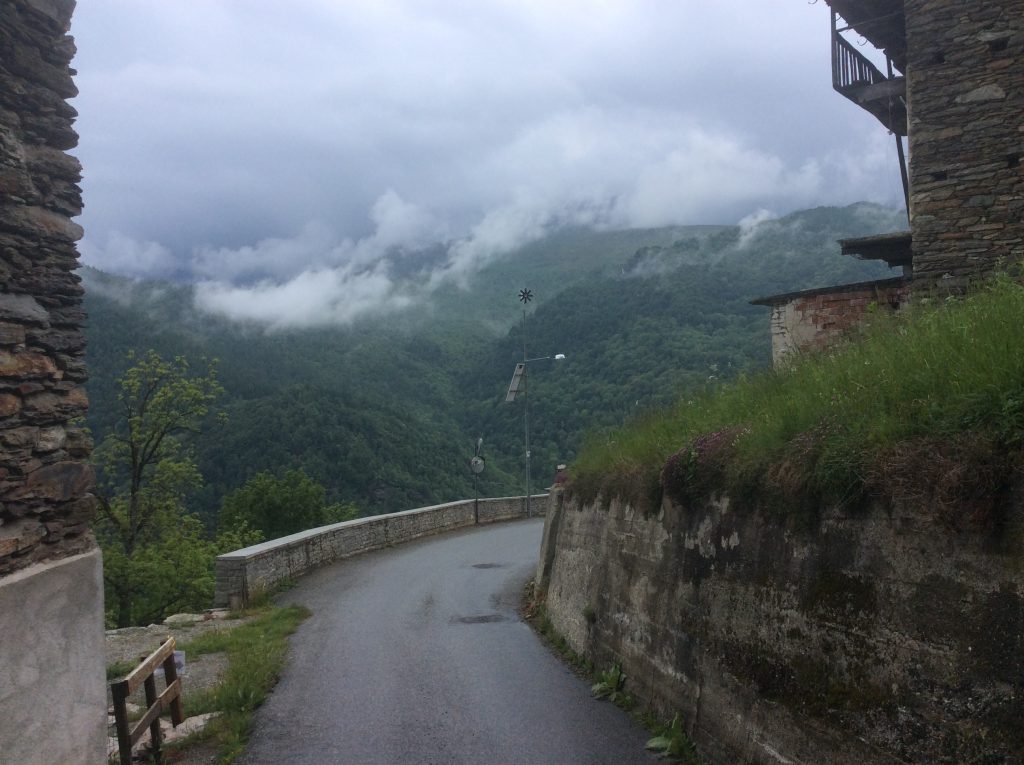
It is 5.47am in Ostana, Cuneo, a small town in Italy (close to the border with France). It has only seventy-four inhabitants, and became world-famous earlier this year from the arrival of a baby, Pablo, its first in 28 years. It is also regarded as one of the most beautiful Italian towns. I am here all the way from Lagos, Nigeria, in order to receive a “Special Prize” called the Il Premio Ostana in Lingua Madre (The Premio Ostana Prize for Mother tongue Literature), organised by a small community organisation who has, for eight years, organised cultural and literary art activities in celebration of the language of the region, Occitan, and other minority languages of the world.

IMG_5867

Although it is barely six am, it is already bright, and the view from my room overlooking some of the tallest mountains in the Alps is breathtaking. The mountain closest to me, shaped like a pyramid with a paramount top, is called Monviso, or “my face” because of the way it is arranged with other peaks around it to look like the human face. The name of the mountain is in Occitan, like many phrases one hears thrown around this place. When the clouds are not covering its peaks as they have done for much of my time here, we see its caps, dotted with greens from trees, and patches of black from the face of rock formations from hundreds of years back. Down at the foot of the hill from where I sit on my bed, a man of middle age is tending a small garden with a long hoe. If I open the glass windows, fresh breeze as cold as fifteen degrees, wafts into the room forcing us to hug the bed covers a little tighter.

The trip from the airport in Turin was a fascinating one, taking about two hours, and journeying through some of the most beautiful views of Italy. Travellers in Nigeria would have felt a similar sense of wonder traveling to parts of Nassarawa, or Ondo states where rocks and hills line each side of the road like guardian masquerades. But this is not Idanre, as the clashing of tongues around one’s ears will immediately reveal. This is the Italian Alps, in a region that once was autonomous as “Occitania”, spanning the land from this north-western part of Italy into the other part of southeastern France, united by a common language and culture. Over time, as the nation of France and Italy formed a stronger national identity, they imposed an artificial border that divided Occitania into two, one part staying in France and the other in Italy. And over time, the influence of the stronger languages and culture began to intrude until Occitan became just an endangered minority language needing protection.

This, in many ways is similar to the story of many African languages, from Yorùbá to Hausa to Swahili, forcibly broken down and eventually watered down by colonial boundaries that kept its speakers having to learn a bigger, more imposing language at the expense of the local one. Where the difference lies is in what has been done over time to acknowledge and mitigate the problem of endangerment by the people who care about it. In Ostana, for the last eight years, concerned stakeholders have come to this mountainous region to celebrate the language, and – more importantly – to celebrate other people working on other endangered languages around the world, making resources and networks available for a shared approach to keeping the languages alive.

Yesterday, at a public panel, Nigerian writer Lola Shoneyin described the state of languages in Nigeria, the history of our regressive attitude to mother tongue education, and the problem that has caused in both our educational and also, sadly, in our political culture. She cited the Ife Six-Year Primary Project, headed by Professor Babatunde Fafunwa the result of which proved that students can and should be educated in their mother tongues for a better educational experience, and how that ideal is now totally lost, and the research result swept under the carpet by succeeding government administrations. During the Question and Answer segment where I was interviewed by a member of the event’s organising body, I also pointed to the ideals that were written in our constitution and our National Policy on Education encouraging education to be conducted in the mother tongue for a few first years of the child’s life, and how that had ended up being just a suggestion rather than a policy statement, and how the National Institute of Nigerian Languages (NINLA) – a body established to train language teachers from every part of the country – had become just a toothless tiger. Members in attendance were appalled to know that over the last thirty years, the Nigerian educational system (particularly in the South) has slowly degenerated from a time when subject can even be taught in the mother tongue in a number of government primary schools, to now when Nigerian languages – even as subjects no longer exist in the syllabi. “It is the opposite here,” someone volunteered. Thirty years ago, no one spoke Occitan, but now it has come back as a language of common use. I got the same experience in Wales, just a few months ago, where Welsh-medium schools have sprung up to supplant and surpass many English-only schools, with impressive results.

Around me in Ostana are varying tongues. Our driver from the Turin airport spoke English as a fourth language, after Provinçale (French version of Occitan), Italian, and French. His colleague spoke only French and Italian. The conversation in his car consisted of him making a point and then running into a language block, unable to remember what English word he needed to use to communicate a point. He’d then translate himself into Italian for his colleague who sometimes then gave him the word in French. My wife and I speak a smattering of French and we’d sometimes then understand it, suggesting the appropriate word in English. Or we won’t get the word right and the conversation would move on only for the process to repeat itself again in a few minutes. For a linguist, it was the ultimate beautiful thing, especially since none of these occasional misunderstandings prevented us from fully bonding and sharing other less untranslatable experiences among ourselves. But it was also a celebration of the beauty in the diversity of our tongues and worldviews. My wife noted halfway into the trip, with mock wonder, how it was that none of the road signs we had seen was written in English. Welcome to Italy. But also, welcome to the real world where education and enlightenment isn’t judged only on the basis of competence in just that one language.

I wondered myself a few minutes later what would be said of a town in any part of Nigeria where all the signs there are written in the one language common to the speakers living in the area, and how we’d have resorted to that common pejorative in order to tarnish that hypothetical village: “tribalism”. We would have reacted as though the town is saying to outsiders: “Do not come in here because you speak a different language. We hate you!” But we would be wrong. The experience I have had traveling all over the world, especially in places where value is placed on the local language, from Kenya to Wales to Ostana, leads me to a better understanding of this hypothetical town’s message to the world: “Come here and share with us the experience of our language and culture. Bring your language with you, by all means, but come in ready to share in ours, in celebration of life and this important diversity.”

And from that, we can learn a whole lot!

______________

First published on Premium Times on June 3, 2016.