What We’re Getting Right in African Literature

I have read only a few chapters in Elnathan John’s new book Born on a Tuesday, and I already formed a few opinions not just about the author and the publishers, but about the direction of literature on the continent. They are good opinions, by the way, and they were a long time coming too. See the following excerpt from the book’s first paragraph:

“Gobedanisa and I had gone into a lambu to steal sweet potatoes but the farmer had surprised us while we were there. As he chased us, swearing to kill us if he caught us, he fell into a bush trap for antelopes. Gobedanisa did not touch him. We just stood by and watched…”
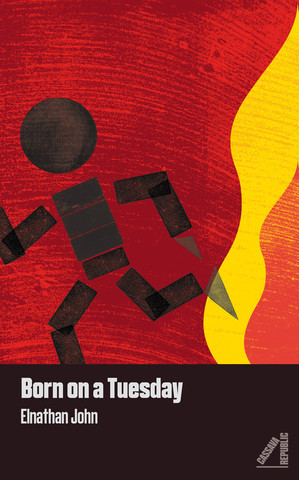
BOAT_largeNotice anything? You have just read half a paragraph in English in which a non-English word was treated like every other word, and not made self-conscious through italicisation or gloss. This is a marvellous and remarkable thing! A smart reader might figure that “lambu” means either “farm” or “garden”. Or not. (The answer, according to a friend, is “irrigation farm”, but I didn’t know that until I asked, which is the whole point. If you live in the Nigeria and you can’t find anyone around you who speaks Hausa, then you need new friends. And what kind of Nigerian are you anyway? If you live anywhere in the world and Google can’t help you with the meaning of a word, or someone who can, you need a new computer and new friends).

Thankfully, the book is filled with many instances like this, like a chapter titled “Dogon Icce” (tall tree), and a number of other Hausa and Arabic-based expressions that the author leaves the reader to research on their own in order to enjoy a more fulfilling reading experience. And why not? What is an almajiri, and why is knowing what it means and who an almajiri is important to enjoying the story? What is a dan daudu, and why should the author spend his time translating it to you when he has a story to tell? What is santi? And if the English language is incompetent to render it to your monolingual mind, why should the author feel compelled to do anything else about it but let you figure it out for yourself?

Let’s hear it from Ikhide Ikheloa who has — in fairness — kept this issue at the forefront of African literary discussion for a number of years:

“African writers should perhaps learn to be more insular, I mean who italicizes akara and explains it as “bean cake” in the 21st century? If the reader is too lazy to use Google, tough luck. But then, to be fair, after all these years of railing at African writers, I now realize that African writers who choose to publish in the West are not negotiating from a position of strength; the editor is Western, the publishing company is Western and the audience is Western. It makes marketing sense. It doesn’t make it any less maddening. Imagine if Tolstoy in War and Peace had taken the time to italicize and explain every word foreign to the African reader. That book would have been way more than 50,000 pages. But then to be fair Nigeria has precious few indigenous publishing houses, what is a writer to do? You want to be published? Take the crap from the Western paymasters.” – From A review of E.C. Osondu’s This House is Not for Sale

All you need to do to see how tenacious Mr. Ikheloa has been on the matter is merely to type “italicize” into the search box on his blog. I did it, and the result was enormous. But he has a point, which is that in order to placate an industry whose nonchalance for our stories — in spite of its lip service to it — is unshy and pernicious, many authors have sold out by consciously dumbing down their literary capability for a token of “wider comprehension” (whatever that means). Literary facility has been exchanged for global acceptability which has, in turn, produced works of highly inarticulate form — not for a lack of viable content, but for the timidity of language and style. So, to have Elnathan’s book give a giant finger to old habits is a brilliant and satisfying triumph, but it’s only the beginning. For one, it is a surrender to the primacy of English as our most efficient literary vehicle albeit now an encompassing one. Having him write completely in Hausa, today, would still have been seen as extreme, which need not be the case.

But while we’re celebrating this interlanguage compromise, there are a few more doors that need to be knocked down. One of them is the habit of publishing Yorùbá (or other tonal African) names without the appropriate tone marks! It was understandable when the publishing gatekeepers were old British men to whom those names were nothing but arranged letters. We bought into it when Nigerian publishing executives followed suit, reinforcing the idea that tone marks were only for indigenous language texts. Now that we know better — and now that we have accepted the role of English in expressing our most genuine cultural and human experiences — there is no excuse not to make it as robust, capable, and representative, as possible.

So, here is a salute to Cassava Republic, and Elnathan John, for a bold (but ultimately merely sane) decision. Here’s to more writers following. And here’s to doing more, because we’re not there yet.


_____

(Photo credit: Cassava Republic)
On His First (Bilingual) Words

One advantage of having a young child to raise, as a linguist, is the chance to use them as human study materials for language acquisition. It’s so cool I don’t know why I never thought of it before.

IMG_9437In any case, already a little sensitive to the intrusion of English into that early education space that I (and a majority of researchers) believe should be meant for the mother tongue, I’m pleasantly surprised that all of my son’s first words are – so far – in Yorùbá. At eighteen months and a few weeks, we’re now able to recognise “gbà” (take), and “bàbá” (father) out of hundreds of other yet incomprehensible syllables. He, of course, also says “bye-bye”, an English expression, with his wrist flailing up and down in a goodbye wave. The linguistic explanation for his easy acquisition of bilabial plosives first isn’t far-fetched.

However, from the time he was able to listen to instructions, I’d made a habit of regularly prodding him to pronounce those common Yorùbá words. Bàbá (father), Màmá (mother), “gbà (here, have), “wá” (come here), wo (look!), maabọ̀, etc. So far, he hasn’t mastered them all, but he knows what they mean and how they are used. And now, he can already pronounce a few of them. He can also understand equally accessible English words like “no” and “come” and “mummy”, which is helpful, since his mother speaks predominantly in English.

What I’ve come to discover in the end is that this bilingual upbringing will likely follow a similar path as monolingual one as far as the acquisition of complex terms are concerned. No matter what language the child learns first, won’t he still learn the easy, monosyllables first, and then others? And if that’s the case, why not just open him up to as many languages are possible? In any case, pure monolingualism is, these days, likely an impossible eventuality. Not in Nigeria anyway.

Maybe I have a theory here somewhere. In any case, there is hope.

_____

PS: I’m currently editing Ake Review 2015  the literary publication of the Ake Festival 2015. If I’m not on this blog as regularly as I’ve always been, this is why. If you are in this area, you should come to Abeokuta in November for a gathering of writers from across the world.

I’m also working on my TED talk meant for delivery at TEDxIfe event in November. It’s a talk I’m tailoring towards this issue of bilingualism, particularly the destructive nature of our current educational policies. I’m currently in-between getting together a sunny speech to convey what is actually the gloom I feel. Not an easy balance.

Also, school has resumed, so plenty busy days lie ahead.

Documenting African Names

I’ve always been fascinated by names, and I can’t say since when. I’ve also always been fascinated with technology. It was no coincidence then when, while researching topics for my undergraduate project at the University of Ibadan, I settled on creating A Multimedia Dictionary of Yoruba Names. It was the first undergraduate project in the department (and, I hear, in the university) which made use of only electronic materials. There was no hard bound copy of any written material. Everything was hypertext and audio, burnt onto a compact disk. For audio I had the help of friends and colleagues to obtain fluent Yoruba speakers willing to help pronounce these names that formed the bulk of the audio database. Then, with my little knowledge of html, I designed an reference interface to access the sounds. Users could click to hear a name pronounced, or they could merely look up a name to discover the meaning.

oruko-logoI found the project stimulating  to work on, hard as the challenge of audio recording was, sometimes across two continents, but it gave me great pleasure, and something worthwhile to work on at that time when academic endeavour as a student looked like a chore with no silver linings. It helped to have had a couple of published materials to use, but researching the meaning of names proved interesting enough to mitigate the boredom of the final years of school. I got my degree, and left the university, with a niggling desire at the back of my mind to one day return to the project in a larger form. The choice was either to find money, call up some of the original collaborators and do it again, this time without the constraints of a university environment, or to simply pursue it as a solo side project. The reality turned out to be that because of other commitments, I would never be able to individually pursue it as a solo project anymore.

Time and chance has kept me in the orbit of project and vocations that relate to African (Yoruba particularly) languages and culture, and my masters thesis focused on the problems and peculiarities of learning Yoruba tone as a second language learner/speaker. Growing up as a monolingual speaker of English in Europe or America, how easy is it to learn Yoruba (or any other tone language for that matter? Mandarin, Vietnamese, Igbo etc). The result of my research yielded fascinating insights to second language learning and acquisition and I have sworn to return to that research as well at a later date. Scholars who have dismissed the possibility of monolingual English speakers to learn and master tone at a second language level will be disappointed by the challenge posed to their premature conclusion.

The reason I have been interested and involved in these things (beside the obvious one of it being in the orbit of my profession as a linguist) is my consternation at the absence of enough cultural materials online from this (Yoruba) and many other African cultures. In this century when most of what is knowable (particularly about Western culture and civilisation) is online and accessible to everyone, it is appalling that Africa seems to be left out. True, most of our cultural information are oral and thus based in the memory of griots and other living libraries scattered around our hamlets. This however can’t be an excuse to shy away from the tools of new technology to document them for future generations. Foreign media who need to pronounce names of African celebrities resort to Anglicizing them without consequences. If a Nigerian can pronounce “Krauthammer” or “Schwarzenegger” or “Spielberg” or “Reagan”, why would folks like Chiwetalu Ejiofor (as the Igbo will spell and pronounce the name) need to change their names to “Chiwetel” in order to get by in Hollywood? In this video from The Tonight’s Show, British actor of Nigerian origin, David Oyelowo tries to teach Jimmy Fallon how to correctly pronounce his Yoruba name.

In a world where linguists and cultural practitioners from Africa do their jobs well, Jimmy Fallon would have had to consult a dictionary of African names online and learnt the correct pronunciation before his guest comes on the show. He would do that for a Swedish guest, after all, no?

My life’s work then, it seems day after day (as I’ve found myself gradually gravitating towards) is to find all the ways possible to make the African experience part of the world experience, using tools provided by information technology. But not just that, it will also include making technology friendly and accessible to Africans who would otherwise have been put off by its alien language and lack of enough user-friendliness. Between 2012  and 2014, we successfully petitioned Twitter to allow the platform be translated into Yoruba. This was a huge victory for language survival and a testament to the open-mindedness of the folks at Twitter, recognizing the ability of the platform to be even more efficient in the hands of more people, and in more languages.

logo1My current project is to document ALL Yoruba names, by crowdsourcing, along with their etymology, meaning, phonetic/morphological properties, and all other stories and cultural dimensions to them. This time, we’re trying to make not just a dictionary, but a resource centre with dictionary, encyclopedic, and linguistic/multimedia information. I am raising funds on Indiegogo to meet the goal of creating the software backbone of the project and we have got a number of volunteers and goodwill. The larger aim is to kickstart a process that will lead to an awakening, and an eventual movement by all concerned, to put more effort in the documentation of our cultural experience in spite of the onslaught of a type of monolcultural globalisation that only leaves us bereft of any signpost of our identity and place in the world. Not just for Yoruba, however, but for all African languages. But we have to start somewhere.

If you believe in this dream, please go to the project page on Indiegogo to donate whatever you can. Every dollar counts.

Indigenous Language in Literature: What Hip-Hop Can Teach Us

One of the highlights of my participation in the recently concluded Ake Arts and Book Festival was at a panel I moderated titled “Teacher Don’t Teach Me Nonsense: Taming Colonial Tongues”. In that panel were Mukoma wa Ngugi (writer and son of prominent African writer and perennial Nobel favourite Ngugi wa Thiong’o), Kei Miller (a Caribbean novelist and poet), and Eghosa Imasuen (author and publisher from Kachifo Farafina). Our task was to examine the use of languages in contemporary fiction by African writers, perhaps with hopes of prescribing a better dynamic for the future. It was during that panel that this new Mabati-Cornell Kiswahili Prize for African Literature was first announced, a prize that broke new grounds for being the first major prize on the continent that awards literature in indigenous languages.

The discussion on the panel had focused on this issue itself, examining the complexities of contemporary language use and the logic in the argument of those who insist that English has already taken root as one of Africa’s languages. If not the largest, certainly the one with the most reach around the continent. But nagging us back to the importance of using languages native to the continent in literatures documenting hopes, aspirations and experiences on/of the same continent, was the embarrassing lack of a large industry among intellectuals for publishing in the native language. Excepting Miller (who is from Jamaica) whose first and only language is English and its creolized cousin (the Jamaican patois), the argument eventually coalesced into the diametric poles of Ngugi’s description of the use of English in the third world “metaphysical empire” and Eghosa’s acceptance of English (this time of the Nigerian variation) as a first and most intimate language. It’s an old debate, featuring Ngugi wa Thiong’o and Chinua Achebe. I highly recommend this video too, as well as this review by Mukoma’s of the recently published Africa 39, anthology.

Why do Nigerian publishers shy away from publishing in Yoruba, or Igbo, or Hausa, to start with the country’s biggest languages? According to Eghosa, the publisher on the panel, it has to do with the nature of the market. In the Q&A, Bibi Bakare (publisher at Cassava Republic) rejected this premise, citing the case of Onitsha market literature and a number of locally produced literature in northern Nigeria that have sold out in the hundreds of thousands through mostly informal means. Unfortunately, the panel ended too abruptly for the discussion to thrive. The consensus however appeared to have favoured the resurgence of literature in African language through a conscious and concert effort by those concerned. English, after all, isn’t going away anytime soon. It will never have a reason to worry about any threat to its existence. We can’t say the same of the indigenous languages of the continent.

I have just watched a music video by Nigerian hip-hop rave of the moment, Olamide, whose fusion of Yoruba slangs, proverbs, and codes with sparse English and pidgin  English words stands out in a unique genre, made famous by the now late DaGrin a few years ago. What the success of people like DaGrin, Olamide, Olu Maintain, etc teach us with respect to language is that the market for local language in art production is still a booming one. It will only take the courage to take the risk, and the conviction to persist. The market usually responds to novelty and dynamism more than they do compliance and monotony. The inauguration of the Mabati-Cornell Prize is just the start. We need even more of those types of incentives for literature in African languages, for works in translation, for bold new experiment s that reject the bland consensus that English has won. We are richer for more ways of expression, not just in style and content, but also in language. Our literature (and, most importantly, our imagination) and our cultural experiences will be the richer for it.


Check Yourself! Introducing a Homophone Checker

My friend, Jason Braun, has launched the world’s first free Homophone Checker app at  Homophonecheck.com!

According to the press release, it is a free web app that allows writers to quickly proofread for errors that word-processing software typically skips over.

homophone-2

“Writers copy text and paste it into the homophone checker. Then 40 of the most commonly confused homophones–words that sound the same but are spelled differently– are highlighted automatically. When writers move their cursor over the highlighted homophones, a box pops up showing each possible word, its part of speech, and a grammatically correct example sentence.”

Blogger’s comment: So far, the software only checks 40 commonly misspelt English homophones, which makes the app targeted mostly at a specific level of writing. It is a wonderful start. Also, rather than bemoan the problems of English language usage nowadays that makes this software inevitable and invaluable, I’ll celebrate its presence and its ability to makes essay writing easier (especially for high school or undergraduate students too distracted by other things to proofread their work right). Of course it will eventually take a smart writer to properly use a software that merely points one to where one might want to take a second look in an essay. Like every spell-checker, the work will still come back to the writer to be sure of exactly what they intend to write. As a piece of utility however, it is a brilliant invention and a good start. I love it. 

378172_4306321257743_1262440586_nJason Braun currently teaches English and is the Associate Editor of Sou’wester at Southern Illinois University Edwardsville. He hosts “Literature for the Halibut” a weekly hour-long literary program on KDHX 88.1. He has published fiction, poetry, reported or been featured in The Riverfont Times, Prime Number, ESPN.com, Big Bridge, Sou’wester, The Evergreen Review, SOFTBLOW, The Nashville City Paper, Jane Freidman’s blog, and many more. His Paradise Lost Office App contextualizes John Milton’s epic poem for the cubicle crowd and is available at iTunes. He releases music under the moniker Jason and the Beast. He is a member of the National Council of Teachers of English (NCTE) and the Learning Disability Association of America (LDA).