Universal time used to be determined at a village of Greenwich in the United Kingdom, and everything was measured against it. I never could figure it out and I grew up wondering why Nigeria was always one hour ahead of the BBC clock. Later in the Geography class, I figured out why. It had to do with the equator or something like that. Then one day I came to America and found out that there is something called Universal Time (UTC). Again, like the old British hubris, Americans expected everything in the world to be measured in relation to that so called universality. A few weeks ago, I had scheduled a phone interview with Rosetta Stone and it was due to come at 2pm (UTC). All I saw was the 2pm, and I planned my day accordingly. I was sitting by my desk at 1pm when the phone rang. It was the representative of the company, and they were calling for the said interview. Good thing I was not still in the shower at the time. What I didn’t bother to wonder at the time was why I seem always to be one hour away from the standard or universal time.
 There are other things that have changed. Yesterday I scrolled through a list of the world ranking of universities. In the 60s and 70s when the now ruling leaders and of the Nigerian society were going to school, schools in the United Kingdom and the Soviet Union among others in Europe were the leading citadels of knowledge in the world. A few people came to the United States to study. Now, according to the list, the first dozen or so universities in the world are universities located in the United States. I scrolled down for a bit before locating my own institution somewhere down on the list, and it was enough to inspire a little urge for schadenfreude at the other ones a little farther down the list. But then, it could be worse, we could be one of the British universities who used to occupy the pride of place in the top list of world class universities. Now, they are somewhere scattered on the list, sometimes even farther lower than Taiwanese, Japanese, Swiss and Swedish institutions. I will not try to hazard a guess as to why.
Chuks is a MacArthur foundation scholar from Nigeria now here in the US. He has his own ideas of why it is a better alternative to go to school in the US in today’s world, beyond the common knowledge that its universities are ranked far higher now more than before. The system of learning and studying are such that the student is built to become independent in thought and research. What is wrong with European schools? “I know of the British schools,” he’d say, “and the system is built in such a way that you get to regard the professor as some repository of knowledge – a person high up there who knows everything and who should not be challenged – rather than a colleague like you who only happens to have read more, and spent more time on the field studying the same things that are available to you if you work just a little bit harder.” Chuks has never studied in the United Kingdom. The system in Nigeria is a mixture of both, with a slant towards the British, naturally, and unfortunately. I have been fortunate to have experienced the impatience with professors in Nigerian class who believe that just by the virtue of their age, experience or qualification, that they were beyond questioning or challenge. I have also been lucky to have met the right ones who would fix appointments with you in a bar so that you could both examine academic ideas over glasses of beer. I have met egoistic teachers who disallowed you from entering their class only because you didn’t scurry into the class when you saw them coming. I have also met those who set their evening classes under a tree just for a change of perspective. The progress in my academic development is mostly due to the inspiration and positive reinforcement of those good ones, and my rebellion against the hubris and negative reinforcement of the bad ones. At least, I survived.
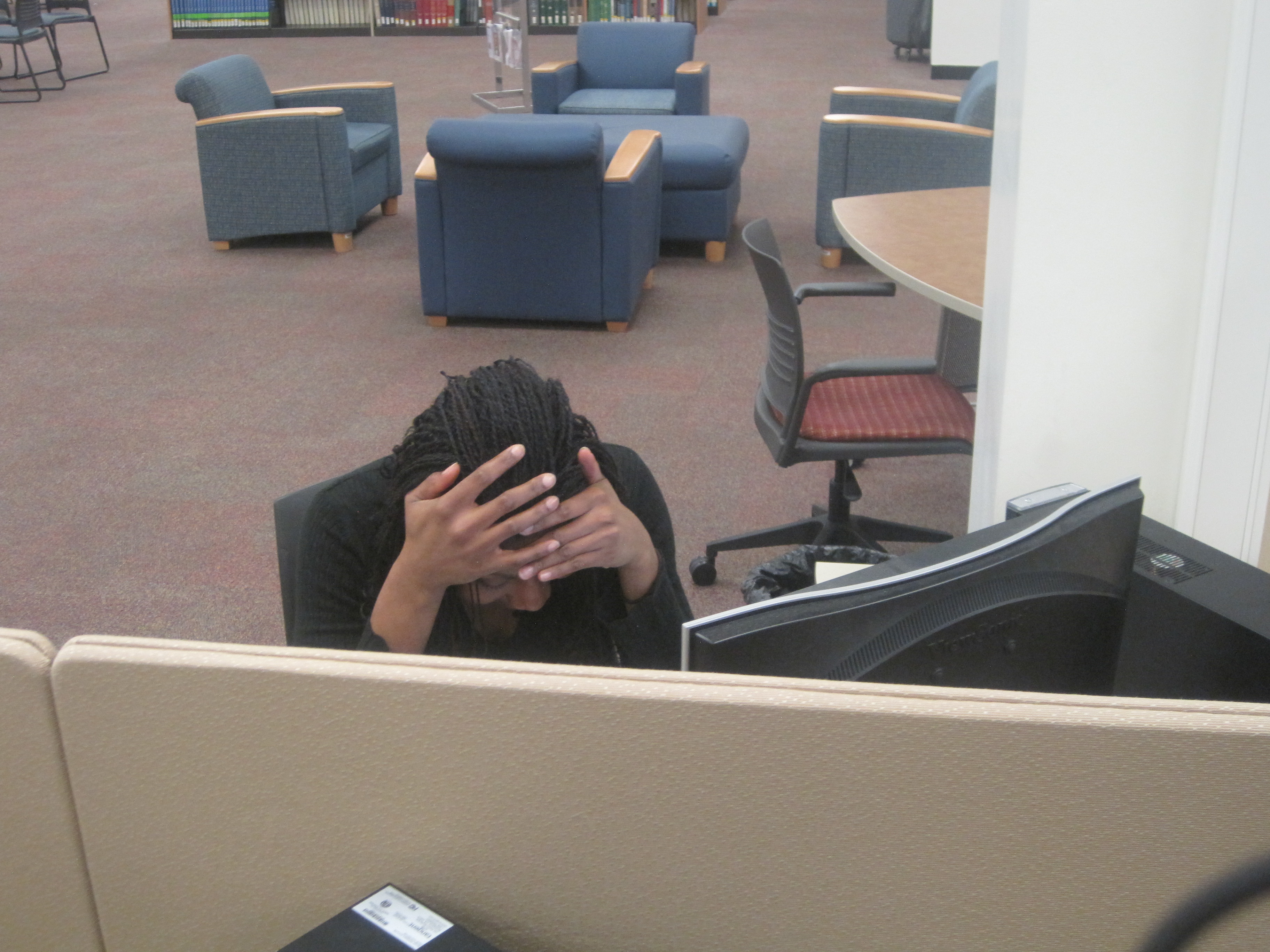
 Or so I think. The biggest misconception about the teaching and learning system of the American classroom today – at least from developing countries that I have some experience of – is that the presence of books and the internet makes it easy to get through. Well, it is true only to the extent of the student’s adequate balance of time and responsibilities. This takes me back to my title. American mean time refers not just to the new role of America’s very engaging, individualistic, and absolutely absorbing educational system in the world of academics. I am using it to refer to its absolute mercilessness when a student dares to take up more courses per semester than necessary. (Yes, this post is about me again). I have personally come to see the benefit of a more relaxed, yet ultimately absorbing schedule that allows the student to get all that is needed in, within a realistic time table that puts the least manner of stress on their mind. I do believe that I have become a better student of language due to the work of the past one year. And thanks to that is due to all my teachers, both the brilliant, open-minded ones, and the empty and needlessly hard-assed ones. At least I learnt something. Perseverance will get you through everything. Or almost everything. Brilliance (or modesty) plus an innate curiosity will compensate for the rest.
But maybe a few decades from now, we’d be talking about Chinese/Japanese Mean Time. Who knows?