Simplicity of Youth

It is night in a once noisy village, and the cool wind of the evening blows around the rest of the dust floating around the sky. During the day, the bustle of the street rivals that of many small markets around Ibadan. Children racing with used car wheels from baale’s house downhill towards Mama Lawyer’s clinic at the end of the street, young girls hawking vegetables scream the price of their wares on the top of their lungs, children run around bare-feet without any care in the world, and loud music plays from the many rooms around the street. Now, at night, everything is quiet, except for the little transistor radio in father’s hands as he paces around the house looking for the signal for the Voice of America.

The concrete slab that extends from the front door of the house bends towards the sand at a steep angle. It goes on for a few metres and is suddenly cut off, leaving a ledge where water drips down into the open field when it rains. The field has grandmother’s garden of vegetables. It had garden eggs, yanrin, and spinach. Farther down a few metres on is the well for water. All the other parts of the compound has different crops, depending on the time of the year. Maize grew in April. We planted them in March. Cassava grew many times during the year, as did coco-yam. As soon as the rain fell, we went out with hoes and made heaps. We got loam from two houses away where the chicken farmer dumped the waste from the poultry. They told us that the soft black dung when mixed with the soil in our compound made the corn come out bigger and stronger. They gave us buckets and seeds. We were six, and seven, and ten. We fancied ourselves as brilliant farmers who knew just what the land wanted, and gave it to it. We treasured millipedes and centipedes, and the little white worm that surprises us from within the dung. They called it ogongo. Ogongo was another name for ostrich, but I’d never seen an ostrich before.

Behind mother’s window north of the house was a large guava tree. Underneath is was the softest soil around the house. Two plots for a house compound was large enough for any kind of play, and we ran around to the best of our strength. When raining season came, we settled on that spot behind her window for the site of the corn and beans garden. The soil is heaped in serrated ridges and space is put in-between them for walking. Corn is planted in twos and threes. Olaolu said he had been told that planting them in threes made the odds more favourable for the seeds. I looked at the small black bed of soil and smiled in contentment. It always took two to five days for the first leaf to sprout out of the heap, and all that would be left is the need to add water, or just wait for the rain to pick up. But there I was just smiling at the result of my accomplishment. Mother looked out of her room through a striped red curtain and giggled. “Kola, you won’t be standing there forever, would you? It doesn’t start growing as soon as you plant it, you know.”

Night. We lay on mats on the concrete slab just a few feet away from the front door. It’s quiet and the evening breeze blows around the village tossing up the remaining dust left of the children’s running feet. There usually is no electric light. If there is, it would have been put off deliberately. What lights the evening is the moon and the cheer in our voices as we talk about whoknowswhat, mostly in hush and sometimes excited tones. Father is still pacing around the house this time with his little transistor close to his ears. Occasionally, the words Tamil Tiger rebels or Bosnia Herzegovina will assail my ears as the others giggle at his strange hobbies. Mostly, when he comes around in those heavy paces holding the radio to his ears, those giggling a few minutes earlier would have relapsed into a mode of pretend-sleep. The front porch had its charm, especially when it rained. It was the best place to sit and watch the lightening rip the blackness of the village sky into shreds, and give certain shivers needed for a good night sleep. But those were the days.
An Affirmation of Life

A kiss here, a gentle touch there. An evening spent at the mall giggling at random quirks, or watching a funny or romantic comedy. A hand to adjust a wrongly fitted tie, a hug to welcome a tired worker back into the home, or the misty-eyed departures and reunions across a number of times, spaces, and circumstances. Life is full of them; mine is. Great food from a number of continental recipes, the variability of palatal expectations; the joy of moments spent laughing about the day, and the rush or arguing about hot topics that pitch us apart into different but sometimes complementing positions.

IMG_0321There are more: family from around the globe – Ibadan, Ife, Lagos, Ijebu, Ilesha, Southern Illinois, Kansas, Fargo, Minneapolis… Canada, London, Warwick. The wingspan of life has stretched into an interminable and happy length. Friends in the irascible Jos, distant acquaintances up north in Kaduna where the bombs lay waiting to explode. A college roommate in Lafia, another in Benin, or Abuja. The pulse of living binds us in a web of memories and thoughts, even beyond the reach of sights and sound.
Nephews and nieces, increasing day after day. Ageing parents, bound by now complicated cords of life and its filial conflicts and complexities. Chords too, in a certain harmony (or discord) across the times, or just the mere knowledge of the barest dignified standard of existence. We live across the times, in hopes and dreams. The present lives in the past, and the future thrives in the throes of the present. Mother’s dreams float in the morning steps into daylight, along with memorized admonitions and caprices. Father’s hopes and pride go in their own direction, and their greyness follows, with stakes, and the rewards. Come home to the present, life continues: a circle of familiar adventures.

Yesterday, I looked out of the glass frames in my office into the dusty streets of the city, my nose sniffing the acerbic bite of the new harmattan season. Memory, like the smell of dry leaves wafting in the December air, floats on in an endless loop. We live, and we are here, and that is all that matters.

Village Boy

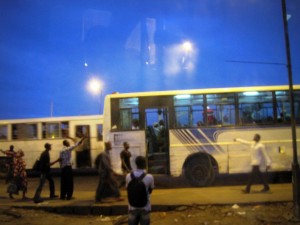
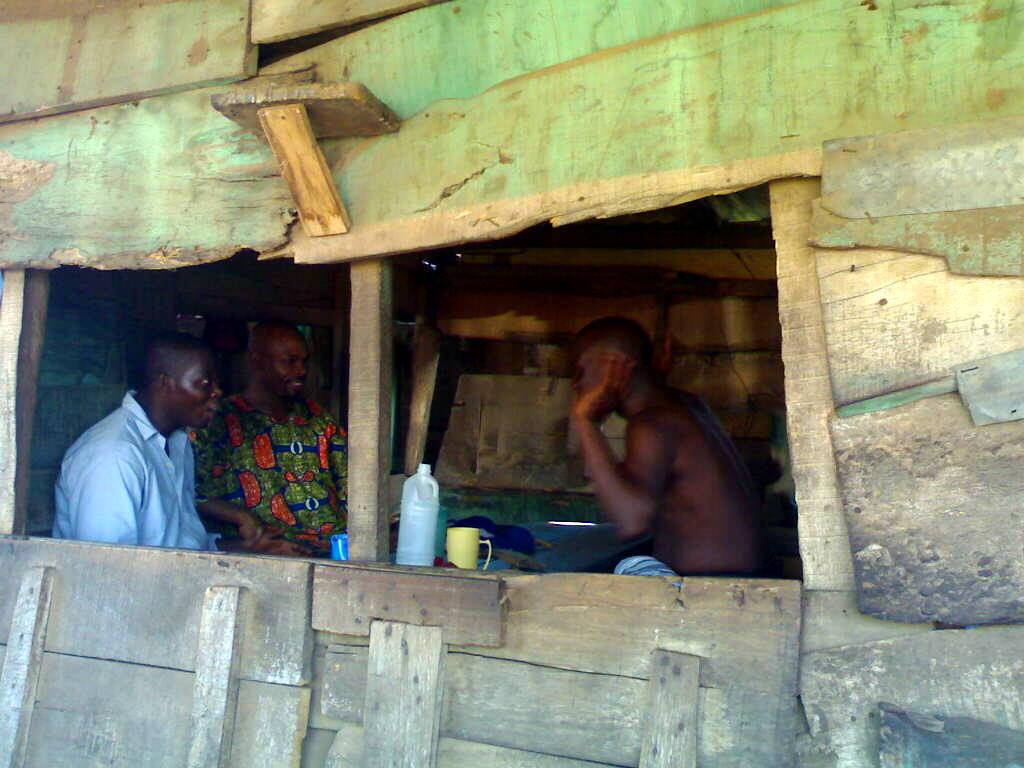
Evenings come with breeze, silence and dust. Across the sky are slivers of brown rustiness finally settling on the town after a long day’s work. A road passes in front of the wooden shack where men young and old sit down to banter in merriment, often with their shirts off. The women sit in groups petting children. When darkness falls and all that lights the day is the moon up in the sky, voices move up and down in modulations that carry the weight of their vain deliberations.

The village is a study of contrasts. On the one side of it is a sprawling mass of huts covered with brown rusted roofs. In the middle of this side of town, also called Aba, was the Christ Apostolic Church – perhaps the only modern building there. Aba burns the eyes with the brown of its thatched huts and of its children’s feet. In a bustling afternoon, the sound of goats and chicken compete with the trail of their smell from one street to another up until the foot of the agbalumo tree…

One hour of traipsing around these edges of the village eventually finds a seven year old boy back at home – a different part of the town. The house overlooks a long equally dusty street that runs from a clinic down to the right hand of the observer to the other part of the village where the barber lives. There is a certain magic in living around here. Grown folks played practical jokes on little children and on each other. A day earlier, on his way back from wandering around the village, he was stopped on the pavement of a certain house where another young boy was being shaven. His head was already bald.

“It’s your lucky day, young man.” A man volunteers. “Stay right where you are. What are you doing around here all by yourself?”

“I was coming from around there. I am going home over there.”

“Why were you staring?”

It is always hard to know where adult conversations were leaning.

“I wasn’t staring. I was on my way home.”

“Like I said, it is your lucky day. All young men your age are being circumcised today.”

What?

“You look frightened. Come closer and sit down here. We’ve been told to go around circumcising all young men like you around town.”

It took a whole minute, then he took off as fast as he could. He never looked back until he got home, panting like a dog. For a long time that evening, he would wonder how grown people managed to make such brutal jokes that seemed at the expense of poor helpless kids scared half to death. And for a longer time after that, he would begin to take a different route home while wandering around the village, but always with a lingering fear that he was not totally out of the grip of mentally bullying elders.

The Third Winter

Browning tar, a rote of car zoom noises around my window. The sun sets in a distance, a lot earlier than before, to a now conditioned amazement. Afternoon and night share a neighbourly block on the street of a dying year. Tick, tock, the clock hand counts the moments again in memories of times gone before. At a different time but in a similar pose, time counted down. The geese quacked. The refrigerator hummed creaky tunes in the middle of night. Ice formed into layers of sweat balls around the glass, and everything else stayed still.

The world has not changed since then, or has it? Many months of movements follow each other in steps of ease, and texts, and work, and revolts. And here we are, another winter, another dark evening at four o’ clock. It is a short remove from those quiet times, just two years ago, in the sober remove of a rustic village, but here it is. A year winds down with the last paces of its easing rote, crank and all.


Across from me, Dawning.

Waking up to the soft silence of fall, there is a magic unspoken. Trees bob light heads in the kindness of the wind. Yellow leaves blow around a once lonely place. The ground lay spread on a terrace of rust. Through the solid glass where the traveller looks out into the backyard, the season floats in the air like a dream of a faraway land. The snap, crackle of dry broken stems could only break the silences. They rarely shake the shape of the morning out of the serene lure of its affection. Morning breaks into the rote of rust. It brings with it silence, crackles of dry slivers of life across the dawning day.