Saworoidẹ Again

IMG_5604Yesterday, at the Lights Camera Africa Film Festival at the Federal Palace Hotel in Lagos, this movie, Saworoidẹ, from the stable of Mainframe Opómúléró, was screened.

It is not a new film. It was released in 1999 (and, according to the director, was premiered during the inauguration ceremony of at least one state government in Nigeria during the transition to civil rule in 1999). It was however a fresh intervention both as a way to look back at the country and where we’ve been, and as a way to contrast today’s movie production to where the industry had been. That was not the stated objective, of course, of the showing. This is my conjecture, purely. The film was screened as part of an exhibition of films at the annual film festival.

For me seeing the movie again for the umpteenth time, and for my family members who were watching the show for the first time, it was a a trip back into a familiar cultural resource. From the regular folk songs strategically placed into parts of the movie to reinforce particular didactic points, to the copious but tasteful use of proverbs and aphorisms, Saworoidẹ delights in ways that can’t be successfully described to a non-Yorùbá speaker. Even for Yorùbá speakers not fully versed in the oral literature, some appreciation of the work might lack in depth, but never completely. The story is well told, well shot, and very well portrayed by the seasoned actors. It’s sad to imagine native speakers of Yorùbá not being able to fully appreciate all of what the work serves to the viewer.

For someone familiar with some of the actors in the film, the showing was also a drive through memory lane. Now deceased Dr. Lárìnde Akinlẹ̀yẹ‘s efficient portrayal of a corrupt chief was and remains a bitter-sweet treasure. The actor and professor died at 56 from injuries sustained in a motor accident in Ibadan in 2004, but not before appearing in a couple of films by Mainframe, including Ó Le Kú (1998), Thunderbolt Magun (2001), among many others.

One question I forgot to ask the director Túndé Kèlání during the Q&A session at the end was how the casting process was like which resulted in a presence of some of the biggest veterans in Nigerian media in many of his movies. Saworoidẹ was written by Professor Akínwùnmí Iṣọ̀lá, and stars as big as names like Adébáyọ̀ Fálétí, Tóyọ̀sí Arígbábuwó, Lérè Pàímọ, Akínwùnmí Iṣọ̀lá, Bukky Wright, a young Kúnlé Afọláyan and a young Kabirat Káfidípẹ̀, among others.
Reviewing “The Help”

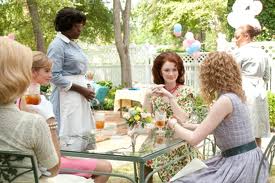
A group of young southern housewives (all brought up by black maids working for meagre payment) gathered around to play bridge every week in each other’s house drinking wine and having fun. Beneath this facade is a series of complex relationships which included jealousy, in-fighting, pretense, hate, and compassion, courage, inferiority, humour, discrimination, ignorance, among very many others. The time was early to late 60s, and the place was Mississippi. The movie is an adaptation of “The Help” a best-selling novel written by 40 year old Kathryn Stockett.

I saw the movie today and it was a moving experience. (I have written a short review on Nigerianstalk.org.) My attention was first called to the movie in May at a house party at a professor’s house. She’s a 70 year old history professor here who occupies a vivid memory span of some of the event recalled in the book. I recommend the movie to everyone who is interested in a few more nuances of the race relations in the South of the 60s and their implications for today’s society. It is an important story.


The Visitor

Exploring immigration, life in New York, drumming, career passion, love, music and (my favourite) the spirit of Fela Kuti, I recommend this movie.

For Coloured Girls

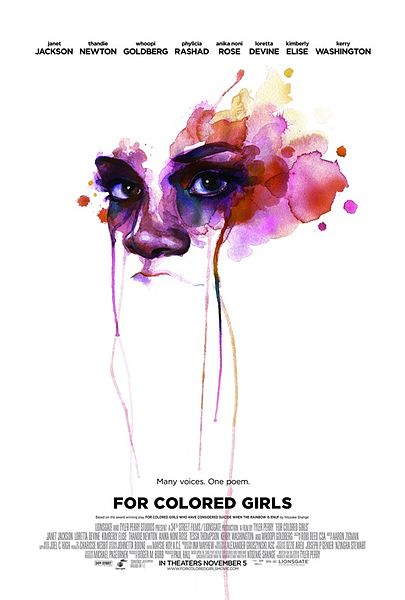
The adaptation of a stage play to film is tricky, and one should credit Tyler Perry for attempting that uphill task with his adaptation of Ntozake Shange’s play into film. Full disclosure: I am a fan of plays. I am a bigger fan of adaptations, especially if I have read the play first. In this case, I hadn’t. All I had going for me was a perception of the director as one very much in tune with his female base, willing to approach them from the most emotional point of their interest.

I had seen The Diary of a Mad Black Woman – his first film I saw. Then I saw the Madea Family Reunion which featured some of my favourite actresses. Maya Angelou was there. Then there was Why Did I Get Married and its sequel which I grossly disliked (and blogged about) for its over-sensationalist approach to family dysfunctions in the black community. In all his films I have seen, what I always took away is his ability to portray things as they exist in the reality of many. In doing so, he contributes to the (some have said “stereotypical”) portrayal of black life.

Initial thoughts on For Coloured Girls is that it does like all his work – with the brilliant performances of Kimberly Elise, Anika Rose, Phylicia Rashad, and Thandie Newton – once again takes an unflinching look at the painful lives of black women, their pains and victories. The positives are a star-studded cast, a language that sticks as much as possible to the lines of the play, and a story that is as complex as it is haunting. The negatives include the failure of the story to offer more than the pain of loss and the beauty of community. The promise of the first half of the story fails to move anymore after an hour, and at times seems like an earnest fight against an inevitable failing. Maybe it’s in my expectation of too much from it all, or my sociocultural distance from the emotional experience being so beautifully portrayed.

The summation of course is not that we need less of these kinds of works. It is that we need more, and better. And this is where Tyler Perry gets a thumb up.

El Mariachi

This was one of the songs that made me want to learn Spanish…

It’s from the movie Desperados, featuring Antonio Banderas, Steve Buscemi and the firector Quentin Tarantino himself. Lovely song.