 One of the things that was always hard to ignore, while I was growing up, was that some teachers wrote my last name with an extra “n”. And while the parents had insisted that it was “Túbọ̀sún” and not “Túnbọ̀sún” we often had to correct the befuddled outsider that their version was incorrect and needed to be changed. Sometimes militantly, as the ‘misspellings’ began to appear as deliberate attempts by strangers to modify our identity, even when the offending user harboured no such intentions.
It took many years for me to accept that other versions of my name even deserved to exist. And then one day I met someone who shared an equal but opposite conviction about retaining the second ‘n’ in the spelling of his name, and after a few back-and-forths that veered between militancy and levity, we resolved to agree to disagree.
Of course, none of us were ‘righter’ than the other. The word “túbọ̀” or “túnbọ̀” mean exactly the same thing: “continue to”, depending on your dialect of Yorùbá, with the former more common among the Ọ̀yọ́/Ìbàdàn while the latter is more Ìjẹ̀ṣà/Èkìtì. What began to surprise me was my own father’s non-challance when we lived in Àkúrẹ́ and people who wrote about him as “Ọlátúnbọ̀sún” did not get immediate censure.
Perhaps all of these various childhood memories contributed to why I found myself later in linguistics, where the nuances, use, and mechanics of language define the trade, and where I found confidence, one day on Twitter, to challenge an Igbo speaker who had insisted that the name “Anwuli” should ONLY be written as “Añuli”. I’d encountered many of these kinds of conversations before (sometimes with the spelling of Chidinma/Chidimma, nyash/yansh, jaiyé/jayé, Sọlá/Shọlá, Akpata/Apáta, among many others that occupied that cerebral section of social media. In most cases, it has remained a conversation about language, orthography, tone, and phonology. But on this day, the response my interlocutor gave was not just that I was wrong, but that I was Yorùbá, therefore unworthy of the conversation at all. Nothing I mentioned about my work as a linguist, my interest in Nigerian languages, and my experience with language technology projects at various levels made any difference. It quickly became an ethnic-based conversation, and all hope was lost.
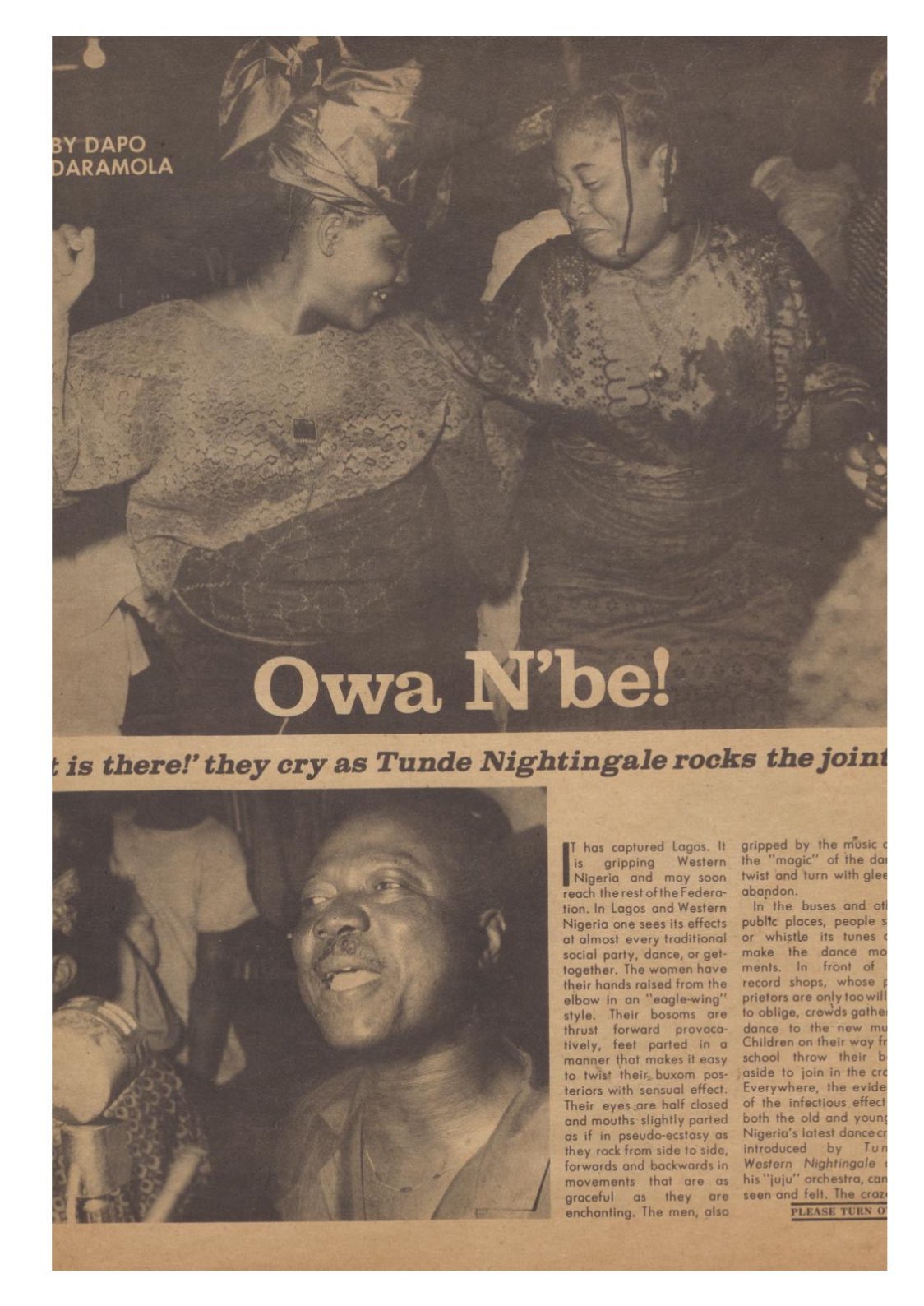 I’ve paid some attention, since then, to many language-related conversations in Nigeria and watched them similarly devolve into dark corners. And when, a few weeks ago, someone tagged me to weigh in on the “correct” spelling of the “Ówàḿbẹ̀”, a now popularized term for loud colourful parties in Lagos and elsewhere, I did my usual analysis of both the origin of the word, the morphological breakdown, and different acceptable ways of writing it around the country. Yes, the original components were “Ó wà ní ibẹ̀” (“It’s there” or “It’s happening there”), but it is acceptable to write it as “Ówàńbẹ̀” as it was originally written, and “Ówàḿbẹ̀” as is now very commonly spelt.
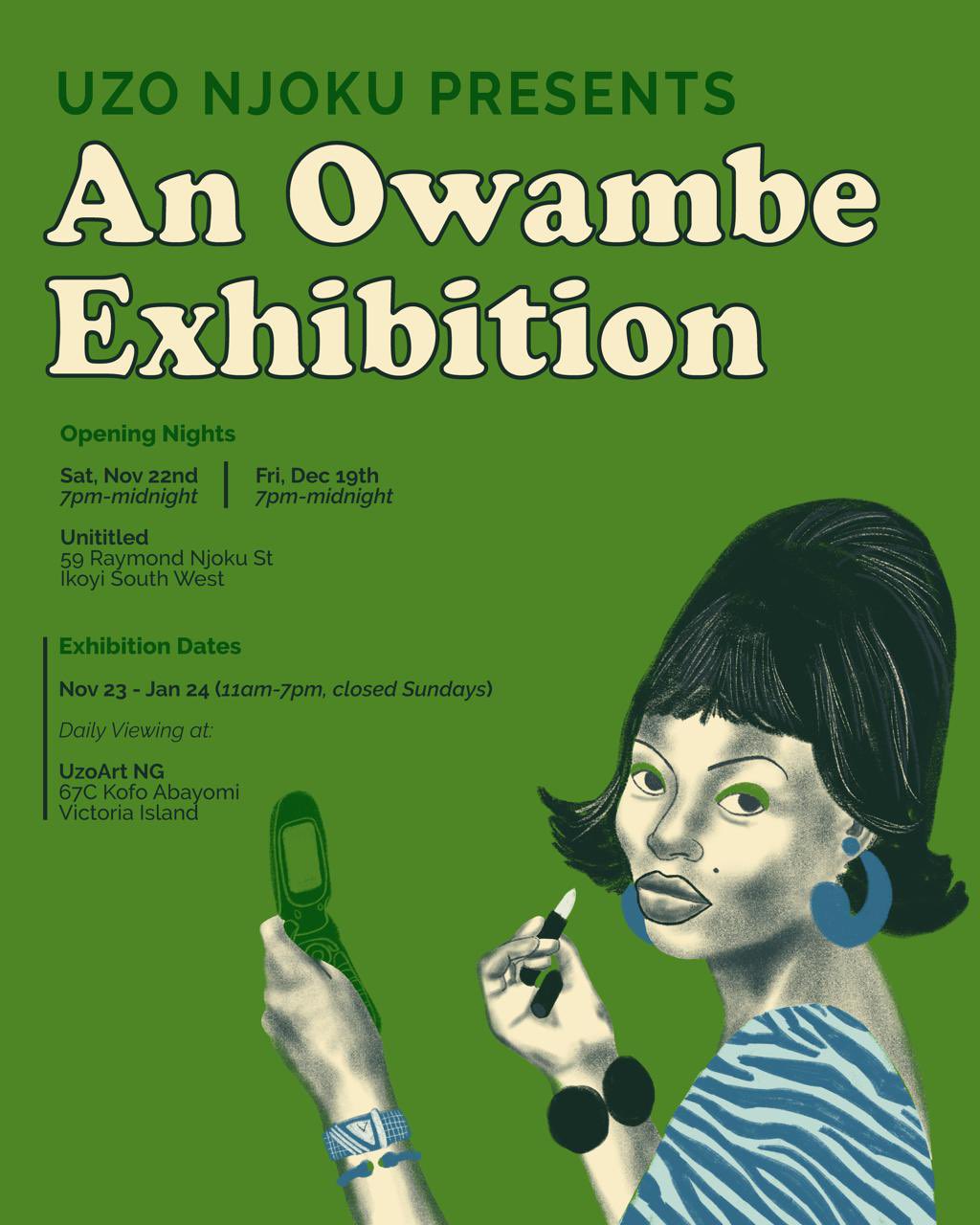
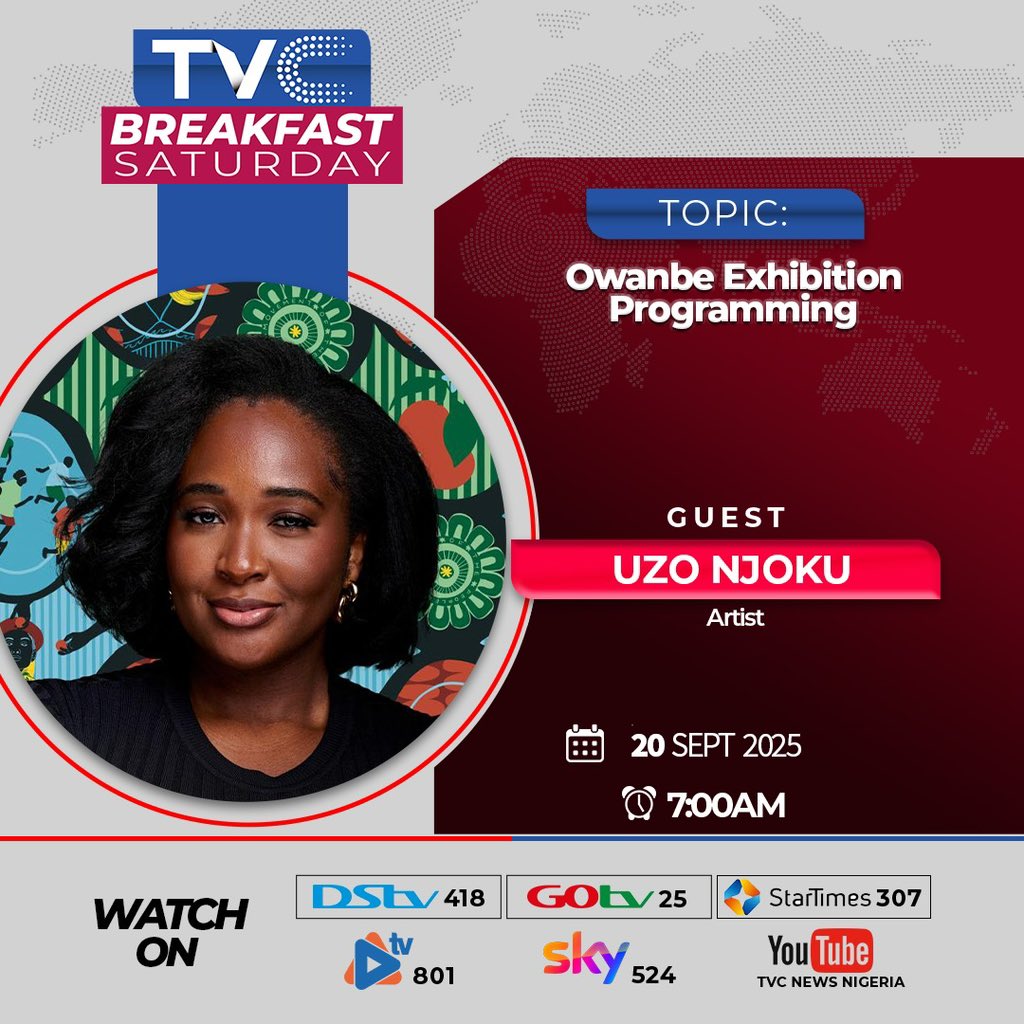
I thought nothing more of it until I started seeing more of related responses on the timeline, usually in increasingly militant tones. Eventually, I found the source of the melée. A young Nigerian-American artist Uzo Njoku had conceptualized an art show which used the “m” spelling of the word, and had not only rebuffed all public insistence by those who said that it had to be an “n”, but had stood by her right to use whatever word she wanted for an exhibition that tried to incorporate different elements of city life, not particular to one ethnic group.
And I watched as the conversation grew wings, sometimes into ridiculous directions. A group calling itself the “Yorùbá Youths Council” subsequently filed a petition to the Lagos State Ministry of Tourism, Arts and Culture to prevent Njoku’s exhibition from taking place. As at today, words continue to fly in both directions, with the group threatening to disrupt the event until the artist either changes the name to suit the “accepted” spelling, and apologise for what is said to be an affront on Yorùbá culture. “In promotional materials, the artist repeatedly mispronounces the word, stripping it of its cultural weight.” the petition said, among other claims.
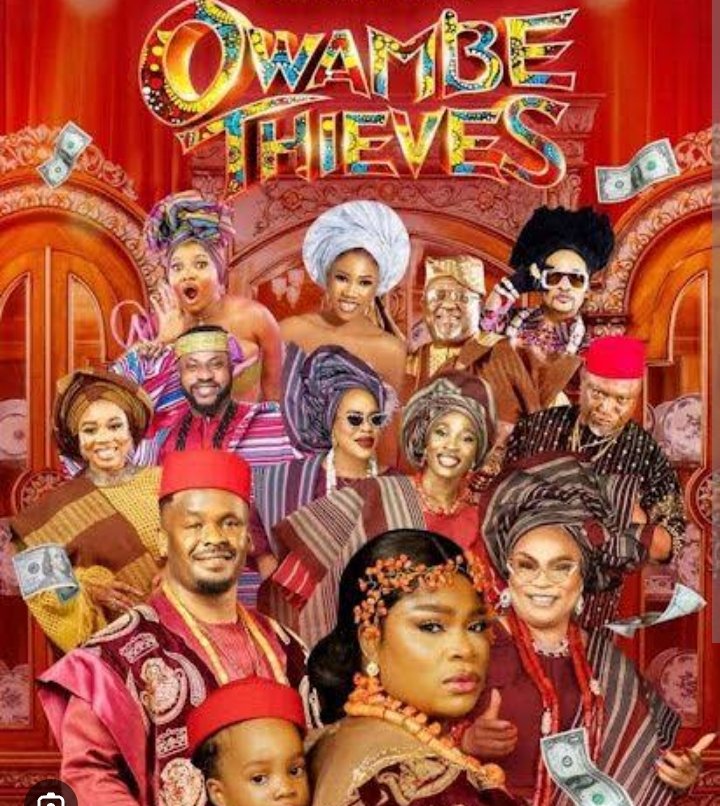 A quick google search will show that the word has existed in both spellings over the years, with only mild eyerolls by Yorùbá language speakers observing the homorganic nasalization turning the /n/ to /m/ because of the presence of the /b/ nearby. It’s a feature not peculiar to this word either — as I pointed out with “Ọlúwaḿbẹ” and “Olúwańbẹ”, which are two varying spellings of the name with the same meaning “God exists”. It’s not peculiar to Yorùbá language either — the homorganic nasal rule has every amorphous nasal sounds taking on the shape of their nearest consonant. So when you pronounce “input”, it sounds like “imput”, and when the word “impossible”, which combines an amorphous negative morpheme “in” with “possible”, the resulting pronunciation adopts the shape of the “p”, as it adopts the shape of a ‘k’ in “incorrect”. It is why “Bá mi délé” is pronounced as /Bándélé/ rather than /Bámdélé/, which is harder to pronounce. For linguists, these are merely fun observations that provide stimulation for our quiet times. Not national crises-points that need police petitions, twitter fights, and civil wars.
And yet, this is what the Ówàḿbẹ̀ crisis seems to have caused.
The last I checked, the Wikipedia page for “Ówàḿbẹ̀”, first created in October 2023, had suddenly turned into a hive of frantic mass-editing, countereditings, and reversals that has, as at today, erased all acknowledgments of the popular spelling at all. And when the artist was invited to a television interview, suddenly the old, long-dispensed spelling, appeared, as if it had always been there. The police guardians of Yorùbá language and culture will give no quarter to anyone intent on giving validation to natural phonological processes.
And yet, as I asked myself when I look back at all I know about language and the faux outrage of prescriptivists everywhere, none of these has done anything to address some of the biggest issues in language endangerment: funding for language courses in high schools, investment in orthography and script development, support for language-medium schools and other relevant research, translations, and other forms of mass adaptation. The last I checked, Nigeria just added Mandarin to its school curriculum.
The dark underbelly of an uncompromising nativism that rejects not only language evolution and variations in orthography, but also cultural mix and adaptation, is hard to ignore here. But the facts remain: Yorùbá and Igbo belong to the Kwa Group under the Niger Congo language family. They share a number of word cognates from ẹnu/ọnu (mouth), eku/oke (rodent), etí/nti (ear), imú/imi (nose), omi/miri (water) and countless others. Not only through language but through trade, migration, intermarriage, etc., the two cultures are irrevocably intertwined, a part of one another: the idea of Nigeria as a nation in development thrives on the vision of a future that accepts and encourages that intermixture and indissoluble connection.
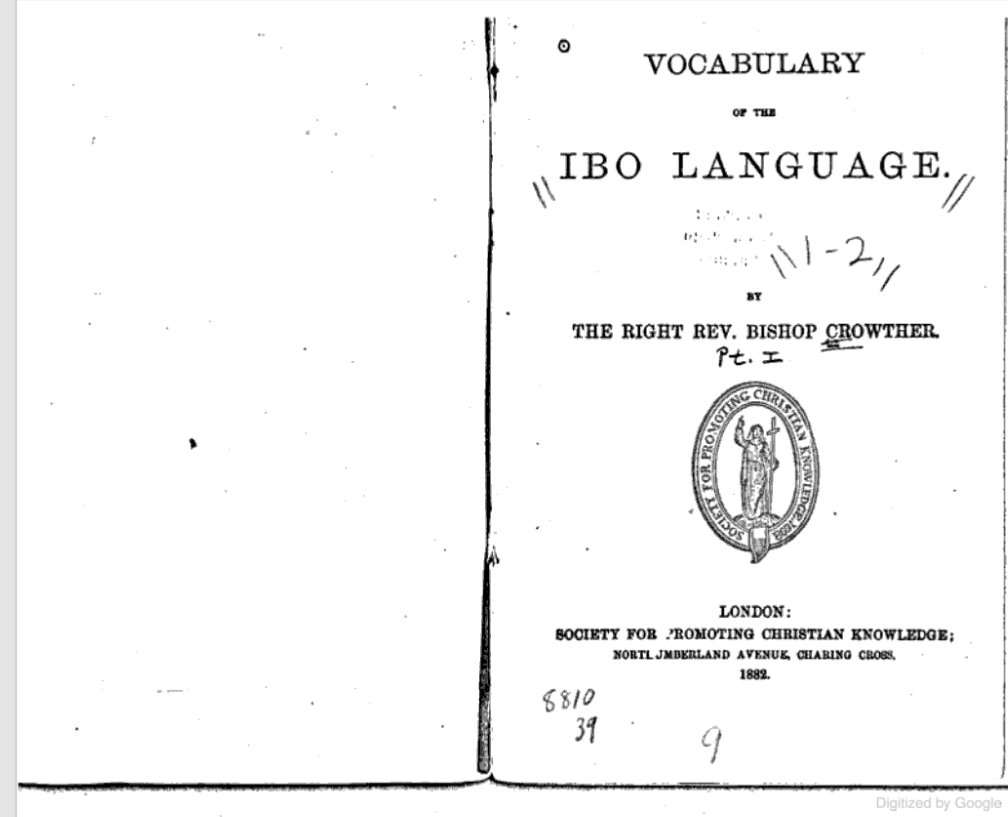 Before Ajayi Crowther published the first dictionary of Yorùbá in 1843 (and his dictionary of Igbo in 1882), all our words were sounds alone. Crazier to think that this was how Crowther first wrote the Yorùbá word for “back” (Ehhin), “tooth” (Ehin/Eyin), “you” plural (Ehnyi) and “egg” (Ehyin) in 1843. While the pronunciations of these words haven’t changed since then, the spellings and the writing systems have, and no earthquakes have happened as a result.
To think that this new technology of writing has become a cause of strife rather than help is ridiculous to contemplate.
Without Latin-based orthography, which had, for about 140 years, defined how we wrote these languages, you could almost not be able to tell the difference when some of these words are pronounced. Writing, as I’ve always insisted, is a secondary technology. Perhaps a new orthography designed with tonal African languages in mind would better accommodate these variations, I argued in 2020. But someone saying “Ówàńbẹ̀” and another saying “Ówàḿbẹ̀” can’t tell apart any perceptible difference. The difference is only in the writing.
It’s worth remembering that language is a living, growing thing, and prescriptivists will never therefore get the final word. I recall a number of years ago, when Reuben Abati — then the spokesperson for Nigeria’s president — took umbrage with young people’s use of “Naija” to refer to the country. With AI and speech technologies, word spellings will become even less and less relevant as we gradually revert to sound.
 An Igbo colleague once told me that the Yorùbá word “agbèrò”, which was invented to describe the old Lagos bus conductor, is pronounced “agboro” in the Igbo areas of the country, likely by people who don’t know its origin. As a lexicographer, this only delights me in the mutability of language. Fufu, a Nigerian delicacy, is spelt “foufou” in Francophone areas of West Africa. Nigeria Pidgin, the most contemporary laboratory of such experiments, has moved a word like “biko” from Igbo into every part of Nigeria, “ọ̀gá” from Yorùbá into the depths of the Delta, and words like “chikena” from the North into popular usage. This, along with its creolization, has created a new and resilient language capable of carrying our music and entertainment industries across the world. No one seems to mind that.
Many words in Yorùbá today were originally Arabic, from àdúrà to àlùbọ́sà, arriving in Yorùbá through our contact with the Hausa in the north. Many words from Yorùbá today exists in Igbo and other Nigerian languages, words like ẹ̀gúsí, moin-moin or aṣọ ẹbí, even if they’re not always spelt or pronounced the same way. This is part of the evolution of not just language but nationhood. But even at the very minimum, even in the absence of any altruistic aspirations to unity, the inevitability of language change, evolution, and growth through varying uses across the boundaries beyond our reach should teach us something profound.
 None of this, to be clear, is to say that standards don’t exist. As a lexicographer, I am interested in providing language learning materials to support users as well as support opportunities to track the changes in word usage over the years. The reason you’ll find both “Délànọ̀” and “Délànà” at YorubaName.com is because people exist today who use either spelling, and my preference for the latter should not necessarily prevent those searching for the former from seeing it. Same for Shadé/Ṣadé, Olúwańbẹ/Olúwaḿbẹ, Adéshínà/Olúṣínà, etc. Good dictionaries of English will make space for both “specialize” and “specialise”, while noting which is typically used where, and other notes about the spelling evolution.
It is to say that in spite of any human intervention (see the Academie Francaise), language evolves; it’s an organic force as powerful and unstoppable as the tides.
It’s also to say that how native speakers speak or write their language should not necessarily bind everyone else who finds association with it helpful or useful to their own creative ends, especially outside of the classroom. The reason why Nigerian English, American English, Indian English, Nigerian Pidgin, Jamaican Patois etc exist is the permission taken by users which eventually redounds to the strength and resilience of the original language. (Tiger; trigritude?) Part of the growth of the English language across the world today comes from accepting these many variations, arrived at from language borrowing, adaptation, and creativity. Without it, what would hip-hop sound like? If we can accept new words entering the Oxford Dictionaries every year from Nigerian words, celebrating it across national headlines, then we can perhaps abide slight variations that come from popular acceptance and language dynamism.
___
A version of this was first published on FlamingHydra on September 26, 2025