My Books of 2017

It’s becoming cliché to say that the year flew by pretty fast, but that happened this year again, and I have a number of books to thank for providing a hiding place from the overwhelming nature of reality. Now, the time has come to take stock of progress and setbacks, and to reminisce about the delight that words in print provided to carry one through a tumultuous year.

(You can find my Books of 2016 here)
Here are books I read, wrote, or contributed to this year, in no particular order. Where a link is provided, it’s usually to a review of the work that I wrote.

Books I Completed

  1. Stay With Me by Ayọ̀bámi Adébáyọ̀
  2. The Yearning by Mohale Mashigo
  3. When We Speak of Nothing by Olumide Popoola
  4. Taduno’s Song by Odafe Atógun
  5. A Good Mourning by Ogaga Ifowodo
  6. The Heresiad by Ikeogu Oke
  7. Songs of Myself by Tanure Ojaide
  8. Like a Mule Bringing Ice Cream to the Sun by Sarah Ládípọ̀ Manyika
  9. I Wrote This For You by Samira Sanusi
  10. The Kindness of Enemies by Laila Aboulela
  11. Slipping by Lauren Beukes
  12. The Birth of a Dreamweaver by Ngugi wa Thiong’o
  13. Welcome to Lagos by Chibundu Onuzor
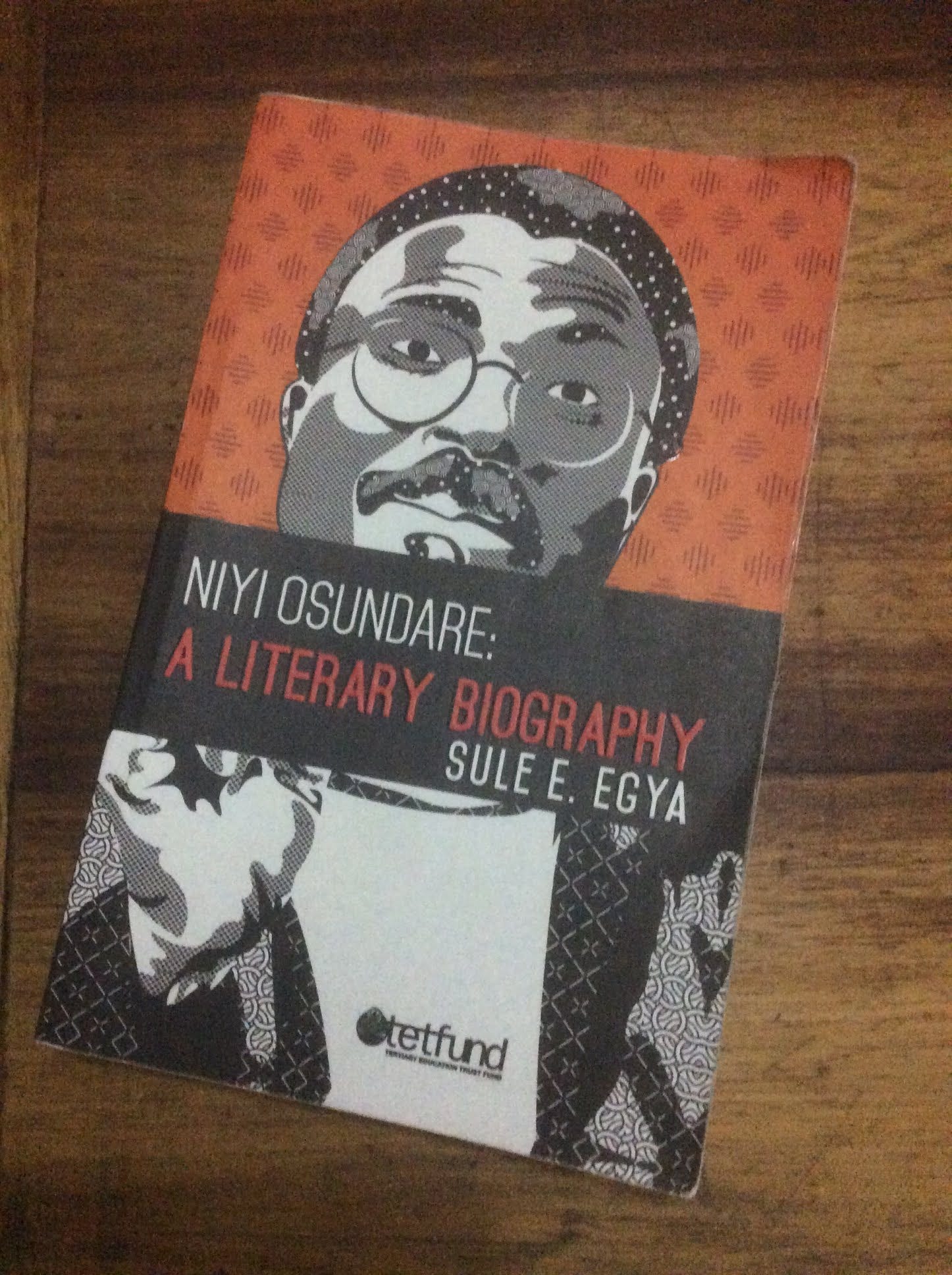
  14. Níyì Ọ̀ṣúndáre: A Literary Biography by Sule E. Egya
  15. Grass to Grace by Ayọ̀ Bámgbóṣé
  16. America their America by JP Clark

I enjoyed all the books I completed this year, especially in the prose department. Ayọ̀bámi Adébáyọ̀’s anticipated debut blew me away in a number of ways, and perplexed me in others. I also enjoyed Mohale Mashigo’s debut which explores trauma and mental illness, Olúmìdé Pópóọlá’s delightful prose and a story of friendship, Lauren Beukes’s collection of dystopian stories, and Sarah Manyika’s beautiful and unconventional book about love in old age. I think I should read more non-conventional prose like these in the next year. Normal is boring.

I was honoured to be able to speak with Laila Aboulela in Kaduna in July, discussing her historical novel The Kindness of Enemies. I’ve always found work that incorporate elements of fact into fiction to be very engaging. That way I can pretend that it’s nonfiction when it is really not. I loved Taduno’s Song for the same reason. I look forward to reading more of such work.

Started But Not Finished

  1. A Woman’s Body is a Country by Dami Àjàyí
  2. Masks of Light by Robert Eliot Fox
  3. What It Means When a Man Falls from the Sky by Lesley Nneka Arimah
  4. Are You Not a Nigerian? by Báyọ̀ Olúpohùndà
  5. The Pleasure of the Text by Roland Barthes
  6. The Book of Memory by Pettina Gappah
  7. The Sellout by Paul Beaty
  8. Facade by Emem Uko
  9. The Idiot by Elif Batuman
  10. Beyond Linguistics and Multilingualism in Nigeria: Essay on linguistics and multilingualism, language in education, English language, Yoruba language & Literature by Ayọ̀ Bámgbóṣé.
  11. Beethoven Was One-Sixteenth Black by Nadine Gordimer
  12. In Praise of Slowness: Challenging the Cult of Speed by Carl Honoré
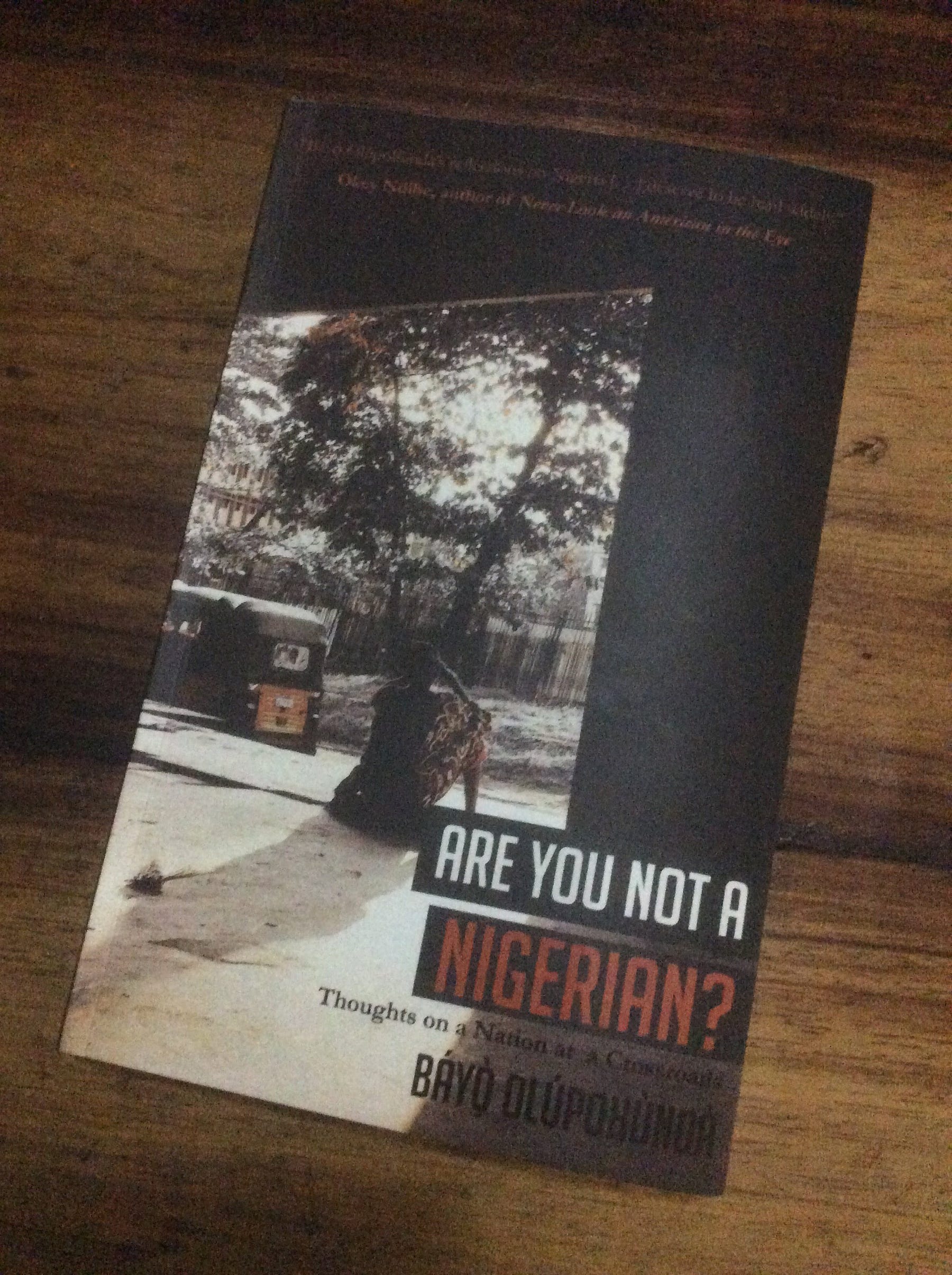
Speaking of delightful prose, one book I can’t wait to finish is Lesley Nneka Arimah’s What It Means When a Man Falls from the Sky. It is my first time reading anything she’s written and I’m blown away. Thanks to the folks at Farafina for sending me a complimentary copy. The book is a collection of short stories each carrying a heavy punch. Her words are sweet and svelte, capable of telling a story, no matter how difficult, with care and beauty. Two of my friends, Báyọ̀ Olúpohùndà and Dami Àjàyí also published a book each this year, and I look forward to spending quality time with them. I’ve read Àjàyí’s book as a manuscript, and many of the articles in Olúpohùndà’s when they were newspaper columns. But I look forward to reading them again. I also highly recommend Robert Eliot Fox’s collection of poetry, published by a publishing outfit by Frank Chipasula whom I met for the first time in Abu Dhabi in April.

Bought But Not started.

  1. Nollywood by Jonathan Haynes
  2. Arrows of Rain by Okey Ndibe
  3. White Lagos by Pẹ̀lú Awófẹ̀sọ̀
  4. Al Franken: Giant of the Senate by Al Franken
  5. King Baabu by Wọlé Ṣóyínká
  6. The Fisherman by Chigozie Obioma
  7. Letterman: The Last Giant of Late Night by Jason Zinoman
  8. Dialogue With My Country by Niyi Ọ̀súndáre
  9. The Translator by Laila Aboulela
  10. A Black Man in the White House by Cornell Belcher
  11. Kintu by Jeniffer Nansubuga Makumbi
  12. Who Thought This Was a Good Idea? And Other Questions You Should Have Answers to When You Walk in the White House by Alyssa Mastromon
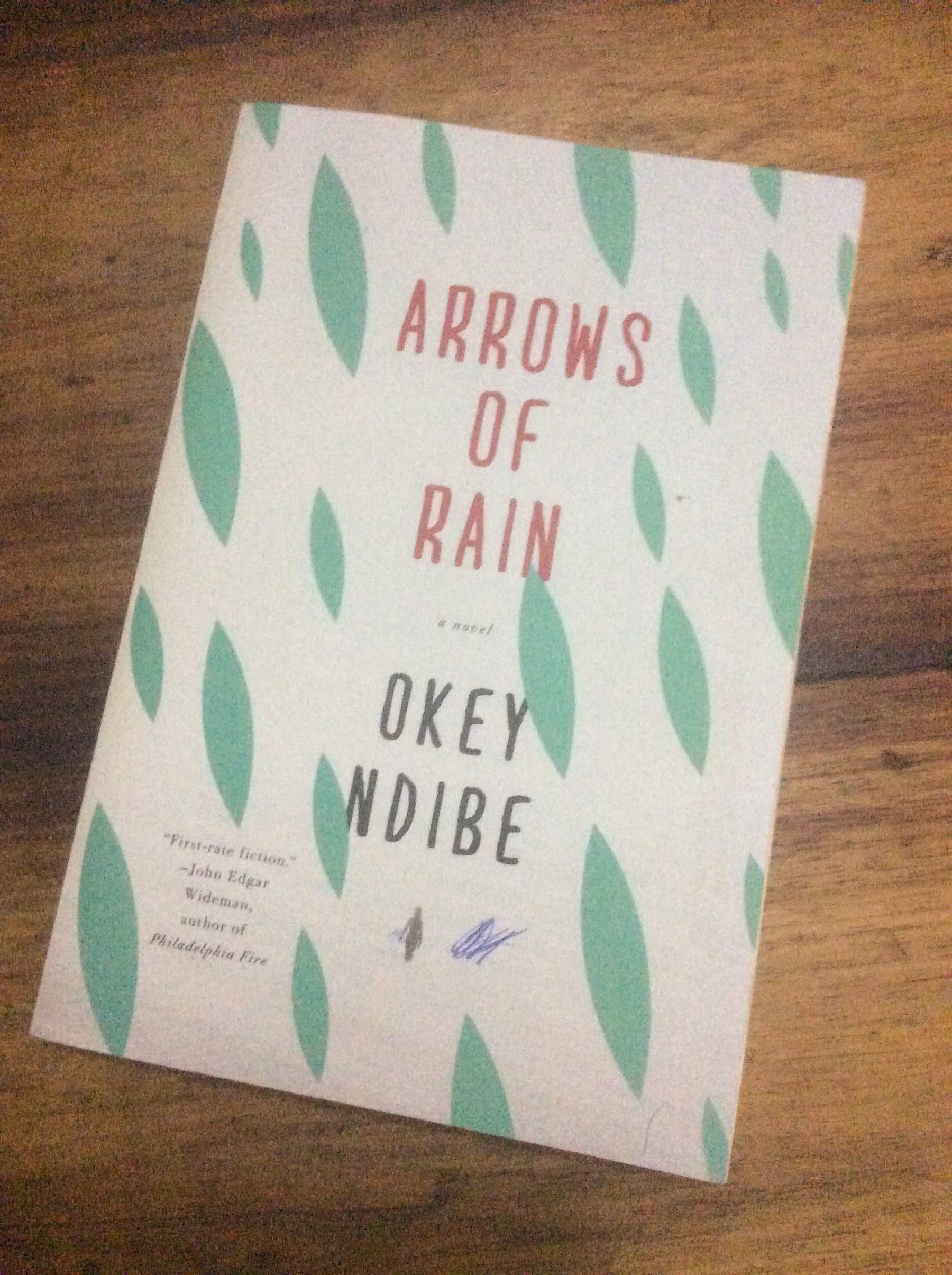
Of these twelve, the one less likely to be read in a hurry now is Al Franken’s autobiography which I was actually looking forward to. His resignation from the Senate amidst allegations, by about eight women, of sexual impropriety will certainly cast a shadow on any of the jokes he makes in the work about working with women. Not like the Letterman story will be any less cringe-inducing, but one of them managed to escape unscathed from public life. Some irony in that. Both of them, however, still occupy a very important place in American public life, as well as in comedy. I bought the Nollywood book at the Lagos Conference this summer, on impulse purchase, and because the author was there. But don’t know when I’ll ever get to it now. It does look like a good reference material on the story of Nigeria’s thriving movie industry though. I also look forward to reading Okey Ndibe’s Arrows of Rain which actually preceded his memoir published last year. Will be interesting to trace his creative development and style.

Publications my works appeared in.

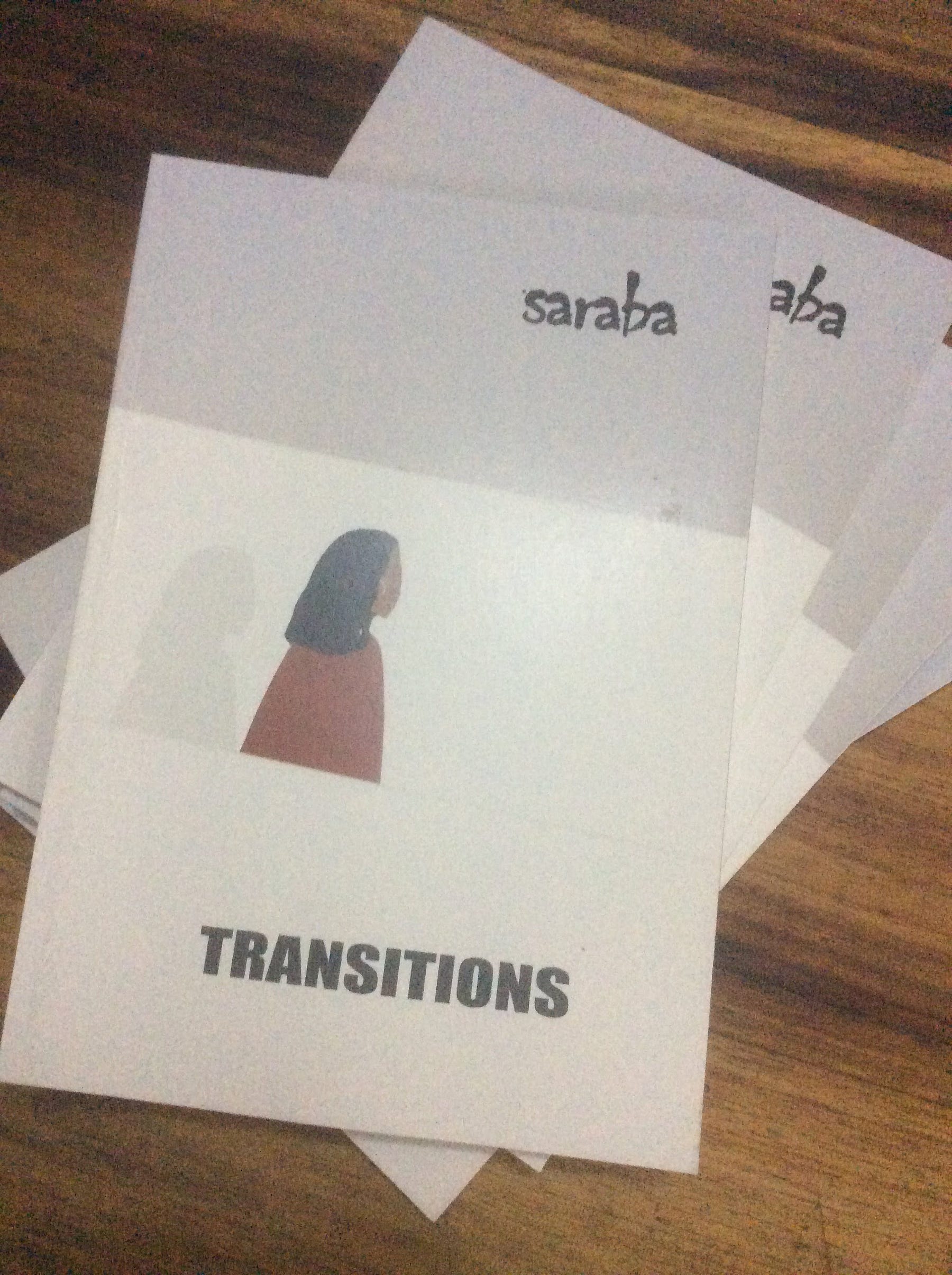
  1. GENERAL NONFICTION. Saraba Magazine’s published its first print issue this year, titled Transitions. In it, I have a nonfiction piece, co-written with Tèmítáyọ̀ Ọlọ́finlúà titled “House 57”, about a house in Ìbàdàn that means a lot to me, but also carries an important story that touches more than just its immediate characters.
  2. REVIEWS AND INTERVIEWS. I published a number of reviews and interviews on Brittle Paper this year, of works of writers like Sarah Ládípọ̀ Manyika, Ngugi wa Thiong’o, Níyì Ọ̀ṣúndáre, Chibundu Onuzor, Odafe Atógun, Lauren Beukes, Tádé Ìpàdéọlá, and Wana Udobang. I also published a couple of works on AfricanWriter.com, most notably my interview with Yẹ́misí Aríbisála (February 2017) and Titilope Sonuga (July 2017). I also joined This is Africa later in the year as a resident interviewer, publishing interviews with Dami Àjàyí (October 2017), Abubakar Adam Ibrahim (November 2017), and Igoni Barrett (December 2017). In Ake Review 2017, I have an interview with debut author Ayọ̀bámi Adébáyọ̀ on her work, her process, and on the presentation of women in fiction. It’s aptly titled “There’s Not One Way to Write a Feminist Character” — a quote taken directly from the author’s response to a question I had posed.
  3. ESSAYS. Earlier in March, my literary essay In the Shadow of Context was published in Enkare Review. It was later nominated for the Brittle Paper Award for Think Pieces. In June, I contributed an essay titled Wetin Dey? Nigerian Pidgin and its Many Pikin as a preface to Inua Ellams’s Barbershop Chronicles staged and published by the UK National Theatre. In November 2017, my essay appeared in Il Suono di Pan an anthology edited by Prof. MM Tosolini and launched at Cividale del Friuli, near Udine in November 2017. The essay was titled The Suspended Leg in the Tripod of Identity: Yorùbá Around the World Today. it was also translated to Italian.
  4. FEATURES. In January this year, Latterly Magazine’s Ashley Okwuosa shadowed me around places in Ìbàdàn where I grew up, asking relevant questions about my work as a writer and linguist. We visited Àkóbọ̀, the University of Ìbàdàn, and she met a couple of my professors. The result was a long profile titled “The Yorùbá Guardian” in the Spring Issue of the magazine. So, while this is technically not my work, it’s one I’m glad to have participated in.
Books Lost

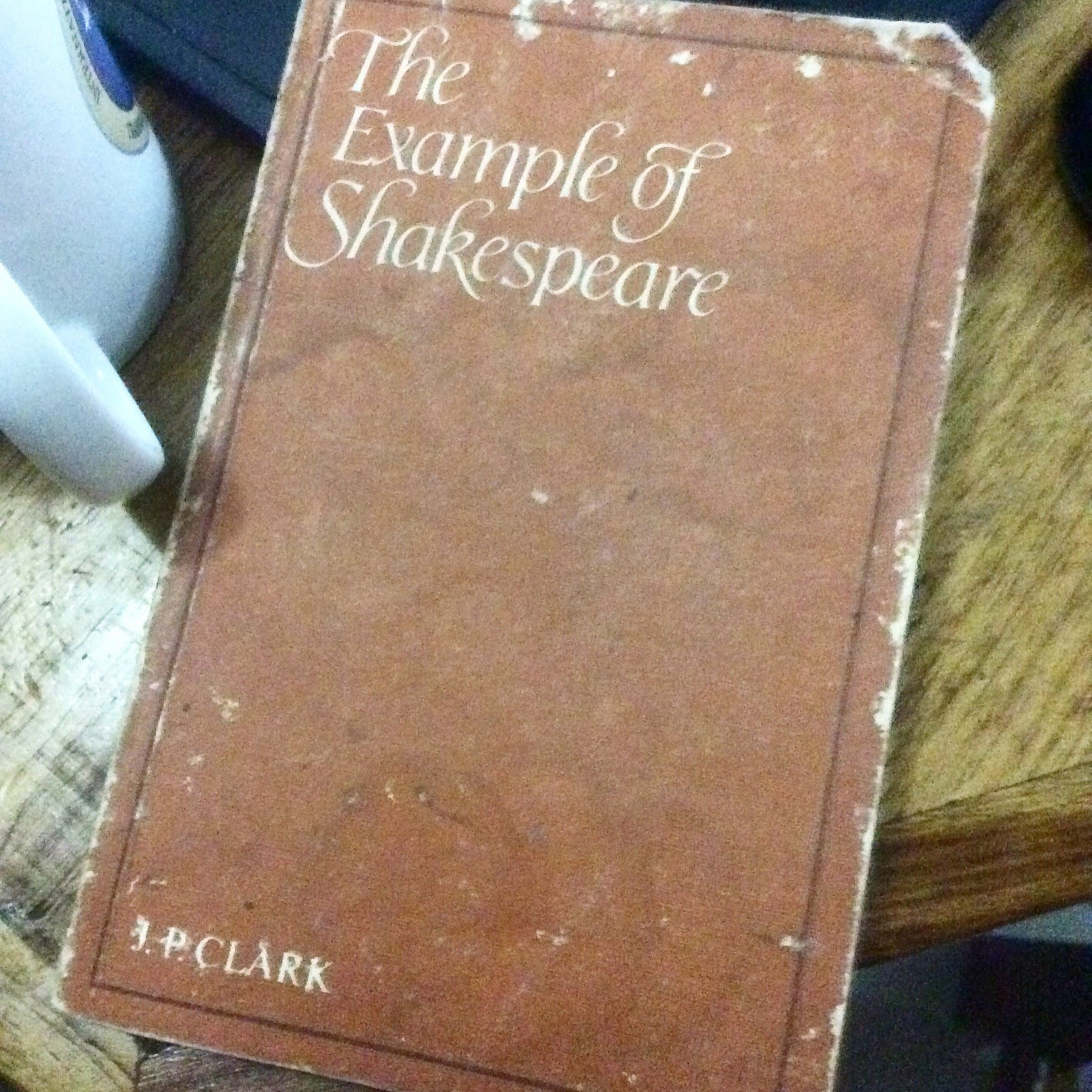
This one is a tragedy A book I’ve had with me since 2002 was “borrowed” from me without my permission while I was attending the Kaduna Book and Art Festival (KABAFEST). Still waiting for whoever has it to send it back, graciously.
Hello 2018!

Thinking back, it’s hard to believe I read (or wrote) this much this year. My pocket certainly doesn’t believe it. There are so many more books I have bought and I’m looking forward to reading. The complete works of Nnedi Okorafor, for instance. Something tells me that the time for sci-fi and fantasy fiction is upon us. Every year I promise myself not to buy more books than I can read. I’ve failed this year, but 2018 is another year.

So, what books did you read and enjoy this year? And will you lend me to read?
SIUE Grad Student Launches International Nonprofit Org to Fill West African University Shelves with Textbooks

For Immediate Release (June 5, 2017)


A brand-new nonprofit organization initiated by a Southern Illinois University Edwardsville (SIUE) graduate student and a native of Nigeria is filling shelves in African universities with much-needed textbooks donated by faculty and students around the world.

Efiwe, Nigerian Pidgin for “bookworm,” is the charitable organization founded here in Edwardsville with a growing presence at book-drive locations on campuses across the United States. SIUE graduate student Philip Alabi’s fervor for equipping West African post-secondary students with badly-needed textbooks and related resources is resulting in the formation of a 501(c)(3) and two boards of directors, one in Edwardsville and one in Nigeria.  

When Àlàbí first arrived in the U.S. two years ago to begin his master’s of science degree in chemistry at SIUE, he saw first-hand how relatively affordable university-level textbooks are to acquire in the U.S. compared to Nigeria. He also saw stacks of still-relevant textbooks in good condition that were being discarded.
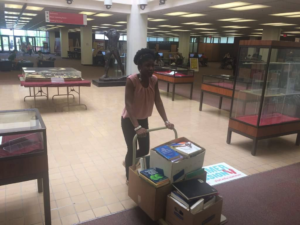
“Even for university instructors, textbooks and relevant resource materials are extremely expensive and difficult to come by in West Africa,” Àlàbí said. “In the U.S., there’s the university bookstore, online academic resources and online vendors such as Amazon.com through which students can access the latest versions of textbooks required for their university courses. Sadly this is not the situation in Nigeria, even at the university level. Hard-copy books for courses are typically outdated and there are not enough to go around. If they are attainable, it is generally only the instructors who have a copy of the text, not the students.”

Adding to the challenges, Nigeria’s sporadic power supply and expensive Internet access makes it nearly impossible for university faculty and students in West Africa to access and download online academic resources, according to Àlàbí. “Our aim through Efiwe is to collect relevant textbooks across U.S. colleges and universities and send the books to university and community college libraries in Western Africa,” he said. “Our organizational mission is to send more than one million textbooks to African universities by the year 2030.”

The mission is ambitious, but Efiwe and its boards of directors, inspired by Àlàbí’s passion, are well on their way. In Spring of 2017, before Efiwe was formally conceived, Alabi and fellow SIUE colleagues launched an on-campus book drive with the same purpose. The results were astounding.

“We thought maybe we’d receive a couple hundred donated textbooks at our initial book drop-off sites on campus at SIUE,” said Àlàbí, who will pursue a doctoral degree in chemistry from Brown University in August. “That initial donation topped 1,000 textbooks in only a few months. We also raised funds to pay for the cost of transporting the books by ship to my home university, Tai Solarin University of Education in Nigeria. We are absolutely confident that we can continue the momentum and tap into the generosity of teachers and learners in the U.S.”
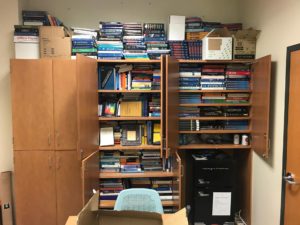
Tai Solarin Deputy University Librarian Jasiliu Kadiri said the donated textbooks would add value to teaching, learning and research work at the university. “We acknowledge with profound thanks the receipt of these volumes of books covering various fields including general and pure sciences, education, social sciences and children’s books,” Kadiri said.

Right now Efiwe is identifying university and community college campuses that are willing to establish a textbook drop-off site on their campuses. Efiwe is also seeking students who will operate and champion book drive initiatives in their respective universities and colleges, Alabi said. Ultimately Efiwe will ask for financial support to pay for the transportation of the books by ship from the U.S. to Nigeria and other West Africa destinations. But for now, the biggest and best way supporters can assist the nonprofit organization is by donating new or gently used textbooks on any and all academic subjects.

“We encourage individuals and student associations at community colleges, technical colleges and universities across the Midwestern states who are willing to designate a location on their campus as an Efiwe textbook drop-off site,” Àlàbí said.
Web developers are currently working to create an online book inventory of all the texts and supporting materials that are being donated so recipient universities can order the volumes they need.

For more information on Efiwe, go to Efiwe.org or email info@efiwe.org.


Travel as Life: A Review of Route 234

I haven’t read many books about travelling around Nigeria written by Nigerians. No doubt they exist (and readers should please recommend some for me in the comment section). I have however read many about traveling in other parts of the world. Tẹ́jú Cole’s (2016) essay collection comes to mind as well as Wọlé Ṣóyínká’s memoir You Must Set Forth At Dawn (2006). There is also America Their America (1964), an “autotravography” by J.P. Clark which caused controversy for what critics thought was a narrow and judgmental view of American values. Recently, there is Okey Ndibe’s Never Look An American In the Eye (2016), an autobiography, and many more.

There are however many more narratives written about the country, and about the continent, by visiting (foreign) journalists, writers, novelists over the years. Karen Blixen‘s Out of Africa (1937), JMG Le Clezio’s Onitsha (1991) and VS Naipaul’s The Masque of Africa (2010) come to mind easily. But so does this one. The overall impression of such books has always been the worry that they rarely depict reality as is, but only as perceived by the visiting foreigner, which – to be fair – is the whole purpose of the subjective narrative. I expect that the impression of America I’ll get from reading travel notes from an African visiting the US in the 1960s will give me an idea of America through that writer’s perspective of events as they unfold to him/her.

fullsizerender-6-1

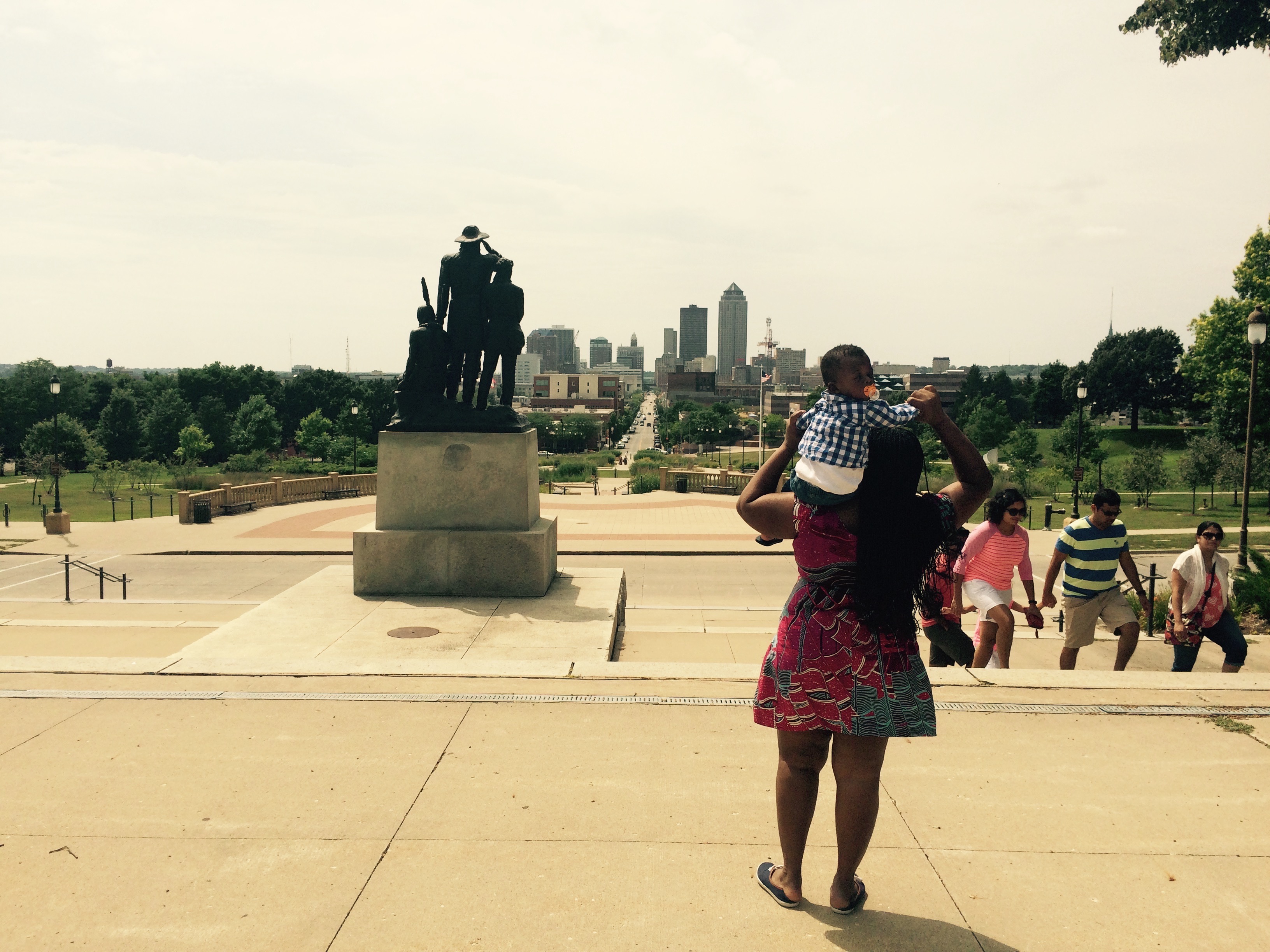
At the Des Moines Capitol, Iowa (2015)

Even in the online space, one might easily find blogs written by foreigners about travel around the continent than one might of blogs by Africans of travel experiences in their own continent. (This is changing, of course. You’re reading this on a travel blog managed by an African, after all). But why is this the case? Human civilization itself is an experiment in travel, documentation and adventure conditioned by necessity, curiosity and sometimes nationalism. We have always left our comfort zones for new experiences. And, as archaeology and anthropology tell us, we have always documented those movements, even unconsciously, in hieroglyphics, and oral poetry, tribal marks, and lately in writing. In the 21st century Africa, the prevailing narrative is that travel for leisure and travel writing is a Western chore, done by the privileged few, and those conditioned to it by their profession in journalism.

Reality, unfortunately, seems to bear it out for the most part except in some rare cases. Olábísí Àjàlá was a Nigerian student who found himself in the United States at age 18 in the late 1940s. Having failed to succeed as a medical student at DePaul University, Chicago, he decided to travel through the country to Los Angeles, on a bicycle and document his experiences along the way. Through deportations, skirmishes with authorities, short Hollywood career (including meeting then actor Ronald Reagan), many short-lived marriages, children, and global fame, through the fifties, sixties, and seventies, he became the patron saint of all adventurers, and an icon in popular culture for African travel. Being called Ajàlá Travels in Nigeria today is a homage to his larger-than-life reputation. He also wrote a book An African Abroad.* 

So why is it that unless in rare cases Africans are not known globally to document our adventures in writing, or is it that we are just generally averse to travelling for its own sake? My friend and scholar Rebecca Jones has been asking this question for a while. In a conference she facilitated in Birmingham earlier in the year, the Call observed:

“For a long time study of African travel writing in the West has focused on Western-authored travel writing about Africa. But this has ignored both the long heritage of the genre amongst African and diaspora authors. African travel writers have traversed both the African continent and the rest of the world, writing about encounters and differences they meet in their own societies and others. They have engaged with colonialism and the post-colonial world, have produced ethnographic description, reportage, poetry, humour and more. They have traversed genres and forms, from the Swahili habari written at the turn of the twentieth century to Yoruba newspaper travel narratives of the 1920s, from accounts of students and soldiers abroad, to newspapers and today’s online travel writing.”

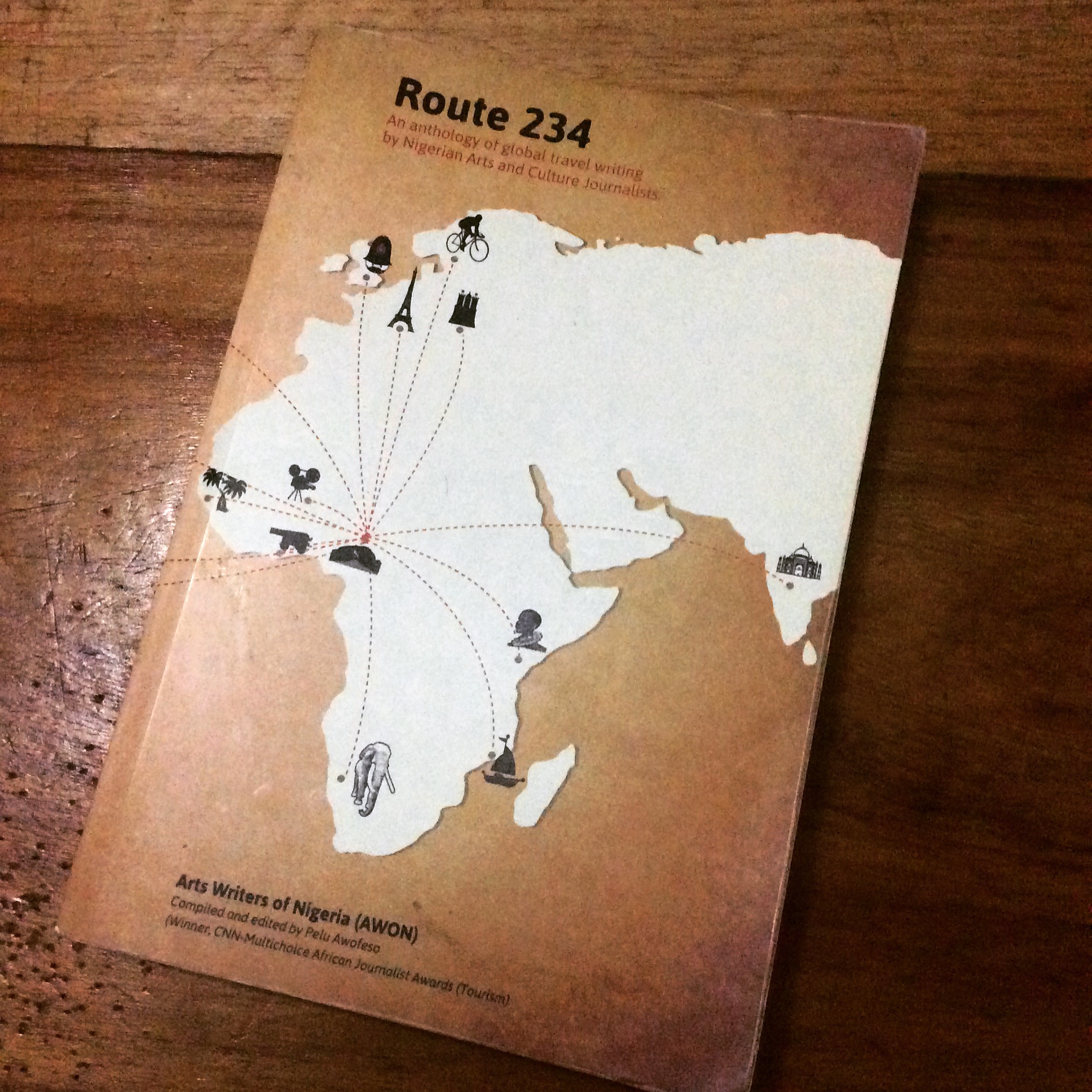
Aside from this blog, there are quite a few other ones online with focus on travel as an African hobby, done especially without the express purpose of becoming a travel “journalist” working for a media house, but for its own sake. Why are there not more. Africans, after all, travel as much as everyone else. Is it that we don’t care about documenting our experiences the way that others do? I have just finished reading Route 234 (2016), an anthology of global travel writing by Nigerian arts and culture journalists, compiled and edited by Pẹ̀lú Awófẹ̀sọ, an award-winning culture journalist. It is a delightful read of many fun, scary, heartwarming, and diverse experience of Nigerians in many different local and international situations. The contributors are however many of the continent’s known arts and culture journalists. This fact will not help our subject matter, but it shouldn’t remove from the value of the book as a necessary work and a delightful read.

image

Route 234(2016), edited by Pẹ̀lú Awófẹ̀sọ̀

According to the editor, the idea for the book came from a private listserve conversation among these culture/travel writers earlier in the decade about documenting some of their travel experiences. It took many years before the idea finally became concrete.  The 211-paged book lists Kọ́lé Adé-Odùtọ́la, Olúmìdé Ìyàndá, Ọláyínká Oyègbilé, Èyítáyọ̀ Alọ́h, Mọlará Wood, Steve Ayọ̀rìndé, Pẹ̀lú Awófẹ̀sọ̀, Jahman Aníkúlápó, Túndé Àrẹ̀mú, Nseobong Okon-Ekong, Akíntáyọ̀ Abọ́dúnrìn, Ayẹni Adékúnlé, Fúnkẹ́ Osae-Brown, Sọlá Balógun and Ozolua Uhakheme as contributors. The scope of the travel experiences documented therein covers Los Angeles, Atlanta, Bahia, Juffureh, Accra, Plateau, Nairobi, Durban, Pilanesberg, India, London, France, Frankfurt, Nice, and Holland.

One of my favourite narrative in the work is Mọlará Wood’s “Farewell Juffureh” (page 35), covering a visit to Alex Haley’s ancestral hometown in the heart of Gambia as well as Nseobong Okon-Ekon’s “Trekking the Mambilla Plateau” (page 93). In both, the reader is vividly guided through experiences that must have been much more intense and affecting than words could capture. Some of the others detail culture shocks at visiting a new place for the first time and re-setting their opinions and expectations preconceived from a distance (“Accra Mystic” by Jahman Anikulapo, page 79) while some focus on their immediate task; covering a film festival, for instance (“Film, FESPACO, Ezra” by Steve Ayọ̀rìndé, page 61). A heartwarming one by Ṣọlá Balógun (“The Good Samaritans of Nice”, page 181) describe an experience common to many frequent travellers: being stranded in a strange city after a missed flight.

What the book represents overall is an intervention in a space where much more effort of this nature is needed. But travel isn’t, and shouldn’t be, the preserve of just culture writers and journalists. Writing about it shouldn’t be either. Tourism isn’t a big deal in Nigeria today because of lack of government (and private sector) care, yes, but also because of a seeming lack of interest in the populace itself. As I argued in this recent piece on a visit to historical locations in Ìbàdàn, commercial attention will come when governmental and private sector intervention takes the first step:

“I think back to a recent experience, in Italy, where tourism has built a thriving industry of restaurants, malls, and gift shops around notable structures that tell the country’s history, real and fictional, and how much value that attention (and tourist dollars) has brought to the country. Old churches and abbeys, ancient arenas in Verona and the Colosseum in Rome, among others, are all just ruins of a certain past. But they have been preserved and well branded in order to attract foreigners and their resources. Even a fictional character, Juliet, from Shakespeare’s Romeo and Juliet, has a touristy structure built in her honour, called Casa di Giulietta.”

Travel is fun. And even when it is not, it is always an enlightening exercise. As Mark Twain said in The Innocents Abroad (1869), “travel is fatal to prejudice, bigotry, and narrow-mindedness, and many of our people need it sorely on these accounts. Broad, wholesome, charitable views of men and things cannot be acquired by vegetating in one little corner of the earth all one’s lifetime.” That same perhaps can be said about travel writing, if not as a way to reflect on one’s adventures, as a way to keep said experiences in the memory of the world.

The book is a delightful read, but much more is needed.

_________

There are many other stories like this, no doubt. Ravi on twitter has pointed me out to “Sol Plaatje’s sea travel piece” (by which I assume he means this bookMhudi, an epic of South African native life a hundred years ago), and Rebecca, in the comment section, to a few more published narratives, also of a few years back. Their input also reminded me of Olaudah Equiano’s  equally notable memoir. There are many more like these, I agree. My point is that there are not many more, and certainly not as many notable ones as there should be).

For more reading

How to Kill the Nigerian Publishing Industry

This comes from new article by Jeremy Weate (founder, Cassava Republic Press) published on Africa is a Country in which the hypocrisy (or counterproductive measures) of the Nigerian administration is laid bare in the new series of tariffs placed on book importation, in contravention of a treaty signed with UNESCO.

Here’s an excerpt:

The reality is, Nigerian publishers who wish to sell good quality books at an affordable price are forced to print overseas. There’s nothing particularly innovative or unusual in this: many Western publishers now print in Asia too. Cheap electricity and labour, access to international paper markets as well as technical know-how limit globally competitive print facilities to a small group of countries. Nigeria has no hope of competing with these countries any time soon. A wiser alternative policy decision would be to not even try. Nigerian paper mill and printing companies catering to local (non-book) printing needs can be supported through tax breaks and subsidies to nurture market development, without the need for protectionism. The lesson learnt from other sectors in Nigeria (such as textiles), is surely that tariffs and import bans stimulate piracy, rather than local market development. It is therefore also likely that book pirates may benefit from the punitive tariff. In other words, authors as well as Nigerian publishers will suffer.

More here.

Books Everywhere

As soon as school closed last week, professors emptied their shelves onto a table in our building. Old and new books, from fiction to plays and journals, poetry collections and textbooks lay spread there competing for attention. They were free to be taken away. By evening everyday, the best of the books would be gone. But by the next morning, there would be another load, and the process continued. I made a few selections every day of the week, including The Book of Yeat’s Poems by Hazard Adams and Exploring Language edited by Gary Goshgarian among many others.

Just last month, a colleague gracefully handed me a box filled with books of African writing published in the 70s. He had cleaned out his shelf and thought that I might be interested in the collection. I was. It is times like this that I wish that I was rich enough to pay for shipping costs to send tonnes of books no longer useful to their owners to small-town libraries and bookstores in Ibadan where young literary minds can get access to them. When I’m done with these, I’ll have to hand them to someone else who might find them useful. It’s hard to think that in a few years, the concept of books itself will have eventually become archaic, especially in these parts.