By Tolúlọpẹ́ Ọdẹ́bùnmi
In the culture I grew up in, you were trained to look out for a signal from God, nature, the gods or whatever (you choose) especially when you are making and taking a serious decision. My move to Toulouse (Midi-Pyrenees), a southern city in France was one of such decisions I needed to consider carefully. I had been studying in Houghton Michigan for a few years, so it felt like a needed a new adventure.
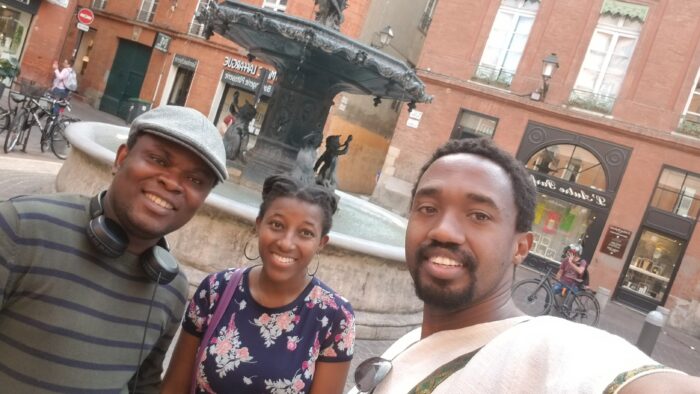
As a Nigerian, I needed a visa to live and work in France. My visa got approved so I took that as a good sign only for me to miss my flight on the day of departure because I had overslept having spent the previous night doing some last-minute packing for the trip. As if that wasn’t bad enough, I almost got on the flight out of the little old town I lived in the following day although I arrived late again. But alas, I was told that the flight attendant would be needing my seat as hers was damaged so “we’re sorry you can’t get on the flight, but you might still be able to fly out to Chicago from a neighboring city.” I was angry, confused and wondered why life had to be so unfair! My dear friend who dropped me off at the airport had left, but luckily enough I got a ride back home from a stranger. Did I mention that the neighboring city was almost 4hrs away? We made it to Central Wisconsin Airport, Wausau in good time for my flight. Upon arriving in Chicago, I thought to myself, “now you are finally on your way to France.” However, I was told by Aer Lingus Airlines that I needed a transit visa to travel through Ireland which I didn’t have thanks to my travel agent who thought that I was American 😊. My world almost came crashing down, I couldn’t believe that the ‘village people’ (a Nigerian term for negative spiritual forces) were still trying to come after me. I didn’t burst out crying but I shed a tear or two as I walked away from the airlines counter at O’Hare airport. I made some calls and the situation got fixed. My sponsors had to buy me a new flight and this time, I would be travelling through Germany and not Ireland. I thought that I might avoid Ireland for a while, little did I know that an Irish man was waiting for me in Toulouse.
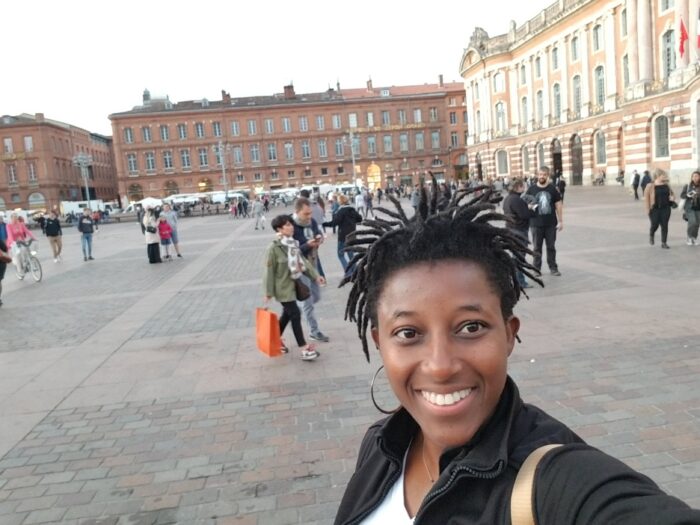
On August 26, 2019, I arrived in Toulouse. It was a warm evening, the airport was moderately busy considering the time of the day it was, French was flowing all around me, but I couldn’t swim in it. That was when it suddenly dawned on me that I had set myself up for something wild. I boarded the tram from la aéroport to Palais de justice. From there, I got a bus to my final destination. Right from when I arrived my broken French was tested, and I also pushed my luck because in my imagination most French people should understand some English expressions so I should be just fine. How wrong was I? The lady who directed me to the bus stop at Palais de justice had been on the tram with me, a young French-Arabic who spoke no words of English but still bothered to speak French to me and used a lot of gestures. Someone else who spoke English on the tram had explained my ordeal to her and so my co French-Arabic passenger had taken it upon herself to help me. I was glad for their kindness but frustrated as I could see a glimpse of what the life of an Anglophone might look like here.
From day 2 in France, google translate became my best buddy. I listened to the voice translation and practiced expressions ahead of a potential interaction in French. Every so often, I blurted out “Tu parles anglais?” Or “Vous parlez anglais s’il vous plaît?” (in a formal context) = Do you speak English? Hoping to be transported back into my Anglophone world. My cliche expression worked sometimes but not nearly enough to make me let my hair down.
A few days upon my arrival, when I showed up for work, my hopes were renewed because my team was made up of native English speakers. Once again, I could express myself freely without feeling inept. Work turned out to be my safe haven since my job was to speak and teach English. The experienced members of my team were very helpful in guiding me and the other newbies into the expatriate resources in Toulouse. The word expatriate had never been associated with me but now as a Nigerian studying in America, I was considered as an expatriate in France where I was offering my English communication skills to French university students. I joined different English-speaking community groups on Facebook, such groups were a constant reminder that many people out there were trying to figure out the French system just like me and I didn’t feel all alone.
The reality of English language in France

The truth is, France is a rich country that educates its citizens entirely in French at all levels of education but can also afford to teach students English starting from primary school. However, many students do not get the opportunity to use and practice their English beyond the classroom so many of them are not likely to improve their English skill to a comfortable intermediate level. Except for kids who were raised bilingual (often with one English parent, or kids of English origin living in France). A good question to ask is why should the average French person care about the English language when they have all that they need available to them in French? A lot of resources are pumped into translation efforts in the French society. Many books, novels, journals, movies, news gets translated into French. Furthermore, prolific dubbing of French over English digital materials makes Grey’s Anatomy (the dubbed version) readily available on TV. I once turned on the TV, saw Johnny Depp’s Pirates of the Caribbean was being aired, only for me to hear some strange voice when Johnny Depp was supposedly speaking. That was when I realized that it was the dubbed version. Another time, I walked into a lovely librairie (bookstore), in Montauban (a neighbouring town from Toulouse). This store was well furnished with print, digital and multimedia resources of various genres, of course all in French. It was fascinating to see the French version of some novels written by Nigerian authors.
English is used in addition to French
Despite the large number of English speakers in major cities like Paris, Lyon,Toulouse, Bordeaux, Marseille etc. The English as a Foreign Language (EFL) status undermines the visibility of English in the French society. One might expect that major companies and businesses would have English services just like services in Spanish is a norm in the USA but that is not the case. As an Anglophone, I get lucky every once in a while, when I come across a service provider who is willing to use their English. It doesn’t help that there is a subtle resistance to the English language and in some cases overt resistance. For example, Académie Française is responsible for keeping the French language updated and relevant. They constantly work on metalanguage, hoping to reduce the influence of English on French. The interesting thing is that the English language has borrowed so much from French, the two languages even share some cognates. For this reason, faux amis (literally meaning false friends) is a challenge for English speakers learning French and vice-versa. Yourdictionary.com defines faux amis as “one of a pair of words in different languages or dialects that look related but differ significantly in meaning. Some common examples are jolly in English and jolie (pretty), medicine and médecin (doctor), actually and actuellement (at present) among others.
For sure, English seems to thrive in the French advertisement channels especially in print ads and display ads with English words embedded in them, English phrases somehow find their way into advertisements. Many young French people love English movies. They are quick to mention Neftlix when you ask how they have been working to progress their English skills. The problem is Netflix feeds you movies that do not necessarily engage you. I suggested to a few students that a better way to get more out of Netflix was to see an English movie and then talk to someone about it in English or even write about it in English. In the language acquisition process listening comes before speaking, so you can watch a foreign movie with or without subtitles if you’ve got some level of competence in it and understand most of the storyline. The actors’ gestures as well as other actions or movements you see give you a hint of what’s happening.
The Attitude
The general attitude towards the English language is positive among the young people (especially students since they have to learn it at school anyway) Interestingly, the Macron administration seem pro-English such that the President has been criticized for embracing “English too much.” For instance, the President Macron tweets in English when abroad, grants interviews in English which offends the French language purists. In fact, the French language conservatives believe that the English language is a big threat to the French Language. Afterall, the English language has been called ‘the killer language’ by some Linguists. This fear of French going into extinction is outrageous in my opinion considering that it is a language spoken by about 300 million people (mostly in Africa), serves as the official language in 29 countries and is the sixth most widely spoken language in the world after Mandarin Chinese, English, Hindi, Spanish and Arabic. Maybe this fear keeps the French on their toes and gives them a reason to continue to perpetuate language imperialism or do some people call that globalization? 😉
The fact that some universities in France offer programs in English, such as an MBA program among others is undoubtedly a friendly gesture to encourage Anglophone students in France. But what is the point not being unemployable upon completing one’ studying and because of deficiency in French language? This has been the experience of several students The pickup line is that you can study in private universities in English, but no one tells you your lack of French will lead to no “good” except you plan to leave the country immediately after your studies. Honestly, graduates in Engineering or STEM fields have higher chances of getting jobs that doesn’t require speaking French.
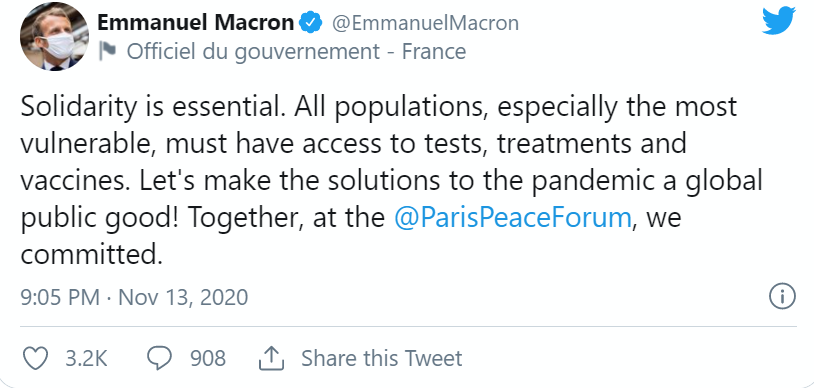
Portraying a positive attitude towards English language
Conclusion
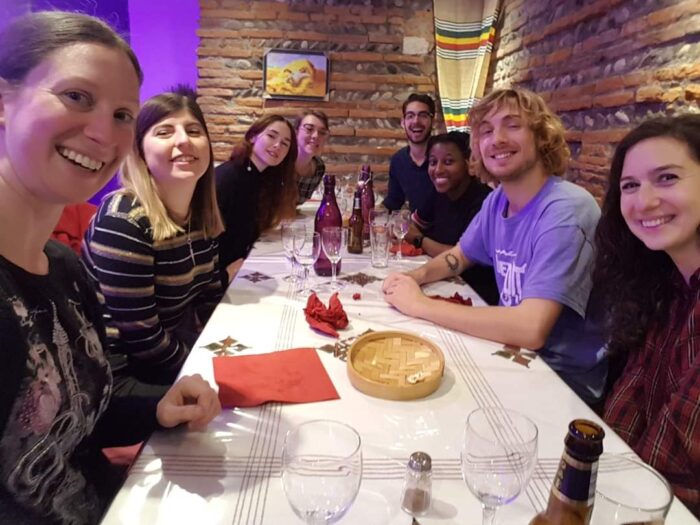
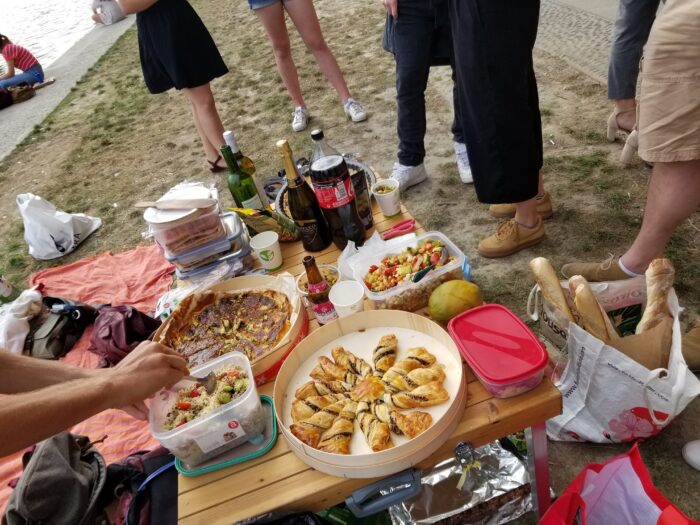
France is culturally rich, has a diverse immigrant population and stands as an imperial force in the world today. My appreciation for good cuisine or gastronomy, nature and openness to pets increased from living and experiencing the French way of life. I enjoy baguette, croissant nature but not chocolatine a specialty in Toulouse because I am not a chocolate person. Now, I can properly ask to buy something at the boulangerie without being corrected for wrong grammar – I now say “bonjour, une baguette s’il vous plait and not un baguette ☺ I have also learned about the galettes du fête among other French food and pastry traditions.
Living in Toulouse has helped me reflect on questions like who has the privilege of resisting a (foreign) language, as in the case of English in France. Many people around the world never learn to read and write their mother tongue because of scarce resources but globalization order ensures that some countries remain wealthy while others scramble for leftovers from the wealthy ones. France continues to reassert her dominant power structure and culture on its residents both directly and indirectly. Who is to blame? Those who succumb to linguistic oppression like me? Another thing is does merely speaking the French language make one French?
I consider myself privileged to have my level of education and access to opportunities allowing me to master the English language (especially the Nigerian variant). With my international exposure and education, I have observed the fascinating nature of other Englishes like the American, Indian, Ghanaian, British among others. In the same way, I have been exposed to varieties of French dialects and accents from the Caribbean or French Islands, Africa, Italy, Latin America. These varieties have become music to my ears since I am only aware of the mixed melodies but can’t really join in the conversation and interact casually with strangers except in simple sentences. This loss of meaningful interaction, feelings of isolation when surrounded by people speaking, laughing out their hearts be it at the park, the busy streets of downtown Toulouse, or on the metro sends my mind to translation mode especially if I am perceiving connected speech which I struggle to catch up with so that the rhythm around me brings a longing of the faraway atmosphere that I once knew- what home was felt like, at least the romanticized version. In spite of the daunting disconnect due to the language barrier, my love for language keeps me motivated to learn French, thanks to my companion Duolingo. Living in a Francophone country as an Anglophone made me realize that being fluent in three languages may not be enough, it just depends on where you find yourself. My multilingual identity is submerged by my baby French level. What is the point of language without the freedom to rap out your soul, say something pressing on your mind, engage in and with your community, feel heard, help out a lost stranger on the street etc?
__________
Tolulope Odebunmi is a communications strategist, a trained linguist and an educationist from Toulouse, France. Her interests include geopolitics and globalization, development issues and popular culture. She was a Fulbright Foreign Language Teaching Assistant (FLTA) at Michigan State University, USA. She enjoys learning, travelling and problem solving.
Platform Slot Online: Panduan Modern untuk Akses Gaming Digital dan Hiburan yang Bertanggung Jawab
Dunia gaming digital terus berkembang dengan sangat cepat, menciptakan lingkungan hiburan online yang semakin terkoneksi dan mudah diakses oleh berbagai kalangan. Di antara begitu banyak bentuk hiburan agendunia55 yang tersedia saat ini, permainan bergaya slot masih menjadi salah satu format yang cukup dikenal berkat mekanismenya yang sederhana, visual penuh warna, tema yang imersif, serta format permainan yang praktis dan cepat. Menanggapi tingginya minat tersebut, berbagai platform modern mulai berfokus pada akses yang lebih lancar, tampilan responsif, navigasi sederhana, serta pilihan konten permainan yang semakin beragam.
Saat ini, sebuah platform gaming online diharapkan mampu memberikan lebih dinasti33.xyz dari sekadar kumpulan permainan. Pengguna semakin menginginkan pengalaman yang terasa rapi, stabil, transparan, dan nyaman digunakan melalui berbagai perangkat. Baik mengakses platform menggunakan komputer desktop, tablet, maupun smartphone, pengalaman secara keseluruhan dapat dipengaruhi oleh kecepatan loading, desain antarmuka, struktur navigasi, serta seberapa jelas informasi yang ditampilkan.
Perubahan tersebut mendorong layanan gaming online untuk menerapkan pendekatan eslot yang lebih modern. Alih-alih membuat pengguna pusing dengan menu yang rumit atau informasi yang terlalu berlebihan, banyak platform kini mengutamakan tampilan bersih dan navigasi yang intuitif. Antarmuka yang dirancang dengan baik memungkinkan pengunjung memahami lokasi berbagai bagian situs tanpa harus membuang banyak waktu untuk mencari-cari halaman yang dibutuhkan. Dalam lingkungan digital yang serba cepat, kesederhanaan seperti ini ternyata bisa memberikan perbedaan yang cukup signifikan.
Peran Platform Gaming Online yang Terus Berubah
Platform gaming online telah mengalami perkembangan yang cukup besar https://eslot.sbs/ sejak masa awal hiburan internet. Situs-situs generasi lama biasanya lebih berfokus pada penyediaan akses menuju permainan tertentu, sedangkan layanan modern cenderung memberikan perhatian lebih besar terhadap keseluruhan perjalanan pengguna. Mulai dari saat seseorang membuka situs hingga menjelajahi konten yang tersedia, setiap tahap semakin dirancang indobet dengan mempertimbangkan aspek aksesibilitas dan kenyamanan.
Sebuah platform modern dapat menghadirkan berbagai kategori hiburan bergaya slot, dengan masing-masing kategori memiliki identitas visual dan struktur permainan yang berbeda. Beberapa judul mungkin https://indobet.cfd/ menggunakan desain klasik yang terinspirasi dari simbol buah, sementara lainnya mengangkat tema fantasi, petualangan, mitologi, konsep futuristik, atau nuansa sinematik. Keragaman tersebut memberikan kesempatan kepada pengguna untuk mengeksplorasi berbagai gaya permainan sesuai dengan preferensi masing-masing.
Namun, memiliki banyak permainan tidak otomatis berarti situs indobet memberikan pengalaman yang lebih baik. Pengorganisasian konten tetap menjadi faktor penting. Koleksi permainan yang sangat banyak justru bisa terasa merepotkan apabila kategori, fitur pencarian, dan deskripsinya tidak disusun dengan jelas. Karena itu, platform yang mampu mengatur kontennya secara efektif dapat memberikan pengalaman browsing yang jauh lebih nyaman.
Konsistensi juga menjadi faktor penting lainnya. Pengguna pada umumnya mengharapkan halaman dapat berfungsi dengan baik, tombol memberikan respons sebagaimana mestinya, dan informasi penting tetap mudah ditemukan. Stabilitas teknis akhirnya menjadi bagian penting dari keseluruhan pengalaman digital, bukan sekadar fitur tambahan yang boleh diabaikan.
Akses di Berbagai Perangkat Modern
Smartphone telah mengubah secara fundamental cara orang menikmati hiburan online indowin88jp. Jika dahulu platform gaming lebih identik dengan komputer desktop, kini berbagai layanan digital dapat diakses melalui browser mobile maupun perangkat portabel lainnya. Perubahan ini membuat desain responsif menjadi bagian yang sangat penting dalam pengembangan situs modern.
Platform responsif seharusnya mampu menyesuaikan tampilan dengan berbagai ukuran layar tanpa membuat navigasi menjadi ribet. Teks harus tetap mudah dibaca, tombol ditempatkan pada posisi yang nyaman, dan bagian penting tetap dapat diakses tanpa harus melakukan scrolling atau zooming secara berlebihan. Detail seperti ini mungkin terlihat sepele, tetapi memiliki pengaruh besar terhadap kenyamanan penggunaan.
Kecepatan loading juga tidak kalah penting. Pengguna internet rajapoker saat ini sudah terbiasa dengan situs yang memberikan respons cepat, sehingga halaman yang lambat dapat langsung menimbulkan rasa kesal. Struktur halaman yang efisien, media yang telah dioptimalkan, serta antarmuka yang ringan dapat membantu menciptakan pengalaman browsing yang lebih smooth.
Pengguna modern juga semakin memperhatikan keamanan dan privasi. Sebelum berinteraksi dengan sebuah layanan gaming online, seseorang mungkin ingin mengetahui bagaimana informasi pribadinya dikelola, kebijakan apa saja yang berlaku, serta apakah platform tersebut menjelaskan ketentuan penggunaannya dengan jelas. Komunikasi yang transparan dapat membantu pengguna mengambil keputusan yang lebih tepat mengenai apakah suatu layanan sesuai dengan kebutuhan mereka.
Mengenal Hiburan Bergaya Slot
Permainan bergaya slot umumnya dikenal melalui konsepnya yang sederhana https://rajapoker.top/. Pemain berinteraksi dengan reel atau mekanisme visual sejenis, sementara simbol dan kombinasi tertentu menentukan hasil yang ditampilkan berdasarkan aturan masing-masing permainan. Meskipun memiliki fondasi yang cukup sederhana, pengembang modern telah menghadirkan grafis, animasi, efek suara, dan elemen tema yang semakin canggih.
Variasi tema menjadi salah satu alasan mengapa permainan seperti ini masih mendapatkan perhatian dalam industri hiburan digital yang lebih luas. Pemain yang menyukai desain tradisional mungkin lebih menikmati tampilan klasik, sedangkan mereka yang tertarik dengan dunia fantasi atau fiksi ilmiah dapat memilih pengalaman visual yang benar-benar berbeda.
Fitur permainan juga dapat memiliki variasi yang cukup besar. Beberapa judul menghadirkan ronde bonus, simbol yang dapat berkembang, animasi khusus, maupun konfigurasi reel yang berbeda. Fitur-fitur tersebut membuat setiap permainan terasa memiliki karakter tersendiri meskipun konsep dasarnya tetap serupa.
Meski begitu, penting untuk membedakan fitur hiburan dengan hasil yang dijamin. Tidak ada platform gaming yang sah yang dapat menjanjikan bahwa seseorang pasti mendapatkan nominal kemenangan tertentu atau memperoleh hasil yang sudah dipastikan. Hasil permainan ditentukan oleh mekanisme dan aturan masing-masing game. Karena itu, pengguna sebaiknya memandang aktivitas tersebut sebagai hiburan, bukan sebagai cara yang dapat diandalkan untuk menghasilkan uang.
Transparansi Itu Penting
Transparansi semakin menjadi aspek penting dalam lingkungan gaming online slotvip. Platform modern sebaiknya menyediakan informasi yang relevan secara mudah dan wajar, bukan menyembunyikan ketentuan penting di balik bahasa yang membingungkan atau navigasi yang berbelit-belit.
Syarat dan ketentuan yang jelas, informasi privasi, panduan bermain secara bertanggung jawab, serta berbagai batasan yang berlaku dapat membantu pengguna memahami layanan yang sedang mereka gunakan. Pendekatan seperti ini juga menciptakan kesan yang lebih profesional karena pengunjung dapat memeriksa informasi penting sebelum memutuskan untuk melanjutkan.
Bahasa promosi yang digunakan sebuah platform juga perlu diperhatikan. Pernyataan promosi yang terlalu agresif dapat membangun ekspektasi yang tidak realistis, terutama ketika menggunakan klaim seolah-olah kemenangan dapat dijamin atau seseorang dapat terus memperoleh keuntungan besar secara konsisten. Pendekatan yang lebih bertanggung jawab adalah menjelaskan fitur hiburan secara akurat tanpa memberikan janji yang tidak dapat dibuktikan secara masuk akal.
Hal tersebut semakin relevan dalam industri yang informasi promosinya dapat menyebar dengan sangat cepat melalui mesin pencari maupun media sosial. Audiens modern semakin mampu mengenali klaim pemasaran yang berlebihan, sehingga keaslian informasi dan kejelasan komunikasi menjadi nilai yang semakin penting.
Menciptakan Pengalaman Digital yang Lebih Bertanggung Jawab
Hiburan yang bertanggung jawab seharusnya tetap menjadi bagian dari pembahasan ketika membicarakan gaming online. Permainan bergaya slot melibatkan unsur peluang, sehingga pengguna perlu memahami bahwa hasilnya tidak dapat diprediksi secara pasti. Pengeluaran sebaiknya tetap berada dalam batas kemampuan pribadi dan aktivitas gaming tidak boleh mengganggu kebutuhan finansial utama.
Pendekatan yang sehat adalah menganggap gaming digital sebagai aktivitas rekreasi tambahan, bukan sebagai sumber pendapatan. Pengguna sebaiknya menghindari kebiasaan mengejar kerugian atau meningkatkan pengeluaran hanya karena sebelumnya mengalami hasil yang tidak sesuai harapan. Mengambil jeda secara berkala juga dapat membantu menjaga perspektif dan mencegah aktivitas hiburan berkembang menjadi sesuatu yang berlebihan.
Batasan usia dan peraturan lokal juga menjadi hal yang penting untuk diperhatikan. Peraturan mengenai gaming online dapat berbeda secara signifikan antara satu wilayah dengan wilayah lainnya. Oleh sebab itu, pengguna perlu memastikan bahwa aktivitas yang dilakukan sesuai dengan ketentuan hukum yang berlaku di lokasi masing-masing.
Platform juga dapat mendukung perilaku yang lebih bertanggung jawab dengan menyediakan informasi yang jelas dan membuat kebijakan terkait mudah ditemukan. Ketika informasi mengenai responsible play menjadi bagian normal dari pengalaman pengguna dan tidak disembunyikan, lingkungan digital dapat terasa lebih seimbang dan informatif.
Mengapa User Experience Tetap Penting
Platform modern yang kuat biasanya memahami bahwa hiburan digital tidak hanya berbicara mengenai jumlah permainan. Koleksi game yang sangat besar tidak akan memberikan banyak manfaat apabila pengunjung kesulitan menavigasi situs atau tidak dapat menemukan informasi yang mereka perlukan.
User experience yang baik merupakan kombinasi dari berbagai elemen, termasuk navigasi intuitif, desain responsif, konten yang mudah dibaca, stabilitas teknis, serta komunikasi yang transparan. Ketika seluruh elemen tersebut berjalan secara harmonis, pengguna tidak perlu menghabiskan terlalu banyak waktu untuk memahami cara kerja sebuah situs dan dapat lebih fokus mengeksplorasi konten hiburan yang tersedia.
Prinsip tersebut sebenarnya merupakan bagian dari tren yang lebih luas di dunia internet. Pengguna kini semakin mengharapkan situs yang cepat, bersih, mobile-friendly, serta mudah dipahami. Platform gaming online pun tidak terkecuali.
Masa depan gaming digital kemungkinan akan terus bergerak menuju antarmuka yang lebih personal, pengalaman mobile yang semakin baik, konten visual yang lebih kaya, serta perhatian yang lebih besar terhadap transparansi. Teknologi akan terus berubah, tetapi prinsip dasar pengalaman digital yang baik kemungkinan tetap sama, yaitu aksesibilitas, kejelasan, keandalan, dan penggunaan yang bertanggung jawab.
Melihat Perkembangan ke Depan
Sektor slot online dan gaming digital masih menjadi bagian dari ekosistem https://slotvip.cfd/ hiburan yang berkembang dengan sangat cepat. Teknologi baru, standar desain yang terus berubah, serta ekspektasi pengguna yang semakin tinggi akan terus memengaruhi cara berbagai platform dibuat dan dikelola.
Bagi pengguna, pendekatan yang paling bijak adalah tidak hanya terpaku pada bahasa promosi yang terlihat menarik, tetapi juga memperhatikan kualitas platform secara keseluruhan. Antarmuka yang jelas, performa teknis yang stabil, informasi yang mudah diakses, serta prinsip hiburan yang bertanggung jawab memberikan fondasi yang jauh lebih bermakna dibandingkan sekadar janji promosi yang berlebihan.
Pada akhirnya, gaming online modern semakin bergeser dari sekadar menyediakan akses menuju permainan menjadi sebuah pengalaman digital yang lebih lengkap. Platform yang memahami perubahan tersebut dapat menciptakan lingkungan yang terasa lebih praktis, transparan, dan engaging sekaligus menghindari pembentukan ekspektasi yang tidak realistis.
Seiring perkembangan industri, pengguna dapat mengharapkan layanan gaming https://www.ktravula.com/2023/06/learning-about-nigerian-libraries/ yang semakin canggih. Namun, partisipasi yang bertanggung jawab tetap menjadi hal yang sangat penting. Hiburan seharusnya tetap menyenangkan, terkendali, dan sesuai dengan kondisi masing-masing individu.
Dengan demikian, pengalaman gaming modern tidak hanya ditentukan oleh kualitas grafis, variasi permainan, atau kemudahan akses. Cara sebuah platform berkomunikasi dengan audiensnya juga memiliki peranan besar. Dalam lingkungan digital yang semakin kompetitif, kepercayaan, kemudahan penggunaan, transparansi, dan desain yang bertanggung jawab dapat memberikan kesan jangka panjang yang jauh lebih kuat dibandingkan sekadar hype promosi yang hanya bertahan sementara.