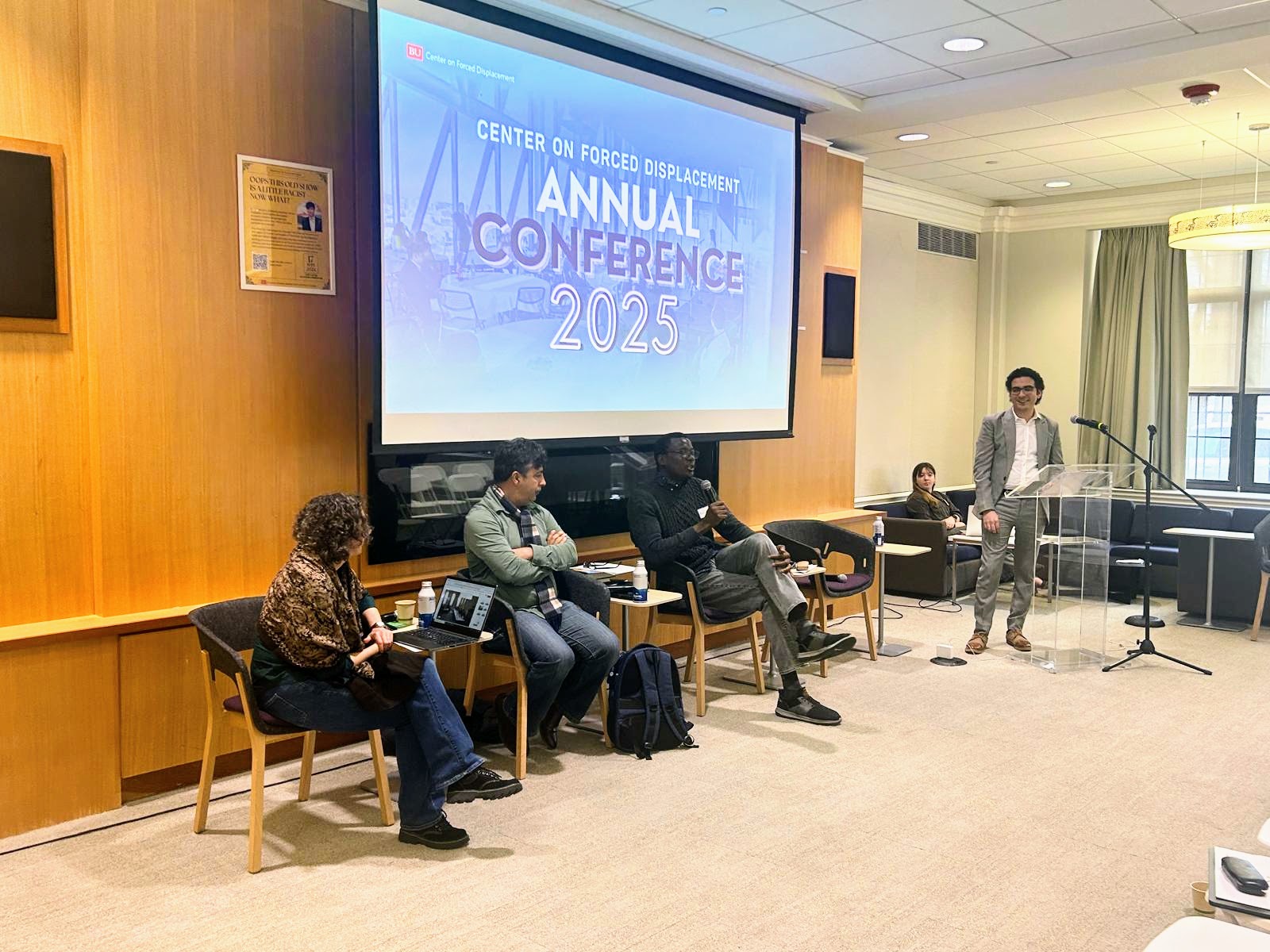
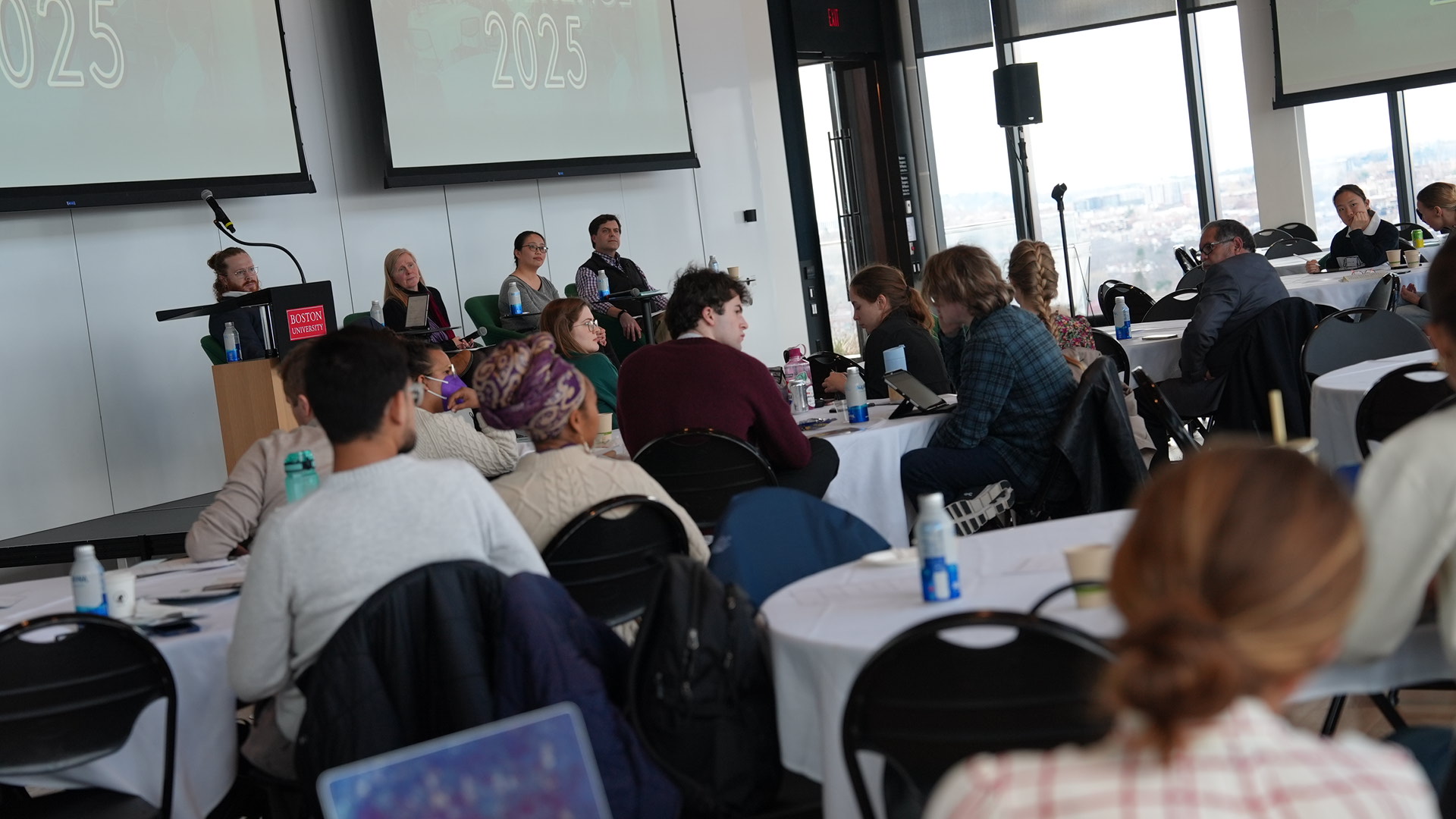
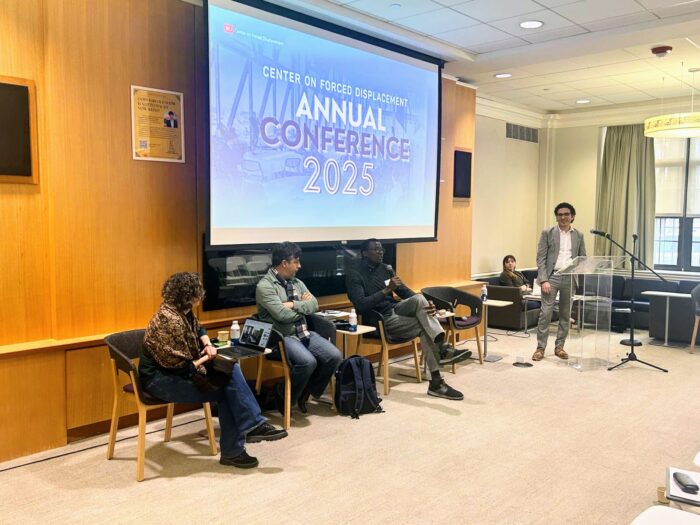
Talk given at Boston University’s annual conference on Forced Displacement. April 7, 2025
____
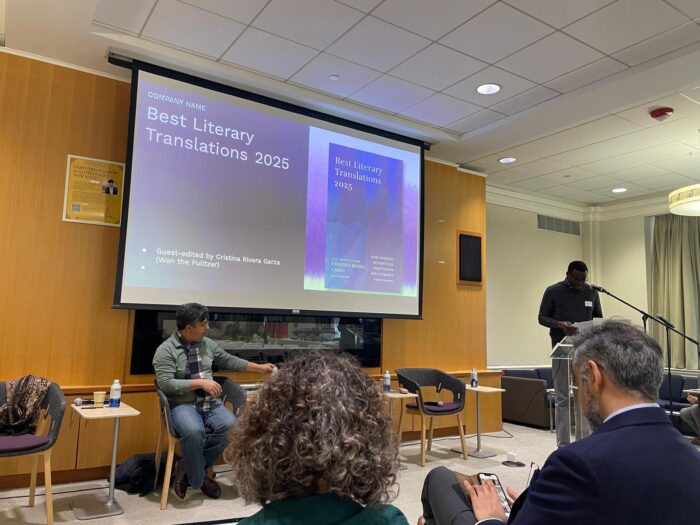 Good afternoon everyone.
Like you, I’ve been watching the news.
And when I got the invitation to participate in a conference on forced displacement, I was convinced that someone had planned with some invisible force to get me into government trouble. I went online to search, just to be sure that it was not an elaborate prank. Look and behold, it’s real. It’s a real place, on campus, and the conference does indeed seek input from a writer and linguist about how violent conflicts affect language. Or, at least as I see it, how language adapts or survives in spaces of armed conflict and forced displacement.
So thank you for inviting me.
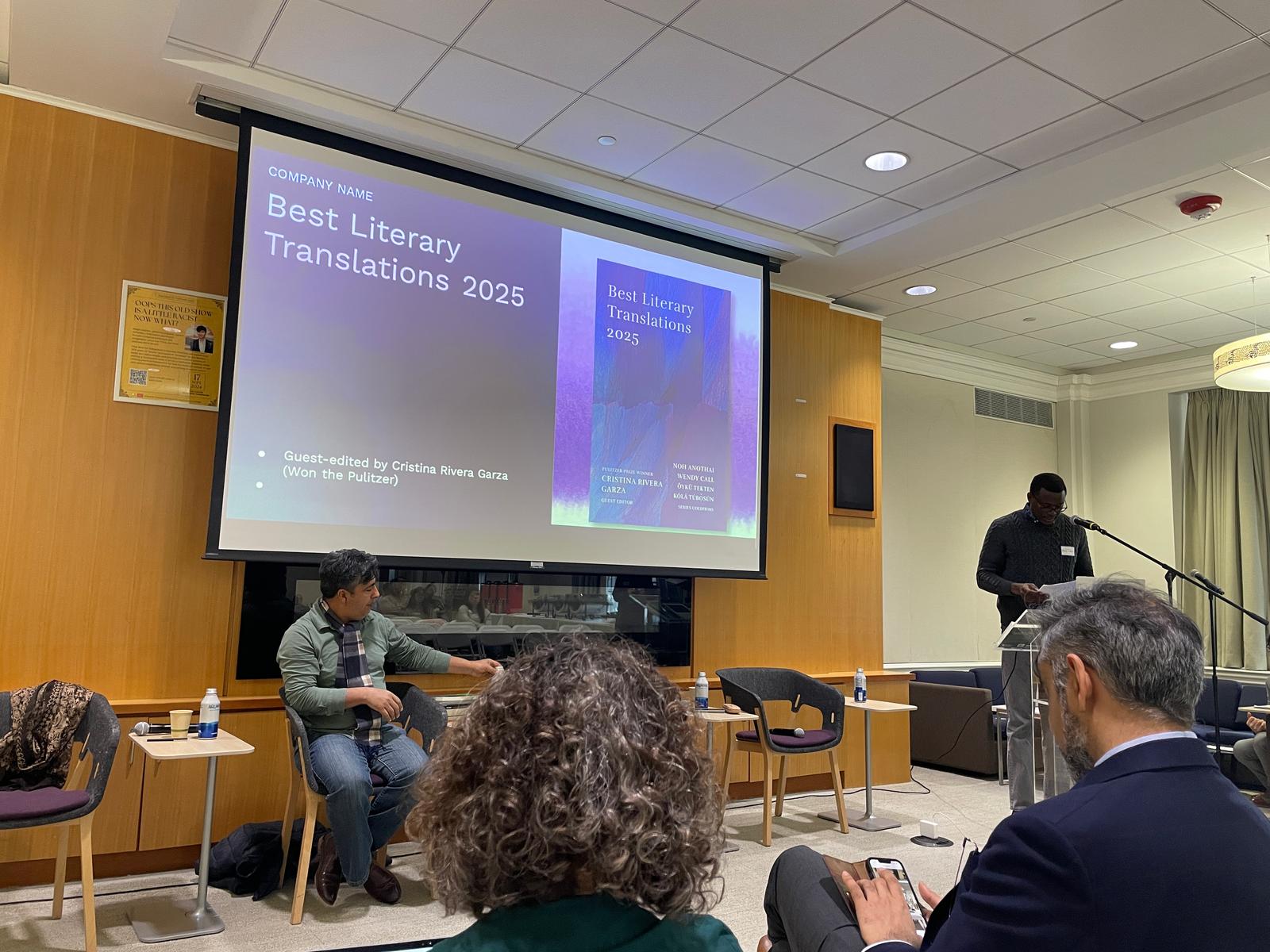
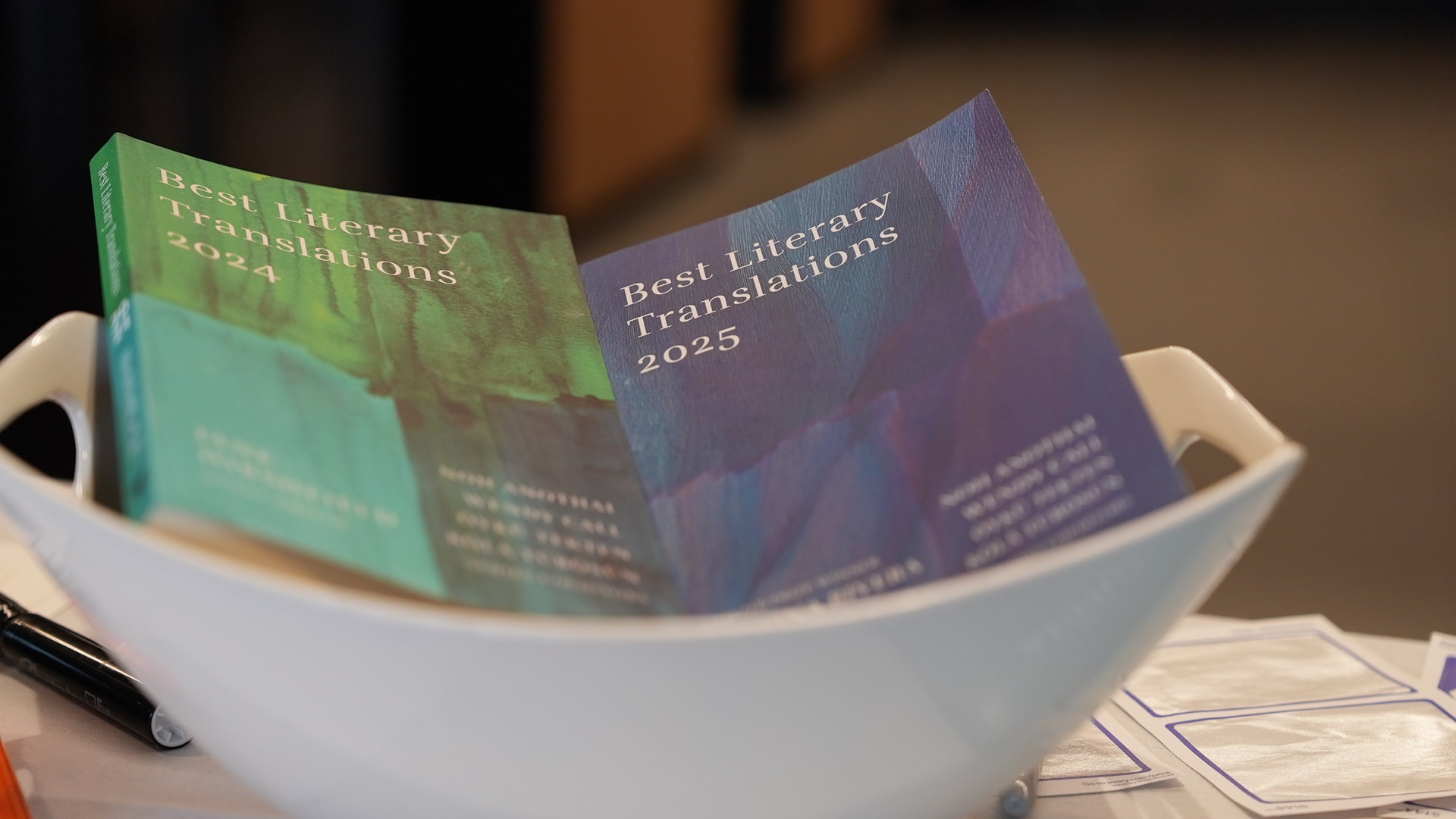
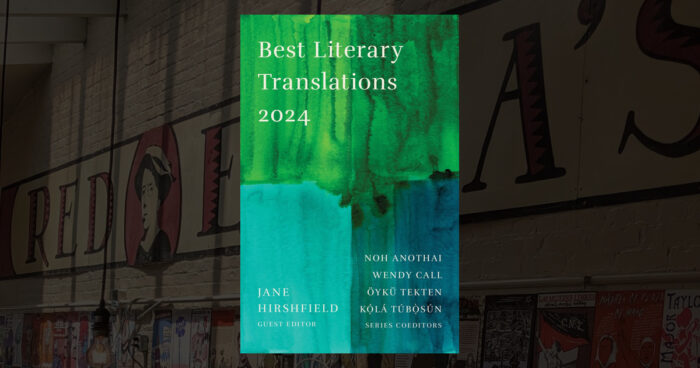
I’m a writer, the co-editor of Best Literary Translations, now in its third year. There are copies of the book for sale if you’re interested in them. The 2025 edition will be out at the end of this month, guest-edited by Cristina Rivera Garza, but we have copies here.
I’m also a linguist, by training. In other lives, I’m a language activist in Nigeria with interest in the ways that technology hinders or enhances the use and vitality of languages across the country and across the continent. I’m also a creative writer, usually poetry. So, you see language is very important in my trade.
At Columbia University a few weeks ago, I spoke about a professor mentor of mine, Ron Schaefer who shared with me the language of his childhood in St. Cloud Minnesota. Like most people who grew up in the frontiers, his grandparents had come from Europe and brought their languages with them, so the lingua franca at the farm was German. I knew that most families at those times spoke their languages at home, but it was interesting to hear it again. Ron himself, now a professor of linguistics, had achieved success in his career by helping to revitalize and document a language of Nigeria called Emai, and had retired as the Director of International Programmes at Southern Illinois University.
We were having this conversation online during the time when the government was declaring English as the official language of the US. I used his story in that talk to illustrate a problem of amnesia but also of displacement. Something many of us can relate to in some way, since every immigrant to the US comes from somewhere and carries with them some of that culture and tradition and, of course, language. What do we lose? How do we carry these senses of displacement to each generation through our language competence and lack thereof.
Nigeria, my primary example, offers many more instances. Even when there are no obvious conflicts, a country of about 520 languages hoping to make a nation out of the many will eventually run into a number of issues. Many of these involve technology, which is my primary interest. But many are merely sociological. Some conditioned by politics, globalisation, educational or government policies. The official language of Nigeria too, is English, and this has affected the growth and capability of many Nigerian languages. There are still no schools in the country today where you can learn in any Nigerian language. Literature is still mostly in English. Governance is in English. And many Nigerian languages are dying as a result. Many languages in the country and on the continent are endangered because of this historical and ongoing event. What globalization has done on the African continent and elsewhere is present English as the only viable means of communication while making other languages irrelevant. And with the language loss, we lose different ways of looking at the world.
 And then throw in conflict, conquest, forced and unforced displacement, and you have a different story. We had a Civil War between 1967 and 1970, but some fissures remain. Look around the continent today; heck look around the world: Ukraine, Gaza, Sudan, the Congo, Korea, etc. Each of those conflict spaces present not just the tragedy of human displacement, but also of language.
During my grad school, I worked part-time at the International Institute of St. Louis. It was an institution set up to help displaced people from all around the world fit into the American society. We taught them not just English language but American culture. Many of them came from places where they had spoken no other language but their mother tongue. Due to war and displacement, they were now here in a place where English language was the only means of communication. Working with adults who had never heard the song “A for Apple, B for Ball” was a moment in humility. It was easy to imagine, in my own bubble in Nigeria where English dominated most of the public interactions that it was a language that everyone spoke or had some experience with.
This is where translation comes in, or multilingualism.
By providing a chance for cultures to travel from one language to another, we bring people into comfort with their surroundings. While we may not always be able to get into their heads and understand the depth of their predicaments, we can help them get a comfort with their new environment enough to give their lives a second chance.
My experience at the International Institute always filled me with that sense of profound awe at what it must take for someone to leave their old lives for a chance to start again, trusting that all they know and have left behind will be enough to get them through the new and challenging experience.
Where communication happens, and relevant messages transmit successfully from teacher to student, colleague to colleague, neighbour to neighbour, life goes on as it should, and community is healed. When it is not, or when translation breaks down enough to transmit ambiguity or other unwanted additions to conversations, the purpose is defeated.
I’d like to quote from the talk I gave at Columbia, regarding a YouTube video I saw earlier in the year, this time about an ongoing global conflict.
I had seen an interview, a few weeks ago, between President Zelensky and Lex Friedman which had — in the space of an hour or so that the interview lasted — the two speakers speaking English, Russian, and Ukrainian. But due to the help of technology, speech synthesis, voice cloning, translation, and artificial intelligence, I could watch the whole interview in English, without even knowing when the switch happened between languages. Someone else could view the same interview in Russian or Ukranian and have the same experience. Technology has been trained to understand which language is spoken, and adjust it to the listener as necessary. This wasn’t possible for any language in 2005 when I left the university, but now it’s almost commonplace. And yet, it still isn’t possible today in Yorùbá, a language that I speak, or any African language I know. If I had my way, it would. One day, our experience of the internet will be tailored to our language competence. But to make African languages like Yorùbá participate, we need a lot of clean Yorùbá data, and resources to train models that can make it happen. The continent of Africa has about 2000 languages. Where do we begin?
 Technology has been helpful, in many ways, in helping us cross language barriers, even in times of war. But, as I said in that talk, some languages have been luckier than others. Because of a combination of factors: political, social, economic, some of the languages most efficient to use in technology, in translation, and now in AI are some of the same languages that have advanced features in the earlier internet age, and in the earlier print age. Some of those obstacles to the smaller languages have followed them into this new generation.
Imagine a situation in which someone being evacuated from Gaza or Sudan or Ukraine into the United States can just communicate immediately through the use of technology, with instantaneous translations?
Literature is one great way to bridge the gulf. The larger the corpora in the language, created by literature or just regular language use in technology, the more likely the language is to be aided by technology in the future, to be useful in modern speech tech. But like I also mentioned, literature has followed the rest of the hegemonic institutions in favouring only big languages with powerful tools and powerful cultures. A lot of systemic issues have mitigated against the production of literature publication in underserved languages. So English, Mandarin, German, Korean, French etc continue to lead in the tech age as they do in the artificial intelligence age.
Literature in a small African language doesn’t always stand a good chance to be read anywhere but in the village where the language is spoken, if it’s written at all. And when it’s written, the chance to publish is small. When it’s published, it might not get widely distributed. With the internet, the audience can grow a bit. So a speaker of that language who lives in a corner of Germany or Japan or Indiana can read that story in his language published on a widely read literary platform. This was the thinking behind our project at OlongoAfrica, where we got a select number of stories by African writers translated into ten different African languages, and then get native speakers to read and record them. We put these on a website for people to read and listen to and share.
What Best Literary Translations does is provide a place for many of the translations from these languages can gather and travel together across the world in English, in a book form. As editors, we collect, read, edit, and present some of the best translation entries we receive which have been translated into the English language. We thus engage readers in English who may not otherwise have access to these works, or these writers.
What we can do is to hope that the availability of these opportunities for creative exchange does something to mitigate the pain and suffering that necessitate translation in the first place, though we know innately that it can never be fully sufficient. The world is a complex place, with a variety of unpredictable events moving us to the other.
 I’m a speaker of Yorùbá, a language I know that I speak with full native competence, but which I haven’t had to speak over the last couple of years as I’d have loved, because I’m surrounded by people who speak different languages. When I am in Lagos, Nigeria, where I lived for ten years, I’m surrounded by other Nigerians who speak Igbo, Hausa, Ibibio, Efik, Berom, etc. To communicate with each other in a modern metropolis, we speak English, or Pidgin. And as a result of this though important contingency, we put our own native languages to the back, and it recedes by itself over the years into places from where we sometimes need sharp tools and hours of labour to rescue them.
In 2021, I published my Yorùbá translation of a collection of English poems, written by a professor from the University of Pennsylvania. In retrieving words from my native language to render from English the creative endeavour of another person, I ran into a wall, many times, and I’m reminded of the saying that the best way to lose one gift is to refuse to use it. Words I once took for granted took many hours of thinking and trying to retrieve. It was no different when, in 2022, I translated a short story by Haruki Murakami into Yorùbá. Very exciting process in both cases, but no less tasking in reaching words I used to never have to look for, in my own language.
So perhaps, this is one of the benefits of translation: giving us a chance to reach into parts of ourselves that we may have forgotten exists, to find the part of ourselves that was always there, and in a language we speak in the depth of our soul. The difference is that in my own case, it is voluntary. The many people who have to go into exile, who are forcibly displaced from their homes, who have to live in places where their native languages do not serve them in any capacity, do not have the choice as to whether to forget. The new societies often force that condition on them, sometimes suddenly, sometimes gradually, but always eventually.
Translations, technology, and literature can only mitigate what is a fundamental alienation.
During the work for our 2024 edition of Best Literary Translation, we ran into a dilemma. Some of the Ukrainian translators selected for the edition wrote to us to request that they not be published beside Russian ones, because of the ongoing conflict. Not being able to resolve the conflict in a way that does not disenfranchise the work of translators we had diligently selected, the writer elected to withdraw her poem, highlighting some of the issues that translation in itself can’t always solve.
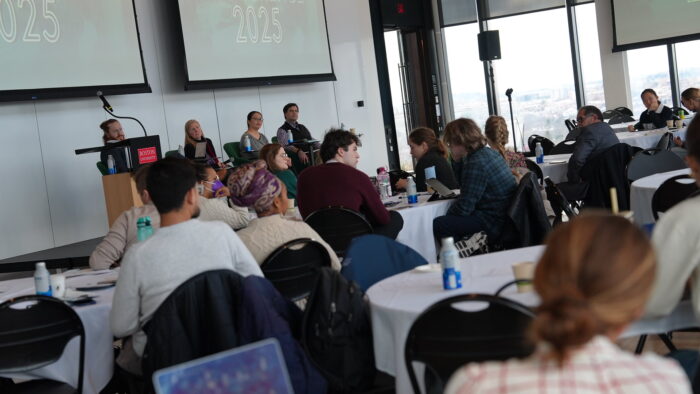 At a language conference at Brown University’s Translation Across Disciplines last year, I was on a panel on Translation and social justice. One of the speakers spoke about her work at Guantanamo Bay in Cuba where US has a base, which holds hundreds of detainees considered too dangerous to put on the mainland or sent back to their countries. Some of the translators at the base come from Cuba — the base provides regular job for them — while some actually live on the base. One of the things I was so curious about, and I asked the speaker, was what did she notice was the change in the Spanish of those who are condemned to live on the Island not because they’re detainees, but because they are employees of the government. They can’t go back to Cuba, they work for the US government, and they don’t have a chance to interact daily with people who come from the US mainland. But their language is Spanish. I was really curious whether the Spanish they spoke evolved over the years to a point where it is so different from that on the mainland. I don’t remember what the answer is now, but I find things like this quite curious — the ways in which our language competence evolves over the years, either because of our deliberate actions, or because of forces beyond our control.
I’m rounding off now. Let me quote from the introduction to our first issue BLT2024:
“Best Literary Translations strives to be a curative to parochial thinking. We present voices from around the world, paying special attention to lesser-known literatures and languages. The guiding vision of Best Literary Translations is to offer a counterpoint to the xenophobia and racism that have marked the last decade— and, truly, the entire history — of this country.”
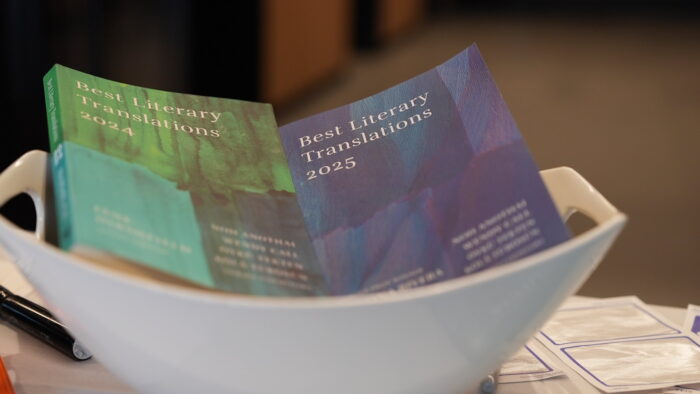 And from BLT 2025, rightly dedicated to Refaat Alareer (a Palestinian writer, poet, and victim of the Israeli bombing of the Gaza Strip in December 2023) and Jerome Rothenberg, an American poet, translator and anthropologist, we have the following:
“Despite the many difficulties that can hinder their translation, twenty-three languages are represented here in Best Literary Translations 2025. Featured in these pages are not only works from languages that have been underrepresented in U.S. publishing, but some that have been actively persecuted, such as the Uyghur of Adil Tunaz (translated by Munawwar Abdulla), the Faroese of Kim Simonsen and Lív Maria Róadóttir Jæger (translated by Randi Ward and Bradley Harmon), the Tu’un Savi of Florentino Solano (translated from Spanish by Arthur Malcolm Dixon), and the Ukrainian of three different authors, among others. That some of these works made it to publication at all—much less into our nominations and eventually into the pages of this anthology is a testament to steadfastness of the authors continuing to write in those languages, the dedication of the translators working urgently to amplify their voices, and the solidarity of the editors who published this work. Best Literary Translations celebrates their successes and honors their ongoing struggles.”
In conclusion, language loss can be as much a marker of displacement as incarceration or loss of land. But I’m a linguist so my work is about the language, and not the politics. Occasionally, they intersect, sometimes so personally. And occasionally, literature is there to provide some succor in those liminal spaces.
Thank you for listening
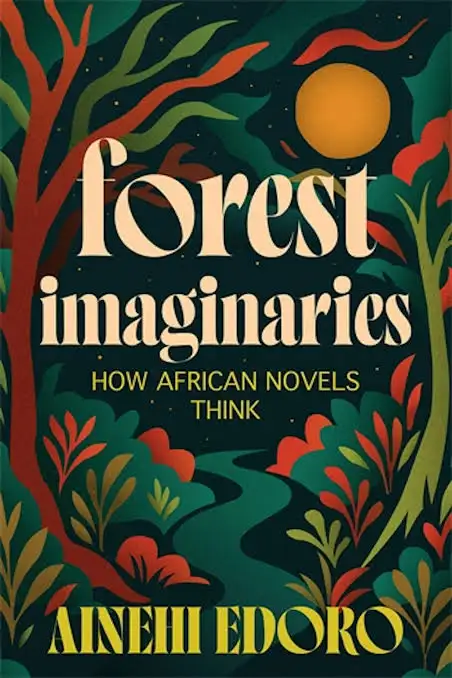 I’ve just finished reading Ainehi Edoro’s Forest Imaginaries: How African Novels Think published last month by Columbia University Press. Edoro, the publisher of Brittle Paper — an important platform for African literature conversations — takes a deep look at the role of forests in African literature, and the reader on a wild ride in this her debut scholarly work.