
A Night in Wales: Pursuing The “English Not”

IMG_4076 The curious linguist in me was on high alert during my tour of the Ysgol Glantaf Welsh-medium School in Cardiff where every subject but English itself is taught in Welsh. I spotted, quite early, that the word Ysgol in the name referred to “school” and was pronounced almost the same way (thanks to my guide Jeremy); that “alright” was used a lot in the classes, perhaps because of a lack of a common Welsh equivalent that could do the job better; and – as was called to my attention while at Radio Cymru – the word “lot” remained the same in English as in Welsh, to the consternation of many conservative Welsh speakers concerned about the dilution of the language. I picked up a few more new knowledge: the “f” sound is pronounced as “v” so “Glantaf” is actually [glantav], and whenever “d” is doubled as “dd”, the sound is the voiced dental fricative, as we have in “those” and “them”. And finally, to my delight, I realised that “Cymru”, the native word for “Wales” is pronounced more like “Camry.”

Walking around a few classes I was privileged to attend as an observer, one of the questions I put to the students was what language they would prefer to learn in if they had a choice. The overwhelming response was “Welsh”. This came not just from native Welsh students but also from students of English-speaking homes. “Why?” I followed up, now genuinely curious as to whether this was just a way to impress this visitor from Nigeria. One of the reasons I remember is that “it is easy to read and spell. The sounds correspond more to the spelling.” I remember this because it refers to one of the famous complaints about the nature of English, but also because it made me acknowledge the role of accessibility in the assessment of a language as a tool for learning. As a Nigerian with a life-long tussle with the English language and a fairly competent grasp of its grammar, the claim of a one-to-one correspondence between the spelling of Welsh and its pronunciation is a little curious (See: “Cymru” above), but the enthusiasm of the student was hard to ignore.
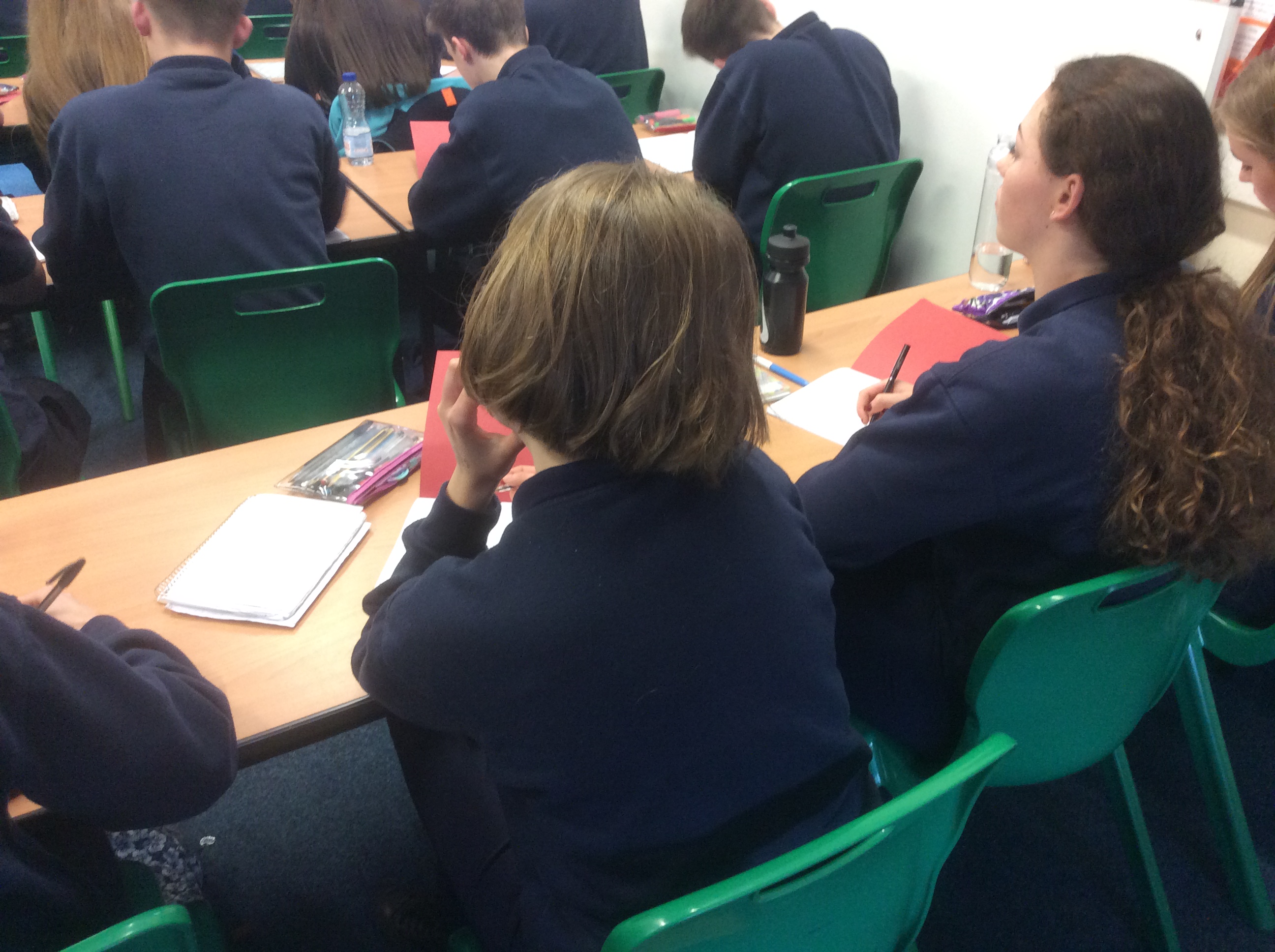
IMG_4088In the end, the idea of a thriving culture of mother tongue education in a language not English – in a British country, no less – impressed me more than anything else I came across in my ten days in Britain. From the days of the Treachery of the Blue Books to the period of the Welsh Not, the country of Wales seems to be back on its footing on the way to a truly vibrant cultural identity. See what happened when one British journalist mistakenly spited Welsh-medium education through a carelessly worded phrase!

In Nigeria, the policy of mother tongue education is scoffed at with one common argument, notable in its emptiness when applied to the Welsh example: “Using the mother tongue to educate a child in a country of so many languages will lead to a fractured and disunited country in the future, a drawback to true national development.” Well, the United Kingdom almost got fractured last year, and the Welsh weren’t the culprit! Scotland, which spearheaded the move, isn’t as big on its indigenous language use (with less than 2% of its population speaking Scottish Gaelic), and perhaps even fewer speaking Scots as a first language. Wikipedia says none of these languages has formal recognition nor is used as a medium of instruction in Scottish schools. So, there goes the argument for language as the only means of national integration!

I note, with sadness, the absence of any school in Nigeria today where any Nigerian language is used as a medium of instruction from start to finish. Nowhere where Physics, Chemistry, Mathematics, or any other technical discipline is taught in a Nigerian language. Could that have contributed to the 70.67% failure rate of English and Mathematics at last year’s year-end results? Your guess is as good as mine. But we have ourselves to blame for not looking for new ways to change a system that is obviously not working as expected. What is education, after all, if not a means of empowering the child?

A Day in the Life

My way to work every morning takes me through a myriad of winding lanes through the veins of Nigeria’s former capital city, Lagos.

I wake up at 5am.

The alarm clock on my phone as well as that of my wife* ring both at once, separated by just  a microsecond, and I get up. The games we play is to plan to be the first to get up before the other places the ringing phone next to the other’s ear.

Like clockwork, I must head to the bathroom in the next two minutes, sometimes spent on my phone checking for missed calls from the US, or unreplied emails on my phone. She nudges me again, and I head to the bathroom.

In twenty minutes, I am back in the room, this time dropping fresh warm bath water on my hair and on my feet. She has placed my clothes where I can easily reach them, a very romantic gesture. A white shirt, a black tie, and a grey pant. Another day is a different combination of colours that leave me entering every class looking as distinguished as I could ever look. I smile, talk about a few interesting things I forgot to tell her yesterday, while I dry myself, put on clothes, and get ready. Must be out of the house latest by 5.30am. And that’s getting late. At the door, I give her a kiss and promise to get home early, and get out of the house.

My path through Lagos is a winding one through all its throbbing lanes. But at a quarter to six, in usually the first or second BRT (Bus Rapid Transport) bus out of the gate at the park, the roads are just waking up. In less than fifteen minutes from then, the city begins to fully wake to the promise of day.

We go through Ikeja, close to the famous airport, then get to Oshodi, a once notorious spot filled with all manner of commuters and market men and women. Dawn wakes in a distance, and the bus plows through. In a few minutes, we are on Ikorodu road, saved for a couple of minutes by the presence of a designated lane for the BRT buses marked with Yellow. We sometimes get to Iganmu, site of the National Theatre (built in 1977 to mark the Festival of Arts and Culture: FESTAC), driving on the bridge that puts the military-cap style of the theatre against the backdrop of a distant skyline of the Lagos Islands. On another day, we find ourselves on the Third Mainland Bridge (Africa’s longest bridge that ends up at CMS near the first church building in Lagos, belonging to the Church Mission Society.)

It is on this bridge that I encounter one of the most enduring images of my last couple of days: sillhouette images of fishermen on canoes going to work, sometimes riding in a formation, sometimes not. But usually, without fail, moving with the dawning day into the far reaches of the dark Lagos Lagoon. At 6.30am, all I see is the shapes of men and young boys paddling slowly into the morning. Here I am, an “educated” middle class “elite” in the Nation’s commercial capital heading to work. And there they are, the fishermen whose livelihoods depend on the benevolence of the waters. It is morning. We are all going to work: me, in a fast-moving vessel of the Lagos State Government heading onto the Islands, and them – from wherever far away in the darkness – into the depths of the waters to find sustenance.

I make a mental note as we go along. I wonder whether the small handheld Canon I just pulled out to take a picture of the dawn along with the canoes was able to see anything. In many cases, it only made me the centre of attention in a bus full of work-faring passengers like me, not yet buoyed by breakfast or a morning coffee. That happens at work.

“How is madam?” used to be the first greeting I receive at work. Now it’s like the second. “How was traffic today?” has replaced it. Sometimes it is, “I hope you didn’t get wet from the rain.” We fraternize like long lost brothers. Make jokes about each other’s appearance. Sometimes we share anecdotes about difficult students, then we disperse to individual offices to prepare for the lessons of the day. I have the first two periods – usually the best time to teach young boys anything, before their irrepressible energies sublimate into the most cantankerous behaviour. An hour and half later, I am downstairs at the school cafeteria for breakfast. Today it is coffee with sugar. No milk. And bread with corned beef and mayonnaise. Tomorrow, it might be ogi and akara. A few members of the academic staff are here, and we laugh and share some more small-talk.

I go back to class to teach, this morning, the subject of argumentative essays. I tell them the importance of having control of the subject, and being able to anticipate the points of the opposition. I ask them about the debates between President Obama and his competition. A few saw it. Some thought that the president won, and some rooted for his opponent. A few students – having seen some doomsday poster/calendar sold under the bridge at Oshodi tell me that Obama was the antichrist. “He has signed 666 into law, and now there are chips being placed into people’s foreheads.”

I shake my head in incredulity and laugh at the folly of the student. He asks me if I am a supporter of the president, and I decline to immediately answer. I tell him that I could oppose the president and still believe that what the doomsday calendar said was just the feverish imagination of smart/desperate Nigerian preying on the gullibility of the average Nigerian. A couple of students laugh at the student, implying that he had been getting information from a grossly unreliable source.

We discuss how to write an essay. I give corrections of past exercises, and tell the students that all of them had made mistakes of beginning their essay with “Dear Panel of Judges, dutiful time keeper, co-debaters, and fellow students…” An essay, as opposed to a debate – takes place on paper, and there are no time keepers or panel of judges. We deal with the necessary points, I give them another exercise, and the class ends. There are three or four more classes during the day, lunch, and a staff meeting where we intend to discuss an upcoming performance of Ola Rotimi’s The Gods Are Not To Blame by students. By 4pm, I’m on the way back home. The traffic of the Lagos roads, beginning at this time of the day towards this direction, promises about two and a half, to four hours on the road.

By this time, it seems the whole of the state are on the road, each private car containing one or two passengers. The distance to the next BRT bus park is about half an hour, and it goes through Obalende. At the end of the bridge that comes from Bonny Camp, tapering towards the Tafawa Balewa Square at Onikan, is an extension of the Lagoon. By the side of the bridge, on the floor of the pedestrial sidewalk, with a lesser look of stress on their faces than the one I now carry along with the passengers of this small bus, are fishermen and some women. In front of them are big pieces of fish of different species. I have spotted large tilapias most of the time. Before the night is over, they will most likely have sold enough to be happy with on the way back to their families.

Tomorrow at dawn, they will be back on the canoes, heading into the deep under the Third Mainland Bridge. Tomorrow at dawn, I shall be on that bridge on the way to work taking pictures of their silhouettes in the dark. Tomorrow, they shall observe us well dressed Lagosians and project the hopes of their children making it to the big stage as middle class “elites” in tie and suits. And tomorrow, I shall look at them from afar with an understandable wonder and affection, of those who work – in rote no less, and in no less dedication as I – to feed their family and secure their future.

The only similarity we would have is the stress on our back muscles when we slouch back at dusk into the arms of our loving wives.

______

On September 22, 2012, I married my fiance in Ibadan.

A Challenge of Fourteen Year Olds

The transition from teaching a set of kids already out of their teens in a university environment into teaching those just entering it in a high school, is not small, as I’ve realized. One set is mature (or maturing) while the other set is a horde of immature ones with an unrealistic appraisal of their own invincibility. Being all boys adds an interesting dynamic or a strong peer influence, less moderating influence of a female peer, and testosterone. At fourteen, I was probably just as terrible, and impressionable.

The memories are gone now, of the tiny youth that I was as a fourteen year old, but little bits of it remains in the marks that my teachers put on my flesh with the cane. The biggest offence then, of course, was disturbing the class. Overall, it stood almost on par with not getting the class notebooks up to date, or missing a crucial class period. There was one period when late-coming carried an equally grave consequence. A military administrator of the state came to the school, rounded up all the late-coming students, and made them do push-ups on the lawn, supervised by military men holding guns and live ammunition.

And so, back in the position as a teacher – no longer the willowy kid at the back of the class trying to get through the day in the best (and most fun) ways possible without getting into trouble – reality beckons: to treat these little ones as I would have loved to be treated, with respect and firmness, or with an attitude commensurate to the behaviour exhibited by individual student. This helps, to think of them as one would younger nephews at home to whom one has a limited responsibility of care. Like the principal of the school opined earlier in the week, the parents are the first and most important teachers.

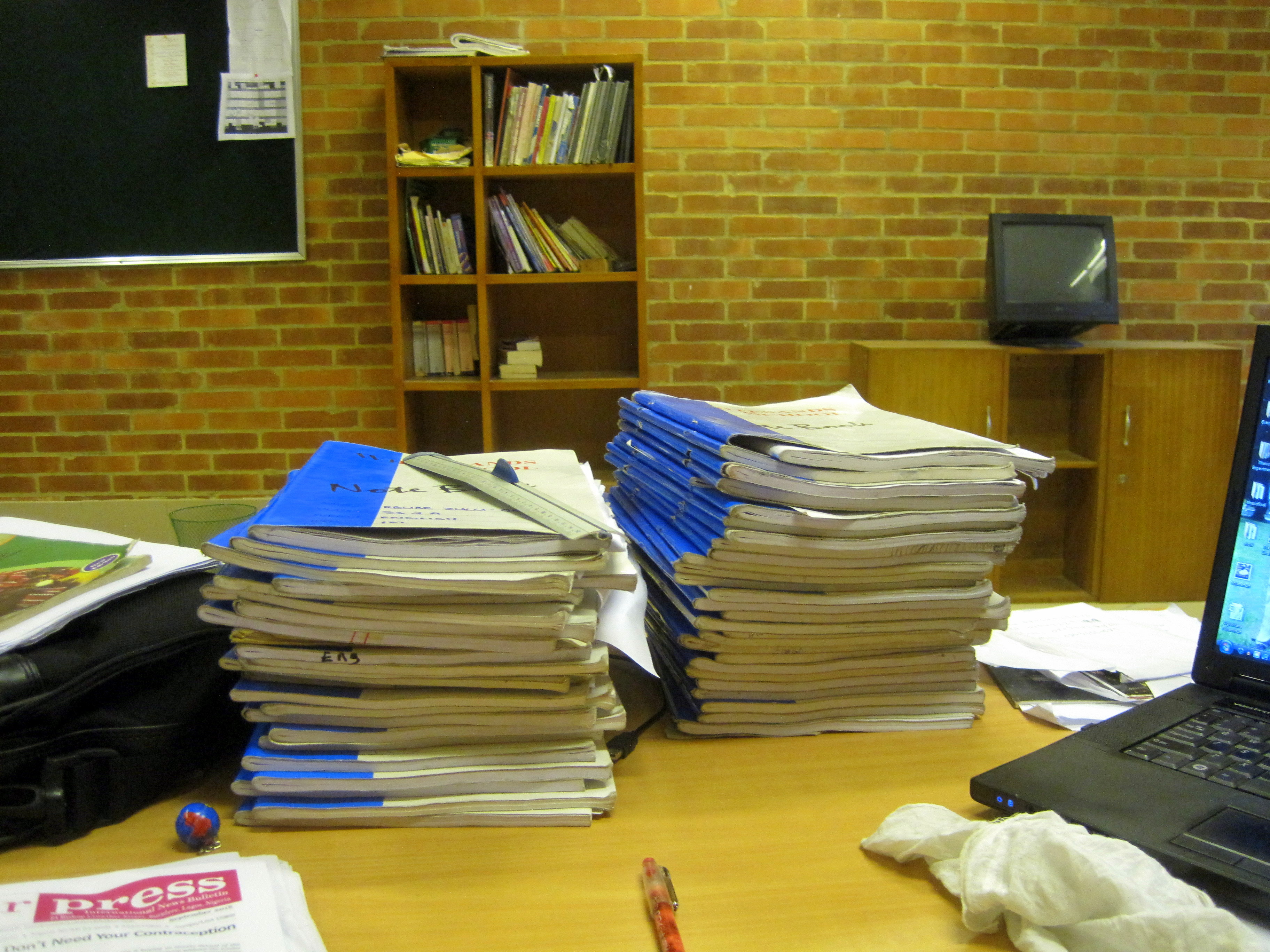
Three weeks have now gone past, along with a series of classroom exercises, conversations, comprehension passages, question and answers about their new English teacher, sentence and essay types, and few confrontations with individually stubborn students to whom a new teacher is someone to test to the limit of his patience. I would ask, I said to myself some nights ago, if there are particularly helpful ways of dealing with students of this particular age.

A Different Classroom Experience

Teaching English in a Nigerian school is almost the equivalent of teaching Yoruba in an American university. The difference, of course, is that while English is a language spoken already by all the students here, Yoruba – to the Americans – is a totally new language which students were being exposed to for the very first time. The similarity of the experience is that on some level, English can also be taught as a foreign language.

It helps that the teacher spent the last two years as a student of Teaching English as a Second Language (TESL), and with a background in Linguistics. It also helps that the masters thesis written in the last days of studentship in the Graduate School had something to do with the performance of students learning a phonological characteristic of a second language. In that sense, there is a feeling of homeliness to this experience, and a certain familiarity with what to expect.

What is different, but not altogether surprising, is the attitude of the students themselves. Whereas in the earlier experience, the youngest member of the class is usually at least eighteen years old, and an undergraduate, here, the oldest member of the class is sixteen, and has probably not yet decided what he wants to do with his life. The challenge is in the balance of expectations and attitude. Boys at sixteen usually have nothing more to worry about than food, peer pressure, and play. It is the teacher’s job to put as much work and discipline as necessary into their restless brains within a forty minute teaching period.

Like in the United States, teachers are not allowed to use corporal punishment on these students. A friend of mine in a school in Illinois had his students put hand sanitizers in his water while he was out of the class. He had drunk it before he realized it. I have not had (and by all appearances would never have) any such experience here, but that contrast is necessary to explain the setting and patterns of behaviour of students in the two different environments. The biggest challenge in dealing with young high school students of this particular age (and in an all-male school) is to sustain their attention and interests long enough to prevent a breakdown of order in such a testosterone-filled environment.

It is a welcome challenge.

End of Classes, and More

My presentation in class on Wednesday was my last in this Master’s program (baring a thesis defense, of course). It focused on a hypothetical lesson plan for second language teaching in a foreign country. One of the advantages of such assignment that allows for creativity is the chance it gives the student to make conjectures on things that may actually become future research areas. I am a teacher of English language in a high school in Kigali, Rwanda. That country emerged just a few years ago from a brutal civil war that tore the country into many ethnic parts. It has now adopted a policy of English language (over French and Kinyarwanda) in order to forge a more united country free of a colonial past, and with a view to a more globalized future.

What problem does such a job pose for both the student and the teacher, even beyond the usual problems of language acquisition? Socio-cultural attitudes of parents still hung up on ethnic and cultural identities and resistant to change? Government bureaucracy and a typical political gamesmanship that might deny funding for much of the initial experimentation that could amount in success? A problem of communication between teacher and student? (It’s hard enough for students to be learning a new language. If the teacher offering guidance for such teaching does not even share the linguistic identity of the students, the baggage of his “otherness” might be a little hard to overcome). What else? There are actually far more positives to the experiment, one of which is the delight of sharing cultural similarities and differences while at the same time sharing the knowledge of a connecting international language. Cultural exchange is after all always an learning stimulant.

I have good memories of my first major teaching experiences in the Nigerian middlebelt as a Youth Corper. Students delighted in their ability to communicate in Hausa and Berom even in our English classes. It was a battle that I struggled with all through the year, frustrated that the purpose of English education is defeated when students choose instead to resort to local codes at every moment of convenience. Other linguists working in the area of Second Language Acquisition have argued that there are positives in this model of acquisition where the pressure to always be right is taken off the shoulder of students and they are allowed to subconsciously acquire the second language. The problem in the application was the reluctance of the students themselves to even try since their mother tongues provided an easy alternative. (But then, a prominent educational research in Nigeria, particularly the Ife Six-Year Primary Project of 1989, showed that students taught in their mother tongues performed better in learning other subjects).

I find Second Language Acquisition extremely fascinating, and the prospect of teaching English in another country equally enticing. Rwanda presents a fascinating example of such intervention because it combines education with social work. A country willing to ditch a dividing legacy of multilingualism for a second foreign language presents a fascinating study. One of the best rewards for teaching – as I have realized from my years of involvement – is not just in the knowledge that the teacher brings into the class, but the ones he takes out of his interactions with his students. I believe that in the next century, the language of the world will not be this English language as we know it, of course, but something richer, encompassing the form and world-view of all the peoples through which it has passed. There is something to enjoy in the process of bringing that to existence.