Re-reading this post and this one yesterday, I realized how much I miss teaching the language class. My two fun semesters between 2009 and 2010 was filled with a diverse range of students struggling to make sense of a new language and culture while trying to get good grades. And somewhere in-between giving and taking knowledge from each other, we managed to have a swell time every time we met. The Yoruba language classes still remain, but I don’t teach it anymore. I am now a full-time student, and I miss those times.
No, not of a book, movie or song although that would be fun, but of the year itself. Yes it’s too early to do that since we still have about nine days to go, but it is amazing to see how close we are already to its end. By this time last year, I was here, same spot, same posture, probably complaining of snow or making a general observation of a particularly fascinating endeavour. The only difference is that then I was a teacher of many young students of Yoruba, but now I’m mostly a student myself. (Speaking of reviews, I’d appreciate you taking a moment to tell me what your favourite posts on this blog has been. There’s a poll on the right side of the blog. Please choose as many options as appeal to you).
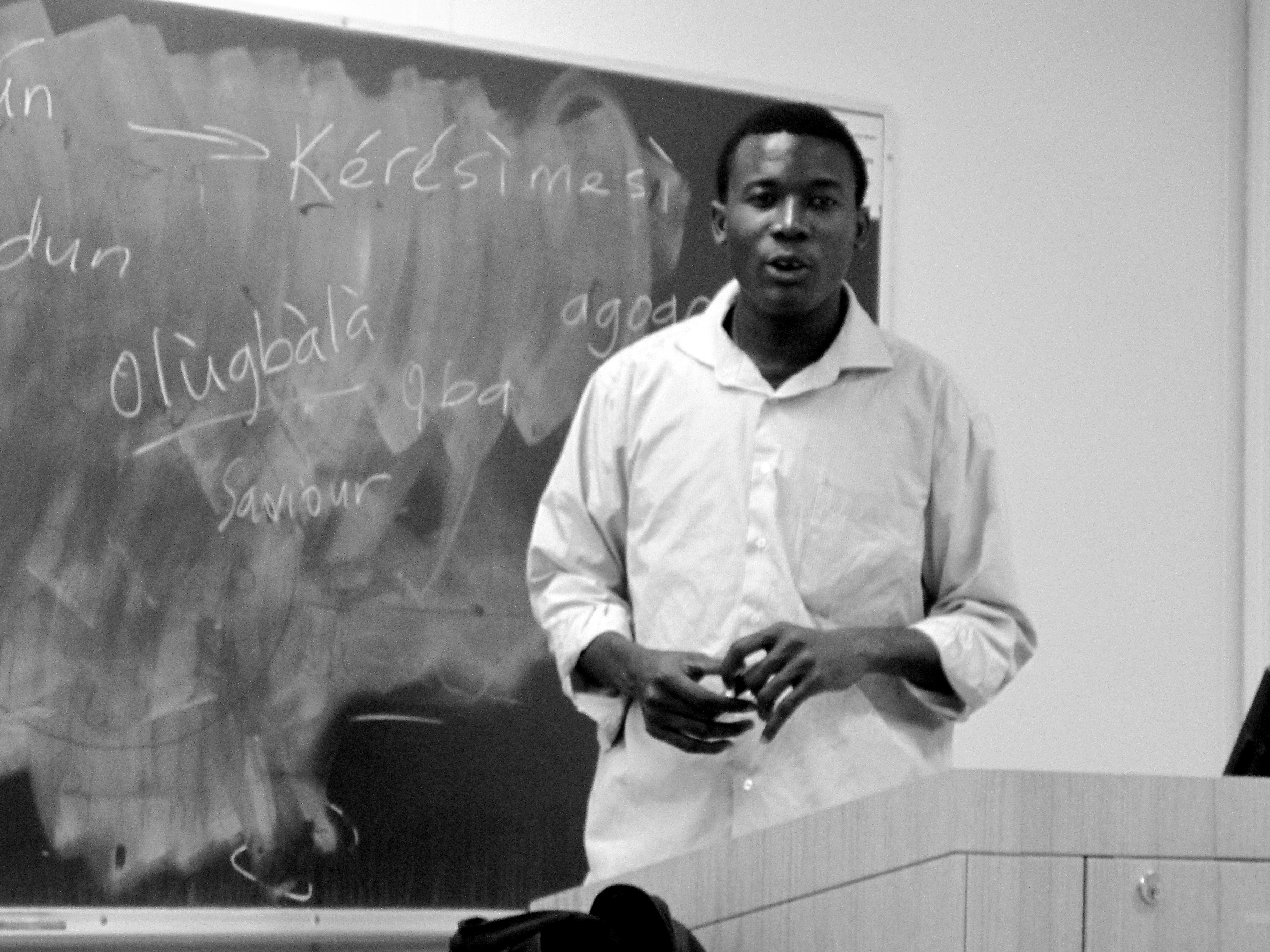 I miss teaching in the Yoruba class. It was one of those moments when everything stands still and a continuous flow of knowledge and fun merges into one beautiful experience that lasts for about one and a half hours, two times a week. It’s incomparable, not just because of the things learnt and taught but for the pleasure of being there, and being the vessel for such cultural exchange. I met a few students this semester who said that they registered for the class either because they attended my talk last year or had heard from other students, and wanted to experience the class for themselves. I am thinking of returning to teach that class next semester. What do you think?
I’ve posted less on this blog per month since August, deliberately, and I think that has worked well. I realized at the end of the first blog year that it was better to write whenever I could rather than make posts everyday as I used to when I had all the time on my hands. It was inevitable that graduate school will attempt to suck me dry of all my waking moments. But then, here we are, still talking, and still sharing little moments of laughter. My semester has been made even better to bear by the presence of lovely colleagues who bring me chocolates and other nice stuff (you know yourselves), and those with whom I share nice stimulating conversation somewhere amidst the bustle of the day. There is also the doting host parents who have treated me no different than their own son with free access to their home, their food and their wine. What else could one ask for?
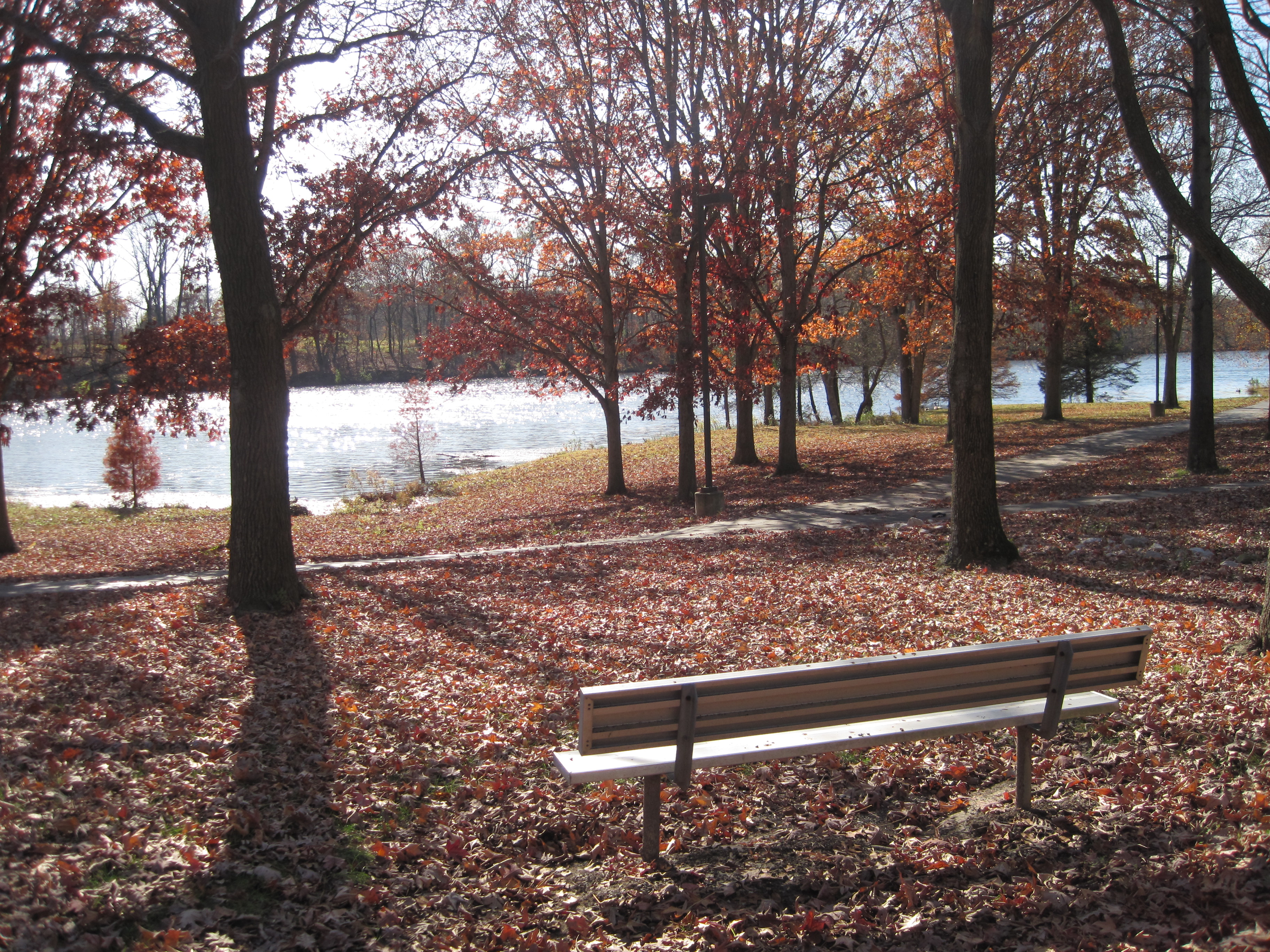 This year I travelled around (some parts of) Nigeria, and that was fun. I hope to complete my tour of that country in a not too distant future. I also got to see a few more of the midwestern United States. A few people have suggested that I should travel with a more critical eye next time (instead of my usually fawning admiration of spaces, I guess). In my defense, I have gone around less with the intention of understanding the people in the places I go and more with the intention of understanding and describing the places in which they live. But now that I know the difference, maybe I should take one more step closer. (You might like this article about the BBC reporter who attempted to understand and describe Americans in a new book). Maybe it is the desire to take pictures and write about places that moves me the most.
When the year ends next week, what I’ll be most grateful for is the general beautiful pleasure of warm human company. There’s still no alternative to that yet.
I strongly recommend Richard Feynman’s book Surely You Must Be Joking, Mr. Feynman! for anyone interested in the appreciation of the world and the little beautiful things in it. Not able to tell you why I’m thinking about him right now, I found his recollection of his childhood and professional life to be one of the most pleasurable one I’ve ever read. I can say for a fact that his was one of the best books I’ve ever read. And the last time I read this book was more than five years ago. He also wrote The Pleasure of Finding Things Out and What Do You Care What Other People Think.
Written from transcripts of interviews recorded over a long period of time, the man walks through the many curious instances of his precociousness, from learning the secret of mathematics to learning to pick locks and safes. At some point in the later parts of my teenage years, I almost learnt to pick locks too, picking after the physicist. I failed terribly. It was the early days of internet in Nigeria and I desperately craved its promised access to the information highway, and I would do almost anything to get usernames and passwords of uncles and friends without their permission. I failed at that too, eventually, and I remember the very many nairas, savings from my first real (also poorly-paying) job at a computer service centre, which I spent surfing the internet and learning new things along the way. Who knew that a day would come when everyone had internet on their computers for 24 hours every day. As far back in 1997 in Nigeria, that looked like a faraway fantasy of a future.
The book by Feynman also takes us back to the beginning of the research into developing the atomic bomb, and all the mischief he caused on site of the research facilities at Princeton, and as a professor at Carlton and MIT, picking locks and leaving clues for his scandalized superiors. He claimed to be the only person to see the bomb tested with his own eyes through the UV shield of a car. All the other people wore glasses. (He also worked at Los Alamos at some point later). Beside the lucid and very absorbing prose and his story telling abilities, Feynman comes across as an eternally curious being not limited to his field (of Physics) or any field at all in his approach to understanding the world. After the crash of the space shuttle “The Challenger”, he broke down the hard details of a scientific error for the common man on TV at a public hearing, and cemented his reputation forever. Whenever I think about my outlook on the world, I think about how much of it I owe to the kinship with the spirit in Feynman’s book. I also immediately begin to look for the phone numbers of my friends who have always pawned my copy every time I buy a new one.
From the love of the science of language, to syntax, to computer programming (which I learnt at some point during the idle times after my secondary school), to learning to play musical instruments, sing, laugh, ride bicycles, almost crash my parents’ car, mess up my cousin’s hair at some point with the barber’s clipper as an experiment (and getting deservedly pummeled for it later on), and learning to draw, to paint, to write, to learn languages, and mostly to explore the many awesome areas of life as it tosses them my way, I have learn to live life to the full. We have less than 24 hours of it at our disposal every day, but it’s amazing just how much pleasure each discovery brings. If I ever become famous, I want to be like Richard Feynman, a wonderful down-to-earth physicist and a great teacher whose ideas changed the way we looked at the world, but who himself never stopped being just a man, with a regular (although many times very mischievous) taste and sensibilities.
Yesterday I returned to the Institute at St. Louis to continue my work as a volunteer in adult literacy teaching. Getting to the place was a little easier this time, and the music from the radio helped. Oh, there was this awesome show on the NPR about how the economy of Brazil was turned around by two young men who introduced a new (first virtual, and later real) currency, the URV, and helped to turn the tide of the country’s spiral inflation.
 My student on Monday was a man from Bhutan of between sixty and sixty-five years old. He had never learnt to read or write in his life and was just beginning. I don’t know his condition of coming into the United States and I’m not interested in asking (nor am I even allowed/supposed to, I think), but I was impressed by his interest and a physical joy he expresses in his attitude to learning. Much of what we did on Monday were reading through images, repetition and demonstration. Then later we moved to dictation, crossword puzzles and word scrambles. The most interesting thing about each experience is that even when the students are not performing well in class exercises, there is a certain pride that come across in the faces of each tutor because of the efforts students have put in and the excitement on their faces for even having tried.
The students all come to the Institute everyday and will, after a while, learn sufficient literacy to conduct the business of daily living in the language of the society without help. Maybe not enough to read Dante, Shakespeare or Cervantes, but to do what they must to get through every day. If I could go there everyday of the week, I probably would.
The title of this post is premature, but I’ll leave it as that anyway. Monday was my first time as a volunteer teacher of English at the International Institute so I can’t tell you much about the life of a volunteer. The last time I volunteered for something similar was teaching up north in a Nigerian secondary school a lifetime ago. But that was different not only because it was mandatory but because the subject of that experience were young children who already have some exposure to the English language but only needed to improve on it. This time, I’m dealing with those who had never had any exposure to speaking, reading or writing English but are willing to put themselves through the stress of acquiring it, even at advanced age.
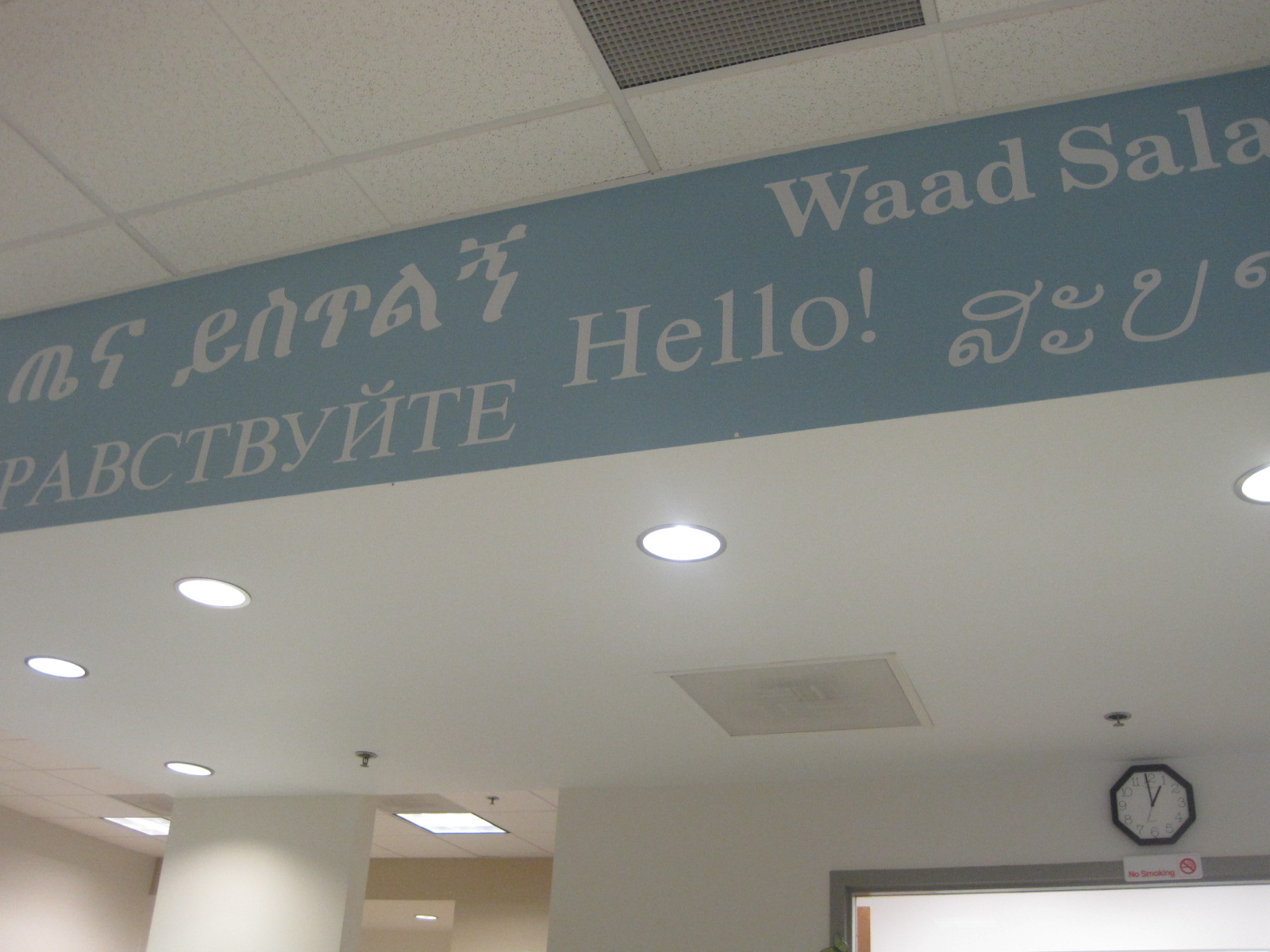 The International Institute in St. Louis is set up to cater for refugees, immigrants and new comers into the United States who do not yet have sufficient knowledge of the English language. Some of them were hearing English being spoken for the first time, many of them never opened a book, and most of them were holding a pencil, and learning to write for the very first time. Volunteers come from different parts of the country and I had heard last week that the Institute would be closing down its adult literacy program as well as the citizenship classes for lack of funding from the government. Yesterday it was confirmed that Institute has just received new funding to continue the programmes, particularly adult literacy one, and so it would continue though the citizenship classes may not.
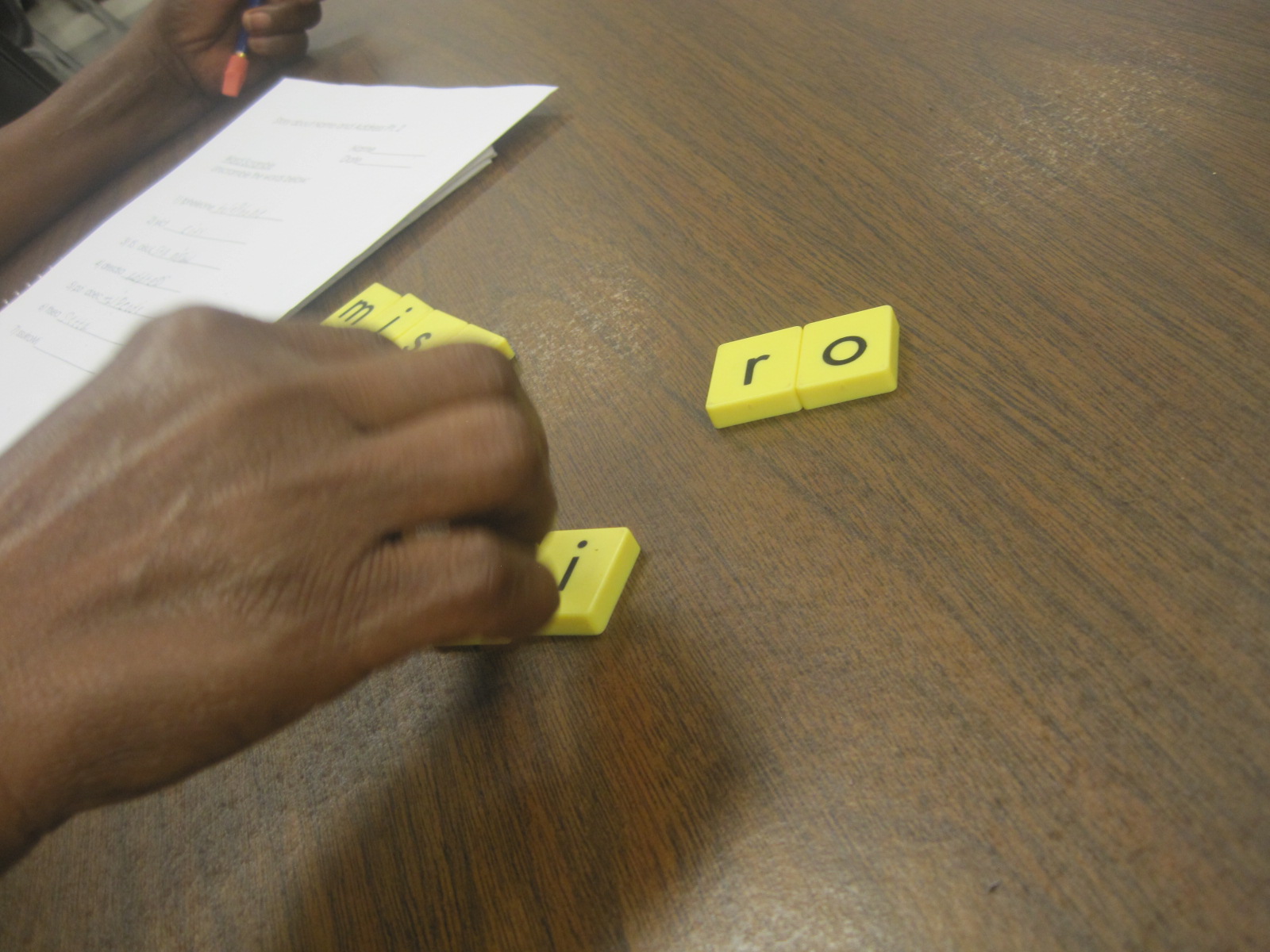 The classes have a very elementary syllabus, as would be expected of a class with such level of student proficiency. The students range in age from thirty to sixty-five and they come from different parts of the world. Our job was to help them read and gain sufficient literacy needed to survive in such a country as this. The books had stories that were easy to read and understand. They also came with pictures, as they should be, and each reading experience was one-on-one, with the students reading along and trying to link text with pictures and ideas. It brought smiles to my face to see grown people show that much enthusiasm to reading. We also did some word scrambling and a few phonic exercises.
What delighted me most is the enthusiasm and confidence of the students at learning. Many of them had been displaced by hard circumstances in their country of birth and had now come to acquire new means of communication in order to survive in a place away from home. They come with their own survival instincts and a rich reservoir of life experiences, but they can’t express them to us because we don’t speak Swahili, Dzongkha/Bhutanese, Spanish, French, Ewe, Gen, Kabiye or any of the languages they speak where they come from. Nor do we want to. It promises to be a rich teaching/learning experience.