It has been long since I wrote a long post. Why? I can’t say. School schedules are going haywire now that things are winding down. I have deadlines almost every week. And I still have to teach. And grade homeworks. And begin packing. And meet up with the final schedules of invites and little goodbye dates that have begun to show up one after another. I feel special. And I feel stressed and worn out. My bones ache. After yesterday’s workout on the basketball court, I realized how much I’ve neglected my muscles and bones. I should exercise more. Should I blame the unpredictable weather again for my lethargy?
Sometime last week, it came to my attention that one of us somewhere on the East Coast has returned home abruptly. He was was sick, and had to be discharged. I’d been in touch with him at the beginning of the year but I didn’t know how serious it was until I heard that he had gone home. I felt sad partly because I wished I had called him more. He used to leave comments occasionally on this blog.
No, I’m not depressed. I’m doing everything to make the last moments count for something. I have a term paper to write about the phonology of Yoruba. Sigh. Heavy stuff, then I’m done. It will be play, basketball and packing. And guest-posts. Until then, I’ll try to work up the time and effort to make a serious/stimulating post sometime before the end of this month :D. Until then, you can go to my Karaoke Page to see a list of my songs and listen to the recordings, or my Youtube channel to see the videos made from scrap video clips and photo slideshows. When I can, I’ll put some of the videos on here.
Adios amigos. Have a nice week ahead.
PS: I was at the Episcopalian Church again today after such a long time of absence. Along with Mafoya, we were the only two black people in church and we looked totally like exotic beings from outer space. When the service was over, everyone wanted to greet us.
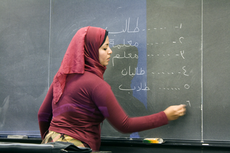
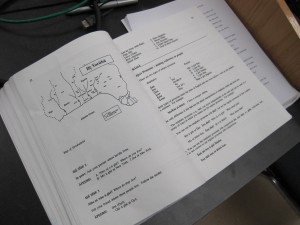 “In Nigeria,” I said, half in jest, “students are not given to this much indulgence as you American students.” Back home, teachers take it upon themselves to surprise students in whichever possible way. Students would go into class one day just to discover a surprise test, with no way of knowing what to expect from the teacher. Do not get me wrong, this is not always a good thing. But here in America, not only did I have to give them the “areas of concentration” as we called it back home, with details of how I expect them to answer the questions, multiple choice or not, I was also made to promise that there would be at least a few more “extra credit” questions, set to help everyone get a chance to come out in good grades. To be clear, I do not have any problem with this. The students have worked so hard to overcome all linguistic and phonetic obstacles of learning Yoruba. It is only fair that the examination be made to test their knowledge, and not to punish their ignorance. Therefore, there would be multiple choice questions. There would also be fill-in-the-blanks, as well as questions requiring long and short sentences.