Seeing Nigeria: 7 Days in Kano

Guest post by Ọmọ́túndé Kàsálí

Exactly three months ago, in the afternoon of 1 July 2018, I set out from my home in Surulere, Lagos for a hotel in Sabon Gari, Kano. I was going on a one-week holiday to the prominent northern city to experience the North. Born and raised in Lagos, I did not see much of Nigeria beyond Lagos while growing up, except in my geography schoolbooks. However, these books interested me so greatly in the places and peoples of Nigeria, that from school on, I have always yearned to see the country in its vastness and diversity.

Much later, I made a concrete plan to fulfill this yearning – while bearing in mind my limited finances, my little free time, transport difficulties, security concerns, and my sparse countrywide connections. The plan was that I would visit a centre of the other major regions of the country beside the South-West, my home-region. And with time and luck, this plan began to materialize. I was posted to Imo State in the “South-East” for my Youth Service and lived in Owerri for the Year. During the time, I twice visited Port-Harcourt in the Niger Delta, just a 45-minutes’ drive from Owerri – first for a literary conference, and second on a visit to a relative.
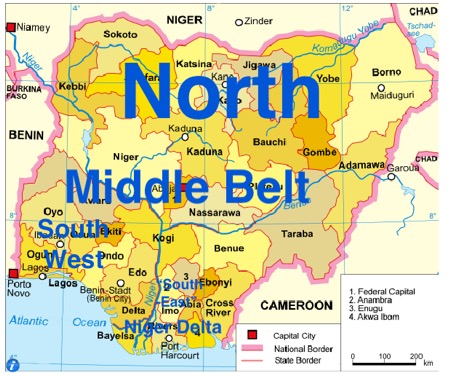
My Nigeria plan

Thereafter, my next region of interest was the Middle Belt and centre of interest in it Jos. Recently, having saved enough money for the trip and a holiday opportunity arisen, I finalized plans to visit Jos. I booked my flight ticket a month before my departure date, and got an accommodation offer from a friend, who is from Jos, maintains a residence there, but lives in Lagos. Then, sadly, a week to my scheduled departure, terror was visited on Plateau State, including Jos. On June 23 and 24, against the backdrop of the herders-farmers crisis, suspected herders gruesomely attacked 15 farming communities, leading to the deaths of 233 persons, the displacement of over 11,500 persons, and the desertion of over 40 villages.

Subsequently, a dusk-to-dawn curfew was imposed, extensive security measures announced, my trip to Jos deferred, and my holiday destination changed to Kano, which was the central city in my now-next region of interest, the North. Accordingly, I rerouted my flight ticket and booked a budget hotel. Sad thoughts about Jos would interrupt painfully, as I prepared for Kano.

At the Muritala Mohammed Airport, I boarded my Arik Air plane at past 7pm, and a little later, the flight – originally with a departure time of 3:05pm, which was then shockingly rescheduled three times on the very day of departure, and finally fixed at 6:45pm – eventually started for Kano at about 7:30pm.

I slept through the flight, and awoke around 9pm as we landed at Mallam Aminu Kano Airport. As I walked out of it, I noticed the glaring contrasts to its Lagos counterpart: serene halls, mellow lights, and no hassles. However, at its taxi park, I was taken aback by the ridiculously high flat-rate fare of ₦4,000 for a trip into the city – for a 15-minute drive to my hotel! The drivers justified it as an offset against high levies imposed on them by Federal authorities – which seemed plausible, given the general notoriety of Nigerian government institutions for exploitation. There was no Uber or Taxify in Kano, nor any other transport alternative in sight. Walking was not a sensible option, as it would entail an hour journey in the dark night of a strange city. Eventually, I bargained with a driver, and we agreed to a fare half the flat-rate.

On the journey into the city, the lights became brighter, the atmosphere more vibrant and my anticipation greater – which all climaxed as we pulled up before my hotel. The building was decorated with lights, there was music in the air, merrymaking all around, and a file of young women opposite the hotel. In it, I checked in and was led to my room, which I did not like but would get by with. Most light bulbs did not work, so did the little fridge, the TV was defective, so was a power socket, the music from the bar was too loud, water ran on and off in the toilet, and it was not potable. I had booked the room online, where it appeared a decent bargain, and now felt some regret about it. Nonetheless, I settled in, phoned my close friend, made a journal entry, and went to bed.

I slept in and got out of bed around 9am, and prepared for the day. Before setting out, I got some general information about Kano on Google, Wikipedia and TripAdvisor, and I had a phone conversation with a friend, who was born and grew up in Kano, and now lives in Lagos. She offered some tips on places to visit, things to do, and how to conduct oneself.

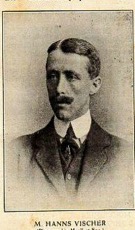
The first of my sights was the Gidan Dan Hausa (translated “Home of the son of the Hausas). It’s an over 250-year-old building, which became Kano’s first colonial residence in 1908, when Hanns Vischer, a British Educational Officer moved into it – his wife Isabella would join him in 1912. At the Gidan Dan Hausa, Vischer taught the English language and imparted western education to students drawn from 11 Northern provinces, including young princes of the Kano emirate. He was well-respected and -accepted, for his knowledge of Kanoan culture, his ability to speak Hausa, and his skilfulness at combining Islamic and western education – such that he was conferred the title of Dan Hausa (Son of the Hausas). He is said to have laid the foundation for modern education in the North.

Gidan Dan Hausa

 Hanns Vischer

Now a museum, the Gidan Dan Hausa presents a permanent exhibition of Vischer’s life in Kano, and the history of the city itself. I arrived its premises around noon and walked through a vast garden towards its ancient gates, where a notice forbade photographing. At the entrance, a guide described the historical building in rapid Hausa to a group of schoolchildren. I entered the building, paid the visit fee, and joined a tour group, which, as I later learned through introductions, comprised 3 Youth Corps members, and a student – Ahmad, whom I would later have more to do with. We were shown various articles of interest and informed on their importance for subjects including: the Vischers’ ways and works; Islamic and Western education in Kano; and Hausa-Fulani relationship, the Kano Emirate’s power, the culture of Kano, as well as their histories.

Having concluded my visit, I proceeded to my next planned sight, which was coincidentally Ahmad’s too: The Emir’s Palace. About 500 metres away, we set off for it together in conversation. Ahmad told me he was Fulani, from Abuja, studying in Zaria, on a visit at a relative’s in Kano, and had for a day been in Lagos. I replied in kind, and revealed that it was my first time in the North, which visibly interested him. He asked about my experience in Kano thus far – as I did his in Lagos when he visited – and offered further travel tips for the North. He then described it in its distinctness to the South, and we talked about this. He criticized the largely conservative outlook of the North, but admired the prominence of Northern culture in the North, especially the Hausa language – suggesting a contrast to the decline of Southern cultures and languages in the South. I sadly acknowledged it.
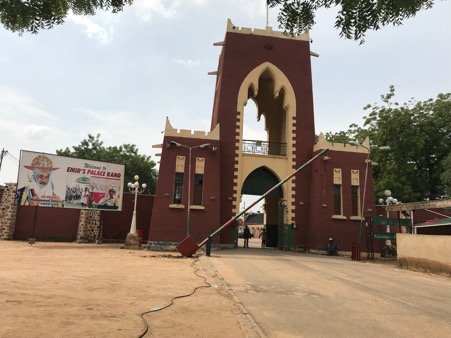
Gate of the Emir’s Palace

At the Emir’s Palace, we were denied entry, ostensibly for not having an appointment with the Emir, and advised to get permission at the opposite Emirate Council building – while locals entered freely into the Palace, apparently for any reasons but an appointment with the Emir. Likewise, at the Emirate Council, we were denied the permission, ostensibly for security reasons, and advised to visit the nearby Gidan Makama Museum – which was my next planned sight anyway – for an alternative experience of the Kano Emirate. Ahmad believed we were so treated because we were not traditionally dressed, but in T-shirts and jeans, and he further railed at the conservativeness of the North. He then took his leave of me for a personal errand, and I bade him goodbye and proceeded to the Gidan Makama.

Built in 1442 as the residence of the Makama of Kano – a high-ranking Emirate aristocrat, the Gidan Makama is an ancient beauty of Hausa architecture. Shortly after its erection, it served as the temporary palace of the Emir; and in 1903, following the British invasion of Kano, it served as the residence of the then-chief commissioner of the Northern Nigeria Frederick Lugard. Now a museum and a national monument, the Gidan Makama, in its 11 galleries, contains materials, artefacts and pictures representing the heritage of Kano.
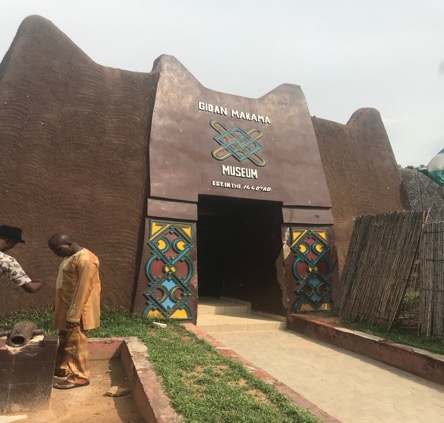
Gidan Makama

Inside Gidan Makama

At its gate, a man offered to be my guide at a small fee. For about 30 minutes, he led me through the museum, while he described its contents and their backgrounds: the colonial British capture of Kano, the traditional architecture of Kano, Islam in Kano, the Fulani Emirate dynasty, the ways of Kanoans, important historical and contemporary figures from Kano, the Durbar, the long history of commerce in Kano, and so on. Later, a large group of university students arrived on an excursion, and my guide excused himself to attend to them. I lingered in the museum, going over articles and taking pictures, and left shortly.

I lunched at the Kano Club to a World Cup match, and strolled by its lawn in the cool of late afternoon to tennis practices by adolescents. By evening, I was back in my hotel room, having visited almost half of my planned sights already on my first day-out in Kano.

So, the next day, I lingered in my hotel room, and set out late in the morning. My first destination was the Dala Hill. I had some difficulty finding a Keke, as tricycles were called, at the Keke-stop. I describe the stop as such, not as a bus-stop, for during my time in Kano, I found Kekes to be the dominant mode of public transport, and transit buses were a rare sight – in-fact, I came upon only one throughout my journeys. Hence, Keke-stops, not bus-stops.

Painted yellow, the Kekes were like a swarm of yellow ants crawling the streets of Kano. Though, compared to Lagos, Keke transport in Kano was better conducted: The rider’s seat sits only the rider; the left opening by the passengers’ seat is barricaded to prevent passengers from boarding from, or alighting onto, the side of traffic; and the business is free and private – no park rackets and destination restrictions.

Kekes

So, at the Keke-stop, on my way to the Dala Hill, a rider finally agrees to take me, upon my indicating an image of it – so legendary was it. Rising over 500 metres, and covering around 10,000 m2, the Dala Hill is the mythical birthplace of Kano. The first settlers in the city are believed to have lived in the Hill. Reportedly, present-day Kano was known as Dala up to the 16th century. According to legend, Dala was a hunter and the eponymous founder of the Dala community and the great grandfather of Barbushe, the high priest to the ancient Hausa god, Tsumburbura. Not anymore a place of worship, the Dala Hill remains a vital natural heritage of Kano, supposedly under the protection of the Kano History and Culture Bureau – on paper only, as I would later see.
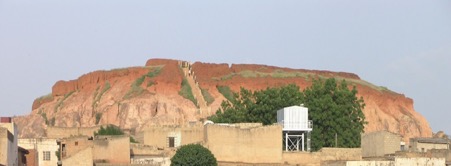
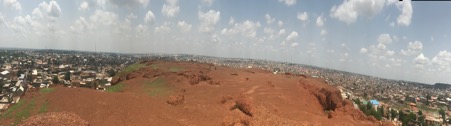
Dala Hill

Kano, from Dala Hill

I found myself the only visitor that afternoon at the Dala Hill. I ascended it by the built concrete stairs, unshapely and unrailed, onto its wide flat top. Surrounding it well into the distance was the city of Kano. For a moment, I took in the spectacular landscape of the sprawling city; and for the next, the neglected features of the bare hilltop. A goat grazed,

and odd-looking acts went on in the crevices. Briefly, I photographed and filmed the city view, and descended the Hill into the local community, bringing my shortened 15-minutes visit to a quick end. I navigated the community, and later, hailed a Keke for the Ado Bayero Mall.

The mall, named after the Kano’s longest-serving Emir, sat set apart on its vast premises in the heart of the city. At the entrance, I submitted myself to security check and went in.

For some time, I wandered the mall, window-shopping, looking into gift stores for souvenirs, checking out the cinema, and enquiring about local dishes in the restaurants. I contemplated seeing a Hausa film about to show in the cinema, but decided against it, for my Hausa language skills entailed only a few words which I had learned in Hausa classes in school and seldom used until this trip. Instead, I settled into a restaurant which ironically, like the others, served no local dishes but fancy foreign foods. I ordered some Lebanese food and orange juice, and ate and relaxed to a  World Cup match. Following the first-half, I returned to the hotel, ending my day-out.

The next day, the fourth day of my holiday week in the city, I took a break from sightseeing and did not to go out, for I was feeling tired from the outings, and had visited all but one of my planned sights anyway. Incidentally, late in the morning, an hour-long heavy windy rain fell, such as one would never expect in the famously hot North. Indeed, the sun had been scorching hot since I got here, as it would be when it appeared moments after the rain.

In any case, it was the rainy season and had been raining for days in Lagos before I left it.

Later in the afternoon, I went into the neighbourhood to search for a restaurant to lunch in. It was my first time walking Sabon Gari. Laid out into streets with names like Yorùbá Road, Ibo Road, Ibadan Street, and Aba Road, and with churches on quite a number of them, Sabon Gari is predominantly inhabited by Southerners. Translated “new town”, it has historically been set apart for non-Hausa-Fulanis, and, sadly, has been the site of past religious and ethnic clashes between Southerners and Northerners. I would later learn that Sabon Garis exist in several Northern cities, like Kaduna and Zaria, where however they have become of mixed habitation. I hope this one does one day.
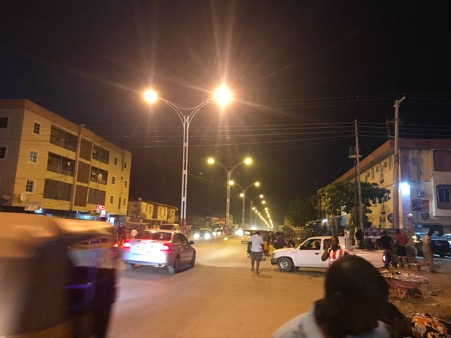
A Sabon-Gari street, at night

I eventually find a decent restaurant. My order, amala with egusi, is taken in Yorùbá language, and served. And I proceeded to devour my lunch. I emerged from the restaurant, with a half-empty bottle of water, which I give to a street-kid who immediately approached me. During my time in the city, the sight of groups of street-kids was a highly disturbing and very common phenomenon.

My last sight was the Kurmi Market, which I visited first on my fifth day, and returned to on my sixth. The market was founded in 1463 by then-Emir Muhammad Rumfa as a regional centre for Trans-Saharan trade, now extends over 16 hectares, and is regarded as both one of the largest and one of the oldest markets in Africa. The Keke rider, who took me to it and with whom I conversed about it, informed me about its major commodities: textiles, artefacts, leather materials, traditional jewellery, etc. I told him I would like some textiles and jewellery as gifts, and he dropped me off in that area of the market. I walked down a narrow passage flanked by rows of cavernous stalls, which I surveyed, and whose keepers beckoned, as I passed. Ultimately, I buy, for myself and friends, a leather bag, bead necklace, and Sassauci caps –  for more of which I returned the next day.

My seventh day in Kano, my last day, was departure day. Yet again, my Arik Air flight was delayed by two hours, and rescheduled to depart at 6:25pm. I made a mental note to avoid the airline in the future, as I left for the airport. I arrived in time, checked in, bought some Kilishi, and proceeded to the boarding area. Our plane arrived around 7:30pm, then quickly began boarding, and finally departed around 8:15pm, following some rain.

Mid-flight, I imagined our plane flying over Jos and thought about the possible events happening there then, after the previous week’s horror. I looked down from the window but saw plain darkness, and hoped for justice and peace for Jos, and looked forward still to visiting it in the future (sadly, there were recent reports of violence there). For a moment though, I reflected over the striking contrasts in two prominent cities of an incredibly complex Nigeria: death and destruction in Jos, and peace and liveliness in Kano. Today however, Nigeria’s national day, which also marks the one-year anniversary of my return to it after a few years away, I remain optimistic about the future of Nigeria despite its colossal challenges, and I am proud to be Nigerian.

_____

Omotunde Kasali (@OmotundeKasali) is a consulate official living in Lagos.

Leaving Lagos

by S.I Ohumu 


I came here on the shoulders of many, great, expectations. It was the glow-up. Smart Benin girl who never fit in with a talent in the arts must move to the big city. But you lose when you do things that are expected of you.

I should have learnt this lesson from my experience juggling being in my first year of university and last year of secondary school, simultaneously, to give my parents bragging rights, though I didn’t. Or I forgot to. So I moved.

Now I am moving again.

I am leaving Lagos. It is lonely. Alone with 20 million hurrying bodies. Inside of a room, a flat, with persons you know in their own rooms, their own flats, the great distance caused by traffic jams enough to keep you apart. Alone with yourself so you run to whoever you can be with, taking the shit, grateful for a body to see, touch, talk, fuck.

I am leaving Lagos because it is noisy here . And in my head. There is too much. Of everything. Too much hurrying. Too much worry. Too much of cars. Too much of agents. Too much of no friends. Too much of want. Too much of the feeling of keeping up but falling short. There is not enough of anything. Not enough of actual air. Of space. Of quiet. Not nearly enough of peace and joy. Freedom to take flight. There is not enough freedom in Lagos. Not enough of the things which make us truly much. Solid hefty things. Lagos is noise and too much and not enough. It is a shiririrrrrr. It is many stones joined together, haphazard, with no weight. Nothing at the middle.

***

It is my last weekend in Lagos and I have come to move my things. For months I have been afraid to be back here. I left on a bad note. I didn’t finish a manuscript I was editing. I didn’t say goodbye at my job. I told the people at my house nothing. I wrote that deeply flawed essay. I absolutely do not want to be back here.

But fear will always be there. So I do what I am slowly learning to do: allow myself somethings, hold back others. I do not confront former work or abandoned manuscript. Not yet. I stay with Ayọ̀ at Ìyànà Ìpájà. On Sunday night I have wine with a married man–bad tasting white wine–while sitting beside a pool in Lekki, and talk to him for hours, until it is too late to go home. And because I don’t want us to get a room, I say, ‘to the beach’!

We walk. I think I belong to the water. He says everybody thinks that when faced with the sea. There is a line of rock I am unwilling to walk. We look at sex workers. At how the wind makes their cigarette fire fly. Sit on a log. He touches my butt. We sleep in his car. The next day, I’m sick with fever. Can mosquitoes live in saltwater?

On Tuesday I uninstall Uber and Taxify. Forget Rele. My heart holds on to Freedom Park.

***

Hearing Edo being spoken became a balm. A balm given to a bus conductor at agege. A smile returned to boy with blue glasses at Cafe Neo. A celebration of familiarity. Everything else was the other.

***

I am leaving Lagos because I am happy now. I have cleaned the room in my head. Put the hangers in the wardrobe, the broom in its place. I am able to wake up every morning. Go to sleep without crying. Look at trees, touch the sky, love a man who loves me back. I am able finally to be accountable. To understand action, reaction, consequence. Interested in navigating the fragile maze of growing up while retaining my childlike wonder. Realizing clichés come from good places. I am able to think good. Solid. I am leaving Lagos because only the solid can fly. You are fraught and froth and secured to the dirt floor in a city with everything but what is required.

I am leaving Lagos because it is not for me. It is this simple. Do not speak in absolutes. No city is the sunken place. This one is magic to many others. Now the question: But is that you? Are you here because you want to be or you think you ought to want to be? Because you need to be here? Sync like a mac to an iPhone to this rollercoaster of a coastal city? When last did you let yourself rhyme?

I want to rhyme. I want to go home. I only know home is home by having been in a place that isn’t home. I am leaving Lagos because it isn’t home.

Lagos isn’t home. Not to me. Is it to you?

N.B: To the ones not squares, wearing boots at ring road, counting down until the big move, why are you leaving? Your family doesn’t feel like family? To find your tribe? Opportunities? Your difference does not mean you must live in Lagos. Granted it’s a hub but is it the only? Should it be? The country big. Ask Fuád, e big. If you want to create, bad air fast bus quick fingers frothy people fun hangouts may be the way. Trees, slow paced, quiet may also be the answer. I am not saying do not go, only consider. Place it side by side another. It is not a given. Sometimes the way to start anew is to stay. Sometimes it is to go.

Go home. But first, find it. Wherever that is.

_____

S.I Ohumu is a mostly happy twenty-two-year-old living where art, food, and environmental sustainability meet.


The Person That Went to Nigeria is not The Same One That Came Back

Guest post by Anne Maabjerg Mikkelsen


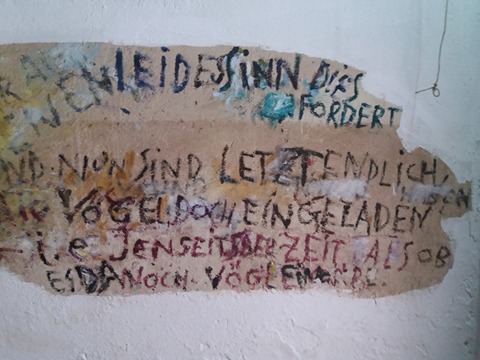
Adunni Oloriṣa’s handwriting on the wall in her former gallery where I slept. Written in German: “Nun sind letztendlich die Vögel doch eingeladen”, English translation: “Now, the birds are yet finally invited.”

“Why do you have to travel so far, Anne?” This was the first reaction from my beloved grandmothers as I told them I would be travelling to Nigeria with the University of Potsdam in October.

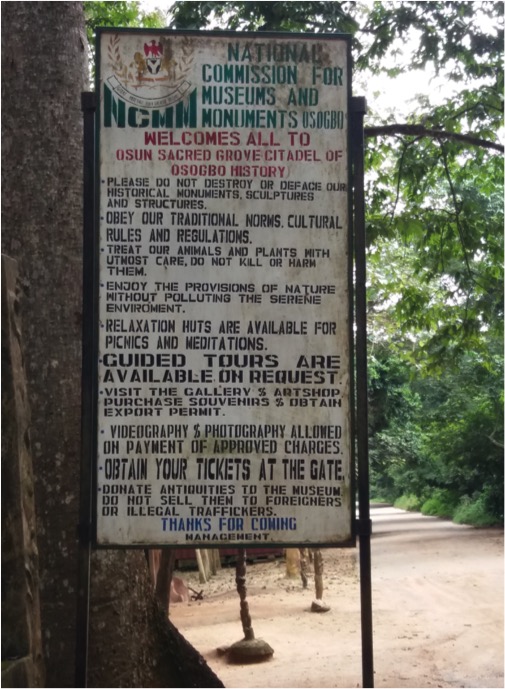
I understand their fears. Nigeria does not have a positive reputation in Denmark because of reports of kidnappings, corruption, diseases, and terror. However, I had to go not just because of my master’s thesis about the Ọ̀ṣun-Òṣogbo Sacred Grove, a UNESCO World Heritage Site since 2005, in Ọ̀ṣun State south-western Nigeria, but because something in Nigeria had been calling my soul.

While writing my thesis about the Grove back in Europe, I struggled with the fact that I had not been there on my own. As I realized that the field trip had been organized, it seemed too good to be true. We were a group of ten people including our professor, who had gotten an invitation letter from the University of Ìbàdàn. Most of our program was scheduled on the University’s campus, and it was a relief to leave for Òṣogbo with the group during the second weekend, since I was longing to see the Grove.

Back home, I had already studied Yorùbá culture, and the playful universe of the Òrìṣàs; the deities of a traditional West African religion manifested as energies and natural forces on the earth. The work and worldview of Àdùnní Olóriṣà (1915-2009), the guardian of the Grove, also known as Susanne Wenger, an Austrian modernist artist who was resident in Nigeria and initiated into the Òrìṣà religion, had also caught my attention. I only expected my visit to the Grove to be overwhelmingly magical. And so it was.

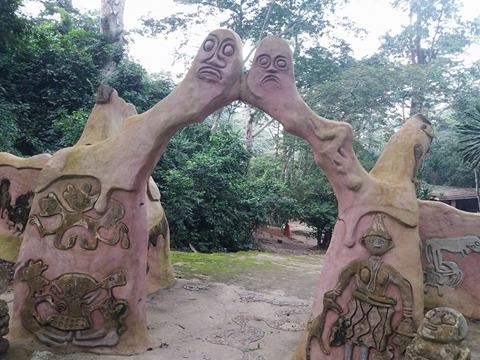
Entering the Grove, I could feel my whole body vibrating and getting charged with the intense energy that flourishes around – the powers of Ọ̀ṣun, the Òrìṣà of fertility, beauty and wealth embodied as the Ọ̀ṣun River, who is in everything there, as she nourishes all.

As the group returned to Ìbàdàn the next day, I stayed in the house of Àdùnní Olórìṣà on Ìbòkun Road with her daughter Doyin Ọlọ́ṣun, an Ọ̀ṣun high priestess, for another three days.

Everything felt so natural, and it was more or less like meeting family. We went to the Grove every day and sat by the River listening to the water curving its way through the virgin forest, sharing dreams and beliefs as the sun made its way through the clouds and sent its warm rays to the surface of the river from where they were gently directed to us. We greeted the monkeys in the green trees around us and the fish that made their arrival as we sat down. Everything here is sacred; no fish can be caught, no animal hunted or tree cut down. No wonder that Àdùnní gave her life to protect this place and the Òrìṣà religion.

It was with a heavy heart and tears in my eyes that I had to leave Òṣogbo, Doyin and her family in the house.

Before Nigeria, I was told that, “the person that went to Nigeria is not the same one that came back.” I must agree. Knowing that I have gotten the permission from the closest people, I feel capable to write my thesis not just through my mind but also with my heart. Moreover, I had the feeling that my thesis was more than just a paper, which would allow me to finish my degree.

My trip to Nigeria reaffirmed that it is also a personal path of self-discovery, and I am certain that I will return. There is much more to tell, still so many questions to be asked, and so many people to thank, among others: Professor Hans-Georg Wolf for organizing the trip; Níke Davies-Okundaye for her open heart; Kọ́lá Túbọ̀sún for his time; Dr Ọbáfẹ́mi Jẹ́gẹ́dẹ́ and the African Studies of University of Ìbàdàn; Robin Campbell from the Susanne Wenger Trust for helping me organize my stay; site manager of the Grove, Mr Olákúnlé Mákindé; and of course my deepest thanks to Doyin Ọlọ́ṣun and her family on Ìbòkun Road.

I am now back in Berlin. My beloved grandmothers are relieved and therefore, so am I. I will do my best to explain to them how magical my experience of Nigeria has been, and that not all Nigerians are bad but rather extremely welcoming and warm-hearted. Where I come from, we could learn from this place and from what the Grove represents: that spirituality is beyond race, that nature is divine and sacred, and the importance of cherishing the feminine principle.

This is exactly my answer to the question “Why do you have to travel so far, Anne?”

____

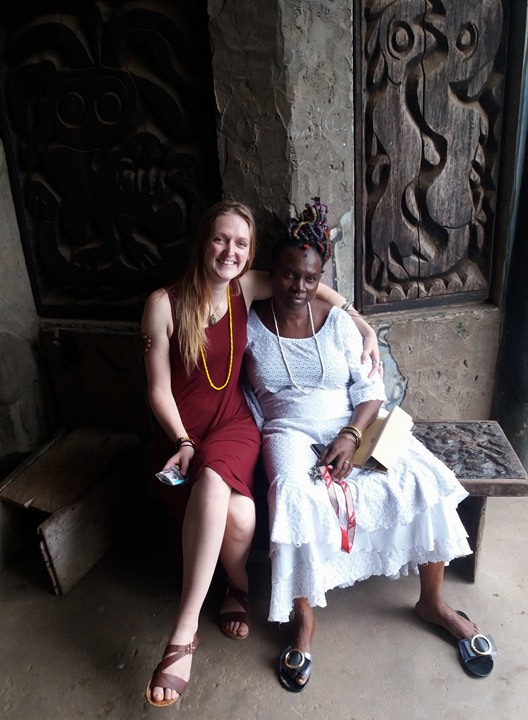
Anne Maabjerg Mikkelsen, pictured here with Ọ̀ṣun priestess Doyin, is from Denmark. She lives and studies in Berlin Germany, University of Potsdam. She spent two weeks in Nigeria as part of an academic visit.

“Like Listening To An Aunt” | Sefi Atta’s Tribute to Buchi Emecheta

The first time I met Buchi Emecheta in person was in 2005, just after my debut novel Everything Good Will Come was published. I had contacted her through an old college mate, Kadija George, to ask for an endorsement, which she very kindly agreed to give. To paraphrase her endorsement, she wrote that reading my novel was like listening to an old friend talk about Lagos.

That was the same year she was awarded an OBE for her contribution to literature, and Kadija organised a celebratory dinner at a Caribbean restaurant in North London, to which I was invited. At the restaurant, she signed a copy of her book Head Above Water for me, with a message: “To Sefi, good luck with your publication, love from Auntie Buchi”. I read an excerpt from the book at today’s memorial event, not just because it’s autographed, but because it’s a testimony of what it means to be a writing mother, and because it’s good storytelling: entertaining and informative, guileless and revealing, intimate, and rendered in the meandering fashion of Igbo oral history, which, by the way, bears some resemblance to that of the American South, where I’m based most of the year.

Anyway, that evening at the restaurant, I found Buchi Emecheta pensive. I imagined she was aware of her achievements and was proud of them: all the novels, plays and children’s books she’d written, the family she had raised, and the obstacles she’d had to overcome. People often mention the burning of her first manuscript, but the daily grind of being a mother to young children, while getting a university degree and writing, was hard enough.

I know this. I have one child, a daughter, much beloved, but I didn’t think I would be capable of giving her the attention she deserved if I had more. I was thirty-three when I started writing full time and she was three. I was working on Everything Good Will Come and had more stories to tell. I wanted to go back to school to get a Master of Fine Arts in creative writing. My husband, Gbóyèga Ransome-Kútì, a doctor, got a job in Mississippi, of all places, and we had just moved there. Before the move, I had worked as a Chartered Accountant and Certified Public Accountant. Following the move, I was not legally allowed to work in the United States until I had found an employer to sponsor my work visa. I was in two minds about living in Mississippi but Gbóyèga quite liked his job. He was supportive of my writing, to the extent that he would cook while I wrote, and thankfully, on the issue of children, we were both on the same page.

Buchi Emecheta often said she saw her books as children. I don’t look at mine that way. My daughter is my child, and my books are my work, though the time I spent writing them did take away from time I could have spent with her. She is graduating from college this year, after a four-year degree. At twenty-two, she is the same age Buchi Emecheta was when she had five children and was studying sociology at London University, and writing. So, to me, Buchi Emecheta was a child bride, child mother and child divorcee, who would later become a renowned writer published in journals such as Granta and the New Statesman, with television scripts produced by the BBC and Granada. And even though one of my first interviews in Nigeria, as a published writer, was titled “Sefi Atta following in the footsteps of Buchi Emecheta”, or something to that effect, my path has been quite different from hers. However, like most Nigerian women writers, we’ve had similar preoccupations with girlhood, womanhood and motherhood, with marriage and religion. For some of us, I would add the death of relatives and the state of being African overseas.

When Buchi Emecheta writes about missing her late father, so I have missed mine. When she writes about her children walking around in wet nappies, I admit, I was sometimes too busy writing to notice my daughter’s diapers needed to be changed. When she writes about racist or xenophobic employers and colleagues in London, I remember my experiences as an accountant in London and New York. She recounts details of difficult relationships with editors and agents; I can recall one or two. She takes a swipe at Enoch Powell; I immediately think of Trump.

What I find most interesting about her works are the paradoxes – of forging ahead from one generation to the next, yet returning to old positions; of her ability to be naïve and insightful at the same time. And judging from her autobiography, what sets her apart from most Nigerian women writers of her time, and mine, is that she was incredibly resourceful, industrious and tenacious. For a self-described small woman, Buchi Emecheta had enormous strength. She could also be stubborn. In Head Above Water, she tells us how she constantly defied people who tried to patronise or diminish her, and how she was reluctant to be labelled by anyone, feminists included. In a book titled In Their Own Voices, a collection of interviews with African women writers, edited by Adeola James, she expressed her frustration about feminists she encountered in the West, who took centre stage at conferences and overlooked her views.

Twelve years ago, when I met her, feminism was a lot more unpopular than it is now, and although I proudly called myself a feminist back then, whenever I was asked, I was reluctant to be labelled a feminist writer because my stories weren’t always in line with feminist narratives. Besides, if you’ve experienced conflicts solely because you’re a girl or a woman, and you write about them, that doesn’t mean you’re a feminist. It just means you’re female.

I was forty-one when I met Buchi Emecheta. I’m fifty-three now. These days, feminism is more mainstream, and commodified, and celebrity-driven. In fact, if you’re an actress announcing your next film, or a singer releasing your latest album, it helps to declare that you’re a feminist, even if you might face some backlash.

I must confess that although I still call myself a feminist whenever I’m asked, I’ve never seriously studied feminist thought. I’ve read about notable feminists like Simone de Beauvoir and Germaine Greer. I’ve read bell hooks’ works because they appeal to me and speak to my experience in America. I’ve also read academic books on Nigerian and African women writers, but that’s about it. Now, I have met, online and in person, Nigerian academics who have written about feminism, such as Mọlará Ògúndípẹ̀-Leslie, Amina Mama and Oyèrónkẹ́ Oyèyẹmí, but I am yet to read their works, or any scholarly works that address the penkelemesis – the peculiar messes – that Nigerian women find themselves in. I think it is necessary to educate yourself on feminist ideas, and to live up to feminist ideals, if you call yourself a feminist; otherwise, it’s rather like saying you’re a born-again Christian. Every other Christian in Nigeria is born-again. They’re usually versed in the Bible, I’ll give them that – though I might quarrel with their interpretations of it and question whether they live up to Christian ideals. I mention Christianity not to be perverse. It was a foreign imposition we now readily embrace, so maybe there’s hope for feminism.

Like Buchi Emecheta, I don’t want to be labelled by any word that excludes my experiences, and, to be honest, I no longer think it’s necessary to call a woman a feminist simply because she has common sense and uses it. When you expect and demand equality and fairness, that’s all you’re doing: using your common sense.

But I digress. The point is, Buchi Emecheta’s works were my introduction to Nigerian feminist ideas. I understood her ambivalence about Western feminism and welcomed her calls for unity amongst women. In Head Above Water, she expressed her disappointment at women who resented her whenever she made progress. To piggyback off bell hooks’ term, in a tribalistic capitalist patriarchal culture like ours, women who claim to be pro-women are not always pro women they regard as competition. It’s the same between men, except they don’t profess to be pro-men. They just are.

Buchi Emecheta didn’t seem to regard other Nigerian women writers as threats to her success. Flora Nwapa, in In Their Own Voices, referred to her as a friend. On a separate note, she didn’t appear to be prejudiced against Nigerians of other ethnic groups, either. Her works suggest she honoured Igbo culture without idealising it, and opposed tribalism even after she faced it. She apparently responded to racism the same way, which I don’t understand. It takes a lot of grace to resist retaliating to prejudice. I’m still working on it.

For me, reading Buchi Emecheta is like listening to an aunt, a busy aunt who makes time to tell you her story. You almost hear her saying, “This happened and then this happened. Wait, wait. I haven’t finished. Don’t cry for me. Don’t get angry yet. Listen to what I have to say and learn from it.” You take your cue from her on how to react. There were sections in Head Above Water where I was sad for her, but she lightened them with humour. There were other sections in which I was angry on her behalf, but she didn’t allow my anger to last. It wasn’t until I reached the end of the book that my emotions overwhelmed me. But, according to her, that was how she coped with hers. She didn’t have time to dwell on them.

In fact, Buchi Emecheta is – and I use the word “is” deliberately: I often talk about deceased writers as if they’re still alive – she is the aunt in your family who stands out. The one who has done something to offend the sensibility of others, and when you find out what it is, you wonder what the fuss is about because she was just being herself, or speaking her mind. She’s really not a troublemaker. She might even be shy and insecure, as Buchi Emecheta says she was. But if you cross her path and she’s fed up with playing nice . . .

You observe her in action. You occasionally worry about her. Then, one day, she’s no longer around and you realise what she meant to you. The options she gave you. But it’s too late to tell her how much you admired her.

Last year, I emailed Kadija to ask if she could put me in contact with Buchi Emecheta again. I wanted to use a quote from her novel The Joys of Motherhood in one of my own, Made in Nigeria. My novel has a section in which a Nigerian professor teaches Joys, and Ama Ata Aidoo’s Our Sister Killjoy, to Mississippi college students, as I had done. Kadija got in touch with Buchi Emecheta’s son, Sylvester Onwordi. I had no idea whether she herself was approached, but I was given the permission I needed.

Afterwards, I have to admit that, for a moment, I hoped she would be around when the novel was published. I was afraid she might not be. I hadn’t seen her since we met at the restaurant. I reach out to writers I admire for professional reasons. I’m not one to cosy up to them. I prefer to respect their privacy and space. I’d heard she had some health challenges, but I didn’t want to pry.

Then in January this year, Kadija sent me the email saying she had died, and I was sad, partly because we no longer had an opportunity to celebrate her in person. It was our responsibility to do so and our loss that we didn’t. When we fail to honour our literary heroines, or stop honouring them, we lose as a group. As Nigerian mothers would say to children who don’t listen, “You are not doing anyone but yourself.”

Buchi Emecheta’s work is done and will continue to resonate. She has plenty of admirers in readers and writers who choose to walk their own paths. Her biography demonstrates that the most powerful thing a woman writer can do, regardless of what is going on, is to keep speaking her mind and producing work for as long as she possibly can.

She did just that, and in doing so, exposed the tribe, unashamedly, to strangers, which probably displeased some of our literary heroes, who at the time were more concerned with attacking imperialism, colonialism, military regimes and corrupt governments. She may also have offended the strangers themselves, by putting them in their place face to face and revealing what she thought about them in her books. But you don’t get the impression that her intention was to offend. Instead you get the impression she was merely trying to take control of her own story, the narrative of her life, and write her way out of her lot. However, if traditional Igbo beliefs on fate are correct, perhaps all she could do was give it her best attempt and leave it up to younger writers to carry on her legacy.

I am one of them. At the age of thirty-three, with a three-year-old child and two professional qualifications in accountancy, I found myself in Mississippi, without a job, and wrote my way out. I didn’t know Buchi Emecheta well personally. I learnt about her through her works. I appreciate the example she set by being prolific, her individuality and honesty. Perhaps I’ve got the wrong idea about her, and I still don’t know if she was aware I’d asked to use a quote from her novel, but of my final statement I have no doubt. I am glad I wrote about her novel in mine.

_____

An abridged version of this write-up was read at the Tribute to Buchi Emecheta which held at Terra Kulture on Saturday, March 25, 2017
_____

SEFI ATTA was born in Lagos, Nigeria, in 1964 and currently divides her time between the United States, England and Nigeria. She qualified as a Chartered Accountant in England, a Certified Public Accountant in the United States, and holds a Master of Fine Arts in Creative Writing. She is the author of Everything Good Will Come, Swallow, News from Home, A Bit of Difference and Sefi Atta: Selected Plays. Atta has received several literary awards, including the 2006 Wọlé Ṣóyínká Prize for Literature in Africa and the 2009 Noma Award for Publishing in Africa.  

Author’s Facebook page
Visit the author’s website
Follow her on Twitter @Sefi_Atta

Across the West African Coast: Gambia

by Yẹmí Adésànyà


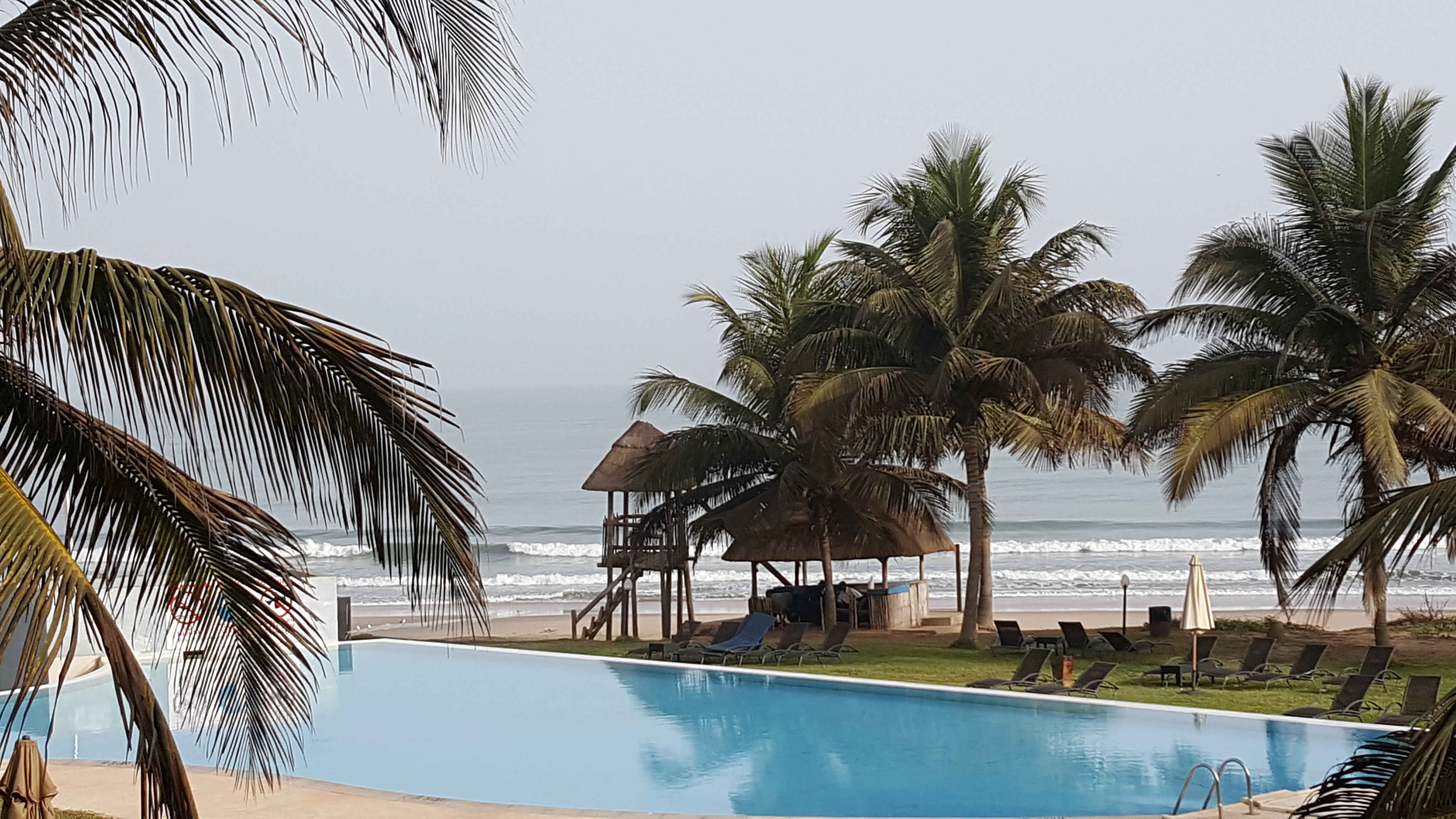
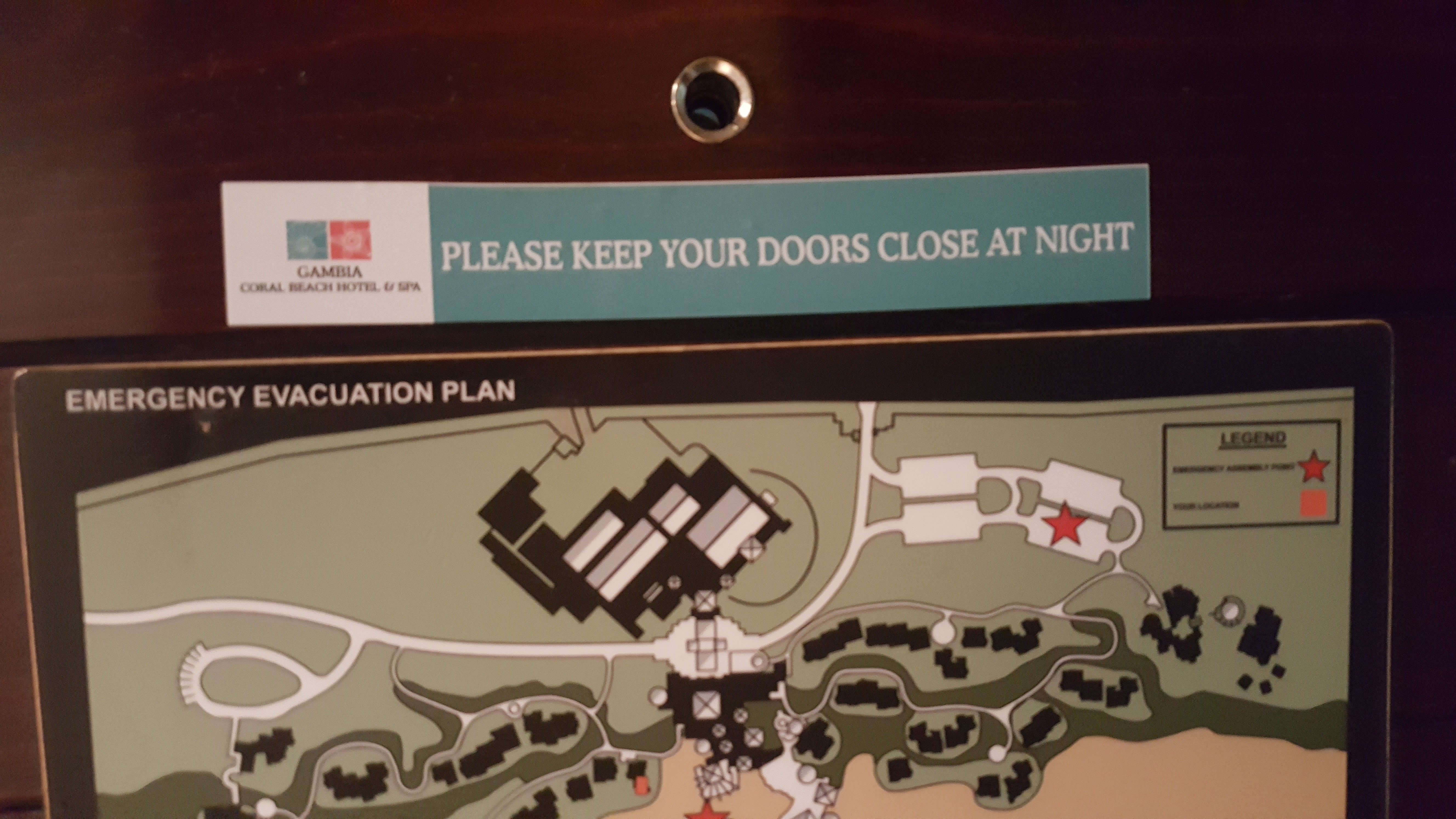
Gambia started on quite a happy note: a small serene country with clean beaches and monkeyed trees. I went to bed to the sloshing sound of the moiling Atlantic Ocean, drowning the indistinct chatter from drinkers at the outdoor pool-side bar. I loved Gambia at first sight.

gambia2

Work too started on a good note, and I quickly made my way to Timbooktoo Bookshop, aiming only to deliver a few copies of Musings of a Tangled Tongue as pre-arranged, but leaving the store with ten new books for my bibliophilic babies.

The despair that found me comfortably ensconced in Brufut was not brewed in Banjul. A part of me perished in Gambia; a part I had hitherto taken for granted, but nevertheless nurtured and savoured, since a time I have no surviving memory of.

My younger sister was due to have a surgery in Lagos, and my last communication with her the day before my trip was hope-laden: I would come see her and her new baby as soon as I returned. It was not to be. I returned to Lagos to the new baby only. My sister had died during the elective cesarean section. Nigeria had taken a huge chuck of my heart, and I was in Gambia suffocating. My howls were drowned by the obstreperous sea outside my window, with every wave of the tide washing away my dream of enjoying the city’s understated beauty. The waves, only the night before reminiscent of an alluring melody, had turned irreversibly to an immutable threnody. Olaitan’s death is a loss that cannot be licked by the lapse of time.

I was only counting down to departure after I was notified of this tragedy, life would never be the same.

gambia1Time went by quickly in Banjul, work took the day, while evenings sought comfort curled up in bed, taking depressing walks by the beach and eating only fresh mangoes; the surrounding beauty recessed to the background of a solemn promise that I would be back.gambia5gambia4

I ate the Gambian equivalent of Jollof rice too, on my first day at work; a disappointing presentation, and befitting mediocre taste. But I’m glad I got that out of the way, and quickly filed that experience away beside its Accra compadre.
When it dawned on me by Friday afternoon that my time was up in the city, I inquired of my colleagues about Gambia and if there was anywhere one could see in town. I was not in a good frame of mind, and needed a distraction, something else to remember the peaceful country by other than my muffled yowls.

gambia11

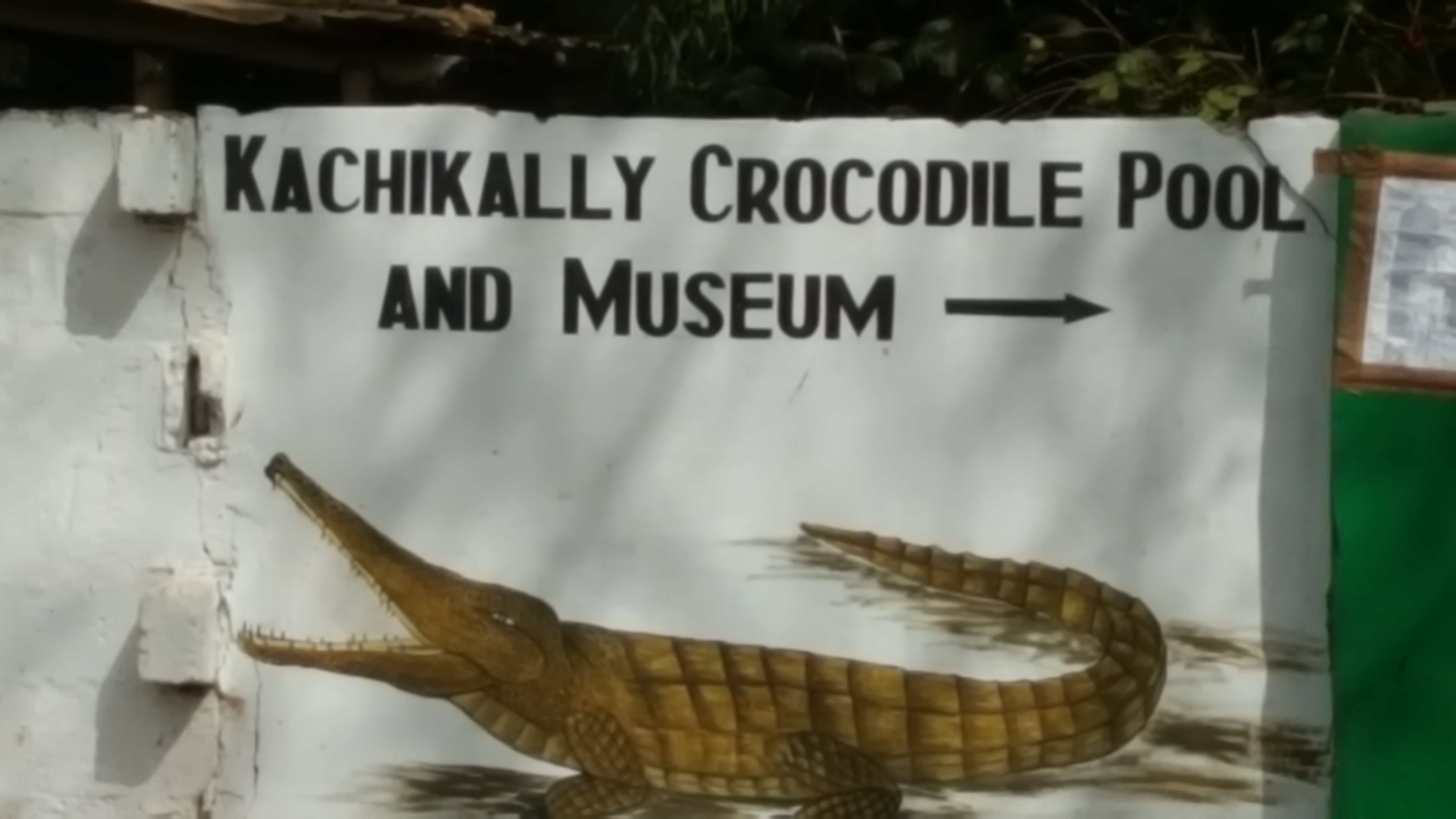
The Kachikally Crocodile Pool was the place everyone suggested, it wasn’t too far from the office and the incredible tales sounded exhilarating: harmless crocodiles living peacefully with locals! Some of them were said to have filed out of the pool once to pay homage to the deceased founder. And visitors could touch the harmless reptiles. This sounded insuperably menacing to me, but tickled my bereavement-sedated sense of adventure.

The crocodile pool was only about five minutes’ drive from the office; in the heart of Bakau village, an otherwise unremarkable residential settlement next to Banjul–Gambia’s capital city. The pool is owned by the Bojangs, a friendly family representative on sight to welcome us. Everyone in sight looked unperturbed, including the sun-bathing crocodiles. The pool is encircled with wire mesh; this was to keep humans out of the pool really, as there was sufficient allowance for the crocs to come outside unto the open dry land. Park attendants too were on hand, encouraging us not to run or panic.

gambia10True to the legend, the crocodiles appeared harmless, as least they were not hunting us; I touched one of them, eventually, after I was able to overcome my morbid fear of being eaten alive.