How To Look Crazy in Kigali

by Laila Le Guen

There’s nothing wrong with looking a little crazy on a trip. In fact, it can be a fun way to make friends. I know, I know, crazy is probably not what you’re going for. You’ve researched the weather and fashion trends, packed adequately and learnt three words of Kinyarwanda. You’ll totally blend in. Except…

Take it from me, looking crazy doesn’t happen on purpose and preparedness has little to do with it. There’s just a sort of disinhibition that happens when you smell the air of a new place that makes you giddy and you may sometimes act in ways locals consider eccentric, whether they let it on or not.

There’s plenty of places online where you can find tips on where to stay, what to do, what to eat in Kigali. This is a different – though equally thorough –  type of guide on quirky things to do and say in Kigali.
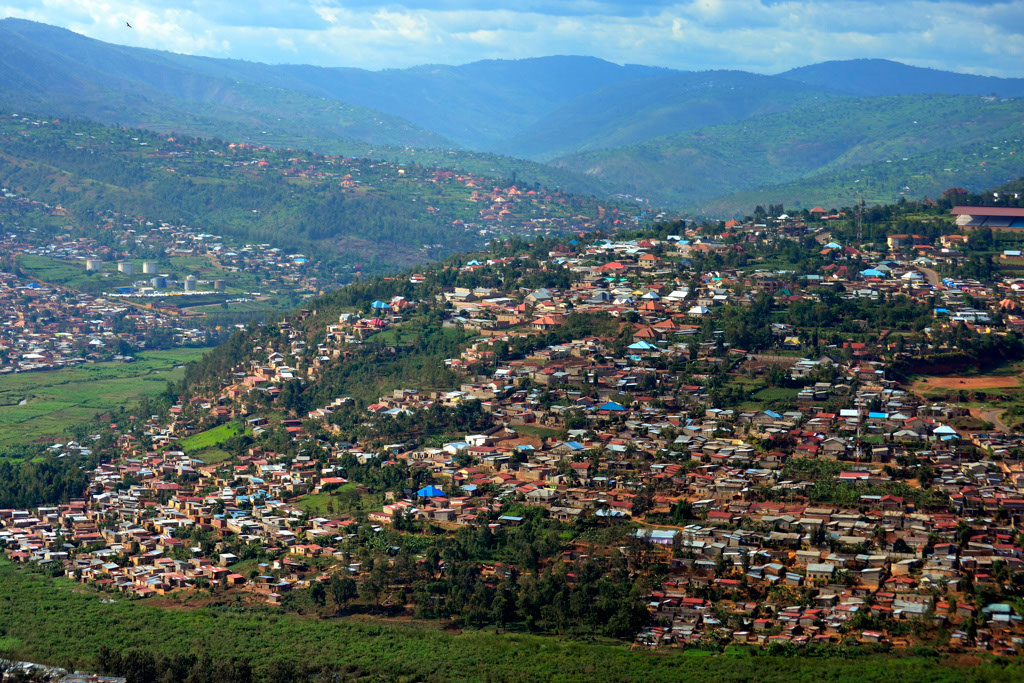
<center>Photographer: Gwendolyn Stansbury/ IFPRI</center>

Photographer: Gwendolyn Stansbury/ IFPRI

Enquire about safety

It only takes a year or two of living in Nairobi (or Lagos, I’m sure) for safety concerns to become second nature. I’ve learnt to never ride in a car without first checking if the doors are locked and I would not dream of walking around by myself after nightfall in an unknown neighbourhood, nor would I board a random taxi if I could help it. These habits die hard, even when you know that Kigali is generally very safe.

So here I am, on a weekday night at Sundowner in Kimihurura, enjoying a lasagna dish and pretending to read while in fact I’m distracted by the lights, the music and the hum of conversations coming from every corner of the pub. I had strolled to Sundowner before nightfall and found myself in a bind: should I walk back in the dark or take a cab to cover just 500m?

After requesting the bill, I debated whether to ask the waiter. I didn’t want to cede to fear but I also wasn’t going to take unnecessary risks in a city where I knew nobody. I figured there was no harm in asking, only the threat of awkwardness.

Awkwardness did occur when the waiter gently laughed at my incongruous question and assured me it was safe. So I walked back feeling tense the whole way, even though the most threatening presence was a bunch of barking dogs behind a closed gate.

When in Kigali, you can afford to chill. And that’s great, if you actually manage to put aside old habits and actually chill. I’m not saying muggings don’t happen, but your guard doesn’t need to be up all the time. Feel free to take a holiday from your high alert default mode, was the message Kigali residents kept reiterating.

Get on the bus

2-kigali-moto-dylanwaltersThanks to consistent signage and well-organised bus terminals, public transport routes are really easy to navigate in Kigali and I tried to use them as much as possible. I find the slow rhythm of the ride an occasion to breathe, to wander, to observe the movement of the city.

A visitor to Kigali, much like Kampala, won’t really need to use buses, as motorcycle taxis (moto) are inexpensive and so numerous that you’ll never wait long before catching one. So when I asked for information about bus routes to strangers at the bus stop and to my host, they inevitably looked bewildered. Why would I choose to take the bus and “waste” half an hour, when I could just hail a moto and have virtually no chance of getting lost?

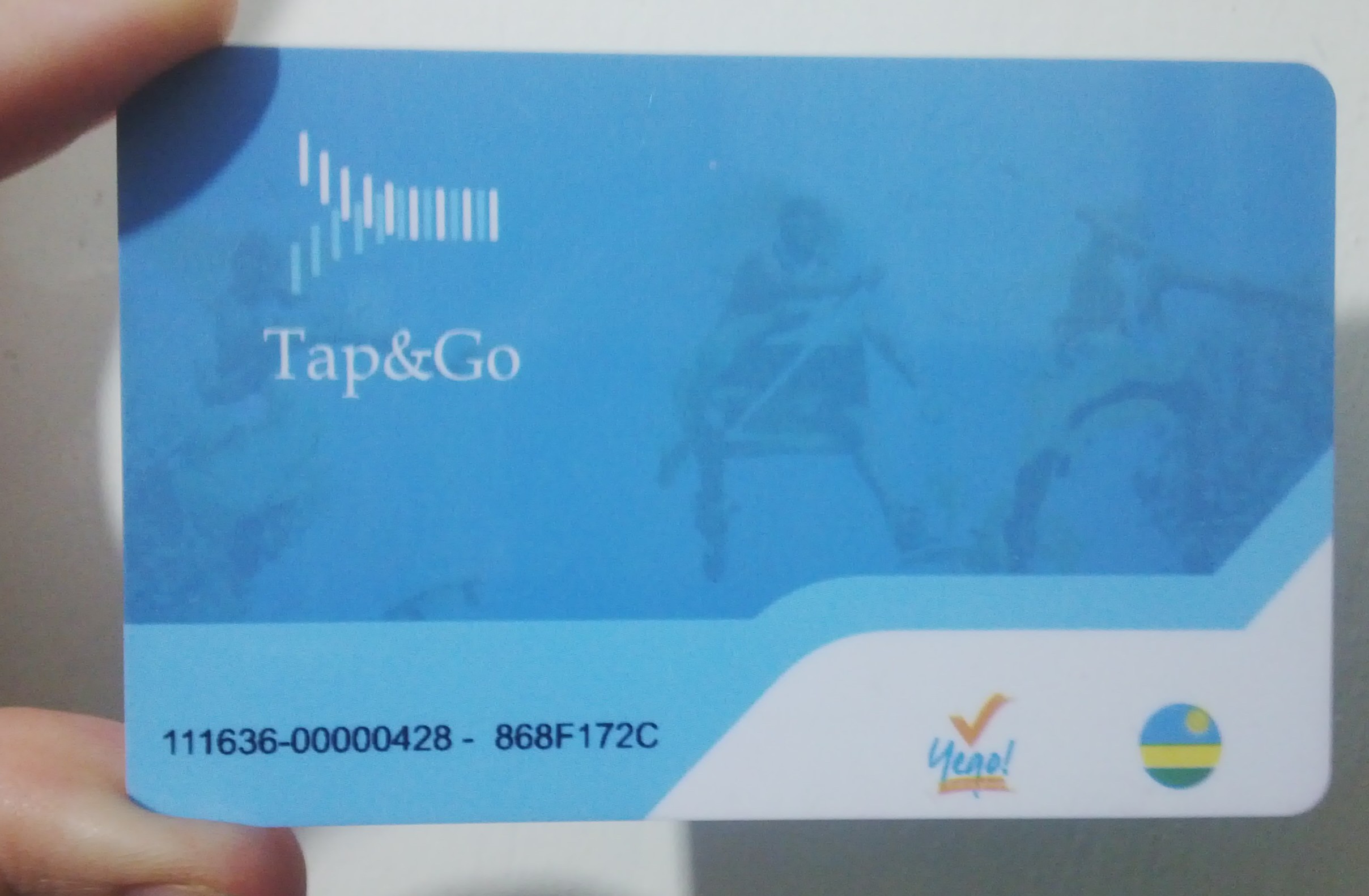
I could see how it sounded weird and irrational. For me, the joy of riding the bus is in the figuring out of the paths through the city, in the conversations you strike up with strangers, in the languages you overhear. And how else would I have experienced the prepaid “Tap&Go” card system used on many routes in the Rwandan capital?

Pavement passion

For three days, I explored parts of the hilly capital on foot and I did so with my eyes to my feet. Not to avoid potholes or puddles but because I couldn’t stop staring at the beautiful Kigali pavements. Just the fact of their existence in every part of the city filled me with joy.

I might have raved about them to every person who would humour me…

Pedestrians in Nairobi get the short end of the stick since pavements – where they even exist – are seen as a space open for dumping stones and rubble when they are not used as a parking lot extension. Most of the time, you’re walking on the roadside.

Kigali residents, I’ll say it again: your pavements are wonderful.

How much hadi la gare?
3-kigali-tapngo-laila-cc0-licenseSince I could never guess which language someone would prefer speaking and Kinyarwanda was not an option for me, I tried English, Kiswahili and French successively (not necessarily in this order). While this linguistic trio makes for strange multilingual introductions, it proved to be a winning strategy in everyday communication.

For moto rides, knowing basic round numbers in French is very helpful (you’ll be counting in hundreds, potentially up to a thousand). Even when we initially spoke English, the driver would often quote a price in French.

Kiswahili is also a good language to have in your toolkit. Many Kigali residents speak it and you’re likely to come across swahiliphone Congolese people as well, so do try it: reactions were always very warm and I found it quite easy to engage with strangers in Kiswahili.

Most of the time, the situation called for a mix of English, French and Swahili because things like ‘sauce provençale’ don’t really translate. Not to worry though: even if your only available option in this context is English, you’ll still be able to get by just fine.

Roju…what?

It took me all of two days to be able to pronounce the name of the nearest landmark to my guesthouse.

I had one of those retrospectively hilarious moments where it’s late at night and you’re trying to explain to the moto driver where you stay but, this time of all times, you have no language in common and the words that come out of your mouth don’t seem to find any resonance.

I kept repeating different versions of the name ‘Rojugire’ but the look of recognition never came. On top of that, we were both getting soaked under the pouring rain!

I ended up walking back with a kind stranger from the pub who happened to know the neighbourhood like the back of his hand because he had grown up there. While we huddled under his umbrella, he told me about the time he got mugged in Nairobi. It sounded like a variation on the universal East African travel story: I went to Nairobi and I got my phone stolen. We made nervous jokes about how unwise it would be to have a stranger walk you home at 11pm in Nairobi.

This trip was about contrast and wonder. Three days in Kigali is enough time to be charmed by perfect pavements and enjoy views over hill after hill, but not enough to to start noticing the flaws that would likely drive one mad after a year.

Do you feel like unleashing your own brand of crazy on Kigali yet? I sure hope so.

__________

Laila Le Guen is a 2016 aKoma Amplify fellow based in Nairobi. Growing up in France, her dreams of getting to know the world outside her small town were nourished by books from the public library. Her work has appeared or is forthcoming in Brainstorm, Aerodrome, Afrolivresque and Saraba.
Across the West African Coast: Ghana

By Yẹmí Adésànyà

It was work that dragged me across the coast of West Africa in delightful week-long bouts of adventure, each country exhuming different parts of me long hidden beneath the lacquer of a time-guzzling occupation. Some ports were more enchanting than others, workload and available time was not equally indulging, and thus my impressions are naturally skewed in favour of cities where my schedule permitted extra-metier experiences.

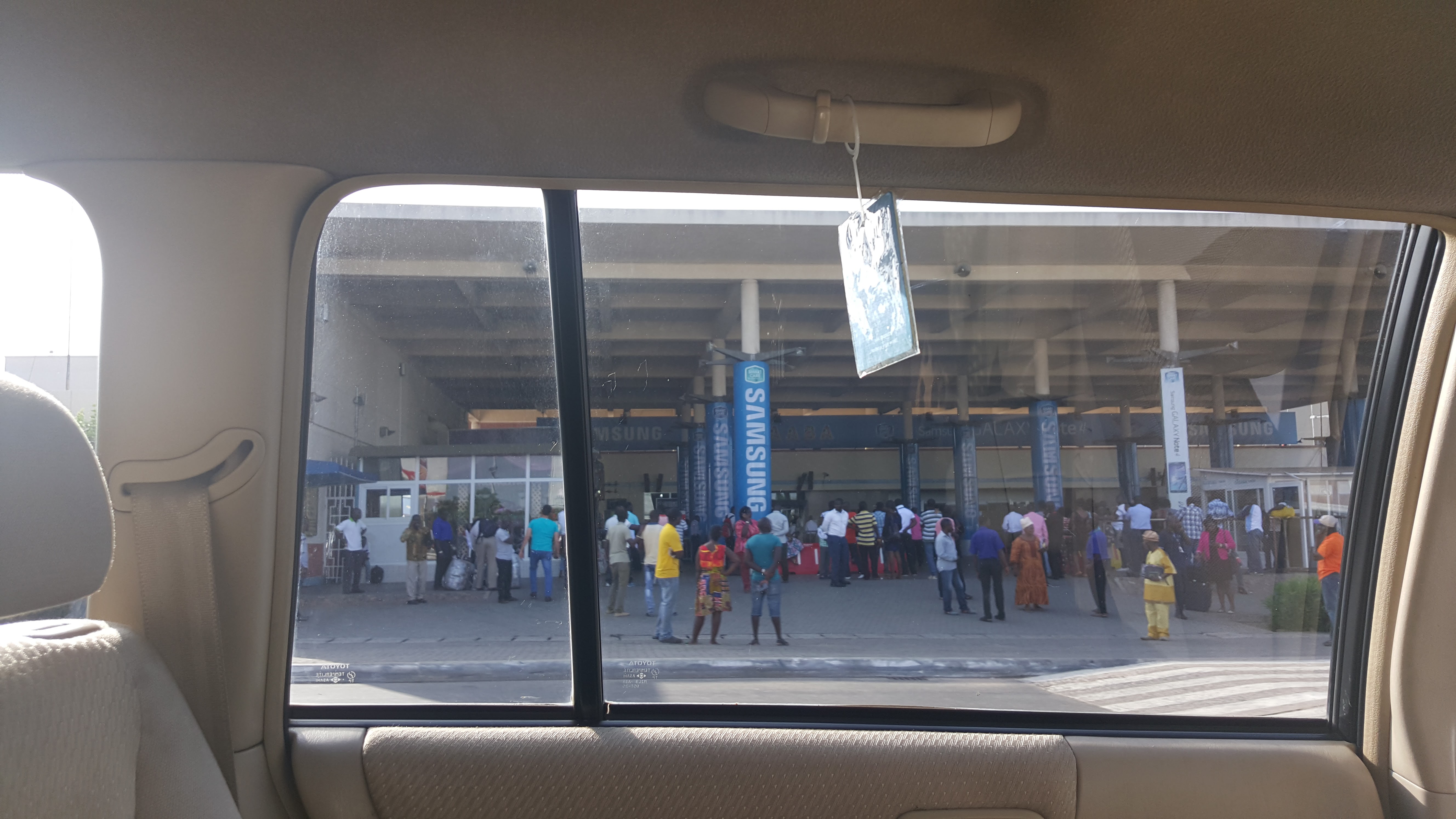
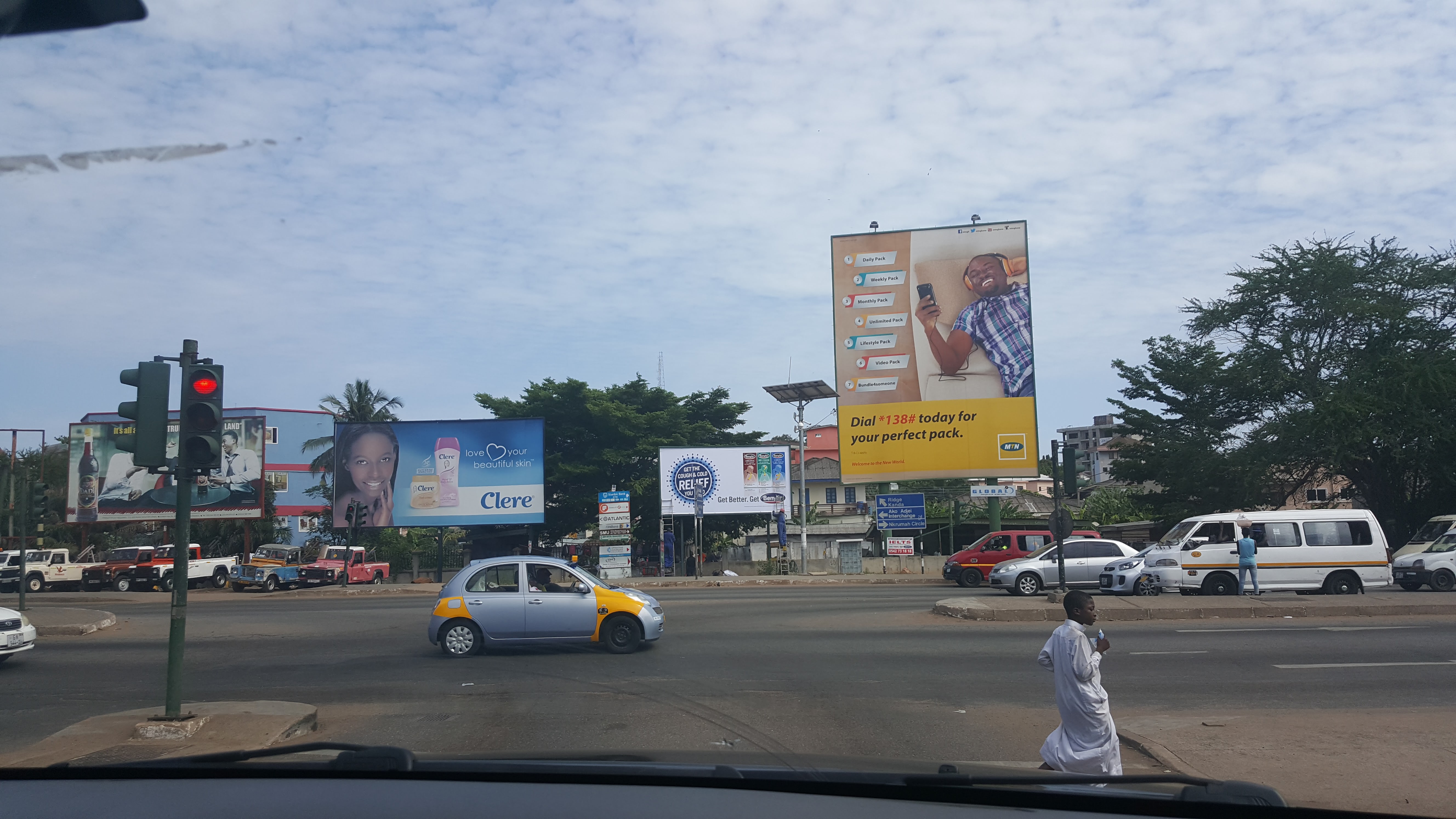
ghana1My journey started with Ghana, a colonial sibling of beloved Nigeria. Accra felt just like home: a buzzing commercial centre, invoking the unfortunately familiar and tiring spirit of boisterous vehicular traffic congestion, co-witnessed by hardworking street hawkers. My hotel was only a stone throw from the office, in Ring Road; there was not much time to play, I therefore did not see much of Accra. Ring Road is largely a business district, but my daily commute offered a view of the residence of one of the top opposition politicians, with campaign banners and billboards clearly marking his territory. So one might say the area is partly residential too.

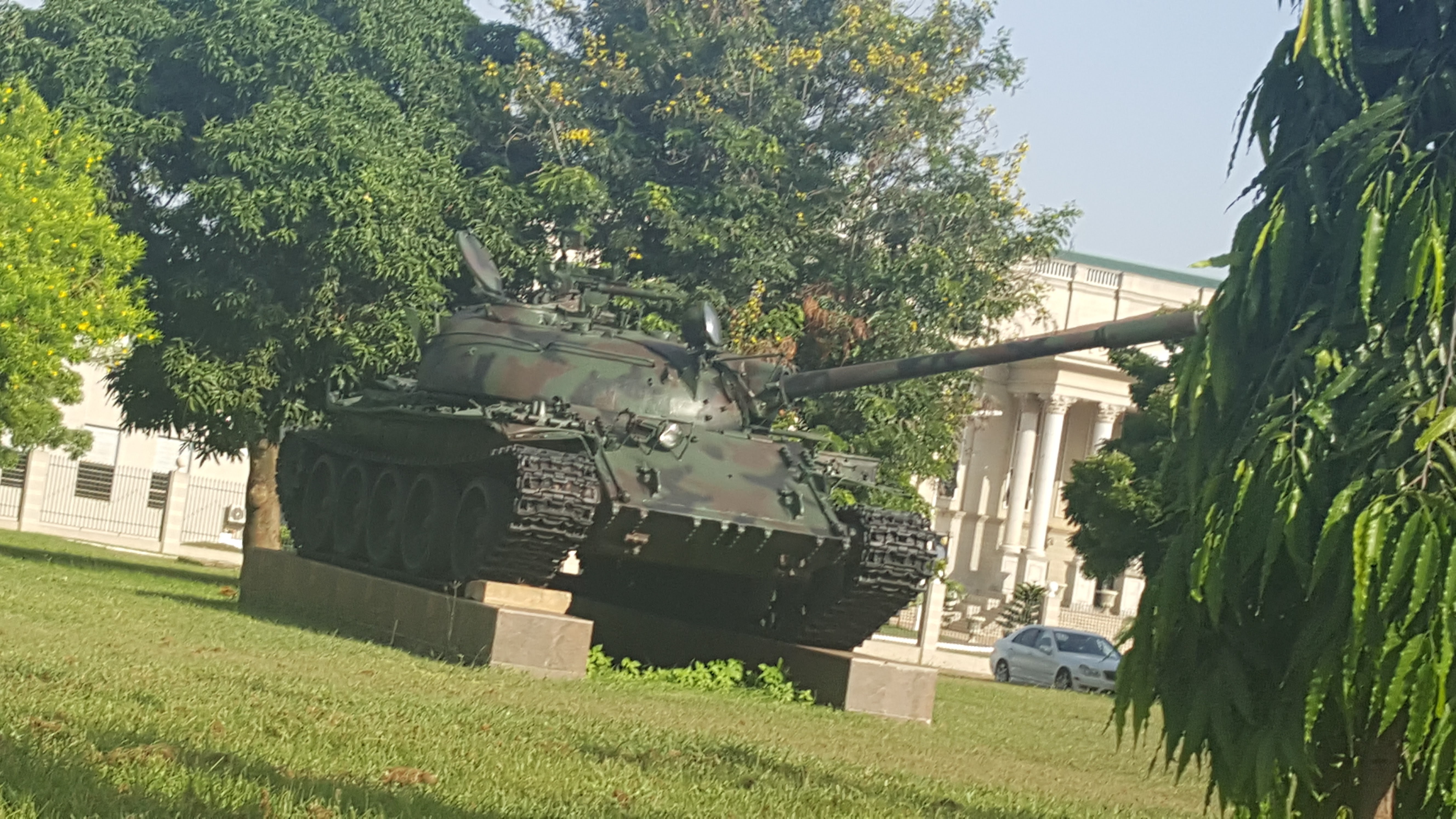
20160429_144618Any city that reminds me of Lagos meets with a kind of languid resignation and apathy, the kind in which I steeped for the duration of my visit.  I got a lousy shot of the state house (although my driver was not sure it was safe to take these photographs) and a stationary armored tank, but no other sense of adventure or curiosity was piqued in me. I made a mental note to opt for a hotel in a different part of town when next I visit, as I prefer relatively less densely populated spaces, with minimal noise.  I was later rewarded on one of these trips with two West African cities that felt like heaven to my Lagos-suffused soul.

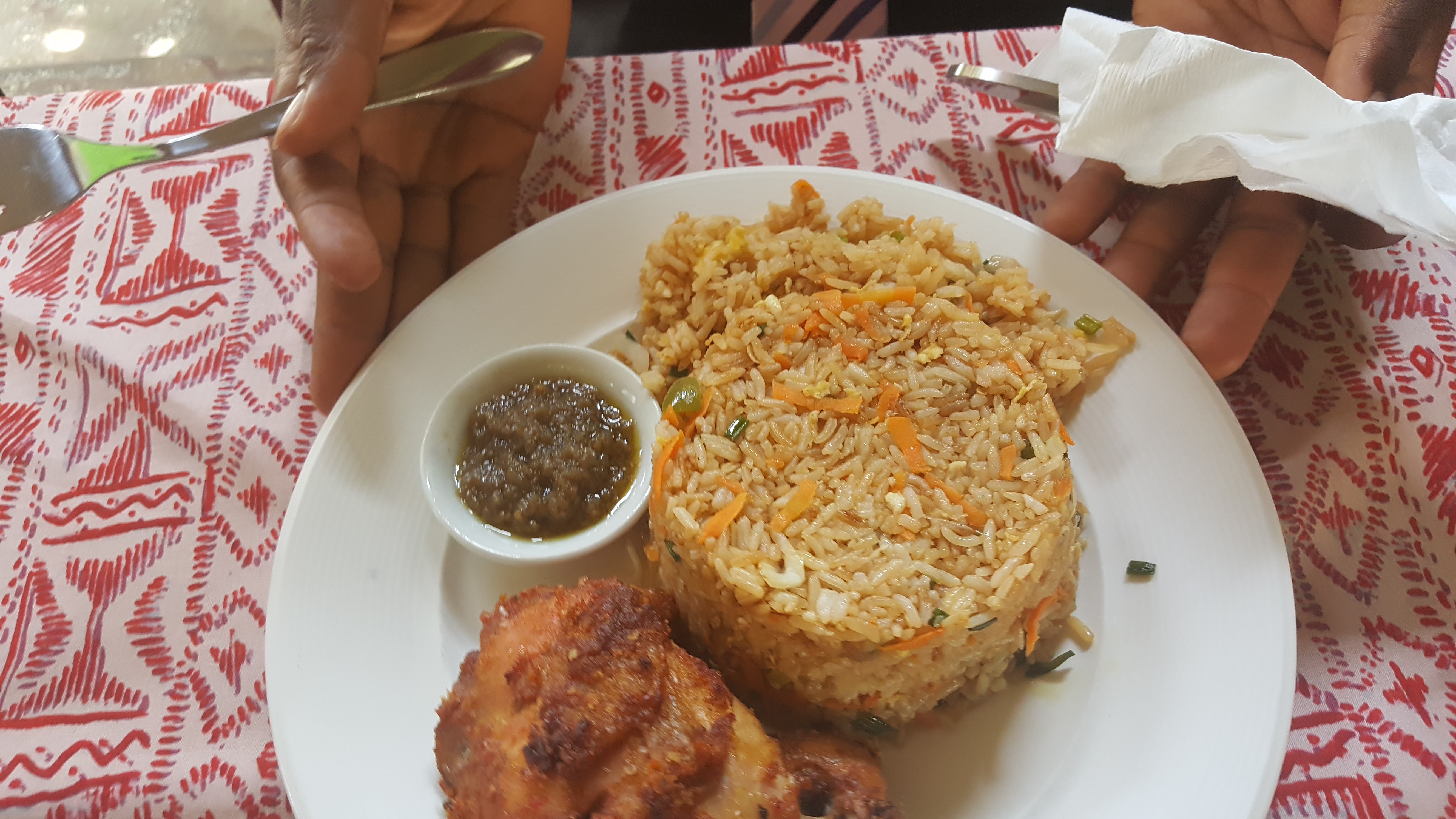
20160429_164403An interest that seemed of inexplicable significance, to my lunch buddy anyway, was a matter of immense national pride which I had made a mental note of witnessing, and documenting my observation and verdict. Many Nigerians have taken part in at least one light-hearted debate on the staple continental dish – Jollof Rice – and I had too, before my trip to Accra. I thought the Nigerian Jollof was better, just because, of course, but I had no objective evidence in favour of my bias. I had ample experience with the Nigerian flavor, and wanted to taste the Ghanaian, to have some closure. Well, I achieved that.

20160425_080640During my week-long desk-bound sojourn in the city, I was condemned to a food-evader’s utopia of monotonous lunch at the Swiss School, chiefly because it was close to the office, plus time did not permit any exploration anyway. I ate Jollof Rice in Ghana, and it was flat, and unlike the pill Posner took in Ibiza, no high followed. It was the second most unjollofesque rice I have ever eaten. Almost completely tasteless, inadequately seasoned, and what it lacked in tomatoes and salt, it made up for in excess pepper. As if that was not enough disappointment, the Zobo drink I enjoyed with my first lunch had taken on a more pungent taste by day two. Zobo the popular drink made by boiling dried calyxes of the hibiscus plant floweris big in Ghana, I was told by my colleague. What he forgot to mention was that it is not always harmless. The variant I was served on the second day shocked my palate to astringent displeasure and reminded me of the need to pay a closer attention to food labels in the future. Spicy ginger does not belong in Zobo drink!

20160425_130806I left Accra with a memento from the Ghana Art Centre market; a Djembe drum, delightful to my little music maker, and a regular reminder that one can sometimes find pleasure in interruption.

Three Days of Madness at the University of Lagos

By Péjú Láyíwọlá

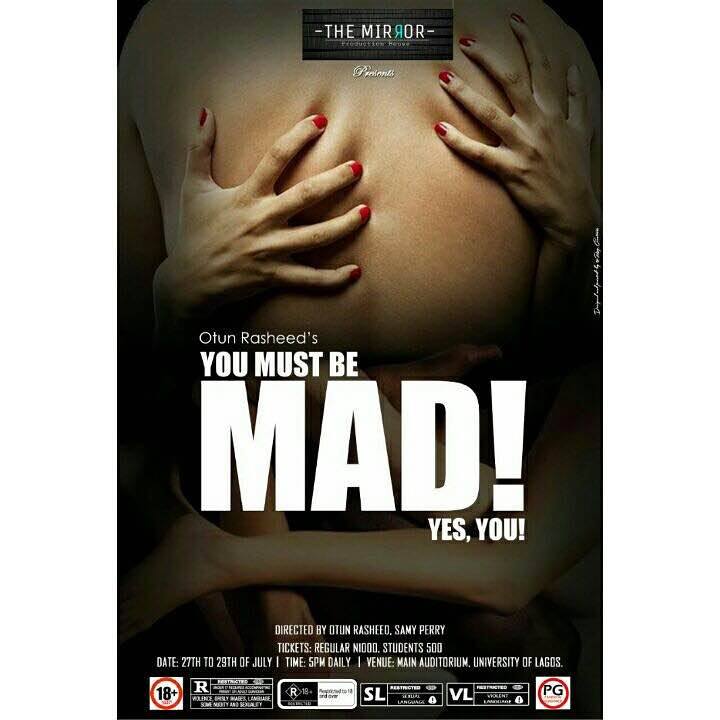
madI was first captivated by the posters and then I was warned not to watch the play because of the high level of vulgarity shown on stage. I braved it and opted to watch it on the second day of the three days that it was shown at the Main Auditorium, University of Lagos. Truly, if you survive the first few minutes of the play, you are likely to sit through this very captivating and bold attempt by a talented young playwright, Otun Rasheed, to shock, provoke, challenge, incite, and stir all manner of emotions through this breathtaking 70 minitues play. Given the very diverse critique of this play, one thing remains clear: sex is a tabooed topic in Nigeria. People prefer to talk about it in private spaces and not see themselves on stage.

You must be mad, Yes You! is the title of the play. While some might quarrel with the title, I think it is apt because really we live in a very mad world! It is a world full of paradoxes. The play was laden with foul language. The stark show of sexual pleasure and the rigorous scenes of obscenity and eroticism would make you cringe! But the message is loud and clear at the end: the level of promiscuity in the Nigerian society is high but largely ignored. Parents delude themselves by thinking their children are ‘holy’ and would not indulge in sex in this highly virtual and visual world of the internet. Infidelity, fornication, incest, pornography have become the order of the day. The level of incest within families is so high that you would be shocked. A few years ago, I attended a popular monthly camp meeting. When the altar call was raised, I was shocked at the number of people involved in incestuous relationship come out for prayers.

The cast comprised students of the Department of Creative Arts. Otun Rasheed is a lecturer in the department. What great mentorship! But does he represent the views of the Department or does he make any reference to it in any way? No! It is unlikely that such a play would see the light of day were it presented as an academic project. It is also not likely to receive a research grant. Yet, the academy should be a crucible for such phenomenal thinking.

Many thoughts crossed my mind while watching. Some of these discussed below reflect, in part, views of some of my colleagues when we discussed.

Why are people more likely to accept visual images of eroticism rather than a play with a similar theme? What role does sound and movement play in accentuating a message?

A bit of diversion: About eleven years ago there was a half nude life-sized female figure in the courtyard of the Visual Arts unit of the department. She was bare chested and wore a very well sculpted g–string that had a butterfly as motif on what I would consider the most significant part. A former Head of Department (also a visual artist) could not understand why that work should have been made. We all lived comfortably with the work for a long time. Over time there were signs of wear and tear on the nipples and lips of the figure. Several months later, the work collapsed. When I asked the students what happened they jocularly said. ‘She was raped and murdered last night and the case had been reported to the state CID’. Investigations are still ongoing till now.

Ọ̀tún Rasheed. Photo taken from Encomium Magazine

Ọ̀tún Rasheed. Photo taken from Encomium Magazine

Religiosity and fanaticism becloud our judgment. I was told that some of the staff in solidarity rushed to watch the play only to run out after five minutes. They couldn’t handle it. Jesus! Armageddon! This is Satan at work! The devil is a liar! This playwright must be mad! Yes, Otun Rasheed is mad! We were told in our elementary theatre class that theatre is make-belief. Yet, there is a meeting point between reality and fiction. Outside the performance, can I look at the most vulnerable of the cast without casting my mind back to the acts of violation on stage? Perhaps the change of cast for each production helped mitigate this.

Tunji Sótimírìn is concerned about the very graphic scenes and the perception of parents who are only just accepting theatre arts as a field of study. Are parents likely to allow their daughters study theatre arts after seeing such a play? As a former Head of Department, I have come to realize that the passion for some of these students far outweighs the choices of parents. I have seen students cry when offered courses other than theatre arts. Every new entrant into the Theatre Arts Department believes, and rightfully so, that he/she would succeed and surpass the achievements of former alumni and alumnae of the department. Several of them abound – Moceda, Stella Damassus, Fẹ́mi Brainard, Mercy Aigbe, Dáre Art Àlàdé, Fẹ́mi Oke, Wọlé Òjó, Helen Paul, Ọmọ́wùmí Dàda, Sambassa, Sẹ́gun Adéfilá and others too numerous to list. The successful careers of their forbears in the entertainment industry looms larger than the sentiments expressed by some parents. We are thankful for such great mentorship since the days of cultural studies. Both students and lecturers have enjoyed such great tutelage from Prof Ẹ̀bùn Clark, Prof Dúró Òní, Prof Àbáyọ̀mí Barber, Prof Délé Jẹ́gẹ́dẹ́ , Prof Alagoa, Prof Anthony Mereni, Prof Bọ̀dé Osanyin, Alaja Brown and Túnjí Ṣótimírìn. It is from this tradition that Otun Rasheed has emerged.

Many questions arise, a number of which I cannot answer: What role does theatre play in the society? What was the message of this play. Was it meant to be a corrective measure? Must theatre always have a message? To whom was this play directed? What binaries does this play throw up.

There are many points at which this play succeeds:

a. The use of space was amazing. Like an owl, the audience found themselves turning three sixty degrees. Many of the cast were seated amongst the audience and the audience were literally brought onto the stage. The stage could not contain the depth of actions Otun Rasheed offered. I also like the use of light and the special effects on the stage particularly in the opening scene.

b. Great publicity. Every day was a new message urging you to watch the play. The t-shirts and posters added pep to the show. The visuals were simply amazing! Social media aided publicity for this pay. Gone are the days when crude publicity was done by hiring a rickety university based cab with speakers mounted on it, while announcement are made round the campus through unfiltered microphones.

c. There was great synergy between members of the theatre unit and the students in bringing this idea to fruition. For this, I congratulate both students and staff of the theatre unit. Otun entertains much as he shocks his audience. His main aim is to call for the censorship of plays just like it is done with films. His personal experiences of taking his under aged children to watch adult plays without knowing it inspired this work. You must be Mad, Yes you! was rated 18+. Tickets were not offered to underage undergraduates, but a few still managed the gain entrance. That is the very point this play tries to address. How careful can parents be in bringing up their kids? What should be told them and what should be left for them to discover on their own?

The play lasted for three days. In my mind, it lasts forever. The final day had the main auditorium full to capacity. My only regret was that the madness was not sustained for a full week. Much as I like this work of art, I would like the directors to temper some of the violent scenes, particularly those couched within the audience area.

Peju-LayiwolaI salute your courage Otun Rasheed for bringing this play to the university environment. I look forward to watching it over and over again. I hope it would be viewed in a more pubic theatre and receive the sort of commendation it deserves. Did I hear you say condemnation? It is left for you to decide because you must be the only sane person in this very crazy world.

_________

Péjú Olówu Láyíwọlá is an artist, painter, and sculptor. She lives in Ibadan. Full text culled and edited from her Facebook page, with permission.

Bloody Morning: The Ukpabi-Nimbo Massacre

Guest post by Chijioke Ngobili

On Monday, 25th April, 2016, just before it was 7am, the unarmed indigenes of Ukpabi-Nimbo, Uzo-Uwani LG of Enugu State, South-eastern Nigeria were attacked with machetes, guns and other dangerous weapons. It was a bloodbath. The news filtered in and pictures of mangled bodies were shared on social media. My Facebook newsfeed began giving me snippets of the carnage around 1pm on 25th April, 2016. I read and searched out more information on it and I was embittered by what I read—some false, some exaggerated and some compellingly true. But then I had begun considering a travel to Nsukka.

On 26th April, 2016, by 6.20pm, I was at the Bishop Shanahan Hospital, Nsukka situated along Enugu Road. I asked the security men that I be directed to the ward where the victims of the Fulani massacre were, and they did. On entering this very ward, anguish and sorrow greeted me with their smell and wisps. One must have to double his guts to endure the sight of blood, deep cuts and wounds. I did before I entered a particular partition of the two wards.

The doctors, nurses were very busy and proactive in managing an overwhelming situation. The victims and their caregivers looked at me with suspicion. They were very careful and looked traumatized. I spoke in Igbo immediately and introduced myself mentioning my place of work so as to douse the growing tension and discomfort. I realised that it would be wise if I limited my speaking to one or two persons as not to attract the attentions of the doctors, nurses and other people in there, else I may be unable to extract any information at all since I’m no journalist by profession.

Nimbo 1 (1)

Samuel Uzoh – one of the victims.

Samuel Uzoh (pictured above) was the first victim I tried speaking to. He had a fiery temper. He understandably barked at me when I tried asking him questions directly: “So, when you get the answer, what will you do with it?” When I tried to explain, he ignored me and continued eating the food his sister was feeding him. It was this sister of his—who declined giving her own name—that told me her brother’s name and gave me a sketchy report of the horrendous incident before withdrawing from saying more when she saw me getting out my phone to record some of the things she said. Despite his massive wounds, Samuel’s mouth remained sharp and mind alert. You need not know that he engaged the herdsmen who wielded machetes and guns, and paid for it. This was his brief story: He is a farmer. He was going to early morning farming around 6am when the marauders attacked him. He refused to submit to death. Instead, he fought and lived to sustain the wounds on his head and right arm.

When I looked to my left, on the other row of the hospital beds, I saw a much younger man laid on the bed with a young woman of his age looking over him. I approached them. The young lady was more friendly and welcoming. She struck as more exposed and educated judging from her response in good English and the unexpected courtesy she showed me after I had introduced myself. 

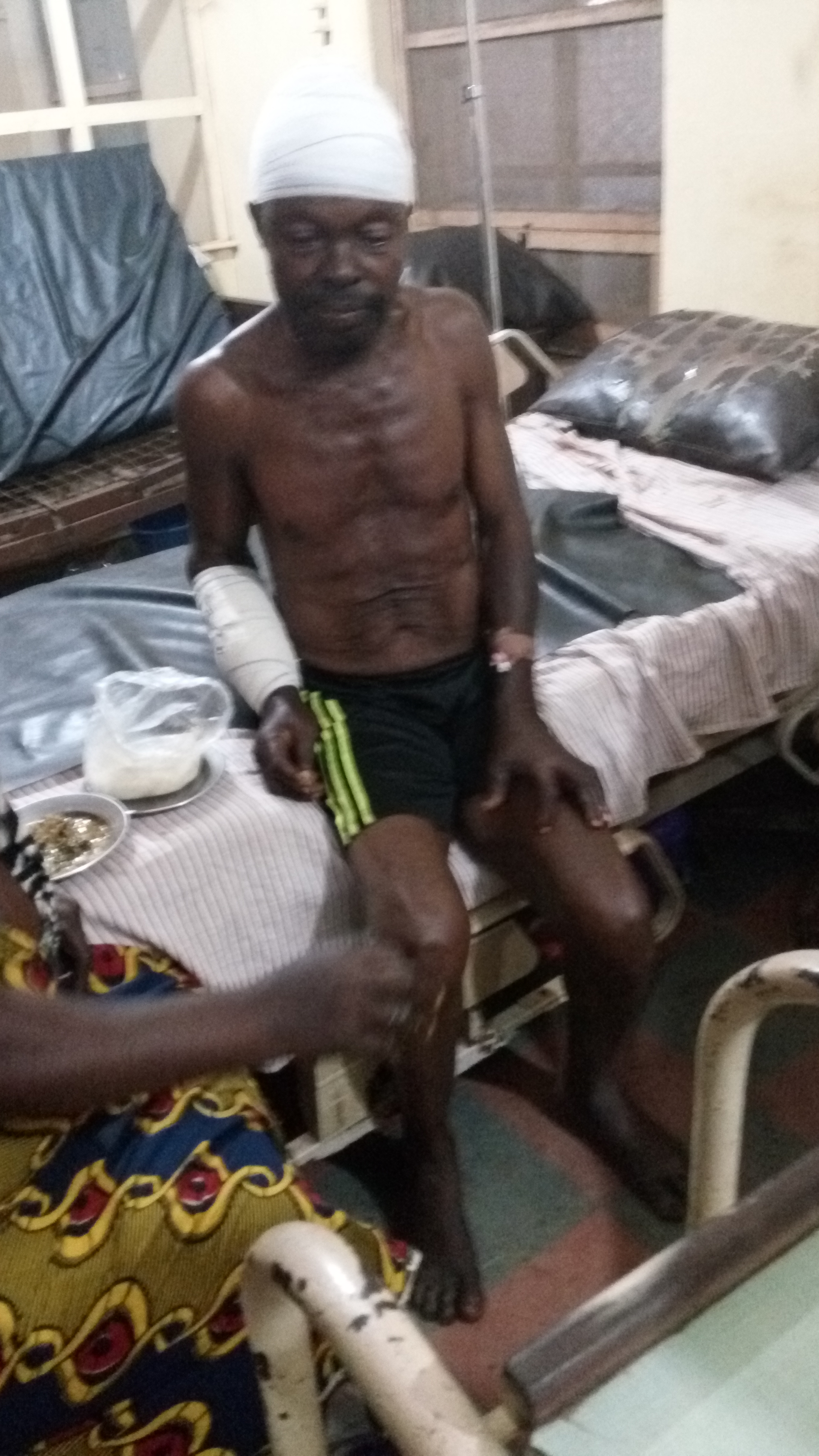
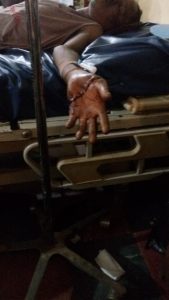
Celestine Ajogwu (pictured below) was the name of her brother. I had asked if she was Celestine’s wife. “No. We are siblings from same father but not same mother. He is Celestine Ajogwu while I am Chioma Ezugwu”, she said. His brother’s left palm was cut with a machete by the Fulani herdsmen as can be seen in the picture. His head and jaw were equally hit with a machete as he lost three teeth in the process. Celestine managed to say a few things to me despite the badly hurt mouth that affected his speaking. His sister, Chioma, helped him to narrate to me how it all happened in their town of Nimbo in the wee hours of April 25th, 2016: “I was in Onicha, Anambra State where I live when they called me to come home; that our community was raided”, she said. “I didn’t even know that my brother was among the victims until I saw people being carried out of the vehicle. I was shocked to speechlessness on seeing him in his very bad condition”.

Nimbo 1 (2)

Celestine Ajogwu – one of the victims.

Chioma then took me down memory lane as far back as 2006 when their traditional leader of Nimbo community naïvely thought that Fulani herdsmen could be pacified with money as to leave his people in peace, only for them to tell him how they desired to acquire more lands. “The man who is our Igwe (name withheld) was away from us for a long time. He returned from Abroad (maybe US/UK) and became the Igwe following some traditional succession”, Chioma revealed. “In 2006 or thereabout, after he had been deluged with complaints from our people on the destruction of farmlands by the Fulani herds of cattle, he invited the Fulani herdsmen and asked them how much he can give them as to vacate from our community entirely and in peace. The Fulani Cattle breeders asked for 10 million naira and our Igwe raised it and gave them, only for them to return to their excessive grazing with the claims that we have a wide expanse of lands”, Chioma told me. Since that year 2006 when the Igwe made that offer and before then, “…it has been endless conflicts between our people and the Fulani cattle breeders”, she emphasised.

Recently, the Fulani herdsmen wrote a letter to the Igwe, informing him with untold bravado, of their intention to revenge the clash they have been having with the men of the community on the issue of excessive grazing. On learning that, the Igwe alerted the State and Local authorities. Policemen were mobilised to the town and stationed to protect the people. But something suspicious and conspiratorial mixed up to birth the eventual misfortune.

Celestine Ajogwu told me himself: “I had slept the night before seeing the policemen around our community and so felt relaxed. Early in the morning, around 6am, I had woken to move out. I saw unusually numerous men dressed in black thinking they were the security men I saw the other night. But when I noticed they were blindfolded, I grew afraid and ran back to my house not knowing they had seen me. Some of them came to my house and struggled with me before dragging me out to butcher. In the process, I fell down to the ground pretending to be dead. That was when they left me alone thinking I had died”.  Chioma took over to straighten the wavy mix of how the indigenes managed to save many lives by escaping an army of numerous marauders. “These Fulani had planned not to raise dust in the killing which is why you can see that many of the victims were mainly butchered and were barely shot with a gun. They planned a smooth ethnic cleansing such that no one around would know what is happening until they are done with the cleansing. But it took one of our men who had woken much earlier to shout out when they struggled with him. The man was coming out with his bike when he saw something unusual about the people they thought were protecting them. With his shouting, people scampered for safety and the killers managed to kill the much they could. My brother, though badly hurt, managed to alert other people he could alert using his phone”.

Nimbo 1 (3)

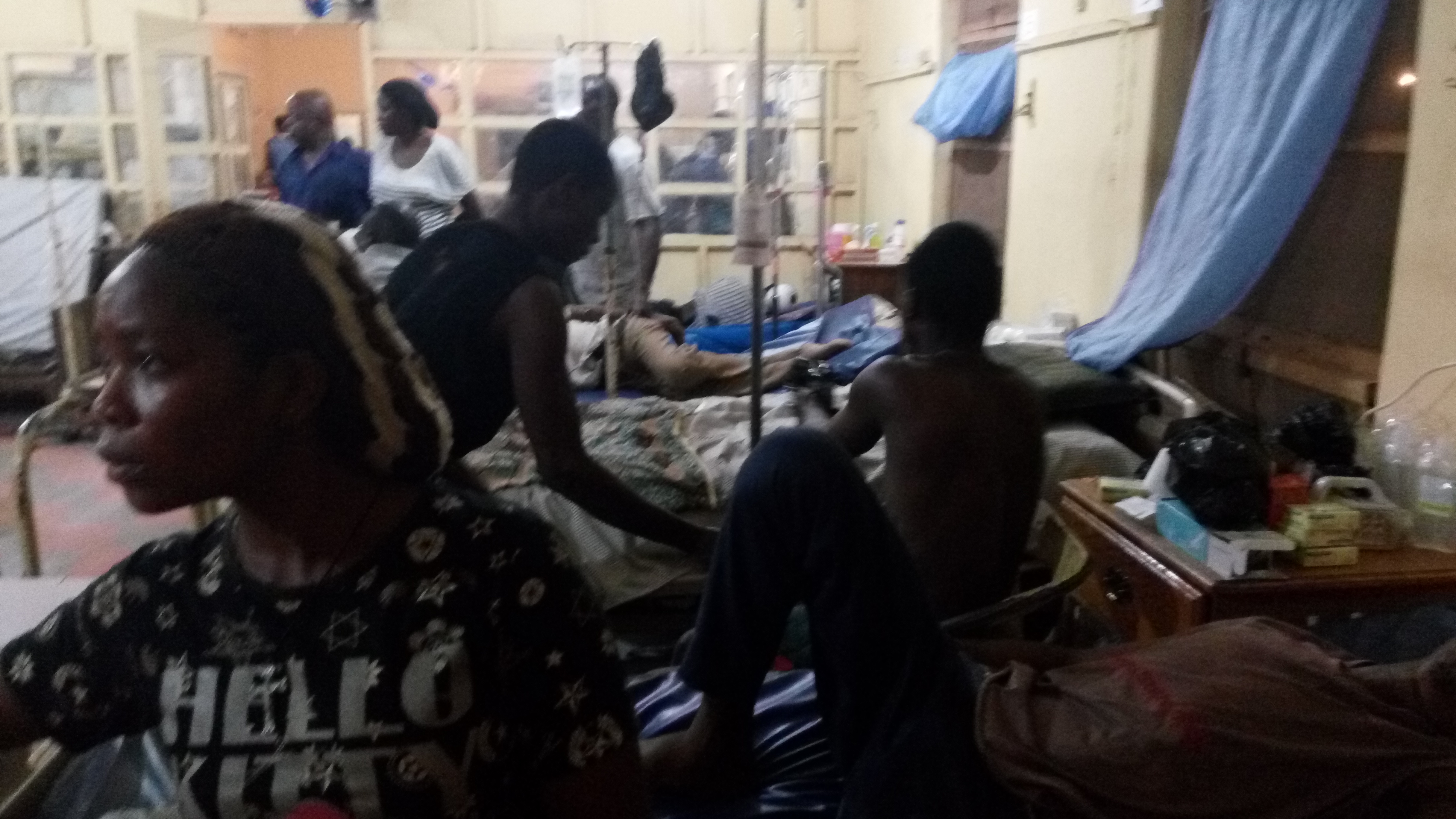
Chioma Ezugwu—my main source of information and resource person—with people milling around in the hospital ward.

I also gathered that the Catholic parish priest in the town earlier escaped the carnage even when the killers approached his house and found no one. In all these, something is significant but rarely noticed: The women were barely part of the victims. I checked the five patients in that ward and noticed that they were all men. Chioma had brought this to my attention saying: “Even if women are gathered in hundreds, they would just pass by and leave them. They said it’s the men they are looking for; that it’s our men that have offended them most and refused them on our lands”. On asking the actual number of deaths so far, Chioma said she had been able to count nine dead bodies brought to the morgue with her own eyes despite the conflicting figures thrown about the media. She pointed at a bed adjacent to theirs: “This evening, the man here died and was taken to the morgue. He was old and couldn’t endure the pains of the deep wounds he sustained”. Chioma didn’t clarify to me if the recently dead man added up the dead bodies to 10 or completed them 9. She also reminded me that there were other victims taken to the General Hospital in the same Nsukka; and definitely, other dead bodies will be there too, plus those who may have equally died in the process. She told me how Governor Ifeanyi Ugwuanyi, the governor of their State, visited them and gave them each a hundred thousand naira each, just as the Senator representing Nsukka Senatorial Zone, Chukwuka Utazi gave them fifty thousand naira each; making it a hundred and fifty thousand naira each. (They were 5 patients in that very ward as at 26th evening of April, 2016). Also according to Chioma, the governor paid their bills and informed them that they’d be transferred to University of Nigeria, Teaching Hospital, Ituku-Ozalla between that evening and the next morning.

Celestine and Chioma, in a nutshell, believed that there is a conspiracy somewhere which resulted to the bloodbath. They believed there was an insider who facilitated it even though they refrained from mentioning the people/group they might have suspected. They are right! The constant pulse in that suspicion is this: An enemy served you a threat. You provided a security to avert it, yet the threat became real. So, what actually did the security agents do after all? Why did they leave their station only for the enemies to surface in a space of few hours? Were where those enemies all along? In the bush? Or did they use the same roads you guard to assess the community of Nimbo? Too many questions begged for answers in my mind.

“We can’t even wait for morning to come, so that we can be transferred to Enugu”, Chioma said resolutely. “This place doesn’t seem safe judging from two of the victims in the other ward who couldn’t speak Igbo when the doctors and nurses asked for their names. I am afraid of their body languages and facial expressions so far. They can possibly be informants who consciously got wounded as to keep penetrating our people further”. I left them at 8pm after showing them some little financial gestures. I assured them that I would keep checking on them and that if anyone who gets to learn of their story from me offers anything for them, I’d surely make it reach them. 

_____________

Chijioke is a musician, writer and freelance journalist. He wrote from Nsukka.

_____________

Photo credit: Chijioke Ngobili

A Few Nights in Jordan

Guest Post by Asha Kansal

IMG-20160122-WA0066


Every other year or so I am lucky enough to have the chance to visit family in India. Traditionally, after our big, fun visits there I extend one of my layovers back to the States in order to take advantage and explore another country. This time around I was determined to visit a friend of mine who had recently moved back home to Jordan. I’ve been to the Middle East only once before (another extended layover) and got to see about 5 hours worth of Dubai. But this visit would be different. In the end I would be there for a little over a week.

My other key motivation to visit was to see for myself what a piece of the Middle East is really like. I’m fed up being told by an ignorant and biased media what to think and believe. Even the term Middle East makes some cringe. The more I interact with Arabic people in the U.S. the more I realize what a diverse, intellectual, and fascinating part of the world they come from! It is becoming increasingly worrisome that the atmosphere in too much of the U.S. is becoming conducive towards hate and racism against a culture that some are too lazy to even try to understand and respect. So I wanted to see for myself what Jordan has to offer, despite a slew of dear friends and family telling me to reconsider because “it’s too risky.”20160121_164706

Before going I had no idea what to expect. I’m an American girl in my late 20s, and I was just thankful that I have this ambiguous brown skin and dark hair which would help me blend in. The first few times that people asked me where I’m from, when they realized I wouldn’t respond back to their Arabic questions, I hesitated to say “America” out of fear that they would have some negative feelings towards our country for some reason I don’t even know. But 100% of the time, Jordanians, young, old, fluent or not in English, taxi driver or acquaintance, would say “welcome” with a smile that was genuine and respectful. Some days I would just meander through the streets alone, taking in the sights, getting lost occasionally, and making small talk with street vendors. Every single interaction with someone there was positive. They see no reason to discriminate!20160120_142813

On nights that we went out, bars would sometimes be swanky enough that I felt underdressed in my expensive jackets and red lipstick. Even their martinis are better than ours.

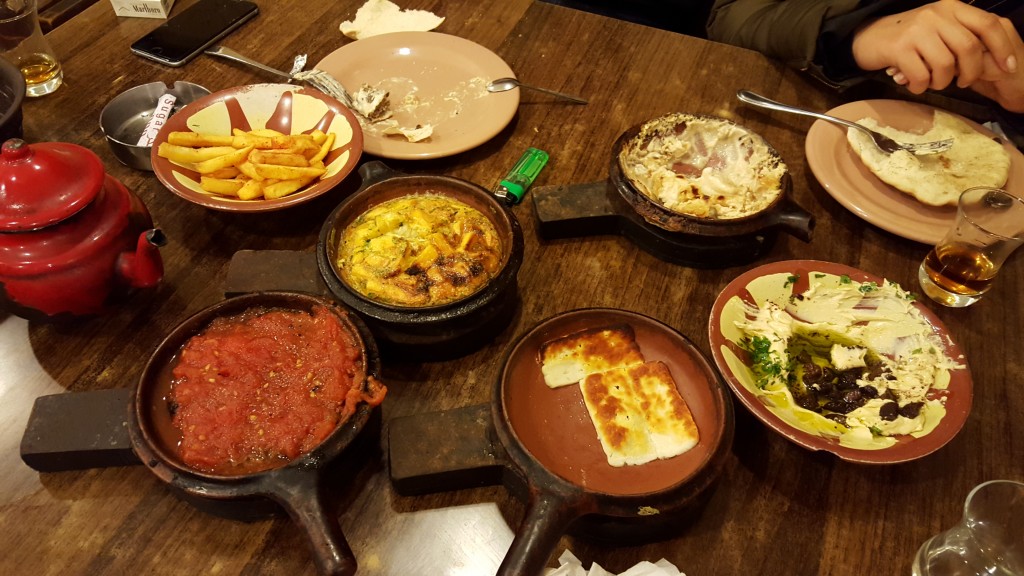
Cafes on all nights are packed with a mix of people smoking hookah and drinking the biggest variety of delicious non-alcoholic drinks you could imagine. Women in hijabs, women without, friends mingling, old and young, Christians, non-Christians…it was an eclectic mix wherever I went.

20160123_210037

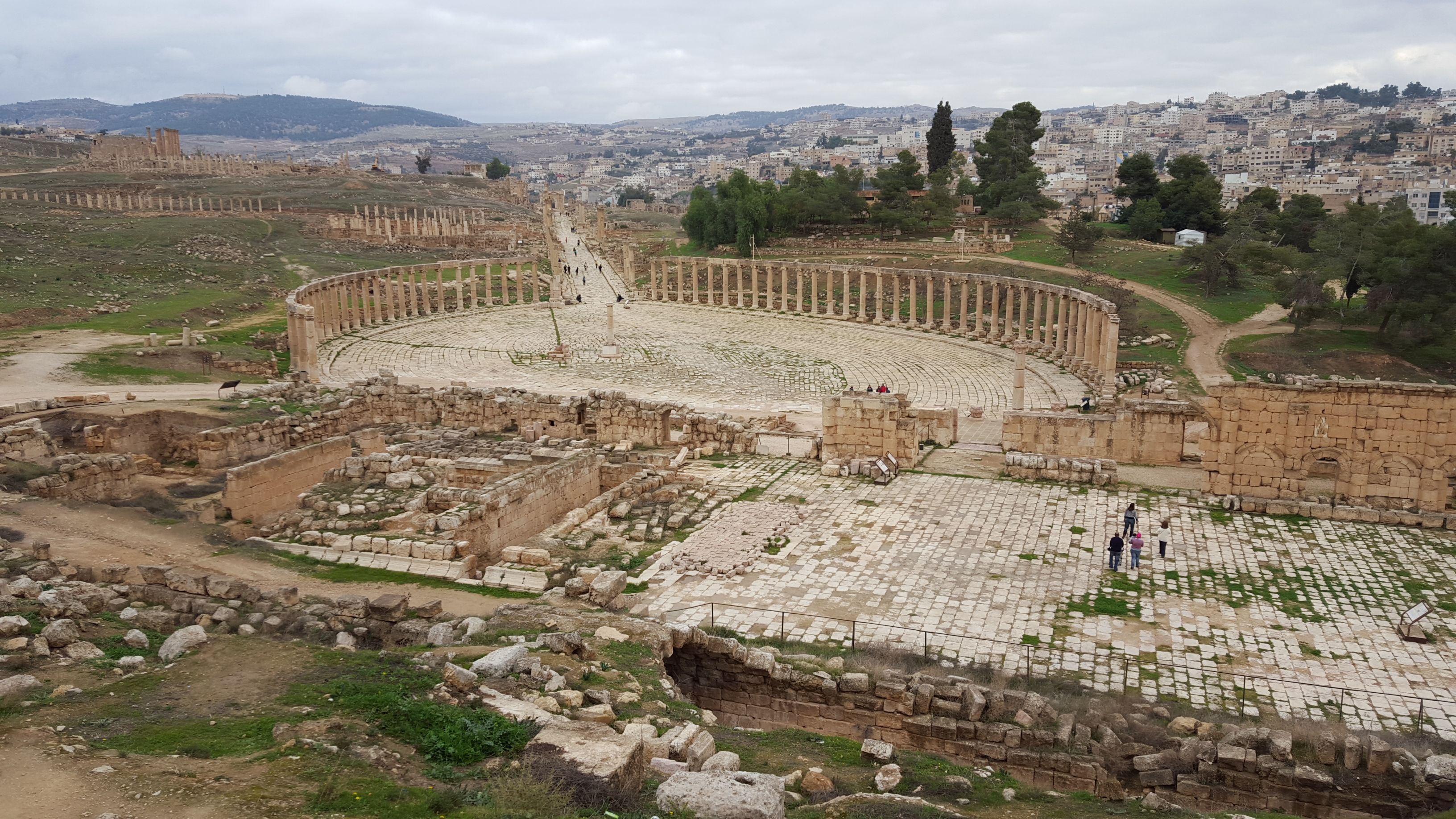
I traveled to Jarash and hiked around the ancient Roman ruins that lie 50 kilometers from Syria. I was so grateful to have such a beautiful experience there. In such a magnificent and breathtaking place, it was completely empty of tourists, due to the unfounded fear that the city is too risky to visit now, due to ISIS’ presence in 2 different countries outside of Jordan.

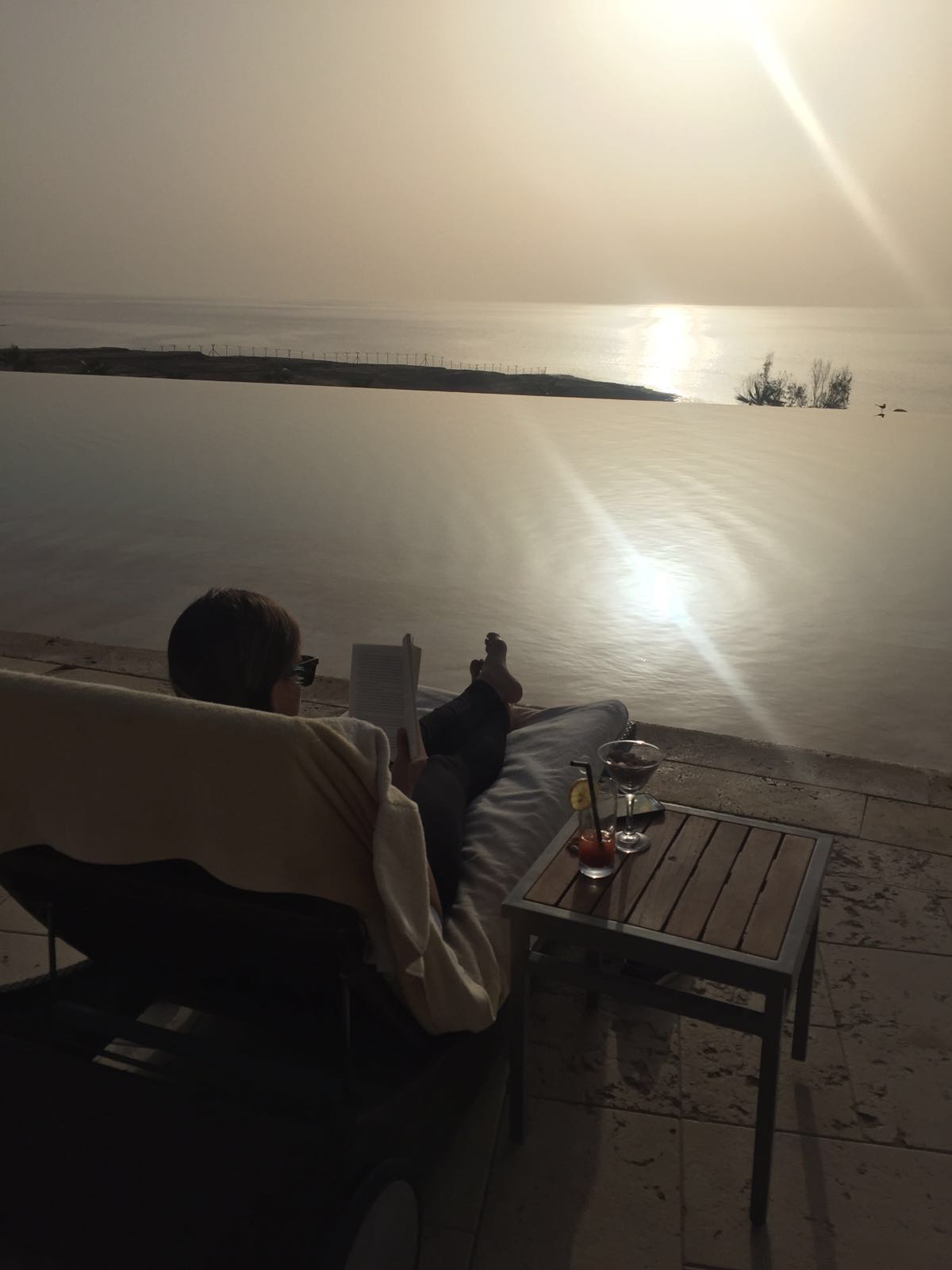
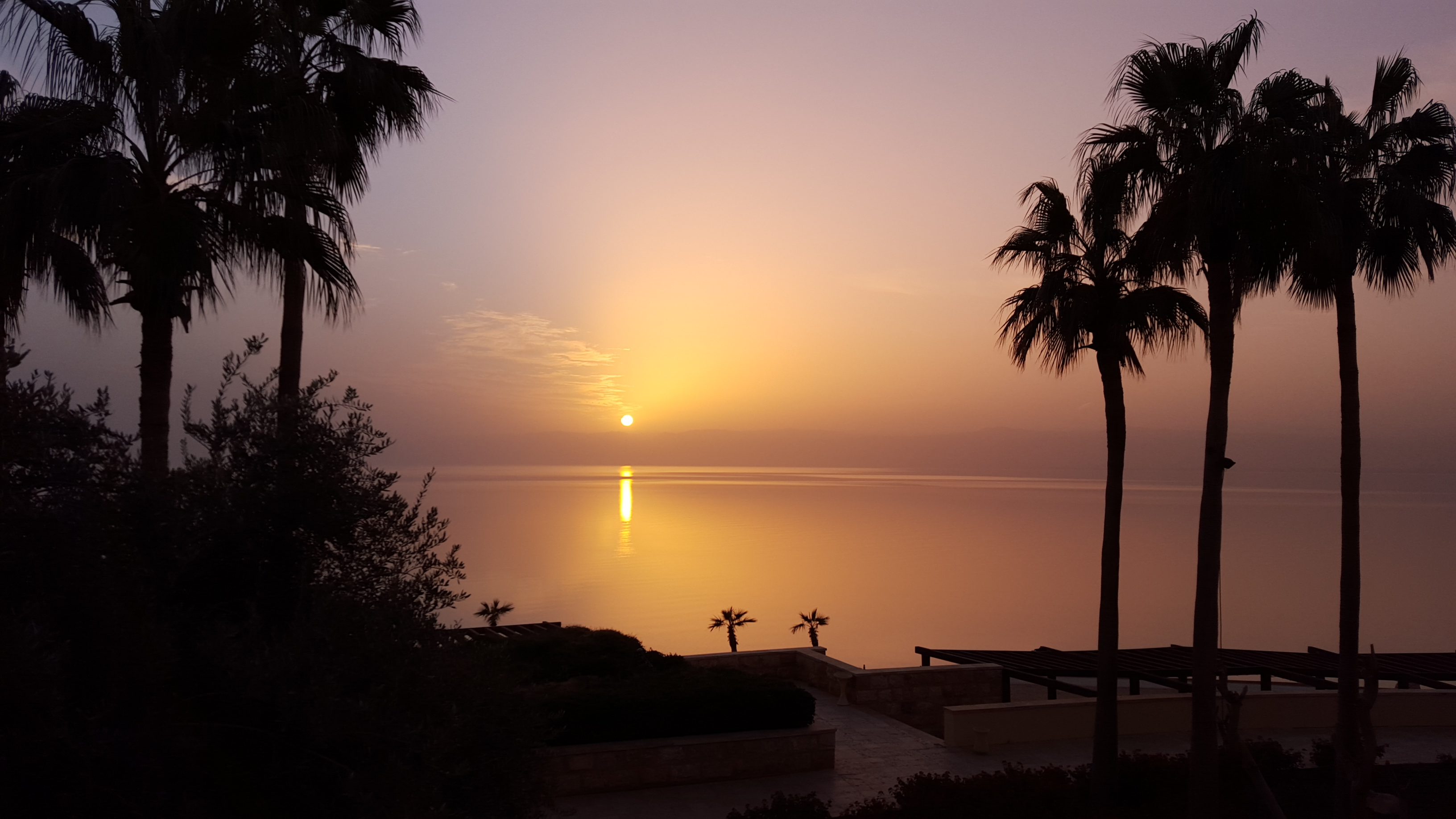
The Dead Sea was an extraordinary experience. With the high salinity of the water, all you can do is float and bob around in the water; even swimming to the deepest parts is safe as it’s impossible to drown! It’s tradition to get a full-body mud pack from the black, gooey mud straight from the bottom of the sea. It’s chalk full of nutrients for the skin. You can get a lovely and eerily close look at Palestine from the coast as well.20160119_160226

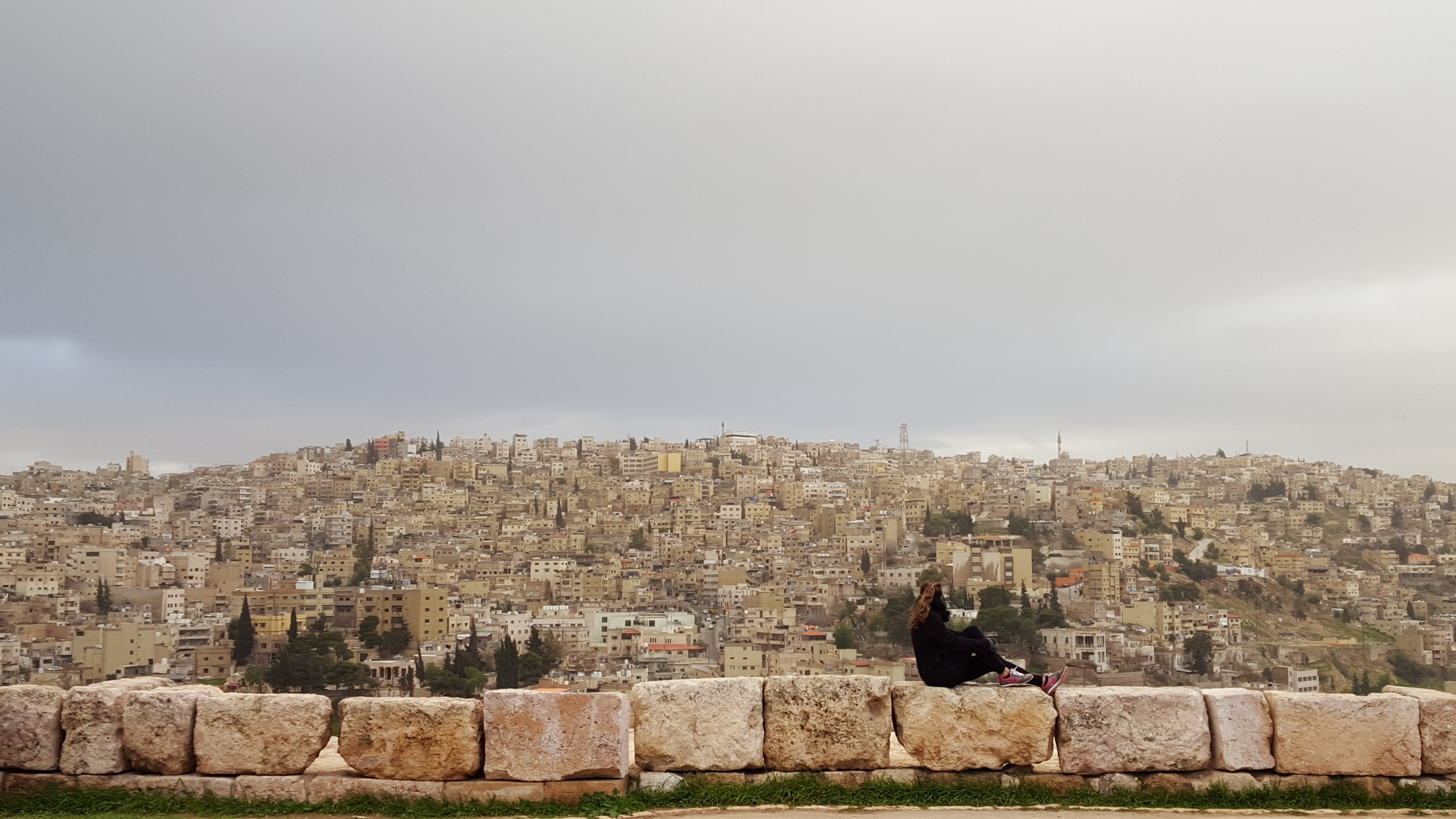
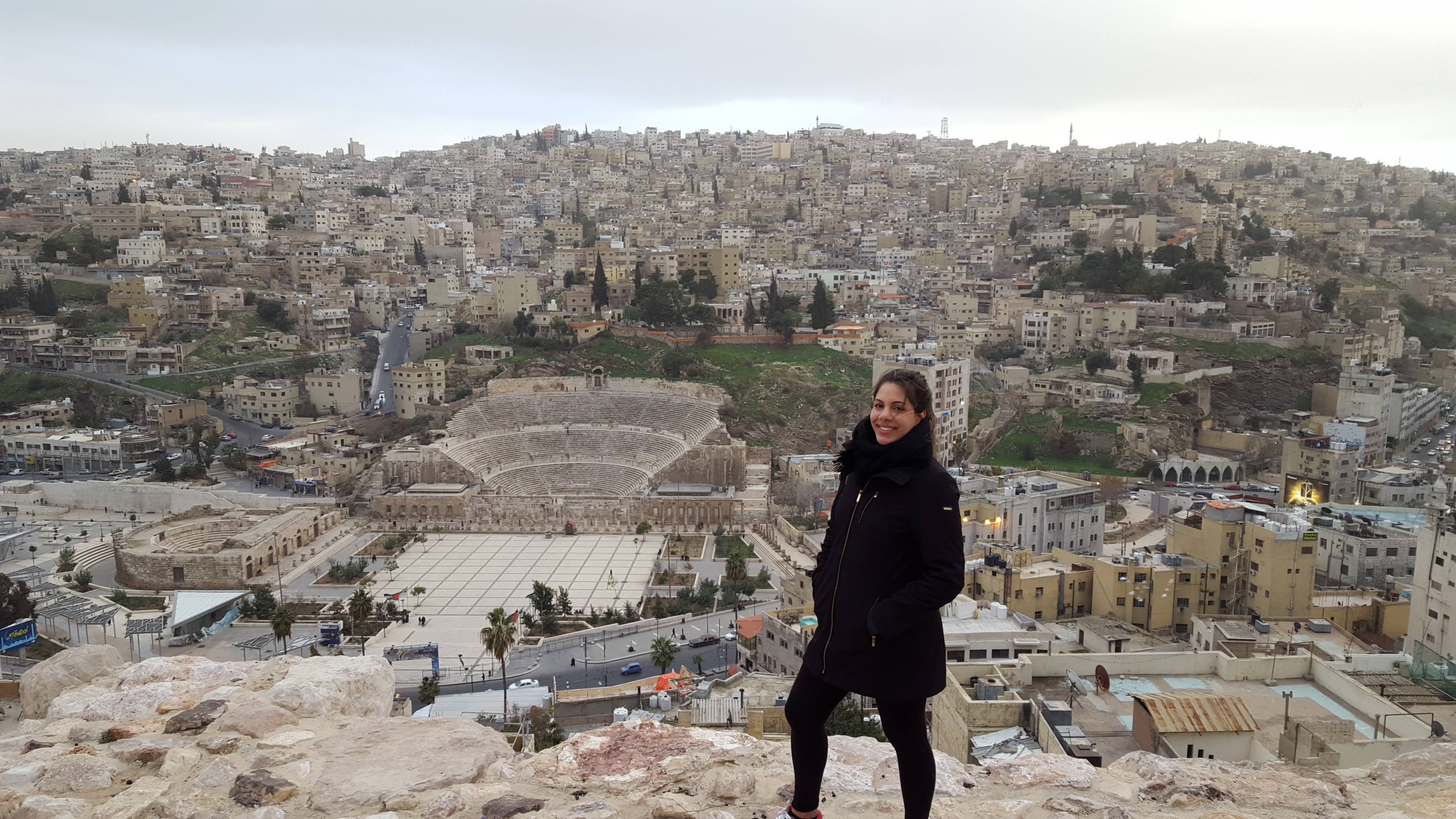
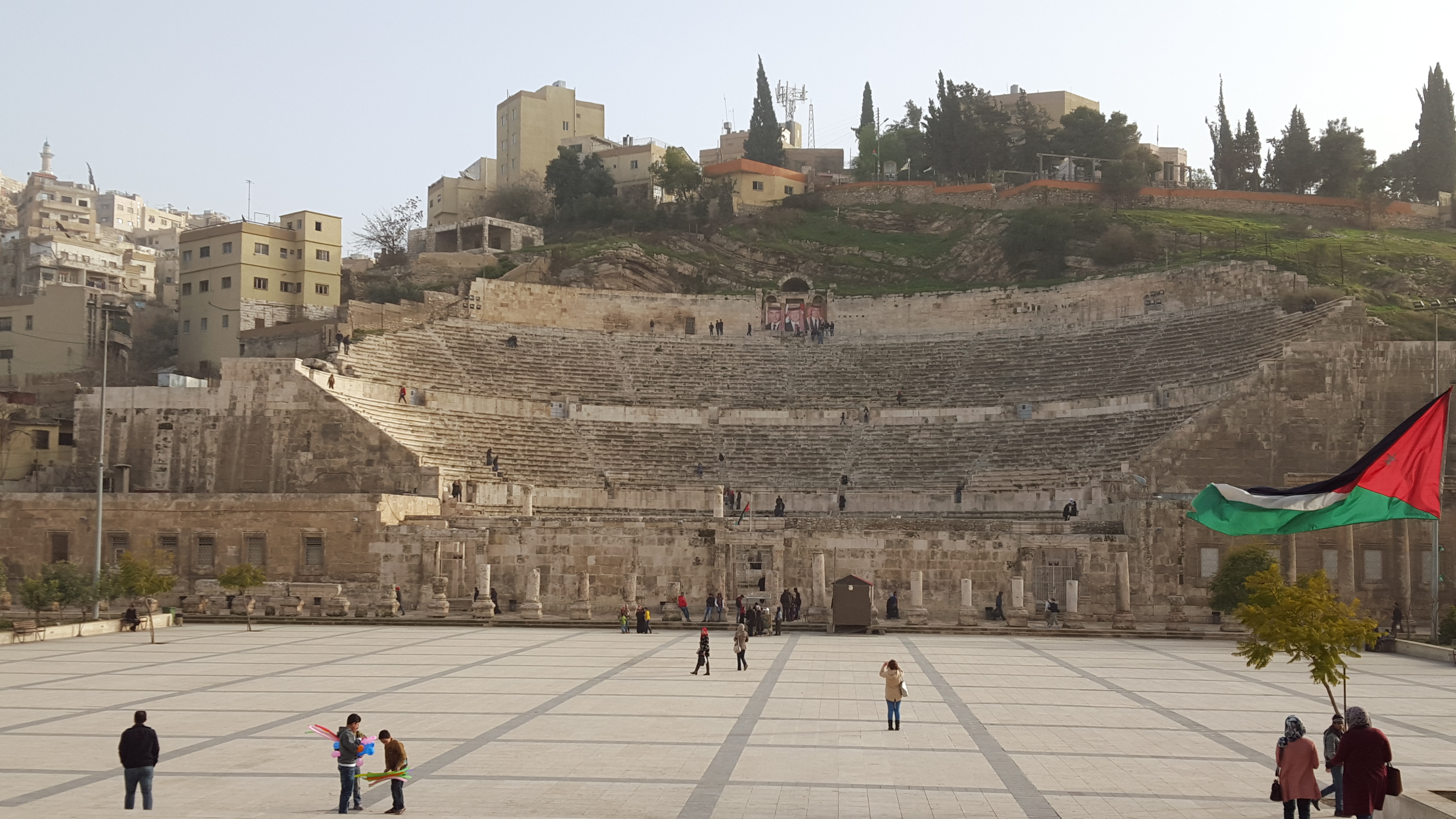
Amman itself offers such a cool mix of things to do. Their shopping malls are like the U.S, except you can sit down and have some hookah in the middle of the mall if you want a break! There are plenty of neat cafes, restaurants, and bars to hang out at, with a surprisingly big number of Westerners enjoying life there. Amman has its own special Roman ruins and amphitheater, part of which impressively sit on top of a hill near the center of the city. Visiting a Hammam and getting the biggest full-body exfoliation and bath of your life by experienced women is another amazing experience! It’s a fascinating city to be in and the people in it make it that much more fun and interesting – good conversation is never hard to find.20160119_161838

I want to share my experience so that people get used to hearing the term “Middle East” and not immediately associate it with “war,” “ISIS,” and “terrorism.” The world is made up of so many different cultures that all we can do is respect one another and even learn a little from each other. There’s no reason to hate. It just doesn’t do any good. And as stupid and common sense as that sounds to me, there are millions of people who do just that towards Arabs.20160118_151130

What an eye-opening experience that I hope to continue to expand upon! Not everything is how we think we understand; we can truly understand that which we actually experience.

———-

Asha Kansal is a graduate of Linguistics/TESL at Southern Illinois University Edwardsville, currently working as a full time ESL instructor. She’s an aspiring travel and food blogger.