Are We Past the Height of Culture?

The current play on my phone at this moment is a tribute ewì album to the departed Tìmì of Ẹdẹ (Febryary 1899 – May 16, 1975), a literate Yorùbá king in both the western and traditional sense. He was a drummer and a prominent culture custodian. There’s a documentary about him on YouTube as well, which you can see here.

The album was done by Lánrewájú Adépọ̀jù, a prominent Yorùbá poet and contemporary of my father’s — both foremost practitioners of the oral poetic form. Likely released in 1975 or shortly after, to mark the death of the king.

Earlier this morning, I was listening to another work by the same ewì exponent. This time, it was the album he waxed for the coronation of the Aláàfin of Ọ̀yọ̀, Làmídì Adéyẹmí who passed away at 83 in 2022. Adépọ̀jù himself died at 83 two years ago. What was common to both works was the depth of the poetry, the thoughtfulness of the work, and the significance of the documentation that the work have come to represent for those of us not privileged to have occupied the same lifetime as some of these prominent Yorùbá kings.

A few weeks ago, the selection of a new Aláàfin Ọ̀yọ́, in the person of Akeem Abímbọ́lá Ọ̀wọ́adé, was announced. It was, perhaps, that singular event that brought me to contemplation about what we may have lost. Along with the album by Lánrewájú in 1975, the poet Odòlayé Àrẹ̀mú did one titled Aládé Ọ̀yọ́, which I haven’t been able to date. There, too, the lineage of the then newly-selected young Aláàfin was poetically preserved.

In 1977, a new Olúbàdàn was crowned — the third Christian king of the military town. Ọba Daniel Táyọ̀ Akínbíyìí. His reign lasted for five years, ending in 1982. But at the time he was crowned, also one of the Western-educated kings of his time — Odòlayé Àrẹ̀mú waxed poetic in his honour. It’s still one of my favourite albums of his to return to once in a while, produced by Ọlátúbọ̀sún Records.

What the naming of the new Aláàfin Ọ̀yọ́ brought to me in sadness was the absence of any capable cultural practitioner of the type of Odòlayé, Adépọ̀jù, and Ọládàpọ̀ to put the new king in context, and in poetry, for a generation that desperately needs it. Look, for instance, at this collaboration between Túbọ̀sún Ọládàpọ̀ and the aforementioned Odòlayé Àrẹ̀mú when the Ṣọ̀ún Ògbómọ̀ṣọ́ was crowned.

or to mark the demise of the Premier Samuel Ládòkè Akíntọ́lá…

Or Àlàbí Ògúndépò’s panegyric tribute to the crowning of the Ọọ̀ni of Ifẹ̀, Okùnadé Ṣíjúwadé in 1980…

Over the last five years, prominent Yorùbá stools have been filled. The King of Ìwó has become a crusader for the Islamic Religion, while the new Ṣọ̀ún of Ògbómọ̀ṣọ́ was chosen from a Redeemed Church in the United States. There have been at least four Olúbàdàn of Ìbàdàn kings over the last ten years, none of which have had any contemporary poet, musician, or artists do noteworthy commemorative albums in their honour. It is not just for the royal personalities themselves, mind you. My worry is what this represents for what goes for public art performance today in the Yorùbá culture.

Here are two albums created by Adépọ̀jù and Ọládàpọ̀ to mark the passing of Ọbáfẹ́mi Awólọ́wọ̀.

Adépọ̀jù:

and Ọládàpọ̀:


Recently, I asked Mọlará Wood, a culture critic, about this phenomenon. What was it, I wondered, that made those times welcoming of these kinds of artistic expression? Obviously, the characters that were celebrated in these notable poetic expressions were important and remarkable characters themselves. Could it be that we have only found mediocre personalities to replace them? Or, also more likely, could we also have run out of original creative thinkers able to wrought remarkable pieces of art in memorial for our departed or emerging culture heroes? Her response, in brief, was that perhaps those were the days of the height of culture.

And that is a depressing thought; that we have indeed peaked, and what is left are the dregs of society with values at variance with the collective need of a society that once thrived on intellection, art, and original creative expression and documentation. While society is being replaced by the sugar-high of popular culture — Afrobeats, Amapiano, Alte, and the rest of the modern saccharine — what is being lost is the worldview and values that once kept our head high, where entertainment was deeply embedded with information, community, and knowledge-sharing, where art was meant to last and to engage, and not just to vainly move.

Shortly before the pandemic, I started work with the Poetry Translation Centre in London to translate a number of important Nigerian oral poetry into English. One of the subjects was Lánrewájú Adépọ̀jù — a natural choice, considering his status in the genre. But what I later found was equally challenging: the near impossibility of translating what makes poetry beautiful in Yorùbá to English. Ocassionally, as you’d see in the excerpt below, the poetry manages to cross over mainly through the strenuous wringing of meaning through English prosody. But for most of his work — and those of his contemporaries — the beauty remains only when the work remains in their source language. This presents the key challenge to those who might respond to the main thrust of this blog with “Perhaps globalization is the saviour, come to save us from traditional Yorùbá poetry; so the dearth of new work should be seen through that lens, and their transmutation through modern music rather than a sign of a confirmed path to extinction. As long as we can write and express ourselves in English, and translate works from and into it, then what’s the problem?”

Well, the problem exists in the lack of new original work. If we were to agree that the culture has become confirmed to a fossilized state where all we have are nostalgic longing for what used to be, and no new creative ferments burst in to shake us out of our complacency, inspire us to new heights, and codify for us in poetic language what the moment means, then maybe we have lost something irretrievable.

I did find, at last, a contemporary work that could perhaps compete with some of the old. It was Kwam 1’s tribute to the departed Aláàfin (see below). Even if the rest of the work didn’t always engage much beyond the deeply moving poetic introduction (a result of my own taste, perhaps), it is heartening that it exists.

But how many more of these do we have before the culture is declared functionally dead?

The Suspended Leg of the Tripod of Identity: Yorùbá Around the World Today

By Kọ́lá Túbọ̀sún

.

“Il suono di pan” (2017)

.

I am Yorùbá by birth and by blood, a privilege that has sat me in good stead, professionally and personally, through a wide network of associations, resources, legacies and traditions. From great award-winning novels (many in translation) to great art works curated in museums all over the world, there are many valuable responses that attend my questing glances around the world for validation and direction. In today’s world, to be Yorùbá is to embody all that is complex and dynamic in a culture and civilization that predates even the birth of Christ.

But due to centuries of colonial contact, my identity today is a complex one. I say complex, because saying “incomplete” would carry too much of a burden of judgment. My identity is complex because were we to return to early Yorùbá societies of 4th Century BC in Ifẹ̀, what I am would embody not just the language I speak, my racial composition, the clothes I wear, the scarifications on my face and my role in society, but also my religion, yet untouched by the crusading powers of Christianity that would come centuries later. 

In that 4th Century BC in Ifẹ̀, I would either be a citizen, with roles and responsibilities, or a member of the priesthood – which isn’t the same as the Christian one, but which carries similar significance to the proper ordering of society, or a royal. An important group of citizens, a hybrid between genuine plebeians and important religious personas, are the sculptors. The working class men — it was a more gendered time — whose role was to continue the tradition of preserving and interpreting the culture through the moulding of bronze heads. (A similar tradition would take root decades later in Benin — 270km SE of Ifẹ̀ — with more bronze heads of different shapes and styles moulded in the same lost-wax tradition not before conceived in the capitals of Europe). 

Because of the hard work of thorough artistry sustained through both civic and religious significance by the practitioners of those times, a record of who the Yorùbá were, what they did, and how long they have been around, was set. This would be helpful in 1938 when Leo Frobenius and his crew came across them at the Wunmonije Compound in Ifẹ̀, buried deep into the soil. So stunned were the European archeologists at the sophistication of the art works (they “compared them to the highest achievements of ancient Roman or Greek art” – source: Wikipedia) that they began to doubt that they could have been created by Africans. They must have been imported from Greece or Rome, they suggested, full of hubris.

In today’s Yorùbáland, I am still a citizen with roles and responsibilities. But I have embodied a new role, that of a citizen of a larger entity called Nigeria, brought into being in 1914 through colonial force, and before that by other forces of globalization, including the transatlantic slave trade and Christianity. (I’ll speak more on that in a second). The internet is a latter-day version of that movement, arriving in time to complete the cycle of connecting what is an individual culture and worldview to a supposedly larger one. In submitting myself to the forces of this expansion of our social and religious space, I also surrender to a new way of thinking. Christianity, in the intervening period, has taken over the world, through the invading forces of colonialism and slave trade. Our religious and cultural autonomy was destroyed and replaced with what is said to be superior and benign.

A friend of mine once visited Brazil and met with a number of caucasian residents of Bahia. In approaching him, because of his mode of dressing, they were curious about his origin. When he told them that he was Yorùbá, they were very excited, and they told him that they, too, were Yorùbá. Never before been exposed to this kind of unfamiliar acculturation, he became disoriented. How, his face wondered, could people of this skin tone and racial make-up be Yorùbá? Then, after recovering himself in a few seconds, he began to speak to them in the language. And to his consternation, they could neither speak nor respond. “But you said you were Yorùbá” he wondered. “Yes,” they responded. “We belong to the Yorùbá religion. We do not speak the language!” That cleared it up, and he learnt something new. Belonging to a religion is not always the same as belonging to the culture.

The Yorùbá religion, consisting of hundreds of Òrìṣà in a dynamic network, centers around Olódùmarè as the supreme being. And through Ifá divination, and its founding father of wisdom—Ọ̀rúnmìlà—the will of the divine one is made known to the people. Ifá as a symbol of divination has been the bedrock of Yorùbá belief system since its recorded history. Along with a corpus of stories, admonitions, aphorisms, songs and chants, that body of knowledge is one through which Ifá priests and priestesses predict the future and understand the past, and one with which the inidividual Yorùbá citizen understands his/her place in the cosmos. So when, in the 16th century, the transatlantic slave trade began, and citizens from inside Yorùbá country were stolen and sold off into the new world, the only valuable resource not capable of being destroyed by the invading slavers and their accomplices across the ocean was the knowledge of these old systems of religious knowledge. Though their bodies were broken down by hard labour, dehumanization, mutilation, separation and other forms of indignity, they held onto these songs and religious rituals and passed them to their children, sometimes in secret.

It is unclear why the religion did not survive in a stronger form in the United States as it did south of the Rio Grande. But we know that in Latin America, particularly in Brazil, Cuba, Trinidad, and Jamaica, variations of the indigenous African religious practices, particularly from the Yorùbá country survived, sometimes in isolation but mostly in syncretism and other forms of mutation, so that today, there are racially and culturally different people who are nevertheless religiously Yorùbá. Their worldview may be Western, as is their racial composition and language, but their soul and heart are Yorùbá, or aspires to be. This is in a sharp contrast with the homeland where many Yorùbá citizens today are Christian or Moslem (converted through a later trans-Saharan slave trade that came through the north), but Yorùbá only in cultural and linguistic heritage, that is, possessing everything but the third leg of the tripod of identity.

It is tempting, then, to assume that the spiritual identity of the Yorùbá has undergone a weakening since the dawn of European civilization. This would have been true only without the knowledge of the depth of hold that the religion has had around the new world, and among those at home who have retained the independent cultural, spiritual, and mental identity away from what the imported religions recommended. In any case, the “suspension” of this leg in Nigeria and much of Africa, deplorable as it is, has only deepened the support for the religion among those to whom that is all that is left after centuries of plundering. And so there is the silver lining. Over the last couple of decades, practitioners of Lukumi (a religious variation of the Yorùbá Òrìṣà religion, which uses Ifá as its divinatory centre, and modified Yorùbá incantations and songs for liturgy) have made pilgrimages to Nigeria and connected the relevant dots of their religious ancestry. And through a fertile continuation of that relationship, the practice of Ifá and Òrìṣà worship has resumed around the country. A number have also started taking to learning the Yorùbá language as well, as something to add to what they already have in Spanish, Portuguese, and English. And while the Yorùbá in the home country have also shown a lukewarm attitude to the language, the diaspora comes in to save it through a warm embrace.

In 2008, Ifá became classified as an “Intangible Cultural Heritage” by UNESCO. There is a sort of delightful ending in the fact that Ifá had to travel all the way across the world in a slave ship before returning home to rescue its people at home. But maybe that was necessary, especially in its now inevitable expansion across all hitherto forbidden spaces. 

_________

(first published, in a slightly different version, in English and Italian; in Il Suono di Pan, an anthology edited by Prof. MM Tosolini and launched at Cividale del Friuli, near Udine in Italy. November 2017)

_________

For Further reading

On The Game of Giants

Red_Front-161x300There are many ways to teach history, but the best and most effective way has nothing to do with the classroom. In any case, a couple of months ago, it was announced that (Nigerian) History would be dropped from the Nigerian secondary school syllabus for reason of inadequate enrollment. Many of us protested online and offline, and that was the end of it. We have come to reconcile ourselves as a nation that no longer cares enough to celebrate, document, and teach its past in order to prepare citizens for the future.

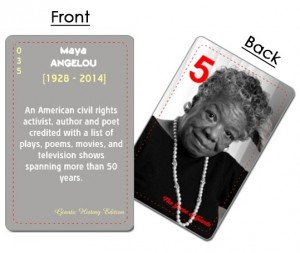
I came across this game a couple of months ago, during its invention, while working on The Giants of History book by Lateef Ibirogba. It was invented by Yemi Adesanya to teach history in a fun and interactive way. Called The Game of Giants, young citizens from the age of 6 to any age can challenge each other with knowledge of famous (and obscure) giants of history. On one side of each card in the pack is a picture of a famous person in history (living or dead), while on the other is a short blurb of his/her achievement. The rules of the game says that each player scores points by correctly guessing, without having looked at the back, what the famous person is known for.

Fullscreen capture 6242014 103239 AMAs a way to generate interest in the past and to introduce young people to a past generation, the game succeeds where textbooks might not. Being a game, it requires a time of leisure when the brain is most at east without any pressures of curriculum, and with maximum dopamin secretion. I have played it, many times with students (and won, if I might add), and what I’ve noticed is that the aim of the game’s invention is easily realized: students strive to remember the faces as well as what the person profiled is famous for. Over time, and over many losses and trials, they begin to remember. Those interested in learning more about the characters will – at other leisure times – go ahead and read some more. It is a good thing.
The best part of it, for me, is that the range of the characters in the game is wide and deep, from Aristotle to Soyinka, from Babatunde Jose to Marie Curie, and from Anthony Enahoro to Gregor Mendel. Gradually, young ones are introduced to history in a fun and non-threatening manner. (More about it here). According to the inventor, the aim is to make the game a household item not just for kids and youths, but for adults as well as a way to learn about the past while also having clean fun. This makes sense to me.

Abeokuta’s Living History

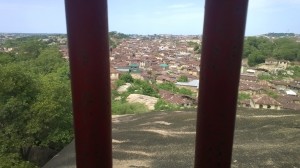
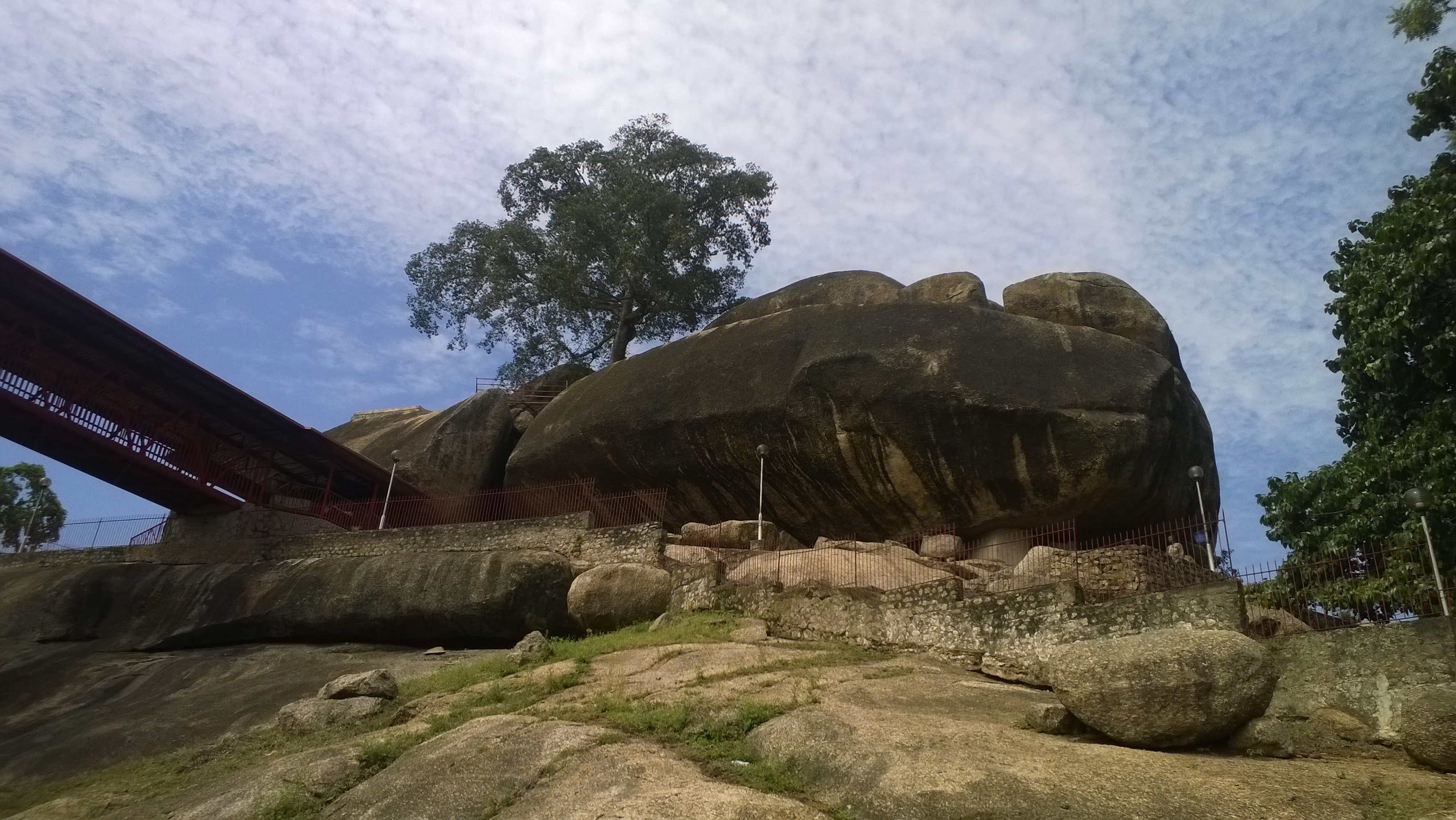
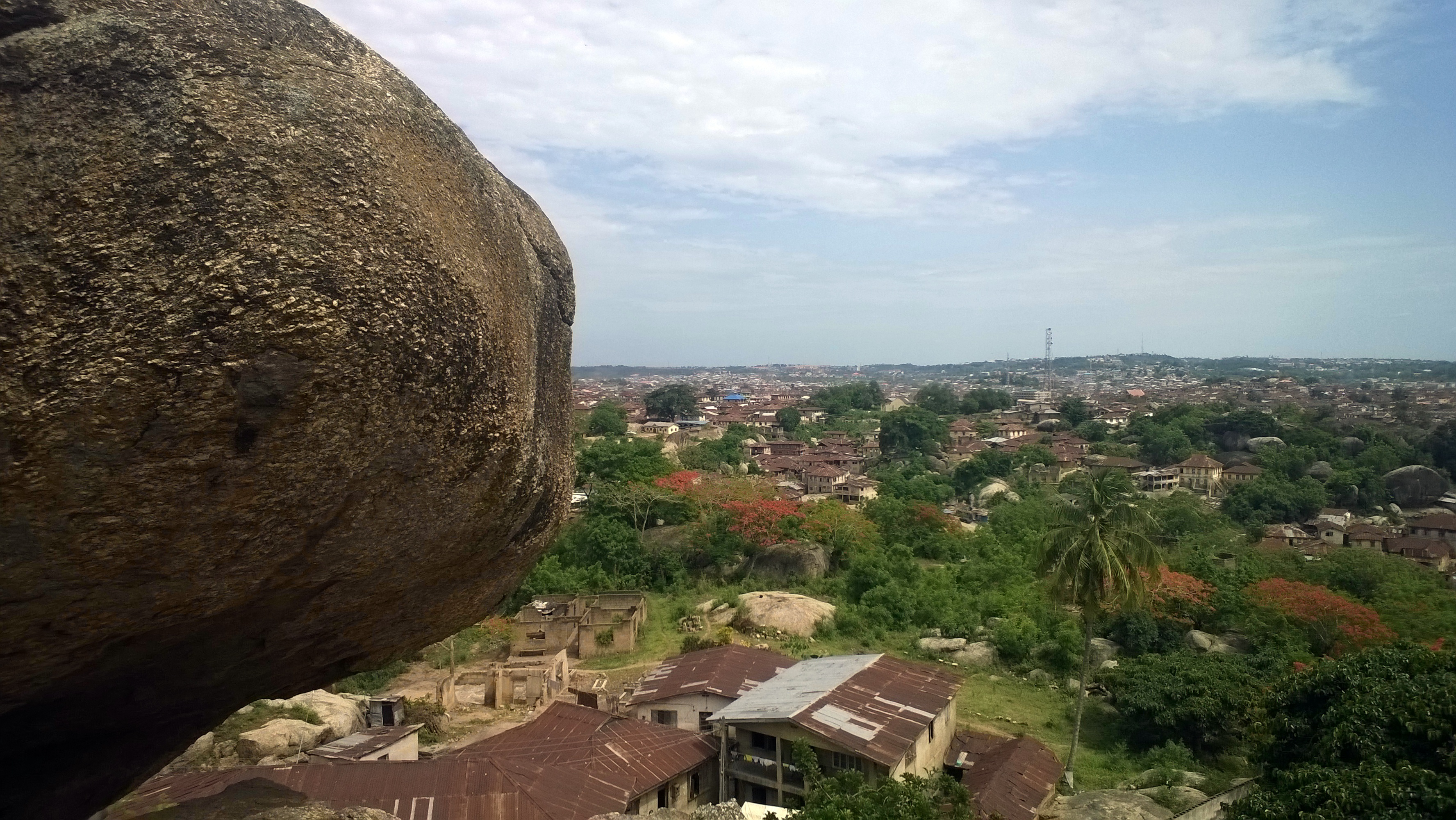
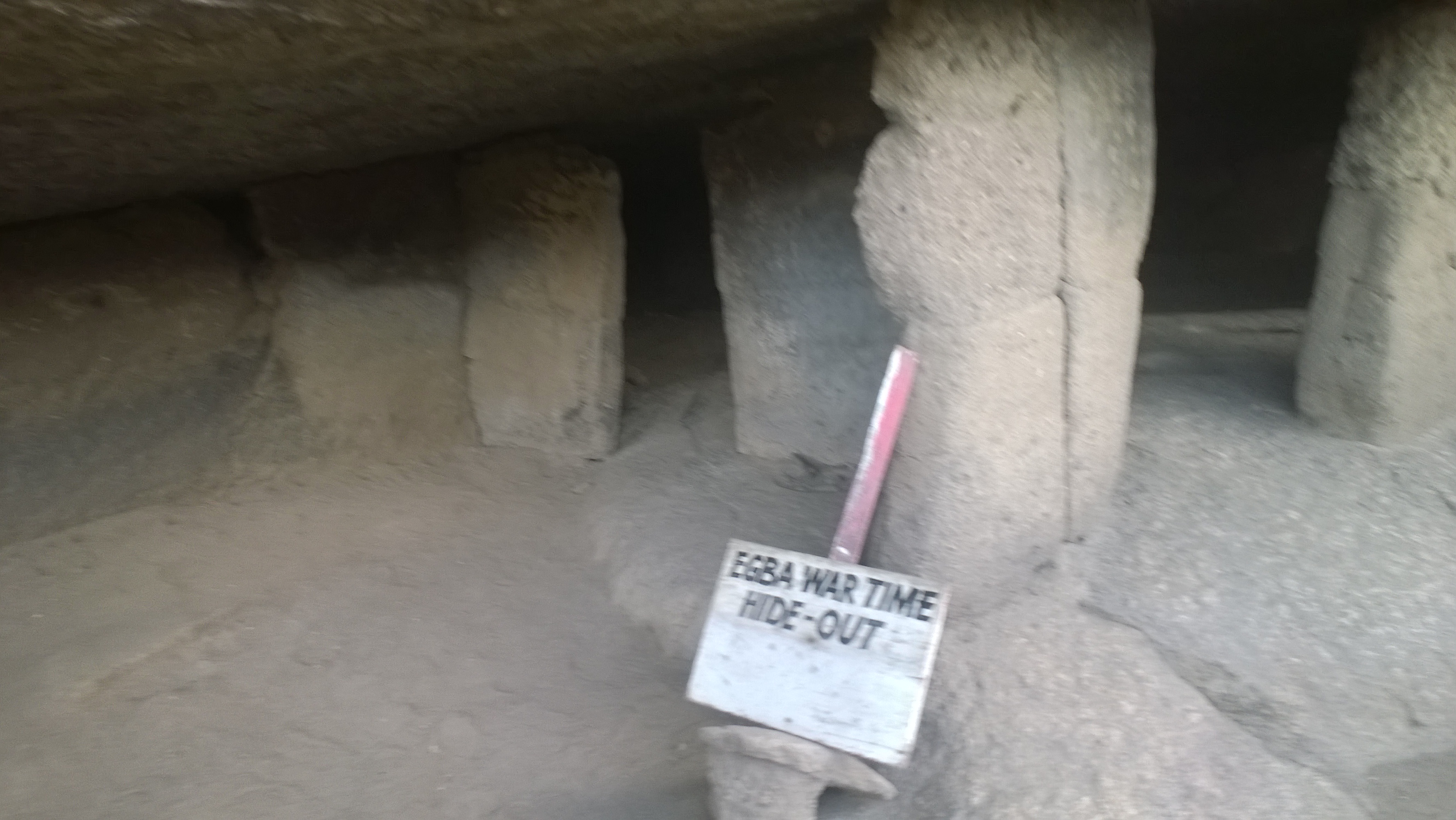
WP_20140410_040The history of Abẹ́òkuta and the Ẹ̀gbá people is tied around a gigantic rock formation, with the transatlantic slave trade that thrived in West Africa featuring at a tangential angle. As usual, there was a war. No actually, a couple of wars. According to known history, the Ẹ̀gbá people (consisting at that time of the Ẹ̀gbá Àgbẹ̀yìn, also known as the Ẹ̀gbá Proper/Ẹ̀gbá Aláké, who settled around Ake; the Ẹ̀gbá Òkè Ọnà who were a group of Ẹ̀gbá people who came from the banks of the (Odò/River) Ọnà; and the Ẹ̀gbá Àgúrá, also called the Gbágùrá. A fourth group that now completes the Ẹ̀gbá Quartet is the Òwu people, formerly residents of Ìbàdàn, who came much later) all migrated to this present place over time, and over several displacements from previous settlements due to inter-tribal skirmishes.

The most recent recorded displacement, according to Johnson’s The History of the Yorubas, was in 1830 when, after a civil war of sorts, fueled by mutual suspicion and unrest, made their continued stay among the Ibadan people unsafe for them.  They escaped into the bush (leaving a couple of their women/daughters behind, many of whom later married Ibadan war lords) and found solace in this current location, many miles south-west of Ìbàdàn, then just a farm of an Itoko man. They called it Abẹ́òkuta because of the presence of large rock heads which offered a semblance of protection. It would become a more concrete and practical bulwark against enemies during future wars with other neighbours, especially the Amazons of Dahomey (Now Benin Republic) who actually sent warriors to invade in 1846.

WP_20140410_027The Dahomeyan invasion is a story of its own, since it is one of the recurrent tales told to any visitor climbing to the summit of the Rock. The Ògùn river, stretching from north (in Saki) to south (the Atlantic Ocean) had for years brought people and goods into Abeokuta and neigbouring towns. But when war became inevitable, it likely also brought with it fighters from Dahomey many of whom were women (The Amazons). Written history has it that, because the invaders were masked, it took a while for the Ẹ̀gbá warrior elders to know that they were mostly females. When they did, they felt quite insulted. Oral history from Abẹ́òkuta citizens says that there were “many” of such wars with the warriors from Dahomey, but the History of Yorubas by S. Johnson said there was just one, an invasion of 1846. Mafoya Dossoumon, a Beninois friend of mine, verified the story of such “wars”, as he was told in his high school history books. The wars were not just with the Ẹ̀gbás but with a lot of towns and neighbouring nations. It was also quasi-slave-raiding, of course. Most most importantly, they were a warlike people who enjoyed fighting. There is an unstated irony, of course, in the fact that History as a subject has now been struck from textbooks in Nigeria. Expect more amnesia to follow.

The Olúmo Rock by default, and by reason of being the biggest and most remarkable rock formation around, became the chief refuge. It was a vantage point to spy on enemy lines, and the geological mascot of the new town. But because of earlier evolution of the Ẹ̀gbá societies as small townships without one central king or ruler, the nation never united under anyone person. The closest they got to that was under Sódẹkẹ́, a warrior under whose ceremonial leadership the nation settled down in the present day Abeokuta in 1830. Sódẹkẹ́ himself died in 1844, after many years of playing advisory and spiritual roles as the father of the new nation. Subsequent evolution of the town vested (informal) political primacy in the Ògbóni cults of spiritual elders rather than on the kings (or chiefs) crowned by the now four large Ẹ̀gbá subgroups: The Aláké, The Ọshilẹ̀, The Gbágùrá, and the Olówu.

WP_20140410_004

A darkly fascinating aspect of these migration and settlement patterns is the underlying presence of slave trade which – at that time – provided sufficient motive for most of the inter-tribal internecine wars. Spoils of the wars included not just herds of cattle but able-bodied men and women that were sold for a profit to the slave traders on the coast. Before 1820, according to Digital History, the number of Africans in the United States “outstripped the combined total of European immigrants by a ratio of 3, 4, or 5 to 1.” They were slaves. But by the middle of the 19th Century, the Trans-Atlantic slavery was abolished by The British Empire and many of the Africans still in slavery, as well as those still on the waters, had to be accounted for. Those in the United States couldn’t come home, being “properties” of their owners. However, a number of them were already living free in England and other places. Plus a few others that recently got their freedom, they were put on a ship en route to the continent.

But since many of them couldn’t find their ways to their original homes where they were forcibly stolen as children, they headed to two locations on the West African coast set apart for that particular purpose. First was Freetown, a town in Sierra Leone founded by Britain as colony for emancipated slaves in 1787, and to Liberia (founded in 1822 by the American Colonization Society for the same purpose). Those people form what is known in Liberia as the America-Liberian people, and in Sierra Leone as the Sierra Leone Creole people. A number of them retained their Yoruba (and other ethnic names) names, while still carrying the Christian/English names that they had acquired from slavery through their masters. Most of them remained in these places, creating new generations and new identities. But there were a few who, after landing in these places, weren’t satisfied, and kept on seeking for the lost homeland.

WP_20140410_050

Take Daniel Olúmúyìwá Thomas, for instance – a man taken forcibly from his hometown in Ilesha while he was eight years old, and sold into slavery. His baptismal name, Daniel, and his adopted last name, Thomas, were names adopted in slavery. According to the account of his grandson in an authorized biographical book This Bitch of a Life (Carlos Moore, 2001), Felá Anikulapo Kútì narrated how, after being set free as a grown man, along with other returning slaves, Thomas embarked on a journey (most likely on foot) to return to his home village. He entered what is now Nigeria, but decided – on reaching Abeokuta – that he was no longer interested in making the rest of the journey (most likely just a few days more) to Ilesha. He settled in Abeokuta where he married and gave birth to modern Nigeria’s famous woman: Olúfúnmiláyọ̀ Ransome Kúti (born: 1900).

Another famous returnee from Sierra Leone was Andrew Desalu Wihelm, an evangelist and translator who – on discovering a chance to bring the CMS mission to Abeokuta, his home town, after spending most of his post-slavery adult life resettled in Sierra Leone, jumped at it. Along with Henry Townsend, a European Missionary, he returned to Abeokuta to preach the gospel and lay the foundation of the country’s very first church at Aké. But not all returnees became famous, nor did they all contribute in the same manner and form to the development of the new country, though many did become quite notable. A number of other returnees settled in many other parts of Nigeria, notably on Lagos Island, bearing names like Williams, Pinheiro, DaSilva, Savage, Lewis, Thomas, Crowther, Macaulay, George, Moloney, Boyle, Berkley, etc.

WP_20140410_056It is interesting, for me at least, to realize that around 1863, while the colonial government in Nigeria was consolidating its hold on their newly found colony, trying to settle the number of inter-tribal wars threatening to set the colony on fire, Abraham Lincoln, many miles across the sea was preparing his Emancipation Proclamation to set free 3.1 million (out of about 4 million) black people who, over three hundred years before, had become entrenched into the system of slavery. About twenty-three to thirty percent of those people, according to different estimates, came from Nigeria. We don’t know how many of those came from Abeokuta, but the legacy of wars around Yorùbá kingdoms during those times, and the proximity of South Western Nigeria to the Atlantic Ocean gives us an idea of the mix of people who today define the African American population.

…and the Caribbean population.

In one famous chapter in Wole Soyinka’s definitive memoir You Must Set Forth at Dawn, the author found himself in a country town in Westmoreland, Jamaica, named Bẹ́kuta. Surprised at the close proximity of the town’s name to his own hometown Abẹ́òkutahe asked around. The town, like the author’s own hometown was surrounded by huge rocks in all places. After having run out of luck with the local population of young and modern citizens with no care in the world for why anyone would care about an old name, he eventually ran into an old woman who remembered why it was so called. The first residents of the town – freed slaves who worked as indentured workers – felt that only one name captured this place that reminded them of where they (or their ancestors) were captured from: Abẹ́òkuta, or later, Abẹ́kuta, and eventually Bẹ́kuta (and later, Kuta), all meaning the same thing: the town under the rocks. When the author returned to the town, the woman had died and no one else in the town had any memory of the stories from which the town’s name came. (A cursory online search shows that the memory of the story actually survived.)

Faktor-Faktor Penting Untuk Sukses Menang Main Slot Online

Dalam permainan slot online, strategi dan pengetahuan yang tepat bisa menjadi kunci untuk meraih kemenangan. Salah satu tips yang dapat digunakan adalah memahami jenis permainan slot online yang dimainkan. Setiap game slot memiliki pola pembayaran yang berbeda-beda, sehingga penting untuk memahami karakteristik masing-masing mesin. Selain itu, manajemen bankroll juga merupakan faktor penting dalam meraih sukses dalam game slot online. Mengatur jumlah taruhan dengan bijak dan tidak terpancing untuk bertaruh melebihi batas yang sudah ditentukan dapat membantu menjaga keseimbangan finansial selama bermain. Di sisi politik, keputusan Agus Harimurti Yudhoyono (AHY) untuk menerima tawaran menjadi Menteri Jokowi memunculkan berbagai spekulasi dan penilaian. Beberapa alasan yang mungkin melatarbelakangi keputusan tersebut adalah untuk memperkuat citra partainya, Demokrat, di mata publik. Dengan menerima posisi di kabinet, AHY bisa memanfaatkan platform tersebut untuk memperluas jaringan politiknya dan membangun basis dukungan yang lebih luas. Selain itu, dengan berada di dalam pemerintahan, AHY juga memiliki kesempatan untuk memperjuangkan kepentingan politik dan ideologis yang diyakininya, meskipun hal ini bisa saja menimbulkan kontroversi di kalangan pendukungnya.

Harga Bitcoin Saat Ini To The Moon Menembus Angka Rp 903 Juta

kita mungkin menyaksikan harga Bitcoin melambung tinggi dalam beberapa waktu terakhir, penting untuk mengadopsi sikap yang realistis dan hati-hati. “To the Moon” mungkin merupakan impian bagi sebagian, tetapi realitas pasar kripto seringkali lebih kompleks daripada yang terlihat dari permukaan.

Dengan memahami dengan baik faktor-faktor yang memengaruhi kemenangan pada permainan onlineslot, serta mengadopsi strategi bermain yang bijaksana, kita dapat lebih siap menghadapi kemenangan maxwin slot sambil tetap waspada terhadap risiko yang ada. Yang terpenting, jangan terjebak dalam euforia pasar yang buta, tetapi tetaplah berpegang pada prinsip-prinsip dasar investasi yang cerdas dan berhati-hati.

Visiting the original Abeokuta today, with nothing much left but a rustic town, a few colonial and traditional landmarks, and the tour guides from every step towards the summit of the Olúmọ Rock telling where the town has been, one walks again in the corridors of living history. The rock lies there still, in stoic silence, a witness to all that had transpired for centuries before. All the other connections are there in plain (and rock) sight.

____

All photos courtesy of the blogger. 

Edit (15th September, 2015): I’ve fixed some of the dead links in the post by referring to earlier instances of the articles via the WayBackMachine.

Update (13th October, 2015): This piece was recently “highly commended” at the 2015 CNN/Multichoice African Journalist Awards.

Fun Stuff: Google Ngram

Google has just come up with a great product called the Ngram Viewer (discussed in this equally fascinating TED video). What the Ngram Viewer does is to give users around the world the ability to sit at home and search through a database of billions of texts. These texts have been scanned into the Google database from all the books published in the world to date. Among other things, what this gives us is the power to discover the rate of occurrence of certain words, phrases or names in publishing history. Extremely fascinating, right?

I have been playing around with the program and here is my first experiment: to figure out which of these men in Nigerian political/social history is most frequently referenced in text, and since when. The men are Olusegun Obasanjo (who ruled the country for a record 11 years and played a crucial role in its political history), Chinua Achebe – Africa’s foremost novelist whose first 1958 novel Things Fall Apart is the most widely translated texts in English literature from Africa, Wole Soyinka – the continent’s first winner of the Nobel Prize in Literature, and finally Obafemi Awolowo – nationalist, politician and visionary. The result is stunning and will offer nuggets for discussion among people who have argued (many times without proof) that one person was more famous than the other.

There are a few more I have tried out. This graph showed that the word “nigger” got more usage in the mid 1800s (just after Lincoln set the slaves free, which made sense), dropped in usage in the 1980s, and is now coming back into use after the year 2000. Go figure. The word “nigga” however is a totally different matter. The word “Republicans” was initially more famous than “Democrats” but eventually fell around 1900 and has remained stably lower ever since. And what about languages/cultures? This graph shows how much the African languages/cultures Hausa, Igbo, Yoruba, Swahili, Twi, Edo, and Zulu have featured in texts through time.  Fascinating result, and not only because Yoruba leads the pack with a clear margin! Yoruba is not the biggest language/culture in Africa. The word “Nigeria”, according to the Ngram has been in use/print since around 1860 (contrary to what we have been told) although it finally gained currency at the beginning of 1900s. Finally, I did a search on my favourite comedians: George Carlin, Bill Cosby, Lenny Bruce, and Richard Pryor. The result puts Bill Cosby on top and George Carlin at the bottom. Oh well.

What Google has done with this project called the Ngram Viewer (I say again, an extremely fascinating project) is to endow the world with a new great tool to do anthropology and study history with nothing but access to the internet. Life, and history, just became even more enlightening.