Browsing the archives for the Literature category.

Travel as Life: A Review of Route 234

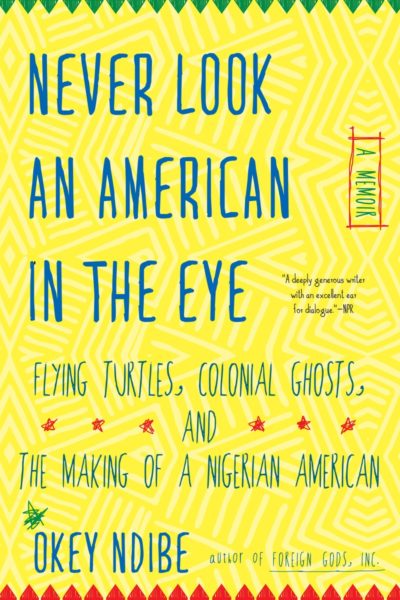
I haven’t read many books about travelling around Nigeria written by Nigerians. No doubt they exist (and readers should please recommend some for me in the comment section). I have however read many about traveling in other parts of the world. Tẹ́jú Cole’s (2016) essay collection comes to mind as well as Wọlé Ṣóyínká’s memoir You Must Set Forth At Dawn (2006). There is also America Their America (1964), an “autotravography” by J.P. Clark which caused controversy for what critics thought was a narrow and judgmental view of American values. Recently, there is Okey Ndibe’s Never Look An American In the Eye (2016), an autobiography, and many more.

There are however many more narratives written about the country, and about the continent, by visiting (foreign) journalists, writers, novelists over the years. Karen Blixen‘s Out of Africa (1937), JMG Le Clezio’s Onitsha (1991) and VS Naipaul’s The Masque of Africa (2010) come to mind easily. But so does this one. The overall impression of such books has always been the worry that they rarely depict reality as is, but only as perceived by the visiting foreigner, which – to be fair – is the whole purpose of the subjective narrative. I expect that the impression of America I’ll get from reading travel notes from an African visiting the US in the 1960s will give me an idea of America through that writer’s perspective of events as they unfold to him/her.
fullsizerender-6-1

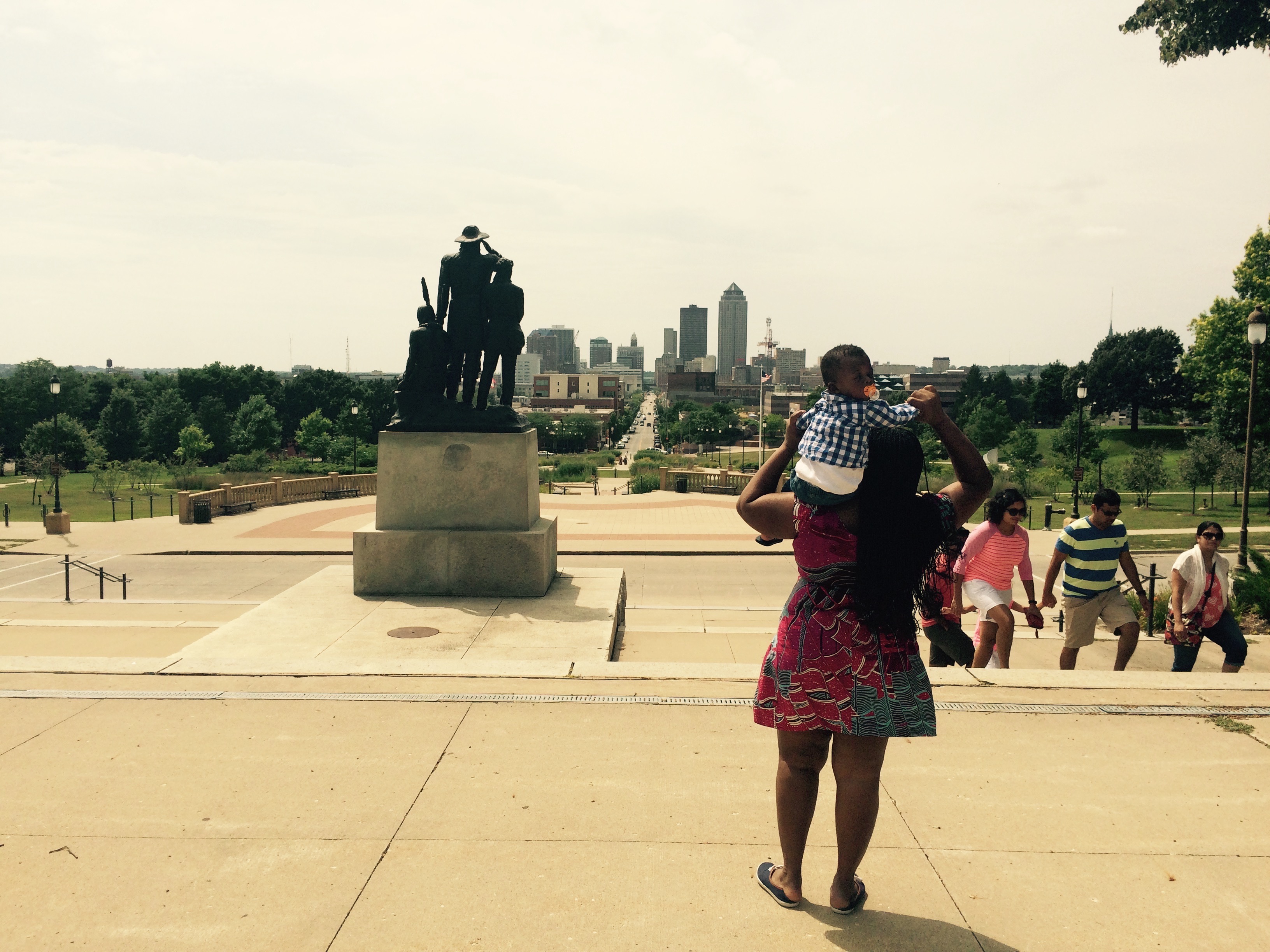
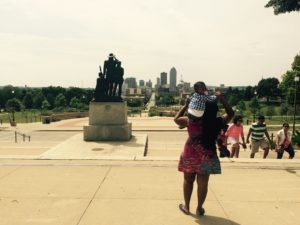
At the Des Moines Capitol, Iowa (2015)

Even in the online space, one might easily find blogs written by foreigners about travel around the continent than one might of blogs by Africans of travel experiences in their own continent. (This is changing, of course. You’re reading this on a travel blog managed by an African, after all). But why is this the case? Human civilization itself is an experiment in travel, documentation and adventure conditioned by necessity, curiosity and sometimes nationalism. We have always left our comfort zones for new experiences. And, as archaeology and anthropology tell us, we have always documented those movements, even unconsciously, in hieroglyphics, and oral poetry, tribal marks, and lately in writing. In the 21st century Africa, the prevailing narrative is that travel for leisure and travel writing is a Western chore, done by the privileged few, and those conditioned to it by their profession in journalism.

Reality, unfortunately, seems to bear it out for the most part except in some rare cases. Olábísí Àjàlá was a Nigerian student who found himself in the United States at age 18 in the late 1940s. Having failed to succeed as a medical student at DePaul University, Chicago, he decided to travel through the country to Los Angeles, on a bicycle and document his experiences along the way. Through deportations, skirmishes with authorities, short Hollywood career (including meeting then actor Ronald Reagan), many short-lived marriages, children, and global fame, through the fifties, sixties, and seventies, he became the patron saint of all adventurers, and an icon in popular culture for African travel. Being called Ajàlá Travels in Nigeria today is a homage to his larger-than-life reputation. He also wrote a book An African Abroad.* 

So why is it that unless in rare cases Africans are not known globally to document our adventures in writing, or is it that we are just generally averse to travelling for its own sake? My friend and scholar Rebecca Jones has been asking this question for a while. In a conference she facilitated in Birmingham earlier in the year, the Call observed:

“For a long time study of African travel writing in the West has focused on Western-authored travel writing about Africa. But this has ignored both the long heritage of the genre amongst African and diaspora authors. African travel writers have traversed both the African continent and the rest of the world, writing about encounters and differences they meet in their own societies and others. They have engaged with colonialism and the post-colonial world, have produced ethnographic description, reportage, poetry, humour and more. They have traversed genres and forms, from the Swahili habari written at the turn of the twentieth century to Yoruba newspaper travel narratives of the 1920s, from accounts of students and soldiers abroad, to newspapers and today’s online travel writing.”

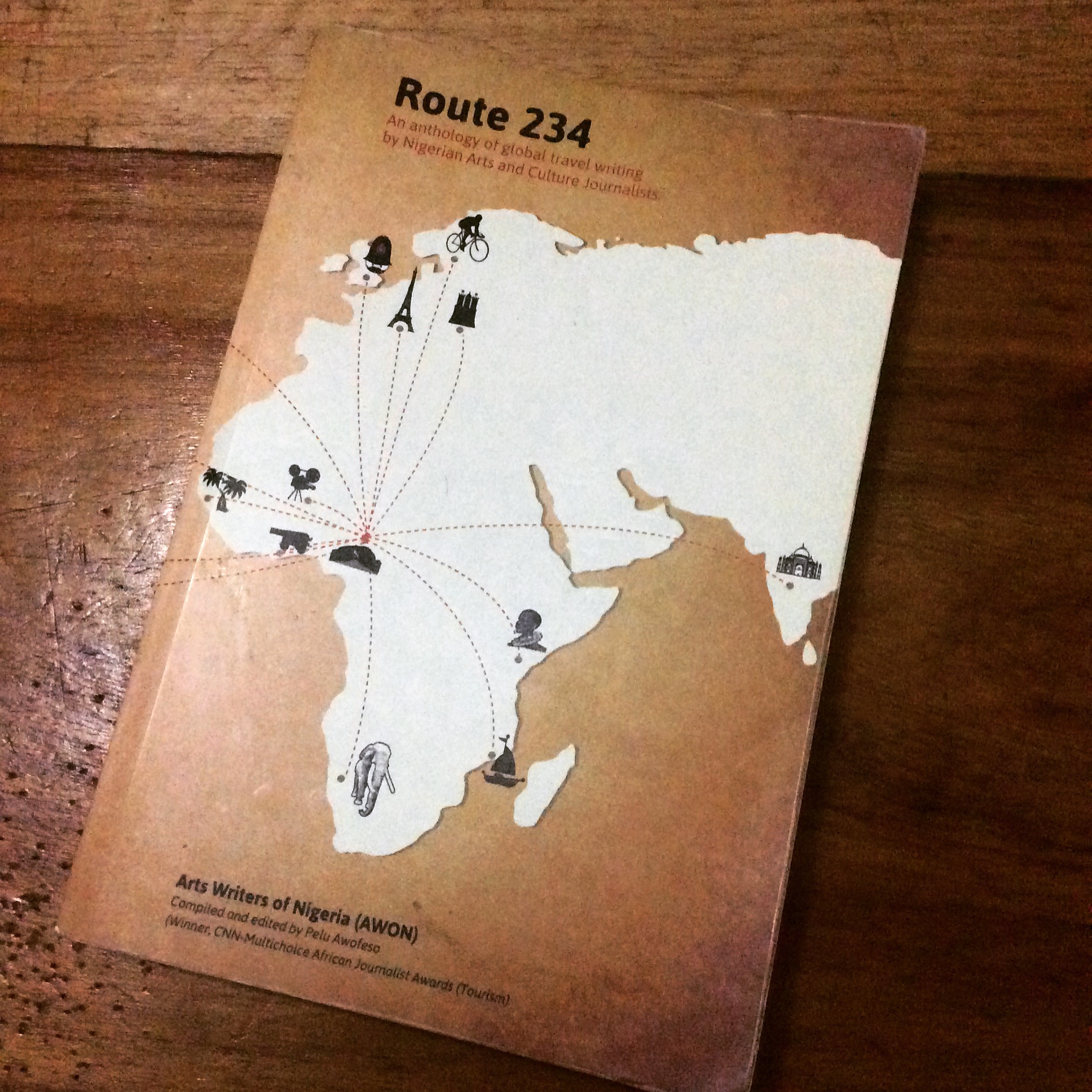
Aside from this blog, there are quite a few other ones online with focus on travel as an African hobby, done especially without the express purpose of becoming a travel “journalist” working for a media house, but for its own sake. Why are there not more. Africans, after all, travel as much as everyone else. Is it that we don’t care about documenting our experiences the way that others do? I have just finished reading Route 234 (2016), an anthology of global travel writing by Nigerian arts and culture journalists, compiled and edited by Pẹ̀lú Awófẹ̀sọ, an award-winning culture journalist. It is a delightful read of many fun, scary, heartwarming, and diverse experience of Nigerians in many different local and international situations. The contributors are however many of the continent’s known arts and culture journalists. This fact will not help our subject matter, but it shouldn’t remove from the value of the book as a necessary work and a delightful read.
image

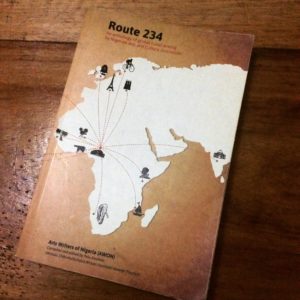
Route 234(2016), edited by Pẹ̀lú Awófẹ̀sọ̀

According to the editor, the idea for the book came from a private listserve conversation among these culture/travel writers earlier in the decade about documenting some of their travel experiences. It took many years before the idea finally became concrete.  The 211-paged book lists Kọ́lé Adé-Odùtọ́la, Olúmìdé Ìyàndá, Ọláyínká Oyègbilé, Èyítáyọ̀ Alọ́h, Mọlará Wood, Steve Ayọ̀rìndé, Pẹ̀lú Awófẹ̀sọ̀, Jahman Aníkúlápó, Túndé Àrẹ̀mú, Nseobong Okon-Ekong, Akíntáyọ̀ Abọ́dúnrìn, Ayẹni Adékúnlé, Fúnkẹ́ Osae-Brown, Sọlá Balógun and Ozolua Uhakheme as contributors. The scope of the travel experiences documented therein covers Los Angeles, Atlanta, Bahia, Juffureh, Accra, Plateau, Nairobi, Durban, Pilanesberg, India, London, France, Frankfurt, Nice, and Holland.

One of my favourite narrative in the work is Mọlará Wood’s “Farewell Juffureh” (page 35), covering a visit to Alex Haley’s ancestral hometown in the heart of Gambia as well as Nseobong Okon-Ekon’s “Trekking the Mambilla Plateau” (page 93). In both, the reader is vividly guided through experiences that must have been much more intense and affecting than words could capture. Some of the others detail culture shocks at visiting a new place for the first time and re-setting their opinions and expectations preconceived from a distance (“Accra Mystic” by Jahman Anikulapo, page 79) while some focus on their immediate task; covering a film festival, for instance (“Film, FESPACO, Ezra” by Steve Ayọ̀rìndé, page 61). A heartwarming one by Ṣọlá Balógun (“The Good Samaritans of Nice”, page 181) describe an experience common to many frequent travellers: being stranded in a strange city after a missed flight.

What the book represents overall is an intervention in a space where much more effort of this nature is needed. But travel isn’t, and shouldn’t be, the preserve of just culture writers and journalists. Writing about it shouldn’t be either. Tourism isn’t a big deal in Nigeria today because of lack of government (and private sector) care, yes, but also because of a seeming lack of interest in the populace itself. As I argued in this recent piece on a visit to historical locations in Ìbàdàn, commercial attention will come when governmental and private sector intervention takes the first step:

“I think back to a recent experience, in Italy, where tourism has built a thriving industry of restaurants, malls, and gift shops around notable structures that tell the country’s history, real and fictional, and how much value that attention (and tourist dollars) has brought to the country. Old churches and abbeys, ancient arenas in Verona and the Colosseum in Rome, among others, are all just ruins of a certain past. But they have been preserved and well branded in order to attract foreigners and their resources. Even a fictional character, Juliet, from Shakespeare’s Romeo and Juliet, has a touristy structure built in her honour, called Casa di Giulietta.”

Travel is fun. And even when it is not, it is always an enlightening exercise. As Mark Twain said in The Innocents Abroad (1869), “travel is fatal to prejudice, bigotry, and narrow-mindedness, and many of our people need it sorely on these accounts. Broad, wholesome, charitable views of men and things cannot be acquired by vegetating in one little corner of the earth all one’s lifetime.” That same perhaps can be said about travel writing, if not as a way to reflect on one’s adventures, as a way to keep said experiences in the memory of the world.

The book is a delightful read, but much more is needed.

_________

There are many other stories like this, no doubt. Ravi on twitter has pointed me out to “Sol Plaatje’s sea travel piece” (by which I assume he means this bookMhudi, an epic of South African native life a hundred years ago), and Rebecca, in the comment section, to a few more published narratives, also of a few years back. Their input also reminded me of Olaudah Equiano’s  equally notable memoir. There are many more like these, I agree. My point is that there are not many more, and certainly not as many notable ones as there should be).

For more reading
Tope Folarin on Accessibility

topefolarinIn this long but compelling essay in the LA Review of Books, Nigerian-American writer and winner of the 2013 Caine Prize Tọ́pẹ́ Fọlárìn discusses the challenge faced by new African writers trying to gain international recognition and being judged against a standard of “accessibility” set by selected role models.

The long essay slash book review is written in a smooth and accessible – he won’t like that word – style that sustains interest from beginning to end, making a valid argument against a single-story stereotyping of African stories that inevitably happens because of a conditioning of taste by the gatekeepers of the profession.

Here’s an excerpt:

It can be said that black artists who live in the United States or produce art that is consumed in the United States are “expected” to create certain kinds of art, but the reason these expectations exist is because some black artist has produced a pioneering work that, for any number of reasons, garners significant attention and is thus perceived by a predominantly white Western audience as the height of black achievement, the precise standard that every other black artist in the same field must strive to achieve in order for their work to be accessible to an audience that otherwise knows next to nothing about the community the black artist has emerged from.

I don’t know whether his conclusion in the essay point more to the laziness of popular culture that chooses instead to anoint one messenger in every generation and move on rather than spending time sampling every offering for a varied taste, or whether there indeed a nefarious effort against the thriving of a diverse minority voice from around the continent. What he insists on however – as the crux of the essay – is that thriving as a prominent voice in African literature often requires a combination of luck, accessibility in the right kind of way, and talent, not necessarily in that order.

Still worth a read.

_______

Photo: DailyMaverick.co.za

Three Writers Shortlisted for the Nigerian Literature prize

elnathanOut of the total of 173 entries received for the NLNG-sponsored Nigerian Literature Prize 2016, a shortlist of three has been released. This announcement follows an initial shortlist of eleven which was released in July. The three shortlisted entries, in alphabetic order, are:

  • Born on a Tuesday (Elnathan John)
  • Night Dancer (Chika Unigwe), and
  • Season of Crimson Blossoms (Abubakar Adam Ibrahim).

Born on a Tuesday, published by Parresia Books, is a story about contemporary northern Nigeria which has over the years experienced religious violence and carnage as seen through the eyes of a young man. Born on a Tuesday is Elnathan John’s first novel. John is a writer, lawyer and a Civitella Ranieri Fellow. He has also been shortlisted twice by the Caine Prize for African Writing.

unigweChika Unigwe’s Night Dancer, published by Jonathan Cape, focusses on the young protagonist’s search for identity and her consequent reappraisal of her mother’s values. This is Chika Unigwe’s second time on the fiction shortlist. She won in 2012 with her novel On Black Sisters’ Street. Unigwe sits on the Board of Trustees of pan-African literary initiative Writivism, and was recently appointed a judge for the Man Booker Prize, 2017.

Season of Crimson Blossoms is a novel set in conservative northern Nigeria. It focusses on unusual love affairs between characters, as well as ambiguities in religion and politics. Published by Cassava Republic Press, Season of Crimson Blossoms is Ibrahim’s debut novel. Ibrahim has won the BBC African Performance Prize and the Amatu Braide Prize for Prose. He is a Gabriel Garcia Marquez Fellow (2013) and a Civitella Ranieri Fellow (2015).


More from the press release:Abubakar-Adam-Ibrahim

“The Nigeria Prize for Literature has since 2004 rewarded eminent writers such as Gabriel Okara for his volume of poetry, The Dreamer, His Vision (co-winner 2005 – poetry); Professor Ezenwa Ohaeto, for his volume of poetry, Chants of a Minstrel (co-winner 2005 poetry); Ahmed Yerima (2006 – drama) for his book Hard Ground;  Mabel Segun (co-winner 2007 – children’s literature) for her collection of short plays Reader’s Theatre; Akachi Adimora-Ezeigbo (co-winner 2007 – children’s literature) with her book, My Cousin Sammy; Kaine Agary (2008 – prose) for her novel Yellow Yellow; Esiaba Irobi (2010 – drama) who won the prize posthumously with his book Cemetery Road; Adeleke Adeyemi (2011 – children’s literature) with his book The Missing Clock and Chika Unigwe (2012 – prose), with her novel, On Black Sisters’ Street, Tade Ipadeola (2013 – poetry) with his collection of poems, The Sahara Testaments and Sam Ukala (2014-drama) with his play, Iredi War.”

The eventual winner of the competition will be announced at a World Press Conference in October, 2016.

Congrats to the shortlisted writers.

________

Photo Credit: Bookslive.co.za, GuardianUK, PulseNG

Three Writers Set for Artmosphere Lagos Reading

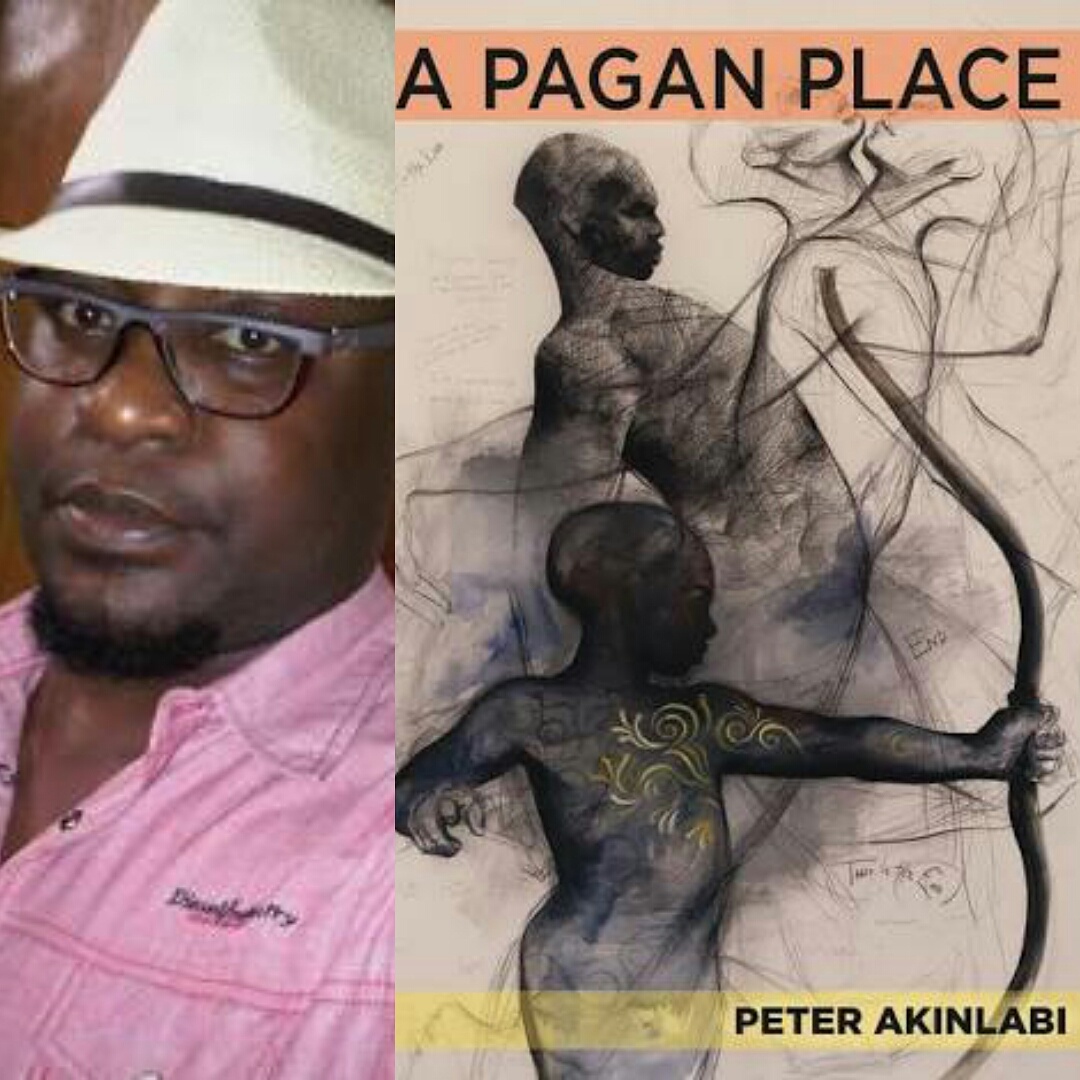
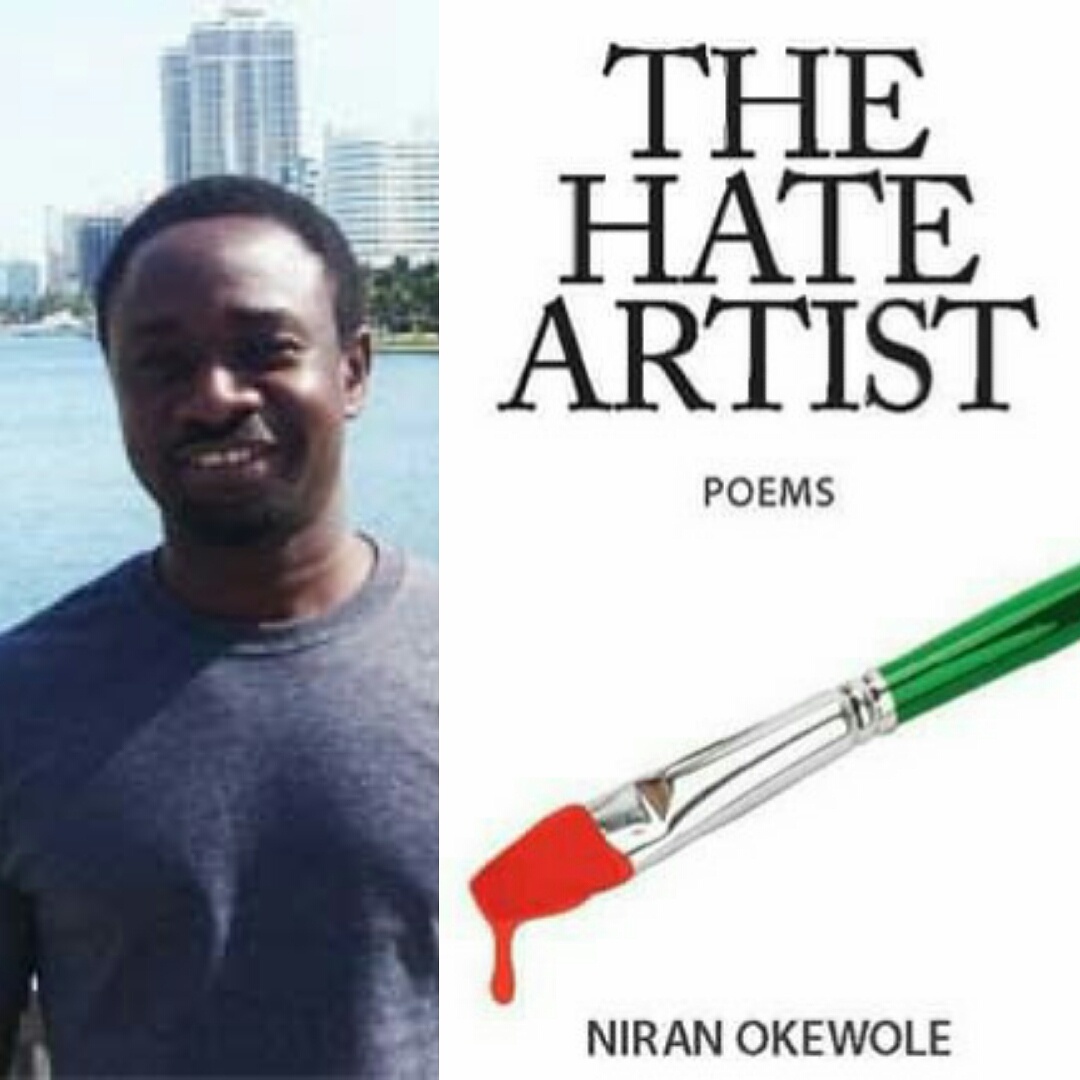
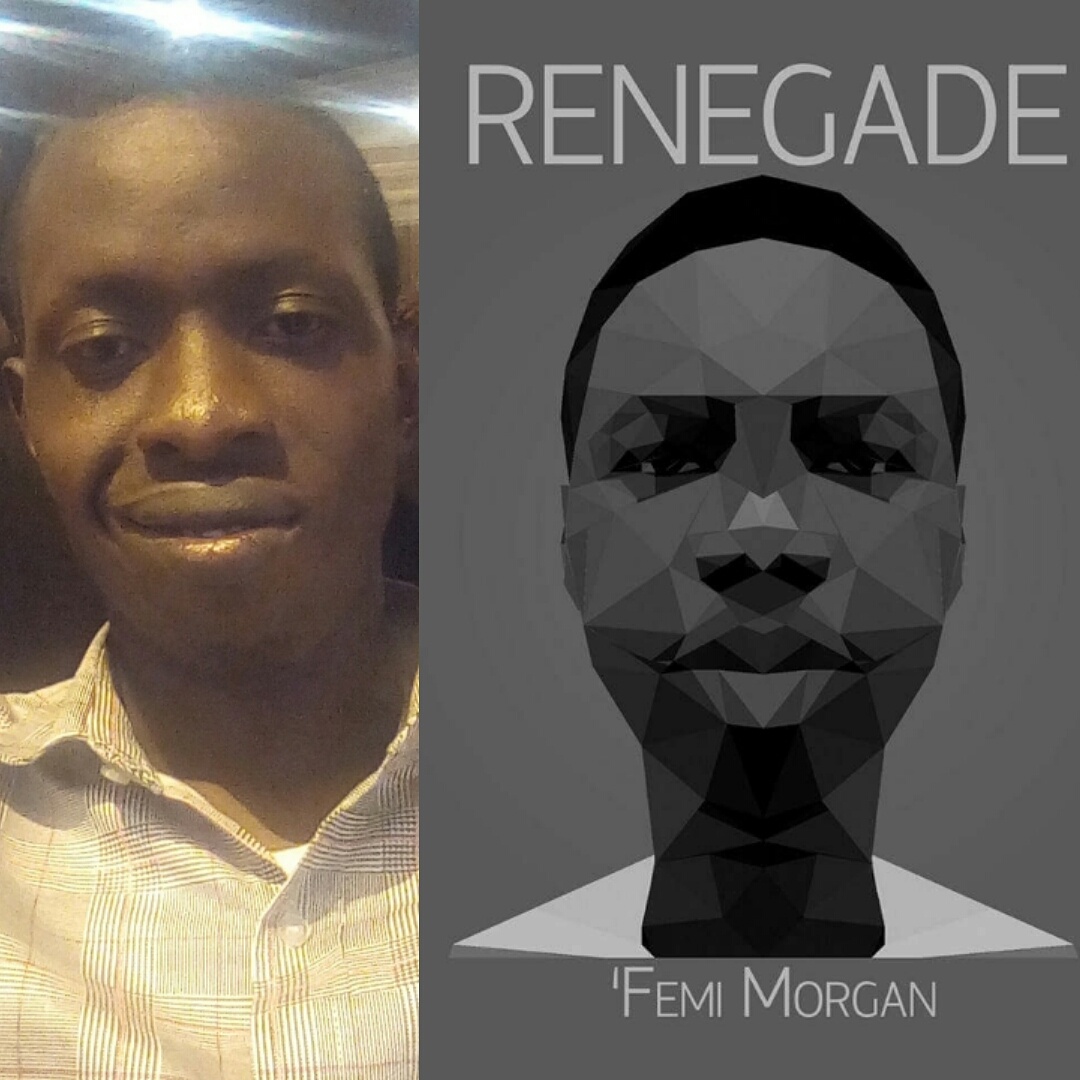
IMG_20160829_155222Artmosphere, one of Nigeria’s leading culture, literature and arts events, will be hosting three poets in the city of Lagos. The event will involve poetry readings and conversations from the myriad themes written by the poets. Poets, Peter Akinlabí, winner of the Sentinel Quarterly Poetry Competition and author of the Akashic chapbook, A Pagan Place, Níran Òkéwọlé, winner of the Muson Prize for Poetry and author of The Hate Artist, and Fẹ́mi Morgan, arts curator and author of Renegade. The Artmosphere Lagos event is in collaboration with Khalam editions, an imprint of an avant-garde publishing house, Khalam Publishers.

IMG_20160829_155039It is scheduled for 2pm on Saturday, 3rd of September, 2016 at the Patabah Bookstore, Shop B 18, Adéníran Ògúnsànyà Shopping Mall, Adéníran Ògúnsànya Street, Sùrùlérè, Lagos, Nigeria.

The poets were chosen for their philosophic disposition to persona, racial and global discourses, for their penchant to write outside the orientation of the popular style and artistic crafting. The book parley will be a gathering of Lagos residents and individuals who are interested in open conversations about art, social, political and cosmopolitan issues that affect our lives.

IMG_20160829_155420Artmosphere has curated literature, arts and culture events in Ibadan for the past five years. It has hosted writers, poets, philosophers, social and culture activists in the country, like Níyì Ọ̀súndáre, Tanure Ojaide, Sam Omatseye, Victor Ehikhamenor, Túndé Adégbọlá, Efe Paul Azino, Aiye Ola Mabiaku, Jùmọ̀kẹ́ Verissimo, Fúnmi Àlùkò, Ìfẹ́olúwa Adéníyì, Saddiq Dzukogi, Ahmed Maiwada, amongst others. It has also organized the Writer’s Notable Series, occasional readings in honour of exceptional writers and creative mentors in Nigeria, which hosted Tádé Ìpàdéọlá in Lagos, in 2013. Artmosphere Lagos will offer the Lagos public the arts, culture and literature conversations that has become a staple in the city of Ibadan.

A Diligent Retelling: Reading Teju Cole’s Essay Collection

KnownAndStrangeI’ve been reading Tẹjú Cole’s Known and Strange Things among other commitments. The book is a collection of published and unpublished essays by the acclaimed author of Open City and Everyday is for the Thief, two books noted for their essay-like forms that brilliantly blur the lines between travel writing and fiction. As a travel blogger, I can relate. He also follows in the tradition of many other writers famous for documenting their travel adventures in their literary output. The book is a compact curation of his own writing journey from many publications in which a number of them had first appeared.

In one of the essays in the book, Cole famously follows James Baldwin to a city in Switzerland in order to re-live that writer’s experience in the sixties while he was working on Go Tell it on the Mountain and to reflect on what may have changed over the course of time. In another, he documents his meeting with V.S. Naipaul in New York, being awed by him but not too much as not to be aware of the man’s occasional condescension that comes out at unexpected moments. “He speaks so well,” Naipaul says of the African author and we glimpse from the skill of retelling that it wasn’t that much of a compliment. In An African Caesar, the author does a nuanced review of a theatre presentation by the Royal Shakespeare Company at the Brooklyn Academy of Music, but doing it against the background of other ironies and coincidences riding on the lives of Shakespeare, Caesar, Abraham Lincoln, and the all-black cast.

In the preface, Cole pays homage to one of his (and my) favourite tongue-twisters from Yorùbá (“Ọ̀pọ̀lọpọ̀ ọ̀pọ̀lọ́ ni kò mọ̀ pé ọ̀pọ̀lọpọ̀ ènìyàn l’ọ́pọlọ l’ọ́pọ̀lọpọ̀”) to illustrate his rootedness in his home culture properly balanced with his accommodation of other cultures and values. In another part of the chapter he expounds this more clearly:

“There’s no world in which I would surrender the intimidating beauty of Yoruba-language poetry for, say, Shakespeare’s sonnets, or one in which I’d prefer chamber orchestras playing baroque music to the koras of Mali. I’m happy to own all of it. This carefree confidence is, in part, the gift of time… I feel little alienation in museums, full though they are of other people’s ancestors… I am not an interloper when I look at a Rembrandt portrait. I care for them more than some white people do, just as some white people care more for aspects of African art than I do…”

The tongue-twister was, impressively, left un-italicized as have typically been the case in most books published abroad. It was, however, not properly tone-marked as Yorùbá words usually ought, and as I did above. Neither were any Yorùbá names referenced in the work. My initial assumption is that this is the publisher’s error, typically paying less attention to proper diacritical marking on non-English words. But elsewhere in the book (Furtwängler, Tété-Michel Kpomassie, Florian Höllerer, Tomas Tranströmer, Galápagos, etc) names belonging to other people in accented/tonal languages were properly accented with no eyebrows raised. Here, my initial elation at the central featuring of Yorùbá in this work was greatly punctured, and now awaiting sacrificial appeasement and repair. In 2016, we should no longer be apologetic about insisting on proper writing of African languages in literature. The writer, certainly, at this height of his literary career, stands in a great position to influence this change.

tejuMy favourite essay in the work yet is an essay titled Unnamed Lake which is a stream-of-consciousness-type narrative on the complexity of perception, art, and the role of memory. It is one I’ll also read again for its layered presentation that offers new gem each time. I like it also for its use of mixed metaphors from French/Algeria (Derrida) to Germany (Wilhelm Furtwängler), from Australia (the Adnyamathanha people) to Nigeria (Major Patrirck Chukwuman Kaduna Nzeogwu), from Bangladesh to Hiroshima (President Truman). The other essays more grounded in recognizable reality of the author’s work history: reviews (Wangechi Mutu), polemics (The White Saviour Industrial Complex), satire (In Place of Thought), and interview (A Conversation with Aleksandar Hemon), etc, are equally enchanting, and serve a purpose of providing a wide appraisal of Teju Cole’s worldview.

What are essays good for? Setting an agenda, making a point, codifying for a coming generation thoughts, ideas, arguments, and questions plaguing a specific time? Mr. Cole’s collection touch on many of these as a timely intervention not just for identifying his own outlook on the world – though this is relevant – but also for leaving a mark identifying this place and this time as his point of visiting. Like a traveler in the desert on the way to somewhere else choosing for a while to make artistry from the sand under his feet not only to delight himself (and how discomfiting would that be in a scorching desert?) but also to amaze overhead flyers and future visitors to the place with his own creative interpretation of what he had experienced.

In that way, essays are not that different from memoirs, which tap into memory and creative writing to attempt an understanding of the past through the narrative lens, except that they tell more than they show, opening to us directly the thoughts and opinions of the writer. What we take away is more than knowledge of the subjects and places we walked through with the writer, but also something about the writer himself. Known and Strange Things tell us that the brilliant Teju Cole is curious in his approach to life, attentive things that connect us with those who have gone before, of different colors, cultures and tongues, and diligent in his retelling of (or at least his arguments about) what makes them memorable or relevant, allowing us to walk in his shoes page by page. That makes the book an engaging, and important, read.

____

Photo credit: TheGuardian.com