Browsing the archives for the Literature category.

Aké Festival 2016: How History is Made

A festival is just a festival, isn’t it? A gathering of tribes, a place of ideas and relationships, a week-long commingling of the most cerebral kind. But it is also something else: an annual attempt to write the history of the continent’s literary track in the minds of its practitioners and for posterity. This latter purpose is usually the least stated on the invitation brochure.

ake2

Participation in this year’s events, I’ve said elsewhere, is my most memorable, but not for the obvious reason of my meeting (and working with) Ngugi wa Thiong’o who is the guiding light of my work in indigenous language advocacy. Or perhaps that is the reason. It won’t matter anyway. The history of this year’s events is being written in different inks and by different observers towards different but complementary ends.

A while ago, someone wondered whether canons are being built around conversations on African language literature, and I responded that festivals, Facebook conversations, and interactions surrounding relevant seminal works of criticism all contribute, in small ways, to the complete tapestry whose form may not always be evident from the current standpoint of one literary thread. I still believe that. For all the memorability I’ve ascribed to this year’s event, I was not there when this apparently notable conversation took place, and I’m all the poorer for it. But the questions raised by this subsequent review of the event by Mr. Rótińwá, separate from the mass cheering on the spot that may have convinced a casual observer of a different takeaway, will live on. And there are many more of those.

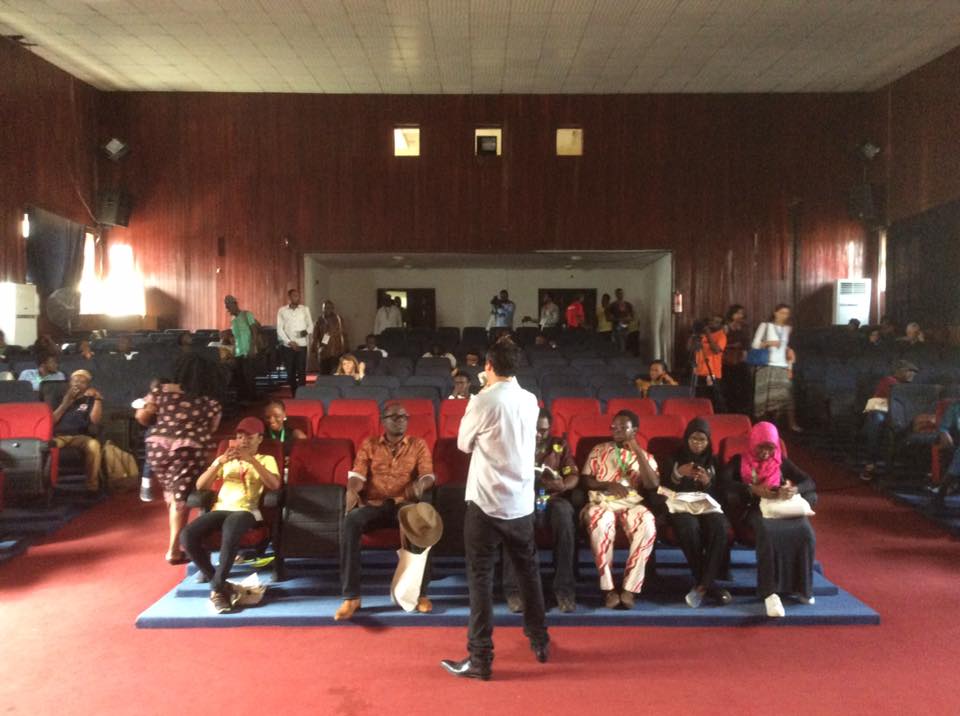
A panel I moderated (video below), set up ostensibly to explore the similar and divergent themes in the memoirs of two important African writers (of different languages), ended up on an even more memorable note: the relevance of archiving and the role of manual writing in the preservation of a writer’s legacy and growth. When I thought of questioning the Congolese writer Alain Mabanckou about what he described as an obsessive write-and-destroy habit that had his travel box littered with disposed writings on paper that he no longer liked, I wanted to satiate my curiosity. But I also thought of the episode as possibly illustrative of the obsessiveness of writers generally during the process of creating. In the end, I – and, as it turned out, the audience – got enlightened by a more substantive conversation around the place of preservation of paper drafts (and archiving in general) in the understanding of the writer’s creative and personal trajectory, thanks to Emma Shercliff, Ngugi wa Thiong’o, and Alain himself.

What the conversation illustrated for me, among others, was a lack of consensus, today, on the “proper” way of creating and shepherding manuscripts. Those of us who grew up in the internet age have taken for granted the benefit of crowd storage and the power of an easy copy/paste/delete on a word processor to care about the true grit of manual writing, crossing out, and re-writing until the draft is perfect, while still keeping the original draft either as a guiding light of the initial intention and insurance against future impulsiveness or as sentimental record of the individual step in the process. But more than that, as Alain and Ngugi pointed out, there is also a financial (as well as archival) incentive for this old-school process: there are scholars, students, and future enthusiasts of the writer’s life and work that will pay a fortune to have access to the initial drafts of whatever eventually becomes a well-accepted work. This helps the culture of criticism and better opens up the writer to perhaps better study.

When he writes on the computer, he said, Alain treats each line of writing as an indelible record that needs special care and preservation. As he puts it, he has different versions of the same work on his computer and would rather create a new one each time than edit the already written one – in spite of the ease given by computers to do so. Isn’t that fascinating? To think that the ubiquity of computers isn’t yet sufficient motivation – in relevant writing quarters – to ditch the drudgery of manual or manual-like documentation. Perhaps not enough has been written about this rebellion and/or the benefit of such active labour in this age of 140-character fickleness. Forget the fight between the Kindle and paperback books. Pen vs Keyboard is where the conversation needs (and will continue) to happen. I will likely forget many of the other questions I asked on that panel but the response to (and conversation around) this one on pen and paper writing and documentation will, and should, live forever.

ake3

The Makerere Conference of 1962 is notable today for a particular conversation on the use of English (and other colonial languages) in African literature. Not much from that conference has lived on in popular lore as that particular debate has. In every edition of the Aké Arts and Book Festival, looking out for such usually short but relevant spark that outlasts a week of commingling has become my yearly obsession. It is to the credit of the organisers that the opportunities are many for such dynamic conversation, debates, arguments, fawning, performance, and even lust (as this report rebelliously recalls). But we remember differently, as it is often said, which is probably for the better. It all comes together eventually. And the culture is richer for it.

Press Release: Irawo Poetry Anthology

PRESS RELEASE – Ibadan, November 21, 2016

Irawo Poetry Anthology:

48 poems celebrating 48 years of Irawo University Centre, Ibadan

We are glad to announce that 48 poems have been accepted for publication in the 2017 Irawo Poetry Anthology.


Irawo University Centre is a private hall of residence for male students, principally of the University of Ibadan. This Centre is one of the numerous educational and social welfare projects promoted by the Educational Co-operation Society, a non-profit oriented body. Irawo was established in 1969, admitted her first residents in 1972 and moved to its definitive site in 1990. That same year, the University of Ibadan recognized Irawo University Centre as “a private hall of residence associated with the university” – the first to be thus acknowledged in the Nigeria University System. The key aim of Irawo is to contribute to the academic, professional, human, cultural and spiritual formation of the student. To do this, emphasis is placed on creating in Irawo an atmosphere conducive to serious academic work.

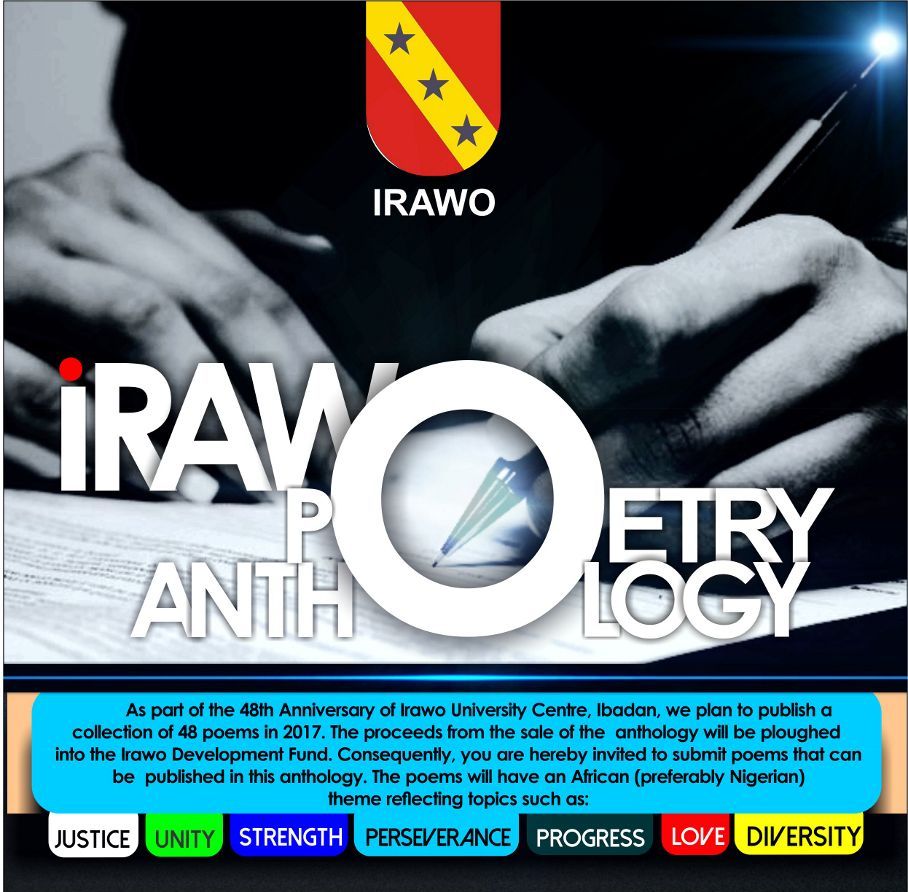
It will be recalled that earlier this year we made a call for submissions for the Irawo Poetry Anthology as part of activities to commemorate the 48th Anniversary of Irawo University Centre. The proceeds from the sale of the anthology will be ploughed into the Irawo Development Fund. The themes for the call for submissions were poems reflecting the following: justice, unity, strength, perseverance, progress, love and diversity. The call for entry closed at 12 midnight of August 31, 2016.

We received a total of 107 submissions from 54 Nigerian poets. The poems went through a blind review process by three renowned Nigerian writers. The three distinguished judges are: Tádé Ìpàdéọlá (lawyer, author of Sahara Testaments which won the 2013 NLNG Prize for Poetry and winner of the 2009 Delphic Laurel in Poetry), Mark Nwagwu (Professor of Molecular & Cell Biology and author of the poetry trilogy – Helen not of Troy, Cat Man Dew and HelenaVenus) and Kọ́lá Túbọ̀sún (Fulbright scholar, writer, linguist, Editor of The Sail Literary Anthology and irawo-poetry-anthology-posterFounder of YorubaName.com).

The 48 considered suitable by the judges for the Irawo Poetry Anthology are listed below.

S/No Title Poet
1 Crux Lawrence Aniawana
2 Timi Uchenna J. Obi-Ibeh
3 The Voice Ogunlaye Olatunde
4 A Letter to the Future Chidiebere G. Udeokechukwu
5 The Key Stanley Aduaka
6 Broken Boluwatife Afolabi
7 A Song of Colours Boluwatife Afolabi
8 Can Two Be One? Oluwatoyosi Agbaaikin
9 Is Love? Oluwatoyosi Agbaaikin
10 Ifunaya…. Ololade Akinlabi
11 The Scales, the Blindfold and the Sword Obinna Amaji
12 Bed of Stone Amamchukwu Chinonoso
13 Ife Mi Amamchukwu Chinonoso
14 Friendly Foes Amamchukwu Chinonoso
15 Awaken Sandra Arukwe
16 Tomorrow Sandra Arukwe
17 Herald Bukoye Emmanuel
18 One Bukoye Emmanuel
19 Vigor and Vapor Kelvin Enumah
20 Quake; the Future at Stake Kelvin Enumah
21 A Fu Gi Anaya Norbert Gora
22 The Broken Last Straw Ikeobi Samuel Chukwubuokem
23 Sapele Water Emuobome Jemikalajah
24 Ikenike Emuobome Jemikalajah
25 Lost Ones Fumbi Ajumobi
26 Dear Dunni Mofoluwawo O Mojolaoluwa
27 The Sun Will Smile Chuks Obi
28 Behind Bars Chuks Obi
29 The Sun Shall Soon Shine Ojo Oreluwa
30 Let’s Stay Together… Segun Onaade
31 Abiku Teleola Onifade
32 Kafanchan Ayomide Owoyemi
33 Kiniun Onibudo Ayomide Owoyemi
34 Palm Tree Oluwatobi Moses Sotanmide
35 One Day Oluwatobi Moses Sotanmide
36 Innocent Till Proven Guilty Chidi Joe Umechukwu
37 Virtual Reality Olufemi Abidogun
38 My Memorabilia Tumilara Adesina
39 Story of our Toppled Storey Tumilara Adesina
40 Moving Clouds Ebisike Chinedum
41 Unity Mofoluwawo Favour Ona-Ara
42 Dawn Taiwo Olawehinmi
43 The Housewife Luke Ogar
44 The Ghost Town Luke Ogar
45 Island of Ice Emmanuel Nwobi
46 Rumble in the Jungle Emmanuel Nwobi
47 The Repose of an Anthill Emmanuel Nwobi
48 Back to our Roots Mahuemolen Odibo

Nwachukwu Egbunike and Emmanuel Nwobi

Editors

Irawo Poetry Anthology

In Pursuit of a Canon

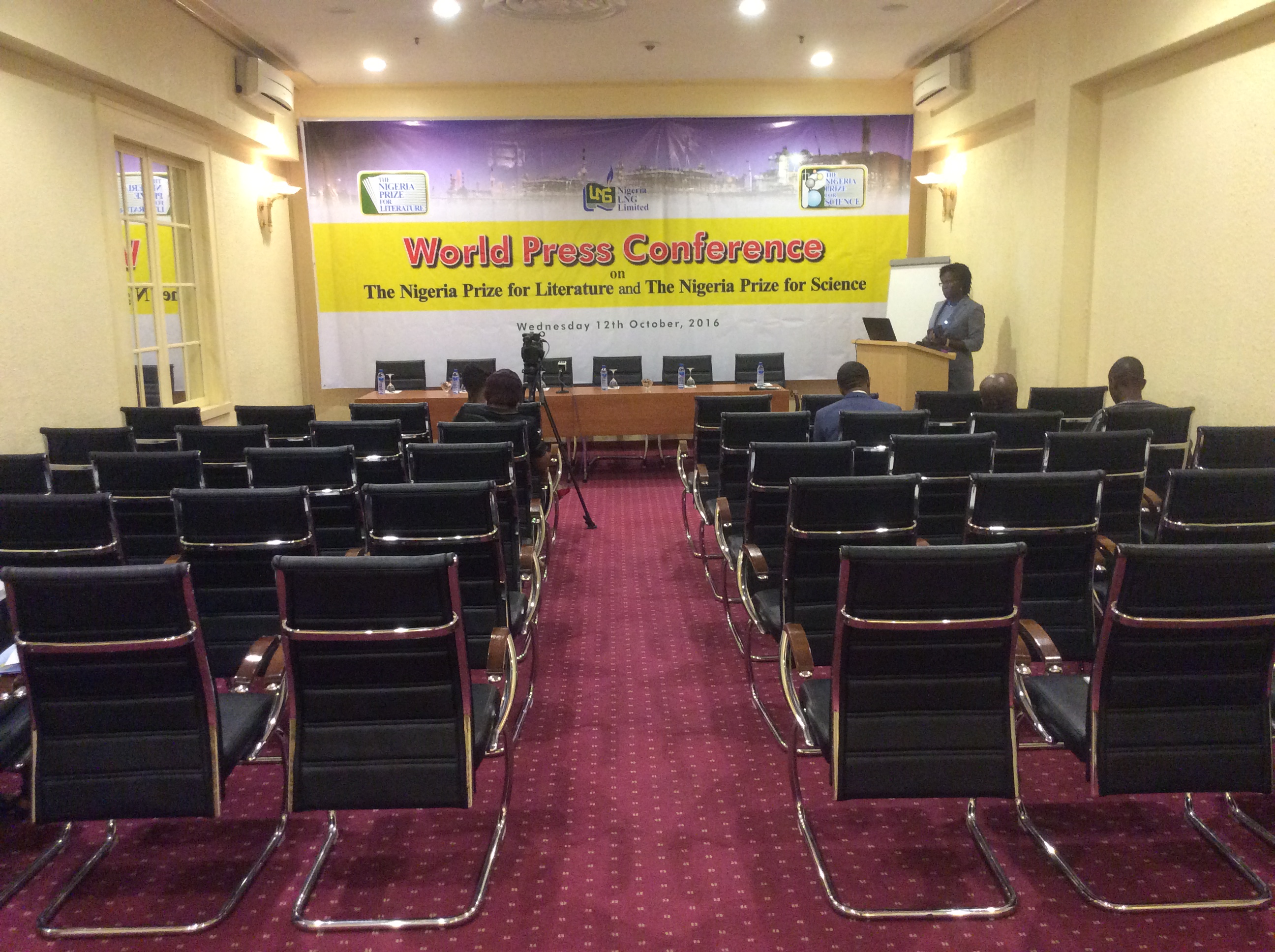
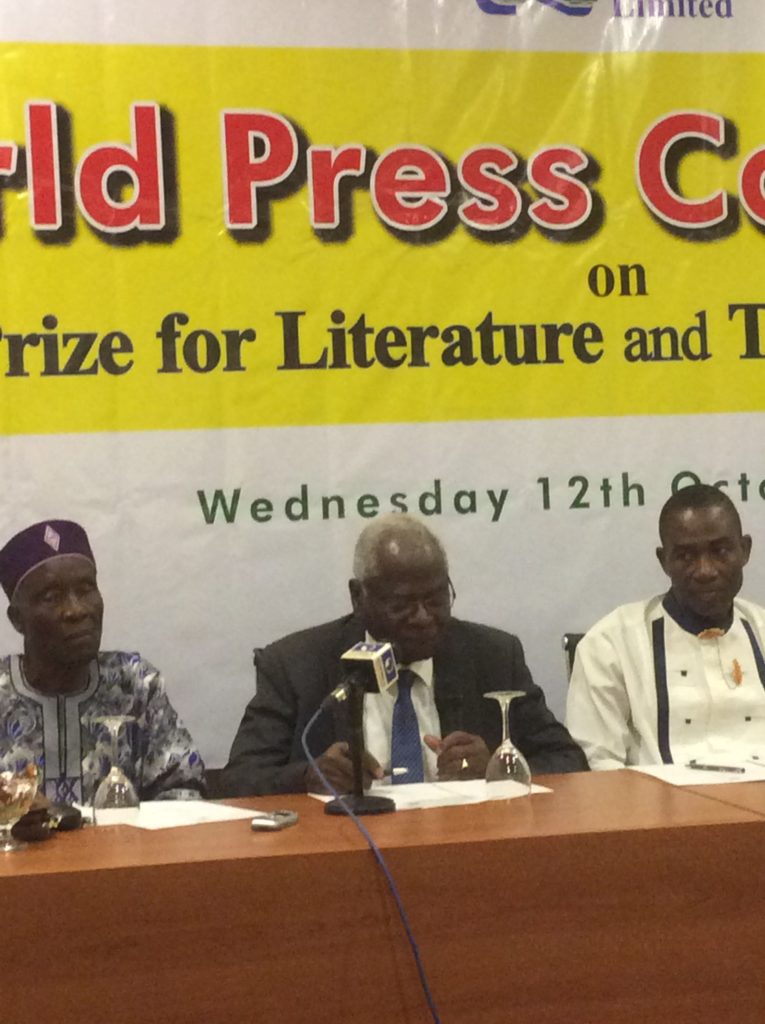
One of the issues that came out of the conversation, yesterday, at the Q&A part of the Press Conference to announce the winner of the Nigeria (LNG) Prize for Literature is whether the judges on the award panel are too old to understand contemporary literature. It was an indirect hit in form of a question from one of the journalists in the room about the currency of the judges’ knowledge about current trends. But the chair of the advisory council, Professor Ayọ̀ Bánjọ, picked up the snark and addressed it fully, defending his team’s savvy and curiosity: “Because we’re old doesn’t mean that we don’t know what is going on. We try to keep up.” Or something to that effect.

But he also went on to suggest that the public make their work easier (if not also superfluous) by generating sufficient debate around each year’s long-listed (and shortlisted) works in order to enrich the canon with smart takes, appraisal, and criticism of each of the work during and after the process of the Prize announcement. He said, and I’m paraphrasing, If you don’t engage the work and create an industry of conversations around them and around the trade, we as judges, may be denied an opportunity to be familiar what is new, and we’d be forced instead to judge the works we are given by the standards with which we are familiar, which may not always be modern. It was both a humble cry for help and a smart take on the state of literary criticism in the country.

Perhaps aware of a criticism of the Prize as being rich in money but not in the elevation of the craft, Professor Bánjọ was throwing the challenge back to the community to not leave the important work of the whole process – criticism, which enhances the value of the work and engages the audience on a second level – to the judges alone. Notable was the fact that no one was rewarded this year with the prize for Literary Criticism which had always been a part of the annual award.

image

He has a point. Many writers who have won the Nigerian Prize – as also pointed out by another questioner – have gone into oblivion with no follow-up work, as if the cash payout of the award had delivered a knockout punch to their creative ability or drive. Certainly, the point can be made that if the work of past winners of such a prestigious prize do not gain more critical interest after such an honour, or increase in sales at the bookstores, or even show up in more quantity on book stands as a result of the award boost, the Prize would have failed in a major way. And what creates this kind of interest is not just the distribution of the books at the award ceremony as the NLNG already does, or a donation of copies to public libraries which is also a good thing, but a critical engagement by other writers and critics of each work as soon as the long list is made, and before/after the award winner is announced.

This is where the indictment of the community is deserved.

The Caine Prize is a much smaller prize in terms of cash reward, but has been deemed way more prestigious across the continent for its sustenance of critical conversation on African literary production though it only rewards writers working in the short story form. There is a couple of reasons for that. The prize has an active online engagement strategy that covers the continent, involves the writing community, and stays connected to the source of important conversations regarding the writers it shortlists. It also has an annual retreat/writer’s workshop in which writers are made to produce works that are then published as an annual anthology. It does this on a budget most likely smaller than that of a prize that awards $100k to an individual every year.

But perhaps more importantly, for the Caine Prize, is that writers and critics also pay attention to each shortlisted story, which are usually carefully reviewed online before the prize announcement. Notable among these annual exercises is the Caine Prize Blogathon founded by Aaron Bady through which interested critics take on each or all of the shortlisted stories each year, and review them individually and as against the criteria of the prize. I have been a part of this exercise since 2013 and enjoyed the process, which brings me much closer to the works than I would ordinarily have. We’d never know how much this annual exercise affects the decision of the judges, but responses to past editions of the Blogathon shows that the large literary community across the continent does pay attention to what is being said and how. It enriches the profession, helps the writers, benefits the readers interested in critical engagement, and makes the prize better.

We need the same for the Nigerian Prize for Literature. All shortlisted books should be made available for free – if possible – to interested reviewers for critical engagement on online and print platforms. Maybe it will make the prize better. But certainly, it will enrich the community of Nigerian readers, and writers.

The Nigerian Prize For Literature 2016: The Judges’ Report

Editor’s note: Today, at Sheraton Hotel, Ikẹjà, Lagos, the winner of the 2016 Nigeria Prize for Literature was announced as Abubakar Adam Ibrahim for his novel Season of Crimson Blossoms (Parressia, 2015) and for the “competent manner in which Ibrahim demonstrated the execution of his work.” Here is the full speech given by Emeritus Professor Ayọ̀ Bánjọ, the Chairman of the Advisory Board for the Prize, on the justification for the prize, and other commentary on the whole judging process.

_____________

image

__________

GENERAL COMMENTS ABOUT THE 2016 COMPETITION BY PROFESSOR AYỌ BÁNJỌ

The Nigeria Prize for Literature is an annual competition which awards annual prizes to winning entries in the literary genres of Prose Fiction, Drama, Poetry and Children’s Literature on a rotational basis.

This year, the genre in focus is Prose Fiction. The following advertised rules were applied during the process of short listing and selecting the winning entry.  

Eligibility: The competition is open to all Nigerians anywhere in the world. This does not mean that writing about other peoples and cultures in a foreign setting is acceptable.

Relevance should be interpreted as consistency with the goals and aspirations of the Nigerian nation and its peoples – specifically, respect for their traditions and their identity as Africans.

Publishing: The prize is meant to encourage local publishing and book distribution, among other goals. Books published outside the country are eligible for entry. Only properly published texts are acceptable. However, efficient editing and good presentation of text are considered essential parts of publishing and are taken into account during the process of evaluation. The quality of the language is important, and errors of style and grammar are  considered major blemishes; these errors may not pass as typographical errors.

Genre: for this year’s competition, a basic distinction is drawn between fiction – that is imaginative prose which may incorporate factual materials and non-fiction like history, biography and sociological tracts which sometimes feature in the submissions for the competition.

This year’s completion has attracted a strong field with such high quality that even without this current shortlist of 3 books there would have still been a winner.

image

COMMENTS ON SHORTLIST OF THREE BOOKS

All the three shortlisted texts cover a wide range of urgent societal and cultural issues such as the status of women in a patriarchal society, the education of youths, the search for identity, the danger of youth unemployment, corruption, insurgency, religious hypocrisy, migration, broken homes and single parenthood and attendant impact on women and children who are usually at the receiving end of most of these problems.

  • Chika Unigwe’s Night Dancer, tells the familiar story of the continuing marginalization of women in Igbo society. The author shows a strong awareness of this context by  the flavoring of the narrative with linguistic and cultural insertions. The novel tells the story of Mma, a young woman’s anguished search for her roots from the opening of the novel when she feels that she has been denied by her mother, until she gradually discovers that her mother had been deeply hurt by both her matrimonial and maiden families. In the course of Mma’s adventures in excavating her identity and her mother’s past, she is predictably confronted by the same cultural inhibitions that her mother had rebelled against. Mma’s own denunciation of those traditions and her belated adulation of a mother she had despised at the beginning of the novel is a slow and painful process of discovering the truth of her family background, and a radical change in her perception and understanding of this background. All this is aimed at validating Unigwe’s passionate call for the extension of the frontiers of women’s space in society.
  • Elnathan John’s Born on a Tuesday is a book about contemporary Northern Nigerian Society as seen through the eyes of a young man. The narrative is told from within a deviant community seen through the first person consciousness of street boys, popularly described as al-majiri. Virtually abandoned by parents and community the  young boy, who tells the story in his own words, finds his survival through a brotherhood of other street boys. Their small outcast community is exploited by politicians and the brutally victimized as scapegoats by law enforcement agencies.  They inevitably patronized and taken over by leaders of religious sects and become a source of recruitment terrorist groups. One of the strong points of the novel is its insight into the social mechanisms that lead to national crisis and terrorism or the social processes that give rise to religious fundamentalism and political hypocrisy, corruption and exploitation.
  • Abubakar Adam Ibrahim’s Season of Crimson Blossoms is a very skillful and sympathetic narrative handling of a most psychologically and emotionally painful between an aging widow, who seeks release from her culturally imposed sexual repression, and a young outcast leader of a group of “weed” – i.e. hard drug – dealers who are ready thugs for politicians. In the background as immediately cause of the widow’s troubles, is the violent history of ethnic hatred and conflicts in Jos, placed within the larger context of contemporary Nigerian history with its complex and sometimes violent intertwining of politics, religion and culture. The novel moves from its evocative and passionate first sentence through a web of anxious moments to a tragic and painful conclusion with hardly a moment of respite.  All through its projects through is main action, the implications of certain key social issues for younger audience – key issues such as early marriage, drug abuse and impact of relationships on human action. It is a novel whose narrow domestic action has wider universal relevance beyond its relevance for its immediate setting.

On behalf of the advisory board of the Nigeria Prize for Literature and of the judges and international consultant, I have the pleasure of announcing as the winner of this year’s entry, Season of Crimson Blossoms by Abubakar Adam Ibrahim.

________

The award ceremony will take place early next year.

“Never Look An American In the Eye”

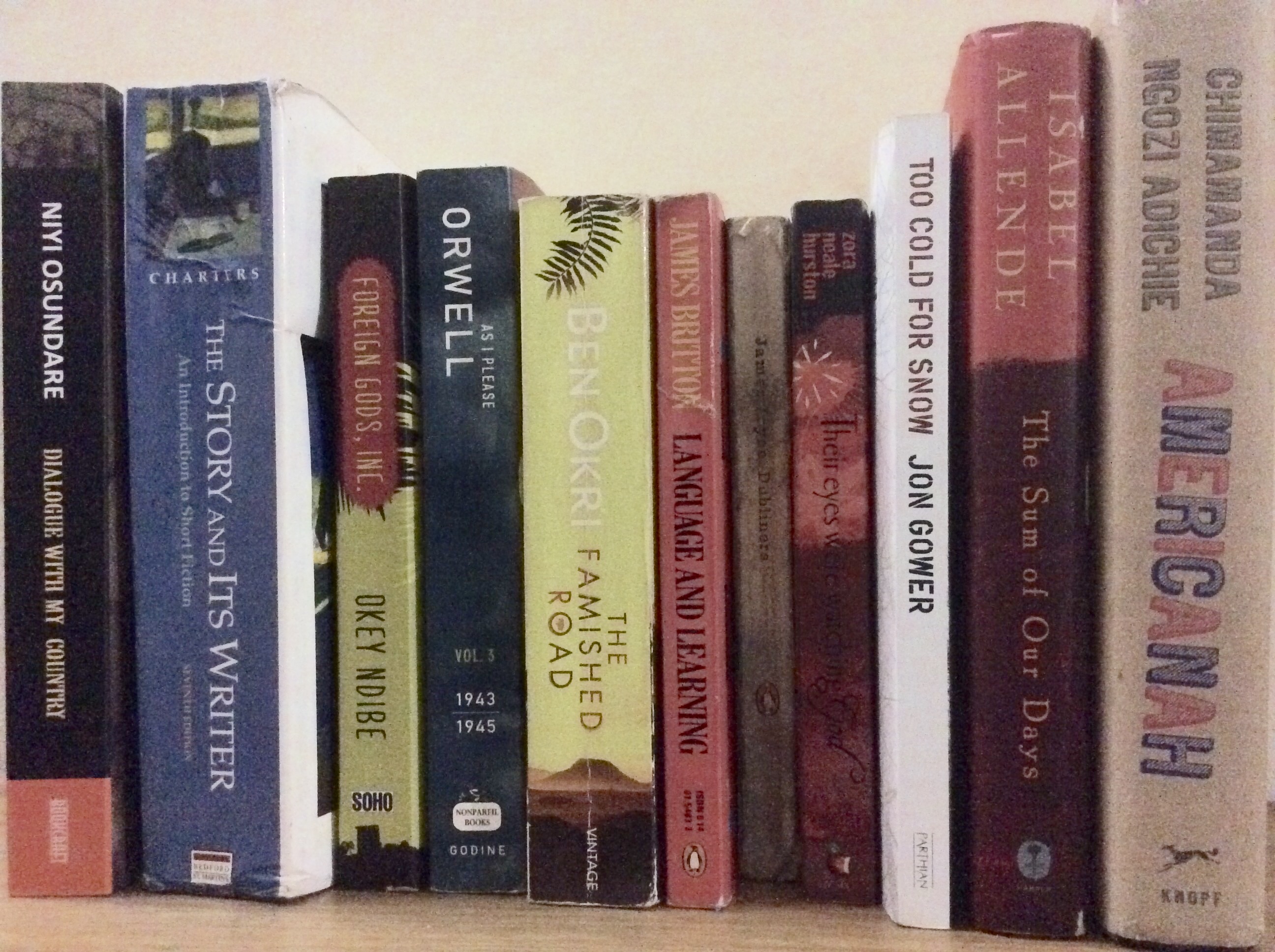
In my last book review, I lamented the dearth of travel writing books by African authors. I have since been scolded for failing to reference a number of other old and new works that tackle the subject matter, so I’m currently looking for Isaac Delano’s The Soul of Nigeria, Babatunde Shadeko’s The Magic Land of Nigeria, Noo Saro Wiwa’s Transwonderland, and Eavesdropping, a collection of essays and travelogues in America by Deji Haastrup.

But one of the example works I pointed to as examples of contemporary works detailing honest and intimate travel experiences of travel was Okey Ndibe’s Never Look An American In the Eye (Soho Press. October, 2016). I have now finished reading a review copy of the work and I can say that it was a thoroughly delightful experience. Having lived in America for a while myself, I am always interested in reading accounts of others who have lived in the country, experienced in ways similar to or different from mine. But with this book, except that both of us had entered the United States for the first time at twenty-eight years old, the experiences could not be any dissimilar, which added a lot of excitement to its reading.

okey

Out October 11, 2016

The title comes from a piece of advice given to the author by his uncle in the village. He, the uncle, not having experienced America in any other way except from the plot of Westerns shown on Nigerian screens where eye contact was the ostensible cause of major conflicts that resulted in lots of gunfire, decided that his nephew on the way to America needed such a good prep. As we know now, from our experience with Americans, the opposite turns out to be true. This leads to a number of awkward, interesting, and hilarious scenarios, one including contact with law-enforcement.

The book is a collection of connected stories about the author’s life in Nigeria and his migration to America. Okey Ndibe is currently a columnist for a number of Nigerian publications. He is also the author of two well-received novels Arrows of Rain (2000) and Foreign Gods Inc (2014). He had arrived in the United States first as a maiden editor of a new international magazine, in the late eighties, before he achieved these later successes, but during which time he was already an accomplished reporter for a major Nigerian publication. In the US, after his stint as an editor, he became a student, and later, a reluctant but ultimately appreciative citizen. The book covers all these periods in his life with tales that paint the picture of an individual with an expansive curiosity and a healthy sense of humour towards misfortunes and uncertainties. The stories follow each other in an unsual order which was slightly disorientating, but ultimately successful in pushing the story forward towards a fitting end. Read to find out why.

As a memoir, it’s an engaging work filled with optimism, written in a style that is neither pretentiously grand nor mindlessly plain. As literature, it is clever in its deceiving simplicity. As travel writing, it is a welcome addition to a trove of like-minded works by Africans traveling around the world. It is a work accessible without being insipid, serious without being morose, and honest without being overexposing or patronising. The handling of his contact and relationships with legends of African literature Wọlé Ṣóyínká and Chinua Achebe deserves credit for its normalcy and honesty. We see them both as humans, chasing human pursuits, and vulnerable to human frailties and human disappointments.

It balances an important narrative about migration, culture, disappointments, love, and restlessness with an outlook that is both sunny and measured. I don’t want to say “circumspect” because that presupposes an unwillingness to take risks. What the work is is the opening of doors into a time in the life of its author which also coincides with a significant time in the life of a country he was leaving behind and the one he eventually adopts. There was no risk to be taken or avoided as far as the writing goes. The story needed to be told well, and it was.

___

The hardcover is 224 pages long, but doesn’t feel like it. The book will be released on October 11, 2016 and can be pre-ordered here. I will be speaking with the author in a public Book Chat in the next Aké Festival in Abẹ́òkuta this November. If you’re in the area, do drop by to hear him answer a number of questions I’m deliberately keeping away from this review :). Go buy/pre-order the book.