American Corner to Screen Femi Amogunla’s “The Bargain”

As part of the United Nation’s The 16 Days of Activism Against Gender-Based Violence, American Corner, the Nigerian Society for International Arts and Culture, Firm Media Production and Liveinibadan.com join the world to stand against gender-based violence.

The Bargain. AThe 16 Days of Activism is a yearly international campaign that runs from 25 November (International Day for the Elimination of Violence against Women), to 10 December (Human Rights Day). The Bargain is apt to raise awareness about these issues because it chronicles a woman’s life, from childhood to adulthood.
“I think that film has power not only to inform but to transform. Many will see themselves in film characters and I think much more than whine about the abuse that happens in marriages, it is important to do something. This is my own little something,” says Amogunla Femi, the producer of the short film.

The film screening will be followed by a conversation on the many manifestations of violence against women in the society.

Venue: American Corner, Jericho, Ibadan

Time: 10am

Date:  December 4, 2015

About The Bargain

The Bargain is a short film that chronicles the life of a Nigerian woman from childhood to adulthood. It shows the many manifestations of gender-based violence against her; this violence resonates with many Nigerian women. The film is about how the Nigerian woman negotiates her existence daily, the way she bargains with reality, with stereotypes. It is a call from one woman to another on the price they place on their lives, on their value. It also raises questions: what are the lessons women learn while paying this price? How much or with what will you trade your worth?

The Speakers

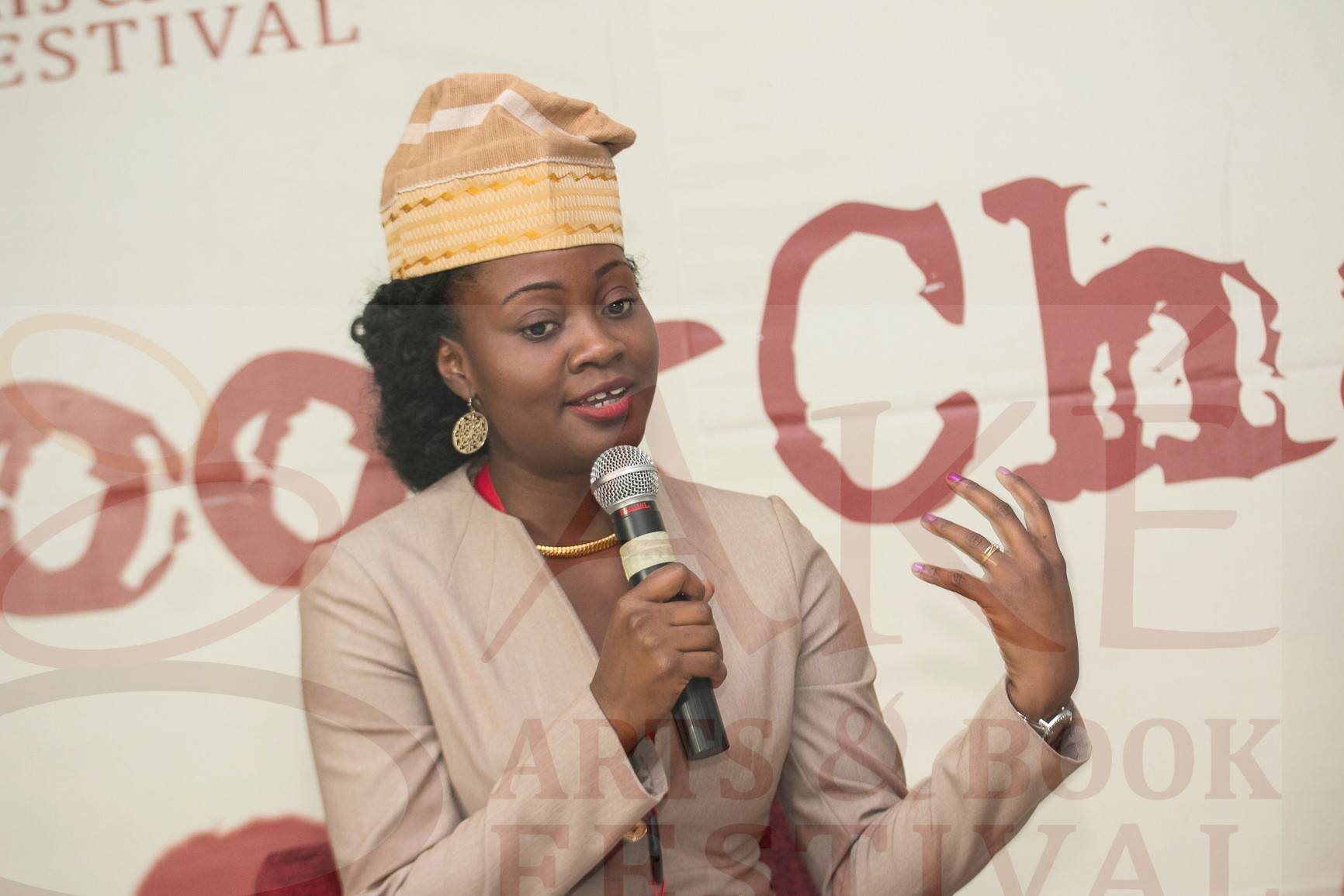
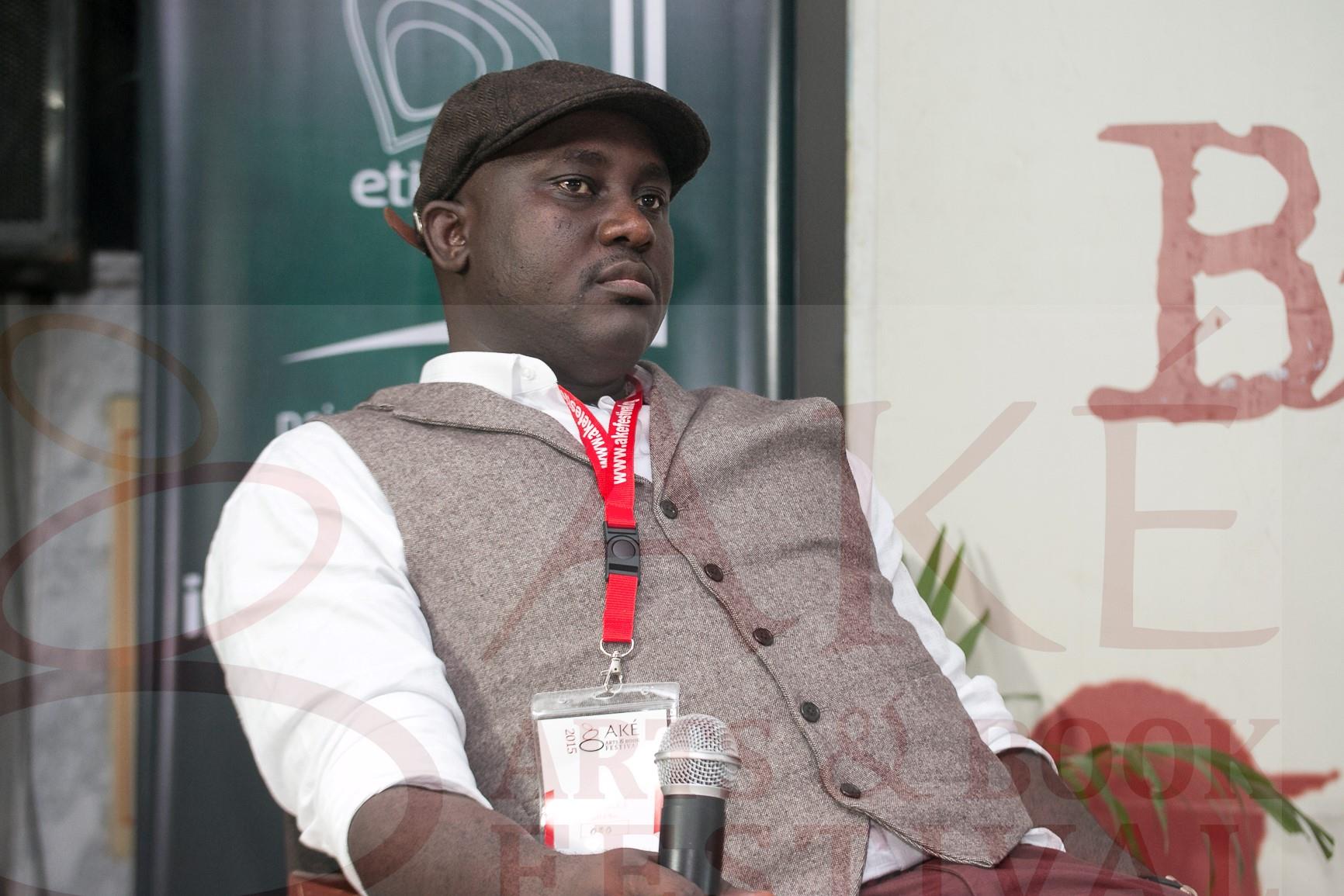
Dr. Olayinka Egbokhare teaches Communication and Language Arts at the Faculty of Arts, University of Ibadan. She is the author of the widely acclaimed novel Dazzling Mirage which was adapted for screen by Mainframe Productions.

Ifeoluwapo Adeniyi is an On-Air-Personality at SplashFm; she is also the author of On the Bank of the River which is on the longlist of the Etisalat Prize for Fiction, 2015. She loves literature and has a penchant for socio-economic and political issues.

Edem Ossai is a Lawyer, development practitioner and founder, MAYEIN (Mentors Assistance for Youths & Entrepreneurs Initiative). Edem received a Commonwealth prize in 2013 for her Essay on the role of women in leadership and entrepreneurship.

Abiade Abiola is a lawyer with an interest in women’s human rights, children’s rights, sexual and gender-based violence and alternative dispute resolution. She is also the founder of Human of Substance Empowerment Initiative.

Femi Amogunla is an award-winning multimedia artist who works with stories, photography and film. His poem My name, My Identity was curated, produced and performed as part of the 30 Nigeria House Project during the 2012 Olympics. In 2014, he was commissioned as one of the official photographers for the #VoteNotFight# campaign in Oyo State. His photography has also been featured in Kuramo Report.

When Femi is not writing or producing, he takes a shot at the world with photography. The Bargain is his first short film.

Aké Diary (XI): Igoni Barrett & Nnedi Okorafor

by Emeka Ofoegbu


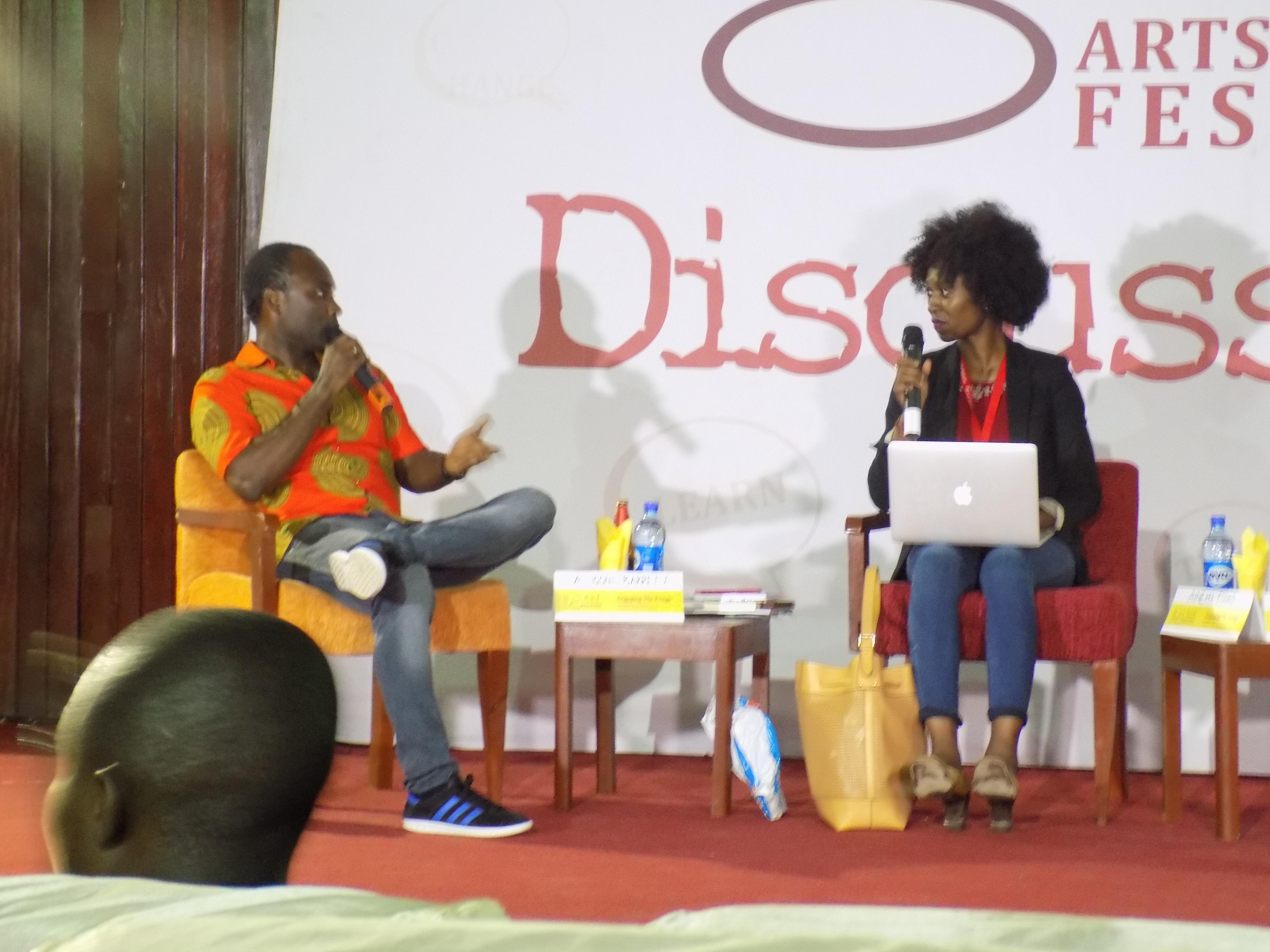
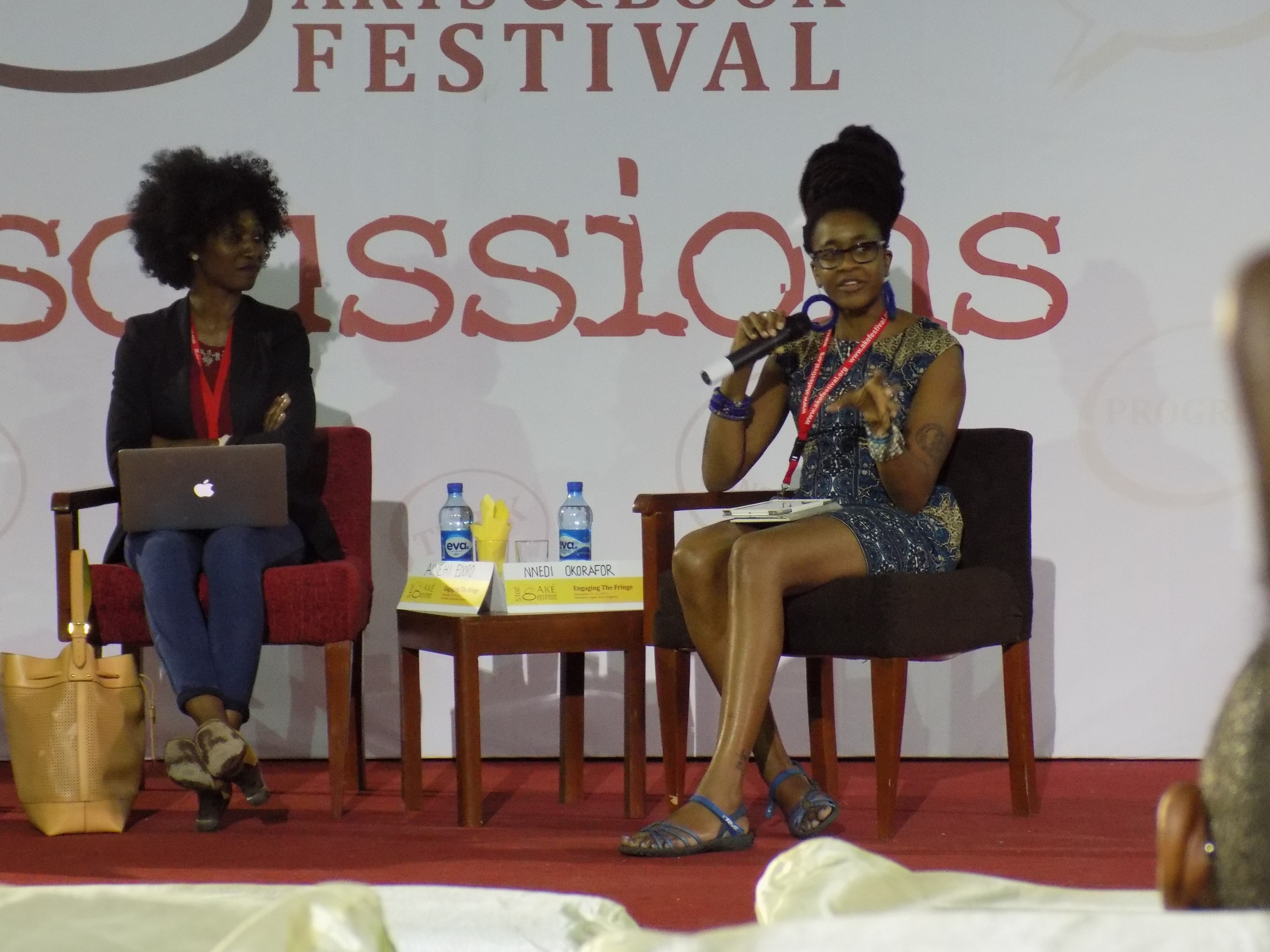
DSCN0757This is one of the highly anticipated book chats of the festival. On the one hand we have Igoni Barrett the author of the tastefully written Blackass and on the other we have Nnedi Okorafor one of Africa’s answers to fantasy, African-based science fiction and magical realism. The moderator for the book chat is Ainehi Edoro editor of Brittle Paper.

“Fiction is fantasy that’s why it’s fiction.”

“Realism depends on a worldview. Fantasy depends on one’s world view.”

These are the statements that color the chat as both Igoni and Nnedi tackle questions about the place fantasy and fiction occupy in African literature.

Nnedi talks about the boundless nature of fantasy writing and how, multiple times, her writing is influenced by the things she observes about her — a habit of hers which she jokingly apologizes for. She then regales with a tale from her childhood to further buttress the point of how her surroundings inspire her stories. It is a tale about how her and her sisters had observed pink ducklings on their way to her home state.

“Because it wasn’t important to the story” is Igoni’s response when asked by the moderator why he had chosen to keep silent on the reason why and how his main character in his latest novel wakes up a completely different race. He stresses how he did not wish to distract the reader with meaningless information and take their attention away from the story he was telling. In his words “the book would have ended in the first paragraph if I’d explained that.”

DSCN0765On talking about the similarities shared by both novels one being based in Lagos state, Nnedi and Igoni seemed to arrive at one conclusion. Lagos is prime material for works of fiction, science-fiction and fantasy. Referring to an article he read a while back, Igoni quotes the writer who said “it feels like Lagos is a city that had been built by aliens and abandoned” to which the audience laughs.

Nnedi talks about Lagos and the chaotic nature of it. She tells us about an incident which put her off the city for years. “You cannot see Lagos without seeing the chaos,” she says.

Ainehi then mentions their novels and their relations to digital technology. A lot of Igoni’s plot moves through social media. His character seems to have two personalities in the book. His real self and his social media portrayal of himself.  Igoni responds by saying “social media allows people do what fiction allows the writer do. It allows you wear multiple faces.”

Nnedi then talks about how rhythm is used to inspire people and can therefore be considered a superpower. She cites Drake, the American rapper, as an example.

“Drake says complete nonsense in his song and makes sense in it. That’s a superpower.”

It is now time for questions and a lot of them come in. One of which is directed at Igoni. He is asked why his main character in his novel is aged 33 to which he responds “Jesus died at 33. I like 33 the lager and I was 33 at the time I wrote the story.”

The Book Chat comes to a close.

Aké Diary (IX): The Deadly Laughter

by Emeka Ofoegbu


When the four kings of the satire sit down to have a panel discussion you can only expect brilliance.

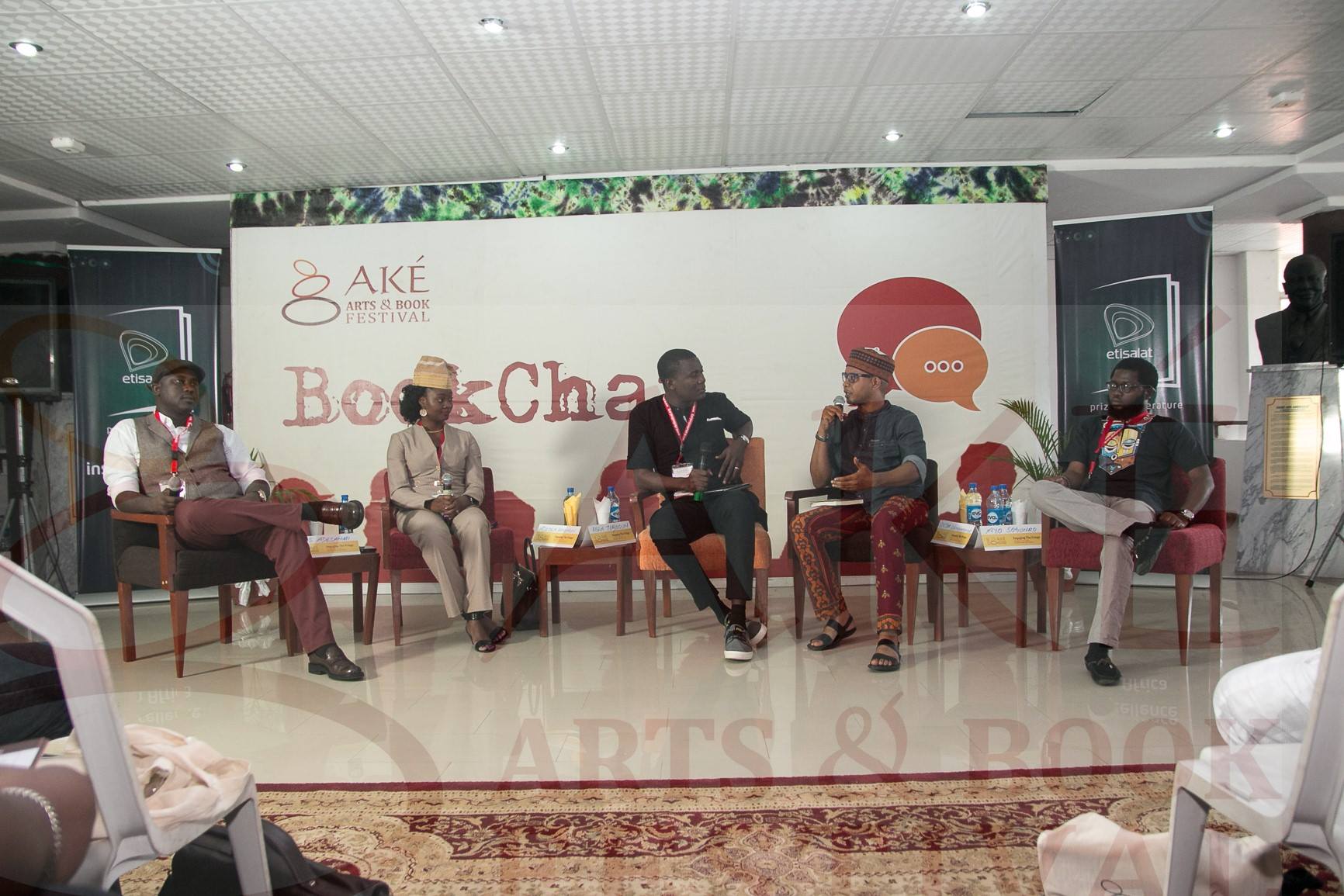
12240855_1072254982794106_817242026421824695_o The panelists are Pius Adésanmí, author of Naija No Dey Carry Last, Adéọlá Fáyẹhùn, host of popular online show Keeping It Real, Ayo Sógunró, author of The Wonderful Life of Senator Boniface & Other Sorry Tales and Victor Ehikhamenor, visual artist and author of Excuse Me. The topic is Deadly Laughter: Satire and Public consciousness in Africa. The moderator is Kọ́lá Túbọ̀sún, acclaimed linguist.

The discussion kicks off to Adéọlá admitting she has received countless death threats for the work she does on her show even with the disclaimer. This is something her fellow panelists agree with. Satire is an approach to dealing with major issues that affect our immediate society which is quickly catching on. The satire is meant to be as subtle as possible but still heavily packed with intent and often met with disapproval and hostility. One thing the panelists agree on is that as a writer of satire you must develop a readiness for vicious backlash. The art of subtle reproach is often too much for people to handle and for those who understand what is implied they cannot stand to be portrayed in that light so they strike back or speak out against it.

12291120_1072255166127421_2596372418372204354_oVictor lets us know that amidst the vicious attacks on satirists, the satire is meant to deflect violence being a way to say what you want to say without being direct. On whether people effectively understand the satire, Ayọ̀ says there are some people who “even if it is clearly marked and sent, some people still don’t get it”. Pius talks about his work saying that the satire respects no one. It brings out the people perpetrating wrongdoings and ridicules them. Often times the case is that they don’t like how they are portrayed so they prefer a direct attack.

Although the satire is meant to be daring, Ayọ̀ tells us there are certain things he cannot write about. He believes feminism is one of these things. He says this simply because he personally cannot handle the onslaught when it does come. To this Victor drops one of his many wise sayings “because you have sharp scissors doesn’t mean you’re going to be cutting everybody in the village’s head off”. It is explained that the moment as a satirist you threaten yourself by attacking matters that are unnecessarily dangerous you’ve crossed satire into sensationalism.

12247737_1072255476127390_4458254252724755255_oWhen the question of who censors the satirist came up, Adéọlá was quick to say “everyone.” She gave us examples of how she was hounded for speaking about a particular issue and again hounded by the same set of people when she decided to remain silent on the same issue. She explained her style of approaching the satire and how it has worked for her this far. According to her she lays the fertile ground before doing the dirty work of planting. She says complimenting before hitting the nail on the head is a style she has developed in her career as a satirist.

Questions were taken from the audience with Professor Niyi Ọ̀súndáre saying the steps to being a good satirist include: “dig your grave” “buy a good coffin” and “write your will”. When asked what it takes to be a satirist, Victor says to portray serious issues in a humorous yet objective way requires a level of humour to avoid it coming across as forced. After all, according to him “it helps for the snake to have venom before it bites”.


______

Photo credit: Ake Festival

Aké Diary (VI): The Transgender Discussion

by Fọpẹ́ Òjó

LS introduces the discussion and talks about how she believes that Nigerians jet themselves by totally shutting themselves off from necessary conversation and dialogue that help us learn about the struggles of other people, the type of conversations that show what these people are going through and help us understand them and develop empathy for them.

Oláòkun Sóyínká is the moderator of this session with Ima Da Silva, an Angolan transgender woman.

“I’m really happy that we have our own Caitlyn Jenner.” Dr. Sóyínká says.

“Who is Imani Da Silva?” he asks.

“I am first a human being and yes, I am a transgender. And I’ve always felt like I was a girl since forever since I was five. When I was five I had my first crush.”

Imani Da Silva is a pretty woman. Her face is oblong and she is light-skinned. She ties an ankara scarf on her head and it suits her. She has lovely glowing skin. And slender legs and is dressed in an ankara skirt and a blouse. She wears light makeup and light red lipstick.

When she talks about happiness she says “We often forget that life is not a rehearsal, it’s today. I decided to be the change that I wanted to see.”

About the people who have influenced her and helped her through her journey, she says “I was always lucky to meet people who saw me for who I am personally and professionally. It’s so unfair to say that I got to where I am on my own.”

She talks about her mother. How her mother was a strong woman who never judged her or her brother or her sister. She later says that the kind of woman that she is has been majorly influenced by the kind of women that she grew up with.

Dr. Sóyínká asks her about the surgeries.

“This wasn’t a choice. You knew you were gay.” Dr. Sóyínká says.

“I had the sex reassignment surgery four years ago and it was the best decision I ever made.” She answers.

She also talks about growing up and religion.

“When I was a teenager I was so religious. So I had this fight inside me about what was right what was wrong what I had been told and what I felt.”

There are many questions from the crowd. This Aké audience is a particularly quiet one. It is as though a very fragile bubble is being passed around from person to person and the audience is being careful so that it does not burst.

About religion, Imani says  “I realise that I don’t need a religion to identify myself as a person. What matters is how you treat the people around you for me the biggest sin is to hurt another human being.”

Another person asks about how female people expect her to be for being transgender and how she deals with the pressure.

She answers and explains that some transgender people have pressure to be as female as they can so that they can convince other people that they’re really women. They end up doing too much makeup and trying to live up to the standards of what society defines a woman as for acceptance.

She says that she doesn’t need to have wide hips or a huge backside to be woman.

About privileges on being born male and lightskin she says “I really believe that it is such a big privilege to be woman in Angola because women are so empowered. Women are strong and are made to believe that they can do anything. Girls are told to study their books.”

She is asked why she had to go as far as the transition, why she didn’t just remain a gay man instead of going through the whole process of changing.

She says that what we first have to do is check the many effeminate men and ask them if they are happy with being effeminate. Or if they want to change to women. She talks about some of her gay friends who are happy with being gay men. She says they’re gay and happy to remain men.

On how she relates with the trans community, Imani says she is the spokesperson of a community that works with such rights. She was approached by such community to be their spokesperson and she took it up.

“When there’s phobia. It’s because people are scared of what they don’t know.”

She goes further to say that respect is the most important thing. Teach gays and transgenders to love and respect themselves, to love and respect others. Then they will get the love and respect because in life, you give what you get.

She also speaks about the difference between gender identity and sexual orientation.

“Gender identity is one thing. Sexual orientation is one thing. How I feel about my gender is different from who I have feelings for.”

She explains that you can be a transgender man or woman and still be attracted women or men.

“I didn’t wake up one day and say I want to be barbie. Nobody told me to wear lipstick. And nobody told me to wear a dress. This is how I felt.”

On the surgical process of changing genders. She talks about how impatient transgenders can get with the process.

“You have to be patient through the process of changing. You have to be patient and know that you will get there.”

Someone asks her about her sexual relation with men, if her transition is complete yet and if she has wild orgasms with the men that she gets sexual with.

“I feel like I was born this way. And I thank my doctors everyday ” she answers simply. And the crowd laughs.

When she talks about motherhood, she says “I believe in marriage. It was never part of my dreams to have a child. I don’t feel like I need a child to be complete. Some people tell me that would change when I meet the right person. But I just don’t feel like I need children to complete.”

A man asks about how long it takes for her to tell the men that she goes on dates with about her history.

She says that it depends on how serious things have gotten. But that respect is always the most important thing in her dealings.

It is a very enlightening session and Dr. Sóyínká and LS thank her for her time and LS jokes about how this Aké audience is probably the most quiet and gentle one that she has ever witnessed.

Imani Da Silva is courteous and lovely as she exits the stage.

Home Is a Slippery Word: Interview with Namwali Serpell

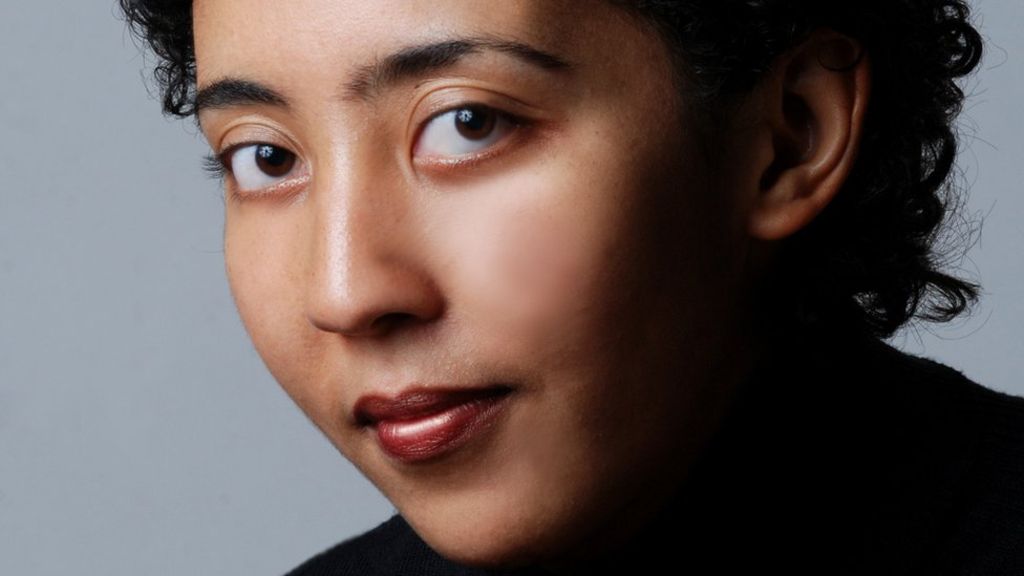
Namwali Serpell. Photo credit: The BBC

Writer and professor Namwali Serpell of Zambia and of the University of California, Berkeley, was declared the 2015 winner of The Caine Prize, the most prestigious prize for the short story by an African writer. Her story, first published in Africa39 was titled The Sack. It was a story which she herself described as “a story so strange”. It was a story that I found quite fascinating in its unraveling. In this interview, she speaks to me about the story, her work, background, and influences.

__________

Hi there and congratulations for your win. Were you expecting it?

Thank you. No.

Im sorry to say that I hadnt discovered your work up until this moment. I have a copy of Africa 39 but managed to read only a couple of the stories there. Not many people know also that you have been shortlisted for the Caine once before (in 2010) for a story called Mzungu. Femi Terry won that year. What have you been up to within that five intervening years?

Since 2010, I have been teaching at the University of California, Berkeley, where the English department just granted me tenure. As part of that process, I wrote and published a book of literary criticism called Seven Modes of Uncertainty (Harvard U Press, 2014), and a handful of short stories and essays.

I know you were born in Zambia, and left the country in 1989. Did the politics of that country play any role in that migration, and what has been your most interesting experience living far away from home?

No, my family moved to the United States for work when I was eight years old. My father was working as a professor in the psychology department at the University of Maryland Baltimore County; my mother was working for the United Nations and then left her job to pursue a PhD.

I enjoyed your recent interaction on The Guardian where you had a lot of snarky remarks to a few ignorant questions of commenters. Does being a college professor prepare you enough for dealing with online trolls?

Insofar as I have witnessed the power of the Socratic method in my classroom, yes.

I caught this from one of the comments in the Guardian interaction: “I appreciate that in any stable society, literature can and sometimes should steer clear of other issues. However the group called Wall Street, Dylan Roof, and police departments across the United States are between them encroaching ever more on America with the intention of destroying art, literature, and learning.I found that refreshing, and indicative of how you see the writer in the society. Have you always held this attitude, and did growing up in Zambia have anything to do with it?

I was mirroring a Guardian comment about the relationship between politics and literature in African countries. Being an immigrant allows one to maintain an outsider’s perspective on the politics of other countries.

I also read the The Guardian is My Heroblog post you wrote to call attention to The Guardian snipping your thoughts in half for a reason I couldnt understand at the time. Friend of mine, and critic, Aaron Bady said it was patronising shittiness, which I think captures it. Or did you see it any differently?

I believe, for understandable reasons, that they cut the part of my answer that critiqued the premise of their question. I did not feel censored; I felt condescended to. The Guardian has since corrected their error.

I dont know if youre aware of the annual controversyabout role of the Caine Prize in determining the direction of the African short story. Chimamanda and Binyavanga have had snarky things to say. How did you come to discover the Caine Prize and what expectations have you had over the years of its role in promoting and preserving African literature in English?

I discovered the Caine Prize when I was nominated for it in 2010. I do not run the prize, so I do not have expectations for it, I have hopes for it. I hope it will continue to support and spread the word about literature from African countries and the diaspora. And I hope that it will be restructured in such a way that it promotes mutual encouragement rather than competition between writers.

What was it like between the period of the shortlist and the final prize announcement? Did it bring any notable (and welcome) visibility to your work? 

Yes. The events—panels and readings—in London showcase the shortlisted writers and offer opportunities to meet with editors and publishers who might not otherwise notice our work.

Which of the other shortlisted stories did you think would have won if yours hadnt?

Having expressed my ambivalence about framing writing as a competition, I decline to serve as an erstwhile judge!

Ive been going through your blog and reading a couple of reviews youve done of other peoples work, etc. I loved the one you did on VS Naipaul’s The Masque of Africa and on Toni Morrison’s latest novel. Are these two some of your favourite writers? The disappointment with Naipaul, in any case, was quite evident in your review. Youre not alone in that.

I admire Toni Morrison’s work immensely and have written about her not only as a reviewer, but also as a literary critic in my book, Seven Modes of Uncertainty.

What other writers have influenced you over the years, first while you were on the continent, and since?

Too many to name. “The Sack” alone was influenced by Audition, a Japanese horror movie by Takashi Miike; Tales of Zambia, a set of nonfiction essays by Dick Hobson; No Company for Old Men, a novel by the American writer Cormac McCarthy; and “Meeting with Enrique Lihn,” a story by the Chilean-born writer Roberto Bolaño.

Other than fiction, and non-fiction, what other writing forms have attracted you? I havent seen any poems out there with the Namwali Serpell on it.

I don’t write poetry. I may write a film some day.

What kinds of film do you typically enjoy?

Again, too many to name. n+1 published my review of two science fiction films starring Scarlett Johansson, Spike Jonze’s Her and Jonathan Glazer’s Under the Skin. I enjoyed both, differently.

If you cannot write in English, which other language would you have loved to write in? What other languages did you learn as a child. Do you still speak them now?

My father is a white Zambian man who was born in London; my mother is a black Zambian woman who was born in Mbala. My parents speak different Zambian languages so we always spoke English as a family. I do know fragments of Mambwe, Bemba, and Nyanja, which I incorporate into my writing. I learned French in school, and Spanish in graduate school; I am far from fluent in either. English is my home language, but as an immigrant, “home” is always a slippery word. Junot Díaz’s epigraph to Drown quotes the Cuban poet Gustavo Pérez Firmat: “The fact that I am writing to you in English already falsifies what I wanted to tell you.” Luckily, falsification is a key part of a writer’s job.

You once wrote an article explaining/defending Zambianspopular acceptance of president Guy Scott, a white man, as Americans would accept Obama, for instance. Your first shortlisted story for the Caine was also called Mzungu, a word for white man.Has the implications of being a biracial African always been prominent in your mind? And what particular instances can you remember helping you deal with it?

The title of the story is “Muzungu”; it means foreign person, usually a white person. Its likely etymology is from a word meaning a person who wanders around in circles and ends up dizzy. The implications of being a biracial African are inescapable; there is no “dealing” with it; I live it.

Where do you stand on the drive to increase the output of more indigenous language literature on the continent? Mukoma wa Ngugi just recently launched the Mabati-Cornell Prize to reward fiction in Swahili.

I stand with it.

You currently live in San Francisco, a so-called Sanctuary Cityby the standards of American immigration debates. As an immigrant yourself, what peculiar characteristics of that city – or of the immigration debates – has fascinated you the most.

I only recently came to San Francisco; my family and I immigrated from Lusaka to Baltimore. I am very taken with the particular atmosphere of the Bay Area, which comprises Oakland, Berkeley, and San Francisco.

And, as a follow-up, should we expect work from you in the future (following examples of Czeslaw Miloszs Visions from San Francisco Bay) detailing the writers consternation/interaction with a new environment with its peculiar and eccentric character? (Im very interested in reading more from African writers in the West about their interaction with America as much as about their nostalgia for and interaction with the African space they left behind, if this makes sense).

My interest as a writer lies in the cultural products—noir, hip hop, murals—that emerge from their distinctive histories of ethnic and racial intermingling. I do have another novel in progress set here but it is about mixed race African-Americans rather than African immigrants.

I hear you say that you will actually go through with sharing the 10,000 pounds Caine Prize money with your fellow shortlisted writers. Since they already get 500 pounds each, that means that theyd go home each with 2500 while you will go home with 2000. Why are you such a socialist? 🙂

We all already received our 500 pounds for being on the shortlist, so we all go home with the same amount of money. Zambia has a long tradition of socialism—our founding president, Kenneth Kaunda, developed a largely socialist philosophy he called Zambian Humanism—as does my family. It seems only fair, so to speak, that I would continue both traditions.

______

This interview was first published in Aké Review 2015.