Browsing the archives for the Literature category.

December 24 in Lagos, Nigeria

It is three days after the end of the world, and another end looms in sight. Depending on the location of the observer, many ends, in fact. The leap into a fiscal cliff all around the USA – an irresponsibly manufactured end to the sanity of the country’s finances. In Kauntan, Malaysia, a different end. Scenes of flooding that I’ve witnessed from pictures posted online, and tweets by concerned denizens of the place, show apprehension for what is to come. If I ever have to worry about an alligator swimming casually into my house on a December morning, I would be very scared too indeed.

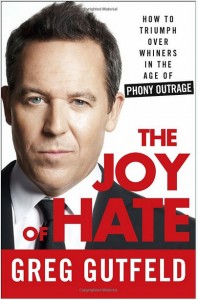
Fullscreen capture 12242012 65525 PM.bmpI am currently reading Greg Gutfeld’s “The Joy of Hate“, a fascinating book from what I’ve read so far. It is perhaps one of the few books I’ve enjoyed while disagreeing with most of what it says. Mr. Gutfeld is a co-host and funnyman on one of my favourite TV shows on Fox News: The Five. He also hosts another nightly show called “Red Eye” (to which I owe much of my sleepless nights in Edwardsville). Where we agree is our inherent rebellious streak: “I became a conservative by hanging out with liberals…and I became a libertarian by hanging out with conservatives“, he says. Watching him duel with his co-hosts on “The Five”, it is hard to disagree. But not all the time. By the time the reader is done reading Greg’s tirade on Sandra Fluke (the young Georgetown law student who became the poster child for the inclusion of contraceptive coverage in insurance policy for women in the US), it would be hard to separate him from a fellow right-wing co-host on the channel, Eric Bolling (and other right-wing ideologue you’ve ever heard from). Time and time again, he attacks Ms. Fluke of wanting “free” stuff from the government, sometimes from “all of us”, without noting if only for once that what the young woman was fighting for wasn’t government handout but an insurance system that treated everyone equally without discriminating against customers purely on the basis of their gender. It always took some stepping back to see from among the odium of Cable News chatter, but it was always clear to all who cared about the issue what Ms. Fluke represented. This particular chapter, since I have not gone too far into the book, has unfortunately cemented the reputation of the book in my head as nothing more than the same old, except this time coming from the mouth of an otherwise smart, funny, and generally perceptive personality.

Everything else is fine, as they should be. Movies are showing “Argo”, “Life of Pi”, “1000 Words”, all of which I’ve now seen, and a few other inconsequential ones. When they bring “Lincoln”, “Django Unchained” or “Zero Dark Thirty”, I will have something to be excited about. The Mayans had predicted an end by December 2012. Here in Lagos, Nigeria, there will probably be no end at all, except to all the fireworks that have now taken over the air to celebrate the season. The harmattan haze will be gone, as will the crazy traffic that has become the lot of roads. People will return to work in January and some measure of sanity will return, if only in the form of broke returnees from holiday travels. Until then, a Merry Christmas to you.

Sentinel Annual Writing Competitions & Publication News

SENTINEL ANNUAL WRITING COMPETITIONS & PUBLICATIONS NEWS


1.  Sentinel Annual Short Story Competition 2012

2.  Sentinel Annual Poetry Competition 2012

3.  All the Invisibles by Mandy Pannett published


There are just 7 days left for you to enter the Sentinel Annual Poetry and Short Story Competitions closing on the 30th of November 2012.


SENTINEL ANNUAL SHORT STORY COMPETITION 2012

Our maiden  annual short story competition judged by Tears in the Fence Editor,David Caddy will close on the 30th of November.

Make your own literary history; be the first person to win the Sentinel Annual Short Story Competition with an extraordinary story in English language, on any subject, in any style up to 2000 words long.

PRIZES

This competition offers prizes of £500 (1st), £250 (2nd), £125 (3rd) and 5 x £25 High Commendation Prizes.

PUBLICATION

All winning and commended stories will also receive first publication in the Sentinel Champions section of Sentinel Literary Quarterly magazine.

FEES

£5 per story (first 2 stories), £3.50 per story thereafter. Enter as many stories as you wish.

ENTER ONLINE & PAY SECURELY BY PAYPAL HERE:

http://www.sentinelpoetry.org.uk/sawc/2012/short-story.html

TO ENTER BY POST, PRINT OUT AN ENTRY FORM AND RULES HERE:

http://www.sentinelpoetry.org.uk/sawc/sasc2012-entry-form.pdf


SENTINEL ANNUAL POETRY COMPETITION 2012

Our 3rd annual poetry competition judged by Blood Brothers and Fixing Thingsauthor, Roger Elkin will close on the 30th of November.

Won in 2010 by Christian Ward and in 2011 by Bridport Prize winner, Terry Jones, Sentinel Annual Poetry Competition is a respectable prize keenly contested for every year by hundreds of poets from across the world. The competition is for poems in English language, on any subject, in any style up to 60 lines long (excluding title.)

PRIZES

This competition offers prizes of £500 (1st), £250 (2nd), £125 (3rd) and 5 x £25 High Commendation Prizes.

PUBLICATION

All winning and commended poems will also receive first publication in the Sentinel Champions section of Sentinel Literary Quarterly magazine.

FEES

£5 per poem (first 2 poems), £3.50 per poem thereafter. Enter as many poems as you wish.

ENTER ONLINE & PAY SECURELY BY PAYPAL HERE:

http://www.sentinelpoetry.org.uk/sawc/2012/poetry.html

TO ENTER BY POST, PRINT OUT AN ENTRY FORM AND RULES HERE:

http://www.sentinelpoetry.org.uk/sawc/sapc2012-entry-form.pdf


ALL THE INVISIBLES

A new poetry collection by MANDY PANNETT


We are pleased to announce the publication of All the Invisibles by Mandy Pannett on the SPM Publications imprint.


Buy this book today first of all because it is one of the finest poetry collections published in the UK this year. Another reason to buy this book is that by getting yourself this modern intriguing work, you also support the work we do at Sentinel Poetry Movement. See the quality of our publication and perhaps discuss the possibility of your next book appearing on our imprint.


Learn more about All the Invisibles here:

http://www.sentinelpoetry.org.uk/publications/alltheinvisibles/

“Emerging Aesthetics in Nigerian Literature”

As a symposium participant in an event at the Draper’s Hall, University of Ibadan, at the weekend to celebrate the work of Rotimi Babatunde, winner of the 2012 Caine Prize for African Writing, I made a few points regarding the distinguishing features of Rotimi’s work, and the opportunity it offers for emerging writing. More importantly, the way it conforms to the already established trends in great storytelling.

In craft, Bombay’s Republic distinguishes itself by being able to re-tell a story already told in a longer form in Biyi Bandele’s Burma Boy in a different form, and from a different angle. This is not an easy feat. As a contribution to history, the work also moves between fiction and real life in a way that is not only authentic, but also affecting. Like Eleshin Oba in Wole Soyinka’s famous Death and the King’s Horsemen, and Okonkwo in Chinua Achebe’s Things Fall Apart, the main character in Bombay’s Republic lived at a crossroads of a certain time in history and automatically assumed the perils and rewards of such serendipitous existence.

As a contribution to language, I made note of my most fascinating discovery, made close to the end of the story, that the author had not used quotation marks at all throughout the text of the short story. That I discovered this towards the end of the piece only added to the interesting point that unlike what prescriptive grammarians would have us believe, our brains usually process text in chunks rather than as individual pieces of written information. Quote marks, as good as they are, and as aesthetically pleasing their presence on the page might me, fade in significance if a story can still be told, brilliantly as was in this case, without any use for their now rather annoying presence.

The event was hosted by a Committee of Friends, including Yomi Ogunsanya, Ropo Ewenla, Benson Eluma, Iwalewa Olorunyomi, et al. Other participants included Sola Olorunyomi (Author of Fela: Afrobeat and the Imagined Continent), Benson Eluma, Tade Ipadeola, Niran Okewole, Jumoke Verissimo (Author of I Am Memory), Biyi Olasope, Remi Raji (President of the Association of Nigerian Authors, and poet), Ayodele Olofintuade, and Olisakwe Ukamaka Evelyn.

CORA launches the 14th Lagos Book & Art Festival

Toyin Akinosho, Publisher of Africa Oil & Gas Report and Secretary General of the CORA Art & Cultural Foundation has announced the dates for the 14th Lagos Book & Art Festival. The festival would hold from the 16th – 18th November 2012 at Freedom Park, Broad Street, Lagos Island with a pre-event Publishers’ Forum and Cocktail holding on the 15th. A theme has also been announced for the Festival: The Narrative of Conflict- which focuses on how the written word and the literacy it engenders interrogates the different conflicts that surround our current existence and recent past. The festival is dedicated to the veteran artist Bruce Onabrakpeya who turned 80 this year and whose work and dedication to the arts continue to be a source of inspiration to generations of Nigerians.

The Lagos Book & Art Festival, or LABAF as it’s often called, is a landmark event on the nation’s culture calendar with sprawling book displays, exhibitions, live music and drama performances and of course, nuanced literary events that take time out to dig deep into the content of books. Says Akinosho- “LABAF is self-styled as Africa’s Biggest Culture Picnic because we don’t just put together a book fair, a performance concert, a literary festival or an art expo, what we do is a healthy fusion of all four in a festival atmosphere, and for the past 14 years, the festival has become an important destination for families, literary and art enthusiasts, culture producers, children and even lovers. We have had people who came as children years ago still attending now as young adults. We have also had people who met at the festival grounds for the first time years ago, still attending as married couples. What keeps them coming back is the way the festival allows them to engage with culture in a fun atmosphere, that is why it is Africa’s Biggest Culture Picnic.”

Set to hold this year from the 16th – 18th November at Freedom Park, 1 Hospital Road, Lagos Island, LABAF will feature over 10 book events, 3 music concerts, 2 theatre shows, 11 workshops for children and 2 visual art exhibitions. There are over thirty books being discussed at the festival including Fela: This Bitch of a Life by Carlos Moore, Catch a Fire: The Life of Bob Marley by Timothy White. Power, Politics & Death by Segun Adeniyi,Bitter-Sweet My Life with Obasanjo by Oluremi Obasanjo,  A Measure of Grace by Akin Mabogunje, Bomboy, by Yewande Omotosho, Voice Of America, by E. C. Osondu,Stealth Of Nations: The Global Rise Of The Informal Economy, by Robert Neuwirth,Steve Jobs, by Walter Isaacson, Open Graveyard by Wale Osun, Out of the Shadows by Kayode Fayemi, Roses and Bullets by Akachi Adimora Ezeigbo and Witness To Justiceby Bishop Mathew Hassan Kukah. Because the LABAF book events usually engage with books at a deeper level beyond the star power of the authors that produce them, most sessions are usually driven by robust discussion panels, some of the writers and thinkers confirmed for these panels include: Sola Olorunyomi, Bisi Arije, Femi Akintunde Johnson, Toni Kan, Femi Aisida, Toki Mabogunje, Odili Ujubonu, Tolu Ogunlesi, Wale Ajao, Derin Ajao, Tunji Lardner, Niran Okewole, Tade Ipadeola, Layiwola Adeniji, Eghosa Imasuen, Anwuli Ojogwu, Kayode Komolafe amongst others.

But LABAF is not just about heavy book events to get you giddy with book knowledge. The Childrens’ Programme coordinated by Children And The Environment (CATE) usually draws children in their thousands and will feature loads of activities, workshops, talks and performances centered around the festival theme of The Narrative of Conflict while marking the National Creativity Day and UN Child Rights Day. 

In a tightly packed performance bouquet, The Crown Troupe of Africa would be staging Zainabu Jallo’s ‘Holy Night’ while the internationally acclaimed Renegade Theatre will also be taking the stage during the course of the festival. Add to that a Jazz Concert produced by Inspiro Productions, storytelling, spoken word, music and reading sessions produced by Pulp Faction, Image & Heritage and Laipo, a return of CORA’s Great Highlife Party in the biggest Highlife Concert in a long while, all rolled into a scenic venue with a captivating history then you know why Freedom Park is the place to be from the 16th – 18th November at the 14th Lagos Book & Art Festival!

For more information on the festival and to contact the organizers, please visit:www.coraartfoundation.com
Of Tabs and Texts

I realized since a few months ago that I have a habit of opening too many tabs on my Google Chrome internet explorer. Everyone who peeped onto my computer screen while I work always wondered how I managed to concentrate on current tasks. My fiancée suggested that I most likely have attention deficit. In return, I argue that I have read enough reports that suggest that distracting oneself with stuff online actually led to efficiency. She has now asked that I limit my open tabs to ten. I have tried, and failed. Now I use Evernote to mark down some of the links I intend to read much later.

Today however, I recalled something that may be responsible for my interest in many things at once (much of them about politics, education, humour, literature, and news). Two words: my father. Thinking back now, I remember how there was always a room in every house we’ve lived in that has stacks of every current publication in Nigeria at the moment. Today, I remembered Prime People, Vintage People, Fun Times, Ikebe Super, Super Story, Vanguard, The Sketch, Newswatch, Daily Times, among very many others. Name it, we had every issue published, and they were always delivered by father’s vendor early in the day. Soon enough, the stack filled up a whole room. Literally.

It was impossible to be bored in an environment like that, and cartoon strips in the newspapers and magazines, and the continuing stories in legitimately fun publications like Ikebe Super, Fun Times, and Super Story sustained a literary interest for a very long time, long before it was eventually replaced with real literature, also from his bookshelves. So now, whenever I’m chided for opening too many webpages at once, I point back to the memory of a time when pleasure and work walked hand-in-hand while sitting on the floor of a living room with dozens of news and feature publications spread all around.

Sometime last year when an academic mentor in Ibadan asked if I had access to past issues of any Nigerian publications which used pidgin as the main language of communication, I immediately thought of Fun Times, Dauda the Sexy Guy, and Ikebe Super. He was working on a compilation of a comprehensive Nigerian Pidgin English dictionary. I have not asked father what he did with all his stack of past issues, but I assume that it will be a trip to return into the margins of those oldies at some point in the future, if they still exist. For now, new tabs and texts.