Browsing the archives for the Literature category.

On Ibadan’s Literary Personality

Ibadan has a special quality which makes it conducive to intellectual and artistic production. It is a big city like Lagos but, unlike Lagos which is chaos running on crack, it is sufficiently laid-back. Consequently, the city’s rhythm is amenable to reflective activity. And don’t forget that the city began as a war camp so Ibadan has always been a city of immigrants, a legacy which makes it welcoming to newcomers till date.  It also has a vibrant, affordable and unpretentious social life; the history of highlife, fuji, juju, gospel and many other genres of music in Nigeria cannot be written without highlighting the importance of Ibadan’s bars, clubs and open-air joints to the artistic development of their major acts. And the city has long hosted the headquarters of most of Nigeria’s major publishing houses.

Add to this mix the city’s juxtaposition of age-long cultural traditions and contemporary urban culture,  its easy accommodation of the significant percentage of Nigeria’s academic elite based in the University of Ibadan, University College Hospital (UCH) and the Bodija area alongside the artisans and petty traders living in the city’s interior quarters, not to talk of the colourful and controversial characters who have illuminated the city’s fascinating and occasional combustible political history, and one begins to understand why the city has been so prominent in Nigeria’s literary history. The prestigious line of writers with significant connections to Ibadan stretches from illustrious names like Amos Tutuola, Wole Soyinka, Christopher Okigbo, Chinua Achebe and J.P. Clark Bekederomo in the 1950s and 60s to vibrant voices of the present like Kunle Okesipe, Niran Okewole, Benson Eluma, Ayo Olofintuade, Tade Ipadeola  and Ify Omalicha of blessed memory.

From my recent interview with Rotimi Babatunde, winner of the 2012 Caine Prize for African Writing. Full interview here.

Caine Comes Home

On Monday July 2, my friend and writer, Rotimi Babatunde, was declared the winner of this year’s Caine Prize for African Writing – the highest prize for short fiction from Africa. The prize comes with 10,000 British Pounds, and the bragging rights that come with being singularly crowned out of a list of diverse nominees.

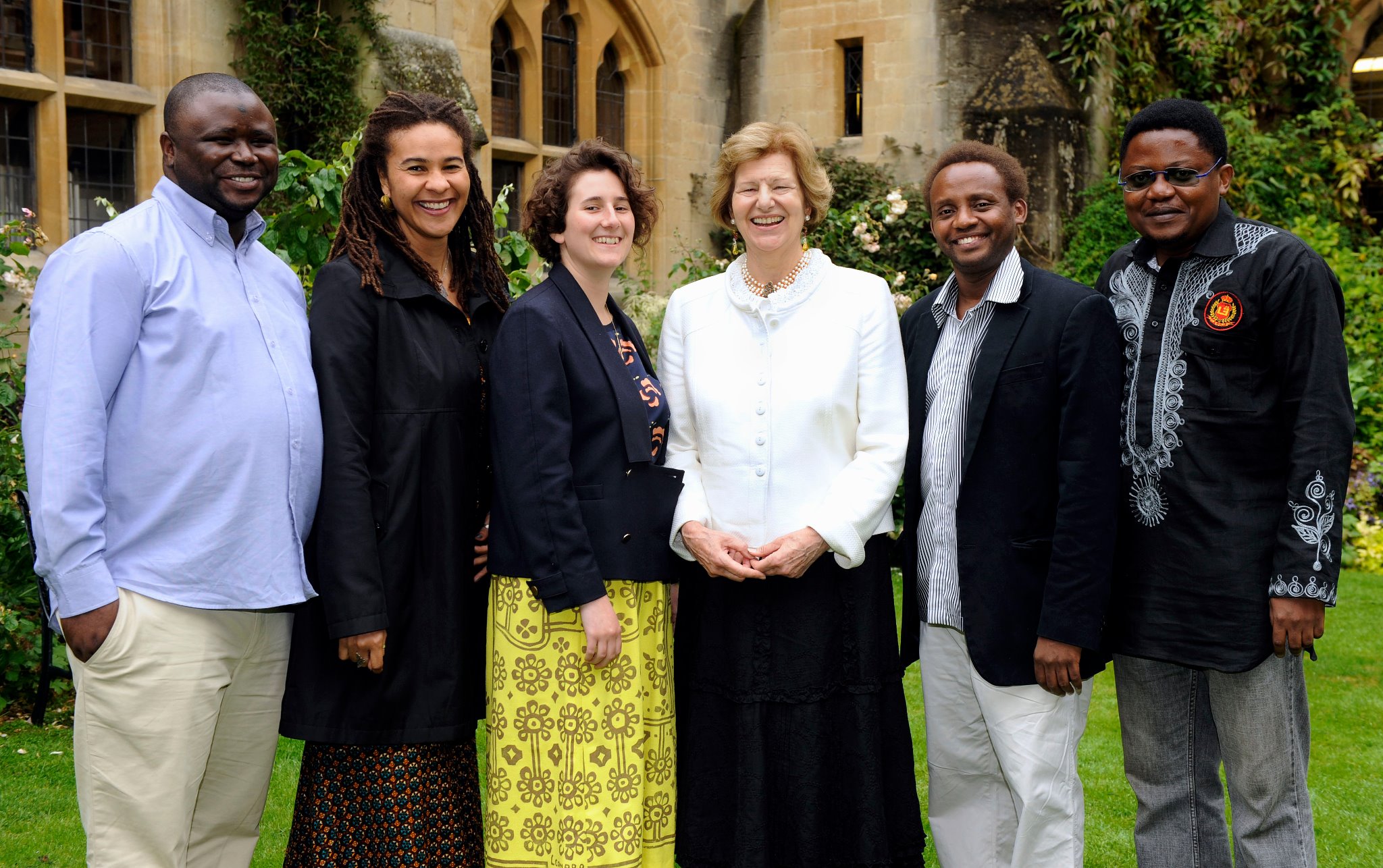
“The shortlist with Baroness Nicholson in Oxford yesterday: Stanley, Melissa, Jenna, Emma, Billy and Rotimi.”

His short story titled “Bombay’s Republic” (downloadable here) explores the almost forgotten story of Nigerian soldiers in Burma during the Second World War. In the citation, Babatunde’s work was described as “ambitious, darkly humorous and in soaring, scorching prose exposes the exploitative nature of the colonial project and the psychology of Independence.”

Rotimi Babatunde’s fiction and poems have been published in Africa, Europe and America in journals which include Die Aussenseite des Elementes and Fiction on the Web and in anthologies including Little Drops and A Volcano of Voices. He is a winner of the Meridian Tragic Love Story Competition organised by the BBC World Service and his plays have been staged and presented by institutions which include the Halcyon Theatre, Chicago and the Institute for Contemporary Arts. He is currently taking part in a collaboratively produced piece at the Royal Court and the Young Vic as part of World Stages for a World City. Rotimi lives in Ibadan, Nigeria.

More on the Caine Prize website.

3bute.com & Caine Prize: Press Release

The 2012 winner of the of the £10,000 Caine Prize, Africa’s leading literary prize, will be announced at a celebratory dinner at the Bodleian Library, Oxford, on Monday 2 July. To promote the new crop of young writers, 3bute.com in collaboration with the Caine Prize will be adapting (so readers can mashup) all the stories shortlisted for this year’s prize before the winner is announced.
Drop dates for the Caine Prize 2012 ‘3butes’:
–          Stanley Kenani (Malawi) ‘Love on Trial’ – May 27
–          Melissa Tandiwe Myambo (Zimbabwe) – June 3
–          Constance Myburgh (South Africa) ‘Hunter Emmanuel’ – June 11
–          Rotimi Babatunde (Nigeria) ‘Bombay’s Republic’ – June 20
–          Billy Kahora (Kenya) ‘Urban Zoning’ – June 30
 
3bute [pronounced: tribute] is an online anthology devoted to the contexts often missing when African stories are reported. Our mash-up platform lets artists collaborate with writers on 3-page visualizations of their stories and journalism. By being able to add context to these narrative and “mashable” surfaces, our goal is to render, with your help, the developing world in a more engaging and immersive way.
3bute’s mashable surface lets everyone add their voice to the story by submitting relevant links to any context/ media content they can find on the web. 3bute pages can also be embedded all over the web, and the context everyone has added to the page goes along with it. In other words, 3bute is a social, accessible and sustainable way of distributing African stories, along with much needed context, around the web.
This year, like never before, overwhelming attention is being drawn to the shortlisted stories, thanks to the efforts of portals like ZunguZungu. 3bute hopes to offer a hotspot for the discussions around the stories.
For more information visit www.3bute.com or email us at mail@3bute.com.

For Maurice Sendak

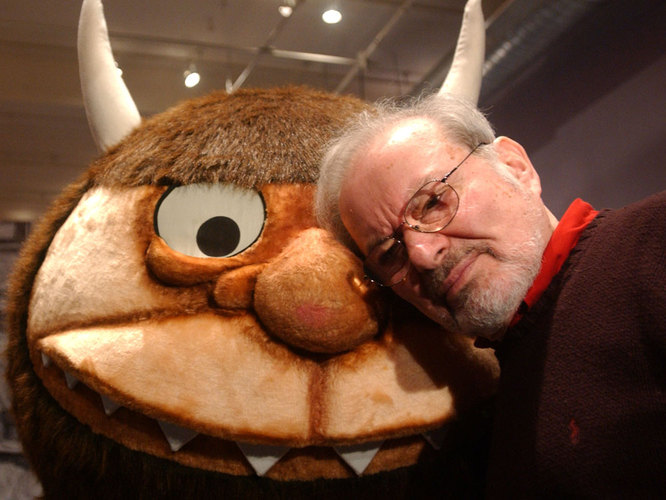
My editorial commentary in the current issue of Nigerianstalk Litmag briefly touched on the passing of children’s writer Maurice Sendak. Like Dr. Seus, I didn’t know much about Mr. Sendak until I came to the United States, and one of my most remarkable contact with him was through Stephen Colbert in a very recent, every affecting interview (as if either of them knew how short a time the writer had left. He died at 83 on Tuesday). Maurice is the author of the popular children’s book Where the Wild Things Are. He admitted to Colbert that he didn’t see himself much as a “children’s” writer but as someone whose work has been accepted as appealing to children. The second part of that interview is here.

Listening to his other very remarkable, emotional interview with Terry Gross of NPR, it is hard to see him as anything but remarkable a human being – much more than the brilliant writer and illustrator that he was. Ending the interview with an advice to “live your life, live your life,” it appears that one of his most enduring legacy will be his ability to defy all odds of negativity and skepticism in order to achieve immortality. As Colbert himself will now acknowledge after receiving the boost of approval from Mr. Sendak for his own new book for children I’m a Pole (and So Can You), genius loves company.

These are some of the last words on that NPR interview, a commentary on his life: “I have nothing now but praise for my life. I’m not unhappy. I cry a lot because I miss people. They die and I can’t stop them. They leave me and I love them more. … What I dread is the isolation. … There are so many beautiful things in the world which I will have to leave when I die, but I’m ready, I’m ready, I’m ready.”

RIP Maurice (Obituary in the NY Times).

Halfway to Sixty

Seeking time comes often to a rote around edges of reason, my friend,

when tomorrow moves away from reach into the lengths of a near past.

It is not just the distance of time and space, or memory, but what portends

In-between the fast changing chords of our once rhyming flat bombasts.

Look at it here: movements, shapes, forms, people, hope, desires, and lusts,

And pleasing exuberance circling within one spot of deferred dreams.

So we wonder restlessly where all the time went. We trade masks that must

Hold fears within claypots of growth. We howl our tears into the stream.

We don’t own then, it seems, balms that soothe with scents of silent mimesis,

Else we would sway with wine bags in reclined poses, seconds spent to please,

Which held us then when time favoured the pockets of our scant playfulnesses.

We would not wonder where they went, days spent sprawled in the shades of ease.

It could be only relief that mischief remains, and love’s comfort in the end,

To sew a new tapestry, and to daily, patiently mend. It was never ours to rend.

___________________________

Being too lazy to write a new pre-birthday poem, this will have to do it for the last day of my twenties.

Edited, from Dec 2009.