Here Comes Trouble

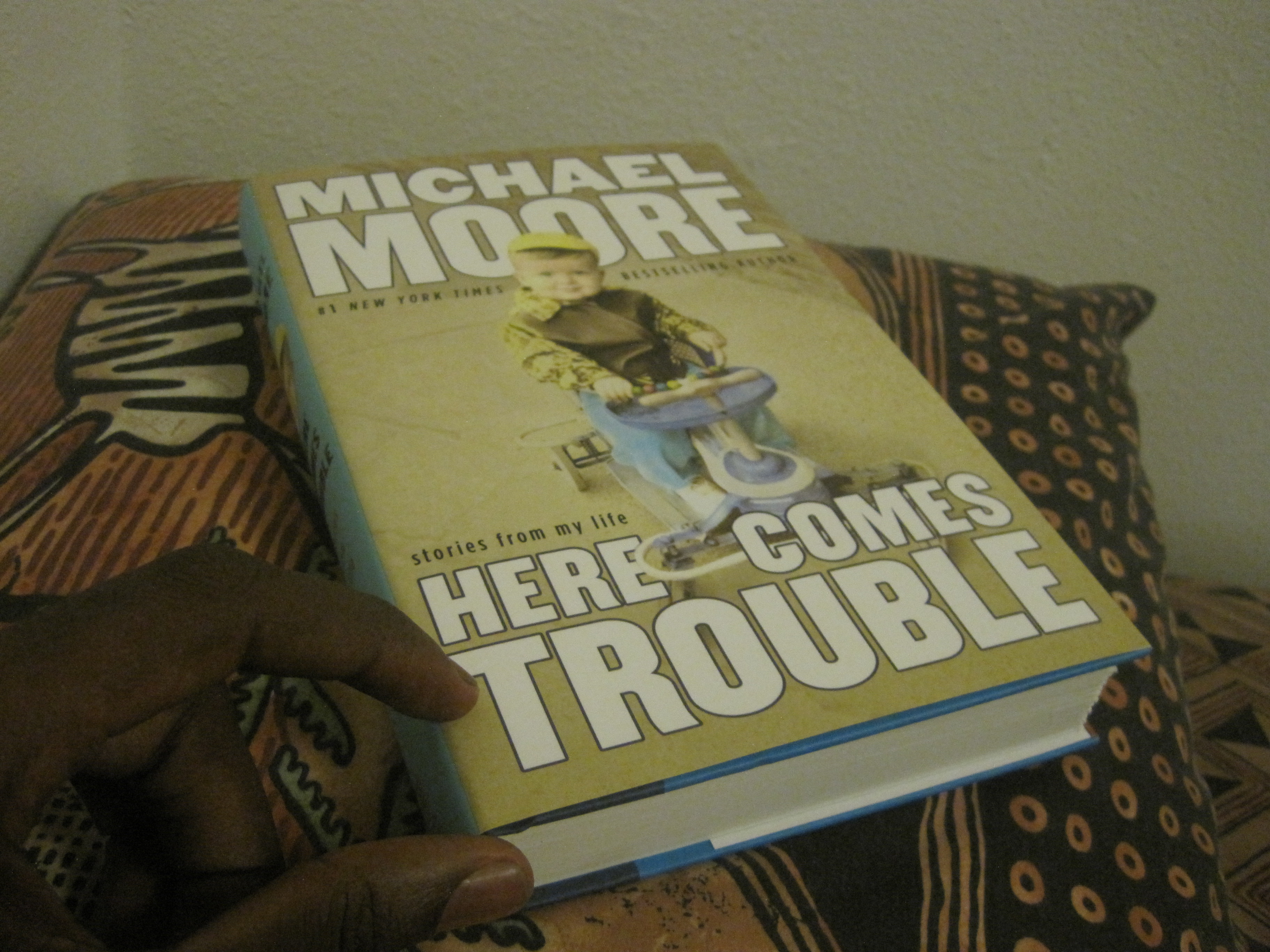
Michael Moore’s new autobiography follows the sometimes ordinary, sometimes extraordinary, life of one of America’s most controversial commentators. His movie Fahrenheit 9/11 is the highest grossing documentary of all time. Aptly titled Here Comes Trouble because of the perception of the author and movie maker during the first few years of the George W. Bush administration and his war in Iraq. He describes in great detail and with sufficient personal reflection what it felt like to criticize the administration on live television during his first Oscar win acceptance speech, and the turbulence of his life after he became public enemy number one.

The memoir-writing style of American writers (mostly public figures) has often amazed me in their ordinariness. No attempt at lyricism or any special verbal sophistication. Just facts, told sometimes with a flourish, and with humour. Not much with any real attempt at literary brilliance. This commentary of mine is ironic, of course, because the straight-forwardness of the narrative makes it a fun and light-hearted read. But it ends there. I’ll remember the facts in the book more than the beauty of how the facts were told. In short, it doesn’t challenge me even though the recollection surely delights. I’m sure this makes some sense.

Michael Moore is a controversial figure, and holding his book with me around campus has already got me a few stares. We no longer live in a George Bush America but it is still fascinating the kind of response his name elicits. A few minutes ago, a student saw it on my desk and asks what I thought could be a tricky question: “So you like Michael Moore, eh?” “I like his work,” I replied. It seems like the safest answer to give given the circumstance. As the book shows, he is however a man bold enough to take risks, and who because of those risks – and some other coincidences in life – has lived a truly remarkable life.

Orwell on The English People

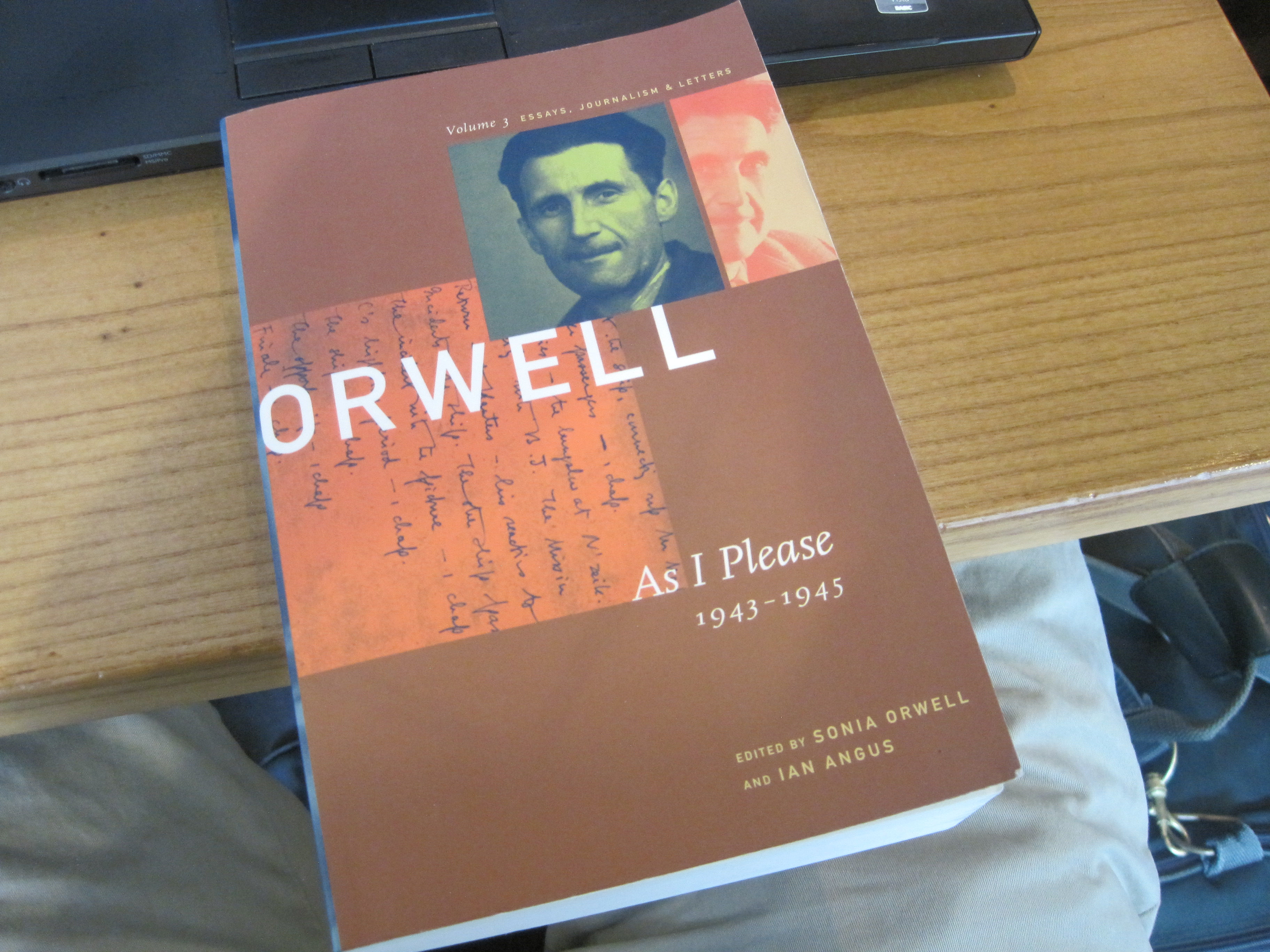
I am reading “As I Please”, a collection of essays written by George Orwell between  1943 and 1945 and edited by Sonia Orwell and Ian Angus. In the first essay titled The English People, the author explains some benefits and demerits of being an Englishman speaking English:

“But there are also great disadvantages, or at least great dangers, in speaking English as one’s native tongue. To begin with, as was pointed out earlier in this essay, the English are very poor linguists. Their own language is grammatically so simple that unless they have gone through the discipline of learning a foreign language in childhood, they are often quite unable to grasp what is meant by gender, person, and case. A completely illiterate Indian will pick up English far faster than a British soldier will pick up Hindustani.  Nearly five million Indians are literate in English and millions more speak it in a debased form. There are some tens of thousands of Indians who speak English as nearly as possible perfectly; yet the number of Englishmen speaking any Indian language perfectly would not amount to more than a few scores. But the great weakness of English is its capacity for debasement. Just because it is so easy to use, it is easy to use badly.

In the essay with parts that read like an epilogue to his earlier essay Politics and the English Language, Orwell complains about English being influenced by “American” pop culture words. Although written about six decades ago, it is fascinating how Orwell’s perception of the English life, language, and culture seems to remain as applicable now as it was then, even seeming applicable to other new post-colonial societies elsewhere.

Here is another quote:

“The temporary decadence of the English language is due, like so much else, to our anachronistic class system. “educated” English has grown anaemic because for long past it has not been reinvigorated from below. The people likeliest to use simple concrete language, and to think of metaphors that really call up a visual image, are those who are in contact with physical reality. a useful word like bottleneck, for instance, would e most likely to occur to someone used to dealing with conveyor belts: or again, the expressive military phrase to winkle out implies acquaintance both with winkles and with machine-gun nests. and the vitality of English depends on a steady supply of images of this kind. It follows that language, at any rate the english language, suffers when the educated classes lose touch with the manual workers. As things are at present, nearly every englishman, wheatever his origins, feels the working-class manner of speech, and even working-class idioms, to be inferior…”

An engaging read.

Holidays and Readings

This period of the season just after final exams means only one thing: a long space of time left open to do anything under the sun – or on top of the snow, depending on what part of the world you occupy. Holiday means days without school, without classes or volunteer work at the Institute, without work at the Foreign Language Lab, without driving (much) and without Blackboard postings. I need that. I looked into my book drawer yesterday and found almost two dozen books I’d bought without reading more than a few pages.

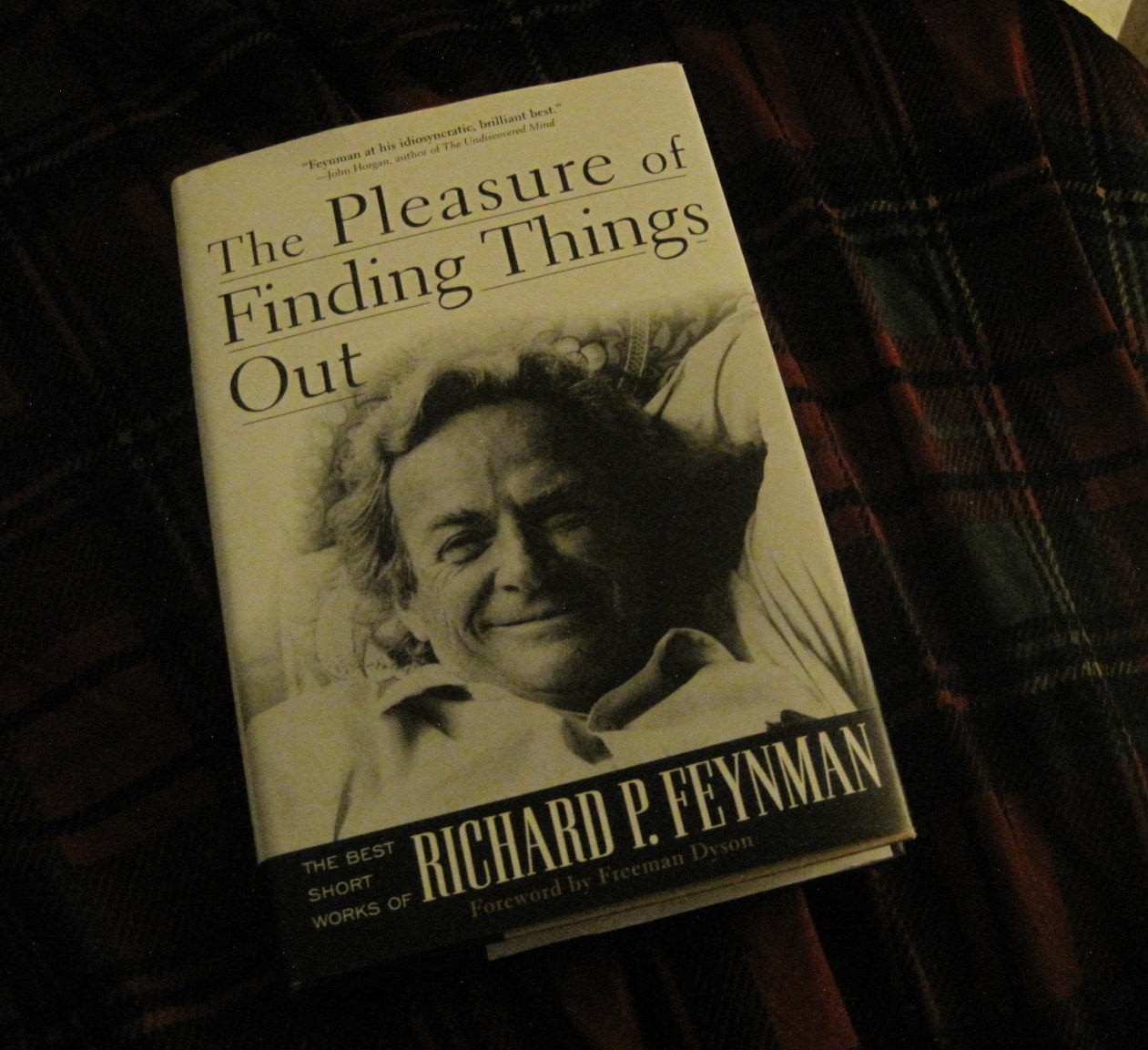
Just yesterday, two more arrived: Richard Feynman’s The Pleasure of Finding Things Out and Wole Soyinka’s Art, Dialogue and Outrage. The latter was a text that had dominated much of the many conversations and debates with mates and scholar as an undergraduate in Ibadan. Obviously important to understanding the thoughts of Africa’s first Nobel Laureate in Literature, the book has always been a reference point. Spending a few minutes on the preface has however convinced me that I should read it only when I’m well fed, and in a most patient mood for deliberately difficult writing. Feynman’s collection of essays is a delight, like many of his earlier publications. Much of the book are transcribed from his BBC interviews as well as from many of his published essays and speeches. Another one of his books What Do You Care What Other People Think now lay somewhere in my bag. I can’t wait to devour them.

The other crazy idea in my head, encouraged – no less – by Mohamed is that we get in the car and drive to California during the winter break. If I wasn’t considering it myself, I would have said that he had gone nuts. Now I’ve given my (almost) word and may have to do it after all. The only obstacle is a stretch of road 2000 miles long which may most likely include black ice and heaps of snow many miles long. What do you think? Is it worth it or would a good old flying do? Oh, there’s still the TSA scanners and grope-downs to worry about.

On “Stickfighting Days”

I read the 2010 Caine Prize-winning short story yesterday. “Gore” is the first word that came to my mind afterwards.

Olufemi Terry’s Stickfighting Days is a moving story that one never forgets in a hurry for its description of raw violence among (pubescent) boys in an imaginary dump site. I’ve read a few stories of raw violence that moved me. One of them was Fola by my friend Olumide Abimbola. It is a short family story with enormous prospects that I believe should be expanded to a standard short story length. It definitely comes to mind right now, but Terry’s offering takes us deep into an isolated world free of societal interference. There is no redemption at the end, just violence, and perhaps some jungle justice that must serve as the only catharsis afforded the reader.

Benson Eluma has written a review aimed at the insularity of the lives of the characters of the story. My friend’s observations in his review take the dialogue on literary craft and responsibility of the writer to a different direction and force us to ask a different kind of question. For me however, it is the stark violence without a chance for a real redemption that puts me off the story. It is not a deficiency as far as craft is concerned. The story is very well written and I don’t think I’ll be reading it again. Read the review on Nigerianstalk. You can read the story itself here.

His Remarkable Journey

It’s not always a bad thing to live in a town where electricity is barely on for seven hours a day. In two days, I have completed a feat I couldn’t while I was in Edwardsville. Larry King’s autobiography My Remarkable Journey. Covering adventures of the young son of immigrant parents from Europe, the book tells the story of how the Jewish kid Larry Zieger who never went to college made it through the very many interesting historical epochs of America to become the famous Larry King recognized worldwide for his voice, his show and his suspenders.

Like many autobiographies, there is the question of whether Larry the broadcaster was the same as Larry the autobiographer-the-writer who was able not only to remember in great detail many of the remarkable events of his childhood, but was able to write them in very fine prose in the 294 paged book. How much of it is fiction or embellishment of the ghostwriter, and how much is rooted in real facts of the broadcaster’s pen and memory?

He wrote of his first meeting with JFK, (it was a mild car accident in which Larry had run into the future president), he wrote of walking mistakenly into the full glare of cameras in the courtroom during O.J. Simpson’s trial without being a witness, how he won a lottery on just $2, and how he almost bribed the president elect Richard Nixon before the latter assumed the presidency. There are very many tender and happy moments in his life, and he recounts them with nostalgia. His many marriages (he was married eight times to seven women), his arrest and financial troubles at a time, his heart attacks and surgeries, and his relationship with his first son Larry King Jr. who he met when the latter was already thirty-three years old all took pride of place in the book.

For decades, the now seventy-seven year old man had helped people to open up themselves. In this work, he does it himself and does a good job of it. Fans and friends who would like to know his opinion of George W. Bush, Nelson Mandela, Barack Obama, Richard Nixon, Bill Clinton among others would do well to pick up the book. Talking about retirement, he hinted that his contract with CNN would be up by 2011, and he still doesn’t feel the need to retire. Hear him: “If I went off the air, what would it do to the ninety-nine year old woman who credits her longevity to watching my show every night?” That’s Larry King.

I’m now unto V.S Naipaul’s Miguel Street. This time, unlike the man making “a thing with no name”, I’m sure I’ll complete it in record time.