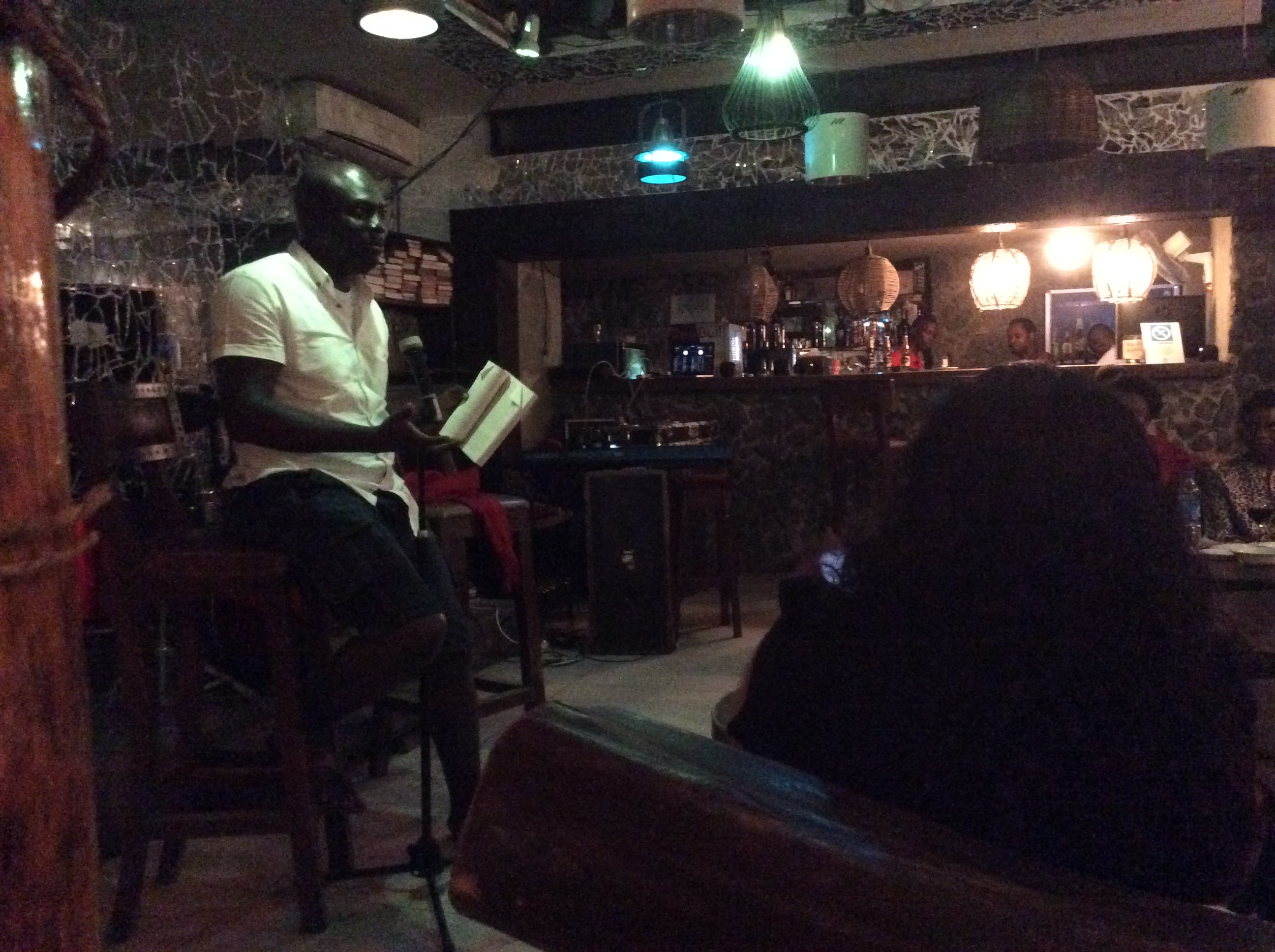
 Tonight, I attended the book party for Elnathan John’s new book Born on a Tuesday (Cassava Republic, 2015). The event held at Bogobiri House in Ikoyi and was well attended by friends, writers, and other well-wishers who came to listen to the author talk about and read from his debut novel. The novel was written as an extension of a short story “Bayan Layi” which was shortlisted for the Caine Prize in 2013. (I reviewed it here and here). The author has been shortlisted for the prize one more time, in 2015.
Elnathan had a chance to talk about the process of writing the book, which came from his obsession with understanding Sufi and Salafi movement – branches of Sunni Islam, and with telling the untold stories from Northern Nigeria to an audience that either didn’t care enough for it, or just isn’t sufficiently exposed. This personal curiosity, the author said, had burdened him for a while until he finally got the chance to address it in form of a short story and later to expand it into a novel form after encouragement by the reading public and by Cassava Republic Press who will also be publishing the book in the UK earlier next year.
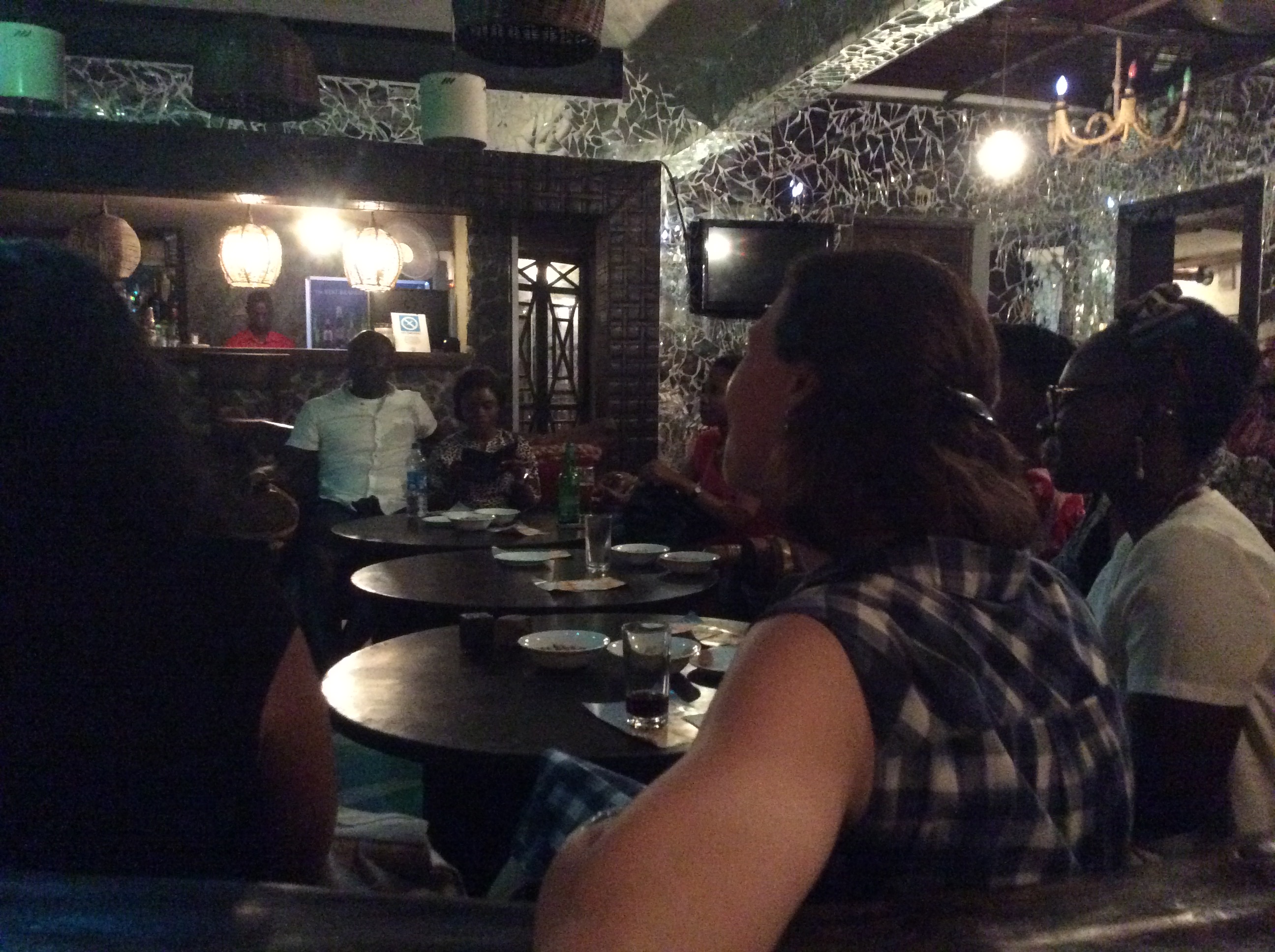 He then read excerpts from the work, including a part where Dantala, the main character of the novel, spent considerable time considering whether or not to continue to kill lizards because of a religious encounter with the Sheik even while he had no such scruples about killing human beings. (There was also a mild detour to get his publisher, Bibi Bakàrè-Yusuf, to pronounce “Dantala” like a Hausa speaker would). He also read a part about “santi”, an expression relating to delight and longing for food which Elnathan admitted cannot successfully be translated into English. The conversation also eventually addressed what it means to be literate — especially if one already speaks (and can write) other local languages, but not English. The audience then got to ask questions, and eventually get their books signed.
 The event which was memorable to me because of its celebration of a work that paid attention to understanding the beginning, costs, and complexities of violence in religion, has now taken a new dimension now that I am home, and learning of an ongoing terrorist attack in Paris, France. It all feels like an unreal web of weirdly-timed coincidences, and the heart sinks again into despair. On the one hand is a night where literature attempts to do what politics (and guns) perhaps had failed to do, and on the other is a reemergence of force as a wailing voice of the unheard and the resentful, taking innocent lives with it. Perhaps literature will suffice to enlighten and create a better future. Or, perhaps, that is just futile resignation and avoidance of more direction action. But we have this piece of literature now, and reading it just got a tad more imperative.
The book costs 2,000 naira and is 264 pages long, including acknowledgements. The cover is designed simply as a fiery flame from which a shadowy figure of a young man is seen to be fleeing. Blurbs on the back were written by Táíyé Selasi (Ghana Must Go), Petinah Gappah (The Book of Memory), Elliot Ackerman (Green on Blue) and Molara Wood (Indigo). “Narrated in Dantala’s raw yet inquisitive voice,” the summary reads on the book flap, “this astonishing debut novel explores brotherhood, religious fundamentalism and loss, and the effects of extremist politics on everyday life in contemporary Northern Nigeria.” It promises to be an engaging read.
Meanwhile, let’s spare a thought for Paris tonight.