Lagos Morning Surprise

It’s a Monday morning in Lagos, after a sustained night rain, and the city – for the very first time – showed an uncommon character the like of which might never be seen again.

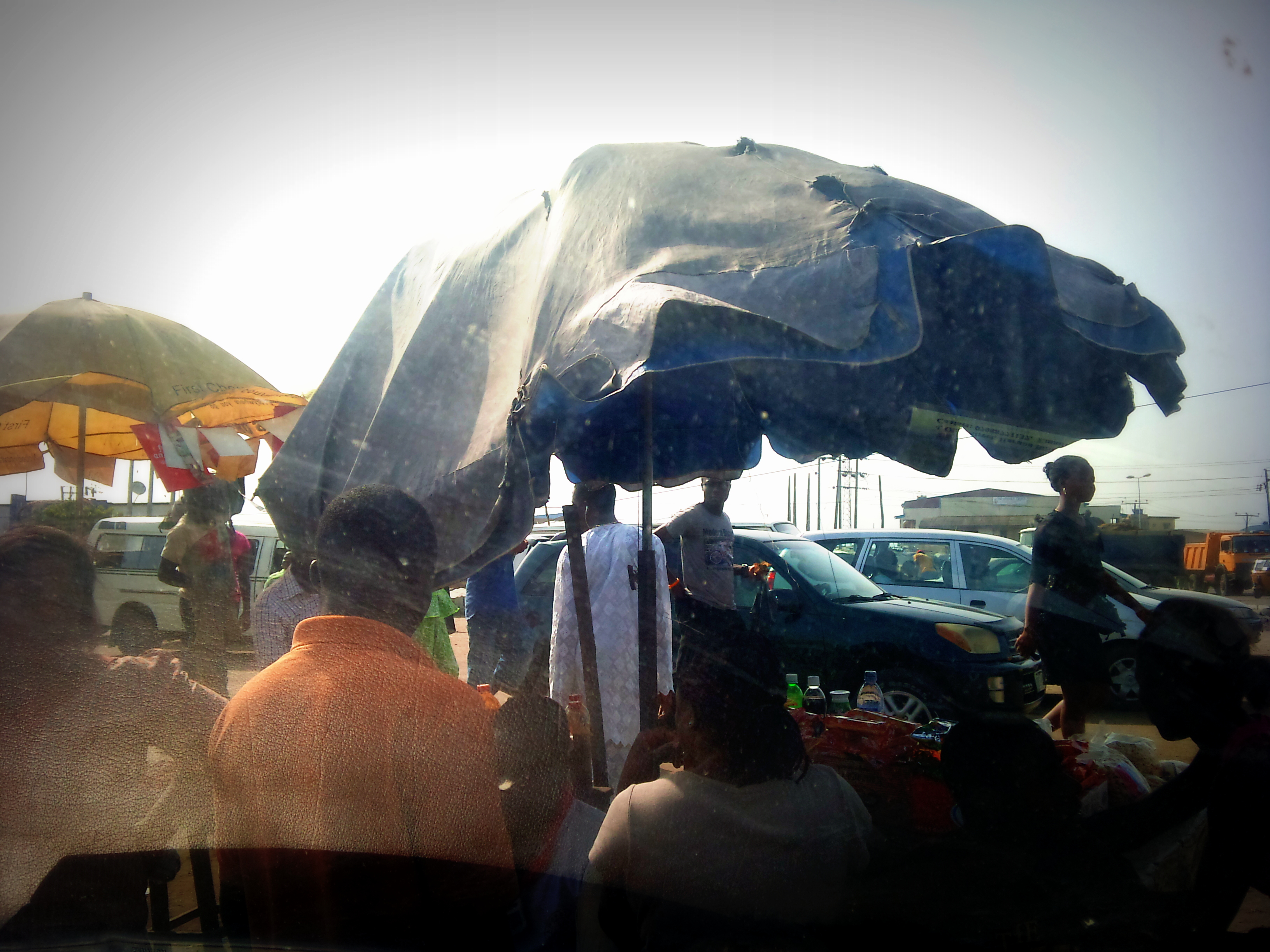
The sewers had opened up their wares, with dung floating to the surface and onto the many streets in the flooded island. With sleeves and pant legs rolled up to keep wetness to a minimum, commuters and pedestrians saunter onto the road, most of them an hour later than they ordinarily would. The transportation buses had left the roads early enough – perhaps the only regular feature of the city’s uncertain character – and commuters who got to the road at anything after 6am had been left stranded now, praying for a miracle to get them to their places of work on time. That was when it happened.
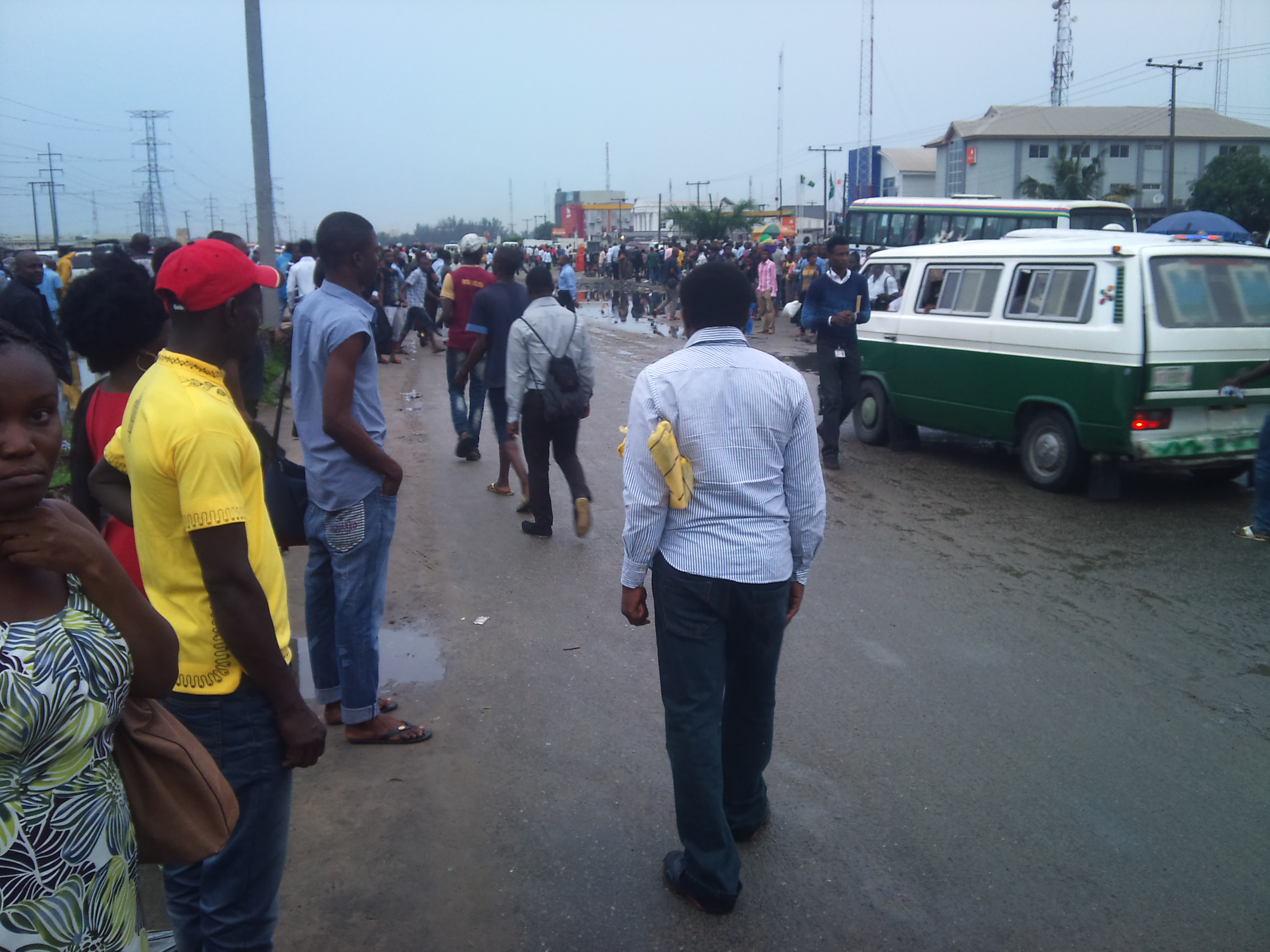
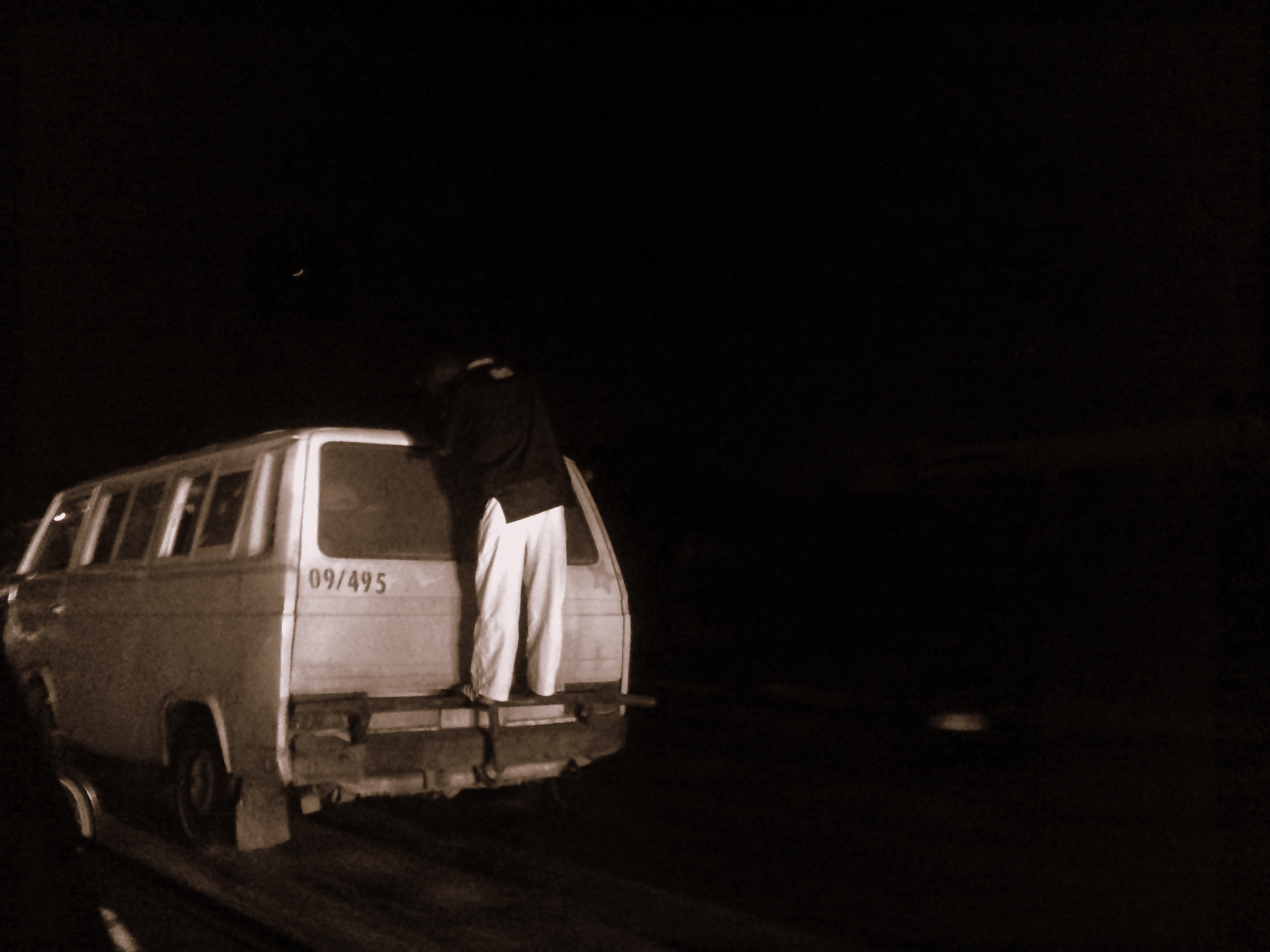
DSC_0284A police van heading to its patrol point in the city parked by a throng of people at one bus stop, and asked folks to come in. They were at first surprised, and then – realizing a once-in-a-blue-moon chance – rushed in and filled the back seating area, saying “thank you” as often as they could. The cops merely smiled, started the van, and moved on. As if on cue, another car stopped, this time a Prado Jeep driven by a young woman of around 32, likely the employee of a bank, or any other high-paying job. “Aren’t you going?” She asked no one in particular, as a few more people paced briskly towards it and sat themselves in comfortable positions in front, and at the back. “I am late to work too,” I heard her say impatiently. “Get in and let’s go. I can drop you off anywhere between here and Law School.”
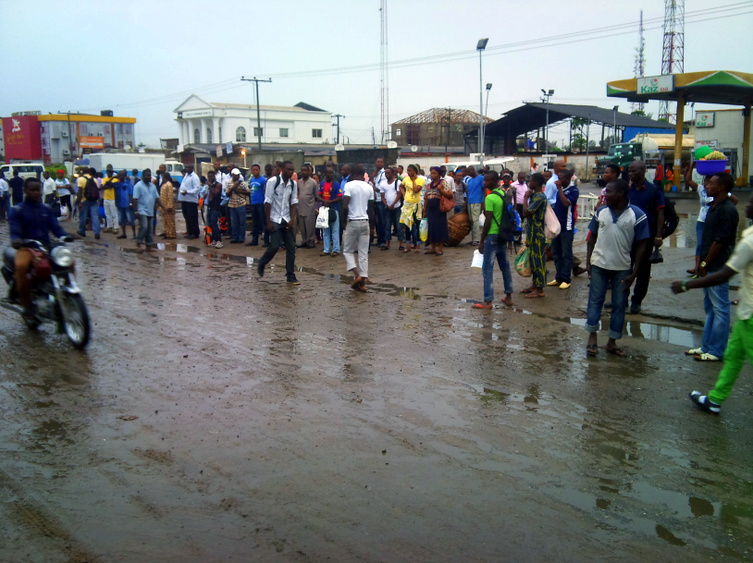
Fullscreen capture 5132013 45702 PM.bmpThe sky remained dour and drizzly as one fancy car after the other stopped at each bus stop to pick up passengers many of who were usually stunned at first that such private drivers could really have intended for them to get into the cars. In one instance, a passenger refused to give into the driver’s constant entreaty that he would, indeed, give him a ride for free and drop him off wherever he would be getting down. “I don’t get it,” the man said to himself. “Lagos rich people are never this considerate.” The driver drove away, perhaps stunned by the resistance of a helpless passenger in the face of help on a rainy day.

For the next one hour, Escalades, Sorentos, Four-Wheelers, Land Rovers, Land Cruisers, small saloon cars, a BMW, a station wagon, a church bus, another police van, a school bus, two empty BRTs heading to a repair shop, a couple of small tricycle scooters, a soldier on a motorbike, a Mercedes Benz, and a number of other new and rickety vehicles, each otherwise empty except for their drivers (and sometimes one other passenger), stopped by all crowded stops to pick up passengers stranded there and late for work. It was a surreal, almost eerie, sight on a Lagos morning. Humanity came alive in a way never before seen and would never be believed by anyone else not there to witness it. There is hope for this country after all, I thought to myself as I concluded my morning stare at the bus stop,  finally accepting an offer to ride with a middle-aged lady in corporate wear who driving her 10 year-old kid to school.

All of this is fiction, of course. You can tell.
Rolling with the Muses

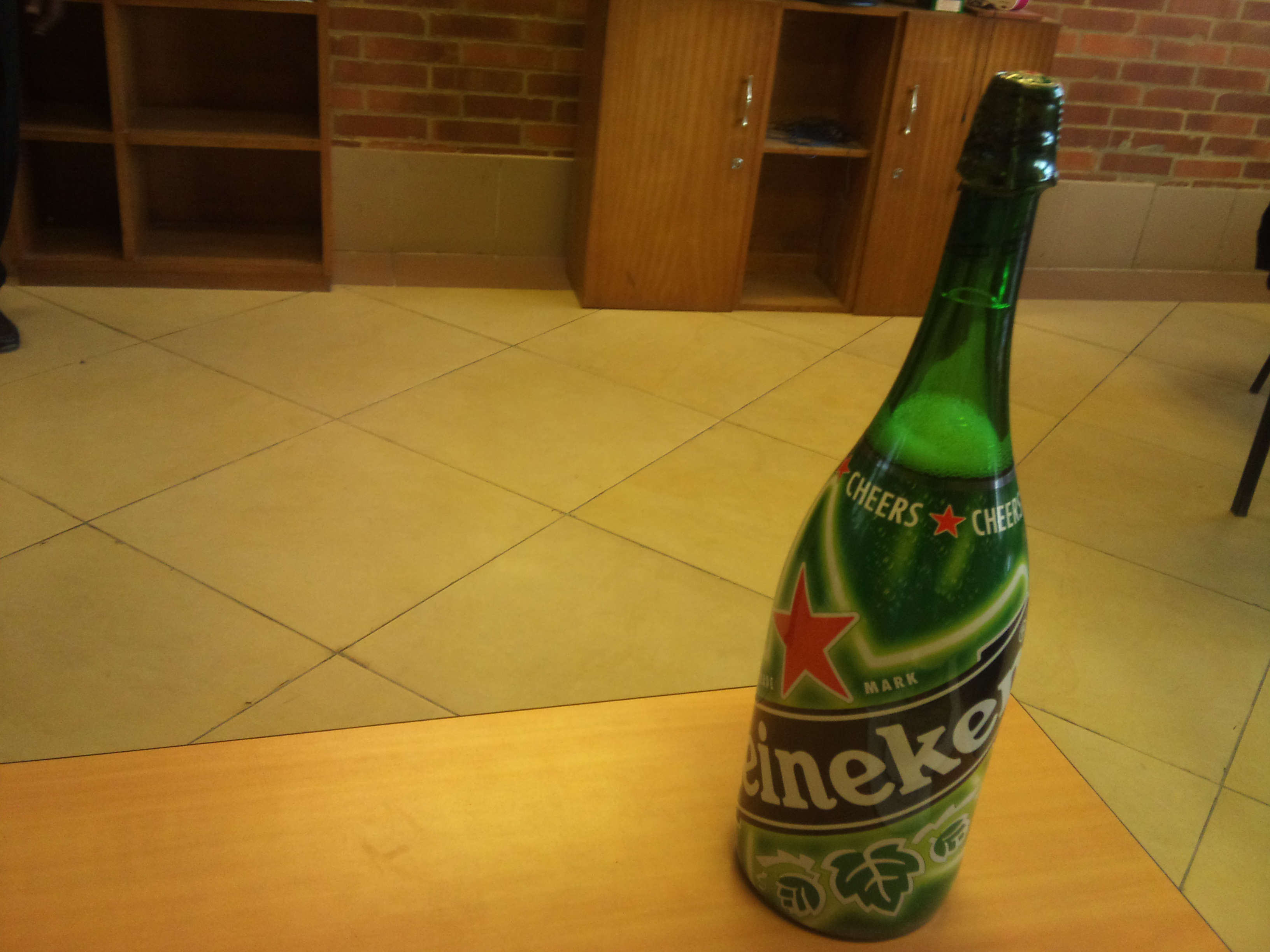
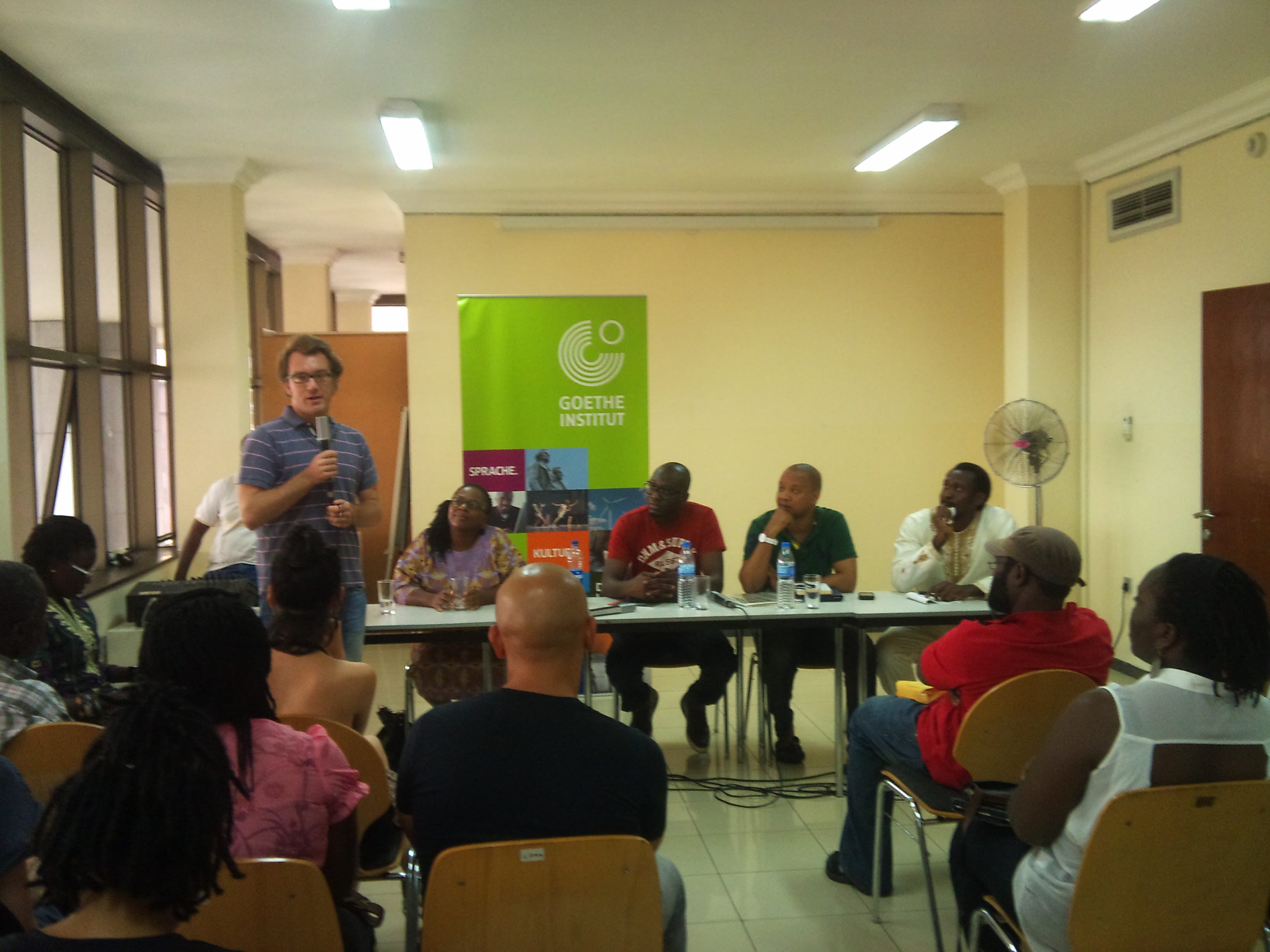
2013-05-11 17.03.28At the Goethe Institut this evening, to attend the monthly Author Interaction there, there were drinks, and brilliant artists from various fields chatting, arguing, and sharing anecdotes and opinions on each other’s works. This is the whole purpose of the event, it turns out. Poet and novelist Lola Shoneyin, journalist and artist Victor Ehikamenor, journalist and writer Sam Umukoro, and poet and author Kume Ozoro, all sat and read from their works while fielding questions from the very interactive, attentive, active, and articulate audience.

Lola Shoneyin is the author of the famous novel The Secret Lives of Baba Segi’s Wives, and an evergreen book of feminist poetry So All the While I Was Sitting on an Egg. Victor Ehikamenor is the author of Excuse Me! a collection of anecdotes previously published at 234Next newspapers, and the artist behind Amusing the Muse, an exhibition of drawings and paintings, on till May 31. Sam Umukoro, who worked previously with the Guardian, is the publisher of a website devoted to interviewing famous Nigerian writers, celebrities, and newsmakers. He has also published a book (whose name I have now shamelessly forgotten). The fourth guest, Kume Ozoro, is the author of a collection of private love poems.

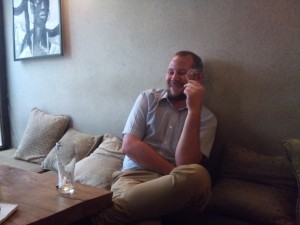
2013-05-11 18.34.39Met also, for the first time, a few people with whom I have interacted over the social media for months, and even years. Deji Toye is one of those brilliant rascals, present in most of every cerebral gathering in Lagos, vocal and engaging in each of them sometimes to be mistaken for the host, and effacing enough to miraculously evade capture at crucial moments after the show for a short aside conversation. Until today. An affable man. I also had a chance encounter with Marc, the director of the Institut who sat around through the event and paid great attention to everything going on, sometimes gesticulating to the host to move it forward whenever the subject began to dwell too long on a controversial point. Then, there was Gbemisola, a loyal reader of the blog who surprisingly was able to recognize me out of a crowd, to my pleasant surprise. I also met Sola, a graduate of Theatre at the University of Ibadan who invited me to come see a few of his live theatre workshop/performances in Ikeja which takes place once every month. I intend to, sometime.

2013-05-11 18.27.56

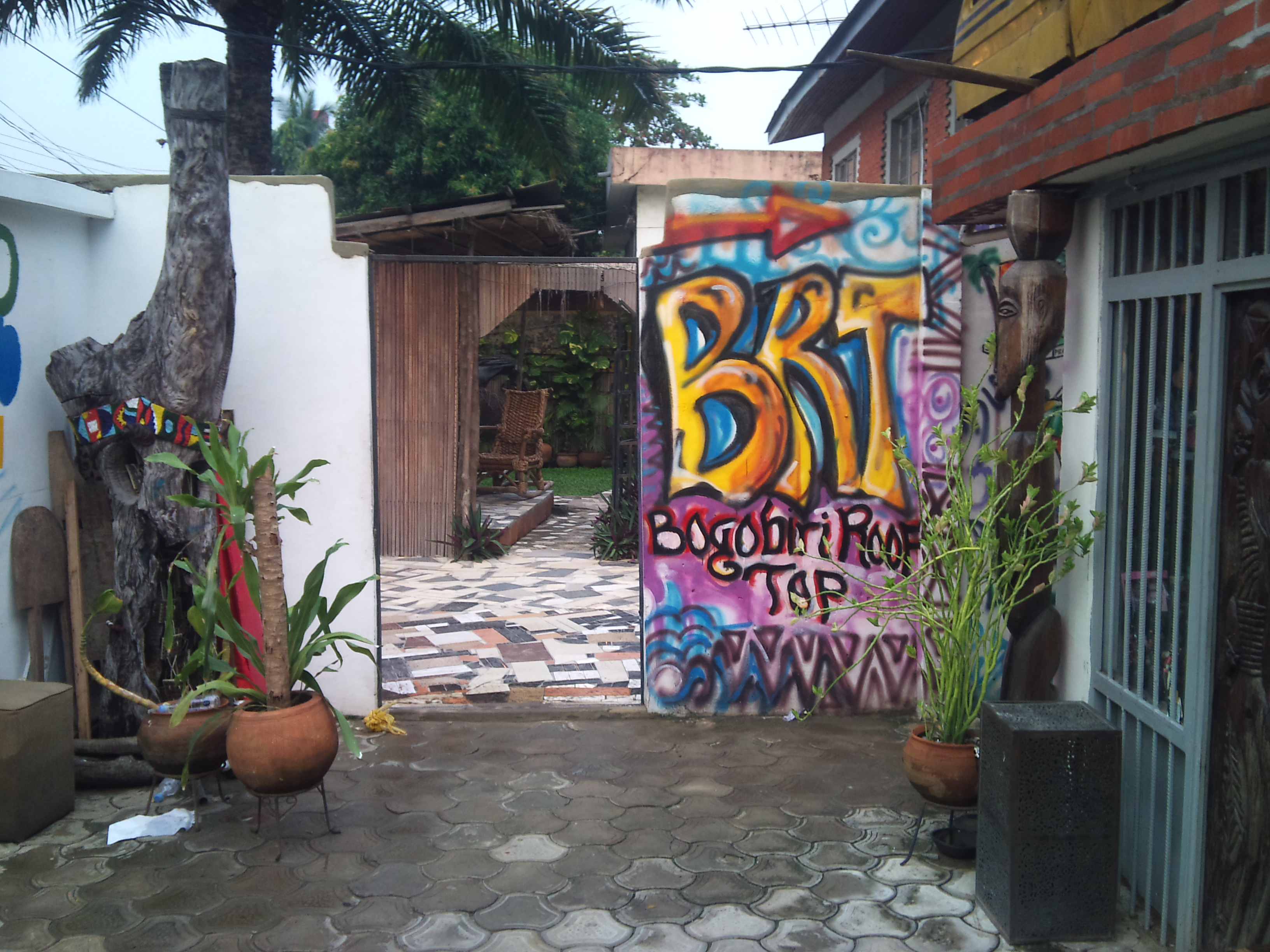
With writer/columnist Bayo Olupohunda much later around Ikoyi, among defiant spirits of the Bogobiri club, dreadlocks woven taut on a couple of heads, we chatted for hours with Swedish journalist Erik Esbjörnsson in town to research the portrayal of women in Nollywood movies – an interest of both himself and Mr. Olupohunda. We talked Nairobi, Uppsala, Eldoret, Germany, and Iowa, beers flowing around the warm glow of the club insides. It is “Marley Day” in Lagos, although, curiously, none of the sounds from the muffled bar speakers played Raggae. Outside, painted on the fences and gate in colourful motifs of the street, are the colours of Lagos, and scrap metals that wear visual arts like fancy clothes. I could as well have been in Fela’s famous Africa Shrine.

It’s night now, and I’m back home, in the arms of Mrs. Tubosun, where I rightly belong.

Xperia’s Lagos

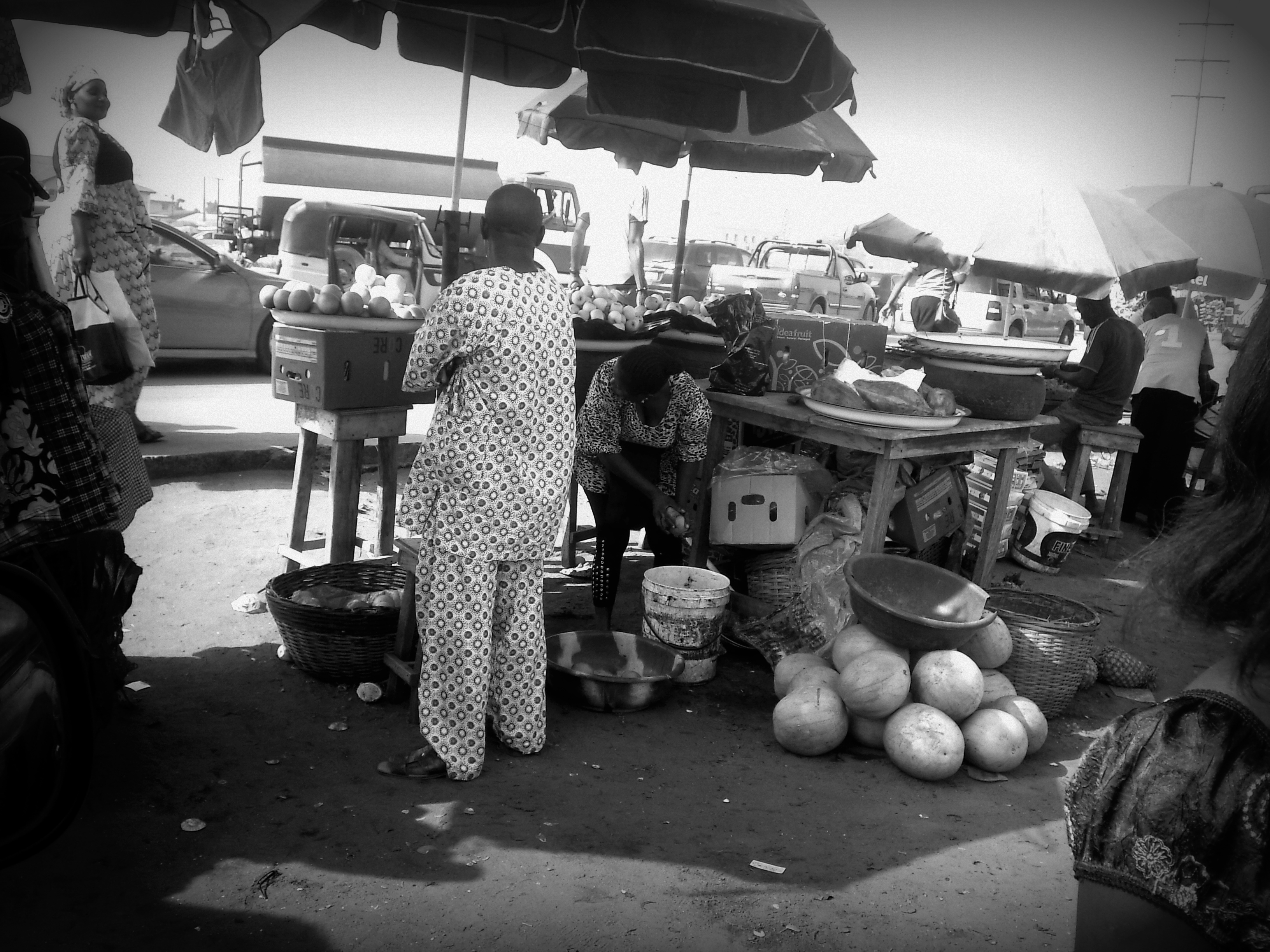
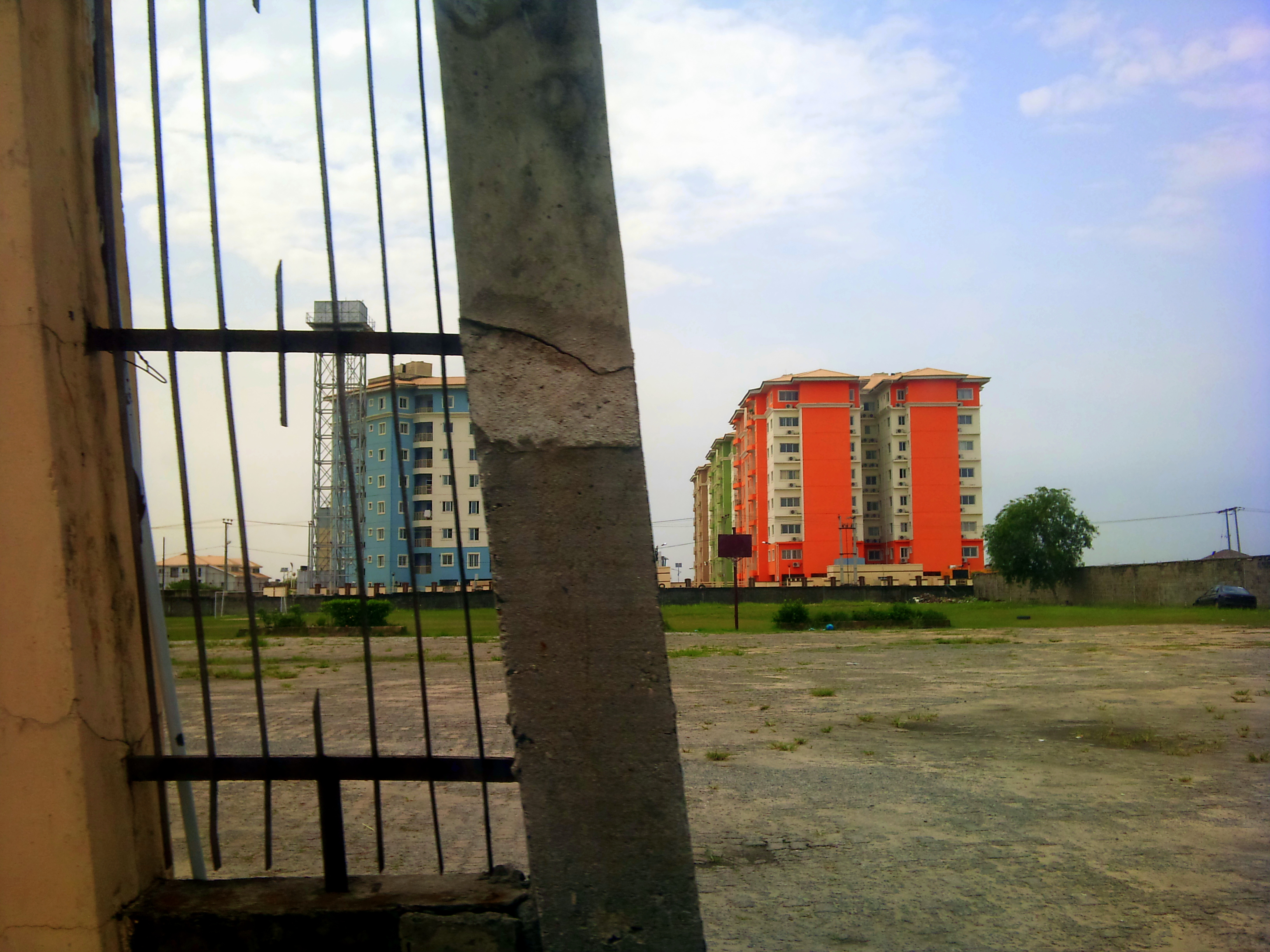
2013-04-19 10.27.32 2013-05-03 16.07.16 Lagos Roulette 2013-05-03 16.07.53 2013-05-03 09.37.23 2013-05-03 09.36.18 2013-04-30 07.00.25 2013-04-26 15.37.32 2013-04-25 11.56.17 2013-04-26 15.40.05Unless Sony Ericsson makes me an offer I can’t refuse, this is the last time I’ll put a name of their brand on a blog title :).  This caveat is necessary in case anyone begins to wonder whether I’ve already been paid to present the camera of one of their better phones in a good light. From how it has worked with me so far, it seems that I don’t need to do that after all. The product speaks for itself.

However, if I do get an offer to try out any of their even better, newer, Xperia versions, it would be nice to compare what I have to what new functionalities they offer. If Google is listening too, I wouldn’t mind trying a Nexus either.

In any case, this post is about a few photos taken around Lagos, Nigeria. Enjoy.

December 24 in Lagos, Nigeria

It is three days after the end of the world, and another end looms in sight. Depending on the location of the observer, many ends, in fact. The leap into a fiscal cliff all around the USA – an irresponsibly manufactured end to the sanity of the country’s finances. In Kauntan, Malaysia, a different end. Scenes of flooding that I’ve witnessed from pictures posted online, and tweets by concerned denizens of the place, show apprehension for what is to come. If I ever have to worry about an alligator swimming casually into my house on a December morning, I would be very scared too indeed.

Fullscreen capture 12242012 65525 PM.bmpI am currently reading Greg Gutfeld’s “The Joy of Hate“, a fascinating book from what I’ve read so far. It is perhaps one of the few books I’ve enjoyed while disagreeing with most of what it says. Mr. Gutfeld is a co-host and funnyman on one of my favourite TV shows on Fox News: The Five. He also hosts another nightly show called “Red Eye” (to which I owe much of my sleepless nights in Edwardsville). Where we agree is our inherent rebellious streak: “I became a conservative by hanging out with liberals…and I became a libertarian by hanging out with conservatives“, he says. Watching him duel with his co-hosts on “The Five”, it is hard to disagree. But not all the time. By the time the reader is done reading Greg’s tirade on Sandra Fluke (the young Georgetown law student who became the poster child for the inclusion of contraceptive coverage in insurance policy for women in the US), it would be hard to separate him from a fellow right-wing co-host on the channel, Eric Bolling (and other right-wing ideologue you’ve ever heard from). Time and time again, he attacks Ms. Fluke of wanting “free” stuff from the government, sometimes from “all of us”, without noting if only for once that what the young woman was fighting for wasn’t government handout but an insurance system that treated everyone equally without discriminating against customers purely on the basis of their gender. It always took some stepping back to see from among the odium of Cable News chatter, but it was always clear to all who cared about the issue what Ms. Fluke represented. This particular chapter, since I have not gone too far into the book, has unfortunately cemented the reputation of the book in my head as nothing more than the same old, except this time coming from the mouth of an otherwise smart, funny, and generally perceptive personality.

Everything else is fine, as they should be. Movies are showing “Argo”, “Life of Pi”, “1000 Words”, all of which I’ve now seen, and a few other inconsequential ones. When they bring “Lincoln”, “Django Unchained” or “Zero Dark Thirty”, I will have something to be excited about. The Mayans had predicted an end by December 2012. Here in Lagos, Nigeria, there will probably be no end at all, except to all the fireworks that have now taken over the air to celebrate the season. The harmattan haze will be gone, as will the crazy traffic that has become the lot of roads. People will return to work in January and some measure of sanity will return, if only in the form of broke returnees from holiday travels. Until then, a Merry Christmas to you.

On the Origin of Names (V)

There is a place on one of the major islands in Lagos called “Sandfill”, a place that most likely has never always been called that (since it might not even have existed before it was created out of the Lagos Lagoon). It was most likely called Sandfill because a large part of it was reclaimed from the waters through the process of sand-filling. Many parts of the Lagos islands are currently undergoing that kind of creative enlargement through reclamation from the water. However, take any public transport in Lagos today (especially ones run by the largely uneducated bus drivers and conductors), and what you would hear as they call passengers going to this direction is not “Sandfill” at all, but “San’ field” (or “Sand-filled”, or “Sandfield”).

IMG_8065I have long wondered about this process of organic nomenclative (if the word exists) behaviour. In my many walks around the world of visiting places of significance, the process of naming – and the etymology of words over time – has always held a tremendous fascination. A place in Southern Illinois, a few miles from where I lived for a few years, was called “Effingham“, a name that meant nothing much to many of my friends until I asked whether it was a purified version of something more risque from an earlier time. Then it made sense. When I moved to Lagos, I heard about another place also a few miles from where I now live, called “Olókó nla”. Like Effingham, I broke into a giggle the first time I heard it, half thinking it was a mistake, and that no one would dare name their place “The Owner of a Big Penis”. The case for ambiguity is plenty. After all, one of the mischiefs we indulged in in primary school was forcing our classmates to repeat “My Father Has a Big Farm” in Yoruba, with a view to leading them into the wrong pronunciation of “Oko” (farm) so that it sounded like “Okó” (penis), and get a big laugh from the class. The only way “Olókó nla” would make sense is if it were originally “Olóko nlá” (The Owner of a Big Farm) before mispronunciations (perhaps due to the multi-ethnic mix of the Lagos metropolis), mischief, perhaps illiteracy, and/or the convenience of colloquialism, dispensed with the old, original pronunciation, and left the world with the latter. I have been in public transportation many times in which young or old women tried to tell the driver where to let them out by yelling “Olókó nla”. It has always been hard to suppress a giggle.
The transformation of “Sandfill” into “San’field” or a variation of it is a problem mostly of illiteracy (and an interesting phonological phenomenon). The bus transport workers most likely are unaware of the reason for the name. A similar problem of contact between people of different languages gave us “Oke Sapati” and “Oke Paadi” in Ibadan, where “Sapati” is a bastardized form of “Shepherd Hills” as the colonial officers once called it, and “Padi” is the Yorubized form of “Padre”. A similar simplification has changed people originally called “Mohammed” to Momodu, “Abubakar” to Bakare, “Isaac” to Isiaka, “Badmos” to Badamosi  and a number of many names that have now become decidedly Yoruba as a result of appropriation, and inadvertent imposition of the Yoruba phonological pattern on the imported word. Yoruba does not take consonant clusters, so any imported word must decidedly take on a new vowel whereever a cluster once existed. So “bread” becomes buredi, “brush” becomes buroshi, “brother” becomes buroda, and an easy one “handset”, when imported, becomes han’seti, among many others.

10112008016

The pleasure of names and nomenclature are open to those interested in their exploration, as I have found. To many to whom names are just pointers to direction and nothing more however, it won’t matter one bit if Alausa was originally “The place for Hausas”, or “The place for walnuts”. Yet as history shows us, the etymology of a word/place plays a significant role in the historical understanding of that place. A few years ago, the Oba of Benin wrote a book in which he claimed that rather than the other way around, it was actually a man from Benin who migrated to found Ife and become their king long after the successful expansion of the Benin kingdom. To support his point, a number of linguist friends pointed to the cognate possibilities of Ooni (the name of the Ife king’s title) being descended from Ogene, and not the other way around. Language, after all, always tended towards simplification, and a word once called Ogene (high chief) is more likely to have simplified to become Ooni over time. The Ife history tells a different story however, claiming that Ooni is a simplified form of Owoni.

There is not much to end this with as lesson other than submit to the dynamism of the process of naming. In cases like Olókó nla, it might lead to legitimately fun anecdotes. By some luck, when signposts spring up in Lagos in the future that point to that place as “San’Field”, or maybe even “Sanfeld”, some people would still be alive who would remember how the original name first came about. Like Nigeria from “the Niger Area” as Lord Lugard’s wife first thought it, it would have been worth the birth of just another word in the language.