My Books of 2017

It’s becoming cliché to say that the year flew by pretty fast, but that happened this year again, and I have a number of books to thank for providing a hiding place from the overwhelming nature of reality. Now, the time has come to take stock of progress and setbacks, and to reminisce about the delight that words in print provided to carry one through a tumultuous year.

(You can find my Books of 2016 here)
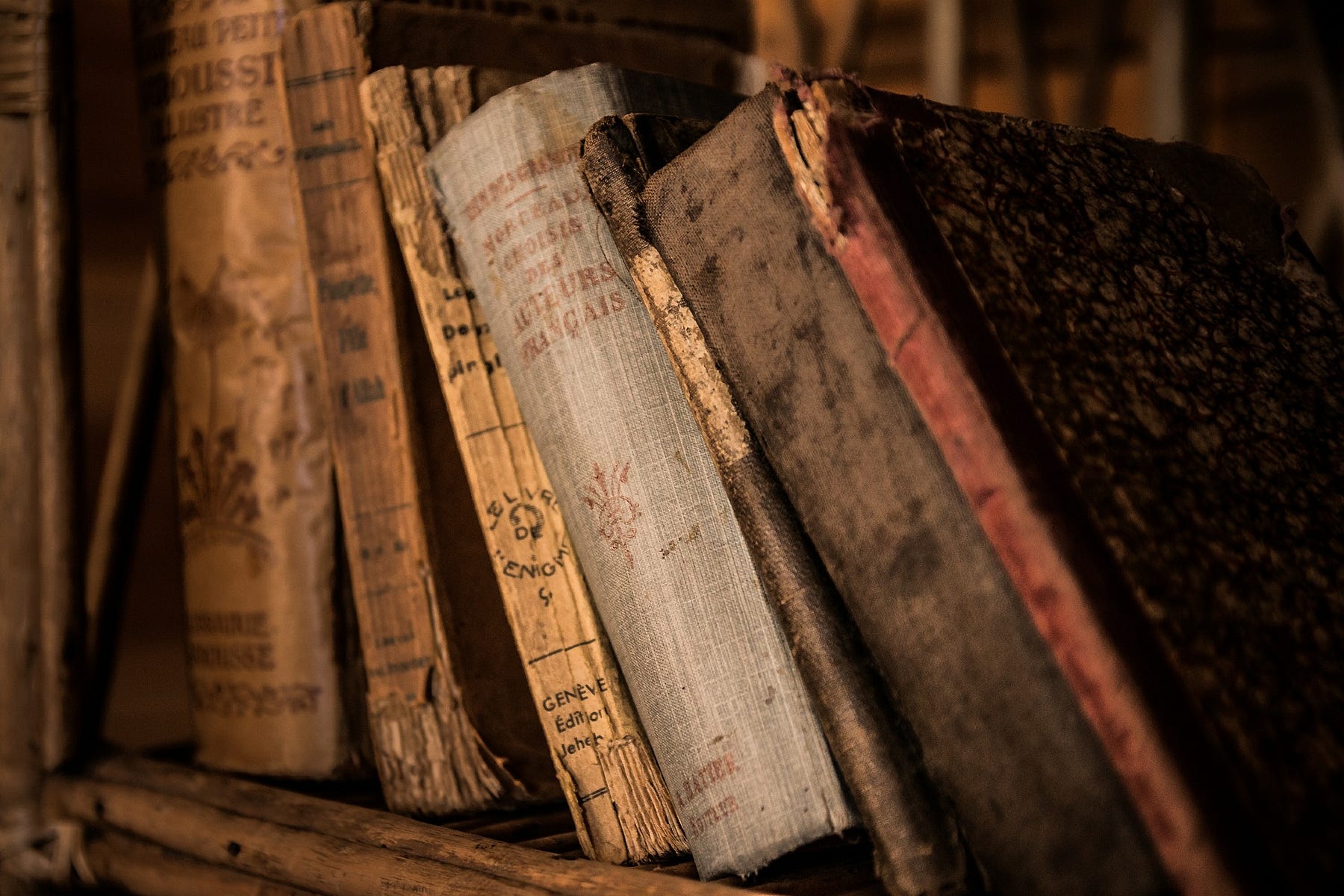
Here are books I read, wrote, or contributed to this year, in no particular order. Where a link is provided, it’s usually to a review of the work that I wrote.

Books I Completed

  1. Stay With Me by Ayọ̀bámi Adébáyọ̀
  2. The Yearning by Mohale Mashigo
  3. When We Speak of Nothing by Olumide Popoola
  4. Taduno’s Song by Odafe Atógun
  5. A Good Mourning by Ogaga Ifowodo
  6. The Heresiad by Ikeogu Oke
  7. Songs of Myself by Tanure Ojaide
  8. Like a Mule Bringing Ice Cream to the Sun by Sarah Ládípọ̀ Manyika
  9. I Wrote This For You by Samira Sanusi
  10. The Kindness of Enemies by Laila Aboulela
  11. Slipping by Lauren Beukes
  12. The Birth of a Dreamweaver by Ngugi wa Thiong’o
  13. Welcome to Lagos by Chibundu Onuzor
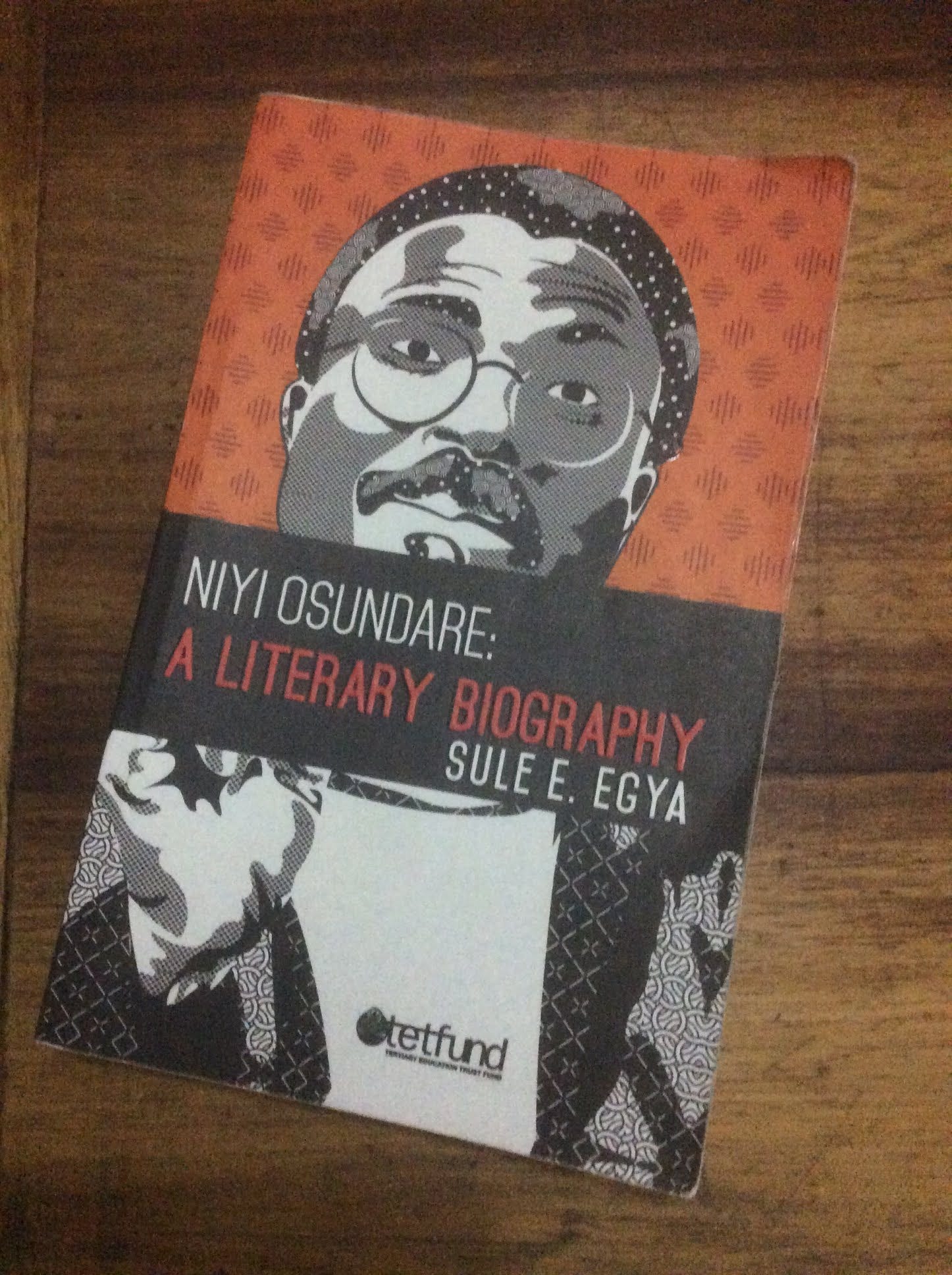
  14. Níyì Ọ̀ṣúndáre: A Literary Biography by Sule E. Egya
  15. Grass to Grace by Ayọ̀ Bámgbóṣé
  16. America their America by JP Clark

I enjoyed all the books I completed this year, especially in the prose department. Ayọ̀bámi Adébáyọ̀’s anticipated debut blew me away in a number of ways, and perplexed me in others. I also enjoyed Mohale Mashigo’s debut which explores trauma and mental illness, Olúmìdé Pópóọlá’s delightful prose and a story of friendship, Lauren Beukes’s collection of dystopian stories, and Sarah Manyika’s beautiful and unconventional book about love in old age. I think I should read more non-conventional prose like these in the next year. Normal is boring.

I was honoured to be able to speak with Laila Aboulela in Kaduna in July, discussing her historical novel The Kindness of Enemies. I’ve always found work that incorporate elements of fact into fiction to be very engaging. That way I can pretend that it’s nonfiction when it is really not. I loved Taduno’s Song for the same reason. I look forward to reading more of such work.

Started But Not Finished

  1. A Woman’s Body is a Country by Dami Àjàyí
  2. Masks of Light by Robert Eliot Fox
  3. What It Means When a Man Falls from the Sky by Lesley Nneka Arimah
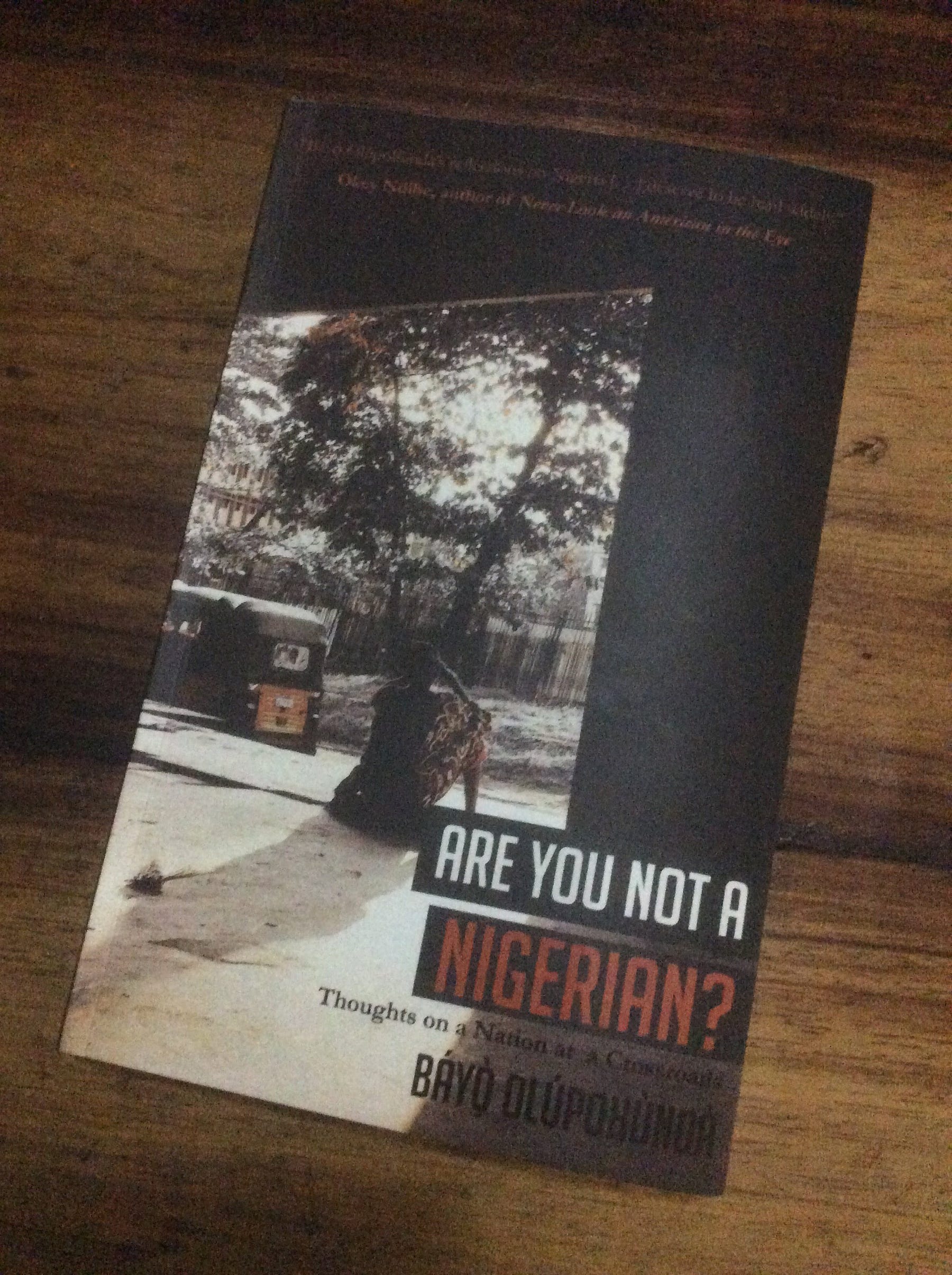
  4. Are You Not a Nigerian? by Báyọ̀ Olúpohùndà
  5. The Pleasure of the Text by Roland Barthes
  6. The Book of Memory by Pettina Gappah
  7. The Sellout by Paul Beaty
  8. Facade by Emem Uko
  9. The Idiot by Elif Batuman
  10. Beyond Linguistics and Multilingualism in Nigeria: Essay on linguistics and multilingualism, language in education, English language, Yoruba language & Literature by Ayọ̀ Bámgbóṣé.
  11. Beethoven Was One-Sixteenth Black by Nadine Gordimer
  12. In Praise of Slowness: Challenging the Cult of Speed by Carl Honoré
Speaking of delightful prose, one book I can’t wait to finish is Lesley Nneka Arimah’s What It Means When a Man Falls from the Sky. It is my first time reading anything she’s written and I’m blown away. Thanks to the folks at Farafina for sending me a complimentary copy. The book is a collection of short stories each carrying a heavy punch. Her words are sweet and svelte, capable of telling a story, no matter how difficult, with care and beauty. Two of my friends, Báyọ̀ Olúpohùndà and Dami Àjàyí also published a book each this year, and I look forward to spending quality time with them. I’ve read Àjàyí’s book as a manuscript, and many of the articles in Olúpohùndà’s when they were newspaper columns. But I look forward to reading them again. I also highly recommend Robert Eliot Fox’s collection of poetry, published by a publishing outfit by Frank Chipasula whom I met for the first time in Abu Dhabi in April.

Bought But Not started.

  1. Nollywood by Jonathan Haynes
  2. Arrows of Rain by Okey Ndibe
  3. White Lagos by Pẹ̀lú Awófẹ̀sọ̀
  4. Al Franken: Giant of the Senate by Al Franken
  5. King Baabu by Wọlé Ṣóyínká
  6. The Fisherman by Chigozie Obioma
  7. Letterman: The Last Giant of Late Night by Jason Zinoman
  8. Dialogue With My Country by Niyi Ọ̀súndáre
  9. The Translator by Laila Aboulela
  10. A Black Man in the White House by Cornell Belcher
  11. Kintu by Jeniffer Nansubuga Makumbi
  12. Who Thought This Was a Good Idea? And Other Questions You Should Have Answers to When You Walk in the White House by Alyssa Mastromon
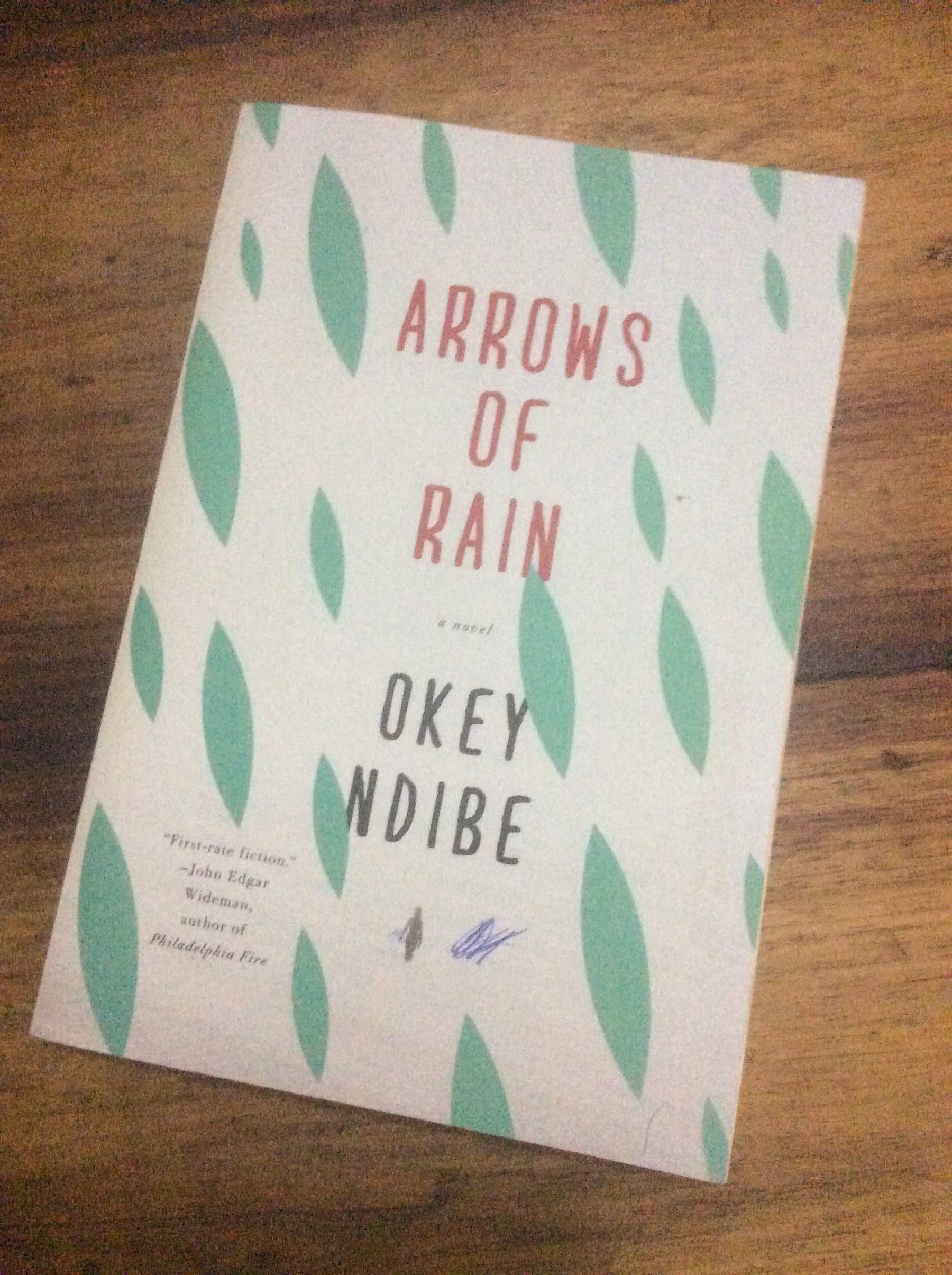
Of these twelve, the one less likely to be read in a hurry now is Al Franken’s autobiography which I was actually looking forward to. His resignation from the Senate amidst allegations, by about eight women, of sexual impropriety will certainly cast a shadow on any of the jokes he makes in the work about working with women. Not like the Letterman story will be any less cringe-inducing, but one of them managed to escape unscathed from public life. Some irony in that. Both of them, however, still occupy a very important place in American public life, as well as in comedy. I bought the Nollywood book at the Lagos Conference this summer, on impulse purchase, and because the author was there. But don’t know when I’ll ever get to it now. It does look like a good reference material on the story of Nigeria’s thriving movie industry though. I also look forward to reading Okey Ndibe’s Arrows of Rain which actually preceded his memoir published last year. Will be interesting to trace his creative development and style.

Publications my works appeared in.

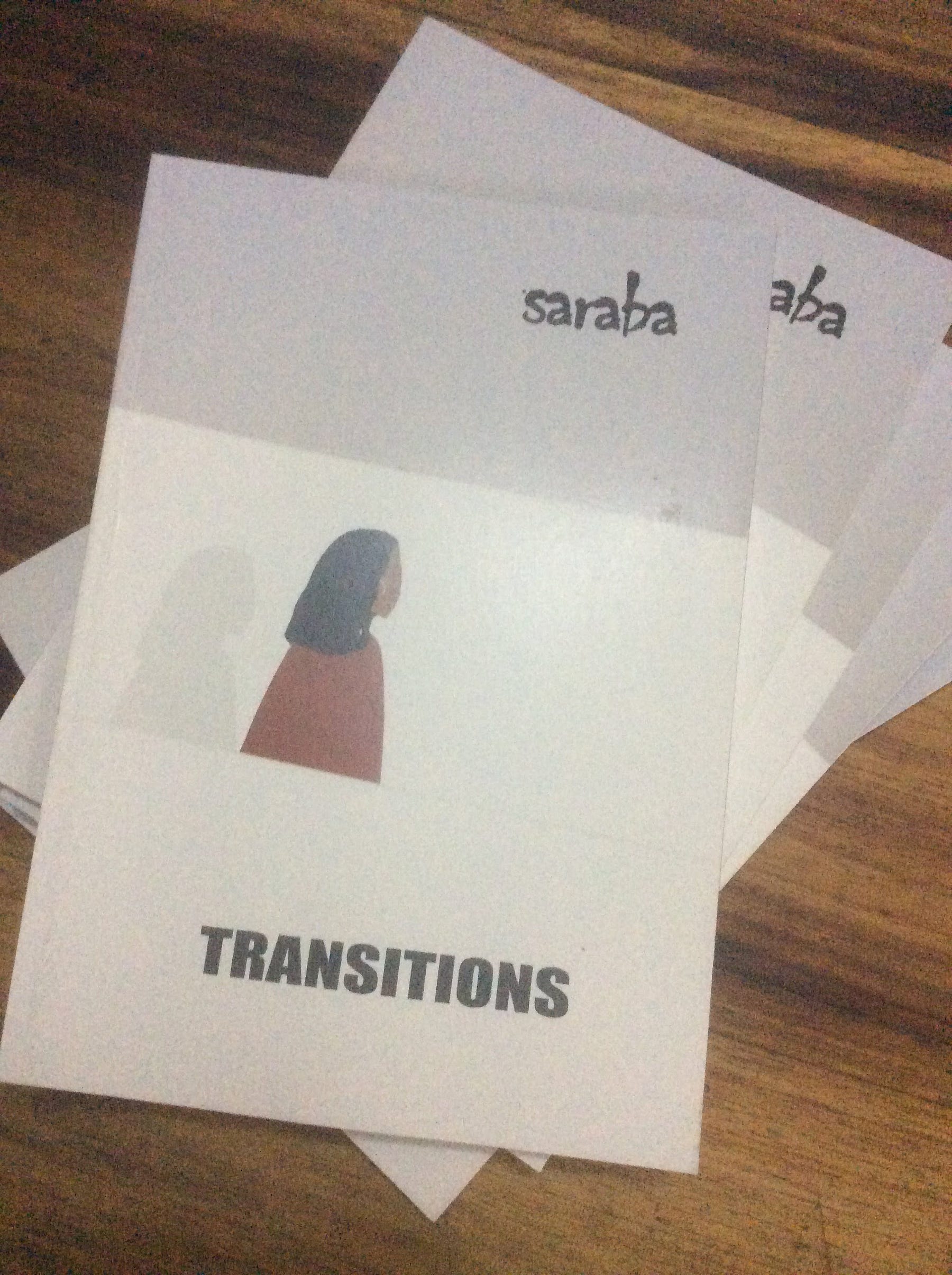
  1. GENERAL NONFICTION. Saraba Magazine’s published its first print issue this year, titled Transitions. In it, I have a nonfiction piece, co-written with Tèmítáyọ̀ Ọlọ́finlúà titled “House 57”, about a house in Ìbàdàn that means a lot to me, but also carries an important story that touches more than just its immediate characters.
  2. REVIEWS AND INTERVIEWS. I published a number of reviews and interviews on Brittle Paper this year, of works of writers like Sarah Ládípọ̀ Manyika, Ngugi wa Thiong’o, Níyì Ọ̀ṣúndáre, Chibundu Onuzor, Odafe Atógun, Lauren Beukes, Tádé Ìpàdéọlá, and Wana Udobang. I also published a couple of works on AfricanWriter.com, most notably my interview with Yẹ́misí Aríbisála (February 2017) and Titilope Sonuga (July 2017). I also joined This is Africa later in the year as a resident interviewer, publishing interviews with Dami Àjàyí (October 2017), Abubakar Adam Ibrahim (November 2017), and Igoni Barrett (December 2017). In Ake Review 2017, I have an interview with debut author Ayọ̀bámi Adébáyọ̀ on her work, her process, and on the presentation of women in fiction. It’s aptly titled “There’s Not One Way to Write a Feminist Character” — a quote taken directly from the author’s response to a question I had posed.
  3. ESSAYS. Earlier in March, my literary essay In the Shadow of Context was published in Enkare Review. It was later nominated for the Brittle Paper Award for Think Pieces. In June, I contributed an essay titled Wetin Dey? Nigerian Pidgin and its Many Pikin as a preface to Inua Ellams’s Barbershop Chronicles staged and published by the UK National Theatre. In November 2017, my essay appeared in Il Suono di Pan an anthology edited by Prof. MM Tosolini and launched at Cividale del Friuli, near Udine in November 2017. The essay was titled The Suspended Leg in the Tripod of Identity: Yorùbá Around the World Today. it was also translated to Italian.
  4. FEATURES. In January this year, Latterly Magazine’s Ashley Okwuosa shadowed me around places in Ìbàdàn where I grew up, asking relevant questions about my work as a writer and linguist. We visited Àkóbọ̀, the University of Ìbàdàn, and she met a couple of my professors. The result was a long profile titled “The Yorùbá Guardian” in the Spring Issue of the magazine. So, while this is technically not my work, it’s one I’m glad to have participated in.
Books Lost

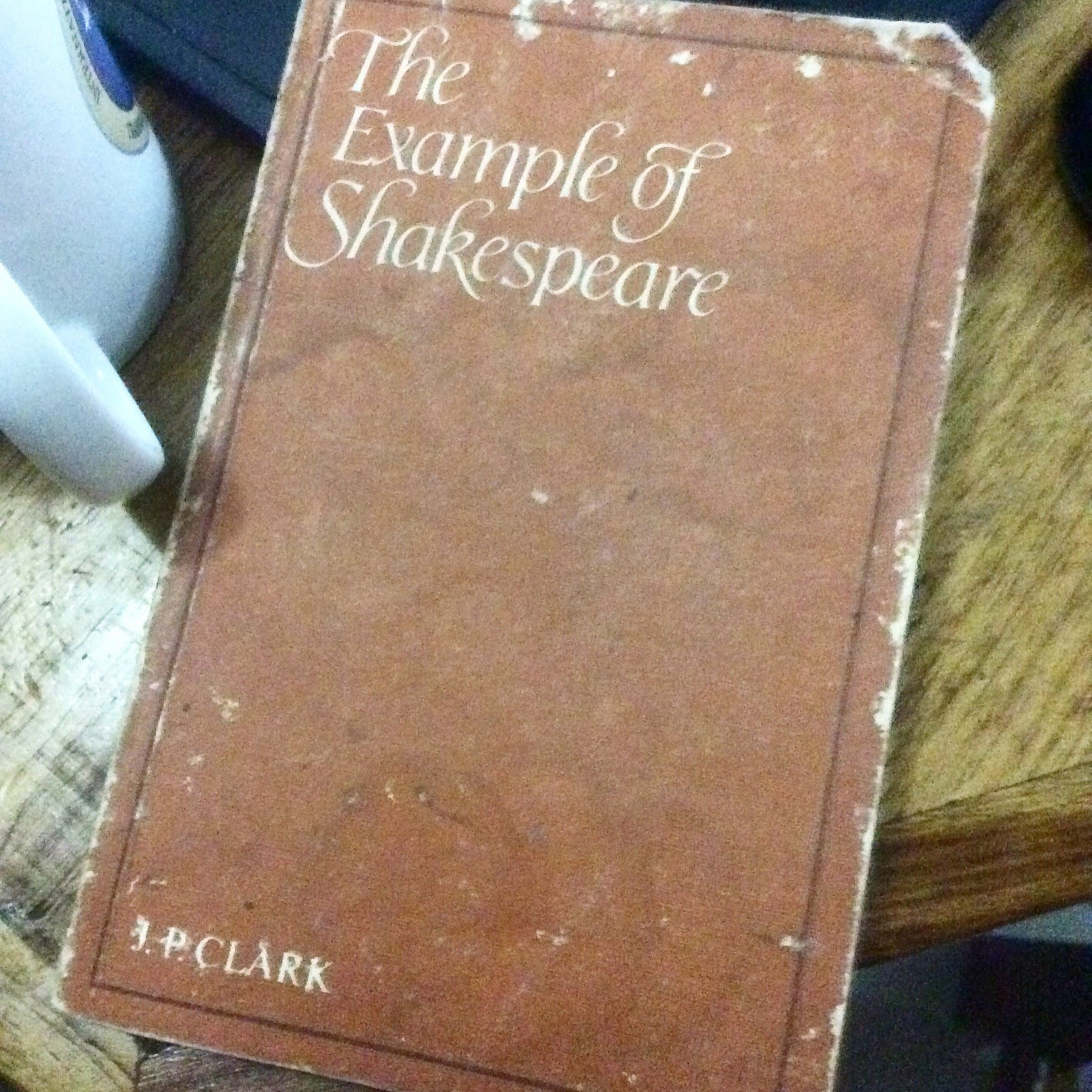
This one is a tragedy A book I’ve had with me since 2002 was “borrowed” from me without my permission while I was attending the Kaduna Book and Art Festival (KABAFEST). Still waiting for whoever has it to send it back, graciously.
Hello 2018!

Thinking back, it’s hard to believe I read (or wrote) this much this year. My pocket certainly doesn’t believe it. There are so many more books I have bought and I’m looking forward to reading. The complete works of Nnedi Okorafor, for instance. Something tells me that the time for sci-fi and fantasy fiction is upon us. Every year I promise myself not to buy more books than I can read. I’ve failed this year, but 2018 is another year.

So, what books did you read and enjoy this year? And will you lend me to read?
The Nigeria Prize Writers Read Excerpts from their Work

The announcement of the winner of the 2017 Nigeria Prize for Literature is very near now. In three short days, the wait will be over and a new winner will be crowned for this year’s Poetry Prize. Last year’s Prize was for Prose Fiction and was won by Abubakar Adam Ibrahim. The prize is worth $100,000.

Winners for the 2017 Prize for Literary Criticism will also be announced on Monday, October 9, 2017.

The writers on this year’s shortlist for the Poetry Prize are Tanure Ojaide (Songs of Myself), Ogaga Ifowodo (A Good Mourningand Ikeogu Oke (The Heresiad). Since the beginning of this week, I have spoken with each of the writers and posted the interviews here.

Today I want to share videos of the writers reading from their work. For anyone interested in any of the books, you can get them on OkadaBooks.com, Nigeria’s online and mobile bookstore.

Here is Tanure Ojaide reading from his book Songs of Myself.

Here is Ogaga Ifowodo reading from his book A Good Mourning.

Here is Ikeogu Oke reading from his work The Heresiad.

May the best writer win!

______

On Sunday, October 8, 2017, do come back to watch the last interview, with Dr. Kudo Eresia-Eke who is the General Manager External Relations of the NLNG, on the future of the Nigeria Prize.

On “The Heresiad” by Ikeogu Oke

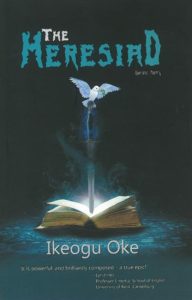
The Heresiad (KraftGriots, 2017) by Ikeogu Oke is, in my opinion, the most ambitious of the books on the prize shortlist this year. It is a book of what the author called “operatic poetry” (another way to put this would be “poetry in drama and song”) featuring one poem extended over a hundred pages. Yes, one poem. It is epic in its scale, ambition, and character (and even in the words of one of the blurbs. See it:

“It is powerful, and brilliantly composed – a true epic!” – Lyn Innes (Professor Emerita, School of English. University of Kent, Canterbury))

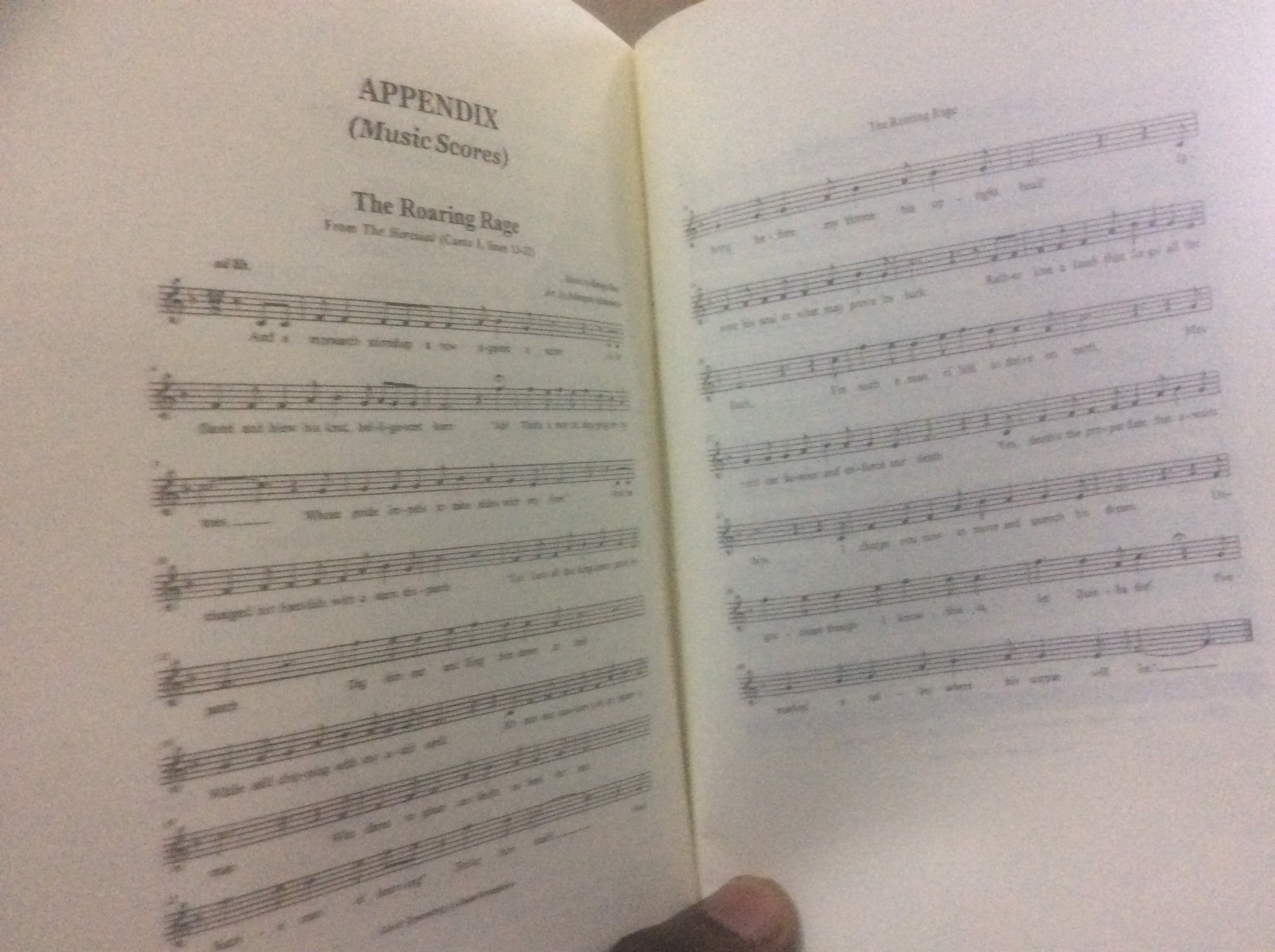
But seriously, the work packs within it a lot of history, philosophy, narrative, culture, allegory, politics, and tradition, rather unapologetically. Without the author’s name, one might confuse it for a work by Shakespeare of any of the writers of the old traditions defined by form, rhyme, and musicality. Only slightly, of course. References intrude from Nigerian (and African) socio-political issues enough to define the work as one addressed to a specific, even if global, audience. And to that idea of musicality, the author graciously provided musical notes with which the poem can be sung.

The name Heresiad, is derived from “heresy” just as the Iliad was derived from “Ilium” or Aeneid from “Aeneas”, as the author explains in the preface. But what needed defending, even more, was the style, operatic poetry, which Oke described as being deliberately crafted as “an art form that transcends verse and goes on to embrace song, music, and drama.” Previous works of this nature which have misled readers into expecting musicality through the use of “Songs of–” in their titles were singled out, from Turold’s The Song of Roland to Vyasa’s The Lord Song to Okot p’Bitek’s Song of Lawino. (He couldn’t have called out Tanure Ojaide’s Songs of Myself, the other book on the shortlist, because this serendipity of both their presence on the shortlist couldn’t have been predicted. But the juxtaposition of this factor in defining Heresiad as unique and better realized as practical literature does appear significant). By discounting the need for a titular nod to musicality and instead embracing it in true form, Oke admits to pursuing a grander ambition: to make written words sing, a homage to Ngugi wa Thiong’o, whose words to that effect was quoted as an epigraph.

Of the thematic preoccupation of the book, Oke says it is written “to make a case for unhindered intellectual and creative freedom… and for mutual respect and harmony between faith and thought, otherwise religion and intellectualism.” In my interview with him, he admitted that the idea of the book, and the first verses in the book, came in 1989 when “a famous writer” was condemned to death for the crime of heresy. He didn’t need to – nor wanted to – mention Salman Rushdie by name, but that connection became immediately apparent. In this book, the condemned author and narrator is Zumba, who was so censured for having writing a “bad” book. To enforce this sentence, and to save him from it, a few other characters, in the person of Reason, Doom, Anger, Sword, Machete, Axe, Stone, Panther, Care, Bluff, Smithy, etc, were introduced with fully-realized characters, compelling presence, and voice. In their thought processes and the unfurling of the curious plot, the poem realizes itself in full glory.

One of the limitations of traditional poetry, which can also become its most enchanting feature, is rhyming. It is a feature that I happen to love. But it is a feature fraught with a lot of risks one of which is the occasional trading of meaning for the benefit of a properly rhyming word, or the use of the immediately available rhyme instead of striving to find the perfect one. In Heresiad, some of these limitations show up, like when “bypass” is made rhyme with “pass”, “reproof” with “proof”, or “unwise” with “wise” (and in one unintentionally hilarious instance, when the native language interference pushes “blade” to rhyme with “head” (page 57). For a book of this type of ambition, it might be that those kinds of lapses are to be expected and tolerated. But for an unlucky book, they can become the flaws by which they are defined.

But when it works, though, it works quite beautifully.

I’m part of this misnomer, I confess,

And so are all you Faithfuls, nonetheless.

Or who among us Faithfuls can have read

The book for which we seek the author’s head?

Rhyming might seem like a trivial issue on which to spend critical time until one realizes that each couplet throughout the work sticks to this rhyming pattern on top of what Oke describes as “lyrical pentameter” (adaptability to lyrical utility). The realization that the author had spent countless man hours crossing all his Ts to achieve this kind of ambitious and thoroughly satisfying theatrical result is most impressive of all.

Now, the author’s plea had reached his ears,

A plea that dripped with anguish and with tears;

And Reason, yes, had pondered through a plan

To take help to the joy-forsaken man.

(page 36)

Equally as impressive is the realization that the book took twenty-seven years to write, over different iterations.

Now lift your voice; lift your voice and say;

Your voice, not mine, must rise and lead the way:

What now transpired among the rising five

Who wished our author more dead than alive?

What – the thought – that, of its own accord,

Changed their common tilt towards discord?

A love as yet profound inspires my choice

To be the human echo of your voice.

(page 52)

Speaking of theatre, when was the last time you read a book of poetry with accompanying musical notations? I certainly haven’t seen any. But here, on page 106-112, the author, with the help of Adéogun Adébọ̀wálé, helpfully guides the future theatre and/or musical director on what is the appropriate way to translate the texts into music.

During my interview with him, I asked whether he would be willing to sing some of the lines to me, and he graciously obliged. It was not as impressive as I’d expected it, but who expects an author of a work to always be its most competent performer? Not me. It is ironic, of course, that this musical characteristic of the work once became a point of risibility when a restless Facebook critic dismissed it as a gimmicky invention to win the $100,000 prize money. On the contrary, I think it is one of the book’s distinctive features, showing it as different as possible from the others on the shortlist in terms of ambition, inventiveness, interdisciplinary scope, and resolve. Now, to see it on the stage!

The author’s habit of including footnotes and references at the bottom of relevant pages irked me at first. They had appeared as an unnecessary usurpation of the critic’s role. But this wasn’t the case. They add a lot of value to the work in illustrating, where necessary, the writer’s influence, allusion, or research. Not one was superfluous.

From what I have observed of the pattern of choice by the NLNG judges, who have typically favoured works of formal and traditional forms in style and ambition (See: The Sahara Testament), I will predict that The Heresiad might take home this year’s prize. There is something about the work that speaks to an intense commitment to innovation, tenacity, joyful experimentation and social commentary in a way that provokes delight and engagement. It is doubly worthy, of course, for its successful bridging of the genres of poetry, drama, and music, while making a strong point, through allegory and an enchanting imagination, about the role of free speech and the responsibility of the writer in a modern society.

I’ll be surprised if the judges disagree, but such surprises are welcome when it’s not one’s work on the shortlist.

______

Find a link to the previous reviews here.

______

Update: October 9, 2017: Ikeogu Oke’s The Heresiad is the 2017 Nigeria Prize for Literature winner. Watch my interview with him here. Congrats to him.

On “A Good Mourning” by Ogaga Ifowodo

As promised, here is my take on the first book on the shortlist of the NLNG-sponsored Nigerian Prize for literature 2017. The book is A Good Mourning (Paressia, 2016) by Ogaga Ifowodo. Ifowodo is a poet and writer, who taught poetry and literature in English at Texas State University, San Marcos, USA. He holds the Master of Fine Art (MFA) in poetry and Ph.D from Cornell University, New York. He studied law at the University of Benin and worked for eight years as a rights activist with Nigeria’s premier non-governmental rights group, the Civil Liberties Organisation (CLO). Between 1997 and 1998, he was held in preventive detention for six months under the military dictatorship of General Sani Abacha.

I’m ashamed to admit that, until now, I hadn’t read anything by that poet with a striking physical resemblance to James Baldwin. But no matter where I have turned, his name had shown up there, from conversations on social media to arguments in closed listservs. Until recently, I also didn’t know that he had served in government in some capacity and that he once contested for (and failed to win) a House seat from his home constituency.

So, I approached his work with an open mind. The title of the book A Good Mourning carried a curious double-edged sword of meaning that intrigued anyone from afar. The cover conveyed darkness as does the paradox of the title itself. If it is “mourning”, how is it also “good”? And how does it contrast with what we have grown to expect when we hear the phrase, devoid of the physical surprise of the spelling difference?

The work does not disappoint. The copy I got was loaned to me by Doctor-Poet Dami Àjàyí to whom the writer had autographed it in 2016: “Good morning & poetry”. I hadn’t found a copy anywhere else that I had looked, inviting conversations to the recurring topic of accessibility of books to the general public before they are selected for the Nigerian Prize. (It is a ridiculous argument, to be clear. The prize is set up to reward excellence, not distribution savvy. But it does raise valid questions about why publishers in 2017 haven’t yet heard of the Kindle, eBooks, and an authentically Nigerian electronic book distribution system called OkadaBooks which can put the books at the literal fingertips of millions of people via their mobile phones).

A Good Mourning is an impressive book that is marked by competence, style, grace, and a distinct authentic voice. It is that competence that I intend to dwell on a bit more because some of the snide remarks about the shortlist had focused on what they regarded as substandard work on the shortlist. Thankfully none had mentioned Ogaga’s name in the diatribes. He is a competent voice whose work leaves no one in doubt of his facility with words, dexterity with decades of African and modern poetic traditions, and sincerity in the pursuit of his numerous truths and points of view.

The poems delight, inspire, provoke, entertain, and intrigue. They cover a range of themes that, contrary to the expectation that the poems in the collection will all be morose and depressing, excite and titillate. In one poem Ten Hours (page 8), the poet describes an appendectomy in a German hospital with such mischief and lexical dexterity that what one feels isn’t just breathless anxiety of a man hanging between life and death but a playful appreciation of the affectation of the doctors’ efficiency and their terrible grasp of English (one confuses “rupture” for “rapture”). He asks for the piece of his gut back, on regaining consciousness, and was told that it had been cut up, and it will no longer, as he had hoped, become

pickled in a beaker,

displayed in bookcase at eye-level

for breaking barren moments,

getting guests to know me inside out.

These kinds of unexpected levity litter the book in random places, turning what was billed as a melancholic take on national life into a delightful, thorough, and serious look at different issues in one citizen’s life.

In the following poem, a serious religious ceremony is gently mocked.

Once an alter boy, he pined for wine

and wafer, not communion with the Lord

Too young for the mysteries of eating God’s


flesh and drinking his blood, he prayed only:

Lord, let this cup pass to me!

The priest sent him out of the holy sanctuary.

You get the idea.

Actually, you don’t.

Ifowodo does this effortlessly throughout the work, especially in places where seriousness is expected. It almost seems like the whole book is an attempt at shattering gloomy expectations. Or else a practical interrogation of life as comprising of both gloom and levity, mixed in the right dosage, waiting to be teased out by the right inquisitor.

The title poem was dedicated to Chief Moshood Káṣìmawò Abíọ́lá. It reads like a recap of history, with snide barbs reserved for players and villains, living or dead.

The false-star general

was first to flee his stolen throne

seeking refuge in a hilltop mansion

built with stolen money.

Since the book was published in 2016, there will be questions about why the author chose now as a good time to write about the June 12 crises, and why the title poem takes about ten pages (37-46) to tell us what we already know about an event whose significance has now almost paled against the background of even more pressing matters. (I asked him about this in our interview. More on this later)

What won’t be asked is whether the work was well written – because it was. In four different sections, Ifowodo explores what it means to be human, with a diverse range of fascinating experiences over many decades and many geographical spaces. The poems are as experimental as they are traditional (though he notably avoids any attempt at rhyming). The book is described as the author’s “reflections on the intimacy of evil anchored in the brazen military annulment in 1993 of the will of the Nigerian people to self-representation…”. I will not argue here with his choice of description of his own work and aspiration, but the work appeared to me more like a nuanced mosaic of a yet unfolding, if rich and fascinating, life of the author himself.

The outward-facing and ambiguous appearance of the title and its however belated tribute to the memory of June 12 will be important in inviting in a curious reader, but won’t be what keeps them. That will be the delightful competence, playfulness, and dexterity of the writer’s voice. I will mark A Good Mourning down as a very strong contender for this year’s prize, but that’s not saying anything since it is already on the shortlist of three. A more specific compliment will be that it is certainly one of the stronger two on the list.

______

The video of my interview with the author can be found hereThe prize announcement will be made on October 9, 2017.

2017: Optimism as Resistance

It’s some of the first few hours of 2017, a year that has taken too long to come. I’m watching, on Netflix, a serial on Queen Elizabeth and the House of Windsor titled The Crown. It’s an engaging series of stories around the style and life of the reigning British monarch and her life on the throne. I had intended to watch just a few episodes of the show, and now it seems that we’d watch the whole damn thing in one sitting.

It’s not such a bad entrance into the new year. There’s red wine here, and palm wine, and fried beef, and rice with Yorùbá stew. On one of my laps is the head of my wife and partner. Our son is fast asleep at home and won’t see us till later in the day. We are guests in someone else’s house.

Yet, it doesn’t feel like the beginning of a new year. Except for some firecracker noises about three hours ago, it has been quiet outside. Inside here is laughter and occasional arguments. But it is a soft, happy, party of family sharing happiness and warmth. There are no rowdy street scenes. No grand announcement of the beginning of a new year. Just a quiet and respectful progression into what had been long overdue.

Yesterday, we spent some time watching Adéyẹmí Afọlayan’s old movie Kádàrá, featuring some of the now notable faces in the Nigerian movie industry. The ending was a little disappointing, but the overall experience of spending the evening in the company of family and watching something from the early 80s compensated for that discomfort. It’s easy to forget that this is the year that Donald Trump officially becomes POTUS and gets the nuclear codes.

In Nigeria, the recession hasn’t eased up. The administration of President Buhari, which came in with a huge promise and a mandate from a wide swathe of people, is fast losing that trust. In Turkey yesterday, over thirty people were killed in a terrorist attack. And the problems in the Middle East don’t look like they are close to being solved soon. A one-state solution in Israel, anyone?

And so, since we’re still here, the resistance continues. Optimism? Well, a cautious one. But optimism anyway. Happy 2017, everyone.