Sometime in April of last year (2019), I visited the site of the Kuti Heritage Museum in Abẹ́òkuta. Located on NEPA Road, Isábọ̀ Abẹ́òkuta, the house was the famous home of the Reverend I.O. Ransome-Kútì and Mrs. Fúnmiláyọ̀ Ransome-Kútì, and the likely birthplace of Fẹlá and some of his brothers.
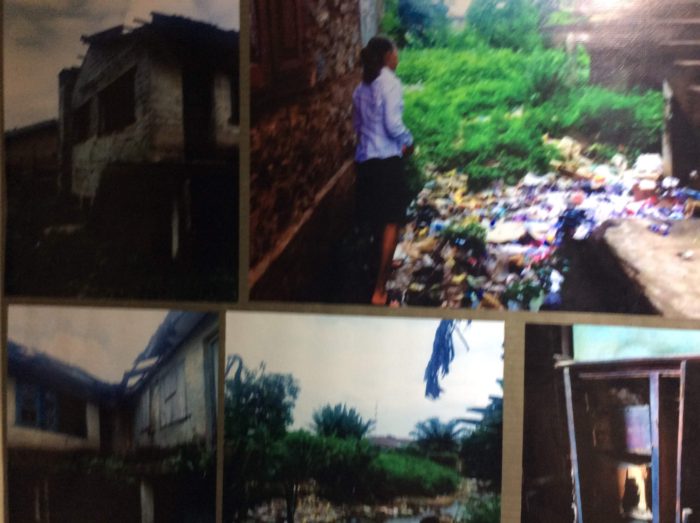
This restoration project has been ongoing for a while. The home of the famous Kútì couple had, over the years, become victim to negligence and decay. Photos exhibited at the venue, showing the transformation of the structure from its earlier state of rot shows it as sometimes being a site for refuse dumping by neighbours and passers-by.
But it was not always this way. Copious paragraphs from Wọlé Ṣóyínká’s autobiography Aké were dedicated to memories of times spent in this place to visit his uncle who was by then the headmaster of Abẹ́òkuta Grammar School, and his wife whose organising of women to protest the misrule of the Aláké led to the Abẹ́òkuta Women’s Tax Riots and the eventual abdication of the king in early 1940s.
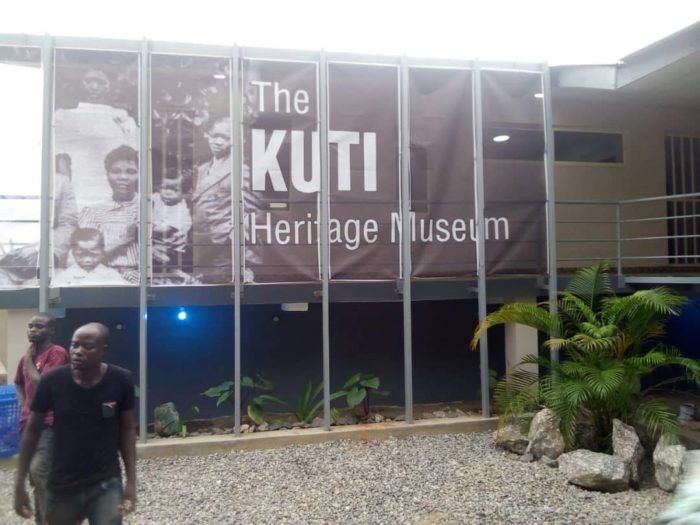
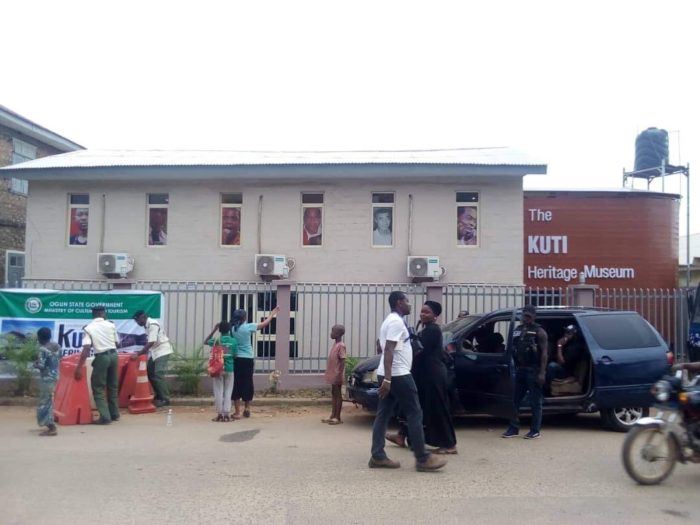
Over time, the successful careers of many of the house’s famous former occupants notwithstanding, the home had gradually settled into oblivion. But the Ògùn State Government, in collaboration with members of the family, returned a few years ago to restore the building to its rightful place in the Nigerian consciousness as bearers of history. From what I gathered, the building adjoining the original home is the museum, set up to inform visitors about the family, its famous members, and their role in Nigerian and world history. I could not enter this building itself on this day.
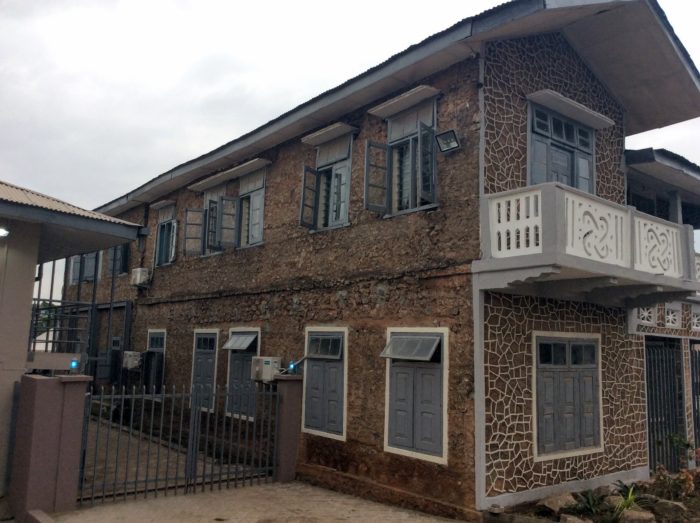
But I did enter the main home, restored to its old stone form, and girded on each corner downstairs with metal beams. Word is that the project was supervised by Theo Lawson, the same architect behind the Freedom Park and the Kalakuta Museum in Ìkẹjà. Being nothing more than a casual observer of art and documentation myself, I was impressed by the presentation.
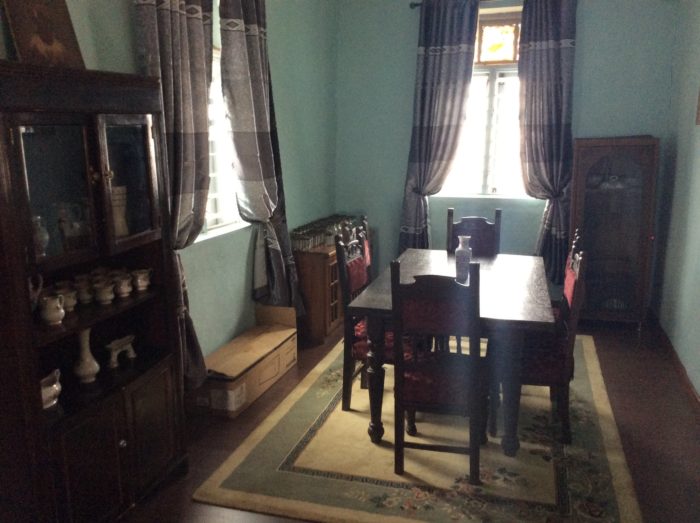
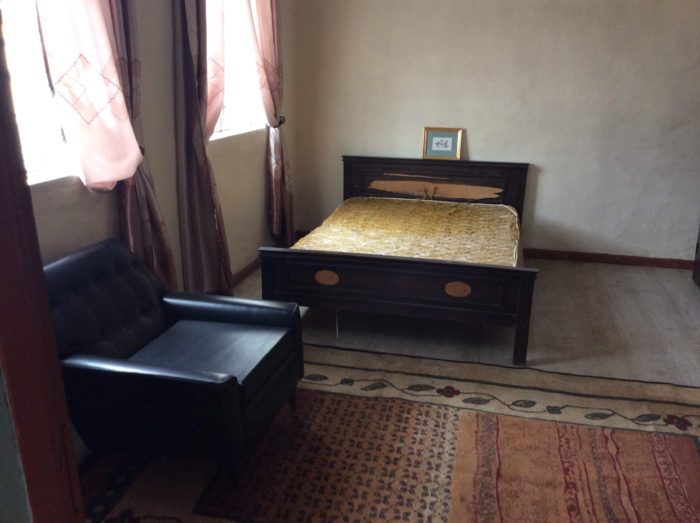
All the rooms in the old building have retained their sense of time. The furniture reflect those of the 40s, and the upper-class aesthetic that the Kútìs must have enjoyed among the society. The bathroom had a bathtub — what would seem like a sign of opulence in that part of Abẹ́òkuta and that time period. The plumbing of the house was modern, even though the house was made of mud and stones. This restoration has added a few more things to the aesthetic: air conditioning — which should tell us something else about the changing climate.
The veiw of the Museum from across the street.
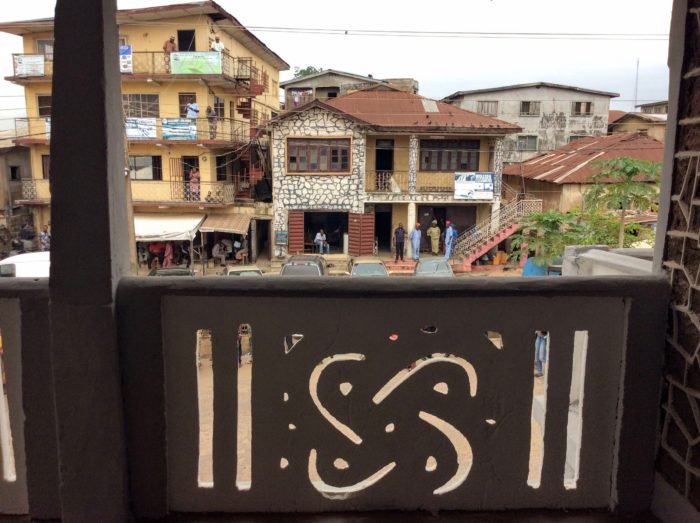
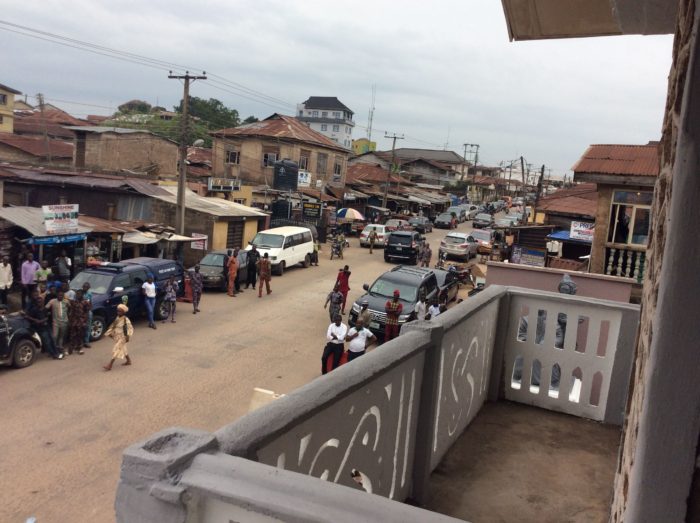
From the balcony, one could see a good view of the town itself, and one can imagine the Reverend himself, on a cool day, standing there, toothpick or pákò in mouth, staring out or greeting a passerby.
The view from the Reverend I.O’s Balcony.
Even much of the smell has remained, a rusty old smell from the mattresses, stationeries, rug, and furniture.
I recommend the building to anyone in Abẹ́òkuta, especially the adjoining Museum. I hope to visit it again when I’m in town. I am already impressed by this attempt at keeping history alive through structures and other non-conventional means of keeping the names of our famous citizens in the memory of contemporary children.
A few more photos below. Here is a more comprehensive report of the launch.
Congratulations to those of you- young, male, Nigerian, and travelling alone, who were able to reach your destinations with(out) molestations, after flying out of Lagos airport in the wake of that failed underwear bombing of December 25, 2009.?
O ye travellers of hope, I hope you have all found your dreams, did you find home, did you find love, did you find happiness? This is a moment of reflection for us, I am one of you. I think we need to gather somewhere and celebrate a decade of surviving what was to become hostile treatment for young Nigerians travelling in the west.
As I write, I recollect all the fears and apprehension that followed the tragedy of young Umar Farouk Abdulmutallab, and the recrimination that was unleashed on innocent young travellers from Nigeria by border forces across the world. My own maiden flight was slated for the middle of January 2010, just 3 weeks after the near-tragic incident that involved a bomb on a plane. Those who believe that the USA and the western governments took undue advantage of the incident to heighten security vetting and high-handedness towards travellers from a certain part of the world may not be wrong, as we became legitimate targets for extra checks in frontiers across the world.
I was freshly 29, at a turning point in my life, a make or break moment, a moment that I made one of the most difficult choices. I chose to leave my father’s home, and headed out to the foreign land.
Taken in 2009. (credit: Fèyíṣọlá Babárìndé. Telford, 2010)
I was coming to the UK to start my master’s degree. But the marks of ‘slaves’ were all written on my passport…. ‘no recourse to public funds’, ‘restricted work’, má j’ata, má jẹ iyọ̀, and many other repressive immigration controls on the unsuspecting prodigal son. But unlike the biblical prodigal son, I did not go away with any inheritance to squander, I had less than £100 in my pocket, and owó onírú, owó aláta, owó alájẹṣẹ́kù paid the bulk of the cost… but like the real prodigal son, I went away from home, joyfully.
Before my flight, I had taken all additional precautions, booked a direct flight- avoided ‘Amsterdam’, the bad boy had connected a targeted flight via Schiphol airport. The scheduled landing time at Heathrow must be during the daytime, such that even if I was delayed in London, my onward journey to Wolverhampton would still happen during the day.
I made sure I had ‘no goatee’, no mustache, I identified as a Christian, from the south — it was necessary at the time in order to survive. So I thought I would be no easy target for any overzealous Islamophobic- steroid charged security operative. On the morning of my flight, I was briefly pulled aside to be interviewed by two middle-aged white operatives in Lagos airport before I was allowed to board, that should be it, I have been cleared — I thought, but I was wrong.
The flight itself was safe, and full of anxiety. I was waiting to meet my wife — we had just been married for less than 4 months before the affairs of this world separated us — I became home, she had become exiled. As planned, she was to collect the ‘JJC’ in London, and we would move to the midlands, where we would live for the next decade or so.
I left Lagos around 10am, it was around 33′ C, and London was waiting for me already blanketed by heaps of snow. Snow was something I had only seen in movies. London was in sub-zero temperature, and freezing. So I prayed that our plane would be able to land without diversion, as we were warned that many flights had been cancelled in previous days.
As the plane was landing, I felt coldness creeping up my spine, clearly all my preparation for the cold had proved unhelpful. I was already wearing two pairs of socks, before I left Lagos. To keep warm, I reached for the fairly used unlined ‘Ògùnpa-gbà-mí-ọyẹ́-dé’ jacket that I bought at Dùgbẹ̀ market. My fine boy shoes, I was told were no use for the wintering London.
We landed safely, and I followed the signs towards the bagging area. In one of my luggage bags was gari, ẹ̀wà, irú woro (which had a tipper load of sea sands in it), èlùbọ́, gala, and other women things that I had bought for Fèyíṣọlá at Alẹ́shinlọ́yẹ́ market in Ibadan.
In the other bag, I had some mainframe movie CDs. ‘They will certainly be reminding me of home,’ I had assured myself. Then in 2009, YouTube was still in its infancy, and had not been populated by Nollywood-advert invested contents. I had copies of some Nigerian books too, there was a feeling that I was going to be gone for a very long time, and I had to prepare for them days. I had some Ọ̀ṣúndáres, Akeem Làsísì’s Ìrèmọ̀jé, some copies of my own ‘failed anthology’, some Fálétí’s works, and some other copyright infringed photocopied books. Amazon and Netflix have reversed all these worries today’s maiden travellers.
So I got my luggage, and I headed out into the hands of my new set of friends. I had met a party of them in Lagos, but to be faced with another security men in London… I was waived into a little huddle of fellow young travellers, at this point we were not all Nigerians in that holding, but we were all single travellers. I was taken in for checks… of course I was punctuating them with my ‘pardon’, ‘pardon me’, ‘and excuse me please’ (s), which would become part of my hurriedly developed survival phonetics in the Un-queenly many regional-accented spoken English language that I would later be exposed to, particularly in the black countries of the west midlands.
I was left in a room, with no shirt on, the machines came up to my chest- I knew they would find nothing. No powders, no tuberculosis, no typhoid- there was no ebola then (thank goodness), and no bombs.
Outside the room, I heard chatters, I could hardly understand what was been said, then footsteps fainted away from the door to the room, and everything fell silent for an eternity.
After some 45minutes, it dawned on me that I have been abandoned in the room. I waited for no further instructions, I dressed myself up, and I was posing for what I truly believed was a camera as if to tell them that I was already yielding myself to the 11th commandment (‘do they own will’)… I was no international security threat to nobody, I was just a young Nigerian happening to be travelling alone after a failed bomb attack on a plane.
I later understood what had happened to me that evening, the poor immigration staff had been understaffed, and I was not properly handed over, I must have arrived mid-shift change.
I pulled myself and my luggage out into a narrow corridor, I approached a table at the other end of the corridor, and I asked whether I could leave. Yes…yes…yes… someone said to me. And I stepped into the arrival lobby, even within the foyer, the winter breeze was already lapping up my face.
Fèyíṣọla was already waiting for me, and she was wondering and fearing the worst. There was a possibility of being refused entry, the whole process of delay, checks, and the disappearance of the security/immigration staff took almost 3 hours. We had no time for hugs and kisses, I was herded like a sheep towards the car park by the invisible winter-rod, and we headed north.
The following months were very cold, it was my very first ever winter experience. The days were very short, I was going to bed with the setting of the sun, and over-sleeping, waiting to wake with sunrise that never happened in the morning. I became bitter with the elements, particularly with the sun, I angrily wrote in a poem about the sun… ‘do not rise today,/ if you will not make me warm’… I nearly became clinically depressed. I contemplated going back home.
Every day of the last 10 years, I have remembered the words of Ìyá Àyọ̀ká- as she is fondly called by the name of one of my sisters. ‘Please do not forget home, I hope to see you again’
Her words had reverberated in my head as I drove myself from Ibadan to Lagos on the morning of my departure. I have since made several other return flights to and from Nigeria in the last 10 years, the feelings of my first flight and the words of my mum always return to me on each occasion. Though the definition of both home and exile has changed for me, there is a part of me that now (sadly) sees exile in every thought of the place that used to be home, and there is another part of me that sees new home in my exile.
Selfie. (September, 2019)
There is no way I could explain my new philosophies to Ìyá-Àyọ̀ká — It will never help. I have joined myself with foreigners, all in the name of citizenship integration. All the things I should never eat, nor drink have become regulars at every dinner, and I know that I have changed and become different.
My muse left me at the depth of my depression. This is one reason for which I must return. I have failed to see any inspiration in the burgundy of autumn leaves, the white winter fields only depress me, and the sun-shined summer’s meadows would not compare with the poetry of Bẹẹrẹ, or with melodies of Bódìjà market.
______
Ìbùkún Babárìndé, author of Running Splash of Rust and Gold (poetry; Kraftgriot, 2008), writes this as a reflection to commemorate the 10th anniversary of his ‘exile’ in England.
Last week, I visited Paris as a guest of UNESCO’s International Conference on Language Technologies (#LT4All). It was a large gathering of language practitioners — from linguists to teachers to tech gurus and other executives — under one roof to share ideas, discuss obstacles, and showcase current activities in the sphere of language technologies. The theme “Enabling Linguistic Diversity and Multilingualism Worldwide” was part of the framework of the 2019 International Year of Indigenous Languages.
It was my first time in the city and in the country (since layovers don’t count).
At the Eiffel Tower during one of the conference breaks.
The conference was co-sponsored by Google (as a Founding Private Sponsor), The Government of the Khanty-Mansiysk Autonomous Okrug-Ugra (as a Founding Public Donor), UNESCO, Japan, France, and NSF as public donors, and others like Facebook, Systran, Microsoft, Amazon Alexa, Mozilla, IBM Research AI, etc, as regular sponsors. Team leaders from many of these companies were around to speak and share ideas from their ongoing work. It was a delight to be able to listen to many of them, and make connections. I met, for the first time, Daan van Esch, who leads Google’s GBoard global efforts, and with whom I’ve worked in some capacity on these efforts while I worked at Google on some Nigerian language projects. His presentation was about GBoard and how it has empowered more people to write properly in their languages on mobile devices.
I also made acquaintance with Craig Cornelius who has done some work for the consortium, but now works at Google as a Senior Software Engineer. This was during a panel on Unicode where I mentioned the fact that Yorùbá writing on the internet has suffered greatly because of Unicode’s inscrutable decision not to allow pre-composed characters. Because Yorùbá diacritics are usually both on top of the vowel and beneath it, one usually has to find so many different Unicode characters to match before one properly tone-marked character can be typed. Beyond the fact that this would be a nightmare for someone having to type a whole passage (or a novel — imagine!), it is usually often still impossible to find the right combinations. And when one manages to find the combinations, the difference between how one computer system or word processor codes its software often makes it impossible for the text to remain readable by a second or third party. I encounter this problem every day while working on the catalogue at the British Library where many of the Yorùbá books listed there appear in a variety of fonts in the BL system, some of which make the titles unreadable or with a different intended meaning.
Craig Cornelius (left), Mark E. Karan from SIL (middle), and a guest.
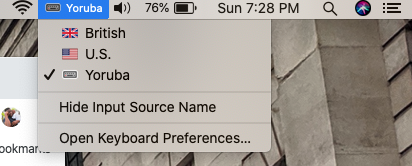
GBoard has mitigated some of these problems. In Yorùbá on the GBoard app, for instance, we now have pre-composed characters like ọ̀ and ọ́ and ọ and ẹ and ẹ́ and ẹ̀, etc, which can be inserted instantly without any secondary combinations. What we need, as I said during the subsequent informal conversation about the subject, is something like that for Unicode so that every new computer user does not have to spend valuable time doing diacritic permutations from the Insert>Symbol field. Or for browsers (Chrome, Explorer, Mozilla, Safari, etc), so we can stop waiting for Unicode to change its ways.
In 2016, through the Yorùbá Names Project that I founded, we created a free tonemarking software for Yorùbá and Igbo, for Mac and Windows, which has been very helpful in writing on the computer — and with which I have typed all the diacritics in this post. It still combines character elements, however, but it is software-keyboard-based, and a lot more intuitive.
The Yorùbá Names Project Keyboard, launched in 2016, can be downloaded at http://blog.yorubaname.com/keyboard
Its limitations show up when a document typed with the software has to be read with another program (like Adobe or Microsoft Word, then the cycle begins again). It would be helpful if the functionality of this nature already came with the computer so there is uniformity. Imagine if every computer sold in Nigeria already suggests to the user to flip the language as I do above so that the keyboard automatically allows for diacritic markings that can transmit across different programs. That would be great, won’t it? The conversation with these gentlemen convinced me that it is doable, but would take time, and different companies coming together to agree that African languages matter on these platforms. It has not always been the case.
Speaking with someone from the Woolaroo team, a Googler, who now lives in Australia and wants me to come visit.
One of the other language products that was showcased there was Woolaroo, created in conjunction with Google Arts & Culture, which is a crowdsourcing visual dictionary for a small Australian language. When publicly launched, users will be able to take photos, and then use that photo to submit words for items in the image, which is then sent to a database and shared with other users. For languages with few speakers, but whose speakers use the tools of technology, it is one way of eliciting lexical items without having to do the physical fieldwork that has characterized most language documentation efforts in the past. There is significance for this type of approach for languages in Nigeria, for instance, where old people who know the name of items are not literate to write, but can perhaps be made to use the visual aid of phones to contribute as much as possible while they are still alive.
How the Woolaroo app works. It will be launched in 2020, and its API will be made available so others can replicate it in many language communities.
There were other Nigerians, and Africans, at the conference. I met Dr. Túndé Adégbọlá of the African Language Technology Initiative (ALT-i), Àbákẹ́ Adénlé of AJA.LA Studios, Professor Chinedu Uchechukwu of the Nnamdi Azikiwe University in Awka, Nigeria, Professor Sunday Òjó, and Adama Samassekou (the founder of the African Academy of Languages), among others. It was a diverse group of people working in different aspects of language revitalization, technology, and documentation. Mark Liberman, whom I was also meeting for the first time, shared my concern about Unicode, having done some work himself in Nigerian languages, and been frustrated by the problem of finding the right diacritics in a simple and accessible way.
Dr. Adégbọlá and Prof. Sunday Òjó
Paris is beautiful at night — perhaps much better looking at night actually. The monuments are lit up, and the beauty of the city shines out from within the glow. The language of the city, naturally, is French, but the tourist who speaks not more than a smattering of the language doesn’t run into much of a problem.
It was cold most of the time, which made walking around a bit of an ordeal. It reminds me a lot of the other global city I once attempted to walk around in 2009. A day before I arrived in Paris, there had been a massive strike that paralysed the entire country and rendered public transportation useless. This could explain why Uber appeared a lot more expensive that I’d experienced elsewhere. Would have been nice to see how different the Metro was from the Tube in England. But the strike also meant that the city was less crowded — at least the usually touristic areas — and the public trash cans seemed always in need of emptying.
The Arc de Triomphe ahead, and a trash bag nearby.
I had got a travel grant of £1,011 to attend the conference — which covered my visa (~£295), hotel (~£270), food (~63), train (~£500), and Ubers (~£81.77) and was helpful and convenient, especially since I had to pay for the highest end of many of these things due to the rushed arrangement. My visa was issued on the 4th, so I was only able to attend the sessions on the 5th and 6th, leaving the city in the evening of the 7th. Still, it was enough to take in the fine city, sample the food, make connections, and make future plans to return for more adventure.
The benefit of the strike is fewer tourists, but more overflowing trashcans.
The train ride on the Eurostar from St. Pancras to Gare du Nord, which took just under three hours, is a story of its own.
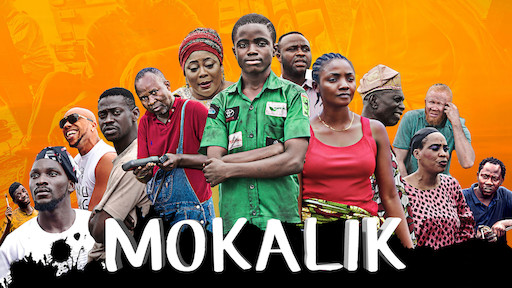
In Mokalik Kúnlé Afọláyan invites his audience into the world of mechanics through the eyes of a 12-year-old who is struggling academically in school. The young boy, Pọ́nmilé, is brought to the village by his father, Mr Ògìdán, to have the apprenticeship experience which the latter thinks may scare Pọ́nmilé to become more serious in school (on the assumption that Pọ́nmilé’s poor performance in school is due to inadequate efforts) since the life of an apprentice is supposed to be full of hardships and lacking in dignity.
By the end of Pọ́nmilé’s day at the mechanic workshop, he decides to continue schooling but also says he will occasionally come back to the village to learn, having realised that such technical know-how can be complementary to his school education. This decision shocks Mr. Ògìdán but he is happy his son’s horizon has been expanded by his experiences in the mechanic village. When Chairman, who serves as Pọ́nmilé’s guardian in the village, reports that the child is exceptional at learning, indeed a fast learner, Mr Ògìdán looks surprised, almost confused as if Chairman was talking about someone else.
Mr. Afọ́láyan’s movie explores a couple of themes often neglected in Nigerian society. First, the misconception about education, the myopic view that education is possible only in the format of a walled school with duly certificated teachers; a general misunderstanding that education is undertaken only in the context of classrooms, prescribed textbooks, regulated syllabi, written exams, etc. In short, the delimitation of education to literacy and instruction in English acquired through formal schoolwork. Another subtle theme in Mokalik is the dignity of labour and the importance of “catching them young”, or encouraging young kids to acquire vocational skills or trades like, in this case, mastery of motor vehicle repair.
One of the thrills of Mokalik lies in the fact that the main character is Pọ́nmilé—someone on the threshold of becoming a teenager. There are only a handful of Nollywood movies that feature a teenager in such a role. In short, the movie is Pọ́nmilé’s interpretation of how the unfamiliar world he finds himself in works. His family resides on the Island (most likely Victoria Island, although that is not specified in the film). During Pọ́nmilé’s one-day internship at different workshops within the village—from the motor engineer’s to the panel beater’s to the electrician’s, etc.—he makes connections between the world he is from and the one he suddenly finds himself inserted in; the similarities between the two worlds are key in shaping his ability to learn and integrate in the mechanic village.
Punishment
Pọ́nmilé ends up in the mechanic yard as a “punishment” for not being book-smart. He is considered to be a “dull” student, not good enough for school but could be good as a mechanic apprentice. It is, however, the rare upper-class parent that would want to steer a child along such a path in Nigerian society—yanked from the classroom and thrust into a trade workshop—given the realities of the criteria for class reproduction and upward mobility here. What actually happens in the film is that Ponmile suffers demotion so that he may become determined and thus concentrate on his studies. After witnessing the suffering in the hell of the Nigerian blue-collar world, he would rededicate himself to getting into the heaven that certificates are supposed to open up for the “educated”.
Would Pọ́nmilé’s father have abandoned him to his choice had he opted to become a full-time apprentice in a mechanic workshop? That scenario would seem far-fetched within the Nigerian reality, but films are not meant to be photographic snapshots of life. In a more general sense, though, wrong parental judgment in relation to a child’s career choice is often the cause of untold anguish and self-doubt, not to mention self-rejection, to the latter. If you get good grades or are exceptional in junior high school, for instance, you are expected to get into “science class”; and average students get pushed to “arts” and “commercial” classes. Such divisions may seem sensible for matching kids to their scholastic capabilities, but the problems that may arise from this arrangement become starker when, say, a high-scoring student opts for “commercial class”, or expresses a desire to become a hairdresser. This is a serious issue but not the focus of the present write-up.
Pọ́nmilé discovers that the world of the apprentice mechanic is like the world of the student. Extending the period of learning for badly behaved apprentices is just like the punishment given to students who repeat classes due to poor performance. Just as there are slow-learning students, so also are there slow-learning apprentice mechanics, and all slow-learners are punished. Pọ́nmilé also discovers a whole world of apprentice misdemeanors in the village, things surely far more colourful and earthy than student misdemeanors in the world he is coming from. Having experienced this intriguing world, Pọ́nmilé wouldn’t want to be totally extricated from it. Thus the “punishment” works, even though the consequences are largely unexpected; yet Chairman, that enigmatic chaperon, seems to have always had inner insight that things would turn out very well for everyone, almost like he wrote the script.
Education and job prospect
It is taken for granted in the film that being educated creates the possibility for entry into certain kinds of jobs. Is it really unusual or unheard-of to find the so-called educated working in a mechanic workshop? The Nigerian social space once buzzed with noise over some “revelation” that a couple of PhD holders applied for the position of truck driver with the Dangote Group. Pọ́nmilé informs Kàmọ́rù that people study Mechanical Engineering in school, of course referring to post-secondary-school education. Kàmọ́rù scoffs at this, responding that such graduates end up working in positions not related to their fields of study, which is quite an accurate description of how things often play out in Nigeria and elsewhere too.
However, Kàmọ́rù is saying more than this. He is also arguing that if you studied Engineering in university and you do not work in a technical field, you’ve probably wasted your time in school. He goes further to mock some of the clients who come to the workshop, implying that some of them who are supposedly educated have no clue about how a car functions even though that status symbol is an essential part of their sense of self-worth. The mechanic is thus the sustainer of their status and self-worth. Indeed, the Nigerian middle-class experience is replete with tales of woe at the hands of “sharp” mechanics who keep finding ways of making sure that their clients come back to have this or that part of their vehicles repaired, tinkering with the vehicles, planting hidden faults that will manifest later, in order to ensure constant custom.
Assumptions and points of view
In the film, there are issues of class and the perspectival baggage that comes with it. The whole idea of bringing Pọ́nmilé to the mechanic village has its class overtones, as already hinted at above. The assumption, of course, has to do with how kids from well-to-do families spend their free time. For instance, there are well-founded assumptions, on the part of the denizens of the village, as to what kids from well-to-do families do with their free time, i.e. playing video games, watching TV, or acquiring other “sophisticated” skills like playing a musical instrument. Simi, the daughter of a food seller, expresses this notion when she asks “Báwo ni ọmọ olówó ṣe wá ń kọ́ mẹkáník?” Pọ́nmilé responds: “Wọ́n ni mi ò kí ń ṣe dáadáa ní school.”
Another question relating to labour, and specifically child labour in the case of Pọ́nmilé, can be raised here. No doubt, learning does take place in the mechanic workshop, but the workshop is not just a learning centre but a business venture also—one can argue that it is indeed primarily a business. The apprentice makes a direct contribution to income-earning activities in the workshop. The modalities may be different from workshop to workshop, but apprentices often earn a living from what they do in the workshop and may save up money towards the day of their “freedom”. Of course, such income-earning chances improve as the apprentice becomes more experienced and expert in the trade, earning the trust of the master to even run the workshop.
A child like Ponmile would make a great apprentice, from what we see in the film, and as confirmed by Chairman when his father comes to fetch him home. But would he not have been an exploited child in that context if he made contributions to his master’s income, and without receiving due remuneration? Maybe we should dispense with such a prism in this case? But considering what we know of what sometimes goes on in such places in real life—the corporal punishment that may come with the territory, especially for young apprentices, the risk of exposure to alcohol and drugs, etc.—the film may be charged with some degree of feel-good narrowness in its vision. Be that as it may, the film highlights an aspect of education that cannot be overstressed, namely, the fact that it is a learning process for both the “teacher” and the “learner”, rather than the view of the teacher as all-knowing and not capable of making mistakes. Part of the story in Mokalik relates to debunking the myth that knowledge comes with age, yet the story does not downplay elderly wisdom. These aspects play out several times between Pọ́nmilé and his teachers in the various workshops he visits in the village. It takes humility for a teacher to accept that they do not know everything as regards their trade; it takes humility and does not suggest incompetence.
Pọ́nmilé appears to have found himself in the perfect world. We see a child with heightened curiosity, eager to learn. He asks questions. Many questions. And he gets answers. But he is a privileged kid in that setting. Pọ́nmilé is treated with such care that may not be accorded to another young boy from the underclasses. His curiosity is entertained even on those occasions when it causes some annoyance or perplexity. He seems also to be protected by his naivety in that, though not rude by nature, he asks direct questions and offers criticism without quite observing the cultural form of deference to age. This naivety works well for him in the scene where he critiques Taofeek (the painter). Taofeek reluctantly accepts Pọ́nmilé as the necessary critical eye of the outsider.
But in the end, the world we see in the film is not Pọ́nmilé’s world. It is the rich world of the mechanics and other denizens of the mechanic village. Their lives open up before us; we see the simplicity and complications of their intertwined existence in that space, a world-within-a-world, for there is more to them than what they do and experience in that space. There is in the village the genius who is able to identify an airline by the sound of the engine of the plane flying overhead; there is that knowledgeable and yet dubious citizen of the world who calls himself Obama. The mechanic village itself is a shapeshifter. It can suddenly become a wrestling arena, only for it to transform into a wedding party the next moment. And the people there embody that thing we find hard to define, the dignity of labour.
______
Tolúlọpẹ́ Ọdẹ́bùnmi is a critical discourse analyst, a trained linguist, and a PhD candidate at Michigan Technological University, USA. Her interests include politics, globalization issues, gender politics and popular culture. She was a Fulbright Foreign Language Teaching Assistant at Michigan State University, USA. She is currently a visiting scholar at Jean Jaurès University, Toulouse, France where she teaches English communication.
On November 8, 2019, we had a reading from Edwardsville by Heart at Angels & Muse in Lagos. The book reading and conversation was anchored by Nigerian poet Precious Arinze.
The BookArtCentre at Angels & Muse is its events centre which has hosted a couple of art and book events, readings, and workshops, in the past.
The reading also featured poetry by performance poet Chika Jones, folk musician Ẹ̀dáọ̀tọ̀, and Afro-Pop star Jinmi of Lagos. Here are some photos from the event.
Perkembangan Dunia Hiburan Online di Era Digital Modern
Dunia digital telah mengubah secara besar-besaran bagaimana orang aman788 menikmati waktu luang mereka. Dalam satu dekade terakhir, hiburan online berkembang jauh melampaui sekadar menonton film melalui layanan streaming atau berselancar di media sosial. Kini, dunia maya menghadirkan pengalaman interaktif yang mampu menghubungkan jutaan pengguna dari berbagai penjuru dunia dalam satu ekosistem ayo788 yang terus berkembang.
Bentuk Baru Hiburan Digital di Masa Kini
Saat ini, hiburan digital hadir dalam banyak bentuk. Mulai dari permainan santai di perangkat gghoki mobile, kompetisi esports yang semakin profesional, komunitas virtual, hingga berbagai platform kreatif yang menawarkan pengalaman berbeda. Internet telah menciptakan ruang tanpa batas di mana seseorang dapat mengakses hiburan kapan saja dan hampir dari mana saja. Semua terasa ggtoto lebih praktis, cepat, dan sesuai dengan gaya hidup masyarakat modern yang serba dinamis.
Peran Teknologi dalam Perubahan Dunia Digital
Perkembangan teknologi menjadi salah satu faktor utama yang mempercepat perubahan ini gokil33. Koneksi internet yang semakin stabil, harga smartphone yang semakin terjangkau, serta hadirnya layanan berbasis cloud membuat pengalaman digital kini jauh lebih mudah dijangkau oleh berbagai kalangan. Jika beberapa tahun lalu banyak platform digital membutuhkan perangkat gototo mahal atau komputer dengan spesifikasi tinggi, sekarang sebuah smartphone modern sudah mampu memberikan pengalaman yang tidak kalah menarik dibandingkan perangkat desktop tradisional.
Kemudahan Akses Menjadi Prioritas Pengguna
Perubahan besar lainnya terlihat dari meningkatnya kebutuhan pengguna terhadap kemudahan akses haha788. Masyarakat digital saat ini tidak hanya mencari layanan yang memiliki tampilan menarik, tetapi juga menginginkan sistem yang simpel, cepat, dan nyaman digunakan. Tidak ada yang ingin membuang waktu hanya karena harus menghadapi menu yang membingungkan atau halaman hahagacor yang lambat terbuka.
Pengguna masa kini lebih menyukai pengalaman yang langsung, smooth, dan tanpa banyak hambatan hao788. Mereka ingin bisa menikmati konten favorit dengan beberapa langkah saja. Hal inilah yang membuat banyak pengembang teknologi berlomba menciptakan platform dengan hwtoto navigasi yang lebih intuitif serta performa yang semakin optimal.
Transformasi Teknologi Mobile dan Perubahan Kebiasaan Digital
Kemajuan teknologi mobile juga memberikan pengaruh besar terhadap cara istana2000 sebuah platform dirancang. Desain responsif, tampilan yang lebih sederhana, serta kecepatan akses tinggi kini bukan lagi fitur tambahan, melainkan sudah menjadi standar yang wajib dimiliki. Kebiasaan pengguna internet telah berubah, di mana semakin banyak orang melakukan aktivitas liga2000 melalui smartphone dibandingkan menggunakan komputer pribadi.
Fenomena ini menunjukkan bahwa perangkat mobile telah menjadi pusat aktivitas digital masyarakat modern liga5000. Mulai dari mencari informasi, berkomunikasi, menikmati hiburan, hingga mengikuti perkembangan tren terbaru, semuanya dapat dilakukan hanya melalui genggaman tangan.
Pengaruh Komunitas Online dalam Perkembangan Internet
Selain teknologi, budaya internet saat ini juga ligatoto sangat dipengaruhi oleh komunitas online. Forum diskusi, siaran langsung, media sosial, serta para kreator konten memiliki peran besar dalam membentuk bagaimana seseorang menemukan pengalaman digital baru. Rekomendasi dari komunitas sering kali menyebar secara alami melalui percakapan sehari-hari dibandingkan hanya mengandalkan promosi tradisional mcmtoto.
Ketika sebuah platform mendapatkan respons positif dari pengguna naga2000, rasa penasaran masyarakat biasanya akan muncul dengan sendirinya. Inilah kekuatan komunitas digital, di mana opini dan pengalaman pengguna dapat menjadi faktor penting dalam membangun popularitas sebuah layanan.
Perpaduan Bahasa Formal dan Slang Digital
Menariknya, perkembangan budaya internet juga membawa perubahan dalam gaya komunikasi naga5000. Bahasa modern kini sering mencampurkan istilah formal dengan slang digital yang lebih santai. Ungkapan seperti “naik level”, “vibes-nya dapet”, “wajib dicoba”, atau “pengalaman yang smooth” sering muncul dalam percakapan sehari-hari.
Perpaduan antara bahasa santai dan profesional membuat komunikasi pptoto.click terasa lebih dekat dengan pengguna. Gaya penulisan seperti ini mampu memberikan informasi dengan cara yang lebih ringan tanpa kehilangan nilai edukasi. Pembaca masa kini cenderung menyukai konten yang terasa manusiawi, bukan sekadar tulisan kaku yang terlalu teknis.
Pentingnya User Experience dalam Platform Digital
Dalam dunia digital yang semakin kompetitif, pengalaman pengguna atau user experience pptoto menjadi salah satu faktor pembeda terbesar. Tampilan visual yang menarik memang penting, tetapi fungsi dan kenyamanan pucuk33 tetap menjadi prioritas utama. Kecepatan respons, menu yang mudah dipahami, performa stabil, serta akses yang konsisten menjadi elemen penting yang membuat pengguna merasa nyaman untuk kembali menggunakan sebuah layanan.
Bahkan perubahan kecil dalam sistem dapat memberikan dampak besar terhadap kepuasan pengguna rextoto. Platform yang terus melakukan pembaruan dan memperhatikan kebutuhan audiens biasanya memiliki peluang lebih besar untuk bertahan dalam persaingan digital.
Keamanan dan Kepercayaan di Dunia Digital
Selain kenyamanan, faktor keamanan juga semakin mendapatkan perhatian. Pengguna internet rrtoto kini semakin sadar mengenai pentingnya privasi, perlindungan data pribadi, serta keamanan akun. Seiring slot2000 berkembangnya teknologi digital, sistem autentikasi yang lebih kuat, koneksi terenkripsi, dan kebijakan privasi yang transparan menjadi kebutuhan utama.