All I Want for Christmas

I’m not so modest as to request for only warm hugs and pleasant night kisses for Christmas as that old song goes (All I Want for Christmas is You). No, I’m a selfish guy. From window-shopping at Apple stores and browsing through unsolicited brochures sent to my mailbox by advertising geek shops, I have decided that I do want myself some new gadgets. This, blog readers, is my Christmas wishlist.
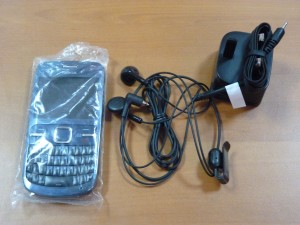
A phone is already out of it. A few days ago, Nokia sent me this new C3 phone they had promised me since summer. It is a nice gadget filled with new functions. It is really stepping up its game to compete with the Blackberry. But I don’t care for that. The fact that I can just pull it open and put my SIM card in it without any hassles is one my its best features. Then there is the Nokia chat messenger through which you can communicate with users of the same phone across distances. In any case, one more phone can’t hurt, and I already have it, so a phone is out.

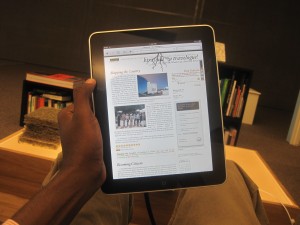
iPod/iPad. To tell you the truth, I’m not much of an Apple fan, but one thing you can’t take away from them is their craftsmanship. They make products so alluring that one would almost forget any other drawbacks (which include exclusivity, non-flash capability, and cost) and plunge directly into buying. I already have an iPod Classic and it’s one of the best companions when computers are far away. All I have seen of iPads have convinced me that they will be excellent companions. Maybe I can finally throw away this old Dell and move into the 21st century. Now that would be a great gift to receive, not only because it would be like giving a library of books as well. No, I don’t want a Kindle. I like to admire it from afar.
A new car radio. Now I’ve never seen so many radio stations in my life. There are about 10,000 commercial and about 2500 non-commercial radio stations in the US alone. Illinois and Missouri have about 500, if not more, of all of those. Of that are my favourites: NPR (the National Public Radio which also becomes the BBC at night), KEZK (Soft Rock 102.5), Rewind 1033 (which plays 70s and 80s hits alone). And last week after my car recovered from battery loss, my old car radio reconfigured itself and is now playing a station called 180Y or something like that, codename: “Today’s music”. The fact is that without the radio road trips would be incredibly depressing. My car radio right now however, is as good as broken.

A super camera. It seems surreal yet appreciable that a little Canon camera could have taken so many nice shots in its short life span. A few months ago however, I dropped the little fucker on the ground by mistake and its display view went bonkers. For many weeks, I felt like a blind man walking with a service dog. The camera itself worked, but I had to put it to my eye (oh so consciously) in order to see what I was about to shoot. It didn’t just reduce the quality of the shots because of the loss of a preview opportunity, it also made it hard to take spontaneous or clandestine shots. Now yesterday, I dropped the camera again, by mistake. This time the display came back on, which goes to say that there is a solution within every problem. It has also however reminded me that I need a new, this time professional, camera.

So, there it is Santa: my techno wishlist. Not much, just an iPad, a supertech camera and/or a car radio. But if you think that all I deserve is nothing but a good old Amazon gift card or a stack of new books by brilliant writers, I would take that too, with thanks. It’s your call after all.

Thanks to Clarissa, I have made my Amazon wishlist which include a few favourite books. Yay! Now Santa, where are you? Make me happy this Christmas. I’ve been a good boy.
The Pleasure of Swallowing

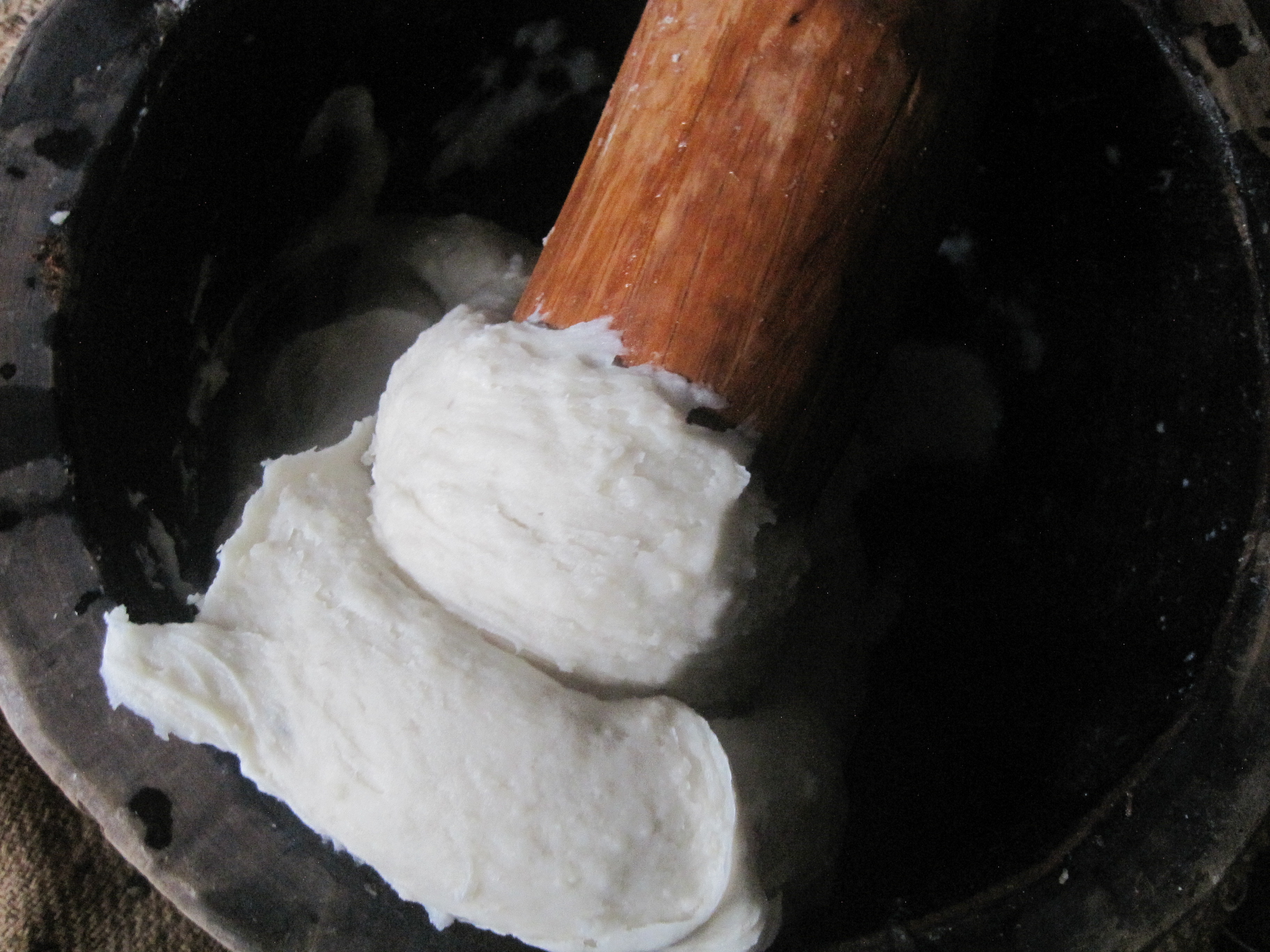
In the heart of the gastronomical art of the people south of the Sahara is the delight of swallowing. Around mounds of hot dough made out of yam, or rice, or potatoes, or corn, or even millet, bowls of soup lay spread on a mat in the middle of a salivating family. Dinner time is more than just the conversation that lubricates the passing of each balls of dough through the oesophagus into the waiting bellies, it is an appreciation of the craft behind the cooking, and the process of eating. Feeding is an art in itself. I see it now: bowls of pounded yam along with egusi soup, hot plates of amala on which ewedu and gbegiri compete for dominance, and all around the plate surrounding small reefs of fried beef. It is the pleasure to behold, and the pleasure to hold on the tongue before the final swallowing.

So a friend from Jamaica had encountered pounded yam for the very first time, and looked bewildered at the suggestion that each handful of a rounded ball of the dough already coated in soup had to be swallowed in entirety. “This is too large for my throat,” she said. I took another look at pounded yam today and discovered that she was right. Contrary to the suggestion that all you do is throw the ball of food in your mouth and swallow it, the process before the swallowing is actually a little more complicated. It starts with a swirling on the tongue of the food in order to separate what’s “food” and what’s “sauce”. A little teeth-work takes place afterwards to press whatever is necessary into the right shape for the throat. Everything else follows.

It is safer to say that whenever you get a delightful ball of Yoruba food (be it pounded yam, amala or semo) into your mouth along with accompanying spiced vegetables, you may just trust your tongue and teeth to sort out the rest of the job. It goes into the mouth as a ball of dough, but eventually relaxes into something smoother before a delightful passage into the warm embrace of the gut. The pleasure, eventually, is in the eating. Here therefore is a salute not just to the art of cooking and the long history of efforts behind it, but also to those who revel in its delightful consumption, especially across cultural lines. Feeding, after all is an artful exercise. (In other words, you could just say that I do terribly miss my pounded yam.)

Goodwill Towards Men

If I could, I’d get a Santa hat to wear around this little town. The smell of snow and the colour of lights around houses in the neighbourhoods comes with a pleasant feeling of Christmas. If I could, I’ll get a Santa hat like the big American guy I saw early today at Walmart. He wore a pair of jeans, a tee shirt, and a Santa hat. He was not Santa Claus. Santa Claus doesn’t exist. He didn’t look good either. He looked goofy. But he had a Santa hat. If I could, I’d buy a Santa hat. But I won’t. I’m done with all things hats.

Hats are so last year, aren’t they? Let me leave that to Mohammed and Ameenah to project their Africanness wherever they go in the United States. They’re our new royalty of cultural exchange (although she still would not budge to my constant nagging that she takes off the religious head covering and replace it with something more culturally authentic – You’re Yoruba, for goodness’s sake. Get a Yoruba head gear. You’re and not from Saudi Arabia; and he would never stop complaining of how people become automatically distanced whenever they discover that he’s Arab. I wouldn’t suggest to him to wear a turban to class for his students either. Actually, now that I think about it, I would. Isn’t that the whole purpose of the exchange? Now that would be something). It is an interesting time to be here, learning good new lessons in cultural exchange through the eyes and experiences of some others standing at a different front line. Ameenah is Moslem from Nigeria. Mohamed is Arab from Morocco. Same continent, same religion, different people, a different outlook on life.

If I could get a Santa hat, I would. It is cold, and my hair (two months old) will soon become unable to provide needed protection. If my brain does eventually freeze itself off, I will have myself to blame, and lose the ability to do anything ever again. I should get a hat, again, truly. Ignore the fact that the last three I bought all got lost after the very first time I wore them. I ran into poet Eugene Redmond today on campus, almost by chance. An African-American writer from the United States, I met him in 2002 on the campus of my University in Ibadan and what struck me the most about his appearance was that he was always wearing an African-designed hat. Today was no exception.

If I could, I would get a Santa hat if only because it is the Christmas season. I could keep my head warm and fuzzy, and delight in the season, with goodwill towards men.

Why Nwaubani Was Wrong

Many commentators have already responded fittingly to a recently published op-ed in the New York Times by Nigerian writer Adaobi Tricia Nwaubani. (One of them was Carmen McCain in this blogpost). In “The Laureate Cause” which you can read on NY Times or on 234NEXT, Ms. Nwaubani argues a faulty logic that implies that having new authors write in local languages is detrimental to national unity and cohesiveness and thus bad for literature. To momentarily ignore the fallacy in assuming that writers write so as to further nationalistic goals rather than to justify their creative potential by creating using whatever means they have, the argument she makes insults intelligence. Language diversity is one of literature’s best assets as well as one of its most assaulted elements. It doesn’t need anymore drawbacks.

With an array of opinions and ideologies as many as the tools of translation available to linguists, it is already difficult to prevent one work from misinterpretation. (Orwell’s Animal Farm was translated into two different ideological interpretations in East and West Germany respectively during the cold war.) However, the pleasure of being able to read works written in the native thought and tongue of the writer has aways been unquantifiable, as can be seen from the feting of writers like Gabriel Garcia Marquez, Naguib Mafouz, Gunter Grass, Mario Le Clezio and very many others including recent Mario Vargas Llosa who have all written in their local languages. If Ngugi Wa Thiong’o had won the Nobel this year, he would have been deserving of it, not just for the depth of his creativity, but for his contribution to the development of Gikuyu by choosing to write in it. We can only hope for more of those kind, and not less.

Many of the books I read as a child were in Yoruba and I can’t say it enough how much it helped my appreciation of English and all the other languages I have learnt to use. If tomorrow I choose to write in Yoruba – which I have certainly considered, I would represent an important a voice in literature as someone who decides to do it in Igbo or Swahili without care for English as an international language as long as I stay committed to the craft and say something new (or even something old, in a new voice and style) and say it well. We’ll have literary translators to do the rest. To make the case for English as the only medium of creative process is easily the biggest one of the many flaws of her essay, and a disingenuous take on the African literary present and future.

Cross posted at Nigerianstalk.org.


In Africa, the Laureate’s Curse

Daydreams and Questions

“What do you eat back home? No, what meals? What is the nutritious content? What utensils do you eat with? Do your children play with barbies, What is the rate of HIV/AIDS? Do you ride a car? Do you have cars? What kind? What of your roads? Of what kind are they? What’s your government like? You run a socialist government, right? No? But your medicare is government run, right? Not as efficient as we have here. You can go to the hospital and get treated without having insurance. Yes? No? Do you like Obama? How did you speak English? Just what is like in Africa where you’re from?”*

Beaten paths of childhood dreams and games on a once dusty road, I return to the noises of the street from where I come. It lay bare in the eye of the sun, with drumbeats of restless feet, and hope on thumping hearts. It seems distant, but also sometimes close by in the eyes of the little children I encounter within the walls of this new land: adventure, love, curiosity, precociousness, love, hate, impatience, impetuousness… Their parents dote on them with love and protection, as they should, in hopes of a more hopeful day ahead. It looks the same to me, I think, and smile back at the little shy girl on the lap of her father. She inherits a large world of new dreams and places to see, and taste.

Behind my childhood home, about half a mile towards the more silent parts of the neighbourhood is a railway line that divides the city into two. I’d stand by its side, looking towards each direction from where locomotive trains blare their horns early in the morning as they move coal and some other market goods around, and dream. The rail goes as far as eyes can see, into where else its makers destined it and on the regularity of black but shining tracks. It recedes beyond my reach all the time, and along with the dusty sweat on my brow carry with them a dream of a place far beyond the reach of limits. It is here. It is even farther beyond. Out through the window of the child’s eye, I see that dream of the past and the adventures of coming days.