A Review

No, not of a book, movie or song although that would be fun, but of the year itself. Yes it’s too early to do that since we still have about nine days to go, but it is amazing to see how close we are already to its end. By this time last year, I was here, same spot, same posture, probably complaining of snow or making a general observation of a particularly fascinating endeavour. The only difference is that then I was a teacher of many young students of Yoruba, but now I’m mostly a student myself. (Speaking of reviews, I’d appreciate you taking a moment to tell me what your favourite posts on this blog has been. There’s a poll on the right side of the blog. Please choose as many options as appeal to you).
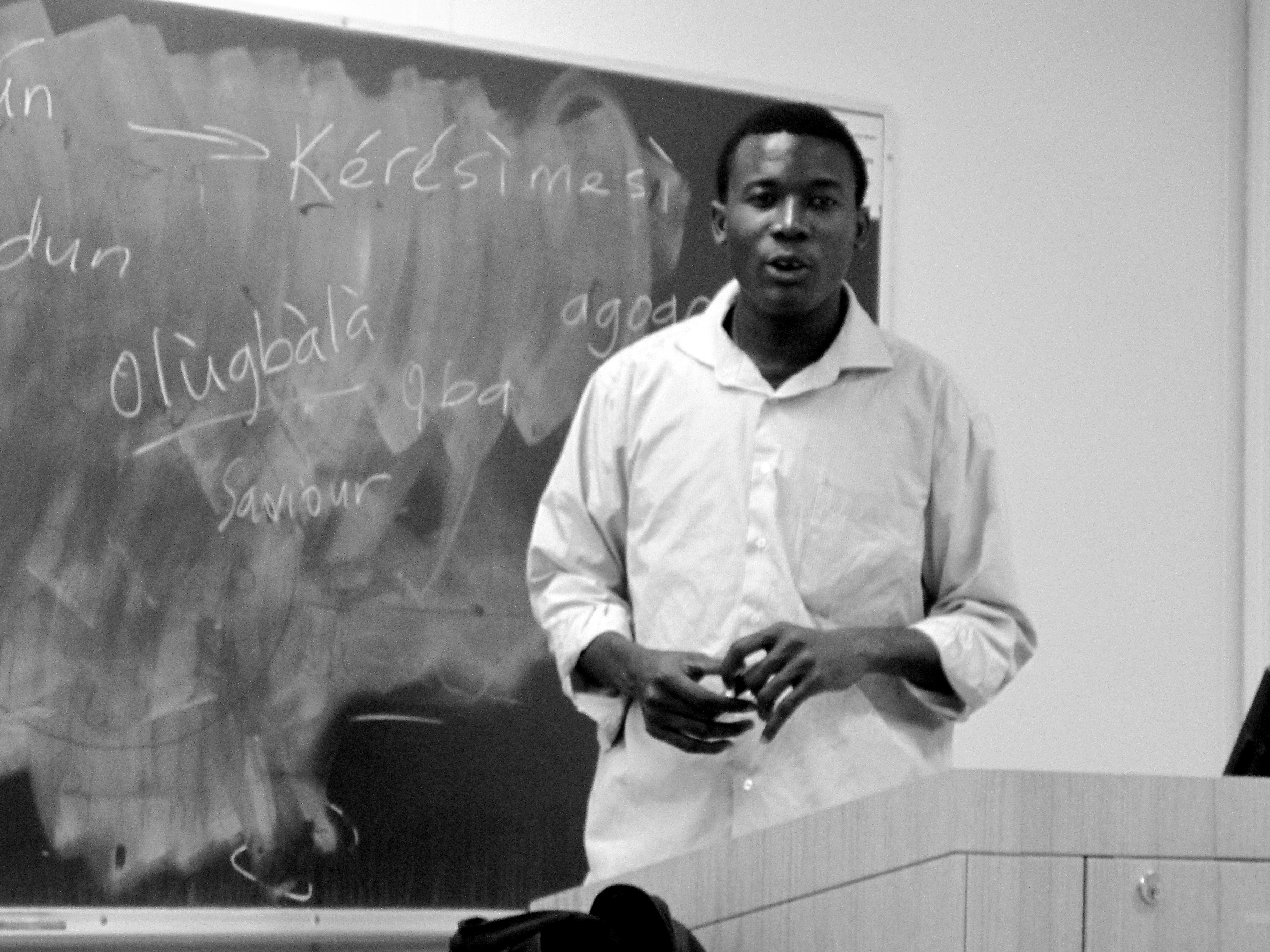
I miss teaching in the Yoruba class. It was one of those moments when everything stands still and a continuous flow of knowledge and fun merges into one beautiful experience that lasts for about one and a half hours, two times a week. It’s incomparable, not just because of the things learnt and taught but for the pleasure of being there, and being the vessel for such cultural exchange. I met a few students this semester who said that they registered for the class either because they attended my talk last year or had heard from other students, and wanted to experience the class for themselves. I am thinking of returning to teach that class next semester. What do you think?

I’ve posted less on this blog per month since August, deliberately, and I think that has worked well. I realized at the end of the first blog year that it was better to write whenever I could rather than make posts everyday as I used to when I had all the time on my hands. It was inevitable that graduate school will attempt to suck me dry of all my waking moments. But then, here we are, still talking, and still sharing little moments of laughter. My semester has been made even better to bear by the presence of lovely colleagues who bring me chocolates and other nice stuff (you know yourselves), and those with whom I share nice stimulating conversation somewhere amidst the bustle of the day. There is also the doting host parents who have treated me no different than their own son with free access to their home, their food and their wine. What else could one ask for?
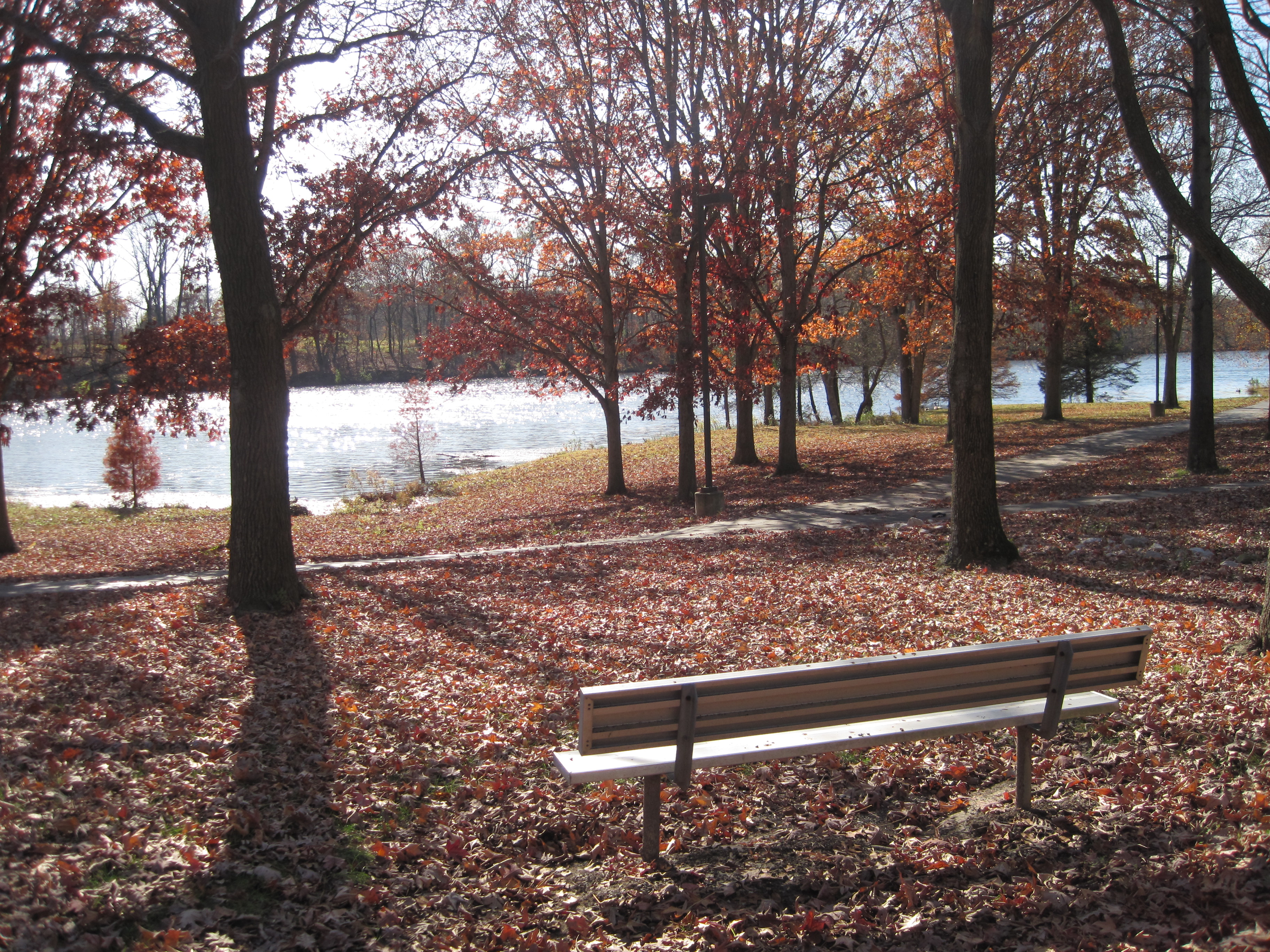
This year I travelled around (some parts of) Nigeria, and that was fun. I hope to complete my tour of that country in a not too distant future. I also got to see a few more of the midwestern United States. A few people have suggested that I should travel with a more critical eye next time (instead of my usually fawning admiration of spaces, I guess). In my defense, I have gone around less with the intention of understanding the people in the places I go and more with the intention of understanding and describing the places in which they live. But now that I know the difference, maybe I should take one more step closer. (You might like this article about the BBC reporter who attempted to understand and describe Americans in a new book). Maybe it is the desire to take pictures and write about places that moves me the most.

When the year ends next week, what I’ll be most grateful for is the general beautiful pleasure of warm human company. There’s still no alternative to that yet.
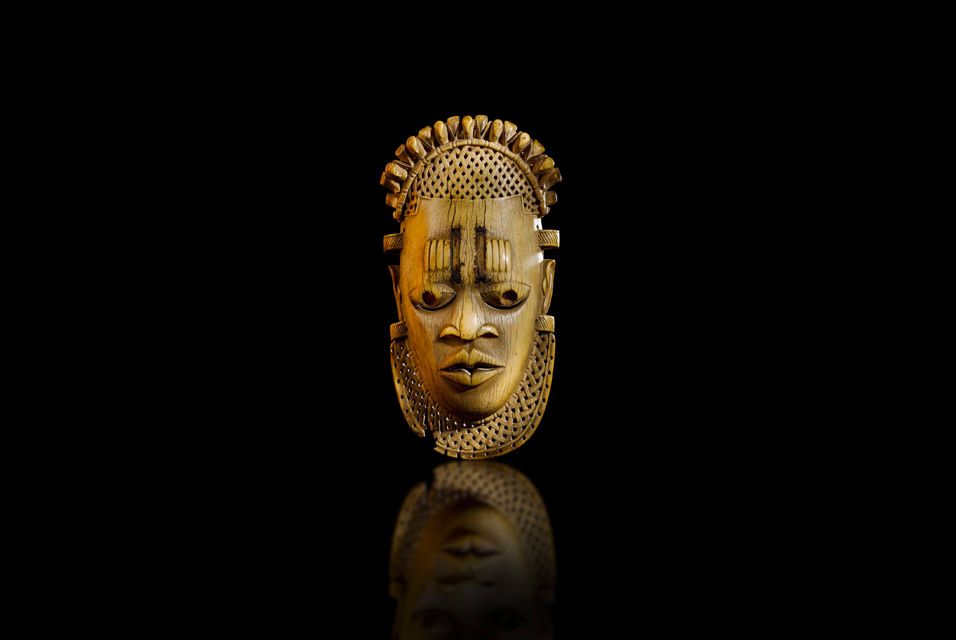
Stolen Benin Art for Sale

One of the most iconic artworks from the old Benin Kingdom (a 16th century ivory mask, pictured here) stolen during the British “Punitive Expedition” of 1897 has now been put up for sale by a private “collector” in London for almost to 5 million pounds. (The details are here).

I don’t know what is more disgusting, calling a stolen artwork a “collected” artwork or offering same for sale when the real owners have spent years advocating for its return. This particular art piece is only one of the many that have been in the possession of the British museum for decades. This one is peculiar for being in private hands of descendants of the British soldiers who looted Benin and made away with its treasures.

A Nigerian activist Kayode Ogundamisi is now calling for signatories to a petition to stop the sale, and get the iconic mask (forcibly taken away during the dark days of colonialism and exploitation in Nigeria) returned to the country, or something. Please find details of the appeal here and see how you can help.

Edwardsville by Heart

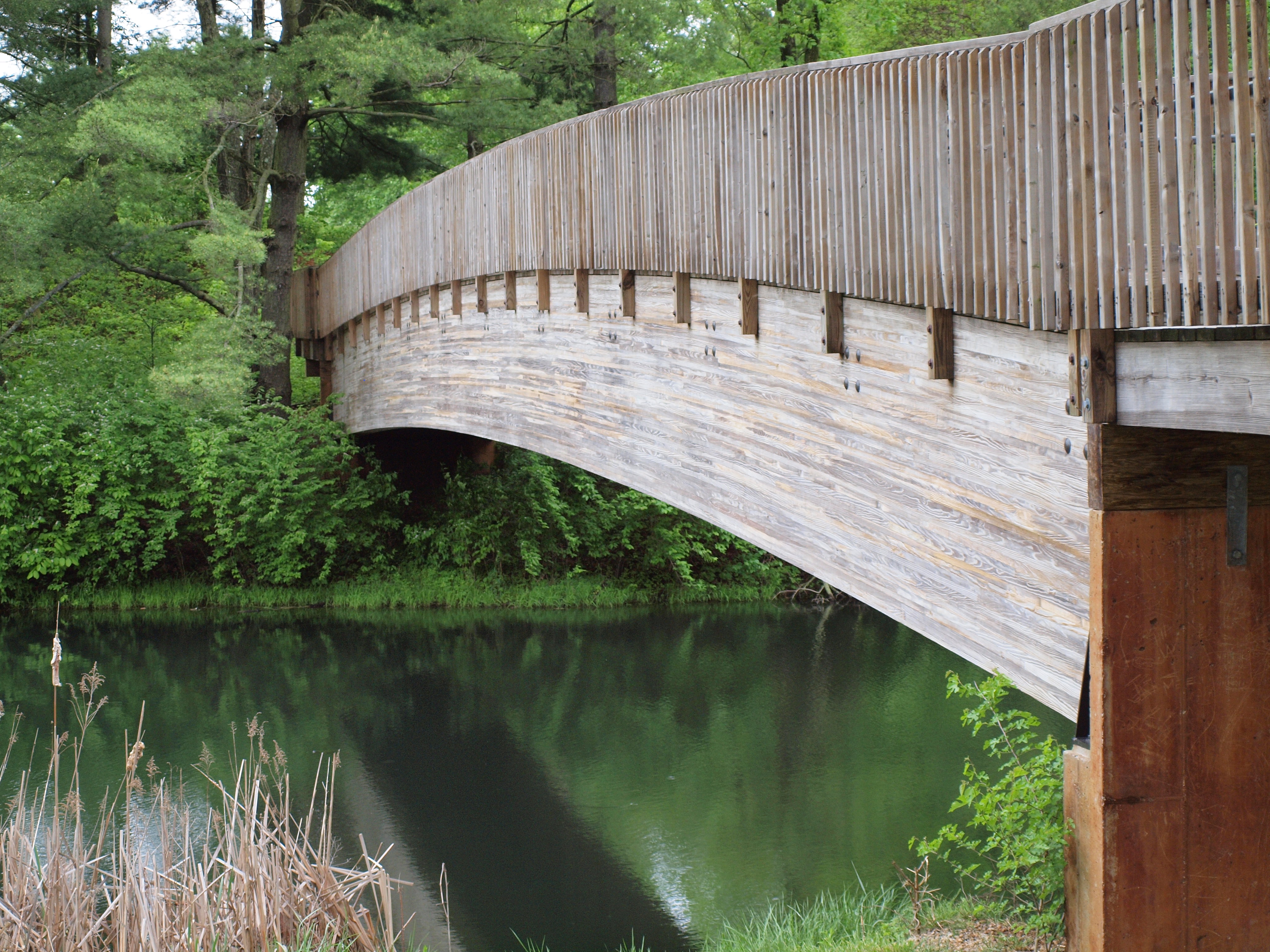
The picture that I had intended for this post remains in my head. It is a sheath of red and green Christmas flowers bound in a perfect circle and hanging by the side of the wooden bridge over the Tower lake at the entrance of Cougar Village. It has been there since winter began as a sign for the season. I don’t know who put it there but it always makes a good sight every time I drive by, and I have always been too preoccupied with driving to be able to take a perfect picture of it. And so, it remains in my head.

One more disadvantage of being able to drive is the laziness it induces. All my favourite haunts on campus once familiar to regular treading of my bicycle tyres have now become distant acquaintances. But for that battery run-out on the car a few weeks ago that forced me to walk home at night in the cold, I probably won’t even have recognized what the bike paths look like. It’s sad, I know. It is also fattening. Goodness knows how large I’m going to become by the end of this school year. We have not even mentioned the cost of gas made higher often, no less, by Nigerian agitators in the Niger Delta. It has warmed up for a while in the last few days and a bike ride is looking very likely now, if only I can muster the patience to walk again to campus in order to pick up my bike where I’d left it a few weeks ago.

But this post is not about the bike, the car or the Christmas sheath. It is the treasures of the little city. Not much a delight as it was last year through a stranger’s eyes, it is growing into an even more familiar friend. From new wineries being discovered in the most obscure corners to making friends in wine shops downtown with the hopes of getting my picture artworks displayed on their walls. If what this is is the subliminal instinct working towards replicating an already picturesque childhood, this will be more interesting than expected. All we need now is a dog. I already have many stories to tell.

Glad for the Holidays

America is such a fast society; busy people talking on mobile phones, travellers in big cities with heavy backpacks and briefcases, racing cars on motorways and a 24 hour news cycle. One almost can’t keep up. I remember the feeling on the first day of my return to this town, wondering just how different it all seemed again. It took me a few days to get back in the grind. Things never seem to wait. It all goes by so fast, and one is left wondering where all the day went. More than thirteen weeks later, it feels good to take a breather. What a ride that was.

The awesome gift my Amigo Secreto gave to me last week. It's an awesome reminder of what I must do instead of being stressed out with work.

Last week at our final office lunch, I was talking with a colleague – an elderly professor originally from Italy. How does he like it here? I ask. Oh no, I don’t much, he replied. If he hadn’t left his country after the World War when it was both fashionable and imperative to do so, he would still be living there, he said. “It’s the people, the culture, the food, the company. Most importantly, the relaxing ability of people to enjoy life.”

There is something about America that is both endearing and sometimes frustrating at the same time, I think. It is the system that makes working the centre of existence, and leisure something you never do unless you’re dead. On the one hand, it is endearing to see how much you can achieve if you work hard for it, on the other hand it is frustrating to see how hard it is to enjoy the fruits of your labour if you only spend all your time working. The delight is in the balance. I wonder if the country has a retirement age.

In any case, I’m glad for a break from school work that sometimes threatened my sanity. Without the occasional comfort of delightful classmates and a couple of courses that one really loves, it could have been harder. Now all I do is stay up in bed for as long as I want, and wake up whenever I want. Watch a movie, listen to music, and get back to just being lazy. Yesterday, I saw the eclipse of the moon. Christmas is in a couple of days and I don’t even know it. Back home, it would already have been a bustle of fun activities including Christmas fireworks and the dry smell of burning grass that characterizes the harmattan season. Oh well, one can’t have it all.

On the bright side, all the snow from the United States has now been shipped to Canada and Britain. There are a few more warm days ahead.

Of Books and Used Books

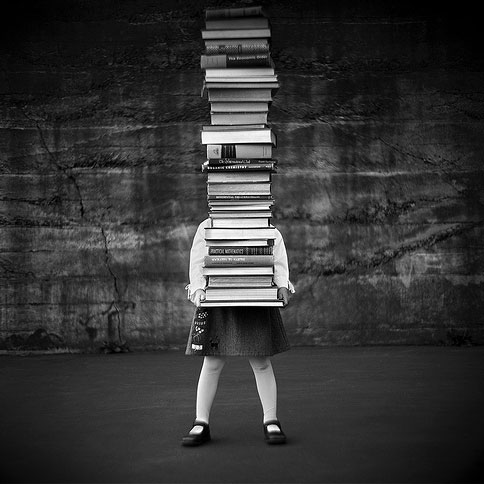
I like books, but only to the extent that they don’t become a physical burden. When I was younger, I used to like the idea of a stacked bookshelf filled with books of different kinds – even when I didn’t get to read them all. My room when I was between fourteen and eighteen was filled with over two hundred books that I’d gathered from all around the house. I studied library archiving methods from books and made a list of all of them, delighting in the ability to monitor their movement whenever anyone borrowed them.

Much of those book were pass-me-downs from father and elder siblings. Father gave me tonnes of Readers’ Digest issues from the 60s and 70s along with series of novels from a writer called Dennis Robins. Sisters read James Hardley Chase and Harold Robins and a few Mills and Boons series. There were also books from the African Pacesetter series that provided an opening into a world of new adventures. The real heavyweight literature texts however were from Shakespeare (father gave me his copy of The Complete Works), Wole Soyinka (we had a copy of The Lion and the Jewel as well as The Jero Plays. I never did figure out who owned them. They could have strayed in somehow from borrowings. I remember vividly when father handed me his copy of Ake, saying, “This is one of his most accessible prose works. Even I can understand it. It turned out to be one of the writer’s most delightful reads.), Chukwuemeka Ike (The Bottled Leopard, The Naked Gods), D. Olu Olagoke’s The Incorruptible Judge, Ngugi Wa Thiong’o’s Weep Not Child, Nkem Nwankwo (Danda and some other one I can’t remember now), Efua T. Sutherland’s Edufa, Chinua Achebe’s trilogies, and his outstanding Chike and the River which I read in primary school. I also remember Thomas Hardy’s The Mayor of Casterbridge which I never read because at that time for a silly reason that it was too big a book to be read without accompanying pictures. Along with all of those were the Yoruba texts: all of D.O. Fagunwa’s books including the famous Ogboju Ode Ninu Igbo Irunmale, Bamiji Ojo’s Menumo, Adebayo Faleti’s Ogun Awitele, Akinwunmi Isola’s Efunsetan Aniwura (which we read in the Yoruba class in secondary school), father’s own poetry and prose collections, among so many others.

The house was a wonderland of sorts with such very many ideas locked in the pages of creative texts that I delighted not only in reading, but in making mine. I called the home library The Virgo Library and made a catalogue of all borrower. I also made a rubber stamp out of flip-flops and branded all of them with coded numbers all starting with VL. Much of the said library became depleted between 2000 and 2005 of undergraduate studies through lending and book exchanges with friends. In turn, I exchanged them for an introduction into a world of new texts and so called “adult” literature of Rushdie, Joyce, Marquez and the rest of them.

Then there was the other realization that half of the books we should even be reading didn’t even get to Nigeria on time, except occasionally through professors (like Niyi Osundare and Remi Raji) who brought them in truckloads after every return trip. We read voraciously from the many book exchanges with such trusting professors. It was a good thing that books – like the sea – renewed their buoyancy after each use, and the knowledge in them went around. Sometime when I think about it now that I’m in the US with Amazon.com at my fingertips, I wonder how much we missed out of back then because we didn’t  have anywhere to buy books, or sometimes even the means to do so. Great books were encountered only in random places either in the shelf of a travelling professor, or in the corner of a used bookstore by the side of the road.

Most of the books on Amazon.com today have used equivalents that cost between $0.01 and $1, excluding shipping. What a delight, especially to find out when they arrive that they actually look as good as new. But what if they didn’t? Who cares? A book is a book is a book. The content will remain the same through pawings, markings, note taking, and dogearings. I’ll read it, leave a few notes in some of the margins, and hand them over to the next reader. These days I don’t keep books with me anymore. I find the concept of a stationary shelf of books to be tiring and not just because of the cost to move them around through airport baggage weight scanners. It might be why the Kindle or the iPad have become the next best companion of the itinerant reader. As clichéd as it might sound, there’s still an allure to the feel of real books, and I won’t tire to buying and reading them. And this, my friends, is why those who take a look at my new Amazon wishlist will find a list of books I’ve wanted to read, along with a few gadgets that have stolen my interest, including the iPad. (Hint: Mr. Jobs, here’s your chance to win me completely over).

What is the value of books, or knowledge, or even Christmas gifts? A delight, I tell you. Or ask a fifteen year old boy discovering the world, discovering himself through the words of others in the dead of night.

__________________________

Picture source: http://www.binarydollar.com/category/frugal/, http://stkarnick.com/culture/category/culture101/