Browsing the archives for the Uncategorized category.

Research

I want to be able to talk about the field of Second Language Acquisition, my encounter with it last semester, and how much the questions it raises are more than the answers it provides. I am back into reading extensive materials in the field many of which didn’t make as much of a dent as they should have during that first encounter. I won’t now, not just because my knowledge is not yet as comprehensive as it should, and that a carry-over from a daunting first encounter is unhelpful in allowing me open up more to its possibilities, but also because I’m afraid of misrepresenting the extent and influence of what I already know. My MA thesis will have very much to do with SLA and I need all the concentration I can get.

But talking about what I’m doing always helps, as I have found out. Having less time to travel around the country discovering places now like I did before, all I have now is my research and the hard work of creating relevance in a field that gives me the freedom to think, and the tools to make a difference.  This time, I’m looking at tonal acquisition. The fact that not much has been done in the area so far is also as positive as it is challenging. So while the research process begins to take shape, let’s see what Krashen and Chomsky have to say again.
On The Strong Breed, Again

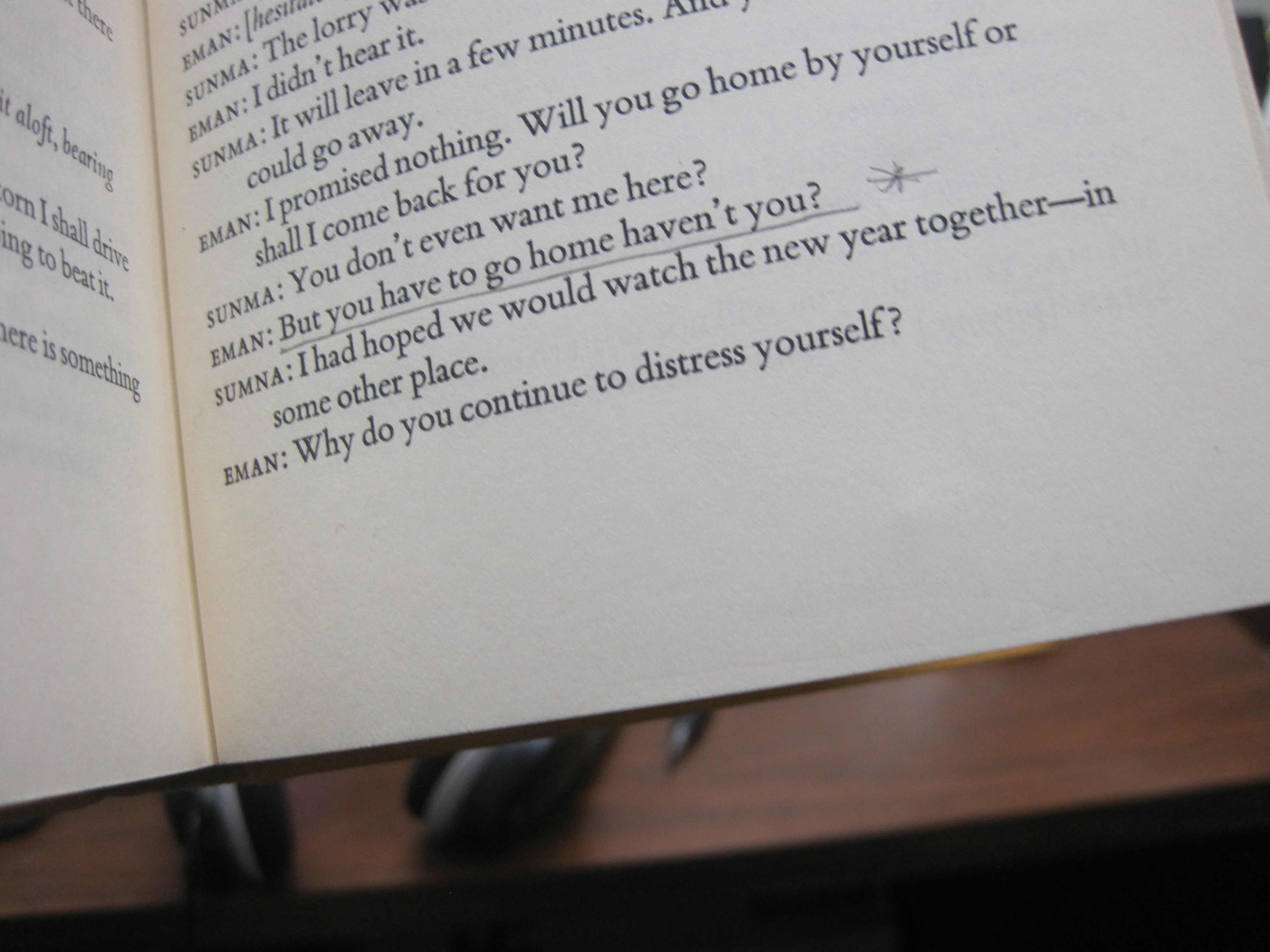
My blog statistics reveals that people who search Google for themes in or discussions about Wole Soyinka’s The Strong Breed often find themselves on my blog, specifically on this page where almost exactly a year ago I had written an unflattering rant/review of Wole Soyinka’s use of a wrong contraction. This is a grammatical flaw that no other publication has pointed out in the many decades that the book has been around, or since.  (Click on the photo below to enlarge and see the error.)

About two months ago when I received a gift box of some African books from the 60s and 70s from a colleague, Wole Soyinka’s The Strong Breed was one of them. There were actually two editions, published by two different publishers at different times. The first thing I did on finding the issues was to look for this error to see if any of the subsequent editions had it corrected in them. The findings: no! I have now examined four different editions of the work and the error remains. (And I believe it’s an error because contractions aren’t formed like that.)

In any case, it is good enough that students of the play who have found themselves on my blog would have taken something crucial away other than the fact that it is one of the playwright’s well known brilliant works examining relationships between ritual, society, and life.  But as you would see as resulting from the comments in the initial postad hominem attacks on my intentions rather than on the merits of my argument dominated the first conversation and prevented a more robust discussion. Maybe this time, it will be better. Or not. Either way, this should be my last word on the matter. Promise.

One shouldn’t spend too much time in the grammar class. 🙁


Oh Fulbright.

I received a spirited email yesterday from someone who had found this blog through search for resources and tips about the Fulbright programme. Here’s an excerpt:

I came across your blog a few days ago when searching for fellow Fulbrighters who were willing to share their experiences on the Web. Either my research sucked big time or there were hardly any note-worthy ones except yours. I loved your posts especially your ’10 Reasons Not To Speak Your Native Language’. Haha..that was hilarious. I can totally relate to that. You see, I’m from Malaysia and our national language is Malay. Obviously it’s an unusual language but it has been quite useful during my stay abroad when we don’t want people to understand us. One day, my friends and I were caught red-handed by a Nigerian who spoke Malay!! Thankfully, we were just commenting on how cute he was. Yes, how about that. Turns out he has lived in Malaysia for quite a bit and he was used to the language. Taught me not to be so obnoxious and use Malay like there was no tomorrow =)

Mails like this make me happy to have – in some way, if only through random observations/rants of daily blog posts – provided resources or stimulus to those who might need them to apply for the Fulbright which I believe is a life-changing experience. It also reminds of why blogging is not such a waste of time after all.  For those that may still stumble on this page looking for resources, let me recommend the following links that might help.

What a Day (June 3, 2010)
A Short History of My Face (January 22, 2010)
Why Fulbright (December 16, 2009)
The Conference (December 11, 2009)
I Was Very Close (December 9, 2009)
The Beginning (August 10, 2009)

and a few others…

Like I said in response to the email, the only other most important criteria needed for applying for the program, along with the required knowledge of language, is curiosity and a sense of adventure, and an open mind.


On Migrations, and Age

This recent post on my colleague Clarissa’s blog on migrations and the kind of immigrants/grad students that we find in the US raises interesting perspectives. The post she wrote and the one she referenced both talk about the two extremes of being migrant students/travellers in the US: they either completely or extremely assimilate (sometimes even more fervently than already settled natives), or refuse to assimilate at all, living in the host country only in the flesh, and keeping their minds fixated only with things from home. Both extremes are unsustainable but we have all at one point or the other met people who leaned more to either side of the continuum.

Does it have to do with age, education, gender or religion? I can’t tell, but one very endearing characteristics of Czeslaw Milosz’s Visions from San Francisco Bay to me was the very removed but well situated (beautifully written) reflections on life in Poland as observed from California where the author had chosen to settle after a career lasting very many years. It was in the interaction of his fossilized Polish cultural personality with the new and dynamic of the American West Coast that the beautiful book of reflections emerged, and one is grateful for it. I suspect that the extent (and more importantly, progression) of the immigrant’s insularity on the continuum of eventual assimilation will determine the extent of creative conflict that might turn out to delight in form of essays and literary reflections. And surely, age does add a very interesting dynamic.

By the end of our teenage years, we are all usually well situated in our cultural surroundings to be able to thrive with it in a foreign country. The result of the melange of attitudes and interactions from then on determines much of how one’s adult life in a foreign country eventually plays out, and much of it is also fuelled by attitude. For a second here, I return to the short moments at the end of Wole Soyinka’s Ake and V.S. Naipaul’s Miguel Street where the young impressionable men leave their home surroundings for the very first time. Insularity ends, and the real world lessons begin. There might be something to be learnt in comparing the thought progression, attitudes and output of the three writers through the prism of their travel experiences, and more importantly, exposure. And time.


Advances in Indigenous Language Technology

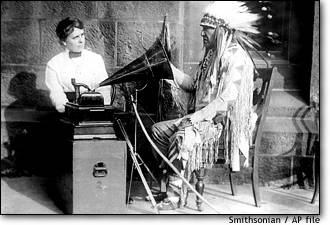
I am fortunate to have worked with some of the most prominent people at the forefront of language technology development in Nigeria. In 2004, during the West African Languages Congress (WALC 2004) conference co-hosted by the Department of Linguistics in my alma mater in Ibadan and the African Languages Technology Initiative, I came across some of the new advancements in localization, and efforts in making African languages relevant to changing times. Work in the area of language technology has produced a Yoruba (and I believe Igbo, Hausa) keyboard for computers, a corpus for translation of computer/technology terms from English to local languages, and a growing body of researchers working between Engineering, Computer Science and Linguistics to bring local languages into the global marketplace. I was the webmaster and quasi-secretary of the conference and I remember the breadth and depth of the number of presentations we had from linguists and scholars from all over the world. (You can find the proceeds from the conference in this book – also available on Amazon).

Photo from http://www.u.arizona.edu/~cashcash/ILAT.htmlAll new mobile phones aimed at Nigeria today from Nokia, Samsung and Sony, as well computer products from Microsoft have made options in prominent local languages a part of their products. I’ve worked since 2004 in the field of such translation work. Today we have Facebook and Twitter as the most prominent means of global interaction, but they are still mainly in major world languages. Twitter announced their translation centre a few months ago but have still not opened it up to any African language in spite of (I can at least vouch for my) repeated calls and bids for a chance of voluntary participation. I would personally love to see twitter usable (at least) in Yoruba (and I will keep badgering twitter’s translation centre until they budge.) It will take a while for major languages on the continent to catch up with the speed of technological advancements, but significant changes are made everyday.

This article – published in Farafina Magazine’s Issue #12 – documents one of my earliest experiences with language translation involving technology, mixed with some of my personal reflections on the field, on life and culture, and on the process and interactions involved in translation. I wrote it in 2006 and it was published in December 2007. (H/T @toluogunlesi for bringing this piece back to my attention today.)