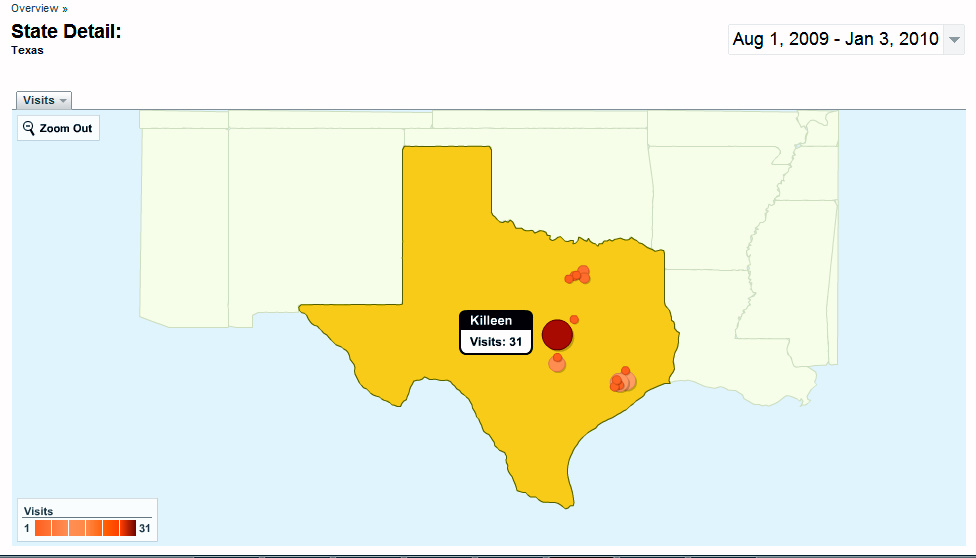
 There are many places that I may never get to visit on this one trip to the US because of schedule, finances and the constraints of time, as much as I would have loved. One of them is the state of Texas, which has however shown on my Google Analytics map as a place where not a few people have been reading this blog. So if my feet won’t get to the State of Texas, at least my words have reached there ahead of me. This post is dedicated to the readers in that state. My regards to Former Presidents George H. W. Bush, and George W. Bush. And to Governor Jeb who might one day become the nation’s President as well. Okay, I know that Governor Jeb lives in Florida, but that’s beside the point. (Click on the map to enlarge)
Browsing the archives for the Travelling category.
 I was not too surprised when a fellow FLTA from France said to me two weeks ago over dinner at the Union Station in Washington DC that the city was developed by a French person. She is french, and, as she said so, everything had just fallen along the line of positive French stereotypes in my mind. They designed the Eiffel Tower and the Statue of Liberty, they must also be the big brilliant brain behind the planning and beautiful layout of the country’s capital. It was my first time of hearing the story, and though she didn’t have the name of the said designer, I believed it.
Today, I had a different conversation with Papa Rudy who says the city was developed by a black man. Now I’m confused. I told him of my discussion with the French girl, and he insisted that a black man did the city’s design. And somewhere in the conversation, the name Du Pont came up. Now I am familiar with a DuPont Circle in Washington DC, and reading more on it this afternoon showed me that it was named after a man Samuel Francis Du Pont (from the famous Du Pont family who really were originally from France). However, he is neither black nor an architect. He was a rear admiral during the Civil War. The wikipedia article on the beautiful Paris-like city does not say much about the “designers” of the city, so I’m giving up.
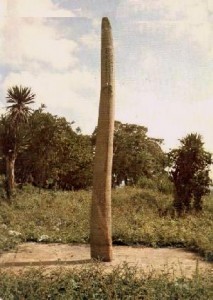
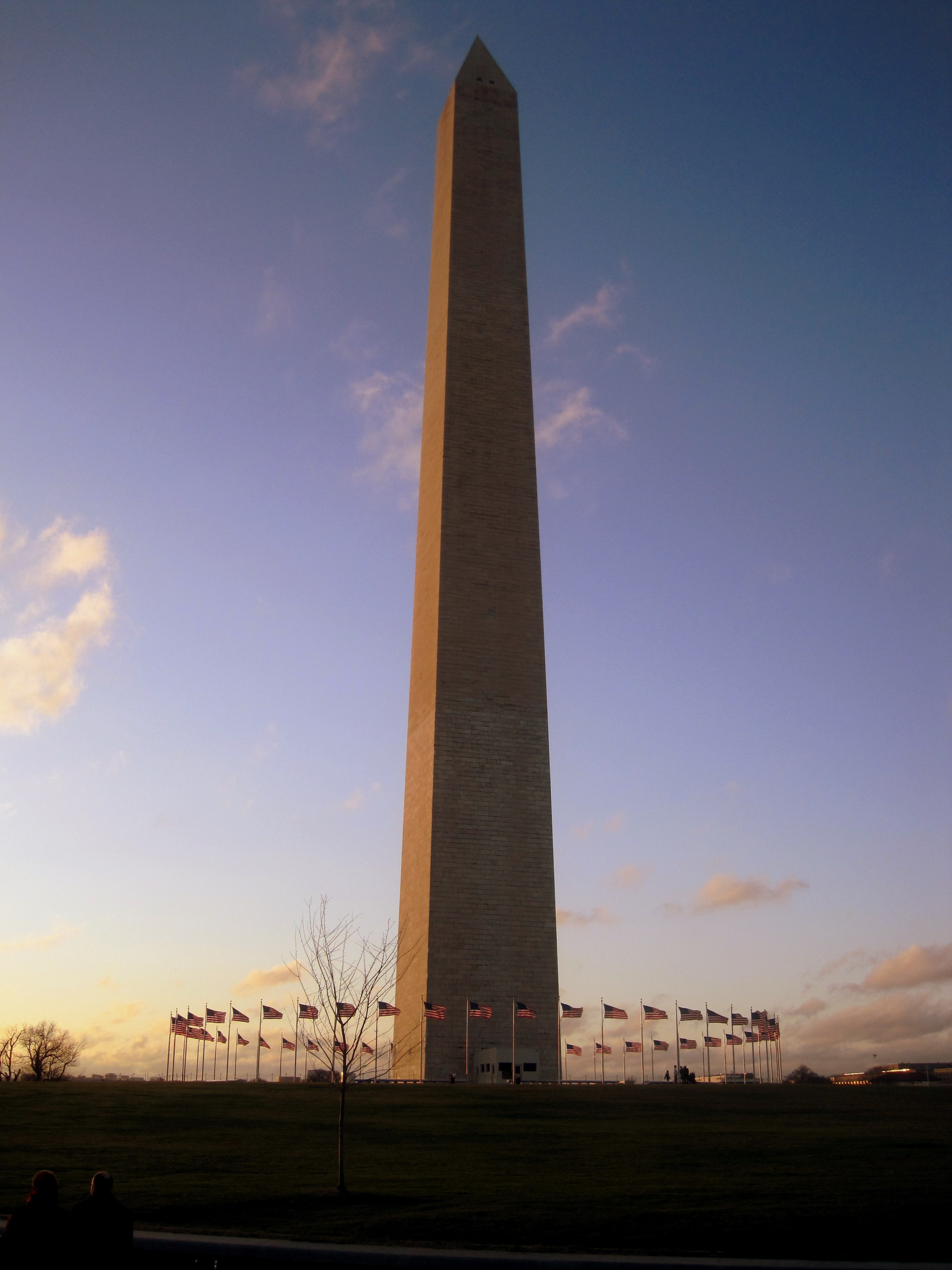
Or not. I have now come up with my own theory, that the person who conceived the brilliant layout of the city with the Washington Monument obelisk standing almost in its centre, could only have been the son of Oduduwa (the fabled progenitor of the Yoruba people). That’s the only explanation that can suffice to clear the air on the similarity between the Opa Oranmiyan obelisk in Ilé-Ifè and this Washington Monument obelisk. The Opa Oranmiyan was erected at a spot once believed to have been the burial site of Oranmiyan, a grandson of Oduduwa. Archeological evidence has now shown it not to be standing on any burial spot at all, but to be just a visible memorial to the fabled progenitor whose name it bears on it’s body. On the Opa Oranmiyan, as has been since its (undated) erection is an inscription in middle-eastern letters that archeologists have accepted as corresponding in sound to “Oranmiyan”.
It’s not the same in height and size as the Washington Monument, but that’s beside the point. The only other way to look at it is that Oranmiyan himself walked over to Washington DC from Ile-Ife with the Washington Monument on his right hand as a staff of office, and planted it firmly at the centre of the city as an artifact for future generation of archeologists to behold. What about that?
 This is the first part of the tale of my visit to the State of Maryland, where food engaged me in a contest of wills and I almost ran for cover.
I had gone to the house of Nigerian writer and literary critic Ikhide Ikheloa to spend the night. I had never met him before until then, and as he reminded me over a bottle of Malbec red wine from Argentina (which I actually miraculously finished, for the first time in one sitting), the first contact we had was when I had sent him an electronic copy of my first collection of poems around 2006 and sought his opinion on them. We had had a few e-conversations on it and then I’d quickly moved on, first because I myself had lost faith and interest in that book because of it’s poor production, the publisher’s nonchalance, and generally because of my own general disgust with most of the poems in there that reflect the best and worst of my writing development. I could say this though: it had a very good cover design, made by a friend in Germany, and some very nice poems that I wrote in the university, even if I say so myself. So going to his house was mostly a step of faith, a belief in the power of good. Even he quipped that his American friends at the office had looked at him funny when he told them that he was about to host somebody in his house who he had met on the internet, and who was a young man. Something about that just didn’t sound right for those friends of his who may have heard words like “pedophilia”, “criminals”, “internet scam”, “serial killers” very many times before in American news broadcasts.
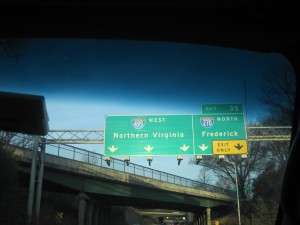 But we made it to his house in one piece, Vera Ezimora and I, with the aid of a talking GPS device. I have never been so humbled by the power of technology, where a little device as small as a mobile phone can lead a car driver to a location of more than an hour away, and where we had both never been before. We were coming from her University where we had gone to participate in one of her class tutorial sessions. (Needless to say, after that almost boring hour of listening to different accents of her classmates discussing the varying definitions and types of empathy, I am now convinced that I am never going to see that word in the same way ever again. Ever. And this is not a good thing!) No matter where anyone lives in the United States, a GPS device can lead anyone else there, without fail. It’s takes just a little imagination to conceive of how much of a leap we would achieve in Nigeria and Africa in general (in criminal investigation, business or even social relations) if we could just get adequate electronic mapping of the landscape.
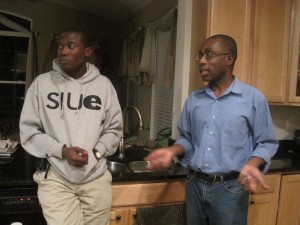 The man Ikhide Ikheloa who met us at the door turned out to be a simple, likeable man just like I had assumed from a distance. He was warm, and down to earth. He is a simple man with a very good taste, and humour; a family man in his middle age. A photo of Barack Obama rests beneath the television in the living room. He ushered us in with his still authentic Nigerian Pidgin English, and I felt immediately at home. His last visit to the country of his birth was just last September, and our first conversations dwelt on the impact that had on him. They were enormous, it seemed, and we listened to his tale of bad roads, generator fumes, LASTMA harassments, malaria, roadside vendors, friendships and many other highlights of his trip. Born and raised by a military policeman, he is no stranger to discipline. The tales he told during the few road trips he and I later made around town were of the memories of his childhood in the old Midwestern Nigeria, especially before, during and after the civil war where he had to survive alone with his brother as a young boy without any parent in sight. He is an avid reader. He also considers himself a compulsive writer, who just can’t help himself. On his critical reviews he says: “I’m a consumer of literature,” and I consider my critical opinion on the work I read as being within my rights of response to what I have spent my money and my time to consume.
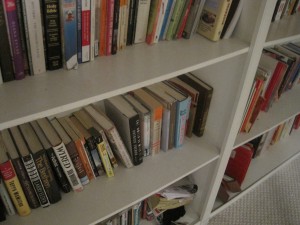
There was always nostalgia when he talked about his father who is now an old man living in Nigeria but who has visited him in the States. I listened to tales of countless encounters of his growing up with his father’s both hard and tender loving side while comparing it to his own fatherhood with two very young boys. There are too many differences, we agreed. Kids nowadays have it good, he said. We shared a mutual love for songs from the past: Rex Lawson, Ebenezer Obey, Victor Uwaifo, Fela Kuti, Victor Olaiya and so on, and he showed me his library of books, most of them filled with jottings and notes. He also gave me about six of them, especially those he had bought more than once. He has lived in the United States since 1982 when, on a whim, he packed his bags and left Nigeria which was at that time of a much stronger economy and currency that even the United States of America. These days, in Nigeria and on the internet, he’s known mostly as a literary critic, even though archives of NigeriansinAmerica.com has hordes of his popular and thought-provoking articles many of which have little to do with just book reviews, but general and very humourous outlook on life. He told me he doesn’t like the typecasting, and I agree. He’s foremost a writer, then maybe a critic. People interested in reading him should check out his writings online. He tells me that he hopes to return to on retirement at age sixty to a beautiful Nigerian countryside, reaping the benefits of his years of labour on the American continent.
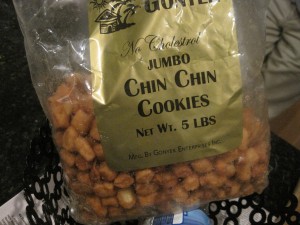
The side of him that is not always obvious to the world however is his cooking skills. To put it mildly, he made the best pounded yam which we ate almost to stupor. I don’t know how many of you Nigerian men still know how to manage the kitchen while your wives went to work. You might want to take a lesson from this renaissance man who is also on Twitter and Facebook in keeping with the current trends in technology, though he doesn’t think that he’s cut out for the life of technology. I met his wife later in the evening, who turned out to be a lovely beautiful woman that we’ve sometimes read about in some of his articles. Oh, before I forget, I also met his daughters Ese, andthe world-famous Ominira both of whom had initially hidden in the safety of their first floor rooms as soon as our car parked outside while they peeped stealthily through the window upstairs just in case we turned out to be two hired guns sent from the surviving cells of the Nigerian military junta against whom their father worked while being a voice on the Pyrate Radio Kudirat which was set up during the Abacha Regime by Pro Democracy groups abroad to sabotage that brutal and oppressive Nigerian military government…
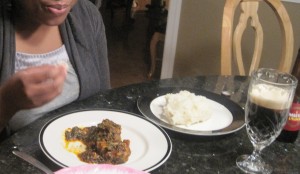 Again, I should say that he did make the pounded yam himself, and it was very good, but Vera and I have never agreed on whether the accompanying vegetable soup and sauce (which included snails, cow legs, and different delicious meats and fish) were also similar results of his culinary skills. I don’t doubt it. He is not a typical Nigerian man by many standards, and he’s surely not a lazy man. However, the voices of opposition and skepticism abound to drown mine of hope and solidarity. The loudest of them ironically belongs to his own first daughter who, having overheard our confused wonder at the dinner table about who made such a delicious soup, had asked aloud without providing a corresponding answer to clear the air of any further speculation: “Is that what he told you, that he made the soup by himself? Ha!” And just as soon as I completed one plate of food, it was replaced by another with the words. “K, here. Have and eat these too. They’re very good, and there’s more where they came from.” By the time I updated my Facebook status some minute later, it read: “KT is not drunk, but this drink of bottle will not wine itself…“. I however survived it by some miracle, but almost couldn’t get up on time the next morning to catch my flight. But in all, it was a memorable experience of a visit for many reasons. Not only because it was a day that I engaged food in a battle of wills, and I was almost roundly defeated.
As for whether he cooked the soup that we ate, my hands are tied, so I would reserve my judgement until the next time. There will be a next time surely, be it in the folds of our American forest along with bottles of Merlot, or in the open spaces of our Nigerian wilderness along with gourds of frothy palm wine. We would surely do this again. And when that time comes, maybe I would be cooking the soups by myself. I would only hope that I am able to meet up with this standard of taste and nutrition that has been so firmly set in the palates of my mouth, and memory.
I left the hotel in Washington DC at around ten in company of my very charming host Bumight, who had volunteered to give me a lift from the hotel and a ride through Howard University. The tour was in the cold rain, but was worth it. Later, I was pleased to get a chance to participate in the cooking my own breakfast.
I then went to the University of Maryland as well and sat through a class group discussion that had students from three different continents.
Later, I went, along with blogger and radio personality Vera Ezimora, to the home of a Nigerian writer and literary critic Ikhide Ikheloa who had graciously offered to host me and drive me back to the airport in the morning. All these he did, and more. I had never eaten so much food at one sitting in my entire life. It was also my first time of finishing a whole bottle of red wine at one sitting. It was Malbec, a fine wine from Argentina. Mr Ikheloa has lived in the United States since 1982 when he decided on a whim to move from the prosperity of old Nigeria in search of adventure. It was another home away from home with stories, music, jokes, laughter and fun.
The morning of Sunday started with promise, in spite of the very cold rain. I left the hotel in Washington DC an hour before check out time in company of my very charming host Bumight, who had come all the way from Maryland to drive get me out of the capital. It was with her that I got a free ride-through tour of Howard University in Maryland where she’s a student of medicine. The tour was extensive and we almost froze our fingers off while walking in the freezing and dripping weather, taking pictures. I later went to Hyatsville where I did a little cooking for my own breakfast.
The Nigerian slice of the American blogging world is dominated, I believe, by a few young but strong Nigerian ladies many of who reside in the state of Maryland. On this visit, I was privileged to have met four of them. Bumight’s blog, like many others, express the different peculiarities of living, particularly as a student in a foreign country, but it has a medical slant, understandably. These days, you’re most likely to find her on twitter sharing thought or just being randomly funny. Can you guess what’s written on that shirt she’s wearing in this picture?
My travelling body was soon transferred from her hand, after a delicious breakfast, into the hands of another blogger Vera Ezimora whose online presence is almost greatly disproportional to her height and (almost) gentle speech. But don’t take my word for it. I’ve been told that while standing beside me, people of normal height look like dwarfs. Vera and I went to the University of Maryland where she’s currently a student. I sat through almost one and a half hour of class group discussion that dwelt on the different types of empathy. After those tortuous hours (of my life that I can never get back, of listening to them deliberate in at least four different accents of the English language – from at least three different continents), I am never going to see empathy in the same light ever again.
Then there was a brief interlude outside of the class, a short respite, where I met some two new faces from the Nigeria: Chinny and Sweet&Sour, who complained that I made them look short. See how one of them tried to get to my height level by jumping up high. I was meeting them for the very first time.
Nigerian writer and literary critic Ikhide Ikheloa who had graciously offered to host me and drive me back to the airport in the morning. All these he did, and more. I had never eaten so much food at one sitting in my entire life. It was also my first time of finishing a whole bottle of red wine at one sitting. It was Malbec, a fine wine from Argentina. Mr Ikheloa has lived in the United States since 1982 when he decided on a whim to move from the prosperity of old Nigeria in search of adventure. It was another home away from home with stories, music, jokes, laughter and fun.
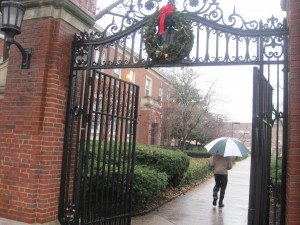
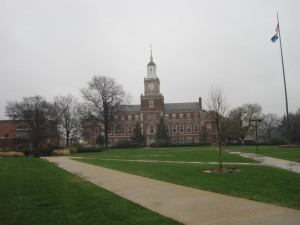
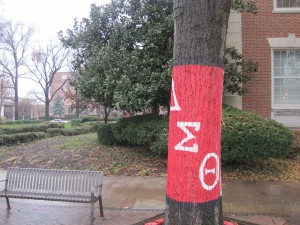
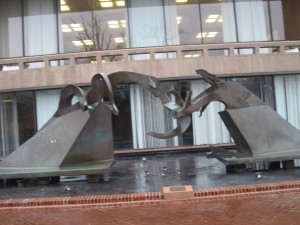
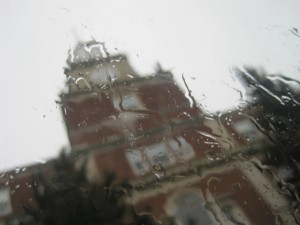
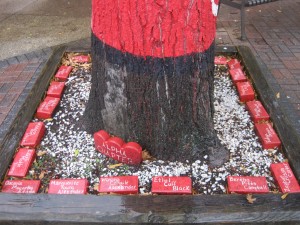
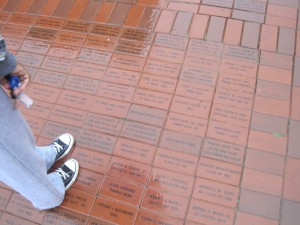
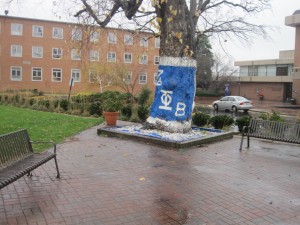
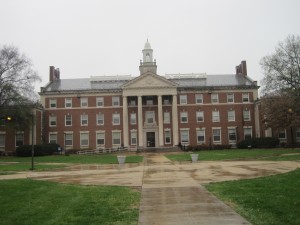

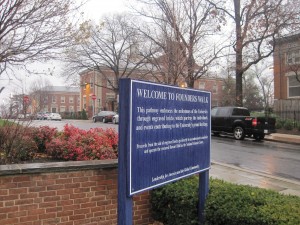
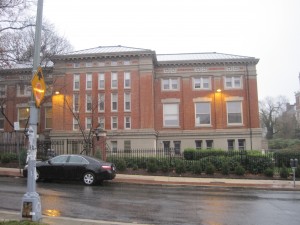
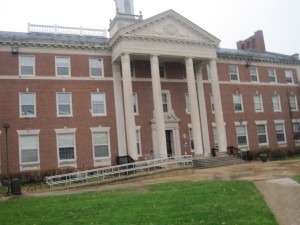
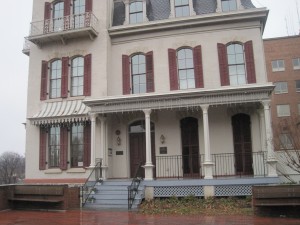
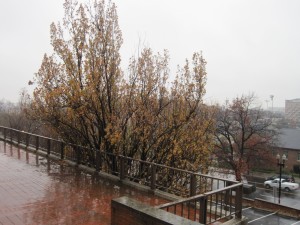 I spent the beginning of Sunday on a foot and drive-through sight-seeing tour of the famous Howard University in Washington DC and its major famous spots. The trip was made possible thanks to a Nigerian friend and a student of the University, who drove all the way to pick me up and give me a tour even in the freezing rain.
The buildings in these photos include the iconic Founder’s Hall, the school gate, the school yard with all the fraternity trees and signs, the Arts and Science building, the medical sciences building, the “Founder’s Walk” area and the Howard Place, a building named after the General Oliver Otis Howard who the University itself was named after. He was an American civil war hero who also became the University’s first president.
The University was founded in the year 1866 as a theological seminary for African-American clergymen, but quickly expanded into a full-fledged University. One of its notable Alumni is Edward Brooke, the first African-American to be elected into the US Senate.