Browsing the archives for the Opinion category.

Aké Festival 2016: How History is Made

A festival is just a festival, isn’t it? A gathering of tribes, a place of ideas and relationships, a week-long commingling of the most cerebral kind. But it is also something else: an annual attempt to write the history of the continent’s literary track in the minds of its practitioners and for posterity. This latter purpose is usually the least stated on the invitation brochure.

ake2

Participation in this year’s events, I’ve said elsewhere, is my most memorable, but not for the obvious reason of my meeting (and working with) Ngugi wa Thiong’o who is the guiding light of my work in indigenous language advocacy. Or perhaps that is the reason. It won’t matter anyway. The history of this year’s events is being written in different inks and by different observers towards different but complementary ends.

A while ago, someone wondered whether canons are being built around conversations on African language literature, and I responded that festivals, Facebook conversations, and interactions surrounding relevant seminal works of criticism all contribute, in small ways, to the complete tapestry whose form may not always be evident from the current standpoint of one literary thread. I still believe that. For all the memorability I’ve ascribed to this year’s event, I was not there when this apparently notable conversation took place, and I’m all the poorer for it. But the questions raised by this subsequent review of the event by Mr. Rótińwá, separate from the mass cheering on the spot that may have convinced a casual observer of a different takeaway, will live on. And there are many more of those.

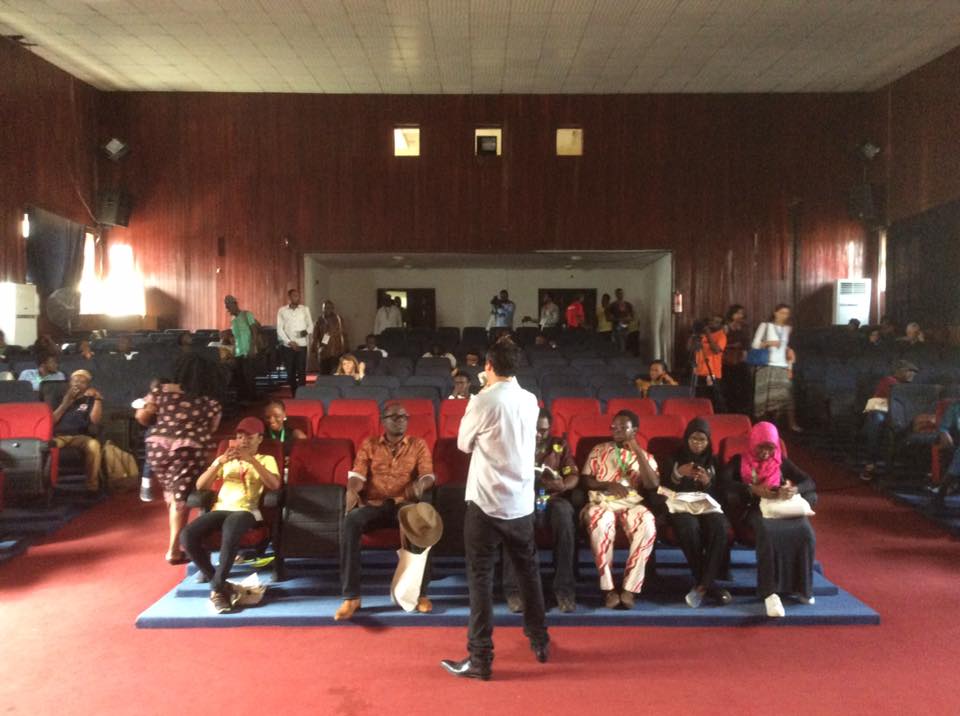
A panel I moderated (video below), set up ostensibly to explore the similar and divergent themes in the memoirs of two important African writers (of different languages), ended up on an even more memorable note: the relevance of archiving and the role of manual writing in the preservation of a writer’s legacy and growth. When I thought of questioning the Congolese writer Alain Mabanckou about what he described as an obsessive write-and-destroy habit that had his travel box littered with disposed writings on paper that he no longer liked, I wanted to satiate my curiosity. But I also thought of the episode as possibly illustrative of the obsessiveness of writers generally during the process of creating. In the end, I – and, as it turned out, the audience – got enlightened by a more substantive conversation around the place of preservation of paper drafts (and archiving in general) in the understanding of the writer’s creative and personal trajectory, thanks to Emma Shercliff, Ngugi wa Thiong’o, and Alain himself.

What the conversation illustrated for me, among others, was a lack of consensus, today, on the “proper” way of creating and shepherding manuscripts. Those of us who grew up in the internet age have taken for granted the benefit of crowd storage and the power of an easy copy/paste/delete on a word processor to care about the true grit of manual writing, crossing out, and re-writing until the draft is perfect, while still keeping the original draft either as a guiding light of the initial intention and insurance against future impulsiveness or as sentimental record of the individual step in the process. But more than that, as Alain and Ngugi pointed out, there is also a financial (as well as archival) incentive for this old-school process: there are scholars, students, and future enthusiasts of the writer’s life and work that will pay a fortune to have access to the initial drafts of whatever eventually becomes a well-accepted work. This helps the culture of criticism and better opens up the writer to perhaps better study.

When he writes on the computer, he said, Alain treats each line of writing as an indelible record that needs special care and preservation. As he puts it, he has different versions of the same work on his computer and would rather create a new one each time than edit the already written one – in spite of the ease given by computers to do so. Isn’t that fascinating? To think that the ubiquity of computers isn’t yet sufficient motivation – in relevant writing quarters – to ditch the drudgery of manual or manual-like documentation. Perhaps not enough has been written about this rebellion and/or the benefit of such active labour in this age of 140-character fickleness. Forget the fight between the Kindle and paperback books. Pen vs Keyboard is where the conversation needs (and will continue) to happen. I will likely forget many of the other questions I asked on that panel but the response to (and conversation around) this one on pen and paper writing and documentation will, and should, live forever.

ake3

The Makerere Conference of 1962 is notable today for a particular conversation on the use of English (and other colonial languages) in African literature. Not much from that conference has lived on in popular lore as that particular debate has. In every edition of the Aké Arts and Book Festival, looking out for such usually short but relevant spark that outlasts a week of commingling has become my yearly obsession. It is to the credit of the organisers that the opportunities are many for such dynamic conversation, debates, arguments, fawning, performance, and even lust (as this report rebelliously recalls). But we remember differently, as it is often said, which is probably for the better. It all comes together eventually. And the culture is richer for it.

In Pursuit of a Canon

One of the issues that came out of the conversation, yesterday, at the Q&A part of the Press Conference to announce the winner of the Nigeria (LNG) Prize for Literature is whether the judges on the award panel are too old to understand contemporary literature. It was an indirect hit in form of a question from one of the journalists in the room about the currency of the judges’ knowledge about current trends. But the chair of the advisory council, Professor Ayọ̀ Bánjọ, picked up the snark and addressed it fully, defending his team’s savvy and curiosity: “Because we’re old doesn’t mean that we don’t know what is going on. We try to keep up.” Or something to that effect.

But he also went on to suggest that the public make their work easier (if not also superfluous) by generating sufficient debate around each year’s long-listed (and shortlisted) works in order to enrich the canon with smart takes, appraisal, and criticism of each of the work during and after the process of the Prize announcement. He said, and I’m paraphrasing, If you don’t engage the work and create an industry of conversations around them and around the trade, we as judges, may be denied an opportunity to be familiar what is new, and we’d be forced instead to judge the works we are given by the standards with which we are familiar, which may not always be modern. It was both a humble cry for help and a smart take on the state of literary criticism in the country.

Perhaps aware of a criticism of the Prize as being rich in money but not in the elevation of the craft, Professor Bánjọ was throwing the challenge back to the community to not leave the important work of the whole process – criticism, which enhances the value of the work and engages the audience on a second level – to the judges alone. Notable was the fact that no one was rewarded this year with the prize for Literary Criticism which had always been a part of the annual award.

image

He has a point. Many writers who have won the Nigerian Prize – as also pointed out by another questioner – have gone into oblivion with no follow-up work, as if the cash payout of the award had delivered a knockout punch to their creative ability or drive. Certainly, the point can be made that if the work of past winners of such a prestigious prize do not gain more critical interest after such an honour, or increase in sales at the bookstores, or even show up in more quantity on book stands as a result of the award boost, the Prize would have failed in a major way. And what creates this kind of interest is not just the distribution of the books at the award ceremony as the NLNG already does, or a donation of copies to public libraries which is also a good thing, but a critical engagement by other writers and critics of each work as soon as the long list is made, and before/after the award winner is announced.

This is where the indictment of the community is deserved.

The Caine Prize is a much smaller prize in terms of cash reward, but has been deemed way more prestigious across the continent for its sustenance of critical conversation on African literary production though it only rewards writers working in the short story form. There is a couple of reasons for that. The prize has an active online engagement strategy that covers the continent, involves the writing community, and stays connected to the source of important conversations regarding the writers it shortlists. It also has an annual retreat/writer’s workshop in which writers are made to produce works that are then published as an annual anthology. It does this on a budget most likely smaller than that of a prize that awards $100k to an individual every year.

But perhaps more importantly, for the Caine Prize, is that writers and critics also pay attention to each shortlisted story, which are usually carefully reviewed online before the prize announcement. Notable among these annual exercises is the Caine Prize Blogathon founded by Aaron Bady through which interested critics take on each or all of the shortlisted stories each year, and review them individually and as against the criteria of the prize. I have been a part of this exercise since 2013 and enjoyed the process, which brings me much closer to the works than I would ordinarily have. We’d never know how much this annual exercise affects the decision of the judges, but responses to past editions of the Blogathon shows that the large literary community across the continent does pay attention to what is being said and how. It enriches the profession, helps the writers, benefits the readers interested in critical engagement, and makes the prize better.

We need the same for the Nigerian Prize for Literature. All shortlisted books should be made available for free – if possible – to interested reviewers for critical engagement on online and print platforms. Maybe it will make the prize better. But certainly, it will enrich the community of Nigerian readers, and writers.

Jakande Unclothed

imageDriving by the Jákàńdè area of Lekki (5th roundabout) on Sunday, I noticed a few people with placards at the roundabout standing around with signs like “this is a peaceful protest, leave us alone here” or something to that effect. Behind them was a stretch of destruction that looked like a heavy storm had just passed through. (I’ve been to aftermaths of real life tornadoes, so I know). Behind them lay piles of debris as far as the eyes could see from the roundabout, made of brown roofing sheets and wood.

image

Before now, that area always looked a little too crowded, too dense, too unplanned to have been housing anything legitimately sanctioned by the state. But as we usually do to things that seemed out of place but seemed to satisfy those immediately concerned, we look away and assume that someone somewhere knows what they are doing. It seems, now, that the government has finally come to pay attention to the area. Now, after removing the shanty that had grown out of the space into a community of sex workers, touts, homeless vagrants, and other Lagosians of little means, what emerges is an open land seemingly ripe for some decent development.

image

This is probably the story of much of Lekki, anyway: a stretch of fresh land occupied by small communities of people now suddenly discovered by bigger powers with big equipment and big money ready to expand and develop the area for commercial purposes. The spot where the Jákàndè Circle Mall now stands used to be a shanty as well. Same with Márọ̀kọ́ at Sandfill which has now become a modern plaza with a big hotel. In all cases, after the owners of the land are compensated, a bigger human cost arises in the displacement of hundreds to whom these areas are all is left of home.

imageI wondered while driving through the beach road yesterday what the real cost would end up being. So far, we already have regular cases of carjacking and traffic robbery in early mornings and late evenings. There have also been kidnappings. According to the state government, these shanties are the real causes of such violence as they hide criminals who use them as springboards and hiding places. Demolishing their home and kicking them out would reduce violence and allow free passage of people. There is some allure in that thinking. Past upgrade of hitherto crime-ridden places in the state and the corresponding success in their removal of crime has shown the success of such an endeavour. Plenty spaces under abandoned bridges have been turned into public parks with lighting and security, making them easy to walk under at night without incident. But still, rendering homeless hundreds of residents at just 72 hours’ notice will no doubt have its own consequences. As I tried to read the despondence on the faces of all those I saw sitting around the open spaces, I wondered what those consequences would be in the long run.

imageBut in this case, unlike that of the demolition of the national monument at Lagos Island or other cases still under the outrage of surprised owners angry at the state’s seeming high-handed behaviour in destroying them, there seems to be an overwhelming public interest. But unless something of relevance is erected in this spot, all these gains will be lost soon enough. A sustained involvement in the redevelopment of the now levelled area would be a welcome event indeed.

“Never Look An American In the Eye”

In my last book review, I lamented the dearth of travel writing books by African authors. I have since been scolded for failing to reference a number of other old and new works that tackle the subject matter, so I’m currently looking for Isaac Delano’s The Soul of Nigeria, Babatunde Shadeko’s The Magic Land of Nigeria, Noo Saro Wiwa’s Transwonderland, and Eavesdropping, a collection of essays and travelogues in America by Deji Haastrup.

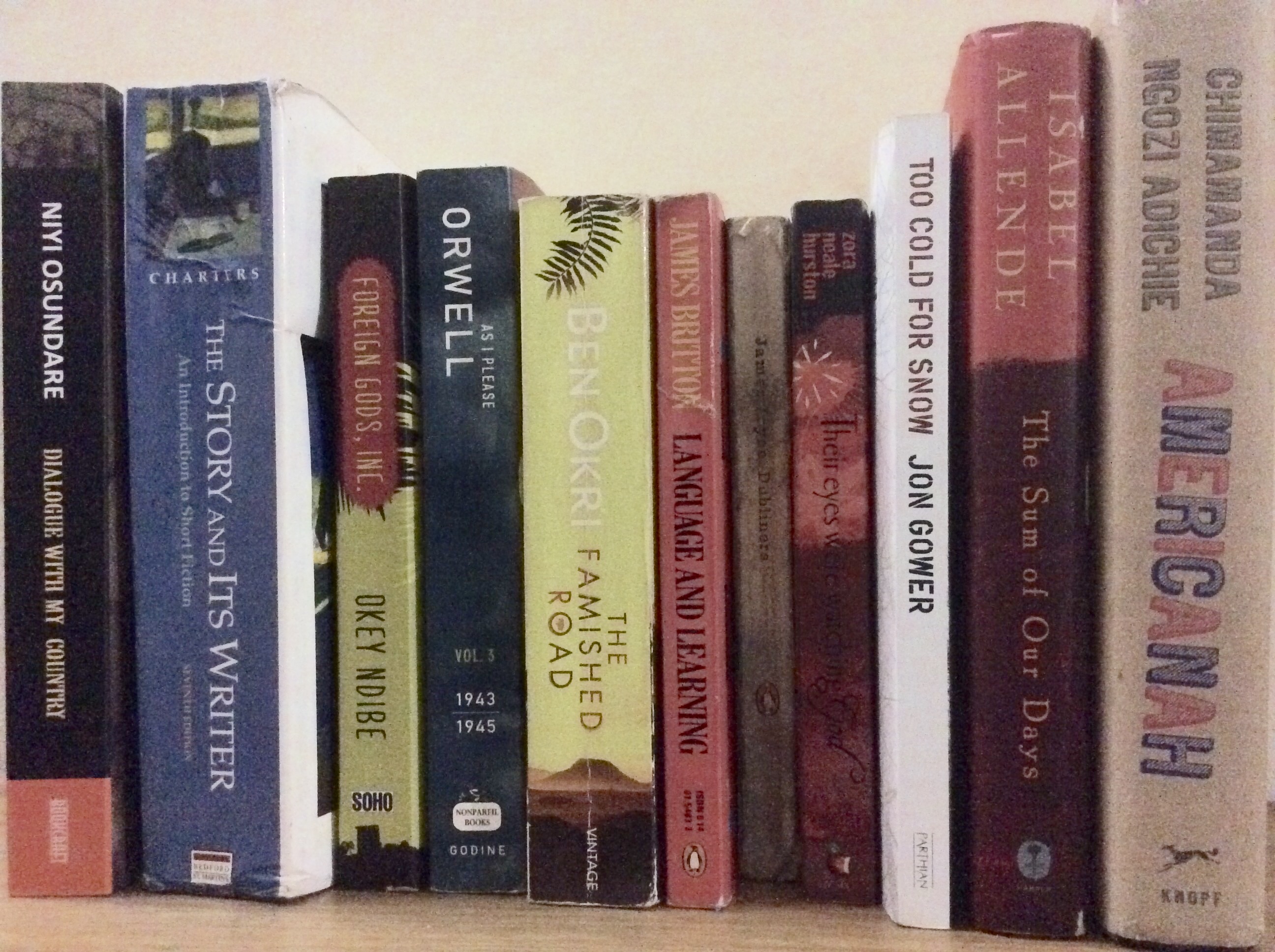
But one of the example works I pointed to as examples of contemporary works detailing honest and intimate travel experiences of travel was Okey Ndibe’s Never Look An American In the Eye (Soho Press. October, 2016). I have now finished reading a review copy of the work and I can say that it was a thoroughly delightful experience. Having lived in America for a while myself, I am always interested in reading accounts of others who have lived in the country, experienced in ways similar to or different from mine. But with this book, except that both of us had entered the United States for the first time at twenty-eight years old, the experiences could not be any dissimilar, which added a lot of excitement to its reading.

okey

Out October 11, 2016

The title comes from a piece of advice given to the author by his uncle in the village. He, the uncle, not having experienced America in any other way except from the plot of Westerns shown on Nigerian screens where eye contact was the ostensible cause of major conflicts that resulted in lots of gunfire, decided that his nephew on the way to America needed such a good prep. As we know now, from our experience with Americans, the opposite turns out to be true. This leads to a number of awkward, interesting, and hilarious scenarios, one including contact with law-enforcement.

The book is a collection of connected stories about the author’s life in Nigeria and his migration to America. Okey Ndibe is currently a columnist for a number of Nigerian publications. He is also the author of two well-received novels Arrows of Rain (2000) and Foreign Gods Inc (2014). He had arrived in the United States first as a maiden editor of a new international magazine, in the late eighties, before he achieved these later successes, but during which time he was already an accomplished reporter for a major Nigerian publication. In the US, after his stint as an editor, he became a student, and later, a reluctant but ultimately appreciative citizen. The book covers all these periods in his life with tales that paint the picture of an individual with an expansive curiosity and a healthy sense of humour towards misfortunes and uncertainties. The stories follow each other in an unsual order which was slightly disorientating, but ultimately successful in pushing the story forward towards a fitting end. Read to find out why.

As a memoir, it’s an engaging work filled with optimism, written in a style that is neither pretentiously grand nor mindlessly plain. As literature, it is clever in its deceiving simplicity. As travel writing, it is a welcome addition to a trove of like-minded works by Africans traveling around the world. It is a work accessible without being insipid, serious without being morose, and honest without being overexposing or patronising. The handling of his contact and relationships with legends of African literature Wọlé Ṣóyínká and Chinua Achebe deserves credit for its normalcy and honesty. We see them both as humans, chasing human pursuits, and vulnerable to human frailties and human disappointments.

It balances an important narrative about migration, culture, disappointments, love, and restlessness with an outlook that is both sunny and measured. I don’t want to say “circumspect” because that presupposes an unwillingness to take risks. What the work is is the opening of doors into a time in the life of its author which also coincides with a significant time in the life of a country he was leaving behind and the one he eventually adopts. There was no risk to be taken or avoided as far as the writing goes. The story needed to be told well, and it was.

___

The hardcover is 224 pages long, but doesn’t feel like it. The book will be released on October 11, 2016 and can be pre-ordered here. I will be speaking with the author in a public Book Chat in the next Aké Festival in Abẹ́òkuta this November. If you’re in the area, do drop by to hear him answer a number of questions I’m deliberately keeping away from this review :). Go buy/pre-order the book.

Travel as Life: A Review of Route 234

I haven’t read many books about travelling around Nigeria written by Nigerians. No doubt they exist (and readers should please recommend some for me in the comment section). I have however read many about traveling in other parts of the world. Tẹ́jú Cole’s (2016) essay collection comes to mind as well as Wọlé Ṣóyínká’s memoir You Must Set Forth At Dawn (2006). There is also America Their America (1964), an “autotravography” by J.P. Clark which caused controversy for what critics thought was a narrow and judgmental view of American values. Recently, there is Okey Ndibe’s Never Look An American In the Eye (2016), an autobiography, and many more.

There are however many more narratives written about the country, and about the continent, by visiting (foreign) journalists, writers, novelists over the years. Karen Blixen‘s Out of Africa (1937), JMG Le Clezio’s Onitsha (1991) and VS Naipaul’s The Masque of Africa (2010) come to mind easily. But so does this one. The overall impression of such books has always been the worry that they rarely depict reality as is, but only as perceived by the visiting foreigner, which – to be fair – is the whole purpose of the subjective narrative. I expect that the impression of America I’ll get from reading travel notes from an African visiting the US in the 1960s will give me an idea of America through that writer’s perspective of events as they unfold to him/her.

fullsizerender-6-1

At the Des Moines Capitol, Iowa (2015)

Even in the online space, one might easily find blogs written by foreigners about travel around the continent than one might of blogs by Africans of travel experiences in their own continent. (This is changing, of course. You’re reading this on a travel blog managed by an African, after all). But why is this the case? Human civilization itself is an experiment in travel, documentation and adventure conditioned by necessity, curiosity and sometimes nationalism. We have always left our comfort zones for new experiences. And, as archaeology and anthropology tell us, we have always documented those movements, even unconsciously, in hieroglyphics, and oral poetry, tribal marks, and lately in writing. In the 21st century Africa, the prevailing narrative is that travel for leisure and travel writing is a Western chore, done by the privileged few, and those conditioned to it by their profession in journalism.

Reality, unfortunately, seems to bear it out for the most part except in some rare cases. Olábísí Àjàlá was a Nigerian student who found himself in the United States at age 18 in the late 1940s. Having failed to succeed as a medical student at DePaul University, Chicago, he decided to travel through the country to Los Angeles, on a bicycle and document his experiences along the way. Through deportations, skirmishes with authorities, short Hollywood career (including meeting then actor Ronald Reagan), many short-lived marriages, children, and global fame, through the fifties, sixties, and seventies, he became the patron saint of all adventurers, and an icon in popular culture for African travel. Being called Ajàlá Travels in Nigeria today is a homage to his larger-than-life reputation. He also wrote a book An African Abroad.* 

So why is it that unless in rare cases Africans are not known globally to document our adventures in writing, or is it that we are just generally averse to travelling for its own sake? My friend and scholar Rebecca Jones has been asking this question for a while. In a conference she facilitated in Birmingham earlier in the year, the Call observed:

“For a long time study of African travel writing in the West has focused on Western-authored travel writing about Africa. But this has ignored both the long heritage of the genre amongst African and diaspora authors. African travel writers have traversed both the African continent and the rest of the world, writing about encounters and differences they meet in their own societies and others. They have engaged with colonialism and the post-colonial world, have produced ethnographic description, reportage, poetry, humour and more. They have traversed genres and forms, from the Swahili habari written at the turn of the twentieth century to Yoruba newspaper travel narratives of the 1920s, from accounts of students and soldiers abroad, to newspapers and today’s online travel writing.”

Aside from this blog, there are quite a few other ones online with focus on travel as an African hobby, done especially without the express purpose of becoming a travel “journalist” working for a media house, but for its own sake. Why are there not more. Africans, after all, travel as much as everyone else. Is it that we don’t care about documenting our experiences the way that others do? I have just finished reading Route 234 (2016), an anthology of global travel writing by Nigerian arts and culture journalists, compiled and edited by Pẹ̀lú Awófẹ̀sọ, an award-winning culture journalist. It is a delightful read of many fun, scary, heartwarming, and diverse experience of Nigerians in many different local and international situations. The contributors are however many of the continent’s known arts and culture journalists. This fact will not help our subject matter, but it shouldn’t remove from the value of the book as a necessary work and a delightful read.

image

Route 234(2016), edited by Pẹ̀lú Awófẹ̀sọ̀

According to the editor, the idea for the book came from a private listserve conversation among these culture/travel writers earlier in the decade about documenting some of their travel experiences. It took many years before the idea finally became concrete.  The 211-paged book lists Kọ́lé Adé-Odùtọ́la, Olúmìdé Ìyàndá, Ọláyínká Oyègbilé, Èyítáyọ̀ Alọ́h, Mọlará Wood, Steve Ayọ̀rìndé, Pẹ̀lú Awófẹ̀sọ̀, Jahman Aníkúlápó, Túndé Àrẹ̀mú, Nseobong Okon-Ekong, Akíntáyọ̀ Abọ́dúnrìn, Ayẹni Adékúnlé, Fúnkẹ́ Osae-Brown, Sọlá Balógun and Ozolua Uhakheme as contributors. The scope of the travel experiences documented therein covers Los Angeles, Atlanta, Bahia, Juffureh, Accra, Plateau, Nairobi, Durban, Pilanesberg, India, London, France, Frankfurt, Nice, and Holland.

One of my favourite narrative in the work is Mọlará Wood’s “Farewell Juffureh” (page 35), covering a visit to Alex Haley’s ancestral hometown in the heart of Gambia as well as Nseobong Okon-Ekon’s “Trekking the Mambilla Plateau” (page 93). In both, the reader is vividly guided through experiences that must have been much more intense and affecting than words could capture. Some of the others detail culture shocks at visiting a new place for the first time and re-setting their opinions and expectations preconceived from a distance (“Accra Mystic” by Jahman Anikulapo, page 79) while some focus on their immediate task; covering a film festival, for instance (“Film, FESPACO, Ezra” by Steve Ayọ̀rìndé, page 61). A heartwarming one by Ṣọlá Balógun (“The Good Samaritans of Nice”, page 181) describe an experience common to many frequent travellers: being stranded in a strange city after a missed flight.

What the book represents overall is an intervention in a space where much more effort of this nature is needed. But travel isn’t, and shouldn’t be, the preserve of just culture writers and journalists. Writing about it shouldn’t be either. Tourism isn’t a big deal in Nigeria today because of lack of government (and private sector) care, yes, but also because of a seeming lack of interest in the populace itself. As I argued in this recent piece on a visit to historical locations in Ìbàdàn, commercial attention will come when governmental and private sector intervention takes the first step:

“I think back to a recent experience, in Italy, where tourism has built a thriving industry of restaurants, malls, and gift shops around notable structures that tell the country’s history, real and fictional, and how much value that attention (and tourist dollars) has brought to the country. Old churches and abbeys, ancient arenas in Verona and the Colosseum in Rome, among others, are all just ruins of a certain past. But they have been preserved and well branded in order to attract foreigners and their resources. Even a fictional character, Juliet, from Shakespeare’s Romeo and Juliet, has a touristy structure built in her honour, called Casa di Giulietta.”

Travel is fun. And even when it is not, it is always an enlightening exercise. As Mark Twain said in The Innocents Abroad (1869), “travel is fatal to prejudice, bigotry, and narrow-mindedness, and many of our people need it sorely on these accounts. Broad, wholesome, charitable views of men and things cannot be acquired by vegetating in one little corner of the earth all one’s lifetime.” That same perhaps can be said about travel writing, if not as a way to reflect on one’s adventures, as a way to keep said experiences in the memory of the world.

The book is a delightful read, but much more is needed.

_________

There are many other stories like this, no doubt. Ravi on twitter has pointed me out to “Sol Plaatje’s sea travel piece” (by which I assume he means this bookMhudi, an epic of South African native life a hundred years ago), and Rebecca, in the comment section, to a few more published narratives, also of a few years back. Their input also reminded me of Olaudah Equiano’s  equally notable memoir. There are many more like these, I agree. My point is that there are not many more, and certainly not as many notable ones as there should be).

For more reading