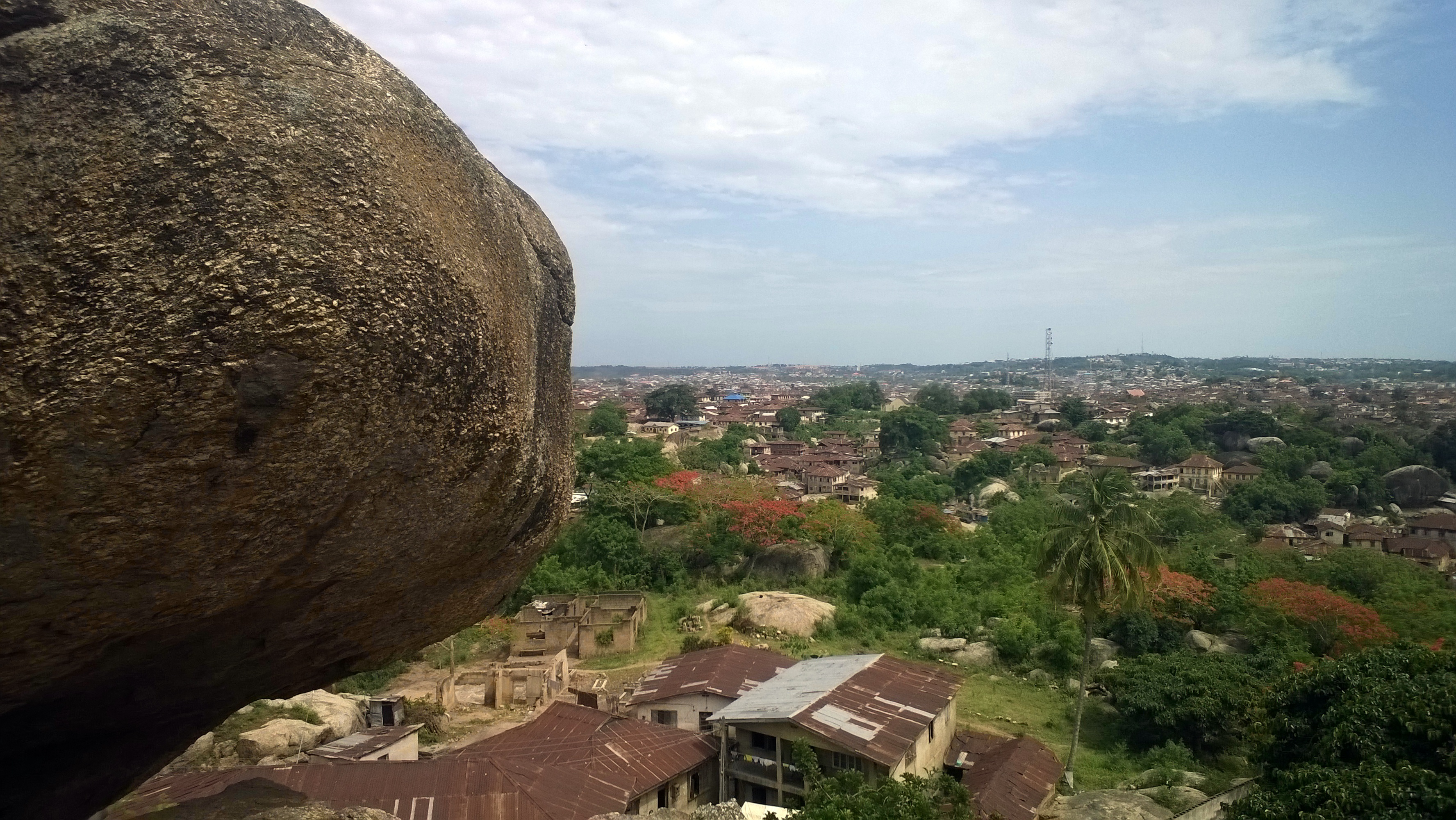
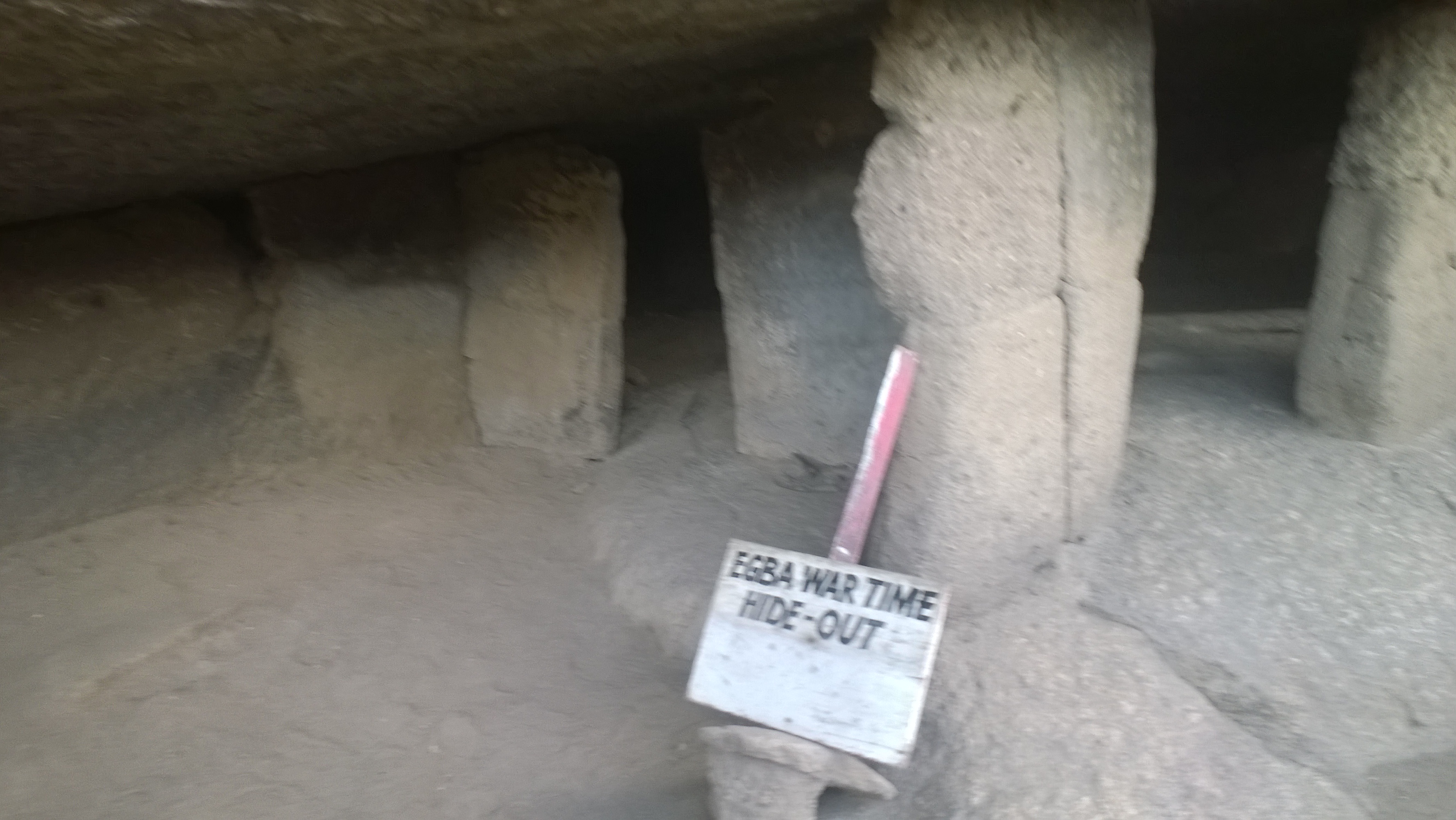
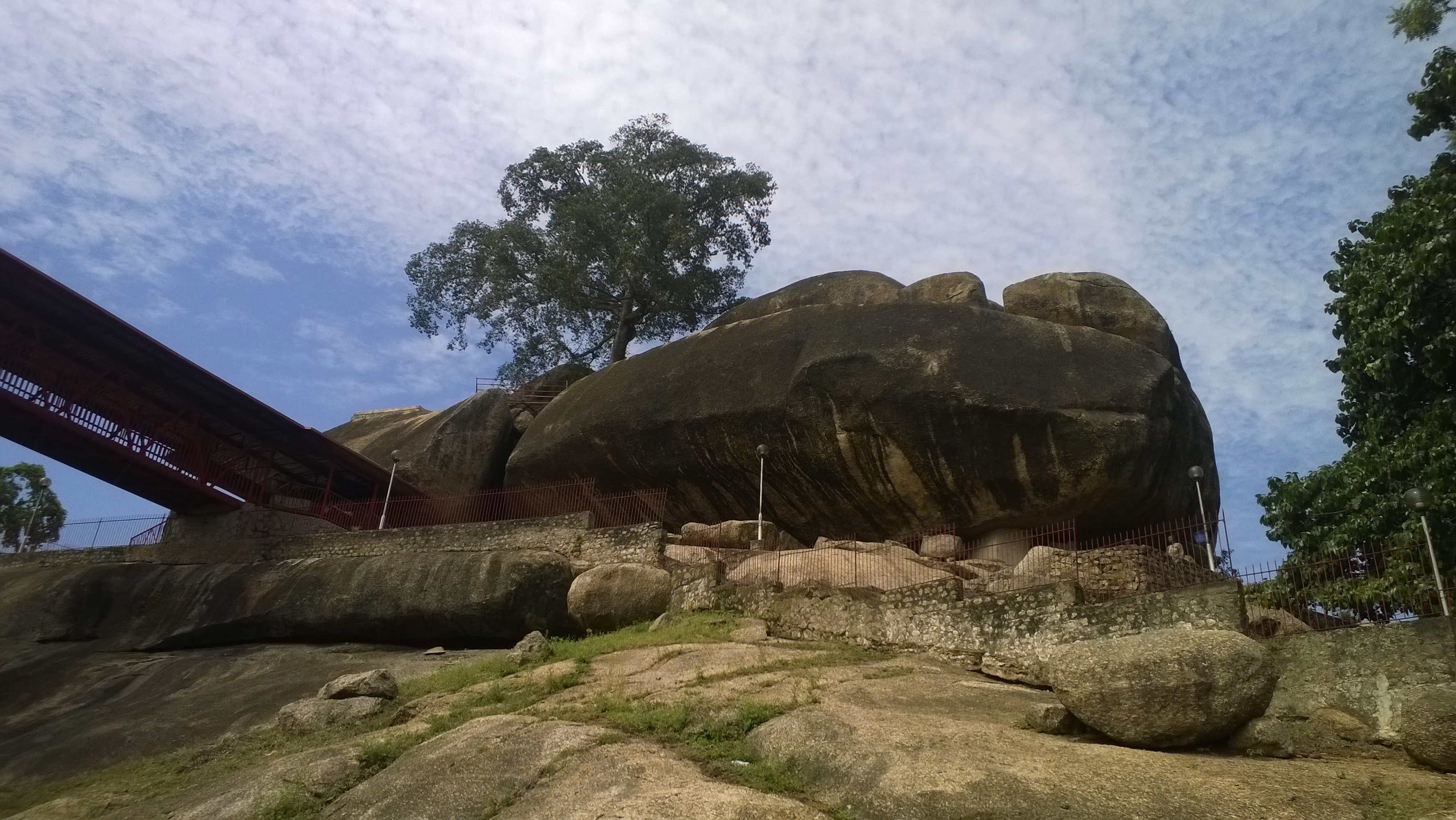
 The history of Abẹ́òkuta and the Ẹ̀gbá people is tied around a gigantic rock formation, with the transatlantic slave trade that thrived in West Africa featuring at a tangential angle. As usual, there was a war. No actually, a couple of wars. According to known history, the Ẹ̀gbá people (consisting at that time of the Ẹ̀gbá Àgbẹ̀yìn, also known as the Ẹ̀gbá Proper/Ẹ̀gbá Aláké, who settled around Ake; the Ẹ̀gbá Òkè Ọnà who were a group of Ẹ̀gbá people who came from the banks of the (Odò/River) Ọnà; and the Ẹ̀gbá Àgúrá, also called the Gbágùrá. A fourth group that now completes the Ẹ̀gbá Quartet is the Òwu people, formerly residents of Ìbàdàn, who came much later) all migrated to this present place over time, and over several displacements from previous settlements due to inter-tribal skirmishes.
The most recent recorded displacement, according to Johnson’s The History of the Yorubas, was in 1830 when, after a civil war of sorts, fueled by mutual suspicion and unrest, made their continued stay among the Ibadan people unsafe for them. They escaped into the bush (leaving a couple of their women/daughters behind, many of whom later married Ibadan war lords) and found solace in this current location, many miles south-west of Ìbàdàn, then just a farm of an Itoko man. They called it Abẹ́òkuta because of the presence of large rock heads which offered a semblance of protection. It would become a more concrete and practical bulwark against enemies during future wars with other neighbours, especially the Amazons of Dahomey (Now Benin Republic) who actually sent warriors to invade in 1846.
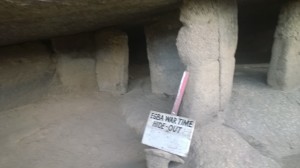 The Dahomeyan invasion is a story of its own, since it is one of the recurrent tales told to any visitor climbing to the summit of the Rock. The Ògùn river, stretching from north (in Saki) to south (the Atlantic Ocean) had for years brought people and goods into Abeokuta and neigbouring towns. But when war became inevitable, it likely also brought with it fighters from Dahomey many of whom were women (The Amazons). Written history has it that, because the invaders were masked, it took a while for the Ẹ̀gbá warrior elders to know that they were mostly females. When they did, they felt quite insulted. Oral history from Abẹ́òkuta citizens says that there were “many” of such wars with the warriors from Dahomey, but the History of Yorubas by S. Johnson said there was just one, an invasion of 1846. Mafoya Dossoumon, a Beninois friend of mine, verified the story of such “wars”, as he was told in his high school history books. The wars were not just with the Ẹ̀gbás but with a lot of towns and neighbouring nations. It was also quasi-slave-raiding, of course. Most most importantly, they were a warlike people who enjoyed fighting. There is an unstated irony, of course, in the fact that History as a subject has now been struck from textbooks in Nigeria. Expect more amnesia to follow.
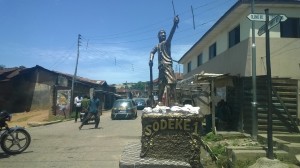
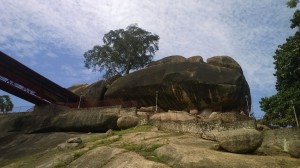
The Olúmo Rock by default, and by reason of being the biggest and most remarkable rock formation around, became the chief refuge. It was a vantage point to spy on enemy lines, and the geological mascot of the new town. But because of earlier evolution of the Ẹ̀gbá societies as small townships without one central king or ruler, the nation never united under anyone person. The closest they got to that was under Sódẹkẹ́, a warrior under whose ceremonial leadership the nation settled down in the present day Abeokuta in 1830. Sódẹkẹ́ himself died in 1844, after many years of playing advisory and spiritual roles as the father of the new nation. Subsequent evolution of the town vested (informal) political primacy in the Ògbóni cults of spiritual elders rather than on the kings (or chiefs) crowned by the now four large Ẹ̀gbá subgroups: The Aláké, The Ọshilẹ̀, The Gbágùrá, and the Olówu.
A darkly fascinating aspect of these migration and settlement patterns is the underlying presence of slave trade which – at that time – provided sufficient motive for most of the inter-tribal internecine wars. Spoils of the wars included not just herds of cattle but able-bodied men and women that were sold for a profit to the slave traders on the coast. Before 1820, according to Digital History, the number of Africans in the United States “outstripped the combined total of European immigrants by a ratio of 3, 4, or 5 to 1.” They were slaves. But by the middle of the 19th Century, the Trans-Atlantic slavery was abolished by The British Empire and many of the Africans still in slavery, as well as those still on the waters, had to be accounted for. Those in the United States couldn’t come home, being “properties” of their owners. However, a number of them were already living free in England and other places. Plus a few others that recently got their freedom, they were put on a ship en route to the continent.
But since many of them couldn’t find their ways to their original homes where they were forcibly stolen as children, they headed to two locations on the West African coast set apart for that particular purpose. First was Freetown, a town in Sierra Leone founded by Britain as colony for emancipated slaves in 1787, and to Liberia (founded in 1822 by the American Colonization Society for the same purpose). Those people form what is known in Liberia as the America-Liberian people, and in Sierra Leone as the Sierra Leone Creole people. A number of them retained their Yoruba (and other ethnic names) names, while still carrying the Christian/English names that they had acquired from slavery through their masters. Most of them remained in these places, creating new generations and new identities. But there were a few who, after landing in these places, weren’t satisfied, and kept on seeking for the lost homeland.
Take Daniel Olúmúyìwá Thomas, for instance – a man taken forcibly from his hometown in Ilesha while he was eight years old, and sold into slavery. His baptismal name, Daniel, and his adopted last name, Thomas, were names adopted in slavery. According to the account of his grandson in an authorized biographical book This Bitch of a Life (Carlos Moore, 2001), Felá Anikulapo Kútì narrated how, after being set free as a grown man, along with other returning slaves, Thomas embarked on a journey (most likely on foot) to return to his home village. He entered what is now Nigeria, but decided – on reaching Abeokuta – that he was no longer interested in making the rest of the journey (most likely just a few days more) to Ilesha. He settled in Abeokuta where he married and gave birth to modern Nigeria’s famous woman: Olúfúnmiláyọ̀ Ransome Kúti (born: 1900).
Another famous returnee from Sierra Leone was Andrew Desalu Wihelm, an evangelist and translator who – on discovering a chance to bring the CMS mission to Abeokuta, his home town, after spending most of his post-slavery adult life resettled in Sierra Leone, jumped at it. Along with Henry Townsend, a European Missionary, he returned to Abeokuta to preach the gospel and lay the foundation of the country’s very first church at Aké. But not all returnees became famous, nor did they all contribute in the same manner and form to the development of the new country, though many did become quite notable. A number of other returnees settled in many other parts of Nigeria, notably on Lagos Island, bearing names like Williams, Pinheiro, DaSilva, Savage, Lewis, Thomas, Crowther, Macaulay, George, Moloney, Boyle, Berkley, etc.
 It is interesting, for me at least, to realize that around 1863, while the colonial government in Nigeria was consolidating its hold on their newly found colony, trying to settle the number of inter-tribal wars threatening to set the colony on fire, Abraham Lincoln, many miles across the sea was preparing his Emancipation Proclamation to set free 3.1 million (out of about 4 million) black people who, over three hundred years before, had become entrenched into the system of slavery. About twenty-three to thirty percent of those people, according to different estimates, came from Nigeria. We don’t know how many of those came from Abeokuta, but the legacy of wars around Yorùbá kingdoms during those times, and the proximity of South Western Nigeria to the Atlantic Ocean gives us an idea of the mix of people who today define the African American population.
…and the Caribbean population.
In one famous chapter in Wole Soyinka’s definitive memoir You Must Set Forth at Dawn, the author found himself in a country town in Westmoreland, Jamaica, named Bẹ́kuta. Surprised at the close proximity of the town’s name to his own hometown Abẹ́òkuta, he asked around. The town, like the author’s own hometown was surrounded by huge rocks in all places. After having run out of luck with the local population of young and modern citizens with no care in the world for why anyone would care about an old name, he eventually ran into an old woman who remembered why it was so called. The first residents of the town – freed slaves who worked as indentured workers – felt that only one name captured this place that reminded them of where they (or their ancestors) were captured from: Abẹ́òkuta, or later, Abẹ́kuta, and eventually Bẹ́kuta (and later, Kuta), all meaning the same thing: the town under the rocks. When the author returned to the town, the woman had died and no one else in the town had any memory of the stories from which the town’s name came. (A cursory online search shows that the memory of the story actually survived.)
Faktor-Faktor Penting Untuk Sukses Menang Main Slot Online
Dalam permainan slot online, strategi dan pengetahuan yang tepat bisa menjadi kunci untuk meraih kemenangan. Salah satu tips yang dapat digunakan adalah memahami jenis permainan slot online yang dimainkan. Setiap game slot memiliki pola pembayaran yang berbeda-beda, sehingga penting untuk memahami karakteristik masing-masing mesin. Selain itu, manajemen bankroll juga merupakan faktor penting dalam meraih sukses dalam game slot online. Mengatur jumlah taruhan dengan bijak dan tidak terpancing untuk bertaruh melebihi batas yang sudah ditentukan dapat membantu menjaga keseimbangan finansial selama bermain. Di sisi politik, keputusan Agus Harimurti Yudhoyono (AHY) untuk menerima tawaran menjadi Menteri Jokowi memunculkan berbagai spekulasi dan penilaian. Beberapa alasan yang mungkin melatarbelakangi keputusan tersebut adalah untuk memperkuat citra partainya, Demokrat, di mata publik. Dengan menerima posisi di kabinet, AHY bisa memanfaatkan platform tersebut untuk memperluas jaringan politiknya dan membangun basis dukungan yang lebih luas. Selain itu, dengan berada di dalam pemerintahan, AHY juga memiliki kesempatan untuk memperjuangkan kepentingan politik dan ideologis yang diyakininya, meskipun hal ini bisa saja menimbulkan kontroversi di kalangan pendukungnya.
Harga Bitcoin Saat Ini To The Moon Menembus Angka Rp 903 Juta
kita mungkin menyaksikan harga Bitcoin melambung tinggi dalam beberapa waktu terakhir, penting untuk mengadopsi sikap yang realistis dan hati-hati. “To the Moon” mungkin merupakan impian bagi sebagian, tetapi realitas pasar kripto seringkali lebih kompleks daripada yang terlihat dari permukaan.
Dengan memahami dengan baik faktor-faktor yang memengaruhi kemenangan pada permainan onlineslot, serta mengadopsi strategi bermain yang bijaksana, kita dapat lebih siap menghadapi kemenangan maxwin slot sambil tetap waspada terhadap risiko yang ada. Yang terpenting, jangan terjebak dalam euforia pasar yang buta, tetapi tetaplah berpegang pada prinsip-prinsip dasar investasi yang cerdas dan berhati-hati.
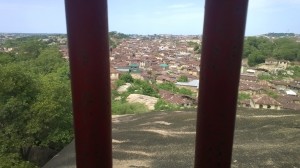
Visiting the original Abeokuta today, with nothing much left but a rustic town, a few colonial and traditional landmarks, and the tour guides from every step towards the summit of the Olúmọ Rock telling where the town has been, one walks again in the corridors of living history. The rock lies there still, in stoic silence, a witness to all that had transpired for centuries before. All the other connections are there in plain (and rock) sight.
____
All photos courtesy of the blogger.
Edit (15th September, 2015): I’ve fixed some of the dead links in the post by referring to earlier instances of the articles via the WayBackMachine.
Update (13th October, 2015): This piece was recently “highly commended” at the 2015 CNN/Multichoice African Journalist Awards.
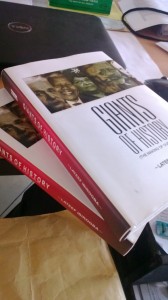
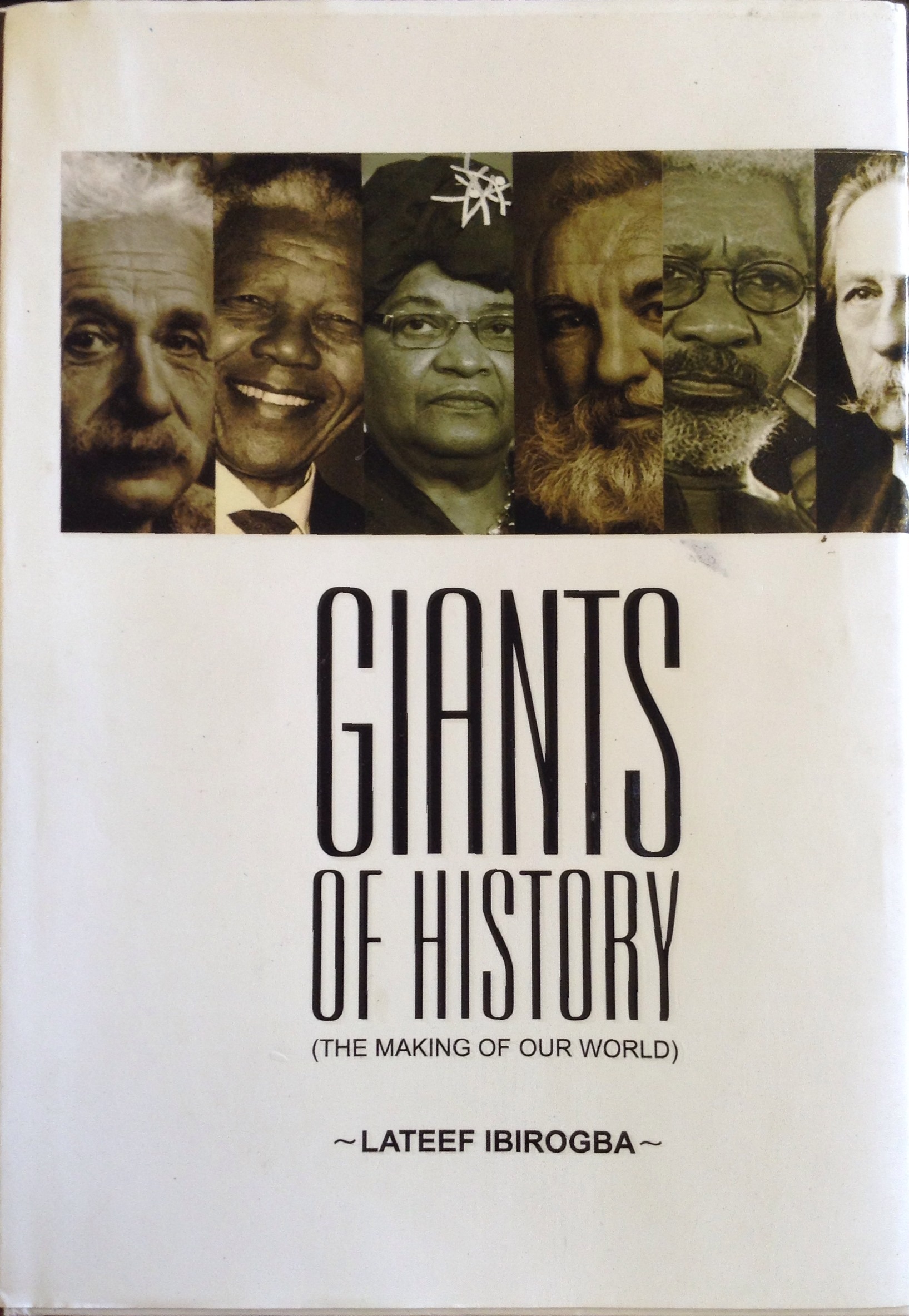 The book has now been published, to be launched in Lagos on April 22nd. I will be there at the launch, which should feature a number of heavy names in politics, publishing, and writing in Nigeria. The book reviewer, Tade Ipadeola – a lawyer and creative writer – was the winner of the 2013 Nigerian Prize for Literature (the highest literary prize on the continent, which carries a prize money of $100,000). I expect that the governor of the state will be there as well, along with a number of other still-living Nigerians whose names also made it into the book. It is important to mention that one of the impressive nature of a work of this kind is its good sense to include in the work not just historical figures from older civilizations around the world, like Plato, Aristotle, Isaac Newton, Mahatma Gandhi, Abraham Lincoln, but also notable historical figures from our own national environment, like Obafemi Awolowo, Nnamdi Azikiwe, Mary Slessor, Funmilayo Ransome-Kuti, Madam Tinubu, Fela Kuti, Chinua Achebe, among many others.
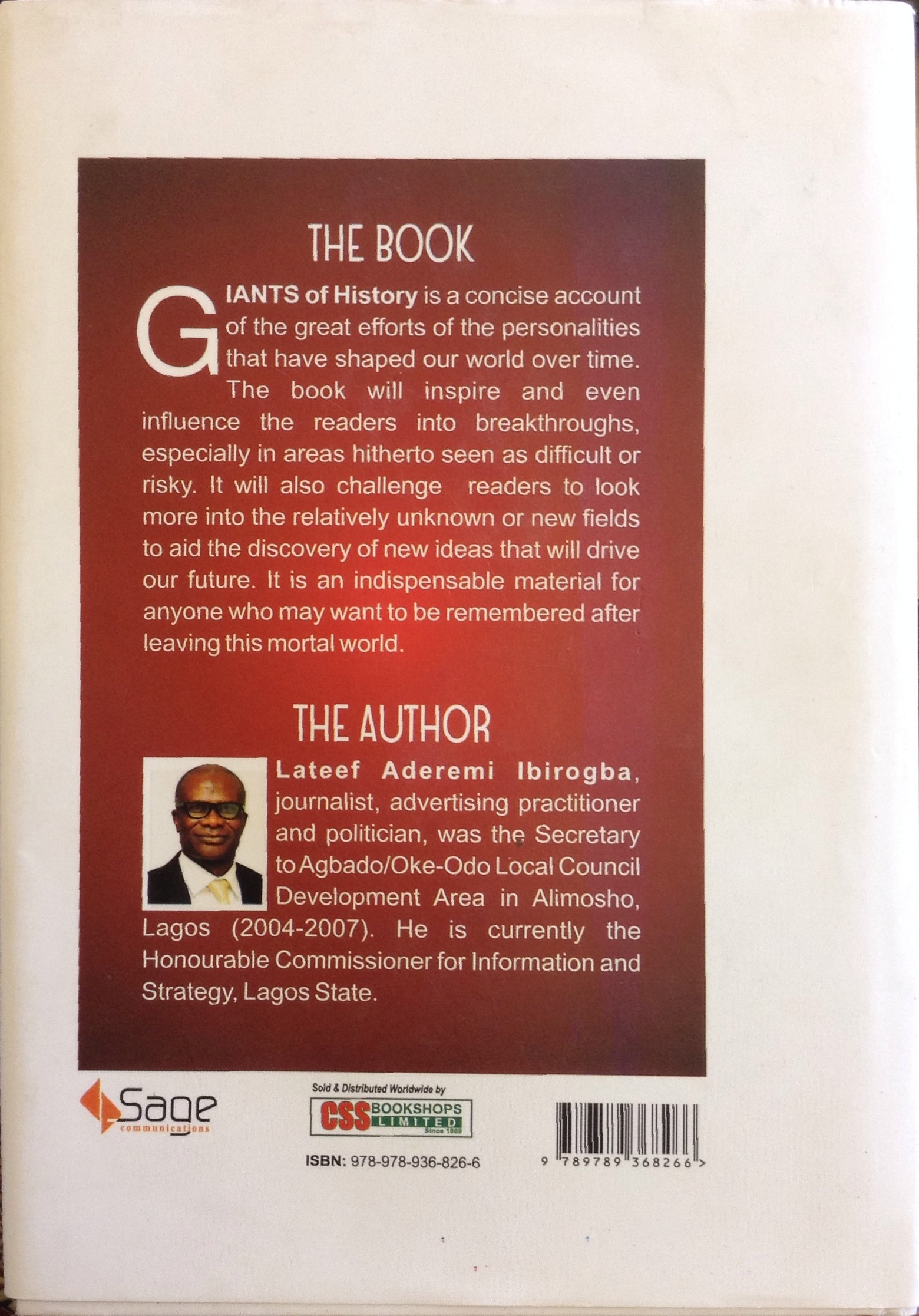 I invite you to look out for the book, and to buy not just for yourself, but for your relatives, especially the young ones not yet sure of where life would take them, or what the point of everything is. If I could still remember the influence of a book on me as a thirteen-year old reader, then precocious thirteen year-olds around you will definitely appreciate you giving them a gift of such work.