Boluwatife could not be saved. She died on last Monday, I heard.
Thanks to those who tried to help. They raised over 320 thousand naira so far, but it was either too little or too late. Or both.
Browsing the archives for the Observations category.
Boluwatife could not be saved. She died on last Monday, I heard.
Thanks to those who tried to help. They raised over 320 thousand naira so far, but it was either too little or too late. Or both.
“One of the magical things about theater is that it gathers a crowd of people in a quiet space, and each member of the audience gets to see how people respond differently to the different things being said on stage. The person next to you will laugh at something that you’d never think of laughing at, and you’ll get a glimpse into all the different ways of viewing the world. Unfortunately, so much theater today is less nuanced. It gives you a large dose of one way of thinking, in hopes of getting as many of the same type of people into the theater as possible.” – a thespian recently features on the Humans of New York page.
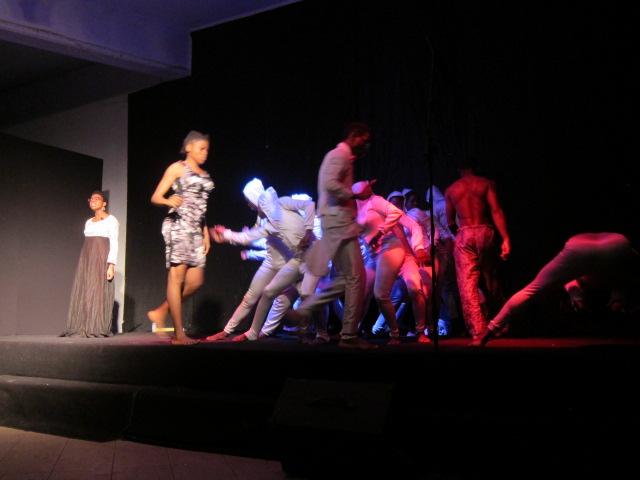 I begin my review of a stage production of Wole Soyinka’s A Dance of the Forest (1963) by Segun Adefila’s and the Crown Troupe of Nigeria from this, a succinct appraisal of theatre as a vehicle to entertain and inform a populace without catering to mass appeal alone, but rather individual tastes through a large but severally tailored offerings.
Perhaps no other play could be used as a poster example for the complexity of theatre and its ability to regenerate itself in a myriad of colours to diverse people than this production which, produced to mark the 80th birthday festivities of its playwright, was only one of the few other performances of the author’s play around the same time. In actual fact, another production of the same play, at a far larger and ambitious scale, was performed on the night of the celebrant’s birthday itself, right across from his front yard in Abeokuta, with trees, shrubs, and real life rock formations as a live set. Photos from that ambitious performance posted on social media depicts a throbbing energy of an audacious imagination, with an air of theatrical verisimilitude for which the author should be extremely proud: an ensemble of real life masquerades, for starters. But I digress…
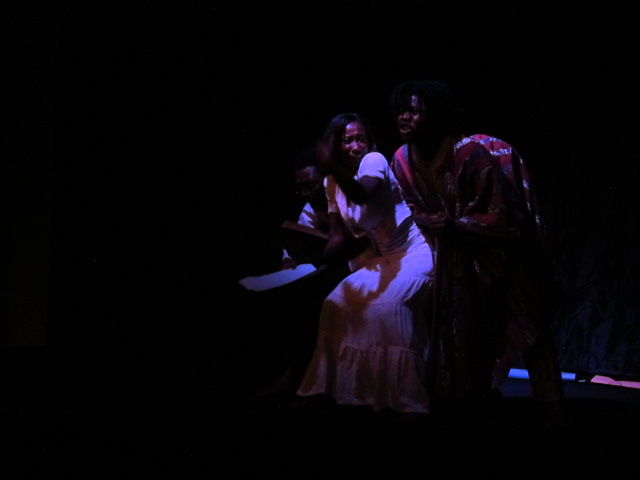 Segun Adefila’s production was a far less ambitious enterprise, which shouldn’t be surprising giving the grand and colourful exertions the play itself embodies. A Dance of the Forest, first performed in 1960 as an iconoclastic satirization of Nigeria’s independence celebrations, has been described as one of the author’s most complex and most difficult to understand works. However, effort was made, not just in the utilisation of the small stage that Terra Kulture (the venue) provides, but also in improvisation on the script of the play itself. Most of the improvisations were with songs, jokes, costumes, and slangs. At one point in the play, a character sings from Omawumi, a contemporary Nigerian musician who was definitely not born in 1960: If you ask me, na who I go ask…? An obvious oversight that could have worked for great dramatic effect happened when the corrupt civil servant was presented a bribe in broad daylight. The token was… a loaf of bread. Audible gasps in the audience suggested that it could have worked way better with a bag of rice. I agree.
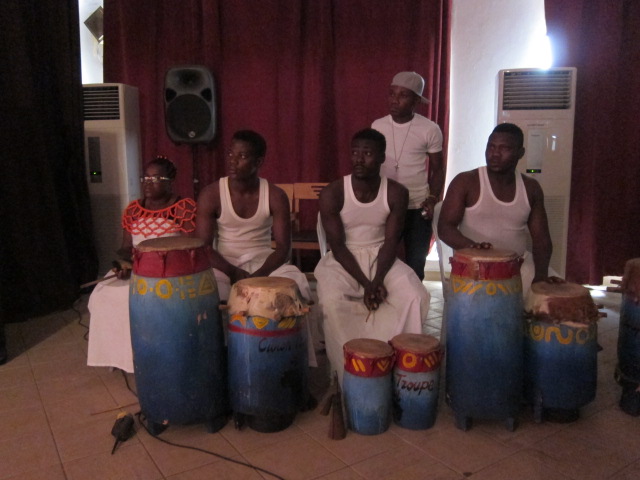
For a low budget production which, one assumes will not, except with some sponsorship, recoup its cost of production (even with the 3,000 naira, $20, gate fee), the play was well rendered. The hall was full, and the audience engaged, with songs, dance, drumbeats, and a dialogue that flowed in the right cadence, at least for most of the night (except for a few understandable omissions or stammers here and there). For a member of the audience with no knowledge of works by Wole Soyinka, this might be a rough introduction, helped only by the dynamic acting of some of the cast. A green-white-green motif featured prominently throughout (a reminder to the audience that Nigeria is the real subject of this play), while the masquerades dressed in white fitting overalls.
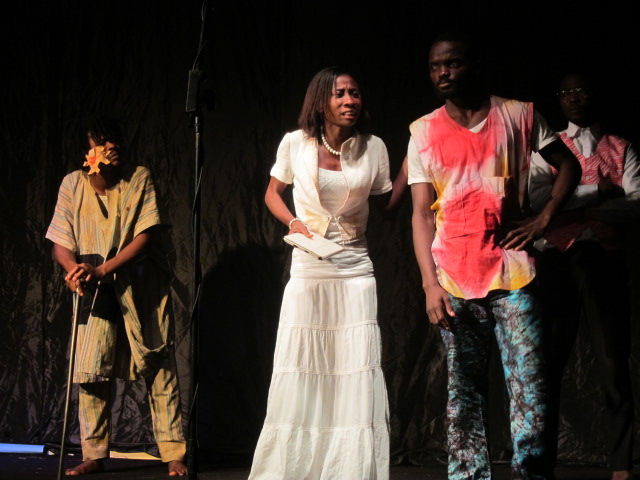 For someone watching the production of this play for the very first time, not much is lost. In fact, a few things are illuminated; how, for instance, the two undead characters loitering around the forest in search of someone to take their case were actually metaphors for the evils of slavery from an earlier time. Why the author chose to depict the man as a castrated being is his to explain, but the depiction leaves no one in doubt. That explanation is just one of the many layered metaphors that earned the play its reputation as a difficult but ambitious experiment. Patient readers, and audience members of future performances will benefit even more unveiling of the work’s many nuances.
There are others head scratchers. Names of Fela! Awolowo! Balewa! were repeated at a number of times as chants to what came before. But there was no Azikiwe. Why? What defines this group which takes only three names: Fela, Awolowo and Balewa? In any case, by 1960, none of these men had achieved much of what gave them the great stature that eventually stamped them into immortality. Definitely not Fela. It is also highly improbable that the author had written the names of any one of these into a script written as early in the life of the country as 1960 when much of what toppled that first democratic experiment had not even unfolded yet.
 And while we’re on oversights, why was there never a consensus before, during, or after rehearsals as to what the right pronunciation would be of Demoke the murderous carver, a major character in the play? Is it “Démoké”: [A + dé + ọmọ + kẹ] “We crowned a child to pet”, or “Démókè”: [Adé + mú + òkè] “Ade held onto the heights”. It seemed a bit distracting after a while, I would assume even for those who don’t speak the language of source, that the pronunciation of the character’s name changed at will without any logical, textual, or dramatic justification.
And there end the knocks.
“Movies will make you famous; Television will make you rich; But theatre will make you good.” Terrence Mann was said to have quipped. For me, as theatre typically guarantees, it was two and a half hours of mental and aesthetic stimulation. Definitely a well-spent time.
______
Read a review of the work itself here, and – even better – here.
 There are many ways to teach history, but the best and most effective way has nothing to do with the classroom. In any case, a couple of months ago, it was announced that (Nigerian) History would be dropped from the Nigerian secondary school syllabus for reason of inadequate enrollment. Many of us protested online and offline, and that was the end of it. We have come to reconcile ourselves as a nation that no longer cares enough to celebrate, document, and teach its past in order to prepare citizens for the future.
I came across this game a couple of months ago, during its invention, while working on The Giants of History book by Lateef Ibirogba. It was invented by Yemi Adesanya to teach history in a fun and interactive way. Called The Game of Giants, young citizens from the age of 6 to any age can challenge each other with knowledge of famous (and obscure) giants of history. On one side of each card in the pack is a picture of a famous person in history (living or dead), while on the other is a short blurb of his/her achievement. The rules of the game says that each player scores points by correctly guessing, without having looked at the back, what the famous person is known for.
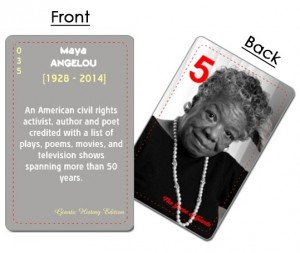 As a way to generate interest in the past and to introduce young people to a past generation, the game succeeds where textbooks might not. Being a game, it requires a time of leisure when the brain is most at east without any pressures of curriculum, and with maximum dopamin secretion. I have played it, many times with students (and won, if I might add), and what I’ve noticed is that the aim of the game’s invention is easily realized: students strive to remember the faces as well as what the person profiled is famous for. Over time, and over many losses and trials, they begin to remember. Those interested in learning more about the characters will – at other leisure times – go ahead and read some more. It is a good thing.
The best part of it, for me, is that the range of the characters in the game is wide and deep, from Aristotle to Soyinka, from Babatunde Jose to Marie Curie, and from Anthony Enahoro to Gregor Mendel. Gradually, young ones are introduced to history in a fun and non-threatening manner. (More about it here). According to the inventor, the aim is to make the game a household item not just for kids and youths, but for adults as well as a way to learn about the past while also having clean fun. This makes sense to me.
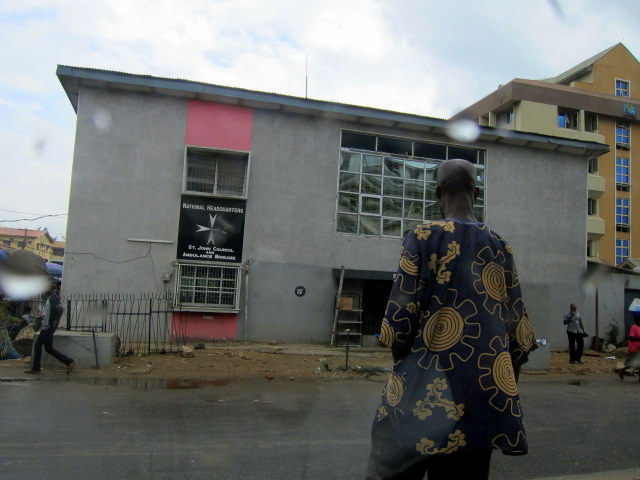
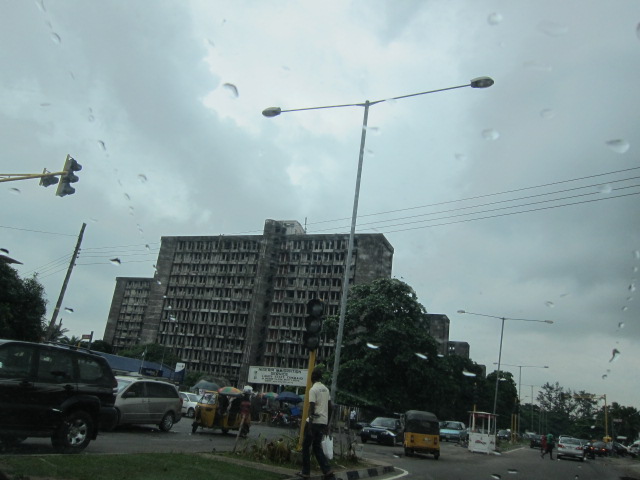
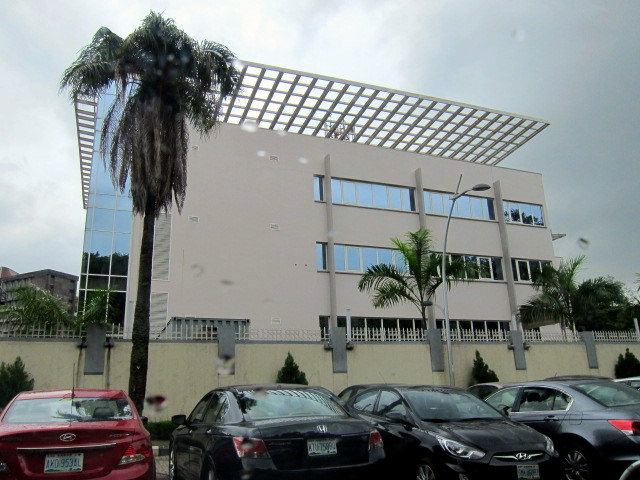
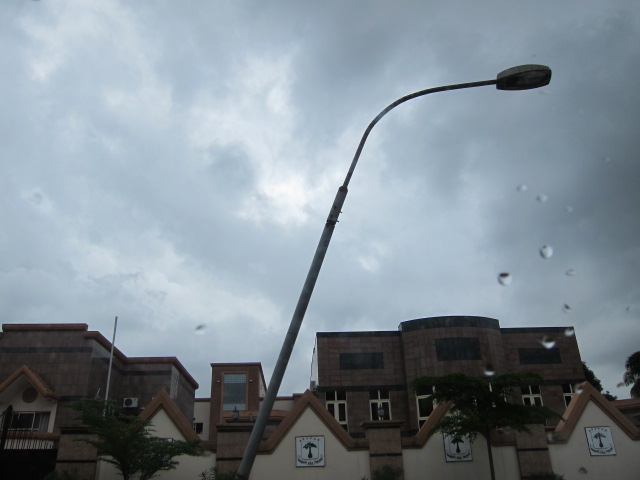

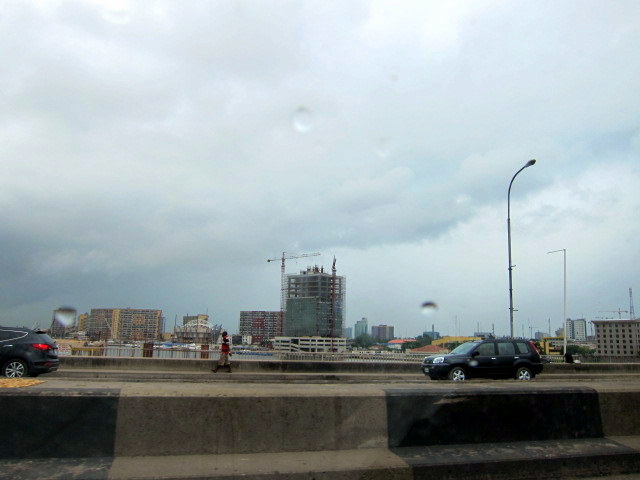

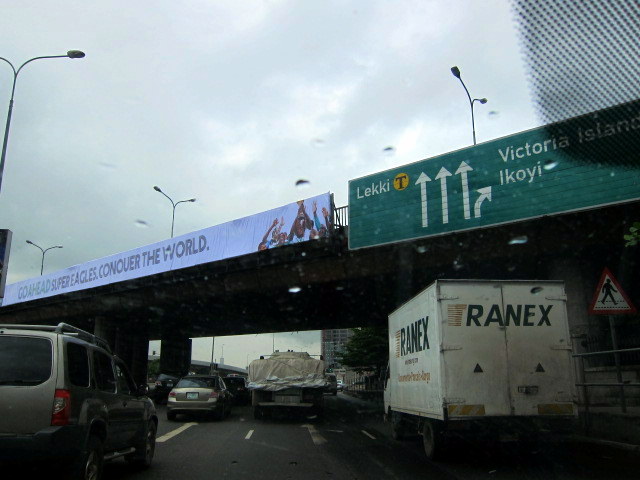
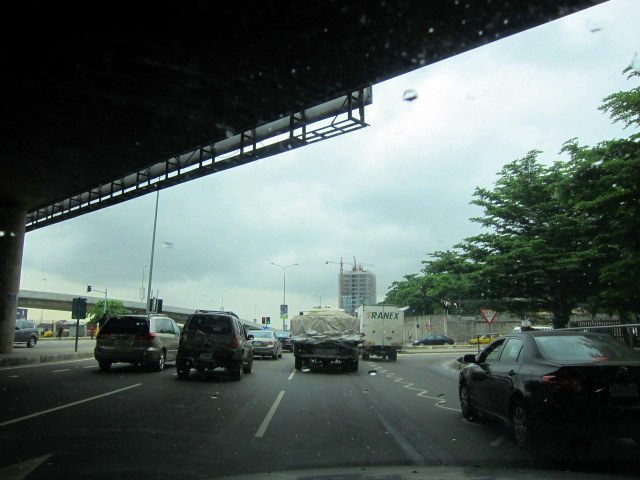
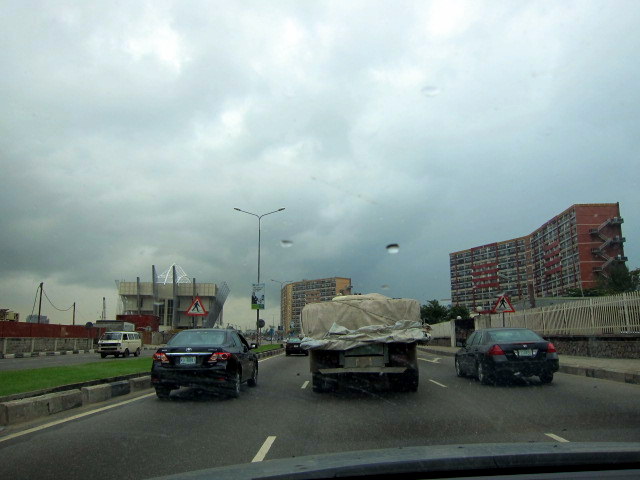
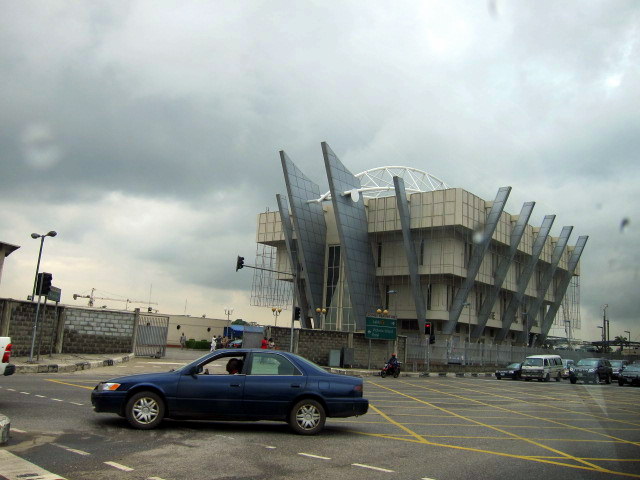
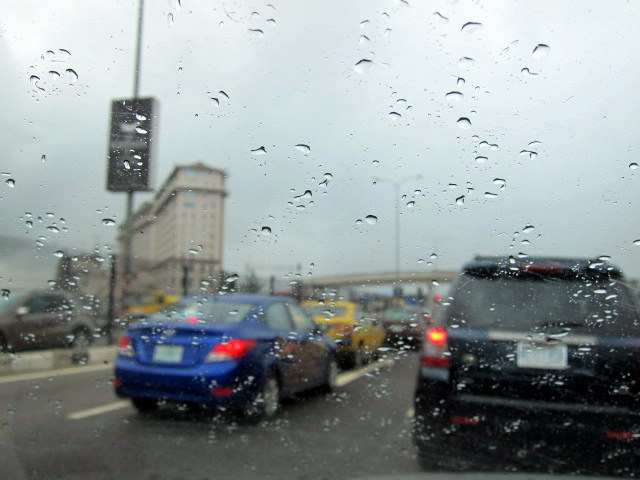 A few caveats, which may or may not be necessary:
1. This is not all of Lagos. This is a result of an indulgent ride from Ikoyi to Lekki are of the state (some would say the better side of the state).
2. This isn’t the only face of Lagos during rainfall. It’s not even close. But the success of the public-private partnership that gave us the Lekki-Epe Expressway ensures that as long as the passenger stays on this highway, he/she would never witness the ugliness that is the innards of the city gutters during rainfall.
3. This aims to be as much about the blogger’s photographic experiments as with the fascination with the city itself, although, as he has often admitted to himself, the city holds much more in treasure for the curious traveler than one can immediately tell from a cursory look.
Enjoy.
I’ve heard it referred to as “the most expensive slum in the world”, usually, after a torrential rainfall that exposes the ugly underbelly of the city’s otherwise pleasant covering. The gutters overflow and the effluence spills onto the roads with smell and other ugly contents. It is the same sight as when riding on a speedboat on one of its waters and having to stop said boat a couple of times during the journey in order to rid the engine of plastic debris and other floating trash. The overwhelming feeling is that management of the city (as improved as it is now from over decades ago) still needs a lot of work.

Lekki, after rainfall
Otherwise, it would not be that Lekki, Ajah, VGC, Victoria Island, Ikoyi, and other highbrow areas of the new Lagos (as opposed to the old mainland) would magically transform to the ugliest sights at the first instance of rain. Simple basic necessities as improved and efficient drainage systems would be in place and water would be properly channeled away from view. It is an island, after all. The last thing one would expect to see again on the little land area remaining would be water in abundance, and in unwanted places. We have the shorelines for that. In the age of threatened deluge from climate change, it’s hardly an encouraging feeling to wake up in the morning to a pond of water having taken over the road meant for motorists and pedestrians.
It “Island” scam isn’t limited to the havoc of rain, of course. In other parts of the world (one imagines places like Jamaica, Cuba, or Barbados), the very idea of an island is that of an exotic location with access to – in the very least – basic ocean amenities and food: shrimps, coconut, squid, fish, etc, at an unbelievably affordable rate. Not in Lagos. Here, to get seafood, one still has to drive for hours in search for one of the highbrow restaurants at Victoria Island. And to get shrimps, one has to get to an expensive supermarket. It begs the question, among others, what our numerous Ilaje fishermen do when they set out in the morning into the deep. They do catch something, right? Where is the crayfish? Catfish? Shrimps? Lobsters? It shouldn’t be that one who lives on the island pays just as expensively as one on the mainland (or in Ibadan, to give an example of a faraway town) for simple pleasures that should be a staple island diet, right? Right?
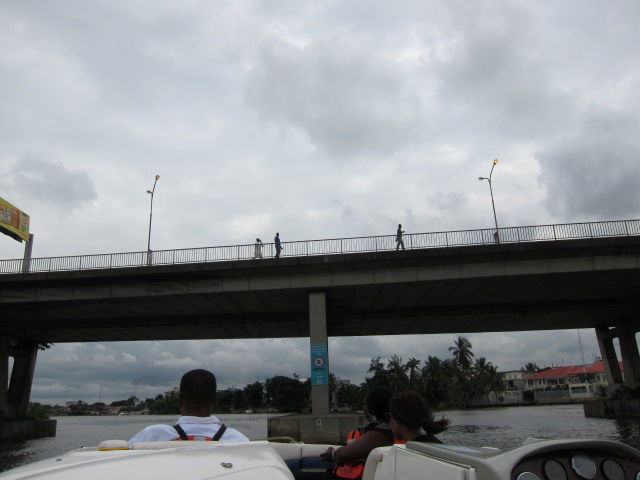 From my experience of the past week, riding by speedboat through some new parts of the city, I eventually realized the potential that has been talked about for so long, by everyone from local journalists to Forbes to local and international politicians. Lagos is the city of the future. Like Lisbon or Venice, the potential for inland water transportation for leisure or for business is huge. Think of gondolas, or kayaks, or just private luxury boats for upwardly-mobile middle class citizens. And like New York, its skyline is ripe for big top class investments in real estate and architecture. We already see traces of it everyday in new construction works (though one hopes that the cultural worldview of the land at least stamps itself, in some way, on the architectural landscape). And what of investments in ferries to move people around in order to clear the roads of so many cars that needn’t be there but serve only to pollute the environment even more (and of course serve the ostentatious needs of their owners).
Well, how do I end this? Friends who read previous posts have advised me to contact the Lagos State ministries in order to share with them my ideas and dreams of a new Lagos where all the possibilities are profitably and usefully exploited. No, I have replied. I don’t have dreams of governing. But I can blog, and detail the things I see. Maybe someone connected to those in charge might see this and begin to think in the right directions. From the history of the new government of the state, it is clear that there is already progress. As citizens, the best way to engage will continue to be giving feedback when necessary, and demanding for more, as the case demands.
Send me your observations at kt@ktravula.com