There are many ways to fund a project, I’ve realized. One can work hard, save up for many months, and then put all that savings into the choice project, ignoring family and other more important commitments in the process; or one can ask friends and family for a raise, promising that the money will not all go down the drain of sometimes unrealistic dreams. This is usually a good idea if they are not, at the moment, committed to something else more important themselves. Usually very rare. Or one can apply for a number of grants in the world, promising to make one’s dreams come true.
Most grants however are specific. I got a MacArthur-sponsored grant in 2005, for instance. It came with a stipend of $600 for all of six weeks, with a paid trip to Moi University in Eldoret Kenya for a “Sociocultural Exchange”. The Fulbright of four years later came with a monthly stipend of about $1200 but one had to pay for lodging, and feeding in the United States (totaling usually up to around $800) such that by the end of the program, there was just enough to buy an iPod Classic, a hand-held camera, and a few gifts for hordes of friends and family back home.
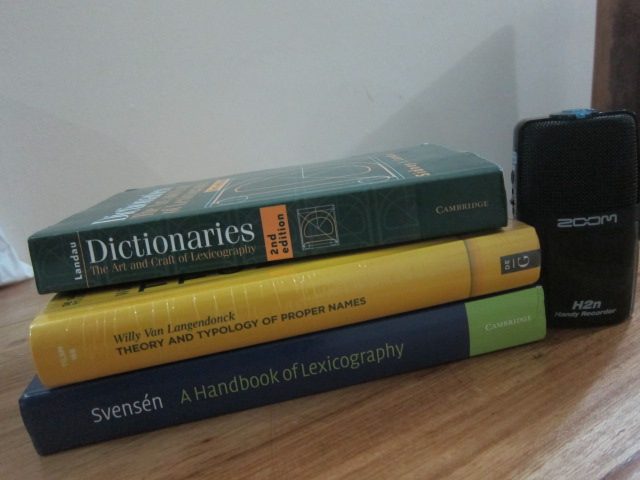
Some grants require that the grantee do a couple of things (like write a book, for instance), or stay in a particular location for a period of time. Or do work in a certain area for a period of time. In most cases, except one is already established in that field, it’s hard to find a grant that fits conveniently. That was why when sometimes last year, while pondering a way to continue and expand a project I started as an undergraduate in the University of Ibadan “A Multimedia Dictionary of Yoruba Names”, I constantly ran into a wall of doubt as to the possibility of raising enough funds (and finding enough interested people) to get the project moving. The model I had submitted as an undergraduate project was of just a thousand names borne by Yoruba children, with their meanings and (for the first time) audio pronunciations done by Yoruba speakers. For 2005 Department of Linguistics at the University of Ibadan, it was an impressive work. For a 2015 adult with access to more efficient technology and crowd-sourcing, it was less than a tip of the iceberg.
 I didn’t have enough savings to start the project on such a scale that I envisioned, and I couldn’t think of any grants that could fund it. Even the Fulbright Alumni Innovative Fund (for past Fulbrighters), as diverse as it is, was limited to a number of categories which doesn’t accommodate a project focused on lexicography and language documentation. There is the MacArthur Genius Grant, a suitable and appropriate grant that makes no demands on the grantee but rewards them (with $650,000 over five years) to be able to achieve their dreams without the drag of a 9-5 job in a busy city. Problem was, one needed to be nominated, and the folks who nominate are usually not known to anyone but the MacArthur folks. Finally out of options, the idea of crowd-funding struck me, just as quickly as the imperative to use 2015 as a year to proceed with the dictionary idea in the first place. I’ve had some contact with Indiegogo before now, but only through friends who had asked me to donate to their project. I’d also heard of Kickstarter, GoFundMe, GlobalGiving, and a couple of other crowd-funding sites. I did a little search on all of them and found Indiegogo most appropriate. Unlike Kickstarter, they don’t send all the pledged amount back to the owners if the goal is not reached. They do take 5%-9% on all the funds raised though, which makes sense when we realize that they’re also in business to make a profit.
So, on January 6 (a not-so-smart date to start a fundraising drive, when one considers the expense that usually goes into the Christmas holiday period), I launched the Indiegogo campaign, open for 60 days. Yet, in spite of the inauspicious beginning, the idea resonated with a lot of friends, family and colleagues with whom I shared it, and they gave, surpassing my expectations. It may also have had something to do with how obnoxiously I pestered a couple of them who promised to donate and then promptly went AWOL :). More importantly, word about the project got out and many people who had nurtured similar ideas about documenting the Yoruba experience but lacked the means or network to do so wrote to me to volunteer their time and services. It has been the best part of the whole experience. There have also been other not-so-encouraging ones: colleagues who matter-of-factly expressed their unwillingness to support either because I’d never supported their projects in the past (even without my knowing it) or because they had their own projects that also needed financial attention. In all, I learn a lesson in human relation, fundraising (I wonder how politicians do it. Explains why I’d never be one), drive, and persistence.
There are now about 15 days to go until the fundraising effort is over. But yesterday, I realized that this is only a start. Yes, I do want to create a Yoruba Dictionary of Names, and the dream is now more realer than ever, thanks to a number of known and unknown people. I however also want to create a Lexical Dictionary of Yoruba containing all the words in the language, also crowd-sourced, and also multimedia and internet based. There is no excuse for the absence of such a document online and such app in mobile phones of interested people all around the world. I want to translate more work from English into Yoruba (I’ve still not completed the one I’ve been working on for years), and render more work from Yoruba into English, and into audio. I want to work with as many people as are willing to make Yoruba relevant to the next century in information technology. The industry for mother tongue education, and documentation is one that is huge and waiting to be tapped. Yes, we are translating twitter into Yoruba, but that can’t be all. Where’s Facebook? Instagram? Google? Where are machine translations? Where is Siri Yoruba? And to do all of these will take more than the $5000 that we are now on the path to raising. We need more.
Yesterday, I applied for the TED Prize 2015, a prize worth a million dollars to support any dream from anywhere in the world. A total stranger had sent me a link to it via Facebook, believing that I have a shot. I scoffed for all of one second and then sobered up. If life has taught me anything, it’s that more than hard work and persistence (which usually pays), taking a chance on oneself is also usually a good idea. I have also begun to look for any other grants that can support a dream of creating a thriving ecosystem of mother tongue education and use in Nigeria. Not just limited to Yoruba, by the way, but the over 500 languages in the country. It might happen, or it might not, but it will not be for lack of trying. There is a future worth pursuing. From the kind of enthusiastic support I’ve seen from the Dictionary fundraising, one also within reach.