 Last Sunday, Joy Isi Bewaji, author of Eko Dialogue, hosted the fourth edition of The Conversation, a public town-hall-style interaction on various issues, at Colonades Hotel in Lagos. The first edition held in Lagos, the second in Abuja, the third was held in Ibadan this last July. This edition was to discuss sexism in Nigeria and its implications for both men and women. I was one of the panelists, along with lawyer Ayo Sogunro, actor Femi Jacobs, and Bimbola Amao. In attendance were men and women from all walks of Nigerian life: journalists, artisans, housewives, young single women, married men and women, writers, and all. This was my first time in one of these events.
 What is sexism? How sexist is the Nigerian media? How sympathetic or sensitive is society to the issues of Sexism as it affects the woman? What are the dangers of sexism in marriage? etc. These are some of the questions posed by the convener, and discussed by the panel and the audience. And, in just a few minutes into the event, a series of personal experiences started pouring in from around the room detailing the crap that Nigerian women put up with on a daily basis: a deadbeat but egotistic husband who prevents his wife from excelling, a caring but misinformed mother who hands over her daughter, at 19, to a man whom she had never met, or loved, to marry just so she could boast of having a daughter in a marriage, a young lady who is kept from going to school to pursue her degrees because of her husband’s patriarchal (and religious) conditioning, another who is struggling in a marriage where the balance of power (and finances) is tilted against her even after she had supported the man with her own income when she had the means. In the workplace, someone who didn’t get a job because she was pregnant at the time of the interview, and many more who were (and would be) denied jobs just because they were female and thus “emotional” beings.
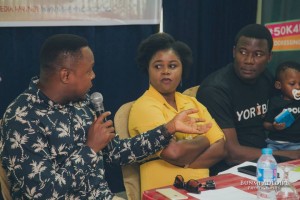 There were many more, not just from the panelists who in a few instances disagreed on the cause of and the solutions to many of the issues. (Is religion a force for good or for ill in these matters? Yes? No? Ayo Sogunro argued, correctly I believe, that our imposition of a foreign belief system on what was a fairly equitable traditional family system complicated our gender relationships and gave excuse to men to relegate women into subservient roles because “the bible said so” or “it’s written in the Qur’an”. Femi Jacobs disagreed, crediting religion with all the good in the world and absolving it of the resulting ill. The followers of the faith, in his opinion, are the ones most responsible for the interpretation of simple harmless injunctions. This isn’t satisfactory, I argued, citing examples in Catholicism where divorce is frowned upon, and Islam where female genital mutilation is – in some cases mandatory. We cannot always separate religion from much of the problems we have with oppression and inequality in marriage, I said. It’s called “Man and Wife”, after all, and not “Husband and Wife”, where “man” is the default and “wife” is just something he possesses.
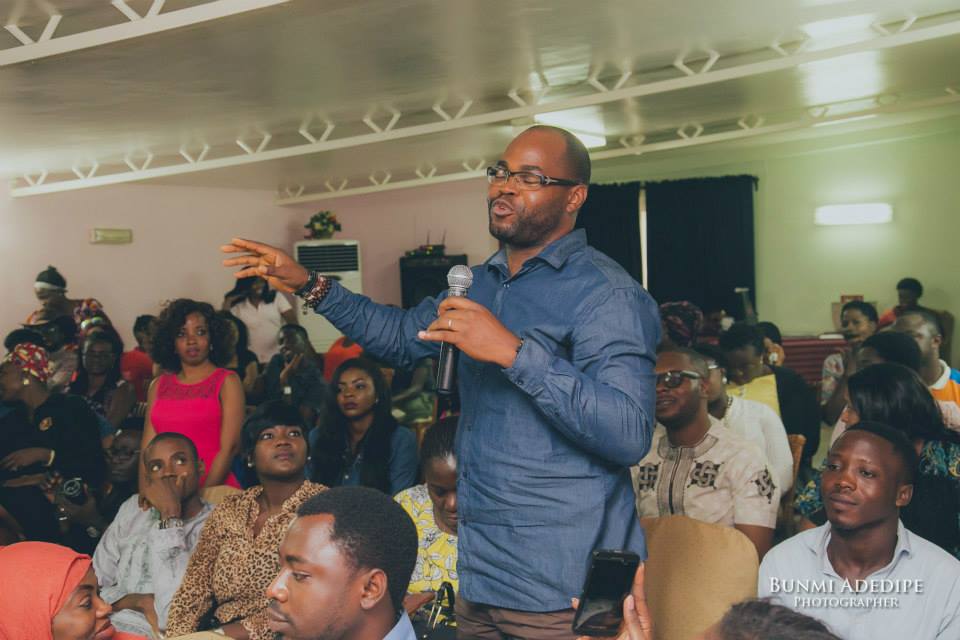 There were also some personal disclosures by some of the women which elicited winces of discomfort, despair, and eventual vocal disagreement by the panel as well as some other members of the audience: should women refuse to hire other women because, in someone’s words “women are emotional, can be petty, and are often unprofessional”? As I responded, hopefully with as much incredulity as I felt, “What would you say if a man had said that???” In discussions like this that can sometimes move fluidly from the solid grounds of rejecting discrimination on the basis of one’s gender to the murky waters of self-righteous recrimination of other members of that same gender for being the real reasons why they have what’s coming to them, it’s always important to be on guard. It is particularly so for women who eventually become victims of these prejudices when they become accepted as fact by the general publc.
 What my experience of participating in the conversation tells me is that a lot more needs to be done. Sexism is discrimination against someone on the basis of prejudiced opinions, summaries, and conclusions about their gender without giving them a chance to prove themselves. Simple. Not giving someone a job because they’re thought to be incompetent before they are tested is sexist. Assuming that all unmarried young women are incompetent is sexist, even if many of them are (and I don’t believe that this is the case). Not employing young women with boyfriends (because they often can’t focus on their work because of their love life) is sexist too – and many more. These are sexist even if the person doing this is a woman! There will always be other avenues to talk about how young women (and men) in Nigeria could improve their competence in the workplace so they’re not mistreated at work. But in a gathering to discuss how to remove that kind of mistreatment, the focus on the victim seemed a tad out of place.
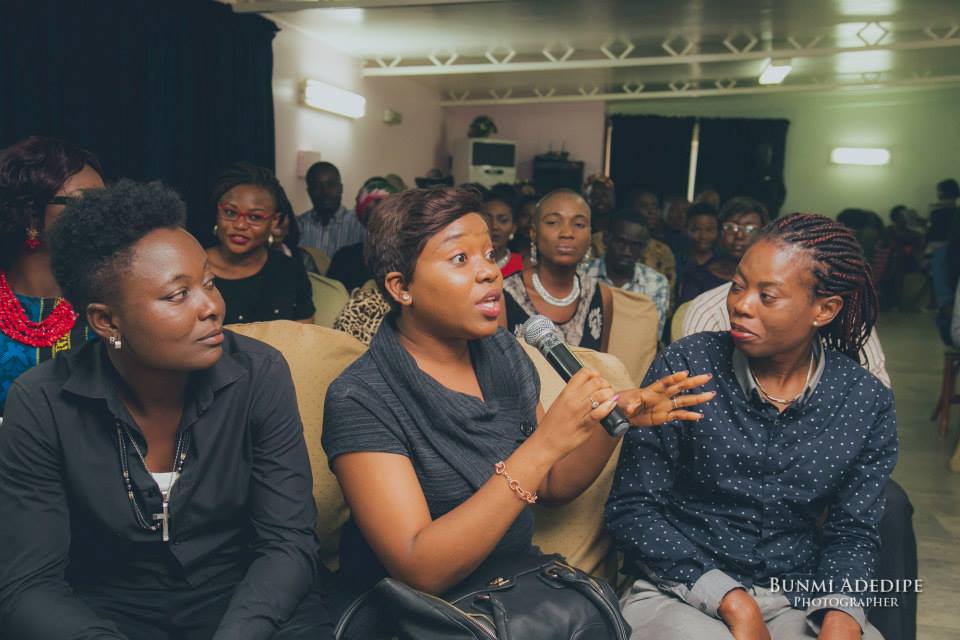 In all, the event was notable – for me – in the the openness with which the women (and men) present spoke about what were intensely personal issues and encounters in their marriage and their daily lives. These were information that couldn’t have been easy to elicit from anyone, but were freely shared in order to illustrate a point, refute another, or help others learn from past mistakes. This is where the convener, Joy Isi Bewaji gets an A+. For creating an avenue for women to share and learn from each other, provide support, and encouragement, proving that there is no knowledge that is not power, I salute her. As the diversity on the panelists’ table shows, it is not for women alone either. Men, hopefully, took away more than just the guilt of having been in a privileged position that has trampled on women’s rights for generation, sometimes non-deliberately. They also learnt about what they can do to make the future a better one for women, for their sons and daughters, and for themselves.
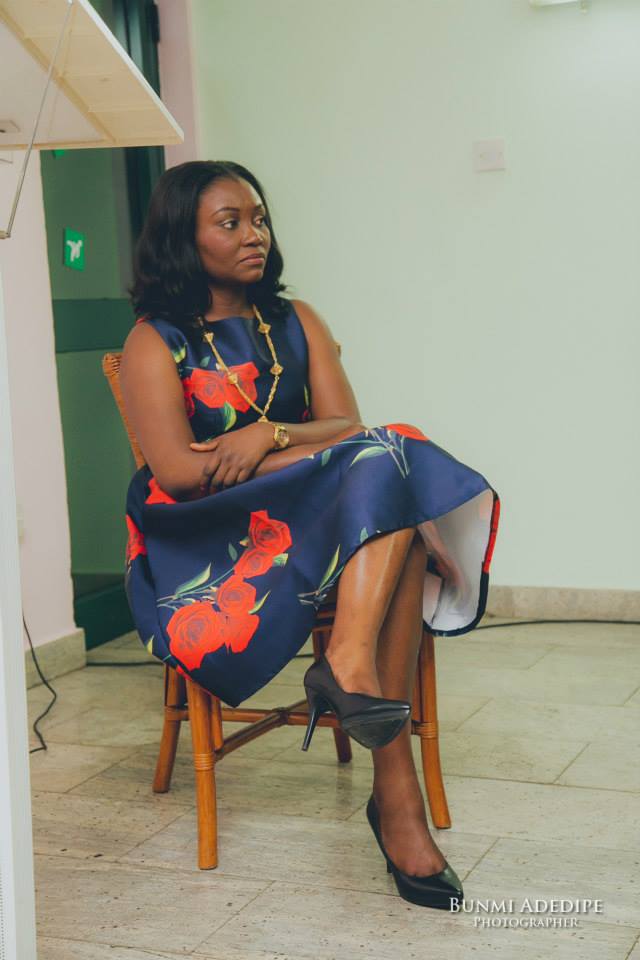 Like Oprah Winfrey who one may guess that Ms Bewaji aspires to surpass in her responsiveness and attention to human-angle issues around the country, especially regarding women, Joy is passionate about what she does, and has achieved success for doing them. At the end of the event, she presented a sum of 50,000 naira ($250) to three women each who, though indigent, had inspired her over a period of time with their strength and innovativeness. The money, according to her, came from donors. Days after the event, we learnt that 85,000 naira (>$400) more was raised – also through anonymous donors – for one of the struggling women at the event who had passionately told a story of her survival through a horrible marriage. The money can never be enough to solve problems that have roots in our evolution, cultural conditioning, and history, but it can have practical implications for someone living in poverty who however has the zeal, the smarts, and the ability to innovate and pull herself up. This is a great thing, and we need more of it.
It took over three hours, then the event ended. There will be many more in the future, Ms. Bewaji said. And to that, we say, amen.
_____