Browsing the archives for the Review category.

Nigeria Prize for Literature 2017: The International Consultant’s Report

by Abena P.A Busia

Finalists:

Ogaga Ifowodo: A Good Mourning (Origami Books/Parresia Publishers Ltd, Lagos Nigeria 2016); Tanure Ojaide: Songs of Myself (Kaftgriots/Kraft Books Ltd, Ibadan Nigeria, 2015); Ikeogu Oke: The Heresiad (Kaftgriots/Kraft Books Ltd, Ibadan Nigeria, 2017)

This has been a surprisingly difficult decision as each collection has very strong merits to recommend it for this prestigious prize. The three volumes, though very different, are the work of three extremely accomplished poets who in fact have significant aspects in common. I single out as the most salient of these traits a firm belief in the place of poetry in the service of social justice, and the desire, shared by each of them, to forge a poetic form that can contain the often difficult subject matter of the worlds they interrogate, within their structures. I discuss them here in alphabetical order by author.
Ogaga Ifowodo: A Good Mourning. The thoughtful intelligence of the arrangement of these poems, is one of the strengths of the volume though it is necessary to be diligent about reading through the whole collection because in the end the opening poems, though they capture well both the exuberance (History Lesson) or the bewilderment (Perfect Vision) of youth, are in the end weaker poems than the ones we find towards the end such as the poignant sympathy evident in the details of Algiers, April 2000 and A Rwandan Testimony.  These poems arranged to unveil with a growing sensibility to a larger world than the one in which we begin. Or rather, what they succeed in doing is taking us on the poet’s journey as the outside world which form the fantasies of childhood become experienced through all the ambiguity and contradictions the poems make us witness. There are wonderfully wrought juxtapositions as in the through line of song in “Where is the Earth’s Most Infamous Plot” which opens the third section of the collection. Impressive also is the evident experimentation in form and prosody though the end results are uneven in some of the poems, in others, such as Liberation Camp the containment suggested by the strict form works with evocative brilliance when we reach the last line.  However, in the end, I rank this collection third.

Tanure Ojaide: Song of Myself. This collection displays such mastery in its presentation of the varieties of form and subject matter and yet still remains a unified whole. Clearly a master of his craft, Ojaide’s brief forward explicating the grounding of his quartet in in the traditional compositions of udje poets is instructive and succeeds in guiding us to a way of reading that enriches the experience. Everything is indeed a metaphor and Ojaide explores his mother hen of a muse with remarkable effect. As with the other two collections, a sympathetic poet’s eye sees with clarity both the quotidian and the grand and finds a way to keep them harnessed together. Ojaide is a painter with words and his poetry leads you into the places he walks, talks, eats with a clarity that makes you an occupant of all those spaces. And particularly in Book II, Song of Myself, where all the poems offered are in carefully controlled couplets the narrating poet, grounded in his own markets and homesteads comments freely on everything the affects and infects his private and public worlds. Lovers and politicians all are drawn into a fine web of shared observations and thus responsibilities. His world is a capacious world of caring whether for the drowned at Lampedusa or the wind that still blows, his poems bear witness to the truth that “so many memories assault me not to forget the beauty I have seen”. And most assuredly this is demonstrated also through the variety and number of love songs contained in the volume. But these loves and not romantic, or sentimental, they are fierce, contradictory, honest; born of a life that recognizes “Everywhere isn’t easy to reach”.

Choosing between Ojaide and Oke has been hard, and I confess to vacillating between them enough to ask if the prize can be shared. Both of them make it explicit through their titles and introductory comments that they see their volumes as a coherent whole rather than individual parts, that is they have both given us different experiments in long-form poetry, and have both succeeded admirably in the control of a difficult project.

Ikeogu Oke: The Heresiad: This is a bold and wonderful experiment whose great strength also could have been its great weakness. That Oke manages to create a poem that keeps quite strictly over 100 pages to the lyric pentameter and still hold the attention of the reader is a singular achievement. The experiment in lesser hands could have led to a deadening of the senses. The volume itself is structured on a great conceit; a bold venture in defense of the art of poetry itself. The narrator is a griot narrating a great battle between supporters and detractors in defense of the humanities, and has succeeded in creating a modern epic. The mastery of form is a tour de force exemplary of the dedication to the craft the poem is inscribed to defend.  It would have been wonderful if this work had not only been published in print, but had been released with an audio version because indeed its singular achievement is its sustaining of narrative that displays the arguments of the contending parties, and yet at the same time keeps so clear the voice of the griot. And we can indeed hear the musicality in the rigor of the lines, and the absoluteness of the rhyming scheme of heroic couplets sustained throughout the work.  In the end, if there must be a choice, my selection goes with this collection for the technical feat it performs. The deciding factor was the inclusion of the music, which I attempted playing and in doing that it brought home to me how very carefully the performativity of this work has been thought through; Oke has made ancient forms new again.

______

Professor Abena Busia is a Ghanaian writer, poet, feminist, lecturer, and diplomat, currently the ambassador of Ghana to Brazil. She is the external consultant on the 2017 Nigeria Prize for Literature (Poetry)
On “The Heresiad” by Ikeogu Oke

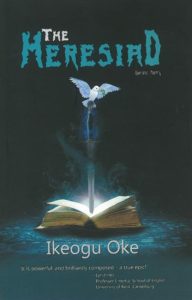
The Heresiad (KraftGriots, 2017) by Ikeogu Oke is, in my opinion, the most ambitious of the books on the prize shortlist this year. It is a book of what the author called “operatic poetry” (another way to put this would be “poetry in drama and song”) featuring one poem extended over a hundred pages. Yes, one poem. It is epic in its scale, ambition, and character (and even in the words of one of the blurbs. See it:

“It is powerful, and brilliantly composed – a true epic!” – Lyn Innes (Professor Emerita, School of English. University of Kent, Canterbury))

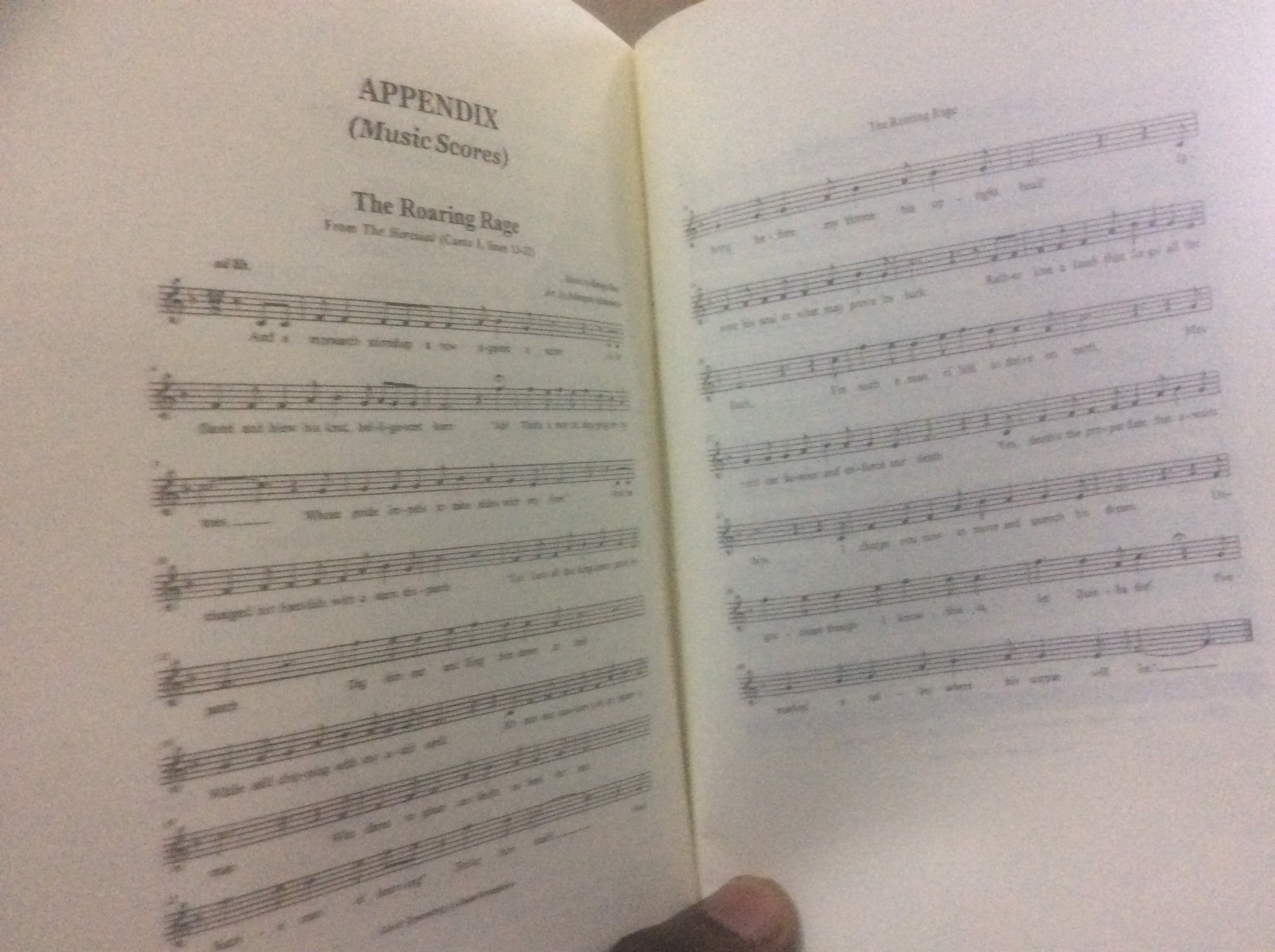
But seriously, the work packs within it a lot of history, philosophy, narrative, culture, allegory, politics, and tradition, rather unapologetically. Without the author’s name, one might confuse it for a work by Shakespeare of any of the writers of the old traditions defined by form, rhyme, and musicality. Only slightly, of course. References intrude from Nigerian (and African) socio-political issues enough to define the work as one addressed to a specific, even if global, audience. And to that idea of musicality, the author graciously provided musical notes with which the poem can be sung.

The name Heresiad, is derived from “heresy” just as the Iliad was derived from “Ilium” or Aeneid from “Aeneas”, as the author explains in the preface. But what needed defending, even more, was the style, operatic poetry, which Oke described as being deliberately crafted as “an art form that transcends verse and goes on to embrace song, music, and drama.” Previous works of this nature which have misled readers into expecting musicality through the use of “Songs of–” in their titles were singled out, from Turold’s The Song of Roland to Vyasa’s The Lord Song to Okot p’Bitek’s Song of Lawino. (He couldn’t have called out Tanure Ojaide’s Songs of Myself, the other book on the shortlist, because this serendipity of both their presence on the shortlist couldn’t have been predicted. But the juxtaposition of this factor in defining Heresiad as unique and better realized as practical literature does appear significant). By discounting the need for a titular nod to musicality and instead embracing it in true form, Oke admits to pursuing a grander ambition: to make written words sing, a homage to Ngugi wa Thiong’o, whose words to that effect was quoted as an epigraph.

Of the thematic preoccupation of the book, Oke says it is written “to make a case for unhindered intellectual and creative freedom… and for mutual respect and harmony between faith and thought, otherwise religion and intellectualism.” In my interview with him, he admitted that the idea of the book, and the first verses in the book, came in 1989 when “a famous writer” was condemned to death for the crime of heresy. He didn’t need to – nor wanted to – mention Salman Rushdie by name, but that connection became immediately apparent. In this book, the condemned author and narrator is Zumba, who was so censured for having writing a “bad” book. To enforce this sentence, and to save him from it, a few other characters, in the person of Reason, Doom, Anger, Sword, Machete, Axe, Stone, Panther, Care, Bluff, Smithy, etc, were introduced with fully-realized characters, compelling presence, and voice. In their thought processes and the unfurling of the curious plot, the poem realizes itself in full glory.

One of the limitations of traditional poetry, which can also become its most enchanting feature, is rhyming. It is a feature that I happen to love. But it is a feature fraught with a lot of risks one of which is the occasional trading of meaning for the benefit of a properly rhyming word, or the use of the immediately available rhyme instead of striving to find the perfect one. In Heresiad, some of these limitations show up, like when “bypass” is made rhyme with “pass”, “reproof” with “proof”, or “unwise” with “wise” (and in one unintentionally hilarious instance, when the native language interference pushes “blade” to rhyme with “head” (page 57). For a book of this type of ambition, it might be that those kinds of lapses are to be expected and tolerated. But for an unlucky book, they can become the flaws by which they are defined.

But when it works, though, it works quite beautifully.

I’m part of this misnomer, I confess,

And so are all you Faithfuls, nonetheless.

Or who among us Faithfuls can have read

The book for which we seek the author’s head?

Rhyming might seem like a trivial issue on which to spend critical time until one realizes that each couplet throughout the work sticks to this rhyming pattern on top of what Oke describes as “lyrical pentameter” (adaptability to lyrical utility). The realization that the author had spent countless man hours crossing all his Ts to achieve this kind of ambitious and thoroughly satisfying theatrical result is most impressive of all.

Now, the author’s plea had reached his ears,

A plea that dripped with anguish and with tears;

And Reason, yes, had pondered through a plan

To take help to the joy-forsaken man.

(page 36)

Equally as impressive is the realization that the book took twenty-seven years to write, over different iterations.

Now lift your voice; lift your voice and say;

Your voice, not mine, must rise and lead the way:

What now transpired among the rising five

Who wished our author more dead than alive?

What – the thought – that, of its own accord,

Changed their common tilt towards discord?

A love as yet profound inspires my choice

To be the human echo of your voice.

(page 52)

Speaking of theatre, when was the last time you read a book of poetry with accompanying musical notations? I certainly haven’t seen any. But here, on page 106-112, the author, with the help of Adéogun Adébọ̀wálé, helpfully guides the future theatre and/or musical director on what is the appropriate way to translate the texts into music.

During my interview with him, I asked whether he would be willing to sing some of the lines to me, and he graciously obliged. It was not as impressive as I’d expected it, but who expects an author of a work to always be its most competent performer? Not me. It is ironic, of course, that this musical characteristic of the work once became a point of risibility when a restless Facebook critic dismissed it as a gimmicky invention to win the $100,000 prize money. On the contrary, I think it is one of the book’s distinctive features, showing it as different as possible from the others on the shortlist in terms of ambition, inventiveness, interdisciplinary scope, and resolve. Now, to see it on the stage!

The author’s habit of including footnotes and references at the bottom of relevant pages irked me at first. They had appeared as an unnecessary usurpation of the critic’s role. But this wasn’t the case. They add a lot of value to the work in illustrating, where necessary, the writer’s influence, allusion, or research. Not one was superfluous.

From what I have observed of the pattern of choice by the NLNG judges, who have typically favoured works of formal and traditional forms in style and ambition (See: The Sahara Testament), I will predict that The Heresiad might take home this year’s prize. There is something about the work that speaks to an intense commitment to innovation, tenacity, joyful experimentation and social commentary in a way that provokes delight and engagement. It is doubly worthy, of course, for its successful bridging of the genres of poetry, drama, and music, while making a strong point, through allegory and an enchanting imagination, about the role of free speech and the responsibility of the writer in a modern society.

I’ll be surprised if the judges disagree, but such surprises are welcome when it’s not one’s work on the shortlist.

______

Find a link to the previous reviews here.

______

Update: October 9, 2017: Ikeogu Oke’s The Heresiad is the 2017 Nigeria Prize for Literature winner. Watch my interview with him here. Congrats to him.

On “Songs of Myself” by Tanure Ojaide

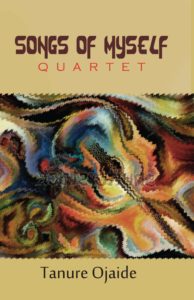
Songs of Myself (KraftGriots, 2016) is a collection of poems by Tanure Ojaide. It is the most personal of the three on the shortlist of this year’s Nigeria Prize, the most introspective, and also the one most (even if inadvertently) expressive of the melancholic aspiration I had prematurely expected from Ogaga Ifowodo’s A Good Mourning because of its ominous title.

Ojaide has published poetry since 1973 and has published twenty collections of poems many of which have won prizes, local and international, like the Commonwealth Poetry Prize (1987), All Africa Okigbo Poetry Prize (1988, 1997), the BBC Arts and Poetry Award (1988), and poetry awards of the Association of Nigerian Authors (1988, 1994, 2003, 2011).  The new work is approachable and deceptively simple, like thin ice over a frozen lake. More on this style later.

The title of the book invites us to approach the collection as work about the author to varying degrees: songs of myself. But in the foreword (which I had personally considered superfluous in a poetry collection, except in a notable instance like in The Heresiad, an exception which I’ll explain in my review of the book), the author explains his approach as incorporating “some of…aspects of oral poetic genre”, particularly of the great Udje poets of Urhoboland, which “deals with self-examination and the minstrel’s alter-ego” in the work as a way of attempting to know oneself with “self-mockery that justifies mocking others.”

This intention changes how I eventually approach the work, not as Ojaide himself recounting his thoughts and opinion on a number of relevant political and social issues alone, but as the voice of an invented poet-persona using a traditional poetic form to interrogate himself and thus the society. The Udje, as he explained it to me in our YouTube interview, are traditional Urhobo griot-poets who work carry social and political significance, and are present as conduits for commentary on the public condition.

So what is this condition? In the book, it is both personal and societal. The poet is both an old man (Gently; page 14) and a young adult (We Have Grown: 155). He’s both the country (Self-Defense; 91) and an individual (On My Birthday; 26). He is a happy observer of the passing of time (For The Muse of Peace) as a cynical record keeper of slights and injuries (Masika; 47). He’s a parent (They Say My Child is Ugly Like a Goat; 107), and a son (Family Counselor; 85); a hopeful lover (Secret Love 147) and a self-critical poet (Wayo Man; 87). The issues addressed are as disparate as they are familiar. Nigeria, the country and the government, is an ever-present villain in most, as are other social issues which the author addresses with sardonic candour.

If I were to ask my people

what they wanted the most,

they would definitely choose money over every other thing,

iincluding good health and peace

that I know there’s a dearth of

because of oil and gas everywhere

that by right should bring us wealth.

(Page 132)

From afar, especially with a misconstrued intention of the writer’s narrative angle, most of the poems appear conditioned into a tried-and-tested style of political and social protest poetry through this staid and resigned voice. But on close contact, especially against the background of its traditional dimension of style, they reveal themselves as both original and intentional, carrying an unflappable tone couched in the simplicity of cynicism. Who is a poet – I ask myself a few times – and what makes a good poem or poetry collection? Is it a successful deployment of inventive gymnastics of modern conventions that appeal to sophisticated palates, or is it an honest recounting of home-grown truths directed at a selected audience even if in a least colourful, or less popularly accessible voice?

So many questions I can’t answer.


After all the birds fall silent in the delta,

how can there be Rex Lawson

with the polyrhythm of weaverbird, sunbird,

carpenter-bird, solos and ensembles?

(page 134)

The question is important in judging the language choice that Ojaide deploys in this work which many times doesn’t read as elevated as one typically expects of offerings of this kind of ambition. Against the background of his stated intention, however, possibilities can be suggested of this character of theirs being defined both by the limitation of translating the cultural and linguistic cadence of Urhobo poetry into English and, less charitably, the author’s helplessness in the face of this challenge. The answer will be resolved by the judges of the Nigeria Prize in a couple of weeks.

When I asked him about his use of language and the idea that the use of English as a conduit for African poetic traditions can be a limiting factor at best and a catalyst for the extinction of those languages, he was less acquiescent. “You must know that there are many Englishes,” he said, to which I say yes, as long as each different variant is able to successfully carry to fruition the stated intentions behind its use, and reach new audiences. In this case, I am not as sold as I should have been, not about the homage to traditional oral poetry, which other authors (and perhaps this one in previous works) have done to great success; but about its seamless and effective deployment. Maybe I have been spoilt.

In many of the poems, the writer includes footnotes, like in the first poem on page 15 where he explains that Dede-e dede-e is an “onomatopoeic expression of ‘gently’ in the Urhobo language.” Of this incursion, there are strong arguments to be made, especially in this work, for doing away with them totally. Footnotes are often distracting, and – to return to contemporary arguments about the audience of our literature – needless. Those who value the work enough to engage with it will do the work needed to unlock much of its secrets. The counter-argument, of course, is that a reader like me who is approaching the work on short notice for the purpose of a review would not have figured out that Aridon is a “god of memory and song/poetry among the Urhobo people” (page 17). That same argument, though, fails in the face of less justifiable ones like “NDDC” on page 133, or “ICU”  on page 24. If I did not know that ICU meant “Intensive Care Unit” either from the context of the work, or from having lived in modern society, then the writer hasn’t done his work or I need to return to school.

These kinds of conflicts show up in other places too, springing up the question of who exactly is the poet’s audience in this case. Since his last five books, Ojaide has started publishing his work first in Nigeria before re-issuing them with foreign publishers, a reversal he said was conditioned by his renewed sensitivity to his role as a poet primarily addressing an African (nay, Nigerian) audience. The justification for this almost “reclusive accessibility” of his literary voice will depend on those to whom the work is addressed or the successful domestication of the reader’s mind to the traditions from which the experiment emerged. It could be that the author isn’t “speaking English” at all, but Urhobo, just barely accessible to us through a shared common lexicon.

They mock me because of my child

whom they say is ugly like a goat.


Don’t mind them who see nothing good.

My pickin fine pass goat.


Where are the mockers when my child

fetches water and runs errads for me?

(page 107)


There are about 91 poems in this collection, making it the bulkiest of the three on the shortlist. In four different sections, the poet bares himself to the world like a local minstrel, under different guises and situations, in an outlook that is mostly dark, self-critical and confrontational in equal parts. The subject matter, a look at the world through a personal self-reflection, is certainly an important addition to current social and political conversations. The language is simple, accessible, and direct. It is a collection that anyone can pick up and enjoy. The prolific nature of the writer’s career and the breadth of this work’s take on Nigeria and Africa’s social and political issues makes it an important presence in the shortlist. And even if I will quibble with the inclusion of some of the poems there for not being strong enough to represent such an accomplished poet on such an important list, I’ll still rate Songs of Myself as an important peek into Ojaide’s poetics, experimentation, and voice. The potential for impact of this type of language and style direction, however, will be subject to practical, and more verifiable, manifestation.

_____

My interview with Tanure Ojaide can be found here. Find a link to the previous reviews here.

NLNG 2017 Literature Prize Interviews and Reviews

As promised, over the last week, this blog has featured reviews of the shortlisted work on the 2017 NLNG Nigeria Prize for Literature (Poetry), as well as interviews with the shortlisted writers, and the prize coordinators. You can now read and watch them here, below:

Monday, September 25, 2017: A Review of A Good Mourning” by Ogaga Ifowodo

Thursday, September 28, 2017: A Review of Songs of Myself by Tanure Ojaide

Sunday, October 1, 2017: A Review of The Heresiad by Ikeogu Oke

Monday, October 2, 2017: Conversation with Professor Ben Elugbe, member of the advisory board of the Nigeria Prize (video)

Tuesday, October 3, 2017: Conversation with Ogaga Ifowodo, author of A Good Mourning (video)

Wednesday, October 4, 2017: Conversation with Tanure Ojaide, author of Songs of Myself (video)

Thursday, October 5, 2017: Conversation with Ikeogu Oke, author of The Heresiad (video)

Friday, October 6, 2017: Excerpts from each of the collections (video)

Sunday, October 8, 2017: Conversation with Kudo Eresia-Eke, General Manager, External Relations for NLNG (video)

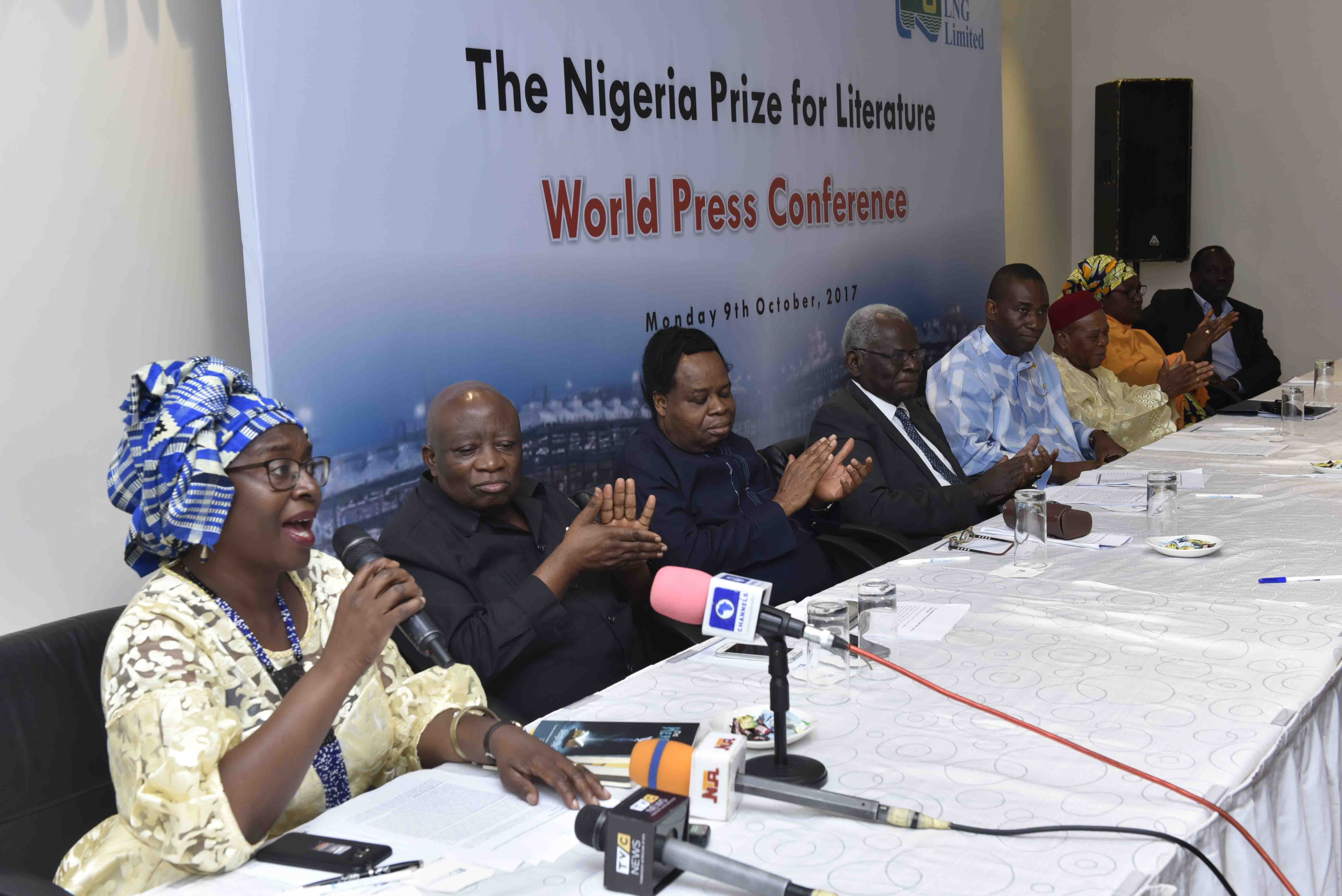
Monday, October 9, 2017: Prize Announcement/World Press Conference.

Update: October 9, 2017: Ikeogu Oke’s The Heresiad is the winner of the 2017 Nigeria Prize for Literature. 

The intention behind this effort was to help engage the community of writers and give visibility to each year’s shortlist as a way to better improve the prize through conversations and constructive criticism. The end game, of course, is the hope to stimulate an improved culture of reading and appreciation of literature around the country.

____

Follow us on twitter at @ktravula.

On “A Good Mourning” by Ogaga Ifowodo

As promised, here is my take on the first book on the shortlist of the NLNG-sponsored Nigerian Prize for literature 2017. The book is A Good Mourning (Paressia, 2016) by Ogaga Ifowodo. Ifowodo is a poet and writer, who taught poetry and literature in English at Texas State University, San Marcos, USA. He holds the Master of Fine Art (MFA) in poetry and Ph.D from Cornell University, New York. He studied law at the University of Benin and worked for eight years as a rights activist with Nigeria’s premier non-governmental rights group, the Civil Liberties Organisation (CLO). Between 1997 and 1998, he was held in preventive detention for six months under the military dictatorship of General Sani Abacha.

I’m ashamed to admit that, until now, I hadn’t read anything by that poet with a striking physical resemblance to James Baldwin. But no matter where I have turned, his name had shown up there, from conversations on social media to arguments in closed listservs. Until recently, I also didn’t know that he had served in government in some capacity and that he once contested for (and failed to win) a House seat from his home constituency.

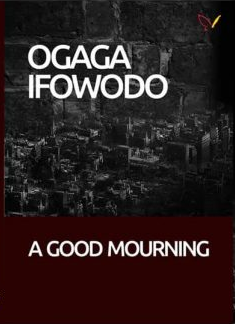
So, I approached his work with an open mind. The title of the book A Good Mourning carried a curious double-edged sword of meaning that intrigued anyone from afar. The cover conveyed darkness as does the paradox of the title itself. If it is “mourning”, how is it also “good”? And how does it contrast with what we have grown to expect when we hear the phrase, devoid of the physical surprise of the spelling difference?

The work does not disappoint. The copy I got was loaned to me by Doctor-Poet Dami Àjàyí to whom the writer had autographed it in 2016: “Good morning & poetry”. I hadn’t found a copy anywhere else that I had looked, inviting conversations to the recurring topic of accessibility of books to the general public before they are selected for the Nigerian Prize. (It is a ridiculous argument, to be clear. The prize is set up to reward excellence, not distribution savvy. But it does raise valid questions about why publishers in 2017 haven’t yet heard of the Kindle, eBooks, and an authentically Nigerian electronic book distribution system called OkadaBooks which can put the books at the literal fingertips of millions of people via their mobile phones).

A Good Mourning is an impressive book that is marked by competence, style, grace, and a distinct authentic voice. It is that competence that I intend to dwell on a bit more because some of the snide remarks about the shortlist had focused on what they regarded as substandard work on the shortlist. Thankfully none had mentioned Ogaga’s name in the diatribes. He is a competent voice whose work leaves no one in doubt of his facility with words, dexterity with decades of African and modern poetic traditions, and sincerity in the pursuit of his numerous truths and points of view.

The poems delight, inspire, provoke, entertain, and intrigue. They cover a range of themes that, contrary to the expectation that the poems in the collection will all be morose and depressing, excite and titillate. In one poem Ten Hours (page 8), the poet describes an appendectomy in a German hospital with such mischief and lexical dexterity that what one feels isn’t just breathless anxiety of a man hanging between life and death but a playful appreciation of the affectation of the doctors’ efficiency and their terrible grasp of English (one confuses “rupture” for “rapture”). He asks for the piece of his gut back, on regaining consciousness, and was told that it had been cut up, and it will no longer, as he had hoped, become

pickled in a beaker,

displayed in bookcase at eye-level

for breaking barren moments,

getting guests to know me inside out.

These kinds of unexpected levity litter the book in random places, turning what was billed as a melancholic take on national life into a delightful, thorough, and serious look at different issues in one citizen’s life.

In the following poem, a serious religious ceremony is gently mocked.

Once an alter boy, he pined for wine

and wafer, not communion with the Lord

Too young for the mysteries of eating God’s


flesh and drinking his blood, he prayed only:

Lord, let this cup pass to me!

The priest sent him out of the holy sanctuary.

You get the idea.

Actually, you don’t.

Ifowodo does this effortlessly throughout the work, especially in places where seriousness is expected. It almost seems like the whole book is an attempt at shattering gloomy expectations. Or else a practical interrogation of life as comprising of both gloom and levity, mixed in the right dosage, waiting to be teased out by the right inquisitor.

The title poem was dedicated to Chief Moshood Káṣìmawò Abíọ́lá. It reads like a recap of history, with snide barbs reserved for players and villains, living or dead.

The false-star general

was first to flee his stolen throne

seeking refuge in a hilltop mansion

built with stolen money.

Since the book was published in 2016, there will be questions about why the author chose now as a good time to write about the June 12 crises, and why the title poem takes about ten pages (37-46) to tell us what we already know about an event whose significance has now almost paled against the background of even more pressing matters. (I asked him about this in our interview. More on this later)

What won’t be asked is whether the work was well written – because it was. In four different sections, Ifowodo explores what it means to be human, with a diverse range of fascinating experiences over many decades and many geographical spaces. The poems are as experimental as they are traditional (though he notably avoids any attempt at rhyming). The book is described as the author’s “reflections on the intimacy of evil anchored in the brazen military annulment in 1993 of the will of the Nigerian people to self-representation…”. I will not argue here with his choice of description of his own work and aspiration, but the work appeared to me more like a nuanced mosaic of a yet unfolding, if rich and fascinating, life of the author himself.

The outward-facing and ambiguous appearance of the title and its however belated tribute to the memory of June 12 will be important in inviting in a curious reader, but won’t be what keeps them. That will be the delightful competence, playfulness, and dexterity of the writer’s voice. I will mark A Good Mourning down as a very strong contender for this year’s prize, but that’s not saying anything since it is already on the shortlist of three. A more specific compliment will be that it is certainly one of the stronger two on the list.

______

The video of my interview with the author can be found hereThe prize announcement will be made on October 9, 2017.