Here’s an old joke I first heard 2001. The characters in it are no longer as relevant as before, but with President Hu of China presently in the United States on a state visit, you might still get some laugh out of it. It’s something about language, accents and idiosyncrasies.
Browsing ktravula – a travelogue! blog archives for January, 2011.
Language use and language attitudes is a very interesting subject for me. More than any other classes I’ve ever attended in school, I found the sociolinguistics classes to be the most fun. Everything in it relates to something out of the class into the real world. From discussing language attitudes and language variations to examining language use and the ever expanding argument about what is a language and what is a dialect, I’ve always found things to relate to. The downside of this renewed delight in the sociolinguistics class is the realization that I’ve been here before. It’s new only because it’s a new, graduate class. It is old because I encountered it in my undergraduate days as well. It is fulfilling however because the examples are fresh, and so are the perspectives of classmates. And there is always something to discuss.
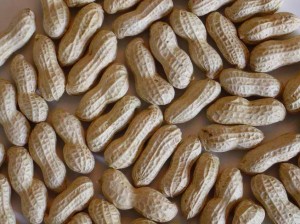
It also helps that the teacher is originally from Turkey and was brought up speaking British English. Words like “pavement”, “veranda”, “parlor” and “groundnut” are slowly returning into my vocabulary in the presence of someone who might actually understand them. I’m also learning new ones like “griddle cakes”, “goobers”, “scallions”, among many others. One of the most positive features of (my) American classes has to be the presence of people who speak a different kind of English, and come with a different kind of linguistic outlook. Nothing beats that.
It rained today as soon as the day warmed up enough. Or maybe I was deceived by the wetness on the ground. For all we know, the snow could just have melted and given the appearance of the after effects of rain. The undeniable fact is that it felt wet and warm, and the air smelled fresh and beautiful. Like spring. No, like the beginning of the raining season in a tropical place.
 How do seasons operate? Smells of rain stays the same wherever you go. One day you’re running in shorts in the mud of loam in the back garden of a big house, planting corn and peas and swatting roaming bees around your head, and on another, you’re looking behind your back in a lakeside house in the winter aftermath of rain with the eerie feeling of having smelt this before. The humid air, the smell of leaves and the general atmosphere of creation.
So, back to that garden, there was a notable incident that had the little boy staring for long moments at a black heap of loam where he had just buried two pieces of corn. And with a feeling of satisfaction at the work gone before – clearing the little garden, making the required ridges, adding humus from a nearby poultry farm – he stared at the ground and felt proud of himself, until a voice sounded from the house. It was his mother, peeping through the window. “It looks like you’re waiting for it to sprout already. Give it a few days. It doesn’t grow immediately.”
It is the smell of rain that usually defines those times. After months of dryness, the first few days of rain comes with a freshness that can’t be described. Add that to the pleasure of tilling the soil in an innocent attempt at farming, and you have the poetry of the season. It is sweet to the senses. The flower I tried to raise in my apartment a few weeks ago however has not survived. It may have to do with the house warmer and the absence of sunlight. Yet, life’s pleasures endure.
Occasionally, we make the mistake of assuming that we have successfully quelled the silly arguments in favour of language (and attendant cultural) homogeneity as a substitute for the current plurality of worldview on the African continent. Last week, I read another one of those articles, this time continuing the Nwaubani line of thought that seeks to keep local languages like Hausa, Igbo or Yoruba away from literature because they are regional. Nwaubani the writer, had written in a disturbing New York Times opinion piece that “I should say that Ngugi remains one of my literary sweethearts, and he’s hardly a conformist. Many fans have extolled his brave decision to write in his mother tongue, Kikuyu, instead of English. If he truly desires a Nobel, I can’t help but wish him one. But I shudder to imagine how many African writers would be inspired by the prize to copy him. Instead of acclaimed Nigerian writers, we would have acclaimed Igbo, Yoruba and Hausa writers. We suffer enough from tribal differences already. This is not the kind of variety we need.” Many people have responded to that slight. Mine is here.
Now this other new article stretches the argument to even more ridiculous lengths arguing that homogeneity (my own word to describe what he prescribes: putting English language first because of its role as a language of governance and communication) is far more preferable alternative in literature because we do not have a culture sufficient to bear the burden of expressing our own thoughts. Nothing could be more preposterous. I’m surprised that the New York Times hasn’t published the article yet. Listen to him:
“One very important point we all tend to overlook is that what constitutes a strong culture and language are the conglomerate strength and power of their civilisation. By civilisation, I mean the economy, technology, politics, religion, and commerce. Our civilisation is either borrowed or enforced. No language can strongly support a culture that lacks the commensurate strength to sustain it.”
What he was trying to say, of course, is that since much of Africa has been colonized and given a new language, the old languages have failed in their duties to defend the worldview, and should therefore be trashed. I’ve never heard a sillier argument in self flagellation. He continues:
“The English language dominates modern technology, market, economy, and even religion. Africa does not have any strong indigenous religion; no indigenous technology to compete with Western ones, no strong economies and markets. So, how do we expect to build a strong literary heritage that will identify with our weak indigenous languages without recourse to the cultural realities of our present existence?”
And more:
“What Ngugi and his supporters have failed to understand is that language is arbitrary. A stone is a stone in whatever language one calls it. The picture is the substance of language. So, whether one calls it stone in English or in another language, the same substance is conveyed. There’s a universality of substance in every language and that is what the writer should strive to communicate.”
A stone is definitely not always a stone. It’s either a pebble or a rock and few languages are capable of expressing it in the same way. What’s more, the literary history of much of Africa’s past is oral, is rich, is old and has as much value for humanity as any other. To insist that they don’t deserve expression just because of a colonial conquest must be what Fela called the second slavery. This article, like Nwaubani’s original piece, missed the mark. It’s crux, which argues that English language should be used because of its superiority of a backing culture, is absurd. “Anyone trying to write and reach a national Nigerian audience would be quite unserious writing in any of the native languages.” This makes no sense. Neither does this: “Rather than begin to romance with the cold smoke of the past, African writers should immerse themselves into the spirit of the times and begin to use the available tools in their disposal to call humankind back to our common humanity.”
Don’t get me wrong. Writing in English has come to stay. What we should object to is this thoughtless insistence that writing in any other language amounts to romancing with “the cold smoke of the past.” What? This is the exact argument that has turned more than half of the current generation of Nigerians into partial monolingual morons who who speak only English language, AND DON’T SPEAK IT WELL! What exactly is wrong with writing in a non-national language? Has writing in the native language removed anything from the depth and reach of the literatures of D.O. Fagunwa, or J.F. Odunjo, or has writing in Hausa removed from the influences of the many Hausa literatures said to be popular in Northern Nigeria? What of Onitsha market literatures that are written in mostly market language accessible to even the most uneducated readers? The argument that Nwaubani makes about having everyone write in English in order to foster national unity rather than tribal identities fails because literature is an expression of self first before it becomes a commercial product meant to reach a wide audience. A trubadour will sing in the language of his audience first before he thinks of others. This is not tribalism. It is self expression. For, no matter how much we apply ourselves to English, we may never be able to speak it like a native speaker. Language carries with it not just the tools of expression, but a worldview that you cannot share even if you share the tools of expression. I speak English, but it’s not mine. If I speak and write Yoruba, or Igbo, better to express my worldview, it is the best medium in which I should write. As much as English is a uniting language, our inability to use our own languages in literature today will one day come back to limit even our use of English to express the basic realities of our everyday life. The fact is that the world- view from which we derive our identities are couched in the language with which we express them. We need as much literature in English published in Nigeria as literature published in local languages, or else, when the local languages eventually die off, we will find out that English is not sufficient to rescue our thought and identity, and we’d have lost it all. The problem is that then, it would be too late to do anything about it. Or maybe it already is.My first memories of elections in Nigeria takes me to June 1993 when the biggest political event of my generation took place. Before then, the most memorable memory I had was the death of someone called “The best president Nigeria never had.” That was Chief Obafemi Awolowo who, as the premier of the Western Region (another name for an area that covers all of Yorubaland), brought the first television station in Africa to Ibadan, my hometown, in 1959.
When Awolowo died in 1987, I was only six years old. Not technically though, since the man died around July – I think. My sixth birthday was to be in September. The most memorable thing I remembered from that day was lazing around my father’s living room and watching on television the lying-in-state of the man that came to define Nigeria’s postcolonial political history. The corpse laid in a glass casket. He had his wig on, and a pair of glasses. I also remember someone asking how they intended to inter someone with his spectacles on. I was too young to make sense of it all – the man’s political dominance and influence – but I heard his name a lot. It would take me years of research (reading his memoirs which my father gave me, among many other publications) to know all I needed to know. Father also made a record album in honour of Awolowo a few months later.

Now in 1993, I was much older. I was twelve and in secondary school. Much of my political consciousness came from rhetorics of elder brothers and their friends, and the media. MKO Abiola had promised to abolish poverty – sort of like promising to make it snow in Nigeria. When his election was annulled by the military dictator, and riots broke out, school was closed, and students spilled to the streets in protest. University students led protests and came to get us out of our schools. We all spilled in the street and fought with police and military men. It was exhilarating for me. I didn’t have much political consciousness to have been able to take sides, but the crises charged me up. We were tear gassed, and shot at. We walked great with friends and fellow rebels from school back home to the embrace of worried parents. It was the best of times for a curious almost teenager. It was also the worst of times for the country. A year later, there was a change of government, from one military dictatorship to another, and darkness descended on the country.

In 1998, I remember exactly where I was when I heard that Sani Abacha was dead, and I didn’t believe it. He had after all survived many rumours of death. A day before, Pope John Paul II had just left Abuja after a state visit (and also to plead for clemency for the lives of a bunch of military men sentenced to death for plotting a coup d’etaat.) The Pope wore white. Abacha wore black. They were both was on the NTA network news and Abacha looked as sick as Tell Magazine of a few weeks earlier said he was, but he looked strong and resolute as well, and mean. But he died. A few hours later, all the suya sellers were nowhere to be found. Their stalls and sheds had been destroyed by happy citizens giddy to be finally free from military dictatorship. Exactly one month later, MKO Abiola, the presumed winner of the election had died of poisoning after meeting with Kofi Annan, the Secretary General of the United Nations and some other “American” visitors. Conspiracy theories abound, but by the end of the year, it was clear that the campaign message “Hope” from 1993 had gone forever.
 And 1999 came, time for the new gentle looking military man to go. He had set machineries in place for democracy to return. I was out of secondary school. I was teaching in a primary school in Ibadan earning the lowest payable wage for that position and qualification while I waited for news of my admission into the University. The candidates were Olusegun Obasanjo (a former military ruler and a UN/Africa statesman), and Olu Falae, an economist: both Yorubas chosen to appease the region after the 1993 annulment and subsequent miscarriage of justice. The South-West voted for Falae. I wasn’t eighteen yet, so I didn’t vote, but I hoped that Falae would win. He didn’t. Obasanjo won from votes from all the other parts of the country. Again in 2003, Obasanjo won again for the second term. In 2007, he handed over to Yar’adua whose deputy was Goodluck Jonathan. Yaradua died last year in Saudi Arabia after a protracted illness. Goodluck Jonathan took over and has since consolidated his hold on power. I am here in the United States as a graduate student.
Last night, as I listened to the result of the votes in the primaries of the country’s largest political party, I was reminded of the memories of my participation in the politics of Nigeria: the sweat, the riots, the rhetorics, the fiery but always independent media, and the national obsession with the figures and players. It isn’t “Hope ’93” all over again, because now I can discern and see through songs and slogans of “MKO: Action! Abiola: Progress!! Na im be the hope for better tomorrow!!!” or Abiola=good and Tofa=bad etc. The coming election that will likely find me in an American class discussing language and society will be between candidates that we hope to get a chance to question, and examine. They will get to power again through our votes, but for the first time, I hope to get a chance to take them to task on what they would do: about Jos, about electricity, about health and higher education, and about a better environment for the people of the Niger Delta and other ethnic minorities. I have come of age, and so has my vote, and I am not giving it away for free, if I’m giving it away at all. I hope that there’d be televised and online debates as well as town hall meetings to question the candidates and ask them how they plan to move the country forward.
I’m proud of the progress taking place in Nigeria today and I hope that there would be public televised and online debates to listen to the candidates as well as town hall meetings to question them as to how they plan to solve problems. If I could go back in time, what a pleasure it would be to relive those experiences again, rebelling, challenging authorities and paying my dues of youth on the streets of a country that I love.