It usually depends on whom you have decided to ask, but if you ask me, I’d say they don’t do too badly, although they could improve. Actually, if you had asked me sometimes early yesterday morning, I’d have said without equivocation: Western Union sucks!!! Here is the story.
The other alternative to sending money to Nigeria would have been to wait until some other person is travelling home from here. That other person would be travelling in a few weeks. Too long, I thought. Of course there is also that option of sending said money via wire transfer, but we already know how dumb that is. Bank charges will end up depleting said transfer even before it gets to destination, so that left the Western Union.
A friend had told me a few hours earlier to go to a Western Union physical location to send said money rather than send it via their website, and something had told me that it may have had to do with the “Nigerian” factor. Nevertheless, I went to the website and started the sending process. There was an experience to be had, and in any case, I didn’t want to go out. Wasn’t technology supposed to make things easier?
So I completed all the forms online, specified said amount, specified my card numbers, specified recipient’s address, and my address plus phone numbers. Everything was supposed to be fine, right? No. The last page of the transaction had the information for me to call a customer’s service number before the transaction could be finally confirmed. So I did.
“What’s your name sir?”
I told her.
“And where are you sending this from?”
I told her.
“And who’s the recipient sir?”
I told her.
“Okay, I hope you don’t mind, we are supposed to ask you this questions to confirm your identity.”
“No problem,” I said. “I don’t mind at all. Is that all?”
“No, I would like to have your zip code.”
I gave it.
“Alright. Give me a moment please.” She said, and I waited for a few minutes. Then she came back on the line. “I’m sorry Mr. Callerwarlay, this transaction has been declined. You will need to go to a physical location to send your funds.”
“What? Why?”
“I’m sorry, but I can not disclose the reason, as a matter of policy. Do you want me to tell you the nearest WU office to you?”
“Of course NOT. I need to know the reason for this arbitrary screening…”
“I’m sorry sir, but that’s the policy…”
I was too annoyed to continue, or to inform my friend that she could have been right, so I hung up the phone. Now I would have to go out to the ATM, withdraw money, take the bus and go to a bank. That sucks. How much do I even have in my account? Lemme check. I logged on to my bank only to find, horror of horrors, that the said amount has been deducted from my account already. What? I picked up the phone again, this time with a perceptible irritation in my voice.
“You did tell me that my last transaction was declined, without reason, right?”
“Yes sir.”
“I have just checked my account balance, and guess what, the money has been deducted.”
“Oh yes sir, that happens. The money is not with WU. We have not charged you for the transaction, but your bank may have removed it because you authorized it to while completing the form online.”
“What?”
“Yes sir. If you’d call them, they’d tell you how soon the money would be returned. It shouldn’t be more than 5 to 7 business days.”
“Let me get this straight,” I said. “You won’t complete my transaction for an unknown reason, yet you can keep my money for seven days?”
“No sir. The money is with the bank. Not with us.”
“This doesn’t make sense,” I replied, “And I won’t wait for another seven days. You either reverse the deduction right now or give me a reason for why you are not completing my transaction.”
“Please talk slowly sir,” She said. “I’m having trouble hearing you now.”
“Alright ma’am. The problem is that I NEED to send that money today, and I don’t have enough money in my account to try again, so you will have put my money back in there right now, or I won’t let you go.”
“Sir, there’s nothing we can do. You’ll have to contact your bank.”
There is nothing I hate more than bottlenecks, and I knew right then that my bank would take at least 5 days to rectify this situation, which was none of my fault. It was enough insult to be denied the chance to send money from the comfort of my room. But to add the injury of having my money to use while I wait? Nope, I aint taking it.
So I said, “please let me speak with your supervisor if you can’t handle this.” I’d been told that this always helps.
“No problem sir. Give me a minute,” she said, and put me on hold.
He came on the line soon enough, and after listening to my rant, explained that the transaction was declined because I had given the wrong answer to a question during the final verification call. That’s crazy, I said. I doubt that could have been possible because I took extra efforts to be sure that everything was accurate. He apologized again profusely and said the money was with the bank. Still.
“Is there anyway you could reverse the declined transaction so that I can do it again, now that you can confirm my identity?”
“No sir. It’s not that easy. It’s all for security reasons. You may try again tomorrow, but I’d advise that you go to a physical location to send it.”
“So what about my money that has now been deducted?” I asked.
“Hold on a minute, let me speak with you bank to know when they’d return it.”
“They’d better return it right now, or I’m not taking it gently.”
“Don’t worry. Just hold on for a minute while I speak with them.”
After a few mins, he got back on the line to tell me that my money had been returned. I checked and it was so. On top of that, he offered me a promotion code with which I could go to a physical location and get 50% off the sending fees. What else could I ask for? I hung up, satisfied. The money has now been sent, and successfully received, although I had to take a bus to get to the physical location not so close by. But it was not that bad. I got a free ride by my professor, and I was able to shop for some groceries. And the 50% discount didn’t hurt either. It is not too bad a customer service experience, but I would like not to have to go through such stress if I can just send the money online, from the comfort of my room.
PS: The money was towards to Jos Red Cross relief efforts.
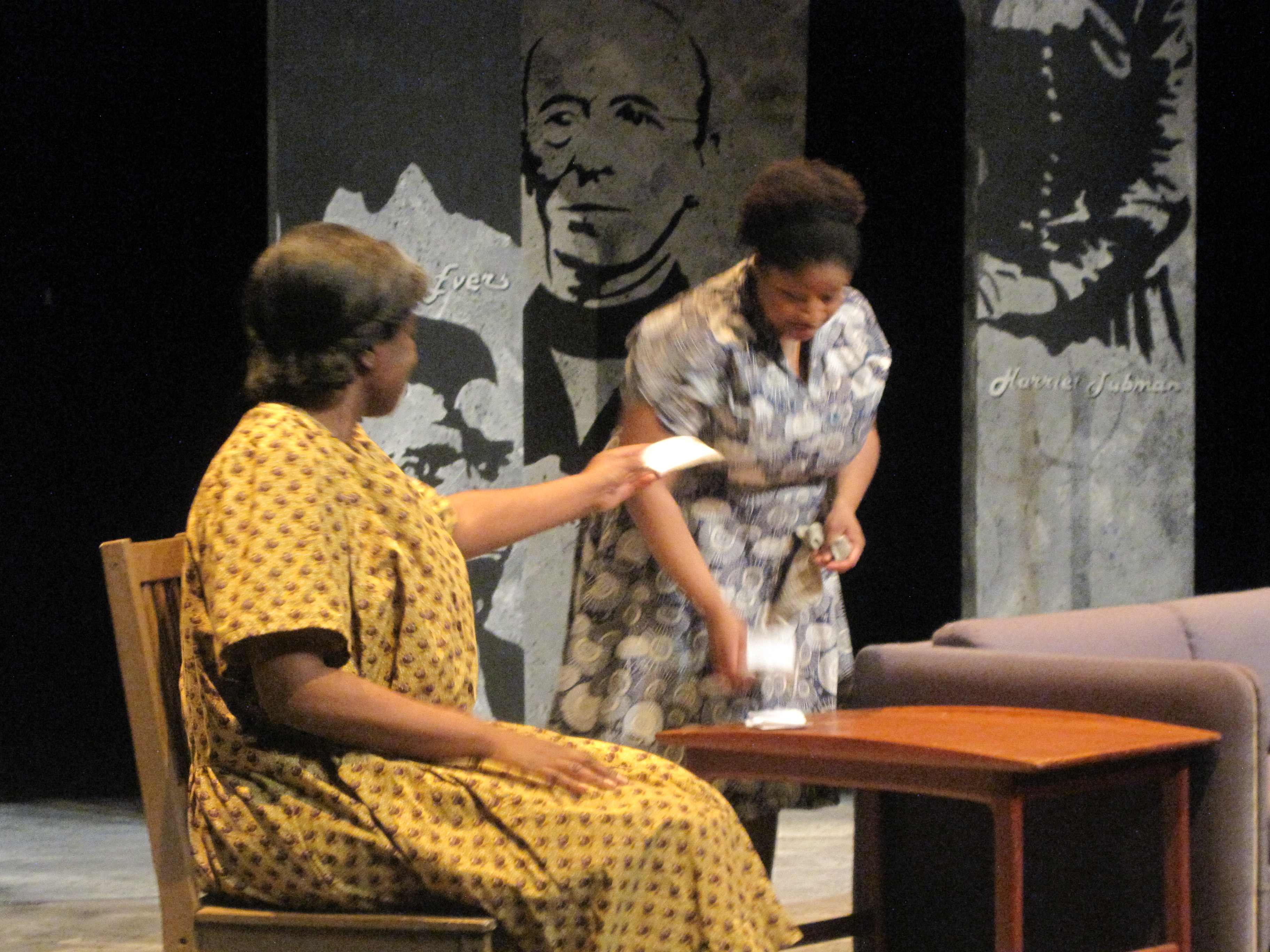 Here are a few pictures from a Black Theatre Workshop production yesterday night. It was my first time of visiting the theatre here on campus, and that is a shame. Back in the University at home, the theatre was a mainstay of campus life socialization, along with a few other stimulating endeavours, and there was always a production or more every week. I can’t say the same for my University here, so I immediately jumped at the wonderful chance to reconnect with the stage. And it was worth every second of it.
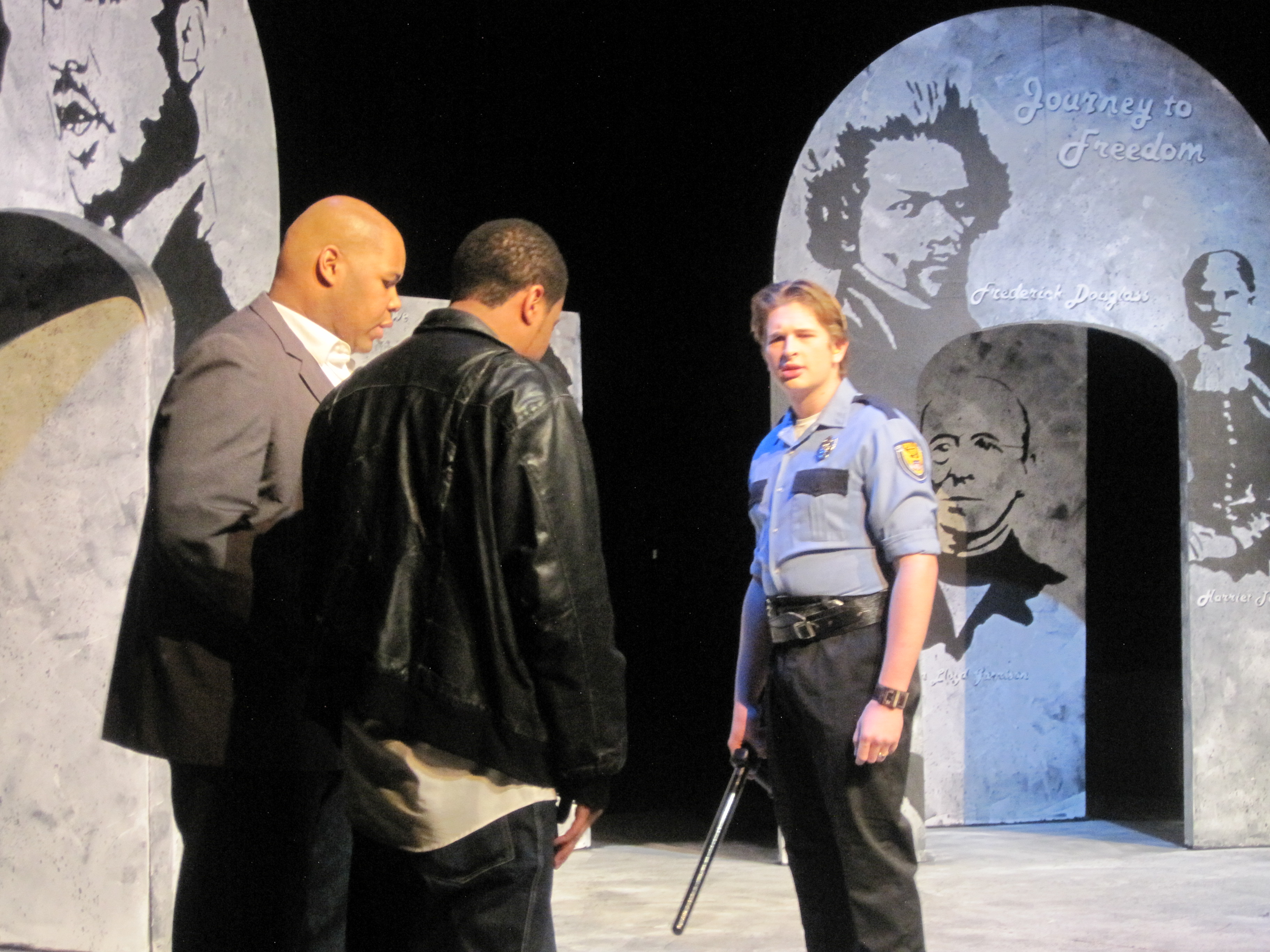 The theme of the event is “The Journey to Freedom” and it featured about twenty pieces with an intermission of fifteen minutes in-between. There was a poetry recitation, storytelling, drama skits, dance, choreography, oration and singing. Held at the Metcalf Theatre (named after a demised theatre patron and former budget director of the University), each piece enacted on stage told stories of the journeys of the Africans from slavery to freedom. Ones that stood out were a recitation of Daniel Beaty’s poem “Knock Knock” by student actor Curtis Lewis, and a scene from A Raisin in the Sun by three other actors.
 Other pieces were “Freedom means to me” written by Cassaundra Sampson, “Celia” written by Edwidge Danticat, “Let it Be” written by The Beatles, “Old People” by Greg Fenner, “The Talking Eggs” by Robert D. San Souci, “The Lady in Orange” by Ntozake Shange, “Consideration before Annihilation” by Unknown, “Last of a Dying Breed” by Greg Fenner, “If We Faint Not” by Ricky Dillard, “Escape” by Curtis Lewis, “Exodus by Jereme Dyson”, “A Change is Gonna Come” by Sam Cooke. and “A Brand New Day” by Luther Vandross.