Watercolor Memories

The most pleasurable pleasures of my childhood were those I had moving around with father who was a broadcaster, record producer, culture researcher, and writer. There were many more which included haunts of the neighbourhood in Akobo where we lived in Ibadan (at one time West Africa’s largest city). There was a railway line that ran through the area about two miles from where our house was located. The blare of its horns was always piercing through the morning air. I remember the sense of awe and delight the first time I walked onto the tracks for the first time. We had just got back from school, and we walked, and ran, aimlessly around the area through bushes, paths, houses and dusty roads until the rail tracks showed up, then stretched in two directions away from view. I have encountered a few other moments in life where the simple pleasures of new discoveries made everything else seem insignificant, and with memory being the only consolation for their brief, fleeting existence.

I was eight, and father was driving to Akure in an old Isuzu. Hands on the wheel, and hungry, he asked me the excited son to feed him bread from the passenger’s seat since I had two hands free. There was another one with mother at the wheel driving somewhere, and insisting that drivers should never turn their heads back from the road. It was my duty to look out to find the right water bottle we had wanted to buy from many of those hanging out of the many shops we were driving around. Where are those days? Faces come in and out of that seemingly crowded childhood: Seye, the distant cousin who rode a bicycle, and later joined the military; Baba M who drove the brown Toyota van; Lanko Lanko who made bread a few houses away and who – from now distant memory – looked like the biggest woman I had ever seen. Iya Tobi was the one who pilfered grandmother’s kola nuts. Grandfather liked ludo. Grandmother liked singing, and storytelling, and gardening.

The best rationale I can muster for keeping a public journal of thoughts is so as to re-live the delights of a charming childhood and now an equally stimulating adult experience. It is not remarkable that I’m writing this now from a cozy comfort of a Chicago hotel, but there is also something pleasing in the deja vu smell of a new experience reminding of a forgotten past. One of the first water colour drawings I ever made were lost in a hotel drawer.
Writing, Making Friends.

Not altogether the ultimate reason for writing, it is possible that one of the perks is being able to make friends after just a few minutes of conversation. In my case, a cultivated reticence has kept my list of friends and acquaintances manageable, but like it happened again yesterday, I gave in to the delights of socialization and made a new friend.

I was at the Writing Centre where students usually get a half hour with the designated editor who looks through their papers in order to help them get it to the best possible form. A few minutes into our joint editing of said paper, he asked the question that I have now heard more times than any other: “You speak very well. Where are you from?” From there, the sequence of the conversations always take a predictable form.

“I’m from Nigeria.”

“Oh really? That’s  great! How long have you been here?”

“Oh, less than two years, but not a consecutive stretch. This is my first summer in the country.”

“I like your English. Have you always spoken it?”

I say yes, explain why, and say a little more about the post-colonial situation of the continent and how most middle-class and/or educated section of the country speak both English and at least one other language from birth to adulthood.

“It is fascinating. Do people sometimes mistake you for an American because of how you speak?”

“No, I doubt it.” I reply “I think I always let out my identity too quickly before they form any such assumption. I think Americans speak differently anyway.”

“So what else do you do other than being a student? Or what would you do when you’re done?”

“I write, actually. I’ve published one collection of poems”

“Really?” His face lights up.

“Yes. I’ve also written some short stories. One of them was published last year in an anthology of some of Africa’s best stories.”

By now, I knew that the hope of spending my half hour working on my class paper had gone out through the door.

“And I can see it here online?”

“Yes,” I said, and got on his computer. Here it is, on Amazon. African Roar. The second short story in there is mine. It’s titled Behind the Door.

“Did you write it when you were here?”

“No, fortunately.” I smiled. I live for little conceits like this. “I wrote it in 2008, I think, before I came here, but it was published last year.”

“I’d like to read it.”

“You should” I said. “I’d like you to. You’d have to order the book though. You can’t find the story itself online anywhere else.”

“This is fascinating. I’m glad we had this conversation.”

“Thank you.” I said. “I have a blog too. You should check it out.”

“Is that it, KTravula? Is that you in that video?”

“Yes. That was at a talk I was invited to give a few weeks ago. I’ve written on it since I got here. I started it mostly to record observations on the places I visited and the things I see.”

“That’s great. Have you been around a lot?”

“I have been to a few places. From Chicago to Joplin, to DC etc.

“Have you been to Principia?”

“Yes, I have. It was a beautiful place. I wrote about it too.”

“I’m impressed. So you like to travel huh?”

“Sometimes. It is fun.”

“Are your parents or siblings here?”

“Oh no.”

“Interesting. Have you been to Alton?”

“Yes, I believe, but as I remember it, it was a short visit.”

“There is a large statue of (I’ve forgotten the name now) close to the SIU Dental School in Alton. Did you see that?”

“Unfortunately, no. But I’ve been close to the Dental School.”

“Well, thank you for sharing with me. I’ll come to read your blog. I’ll get the book too. Behind the Door you call the story?”

“Yes.”

“I have a friend who started a blog but hasn’t been writing on it. I want to show her what you have, maybe she’d get motivated.”

“Thanks. I hope it helps. I try to update the blog as often as time allows. Do leave a comment whenever you come, so that I know it’s you. Nice to talk to you too.”

“Nice to talk to you too. You work at the Foreign Language Department. One can always find you there, right?”

“Yes, mostly.”

“See you around sometime then.”

“See you too, and thanks for the help with my paper.”

________________________________

This is an abridged recreation of the conversation that lasted about an hour of actually very productive tete-a-tete. I got very useful prompts on the paper I had taken there (at least before our conversation moved into a discussion about writing, travel, migration and family). Along with lessons on the proper use of comma, I also took away from there the name of a new writer, Ambrose Bierce, said to have lived in the time of Mark Twain and written a story called “The Boarded Window”. I promised the editor that I’m going to read it.

Discoursing Translations

I spent a few hours last week in the house of an American colleague, Tom Lavallee, who teaches Chinese here. He had invited me and a few other friends for an evening of Chinese food and conversations in his St. Louis home. His partner is a Chinese woman who works as a writer as well as a translator from Chinese into English.

The conversation soon turned to the matter of writing, and the challenge of translating from one language to the other. What is lost in translation? What remains? How authentic is that product of translation in representing the original thought of the writer? Who makes the call of how translations should turn out? How much is taking too much liberties with original ideas? Where does translation end and improvisation/adaptation begin? They were interesting questions for me not only because I’d considered them many times myself before, but also because I discovered, a few years ago, that the translation of George Orwell’s classic book Animal Farm into German was not uniform because the translators belonged to different ideological camps during the cold war. I have spent countless moments pondering the literary tricks that would be needed to render something so clearly anti-socialism (or at least anti-leninism) as anti-capitalism. But then, that is the power of translation – which thrives on running an original idea through the conduit of the mind of a removed second reader-writer.

I’ve read a few Chinese literature in English. We discussed the ideas behind Soul Mountain, the famous novel by Gao Xingjian, translated by Mabel Lee into English. It is a travelogue of some sort incorporating elements of soul-searching autobiographical non-fiction, fiction, vignettes, ethnographic writings, musings, jottings, poetry, and story fragments. One of the challenge of translating from Chinese must also include rendering an idea of communality into an English-speaking culture of individualism. But therein lies the pleasures of translation – a special brand of serving that is not totally belonging to one culture, and not totally transformed into the other. In language learning, that would be a sort of “interlanguage” – a language that is neither the first nor the second language. What we read when we read something translated into English from Greek or Latin, or Arabic, is neither those languages, nor is it English. The ideas are most times successfully conveyed in the target language, but not enough to prevent literary/language purists from a snobbery that insists on the original as the most authentic standard bearer. And they are sometimes right. Yet, the “interlanguage” of translation carries in itself an original and yes authentic voice.

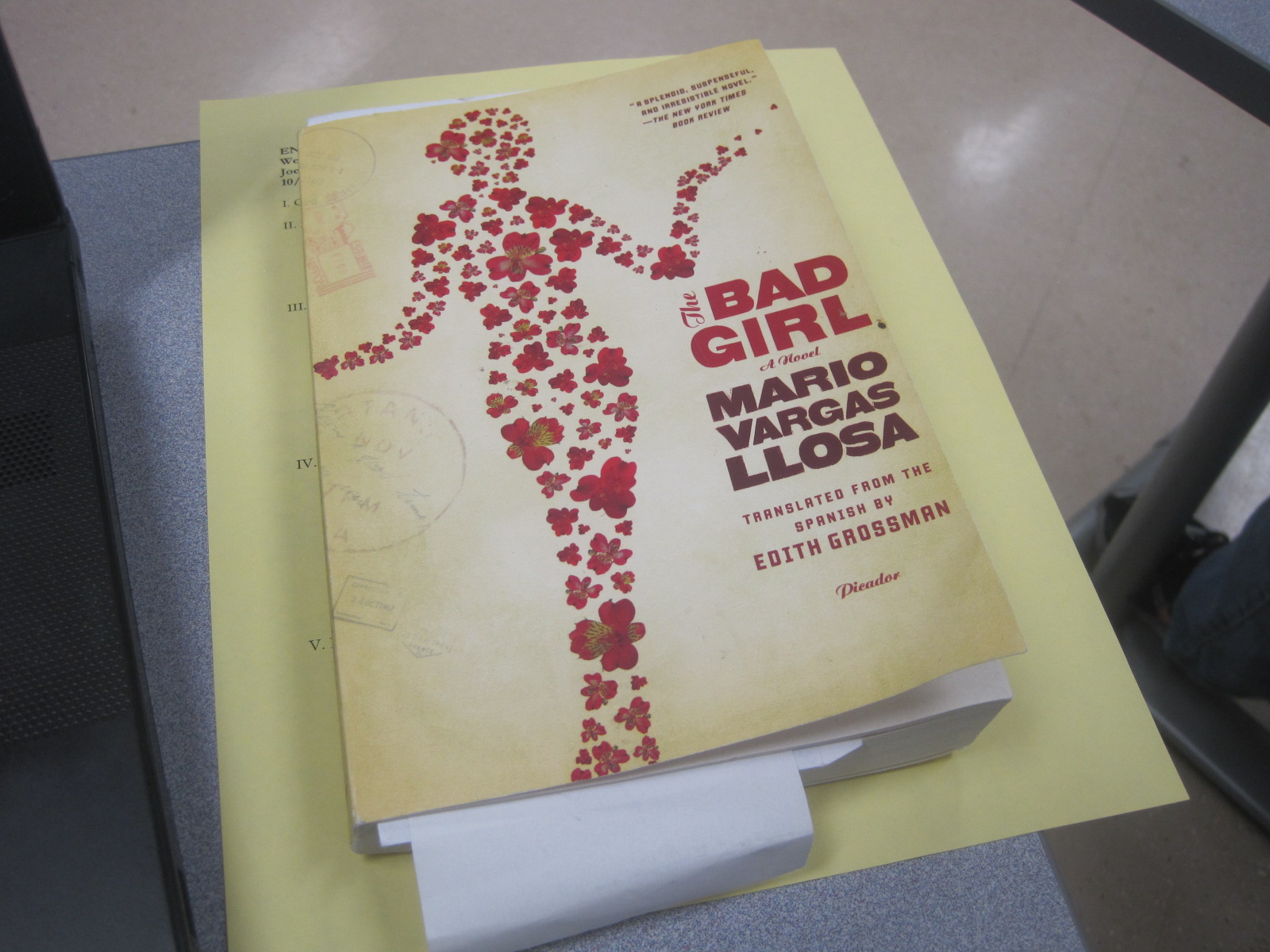
Garcia Marquez is famous in English speaking Africa even though we don’t speak Spanish. Vargas Llosa will be too soon enough, for good reason. How much did we lose if we did at all reading in English? Does it ever matter? Does my friend from Morocco have a better and richer literary experience than me because he speaks Tamazight (his local language), Arabic (his national language), and French (his country’s official language) and English and is thus able to read many more literature in original languages? If I read Naipaul in English and he reads it in French, what have I gained that he hasn’t? Does an Indian reading Naipaul or Rushdie (in English) gain something more? After all, they are co-sharers in the cultural conditioning that produced the texts? If I read Onitsha by JMG Le Clezio in French, do I gain any more or less than those who do it in English? After all, the writer is French. But then, after all, I am Nigerian, and the story in the book are based on the writer’s adventures in the Nigeria of the 60s. For those who have read George Orwell’s 1984 in German, or in Japanese, how does the writer translate words like “newspeak” and “thoughtcrime”. Does it make the same compact sense as it does it in English?

I first read Plato On the Trial and Death of Socrates in the early 2000s and what struck me the most was how beautifully it was written. It was a translation. Plato did not write in English. A few of the other plays we read as undergrads The Frogs by Aristophanes, Oedipus Rex by Sophocles, and Wole Soyinka’s notable translation of D.O. Fagunwa’s classic novel into The Forest of a Thousand Daemons all struck me as bearing very distinct literary styles that stand in their own stead as authentic study of thoughts in translation. The last time I read Plato On the Trial and Death of Socrates was late last year in Edwardsville, and I was greatly surprised at how insipid it read compared to the one I read back in Ibadan. The conversation on the dinner table went back and forth within these many areas of literary translation and I learnt as much as I grubbed. By the time the evening was over, all I wanted was a financial grant to go live in a small house by river and complete all the pending translations I have been working on for many years.

The last time we conversed, I sent them a long Yoruba to English translation of some of my father’s poetry. Half insecure in my experimentations (I’d completed the translation in 2005 and haven’t worked on it since then), and half wondering if any of the beauty of oral literature is lost when they become text, I was pleasantly surprised to read as a response to it, an email from my colleague: “That is a lovely, rich and absorbing poem,” it read “I have read it twice and found myself drawn in so many directions, wishing I could climb its hills, listen to its music more closely and roll around in its musky earth – love is a vast world, mysterious and ordinary and always full of pungent flavors and astonishing depths and heights.  I would like to read more.” See? Maybe all that is lost to translation should be the expectations we bring to it from our knowledge of the depths of the original. A few hours later, he sent me a work-in-progress Chinese to English novel translation excerpt that he and his partner (the writer) had been working on. I found it a delightfully splendid read. And I don’t speak Chinese.

Good literature will always speak out, in whatever tongues it finds.

New Writings

I gave a long interview on the creative process, current writings, influences, projects, opinions on language, publishing etc to the editor of ImageNation last week. Find it here.

Two poems of mine have been published in the 5th issue of Sentinel Nigeria. Check ’em out.

An essay I wrote: “The Blank Sheet: On Blogging and Other Botherations“, an expose on the blogging journey, rewards and motivations, is published in the Anniversary Issue #7b of Saraba Magazine.

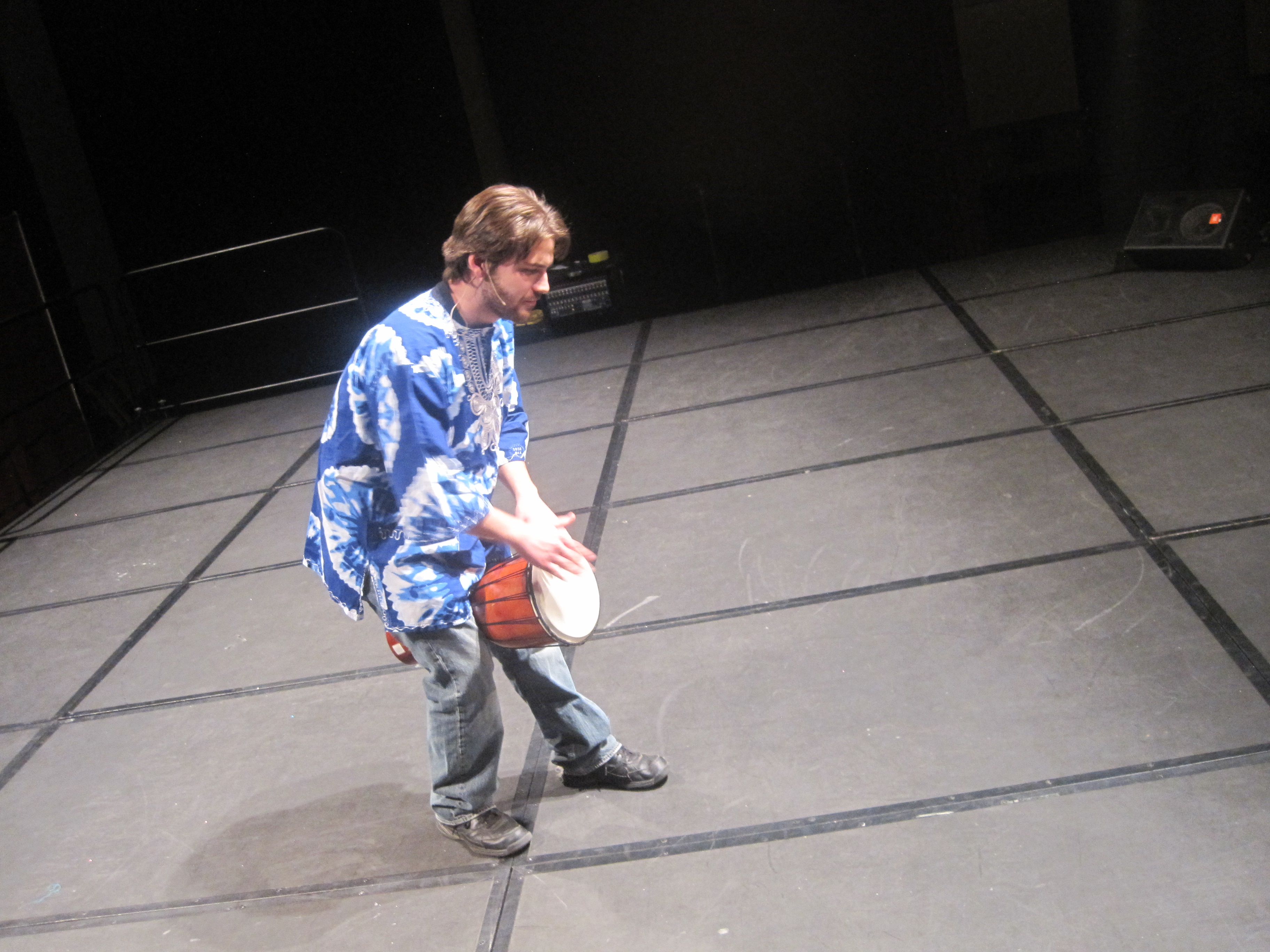
That picture –> is of Jacob Moorleghen doing a few tricks with the drum as part of our skits on stage last weekend. I think I may have arrived at a new creative cycle.


A Little More Than Fun

I enjoy the trips I make – when I can afford to make them, most times between the moments of mouthing profanities at mandatory fees of the graduate school. (More angry posts on this later). They enlighten, they inform, they surprise, and they provide countless photo opportunities – very great shots that present themselves at unexpected times in unexpected places. I also love them for the brief relief they provide from the stress of graduate school. In the end, they delight those who read about them, and that in turn makes me happy. Like I always say, life is too short to be spent in the tedium of just work.

I’ve discovered something else. More than just a chance to see my word in print – and who hasn’t harboured plenty of such narcissism – there is also the desire to say something, or say something new. Whether that desire is realized itself is another matter, but the pleasure of having something to say, and the chance to say it in one’s own way at one’s own time is delightful. In-between the appreciation of nature through photographic lenses, or songs, or words of others from books, there sometimes rises moments of professional epiphany, or hubris. The self realizes itself as a medium, and immediately assumes the responsibility to communicate a freshly discovered idea. I mean, I’ve not always been meant to be here, even though I’ve always felt myself moved to write, or to interpret concrete ideas of the world in my head through my own thought processes. But the present delights. In one moment, I’m in the vortex of confusing ideas even of my own relevance, and in another, I’m thinking of writing a book: Yoruba for Dummies: a guidebook to machine translation from and into Yoruba (although speaking out on my thoughts already makes it easy to absolve myself of the responsibility of having to do the work).

What was the point I was trying to make? I’ve lost it now, but it must have had something to do with deciding to write more on this blog in the coming year about my career projections, observations and opinions; sort of like a regular shrink session of ideas with my own personal silent listener. On second thoughts, maybe I was just getting the end-of-the-year blues characterized by looking for relevance in the most mundane things, or taking myself too seriously.