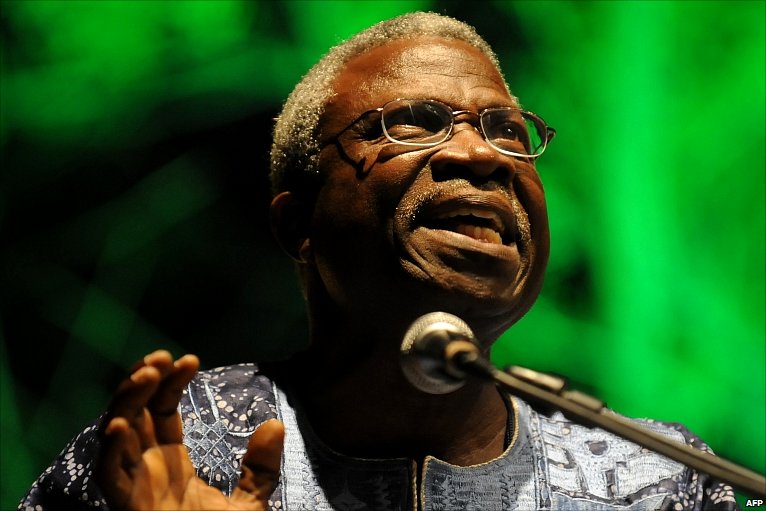
Ibadan Jazz Forum and the Riffs of Remembrance

 (Celebrating Black History Month, 2022) 

by Niyi  Osundare
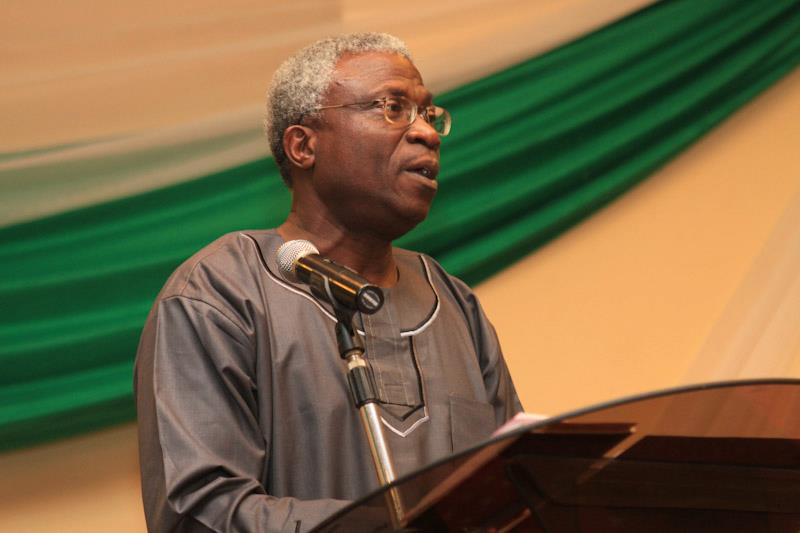
Professor Níyì Ọ̀ṣúndáre.

Thank you very much for inviting me to keynote the dialogue segment of this year’s edition of your Black History Month activities. As someone who has been with you and has been privileged to participate in some of your activities from the very beginning, I have come to appreciate the dreams which necessitated the inauguration of the Ìbàdàn Jazz Forum, the visionary acumen that has characterized its idealism, and the modes and methods of its operations over the years. For daring to dream in a world in which such an act is constantly sidelined by blatant realism, for standing for the cultivation, defence, and projection of lasting values in a country overwhelmed by cynical materialism and instant gratification; to enter a plea for Culture in an age of philistinism, the Ìbàdàn Jazz Forum (IJF) has succeeded in pointing a way to the future by leading us towards the apprehension of the inevitable connection between the past and the present.

The Black History Month and the Ìbàdàn Jazz Forum are products of the same initiative. On a more specific note, it could be said that the latter grew out of the global ferment of the former. Hence the similarity between their mission: the imperative of Memory, the necessity of Remembrance, and the need to bring both to bear on the present in the much-needed effort to re-shape the future. Primary to both initiatives is the task of repossessing our history by taking control of our own narrative; for, it is a universally acknowledged fact that whoever controls your history will end up controlling your destiny by shaping to their own interest and design not only your memory but the memory of you by others. For many centuries, this was the case with Africa where the enslaver and the colonizer were the ones who wrote the history of their exploits as well as that of the objects of their exploitation.

As Chinua Achebe once observed, the hunter’s story of the hunt will always be different from that of the antelope. So, when we gather here every year for the celebration of Black History Month, what the IJF is asking us to do is to repossess our narrative, tell our own story in our own way and in our own voice, and doing this without forgetting how the Black story connects inextricably with the universal human story, and the mutual seepage between the two. From Olaudah Equiano to Frederick Douglass; from Harriet Jacobs to Sojourner Truth whose powerful “slave narratives” focused human conscience on the inhumanity of slavery and the slave trade, to relatively more contemporary writers such as Achebe, Soyinka, Toni Morrison, W.E.B. Du Bois, and Edward Kamau Brathwaite, a strong un-ignorable articulacy has come to the telling of the Black story. A “race” once spoken for, or on behalf of, or spoken against has reclaimed the I-Paradigm of the Human discourse and the ability to say “I am”. The retrieval of the Black person’s agency is way up on the Black Liberation agenda. But this instance of self-determination, cultural re-affirmation, and epistemological re-configuration has not come without opposition from those who have always been at the commanding heights of the power hierarchy. These are the people for whom an old, by now offenceless terminology called critical race theory has recently become a spine-chilling bogeyman. Long denied, blissfully neglected, cleverly negated truths and ideas whose restoration is considered threatening to an unjust status quo, are currently under assault, especially in the United States where acts of curricular cleansing, shelf-clearing, and book-banning are happening at a pace and with partisan political ferocity that would have done brave credit to the Spanish Inquisition.

But this world, our world, is moving on, undeterred, though at differential speeds by its constituent parts. Central to our concern as we gather for this year’s Black History Month events is the velocity (or lack thereof) of the progress of Africa, our continent, currently in the grip of three debilitating afflictions: the global COVID pandemic, centuries-old poverty, degradation,  and underdevelopment, the resurgent plague of political instability as evident in the current spate of terrorism and military coup de’tat. Humanity’s oldest continent remains the world’s poorest and most miserable, marginalized, despised, and zeroed out. As I have soberly put it in my forthcoming book of essays, it takes an awful lot of courage to own up to being an African today. The last time that sorrowful confession invaded my thoughts, I was hard at work on the sixth movement of Midlife, a volume of poems that marked the attainment of that existential milestone clearly proclaimed by the title of the book. Let me appeal for your patience as I poach a long and sombre excerpt from that book of verse:

                      Midlife

now Africa, beholding you full-length, from shoulders

baked strong by your Black sun;

my hands towards the sky, feet towards the sea,

I ask you these with the urgency of a courier

with a live coal in his running palm:

The skeletal song of Zinjanthropus,

was it a lie?

The awesome ruins of Zimbabwe,

were they fiction?

The bronze marvels of Benin, of Ife

were they a lie?

Is the Nile really a fickle tear

down the cheeks of unmemorable sands?

The geometry of your idioms, the algebra of your proverbs,

were they sad calculations of a pagan mouth?

My question, Africa, is a sickle, seeking

Ripening laughters in your deepening sorrows

                    *

Giving, always giving,

scorched by the Desert, blanched by the Sea

bankrupted by the Sun, indebted by the Moon,

robbed of your tongue, bereft of your name

Giving, always giving

ebony springboard for giants of crimson heights

Giving, always giving

my memory is the thrashing majesty of the Congo

its dark, dark waters fleeced by scarlet fingers

its shoals unfinned, its saddled sands

listening earlessly to the mortgaged murmurs

of ravished ores

giving, always giving

the tall lyric of the forests

the talkative womb of the soil

the mountain’s high-shouldered swagger

pawned, then quartered, by purple cabals.

The elephant’s ivory is a tale of prowling guns,

the crocodile mourns its hide on the feet

of trampling gods

Giving, always giving,

fiery dawns once wore you like a robe, oh Congo,

soft, warm, gracious like the cotton laughter

of Lumumbashi,

the Niger, the Volta, the Benguela

bathe the rippling hem of your luminous garment

the sky was your loom, April’s elephant grass

your needle with a hundred eyes;

your thread was the lofty spool of the eagle,

the chalky string of the egret in the dusty shuttle

of meticulous harmattans

And now noon

With the sun so young in the centre of the sky,

That robe is a den of dripping fragments

awaiting the suturing temper of a new, unfailing Thunder

                      *

My question, Africa, is a sickle, seeking

Ripening laughters in your deepening sorrows

                       *

           Midlife

on a continent so ancient and so infant

crawling, grey, in the scarlet dust of twilight horsemen,

ravished by the gun, crimsoned by ample-robed

natives and their swaggering fangs;

our sun so black with crying hopes,

wounded by the boundless appetite of hyena rulers

Shorter every inch by our tower of dreams,

Their eyes smugly sitting in the blind pit

Of their funeral stomachs;

eunuch between the moons, their claws

gore-deep in assassinated wombs;

they whose fathers, whose fathers’ fathers

emptied whole epochs into slaving galleons

have pledged once more the eulogy of the chain,

their hearts crammed with rums, fickle mirrors,

and other gifts unremittingly Greek.

A knee-eyed sun shouts from the middle                 

of a drifting sky:

     Who will cure Africa’s swollen foot

     Of its Atlantic ulcer?

My question, Africa, is a sickle, seeking

ripening laughters in your deepening sorrows .

                        (from Midlife, 1993)

                    *

Here is a poet-patriot’s quarrel with his continent. A song of pain and anguish, of patriotic anger, of lingering doubts and desperate deliberativeness, as evident in these words from the ‘Foreline’ of the volume:

Past forty now, the riddling kola of life ripening, ripening in my mouth,. . . . Taller too, able to look the giant in the face, able to ask Africa a few sunny questions about her dormant dawn. Able to ask the world how many wasted nights really make up a single day.

These ‘questions’ which engaged my consciousness at midlife are there, still there, now over three decades on, some of the old problems have even surged into more intractable mutations, with Africa frequently dismissed as basket case and the epicenter of global problems. But a “stubborn hope” (Viva Dennis Brutus!) keeps sharpening my machete as I cut a path through Africa’s jungle of problems and promises. Those promises have always been there, but we all know that promises do not a continent make. Needed as a matter of urgency: a new grid of positive values, informed, competent and ethical governance, a sound educational base that puts ignorance to flight and keeps us abreast of the velocity of a fast-moving world and its digital imperative, an end to our dependent, cargo mentality that has turned us into blind, gluttonous consumers of the products of other people’s imagination and labour in our abject posturing as “importers and manufacturer’s representatives”, instead of being “manufacturers” ourselves, a stronger belief in ourselves and our infinite possibilities.  

 These are some of the ideas behind the significance of the Black History Month and Ìbàdàn Jazz Forum, its noble offshoot and local companion. Over these many years, the IJF has shown us the primacy of ideas and their ability to change the world by creating an intellectual and socio-cultural community that prides itself on its ability to think different, feel different,  and act different. Not even the countless debacles of Nigeria, one of the most chaotic and wickedly misgoverned countries in the world, have been able to put a clog in the wheels of their progress. On the contrary, the IJC has ceaselessly highlighted the problems of Nigeria and the Black world, and the ways of turning those problems into possibilities. The overriding purpose of the Black History Month and the Ìbàdàn Jazz Club is to get us to know that we are actually more than we think we are. To come to this awareness, we need to pay more attention to History and its dual cohorts of Memory and Remembrance. The future belongs to those who remember the past and its storehouse of wisdom and folly, and are therefore able to think hard and make informed choices. Like Black History Month, Ìbàdàn Jazz Forum is there to make sure that we do not forget. Like jazz, that music genre from which it derives its name, the riffs are many and unsilenced-able; the wind is its chariot; it is a seed that grows everywhere it touches a good soil. Like that seed, Jazz has taught us the boundless possibilities of the creative spirit, its regenerative transgressivity, its constant striving at doing it differently, doing it new, its unfathomable Soul and sinuous swagger, that proverbial resilience that has enabled its progression from “nigger-noise to state-of-the-art”. What better way to end this piece, then, than the chanting of this brief oríkì  of Jazz and its profoundly complex biography:


JAZZ

(from ‘nigger noise’ to state-of-the-art)

Once

offspring of a tattered trumpet

rescued from a rusty dump

by the restless fingers of toil-

encumbered hands;

animated by a new wind,

powered by a strange metallic thunder

which rocks the eaves of slumbering ears

once

shuffling accent of seedy lanes

and dreams long deferred

in the blue memory of prisoned voices…

Now

horn of well-hoofed stars

lulling purple chambers

with riffs of syncopated silence

saxy splash of running garlands

adulations which surprise the song….

The stone once rejected by the master builder,

is it really now the cornerstone of the glittering house?

Let’s jazz it up then. Let’s jazz it real good. Happy Black History Month!

Ìbàdàn                          

Níyì Ọ̀ṣúndáre

Feb. 14, 2022
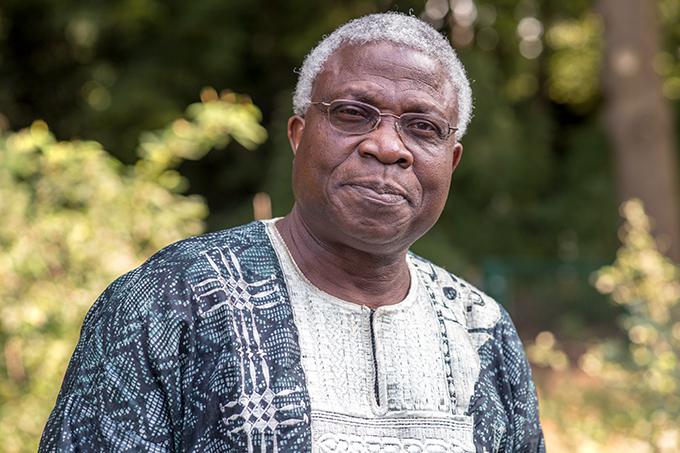
Niyi Osundare on Ecopoetry and Environmental Sustainability.

Poet and writer Níyì Ọ̀ṣúndáre recently stopped by The Green Room to share some poetry and personal thoughts on the current circumstances bedeviling humanity.

See below.

The event, “What the Earth Said: A Reading and Conversation with Níyì Ọ̀ṣúndáre,” was put together by the Green Institute and moderated by Tósìn Gbogí, an Assistant Professor of English and Africana Studies at Marquette University. Directed by Dr. Adéníkẹ Akínṣemólú, the Institute runs a monthly online forum called the Green Room, now in its third edition, through which it fosters discussions about the dying state of the earth and what needs to be done to stem this. 

Ọ̀ṣúndáre is a foremost African poet whose work has been widely acknowledged for its environmental concerns and motifs. He uses the earth as an organizing principle in his poetry—a principle which allows him to pay attention to, and even question the binary understanding of, the human and non-human dimensions of our world. Ọ̀ṣúndáre’s conversation at this event revolved around this principle, which allowed him to speak about subjects as varied as childhood memories in Ìkẹ́rẹ́-Èkìtì, Hurricane Katrina, the Amazon burning, and the perils of a city like Lagos that continues to borrow the sea as its land. 

The live event was widely attended and shared on Facebook, Twitter, and Instagram. The poems were read in both English and Yorùbá.

“I Can’t Breathe” | New Poem by Níyì Ọ̀ṣúndáre

      (Episodic Variations on the Ripples of a Primal Scream)

            I

I can’t breathe

   I can’t breathe

     I can’t bre

       I can’t

         I can’t

I. . . .

            *

2020: Black Lives Matter

1965: I AM A MAN

            *

There are countless ways

Of lynching without a rope

            *

The casualties were fewer than we ever expected:

     10 Persons

         &

     1,000 Negroes

            *

For every Black in college

There are a hundred more in prison

             *

So many centuries on,

America still has a “Negro Problem”

             *

My skin is my sin,

Sings Bluesman with the wailing strings,

My very life is an “underlying condition”

For countless afflictions

            *

And the Media Sage responds:

Racism is America’s Original Sin

Violence, its inalienable companion

             *

There is a common crime in town:

Breathing While Black (BWB)   

            *

Mr. George Floyd committed two cardinal crimes:

He was Black

He was big

            *

Black Lives Matter

Black Life Martyrs

            *

Asked Louis Armstrong, the Smiling Trumpetman:

What did I do to be so black and blue?

                  II

Black Life Martyrs,

Their voices rise from their untimely graves:

Amadu Diallo, Eric Garner, Michael Brown, Tamir Rice, Walter Scott, Freddie Gray,  Botham Jean, Breanna Taylor, Philando Castille, Trayvon Martin, Ahmaud  Arbery,  George Floyd. . . . .

Any Hall of Fame

For Trophies from Police hunts?

            *

To be and not to be

To wallow in want in a sea of wealth

To shout and not be heard

To stand and not be seen

To sow and never to reap

To live all your life below the Law

To be stopped and frisked stopped and frisked stopped and frisked stopped and. . . . . 

To be told countless times

To forgive and then forget

            *

Yess Sur, Yes Maa’m. . . . 

Put them at ease with your Negro smile

Your low, low, bow and your high regard

That cool façade is your saving grace

The “Angry Black Man” is as good as dead

            * 

911, 911,  911, 911

My name is Sue, 

Calling from my car in City Park

There’s a big black male around

Whose big dark shadow is menace to my sight 

Please send a cop; my life is at risk

              *

Choke-hold, choke-hold

Stranglehold and dash and dangle

400 years of knee-on-neck

              *

Our Police know their oath:

To serve

   &

To protect

            *

The Police Chief took a knee

The Sheriff followed in tow 

Is this a genuine genuflection 

To Kaepernick’s treason

Or patronizing bribe of momentary appeasement?

            *

And the Emperor snarls 

From the bunker of his White Castle

Vowing “vicious dogs and ominous weapons”

Rolling in guns to “dominate the streets” 

His unhappy nation now his “battlespace”

             *

Black Lives Matter

Black Life Martyrs

             *

Asked Louis Armstrong, the smiling Trumpetman:

What did I do to be so black and blue?

               *

I can’t breathe

   I can’t breathe

    I can’t bre. . . . .

I. . . . 


______

Niyi  Osundare is a prolific Nigerian poet, dramatist and literary critic. A champion of free speech, his art and criticism is associated with activism. His work is taught in Nigerian schools and recipient to many Nigerian and International prizes. He sends this from New Orleans. June 7, 2020.  

“Ours is Not Yet a Humane Society” | Conversation with Niyi Osundare

Professor Níyì sundáre is Professor of English at University of New Orleans, USA, and one of the best-known poets from Africa. His works of published poetry include Songs of the Marketplace (1983), Village Voices (1984), A Nib in the Pond(1986), The Eye of the Earth (1986), which won both the Association of Nigerian Authors Poetry Prize and The Commonwealth Poetry Prize in its year of publication. He was also a recipient of the prestigious Folon/Nichols Award for ‘excellence in literary creativity combined with significant contributions to Human Rights in Africa’. Other published volumes of poetry include Songs of the Season (1987), Moonsongs (1988), Waiting Laughters (1990), Selected Poems (1992), Midlife (1993), The Word is an Egg (2000) and Tender Moments(2006). Niyi Osundare has also published four plays and essays on literature, politics and culture. Orality and performance are important features of his works, which have been translated into the Italian, French, Dutch, Czech, Slovenian, and Korean languages.

________

Thank you for talking to me. And congrats on your 2014 National Merit Award.

I should be the one thanking you for providing the forum, for making it possible for this exchange to take place.

Let’s start with your poetry for which you’ve been widely acclaimed. The last recorded work from you was in 2006, titled “Tender Moments”. Is there a reason you haven’t released another published collection since then, almost a decade ago?

Tender Moments is, actually, not my last publication. The book has got two aburos: City Without People: the Katrina Poems, published here in the US, and Random Blues, the first volume of the collection of my weekly poetry column in the Sunday Tribune. Both were published in 2011. And right now, the publisher is looking at a new book of poems, some kind of travelogue-in-verse, which I completed last year after many years of preparation. I’m also working on a sequel to The Eye of the Earth, a 1986 book whose resonance and thrust I consider so achingly relevant in this age of the deniers of the scourge of climate change and global warming, even when the effects are so palpably, so tragically evident. Many of the poems from this manuscript have featured in three influential international journals on either side of the Atlantic:  Interdisciplinary Studies in Literature and the Environment (ISLE), University of Oklahoma’s  World Literature Today,  and Moving Worlds of the University of Leeds, UK . Mine were invited contributions, and I am both glad and inspired by these journals’ single-minded concern with some of the burning issues (all pun intended) of our time: nature, climate change, wild winds and tsunamis, etc.  So, you can see I’ve not been sleeping on duty!

I first met you on the campus of the University of Ibadan where you taught in the department of English, and then left for New Orleans. What was your most significant memory of teaching in Nigeria compared to teaching in the United States?

Now, you’re asking me to cast in the past tense  a narrative that is  still very much in the present tense. My pedagogical and academic relationship with the University of Ibadan (and other Nigerian universities) continues, though at a less formal, less regimented level than before.  You will remember that I said in my 2004 valedictory lecture that my relationship with the University of Ibadan is a laelae  (lifelong, everlasting ) affair. This is why I do not come on the summer vacation without having one kind of interactive session or another  with students in the Department of English – a mutually beneficial activity which I thank the present Head of Department for facilitating. I also actively participate in academic events in other departments. But I do know that both the tenure and the tenor of my service have changed, and things are not exactly where they were when I left in 1997.

Now, teaching at Ibadan versus teaching at the University of New Orleans. Many similarities and a few differences. To begin with, in both institutions, I have to deal with students, the centre of my professional concern. I have discovered that students are virtually the same everywhere: young, vulnerable, unsure, even fearful, but inquisitive, ambitious, demanding, generally idealistic. And on both sides students who are sharp as razor, engaging, and quick on the uptake, and those who are a little slow and need some gentle prodding. But what makes the real difference is the environment. It is common knowledge that the Nigerian student as well as her/his teacher are still engaged in a life-or-death struggle for the provision of amenities which their American counterparts have come to take for granted: steady power supply, potable water, relative freedom from hunger and suchlike harassment by social needs, a predictable academic programming and scheduling,  and above all, a relatively stable political system. A book comes out on Monday; by Thursday it is already within your grasp; access to internet facilities that are fast and inexpensive. These are facilities still far from the grasp of the Nigerian student.  But in a way there is some ‘sweet uses’ to the Nigerian’s student’s ‘adversity’ – to echo Shakespeare. Driven by need and necessity, the Nigerian student tends to be more aggressive, less complacent, and less dependent (Who are you going to depend on: parents who are barely striving to survive, or a government that has no interest in your welfare?). I have observed that drop-out rate is much, much lower among Nigerian undergraduates; for to drop out is to drop under and, in many cases, to drop dead; for the kind of socio-economic safety nets available to American students are nowhere there for their Nigerian counterparts.


At the faculty level, surely, the American academic has much more to work with: the laboratories are well equipped and functional, research funds are made available (depending on the buoyancy of the university’s budget; for, yes, even in America, colleges and universities do go broke!). As a result of a situation of general relative contentment, labour union activity is almost non-existent in American Academe. Many times I miss the rousing militancy of ASUU!

You were notably affected by Hurricane Katrina in New Orleans in 2005, and you’ve given a number of interviews about that sad event. Do you hope to write a memoir about it at some point? Many of us would like to read what it was like to get through those harrowing times.


Thank you for your concern.  The book mentioned earlier on in this interview, City Without People: The Katrina Poems, has tried to explore and articulate some of the harrowing experiences. The poems themselves are sandwiched between two prose pieces: a prose preface and an interview both of which put the Katrina narrative in proper perspective. But there was a prose parallel I was writing while composing the poems. Somehow, I managed to complete the book of poems, but the prose narrative stopped a few pages after 40. The memory of our losses weighed me down. The prose narrative literally collapsed under the debris. Why and how I found poetry a readier bearer of the tragic experiences, I still do not know. I think this would be an interesting study for psychanalysts.  Even the poems, I couldn’t complete until six years after the hurricane… I may go back to that prose narrative someday – maybe when I’ve retired from this penny-a-day teaching job and I have more free time to myself. And when the trauma engendered by memory of the event would have thinned out sufficiently to allow for relatively painless recollection. But then, who knows: some memories never let go of our faculty of remembrance.

Being influenced by your Yorùbá background, you must have strong opinions about poetry as performance (spoken-word) as opposed to poetry as text. How best do you think poetry should be enjoyed or employed?

Both ways, both modes. And more. In the house of poetry and its practice, there are many rooms. Some poems are written for the eye, some for the ear, and others for both. I see my Yorùbá background as abundant blessing to my poetry. I have always wondered what kind of poet I would have been without this fabulously rich culture and its language. Or, indeed, whether I would have been a poet at all. Come to look at it: everything in Yorùbá is poetry-in-motion, poetry-in-action. Yoruba language is music: from its intricate tone-system to its inimitable ideophones. Sounding is meaning, and meaning is sounding. A language whose syllables sound like drumbeats. A generously metaphoric language which can render the most abstract concept in the most arrestingly imagistic way. Compare ‘I am hungry’ with ‘Ebi npa mi’ (Hunger is beating/killing me); ‘I am shy’ with ‘Oju nti mi’ (Eye is pushing me) . This phonological and imagistic paradigms are central to my poetics. For me, the line is not complete until I make it sing and make it sing meaningfully.  My Muse is never far from her/his music. Those who cavil at the abundance of repetition in my poetry need to know the music behind my Muse. Fortunately, this is not an exclusively Yoruba attribute. The music of Welsh language drives the prosody of Gerard Manley Hopkins and, to a lesser extent, Dylan Thomas; Irish inflections in the drama of John Millington Synge. How can one come to a full experience of Igbo masquerade chants in the poetry of Obiora Udechukwu and Ezenwa Ohaeto; of udje songs in Tanure Ojaide,  without remembering the haunting  musicality of Soyinka’s Death and the King’s Horseman and Osofisan’s The Chatterinng and the Song, the threnodic minstrelsy of JP Clark in Casualties and Song of a Goat? It is this blend of sounding and meaning, music and movement that lies at the heart of the performative strategies and enactive potentialities of the poetry of Akeem Lasisi and Segun Akinlolu (Beautiful Nubia)… At the personal level, I hear my words before I set them down on paper. I allow them to indulge me in the sheer musicality of their essence, their dramatic possibilities. Most times, I see with my ears.  For every word I care about, all the world’s a stage.

It’s been said that your decision to resettle in the United States was based on the educational opportunities afforded your daughter who is hearing-impaired. What has been your experience from the time of your resettlement about what’s lacking in Nigeria and what can be done about it?

Thank you for not forgetting this personal dimension. Yes, indeed, my family and I left Nigeria hurriedly in 1997, (leaving behind  our son who was then an undergraduate at the University of Ibadan).  My wife had to leave her job while I took an unexpected leave of absence from mine. The English Department of the University of New Orleans facilitated our relocation by providing me a job. Upon our arrival in the US our daughter was enrolled in the Louisiana School for the Deaf in Baton Rouge, about one- hour drive from New Orleans where we live. That school provided the necessary educational needs and a conducive environment, and our daughter took full advantage of these and began to thrive. Her talent in Fine Arts was spotted straightaway and fully encouraged. Two years later she was recommended for admission to Gallaudet University, America’s famous university for the deaf, in Washington, DC. where she graduated with a degree in Fine Arts. She is out of school now, still figuring out what to do to earn a living. It’s been a challenging period for all the family, but we are happy this girl has not ended as a roadside beggar in Nigeria. Our experience has shown us all the more how little Nigeria is doing for her citizens, especially those impaired and those with special needs. Ours is not yet a humane society. There is plenty of work to do to get us to achieve that ideal. But we must not relent. Every child deserves the best.

What role do you think that poetry should play in the political and cultural environment in Nigeria and around the continent?

Seven cheers to you for asking this question which many would have considered  intolerably old-school,  even passé, in our triumphally ‘post-colonial’,  post-functionalist, post-humanist condition… Poetry is the soul of a people, their heartbeat, the rhythm of/in their movement, the rhyme in their reason. It is that magic which distills cosmos out of their chaos, the song which salves their sorrow and exults their gladness. It is that oríkì which causes the head to swell; that èébú which makes the victim feel like jumping into a bottomless river. Poetry has never been far from politics, for the real poet is one who holds up the mirror to  the naked emperor; one who calls evil by its original name;  one who perceives hope where others only see despair. Have I idealized the poet and the role of poetry? Yes, and deliberately so. The poet is no insulated saint nor is s/he an angel. I am inclined to judging life by its possibilities, not its failures; to accept life’s cup as half-full while I join others in finding a way to fill the remaining half.. It is legendary now, the staunch, life-affirming role that poetry has played in African politics, from the anti-colonial, pro-Independence versifying of the Osadebays to the towncrier griotism of the post-Independence era, and the ‘decentred’, ‘indeterminate’ collage of the ‘post-colonial’ present.  Has poetry ever caused the toppling of bad governments in Africa? I wouldn’t know for sure; but I do know that excoriative words and guillotine verses have chipped away at the ramparts of despots, military or civilian, opening up fissures and cracks for the entry of revolutionary barbs. As for culture, African poetry keeps reminding the African tree of the neglected importance of its roots, the African society of the pollution of its values.

Literary output in the local languages of Nigeria has been abysmal in the last couple of decades. Why is this so? What can be done to revitalise the industry? Is it even worth it?

Our indigenous languages are in that state because they have been neglected by our government and ignored by our school system – just like other aspects of our culture.   The enthusiasm brought to bear on their cultivation and promotion in the  1970’s and 1980’s has fizzled out just as aggressive, and philistine foreign religions have desecrated and taken over the temples and shrines of indigenous deities. Ọmọlará Wood put the matter so succinctly well in her book chat at the  First (2013) Ake Book and Arts Festival when she said ‘I think a lot of our ways are demonized, especially in the Nigeria of today where it is perceived to be uncouth to speak your language’. She then sums it all up in this painfully crisp, undeniable statement:  ‘Others rubbish our culture because we don’t value it’ (Both quotes from Sunday Tribune, January 13, 2014).  We Africans are a people in danger of a looming culturecide. In the southwest, people like Adébáyọ̀ Fálétí and Akínwùmí Iṣọ̀lá have built on the solid foundation of the likes of Fágúnwà and Ọdúnjọ, and produced literary works that are deep and enduring. I shudder to think of what will become of creative writing in Yorùbá when these intrepid cultural and linguistic nationalists are gone. Well, maybe it will be Nollywood to the rescue, though the kind of trivialization and literalization the indigenous languages are going through in the video world are a cause for worry. Needed urgently an educational policy that will make the teaching and study of Nigerian languages compulsory in all Nigerian schools, and a mindset that does not privilege the foreign over the indigenous. Without an iota of doubt, we can only get to that juncture when/if we get our politics right.

How do you see the future of literature in Nigeria? What gives you hope? What gives you despair?

On the positive side: Thronged.  Complex.  Diverse.  Largely relevant

On the not-so-positive, my concern about the increasing diasporization of Nigerian/African literature in conjunction with the phoney globalization which deceives  people into the acceptance of  a world  on whose map their own home is missing. Consider this:  Our ‘best sellers’ are determined abroad, in places where the values which propel our imagination are either unknown or disdainfully discounted. Virtually every young Nigerian now dreams of getting published abroad (read USA and Europe). The cultural, socio-economic, and aesthetic repercussions of this exogeneist mentality are grave and far-reaching. Our writers’ charity no longer begins at home. This is culturally and psychologically suicidal.  But who can blame these young folks, considering Nigeria’s illiterate, philistine political leadership, our inefficient and dishonest publishing culture and abysmal reading habit, and the consequent slump in the sale of books. We must create an enabling environment that does not alienate Nigerian writers and their vast and diverse talents.  For this to happen, again, I say: we need to get our politics right.

____

This interview first appeared in Aké Review 2015