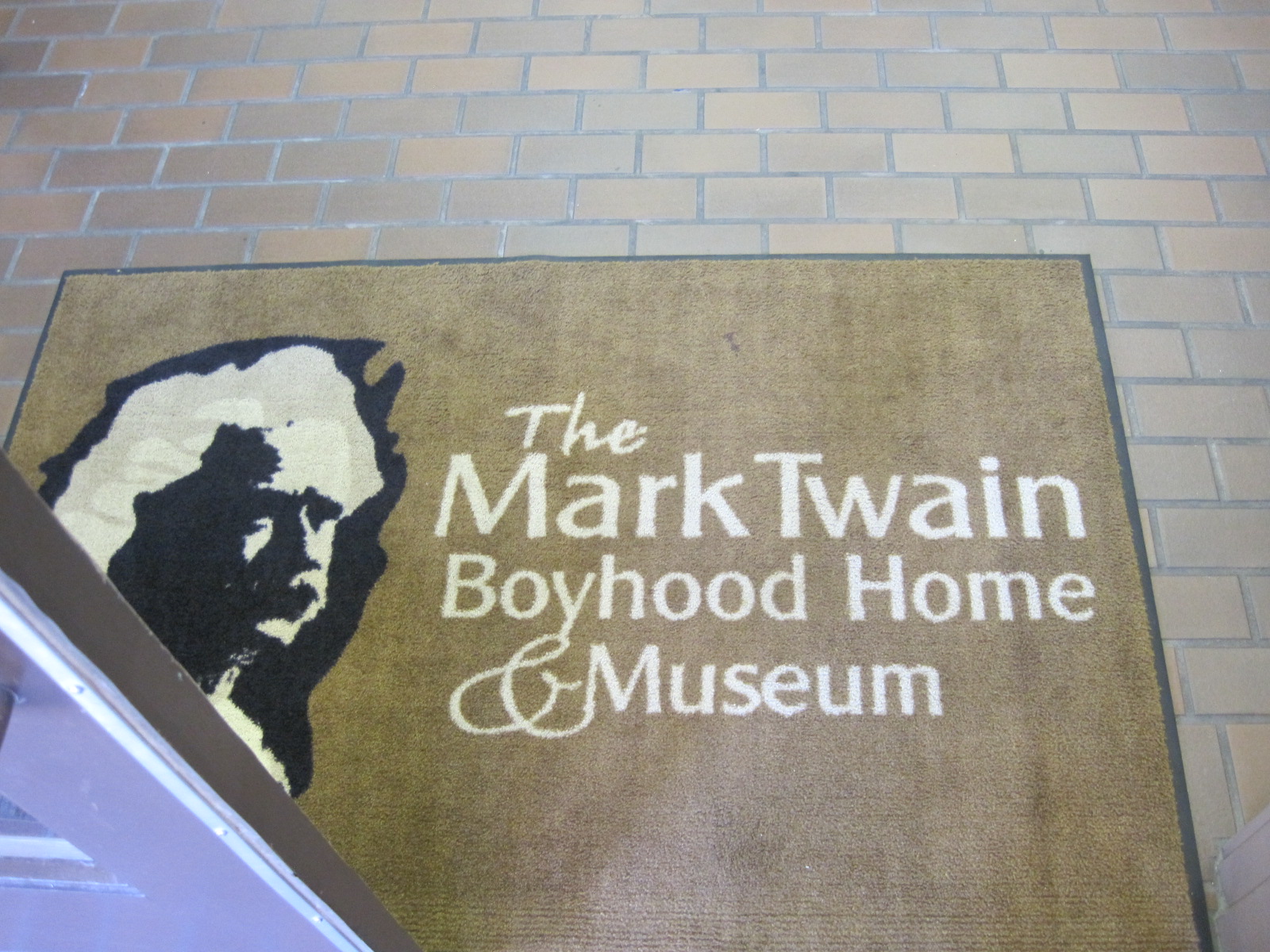
 And so I went to Hannibal, a little town two and a half hours away (131 miles north) from my present location. More than anything, it is famous for being the birthplace of Mark Twain (born Samuel Clemens) and the site of his boyhood home with the famous white-washed fence. There’s so much to say about the journey, from the open land of the highway which reminded me of the trip between Kaduna and Zaria to the coolness of the fresh morning air on the way and back. Then there were the sculptures, the quietness of the town, the beauty of the museum building, and the amazing detail of the house as compared to the descriptions that Twain wrote about them in his books The Adventures of Tom Sawyer and Huckleberry Finn. The famous white-washed fence was there all right, now marked with names of visitors from all over the world.
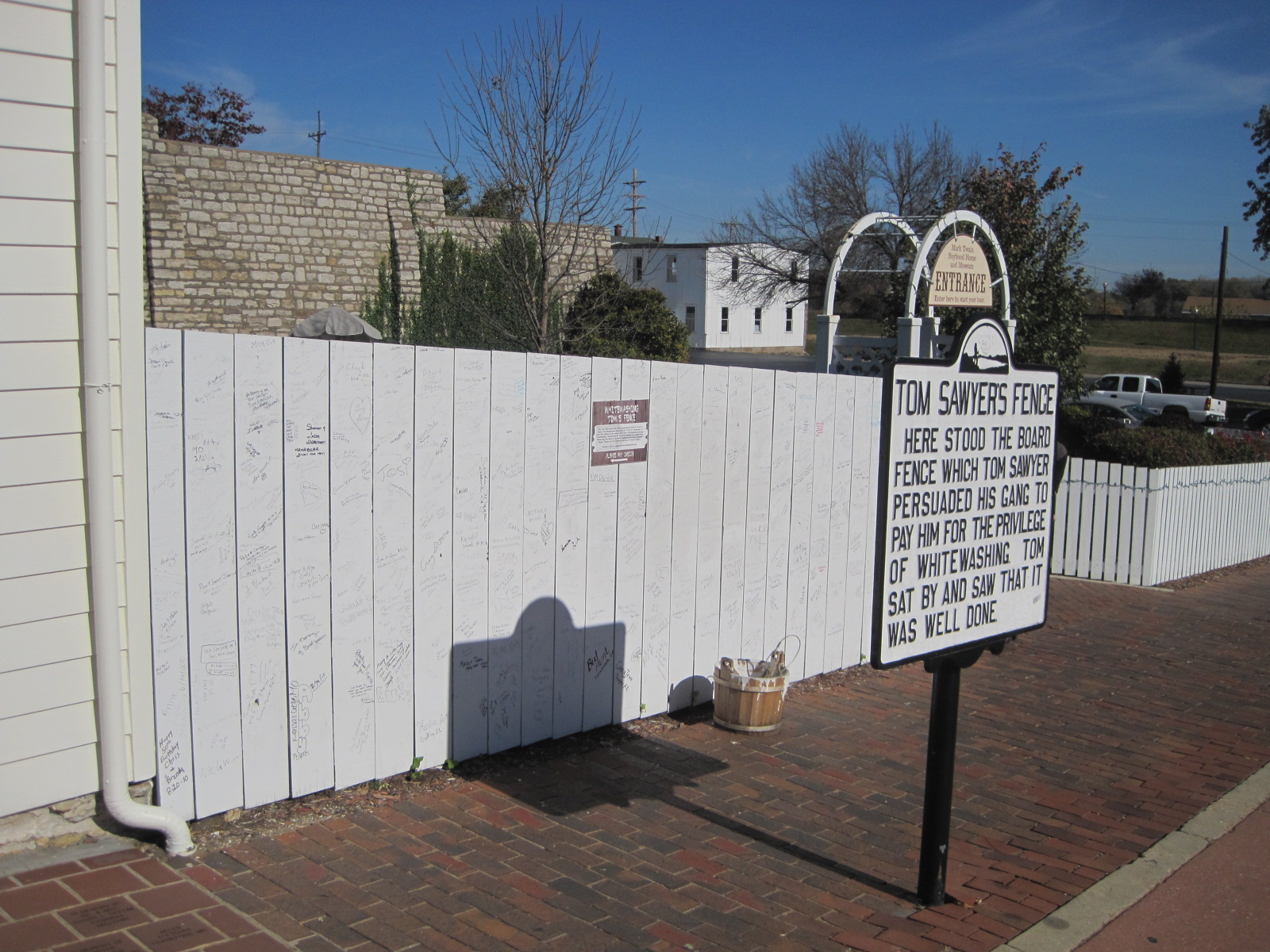 For those not familiar with the story, the young boy Tom had successfully conned his bullying friends into doing his own chore of white-washing his house fence for him. Samuel Clemens grew up in this house in Hannibal, a son of a judge of a father living on a low income. He moved out of it in 1853 to seek his fortune. Twenty years would pass before he started writing The Adventures of Tom Sawyer, and he drew most of his materials from the events of his own childhood on the streets of Hannibal in a house overlooking the Mississippi river. This makes a lot of sense: living through a very hard but colourful childhood and amassing in the process a very large stash of memories, and waiting at least twenty years to set them down to paper, sometimes after returning to visit the place and reliving the memories. Now that’s an idea.
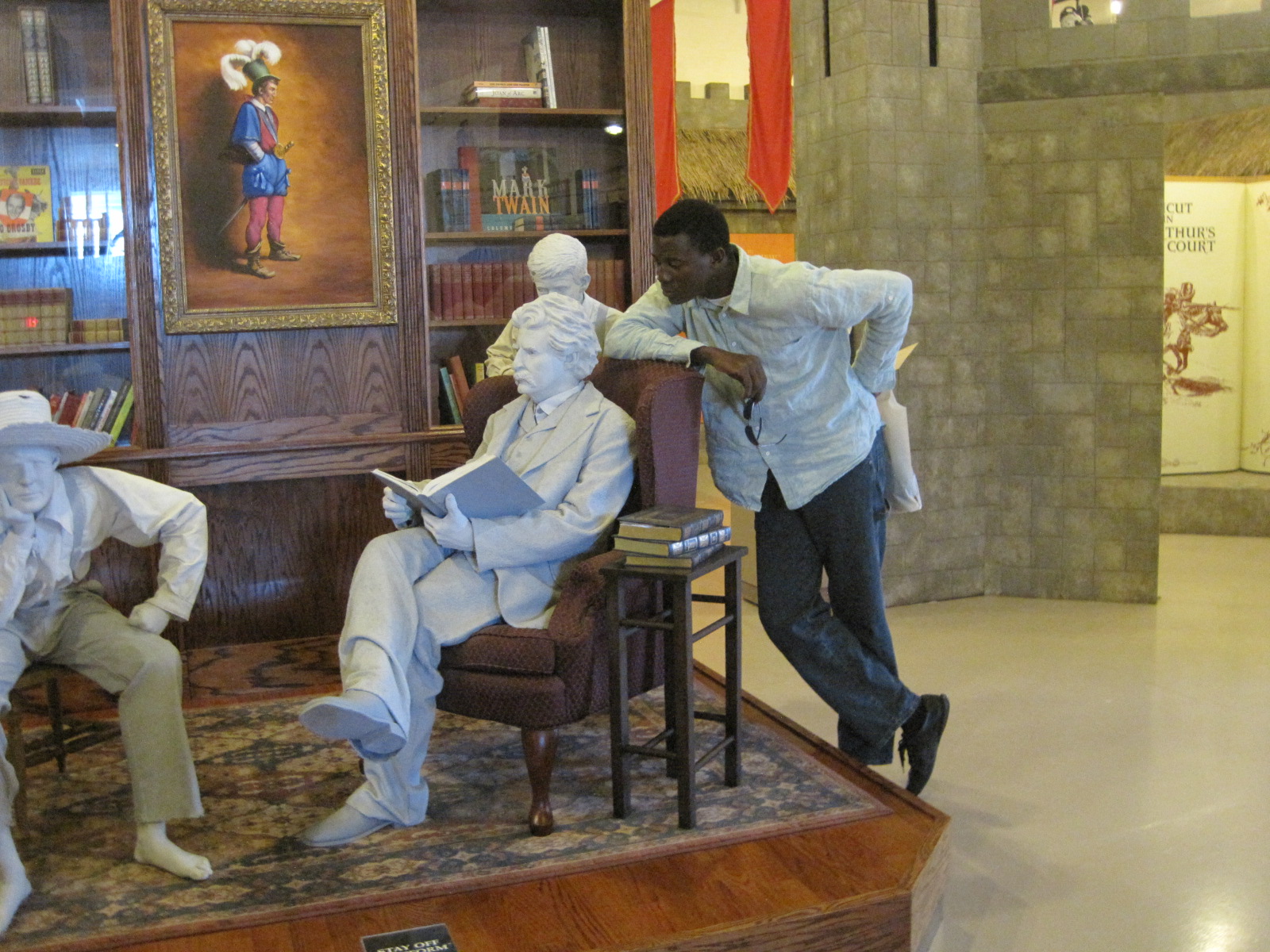 The museum had many fun sights: a marble sculpture of the man reading stories to kids, a boat deck to simulate the view of ship captains (the original inspiration for the name, Mark Twain), a gallery of famous quotes of the man, and a cave built to the type described in his books about his childhood days. It also has a gift shop filled with postcards, t-shirts, and countless books (including his autobiography. He had written it – The Autobiography – by himself and had instructed that it be published a hundred years after his death. It has now been published, and is the current #1 bestseller on Amazon and the #2 on NY Times bestseller list. One of the famous quotes on the t-shirts being sold there reads: “Travel is fatal to prejudice, bigotry, and narrow-mindedness, and many of our people need it sorely on these accounts.” Another one read: “Action speak louder than words but not nearly as often.” And there were many more.
 I may not successfully exhaust my report of the visit to a place that holds much significance to me as a consumer of literature and the works of the man as a writer and a chronicler of a certain epoch in American history. His views on slavery, politics, and life in general have been highly documented in many of his books, including this final autobiography. But I can tell you this: that it was a worthwhile visit that I would gladly make again, if only to be able to spend more time in the town and see what else they have besides the very many resources of the Clemens. One more thing before we left (Temie and I) was to sign our names on the white-washed fence. The traveller was here. No, that wasn’t what I wrote. You have to go there to find out for yourself.
Oh, and one more quote now going to remain on my office computer: “To succeed in life, you need two things: ignorance and confidence.” Oh well!
Pictures by Temie Giwa
 Basically, this blog reflects my reading life.”