Roads Around The Child (Non-Fiction)

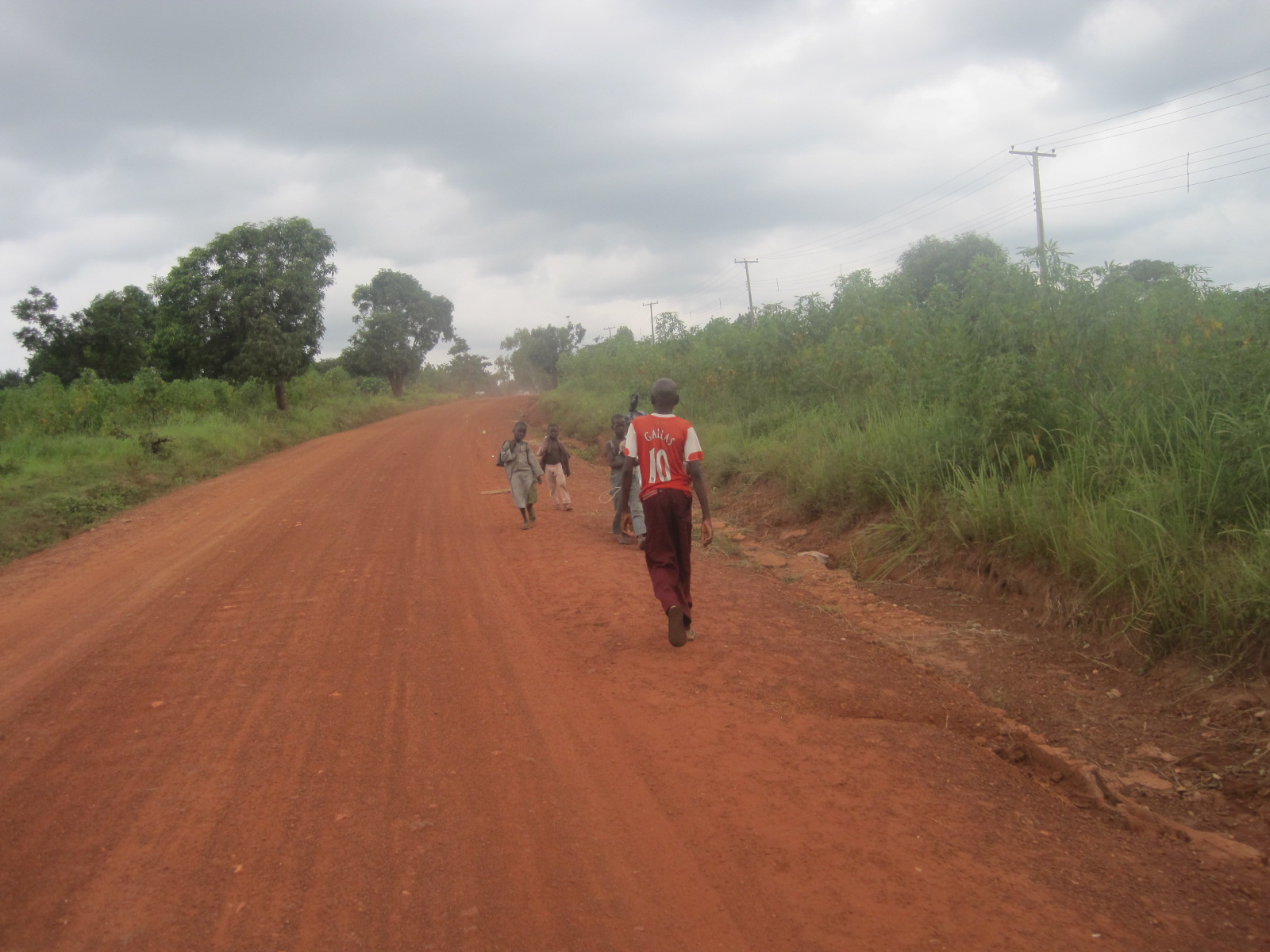
Our house lay at a junction of roads. The first one stretched from an unknown place beyond the mango trees and a public water well in front of the Oguns’ house. Ahead, it reaches out into the dry dusty parts of the village, past the albino barber’s house and farther down into places where now I can’t immediately conjure beyond the sight of leaves, dry wood and old men playing draught on wooden benches outside their unpainted houses. The other road goes past the Bello’s house to the church, then branches towards the main road where tar begins and heads into the town. When put side by side as they both inevitably lay approaching the wide spot in front of the house where we all usually play in the evening around the grown men of the area, they form a dusty wide line of an attempted “v” which ends at the Baale’s house. From there, they part, each again taking up a lonely path to my right into as far as the eyes can see.

A mental stepping now out of the big compound of my house into those streets, I stand now, facing the Baale’s house, turning my back to the dusty “v” of the coming road. On to the left, the road veers by the small thrush in front of the house where Lanko Lanko lives, then a little further down it reaches an electric transformer. After that, to the left, is my school, fenced around with a white concrete wall and spiked metal bars. Further down is nothing but gullies and leaves, and a beaten path to where moin moin is sold along with its corn paste companion, into the labyrinths of huts and a maze of households of mud and concrete of old women with intriguing dress patterns and ribald tongues. They knew me and knew that I ran away from them whenever I could, except when I had things to buy. And one of them called me “my husband”. Further down in the centre of the village woods where dirt competed with house animals and putrid smells from collective waste is a large agbalumo tree. It came along with it a myth that it housed spirits that tormented wandering children…
Back to my junction, on to the right are the better, sanctioned spaces of play: the opening towards Mama Lawyer’s clinic, just three houses away. Before that is the kolanut seller, then the farmer and professor’s awesome cottage where I saw a chess board for the first time and wondered why it didn’t look like the draughts boards I’d seen my brother play at home. In there are their three boy children one of whom was around my age, older by about a year or two. Then an orchard of sweet smelling flowers, a corn mill, trees of mango and cashew, and livestock.  The cottage opened itself always up as a paradise of treasures, menu, and learning.

Mama Lawyer’s clinic, for then and now remains as old as memory. I never saw her husband who was the real lawyer. She has travelled to many countries, we were told, and she had come home to retire, operating the clinic as a way to stay active. Even then, tufts of grey hair already dotted her beautiful hair that kept her demeanour always so disarming. The smile, the warm hug of a mother of all little children, and the music in her voice when she asks “Young man, what have we got today? Aren’t we looking good.” It always made the enduring phobia of needles immediately disappear, if only for the second. So when I get the “fever” as all ailments are called to a six year old, Momma dresses me up in a thick sweater and the right pair of trousers, and we walk hand in hand towards Mama Lawyer’s house, stirring the dust paths of the village’s open roads into the evening sky.

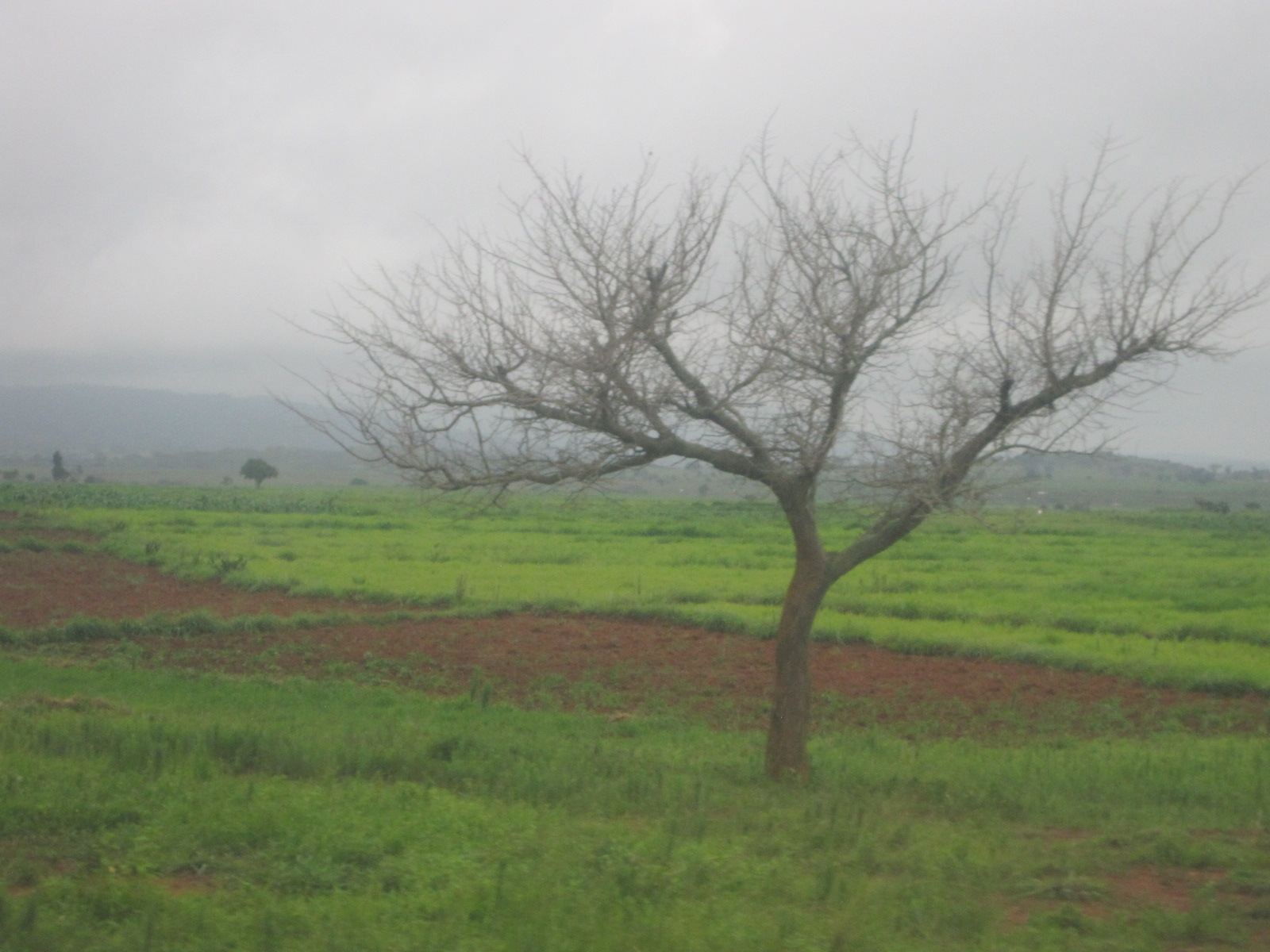
(Photos taken in Jos, Plateau and Obi, Nassarawa. July 2010)
In Bedlam

Sleepy eyed in a quiet town, with just a bed-time snore to brand the night for all it was worth. A giggle there, a whisper there. The night rests sombre along the shore of reminiscences. A closet of dreams and a nightstand of slivers and sheets rest beside. An empty plate with a fork looking up. A camera and a lamp long dead from a burnt out fuse. A cordless mouse. Two books and a jar of cream, and pens, and two name tags that point to a faraway place.

Cream-coloured paint on the wall, a dreamy clinic for wandering night eyes; the vent, smoke detectors and invisible sneaky bugs of a metal bush. Deodorants just twenty feet away beside a basket of goodies that now just cups the wisps of air from behind the curtain. Either that or loose coins that make their home into the cracks of its browning chest. Others are straws, and hangers, and toilet rolls strutting underneath the shade. A padlock  here made of silver: Chicago-bought, and a white floor littered with shoes.

Then, a snore and a sigh: the city sleeps.

Weekend in a Little Village

There hums a fan four feet behind the chair in a closed office. Outside, the sun recedes into the end of where the eyes can reach and heat pervades the day. The bustle of traffic is as unpredictable as the flight of the geese around the neighbourhood and on the surface everything goes on as it always does, this time only with a little more gusto as commuters disperse with the wind heading somewhere, heading nowhere.

There, as usual, is a magic to the simpleness of the atmosphere, something about the order and ordinariness of the programmed chore of day in a working metropolis. In the middle of such broth of movements is a yet unknown idea bubbling around the edge. Everyone seeks it in some way or another. Some find it, and some don’t. And some don’t collide with it a few times in a day’s work. And in many other parallel worlds, there are replicas in this rote and eventuality. Only one thing stands out of the urgency of each second: the futility of it all.

There now hums more than just a whirling fan. There is music, and company, and noise – the same old rote of living.

The Text Part of Growing

The evolution from picture books to text-only materials was gradual, but memorable. There seemed to have been an unwritten disdain for picture books that manifested after each birthday, each disposed oversized pyjamas and each replaced tooth. It wasn’t self-wrought however, but acquired, either from older peers with fancier stories of intimate relations with the written word resulting in inspiring encounters, or jealousy of even fancier ones with fantastic tales of their reading prowess. Something gave, however, for sure, little by little, and the young reader emerged, ready to take on the reading world without accompanying images.

The most memorable of such recollection could be the singular, but eventually impossible task of reading the first chapter of The Tiger by the Tail during a bus ride from home to school. It didn’t matter to him in the least that he couldn’t make any sense of it yet, never having even applied himself to more than just a few words on each page he flipped. It matter though that people saw him with a book that was bigger than a storybook, had no pictures in it, and moved from page to page as if passing through the patient and critical eyes of an avid reader. “Hey, nice book. How’re you finding it?” Someone would ask sometimes during the day, and he would respond: “Oh, very nice. Chase is such an exquisite writer”, and move on before the probing went far beyond the familiar. Oh the days.

The blog, now splattered with colours and images, flesh and blood, of ordinary and extraordinary people of various places, beliefs and convictions, could only remind of such trivialties; of days when colour meant ordinariness, and a lack of sophistication needed for the rites of adulthood. Now only a smile remains, and a longing for such a not so distant past of innocence and silliness.

Welcome September, and the year of birth.

In Little Moments

A peep into a dark office reveals a face that he instantly recognizes as that of the erudite Yoruba Professor A.I. famous for several classic plays that have now been turned into famous movies. There were a few others there. “Good morning sir,” he greets, bending almost double towards the floor. The man doesn’t recognize him, but he is obviously used to being greeted by one and all within and out of a University environment. “That is …’s son,” the other teacher volunteers, as he always does without prompting, and the visitor withdraws. “Ah, ah,” the Professor says, “I used to know your house in -. Don’t you have a brother just as tall as you?” “Yes,” the boy responds, as he mentally calculates how long it will take to exhaust the conversation, while at least happy for a little connection. “He’s fairer than me in complexion,” he says. “Yes, yes,” the Professor agrees. “How are you?” “I’m fine sir. I used to greet you many times, but you never seem to recognize me.” “Yes. I know your brother very well. He’s abroad now, right?” “Yes he is,” he replies, wondering how the man knew, “but I was the one who went to the US.”

He was silent for only a few seconds, and then asks. “Oh, you went abroad?” “Yes, sir. To teach Yoruba.” “Oh, that’s great. So why are you back here?” The boy laughs for a short second and responds, “The programme was over. I had to come back.” “Oh really? Why didn’t you just stay there for about three to four years to do some more academic programmes?” In other climes, this might have been a trick question, and the other teacher interjects rather excitedly, sensing that the Professor was serious. “No, they weren’t supposed to stay there permanently. One of the stipulations of the programme was that they return home immediately afterwards.” And there was something a little too perky about the response. Teacher was one of the ones who had insinuated that he might not come back if allowed to go out. “Boy, wasn’t there a time when you were all asked to promise to return at the end of your programme?” “Yes,” the boy responds, sensing an opportunity to strike back, “And I always found it funny and insulting at the same time. Had they expected me to simply disappear into the thin air of the American space. I could never understand it.” The Professor just beams and nods. “Well done, boy. So will you be returning there now?” “I don’t know sir. Maybe,” he responds in the same way he has now learnt to answer the question to everyone that asks in much the same way.

Yet, he wondered as he always did if the question was borne out of a certain love for him, or a desire to be rid of his presence as soon as possible. Some altruistic sadism, perhaps? It always seemed that everyone felt him better-off in a faraway land. And for few moments afterwards, he always found himself questioning whether that occasional desire to return to the old place that sometimes spring up on him unexpectedly is conditioned by anything other than his own restless feet.