Bassey’s Literature as Truth; Truth as Literature

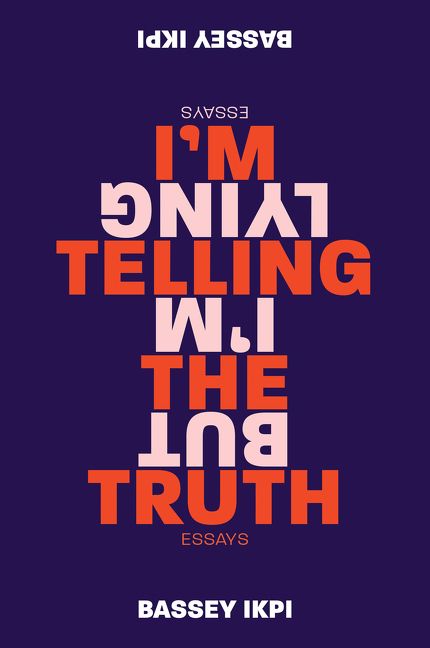
I read an advanced copy of Bassey Ikpi’s new memoir a couple of weeks ago, and I haven’t stopped thinking about how important it is that the work exists in the world. I wrote an earlier review much of which I’ve now discarded for focusing less on the unique nature of Ikpi’s intervention in the space of writings about mental illness than about its similarities — or otherwise — of other books of its nature.

Bassey’s book of essays, titled I’m Telling the Truth but I’m Lying focuses on the writer’s life and upbringing, first as an immigrant child in an America she didn’t immediately adjust to, then as a young adult unable to name the mental issues that afflicted her, and into an adult that had to fight and struggle through the most destructive phases of a bipolar disorder. This summary, however, does no justice to the beautiful piece of literature that is Ikpi’s book. It is a memoir (don’t let the “essays” tag fool you), written mostly in first person, except when — in a style deliberately designed, perhaps, to help the reader simulate the rollercoaster nature of the writer’s journey through the ailment — parts were written in the second person, allowing the reader to pretend, for a second, to be a participant in the ordeal.

The book is honest, though the writer warns us in the title and in many other parts of the book, not to take her too seriously as a reliable narrator. It is raw and unflinching. It peels back an often opaque veil to show the extent to which people suffering ailments of this nature can go in order to feel “normal”, and extent to which mental disorders contribute in the blurring of lines between self-destruction and self-awareness.

“All my life, I feared being “bad.” I already felt broken, already felt like there was something irreparably wrong with me, the least I could do was coat myself in the “goodness”: this idea that who we are is based on how we are seen I already feel broken; I followed the rules but now I wanted to feel something different– to feel better, to feel unbroken–more than I wanted anything else. I wanted something other than this Novocain and numbness. Its very name revealed its power: I wanted ecstasy.”

Page 93.

But more than a confessional — it skips mention of a number of specific personal details on the writer’s professional life, so those looking to learn about the writer’s illustrious career as a travelling artist on the Spoken Word circuit through America will have to wait for another book — Ikpi’s book is a kind of map for those interested in learning about how mental illness affects people. “If I were a nurse or a teacher,” she tells me in a private conversation “It would have shown up the same way.”

And yet, it is not a grim book, because we know that the writer survived to tell the story. It is not a morality tale either. Let me quote Erin Wicks, an editor at Harper Collins here: “What you will find within these pages is something far riskier and far braver: a human breaking down her external wall to show us the structures beneath, and then examining them before our very eyes with great honesty, and love, and brutality, and rawness, and vitality, and mourning.”

I have interviewed Bassey Ikpi in the past, when she lived, briefly, in Nigeria in 2014. She continues to be an advocate for openness in speaking about mental illness. To a layman, especially in Nigeria, all mental illnesses are the same. In most African cultures, there is just one word for them: an equivalent of “mad”. In literature, and in reality, there are many dynamics and diagnoses, one not looking the same as the other. Dysthymia is not bipolar disorder, which is not dissociative identity disorder, which is not schizophrenia, which is not chronic depression. So, through the experiences of others, written — in this case with Bassey’s book — with prose that is as honest as enchanting, one hopes that the reader can build both a bank of knowledge and a muscle for empathy.

It is to our benefit that works like Ikpi’s exist and continue to put the conversation right before our eyes. While the illnesses may never quite cure, the result of the human will to thrive in spite of it, as evident in this beautiful book, is a spectacular reward of its own.

I’m Telling the Truth But I’m Lying will be out on August 20, 2019

Reading JP’s America

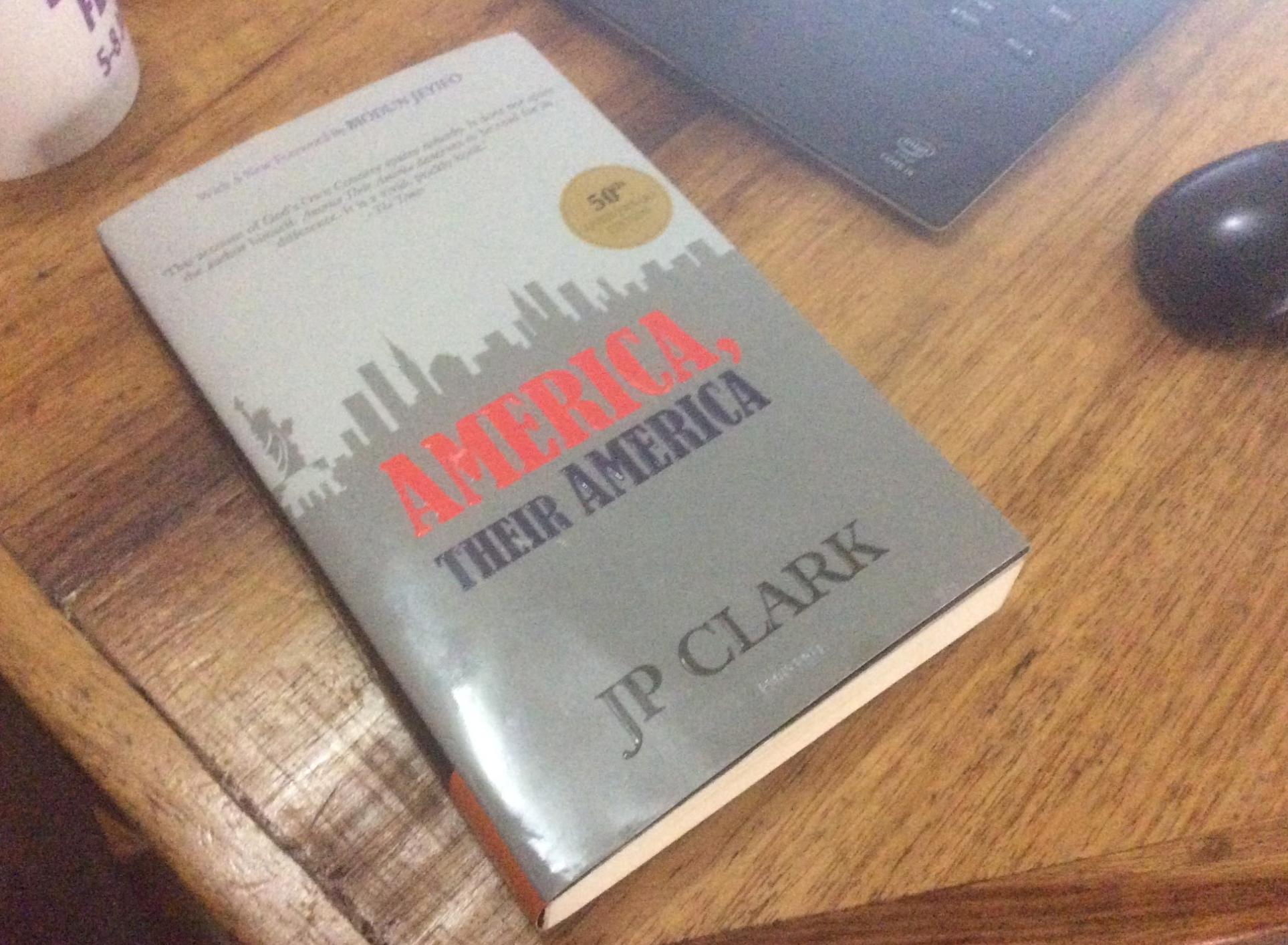
It’s amazing to think that an African writer/journalist had the kind of access that Nigerian writer JP Clark had to the corridors of US power in 1962 during the Medicare debates, and some of the most high-stakes political period of the country’s history. The writer, then a playwright and journalist working in Nigeria, had won a Parvin Fellowship which, at the time, had been set up to bring young African professionals to the US for one year in order to interact, socialize, learn a bit about the American political system, and gain some skills to take back to their young countries. The result of that experience, and the subsequent fallout from his abrupt ejection from the country, was his 1964 book America Their America now re-published in a 50th anniversary edition by Bookcraft, Ìbàdàn (2015).

At that time in the 60s, all of the countries on this continent had either just gained independence or were in the process of doing so. The coup d’etat hadn’t started rolling in (as they did in Ghana and Nigeria in 1966). The CIA hadn’t started getting too involved in the political process of new states that turned away from the western-type ideals enough to start helping to assassinate them. Names like Wọlé Ṣóyínká had not become household names yet, and Chinua Achebe himself was still in the United States on a different study programme. In short, it was the golden years of statehood of many African countries on the world stage, and this benefited students from the continent who took adequate advantage of America’s attempt at a global outreach through soft diplomacy. It was also during this time that Barack Obama Sr had found himself in Hawaii as a father of a new American son, Barack.

And there was JP Clark, a young and boisterous playwright and journalist from Nigeria with, not unlike what has been described of Obama Sr, an acerbic voice, a confident gait, and a snarky outlook at the elaborately choreographed introduction to the American experience, which the Parvin Program had packaged for him. Even in his own accounting of the times, he was a rude, and unfiltered guest, willing to poke where the society he found himself had decided needed to be left alone: religion, politics, and race. He spent most of his time pursuing his own creative and personal haunts than spending time participating in the rituals required of the scholarship that had brought him to the United States, and he did these all while throwing his weight and sometimes solicited opinion around, often to devastating personal consequences. In the end, his host had had enough, so they kicked him out rather unceremoniously.

The country had, until then, seemed never had such a caustic guest. It certainly had not expected it from this African, half expected to be grateful and obsequious for the privilege that the opportunity had brought, and certainly expected to take the opportunity as one that may never come again. They, apparently, hadn’t met Mr. Clark, the saucy poet, who traipsed around America among some of the most influential members of that country’s society, in culture, academia, literature, and government not quite like he owned it, but like his critical opinion should matter as much as any man, intellectual, and journalist of his competence. And why not? Was he less of a journalist because he carried a green passport or a black African skin? Is America, a country founded ostensibly on the freedom of speech, not naturally best suited for, and welcoming to critical engagement by all that live in it towards “a more perfect union”? At the time, it certainly didn’t seem that any negative or uncomfortably frank perception or opinion was expected of this stranger, and he was informed of this, subtly and directly. He didn’t care. And, today, it is in that quality of brutal honesty and self-indictment that the book America Their America earns its stripe as a cultural landmark – a work of both political, journalistic, cultural, and literary value, packing an unapologetic look at the American political and cultural landscape with an attentive recollection of one man’s travels and travails through its corridors at a crucial time.

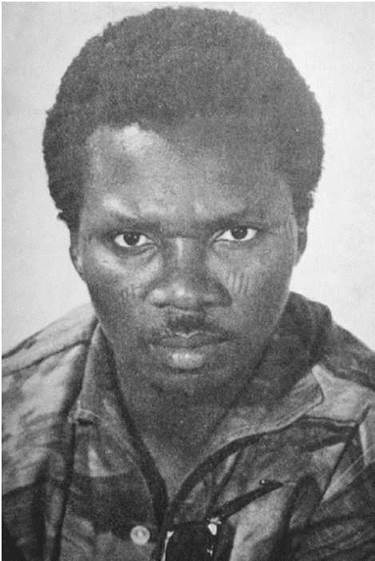
JP Clark (Author’s photo from the 60s)

I had moments of deja vu, while reading America Their America, not just because of the eerie similarity of those times and the depicted political realities and the current one, but also because of the similarity and dissimilarity of the visiting experience of Mr. Clark and myself. He had been invited into the country as a Parvin Fellow (a fellowship that was discontinued a few years later, perhaps no thanks to his fiery and bold-faced ungratefulness for much of the fellowship except for parts of it that allowed him the freedom to travel and experience America on his own terms) and I had made my first contact with America as a Fulbright Scholar in 2009 on similar terms. Except in the location of my fellowship and the teaching responsibilities expected of Fulbright fellows, we seemed to have been invited to experience the country in much the same way, through its generosity and openness to exchange of new ideas, and packaged through a rote of American perception of itself as exceptional.

Reading America again through his eyes brought moments of intense recollection, sometimes of nostalgia, but mostly of envy for the kind of access the Parvin Fellowship offered the writer and other fellow scholars. I certainly never got a chance to visit the Capitol building in order to watch legislative deliberations or have 0ne-on-one conversations with congress people. I did walk in front of it, but only because of my own restlessness. Neither, except for my own equally deliberate and constant rebellion against the constraints of a regimented school session, did I experience a year of such intense and colourful freedom. But it is the literary and historical value of the book that packs the most punch for an interested reader as myself committed as much to its contribution to understanding the 60s and early black scholars in and out of the West and the trajectory of the early African writers’ literary voice. Mr. Clark delights both as an astute storyteller of a tale in which he’s both the hero and the villain, and a travel writer experiencing reality through a fiery literary lens.

He complements the narrative with occasional poems written at moments of distress or contemplation. This one was written while thinking of James Meredith (the first African American to attend the University of Mississippi) and composing a letter to his brother in India:

Last night, times out of dream,

I woke

to the sight of a snake

Slitering in the field, livid

Where the grass is

Patched, merged up where it runs

All shades of green – and suddenly!

My brother in India, up, stick

In hand, poised to strike –

But ah, hiimself is struck

By this serpent, so swift,

So silent, with more reaction

Than a nuclear charge…

And now this morning with eyes still

To the door, in thought of a neck

Straining under the sill,

I wake

To the touch of a hand as

Mortal and fair, asking

To be kissed, and a return

To bed, my brothers

In the wild of America!

(page 56)

Of Washington DC, he wrote, a terse indictment:

A morgue,

a museum –

Whose keepers

play at kings.

(page 184)

In each poetic offering on the state of his mind at different moments, one glimpsed doses of frustration, mirth, mischief, inspiration, and more. It was a peek into the creative potential of the – at the time – 29 year-old author. The style, in which poetry and prose were effectively deployed to serve the purpose of memorizing, would also be deployed equally as effectively in Wọlé Ṣóyínká’s The Man Died (1971).

Politically, what impressed and fascinated me, even more, is the relevance of the debates that JP Clark diligently documented of the Senate debates surrounding the passage of the Medicare Act of 1965, and how little seemed to have changed. As I write this, the US Senate has just given up on their latest attempt to repeal the healthcare law signed into effect in 2009, a law that takes care of the most vulnerable in the society just like Medicare did in 1965. And watching the US media debates surrounding healthcare as I had when I lived in Illinois in 2009-2012, the following passage seemed very familiar:

“How are you sure he wants to follow in his father’s footsteps?” I asked.

“He darned well will want to,” the man said. “Why, he’ll all be provided for. I have built this business up for what it is today so no member of my family will lack for anything.” And here he brought out another photograph, this time of the entire family, even with the old parents included. Radiant in the centre with a strapping son and two daughters on her either side was his wife. 

“Now, they’re pretty well taken care of, for now and the future as far as human hand can provide.” He congratulated himself and the American system of which he was a shining ‘success’ example. 

“Don’t you think by all this provision and security, you deny them their great American privilege of paying their own way through life?” I asked. 

“How is that? he showed genuine surprise and disbelief.

“Well, I can appreciate the point of your doctors when they say they want no medicare for the old,” I began. 

“Go on,” he prompted me, calling out for more drinks for us both in the bar where we sat. 

“As I see it, the doctors seem to be insisting that every American citizen should have provided for himself fully by retirement age. So why ask government now to pay their full medical bills?”

“That’s right, boy, you’ve been following pretty close our American debate,” he cheered me on. Until I added: 

“Well, it seems to me you’re denying exactly that sacred principle the doctors are insisting on by wanting to lay on everything for members of your family.”

“Young man, are you calling all my life’s effort vain? No, no, don’t withdraw or make any apologies for beliefs you honestly hold to. But tell me, as a writer, of what I don’t know, don’t you want to make money?”

(page 182-183) 

As a Parvin Fellow, Mr. Clark was based in Princeton, but the traveller’s gene in the poet carried him around the country, from New York to Boston, and to DC. As a Fulbright fellow, I resided in Southern Illinois, with aspects of my work taking me to Rhode Island and Washington DC. But much of my emotional connection to Mr. Clark’s delightfully addictive rant against his uncomfortable participation in American life comes also from my hitherto lack of sufficient time and discipline to put my one-year experience into the words and images, with diligent markings of its most notable moments, as the writer has brilliantly done. America Their America was published about a year after the writer had returned unceremoniously after being kicked out of the fellowship for failing to show up in class. The closeness of that recollection to the space and time of the event’s happenstance probably helped its acerbity. But its ability to endure, even till today, as one of the most honest accounts of an African writer’s sojourn in America is tribute to the writer’s impressive talent, creative fire, and artistic integrity.

Another part of the book caught my eye:

Americans, very true to their candidatural role, like being liked a lot by foreigners. The picture they cut is of a big shaggy dog charging up to the chance caller in mixed feelings of welcome and defiance, and romping one moment up your front with its great weight, all in a plea to be fondled, and in the next breaking off the embrace to canter about you, head chasing after tail, and snout in the air, offering furious barks and bites. “Where are you from?” they breathe hot over the stranger to their shores. And before you have had time to reply, they are pumping and priming you more: “How do you like the US? Do you plan to go back to that country? Don’t you find it most free here? In Russia the individual is not free, you know, he cannot even worship God as he likes and make all the money he should.” And from this torrential downpour of self-praise the American never allows the overwhelmed visitor any cover, actually expecting in return more praise and a complete instant endorsement. God save the brash impolitic stranger who does not!

Little wonder why his visit ended with such infamy!

But such a shame that the fallout from the perception of his “ungratefulness” for writing the book had coloured the author’s subsequent negative perception among Western gatekeepers of African literature from which he never recovered. Heck, it had coloured perception on the continent itself, allowing publishers (many of which had ownership in the West anyway) to distance themselves from it. The book, for all of fifty years, remained invisible on bookshelves, earning its reputation only by word-of-mouth while other memoirs that came after it (The Man Died; 1971, Second Class Citizen; 1974) had enjoyed multiple print runs. Hard to think of any other book of such fame/infamy not having a second reprint for fifty years.

“Out of Print-Limited Availability” on Amazon today.

Yet even if we ignore the much more fruitful contribution of the author to the African literary space, the service that the presence of a book of this nature offers continues to be relevant, not just for African writers, many of whom have found less assertive ways of navigating the American immigrant experience either through soft engagement (see: Americanah, Open City, Never Look an American In the Eye), or through silence (see: Ngugi, Achebe, Soyinka), but for writers in general and for people interested in the enduring power of documentation with honesty and verve. JP Clark won’t be with us forever, but many of the issues raised by the book continue to be a relevant mirror to the American society, just as valid as those by its own active citizens, from James Baldwin to Ta-Nehisi Coates.

To call it merely an “African” classic is to do it too much disservice. It’s a classic nevertheless.

—-

(Rating 5/5)

A Book for the Tasting

By Kọ́lá Túbọ̀sún

Book: Longthroat Memoirs: Soups, Sex, and the Nigerian Taste Buds

Publisher: Cassava Republic Press

Publication Date: October 31, 2016

Pages: 357

The Great Nigerian Food Memoir

Nigerian food is the most endearing, enduring, topic in the world, especially since we have gone so long without talking about it.” – Yẹ́misí Aríbisálà

The allure of Yẹ́misí Aríbisálà’s debut book of nonfiction, titled Longthroat Memoirs: Soups, Sex, and the Nigerian Taste Buds, is, surprisingly, not the food, nor the promised “sex” in the title.Published by Cassava Republic Press, this book of essays comes with a more satisfying delight of well-crafted sentences, stories, and attention to detail, style, and ambition. An unapologetically Nigerian book of such brilliance, scope, and purpose has been needed for such a long time that it is hard to believe, going through its pages, that it has indeed arrived. The author it was who wrote a food column, for a few years, in the now defunct Nigerian paper 234Next as “Yẹ́misí Ogbe”. For those familiar with the understated brilliance of her style and approach, this all makes sense, and is timely.

Longthroat begins with an introduction fourteen and a half pages long, which coyly attempts to manage expectations of what is to come, through caveats about the author’s unlikely role as the bearer of the country’s food biographer, among other “confessions”. This part could, arguably, serve as a review of the book, except that it takes too much away from what follows. So, it whets the appetite of the new reader instead, and sets the table. In that introductory treatise, we are gently eased into the kitchen of the author’s mind where both the idea and the steps of implementation of this culinary journey take place first before they meet the page. I would return to the introduction again and again.

The first chapter is a review of the reputation of Nigerian food (and names) in the imagination of the foreigner. The first culprit here is Michael Barry, a half-Welsh, half Indian man whose “Nigerian River Province soup”, listed in his 1996 book Exotic Book the Crafty Way as an authentic Nigerian food, left the author scratching her head trying to identify its parts. She gave up eventually disappointed with both the writer’s imagination and the accessibility of Nigerian food to the outsider. Our ẹ̀bà, it turns out, was what was being described as “cassava bread” in Michael Barry’s book. A disappointing find! We never find out what the “River Province soup” is because it doesn’t exist. It is, also, the creation of a foreigner as an idea of what a random Nigerian food looks or behaves like. Yẹ́misí did not hold back: “I would hate for Michael Barry to get away with… suggesting that our food can be simplified and reformulated into something else, something it is not.” Her idea of the Nigerian soup as a person, more than just a passing item on a plate, takes off from here. It “may seem aloof at first,” Yẹ́misí writes, “but once given its due, it will immediately make itself friendly at the very least.”

The book proceeds smoothly along these lines, paving way to other encounters, hilarious personal stories, told through the keyhole of a writer obsessed with the dimension of food in everything, from sex to dreams. The chapters move in different ways. In one, which came early in the book, the author describes a typical Ìbàdàn boy in a marketplace arguing with his mother about eating àmàlà (or ọkà, as she put it), to illustrate the mischief of adults, and the eternal devotion of Ìbàdàn indigenes to their carbohydrate meal made from “desiccated yam ground into a dense white flour, and then made into a grey mound using boiling water”. In another narrative in the same chapter (listen to audio excerpt here), a ram goes for a ride on a motorbike and ends up on jollof rice: quite a common scenario in many Nigerian cities during festive seasons. The description lures in the oblivious reader with gentle words until the macabre nature of that ill-fated ride becomes suddenly obvious. To the Nigerian already familiar with it, the passage plays out like dark humour gently hovering above the conscience of the meat-eater. Another chapter which further elevates the book into canon of essential Nigerian literature is the story of the author’s father-in-law and his travails in the Nigerian Civil War; how the pursuit of the next meal drove the conversation of survival. It was, aptly titled, Dead Man’s Helmet.

Reading the book, deceptively called a “memoir” (it is, to be clear, but the character of the book both defies and enriches the genre) takes the reader back decades into a happy place where food and observations of food carried some reward of discovery. Here, I speak for myself. What is the difference between irú wooro and irú pẹ̀tẹ̀, for instance? What are they anyway? Why did they smell so much and why did my grandmother like them so? Why are they wrapped so tightly in those small leaves? Why are the ones my grandfather’s youngest wife bring from the farm better than the ones we bought in the neighbourhood? How come I sometimes saw them in food (as in okro) but not in some (ewédú)? How is irú different from ògìrì? How does Dadawa, the cubed variant that debuted in the 90s, improve on what was a local condiment that supposedly added character to our local meals?

Sometimes a chapter is a journey into a forgotten part of one’s culinary past left unappreciated through the passage of time. One word or a sentence here stirs it up, smell, aroma and all, into new awakening. At other times, it is the wonder of a shared experience which in one’s memory had previously amounted to nothing more than a mundane occurrence, but which in literature transmutes now into a notable cultural event, properly highlighted and intensified through the writer’s power of observation and documentation. This is where the work shines out the most: elevating the most common experiences—what defines Nigerian culture: our cooking and eating habits, among ourselves and on the world stage—through beautiful sentences that delight and titillate.  

Who remembers, for instance, breaking open ẹ̀gúsí shells with their fingers, usually while seated with mothers or grandmothers to whom that kind of chore is a perfectly productive use of afternoon time? In a world now defined by “finesse”—a type of accepted snobbery against deliberateness, patience, commonality—that image of simpler times spent sitting with grandparents and helping out with cooking over several hours, along with stories, songs, and admonition, brings the reader as close to emotional time travel as one can get. Yẹ́misí calls this particular food preparation act: “hand-shelling” ẹ̀gúsí. We who are familiar know that she meant “hand de-shelling” or “de-husking” if we’re being technical, but one could see why the former appeals more. In Yorùbá, we say “wọ́n ń ṣẹ́ ẹ̀gúsí”. That act of “ṣẹ́-ing” the ẹ̀gúsi, breaking the shell in half and removing the content, is what gets the white pointed seeds out to where it can be useful. But that attempted homage to the phonetics of ṣẹ́-ing the seed, instead of the mechanically-sounding “de-shelling”, warms my linguist heart (though that English translation wasn’t the only relevant pull to the vivid sense of nostalgia that the chapter beautifully evokes).

Of Sex,  Subtlety, and More

What I ate last night is as significant and as tangible as my dreams. My dreams are as tangible as what I’m eating. Neither of them can safely be taken for granted. Life seen through the prism of food has more colours, not fewer.” – YA

The “sex” in the subtitle of Longthroat Memoirs does not materialize in the way readers conditioned to the treatment of the subject in Nigerian writing might expect it. But it does materialize in different other ways, sometimes gentle, and sometimes hot and vivid, usually around food and cultural attitudes. I, for instance, will not be able to look at a the velvety black covering of the African snail the same way again. Through word association and the writer’s imagination of their role in our sexual myths, vividly and mischievously imagined in the chapter called The Snail Tree, a Nigerian foodie’s insistence on a snail diet will now always task the mind in the direction of more intimate parts. The treatment of sex here however, as one would realize, is deliberate. Check out, for instance, this sentence from the second paragraph from that same chapter:

There are places in a woman that a penis will never reach.”

The sentence that follows this gives too much away so I will not quote that here. But the chapter itself, one of the most directly polemic in the book, tackles the author’s discomfort with the ubiquitous fascination with sex in contemporary literature. Here, she opines directly on the Nigerian/African writing and literary culture in a way that is fresh and unflinching, using food as a contact point. Chimamanda Adichie and Binyavanga Wainaina make appearances and not in a flattering way. The chapter also explores the way in which food can be used to sublimate other human impulses. But because of the understated way in which sex appears and disappears throughout the work, I expect some mild reader rebellion. Pointing out the irony of using “sex” to sell a book in which the use of sex as a selling point in modern writing is so directly challenged will be too good to pass up.

In a yet unpublished interview with me, Yẹ́misí clarifies her purpose:

Our manifestations of sexuality seem mostly dysfunctional. In writing, in the media, it is mostly titillation and misunderstandings. Are there some things that the application of words disfigures? Obscures? We all seem to be grasping at straws in private lives bragging about our involvement on public platforms. So if we are going to be real and honest, “liberality” should be prima facie the admission of incompetence and fumblings and disastrous encounters. The chapter was me saying, look I’m not going to pretend I’m good at this, that I apprenticed with Cirque du soleil. If I’m going to be truthful and free in my writing about sex, I’ll have to talk about my confusion and incompetence. Everyone else can write titillation if they want.

I wanted to point out obvious and not so obvious parallels between appetites… I wanted to offer the perspective of seeing something better by not looking directly at it.

That chapter alone, The Snail Tree, capable of winning any prize for nonfiction anywhere, makes the whole book worth reading.

But the book does (and packs) much more. It challenges assumptions (Will a Maiguard in Lagos prefer carefully made white soup or his Agege bread and fried eggs, if given a chance?), attacks hubris (Yorùbá people, with your pride of “sophistication”, come to Calabar and experience food cooked with some imagination and creativity), and examines contradictions (How are Yorùbá the oily-food-eaters—ndi ofe mmanu—when Easterners add oil to their garri at every instance? And how are Igbos the eaters of solid-as-stone food—aj’òkuta má mun’mi—when their invention of garry-with-oil has rescued ẹ̀bà from the tyranny of turgidity?). Longthroat Memoirs successfully situates itself in a prominent space for not just the sensual narratives around food but of cultural attitudes, defining the country and its people in our own taste and words. A cookbook, a narrative of one culinary pilgrim’s journey through Nigeria’s cultural environments (from Ìbàdàn to Calabar), an exposition on prejudices and pretensions of some of our cooking myths, a personal and historical diary, all at once, Longthroat Memoirsmanages to fulfill more than gastronomic desires.

How to Cook a Sentence

Writing about food in the way I do involves noting the influence of food on life and life on food, and attempting to weave an accurate cultural landscape.”  – YA

Something that Aríbisálà has, and exhibits in abundance in this work, is patience. (That, along with the discipline to remember the names of all the food items she encountered while living in Calabar, and the diligence to verify the Englishand sometimes Botanicalnames of the local vegetables and fruits we are used to under different local names.) Reading any book is a race against time and the writers intentions. But the style in Longthroat Memoirs is deliberately contemplative of each individual reference, attentive to the moment enough to satiate an impatient reader and possessive of the right depth to reward a patient one. We know now that the book came about from a number of essays written first for a weekly newspaper column. But in setting each word to the page, the writer has deployed a rare skill that draws the reader in with an inviting aroma and keeps them satisfied after each course. In Peppered Snails, Aríbisálà introduces new Nigerian concepts (“toaster”, “yíláta”, etc) to the unfamiliar reader and spent considerable time weaving these into a tale about the cooking or endurance of hot peppered snail, all without taking the focus off the important direction of the narration. The style reminds of the best offerings of greats like Sóyínká in a work like Aké or Ìbàdàn, the Penkelemes Years, for instance. This is no idle comparison.

How does Yẹ́misí do it? How does one person deftly convey a vivid sense of smell and presence through words? We have read countless fiction and nonfiction by African writers, but not many of them have handled the treatment of food or any intimate contact with this much dexterity. I have an idea, but it is an inadequate one. Growing up in South-Western Nigeria isn’t enough motivation to care about its food, nor is having been transposed—through marriage—out of that environment into a contrasting one in the South-South a sufficient excuse either. There are many coincidences along the way, one of which is discovering, a while ago, that her health, as well as her children’s, was being affected by what they were consuming. She wrote about how she found out, in her trademark style of patient literary exploration of ordinary facts, combining personal history with a collective journey around food, in the piece for Medium in 2015 titled Mother Hunger.

Though that piece, along with many others of hers scattered around the web, are not included in this collection, they offer some clues as to the motivation for her craft, but not the germination of her skill. The writer’s obligation to memory and her diligent recollection seems to have been wrought through plodding hard work of deliberate crafting over many years.

Eventually reaching the end of such a book feels satisfying as equally as it feels deeply dissatisfying: it is not a book that should be read from cover to cover in one stretch. Each chapter, like slivers of mọinmọin under the leaves after a wrap is finished, should be returned to for extra flavours and spice. It is a shame that the book is not universally available on Kindle. Those equally likely to enjoy the literary delight of its letters juggling the taste buds of memory are Nigerians abroad or people everywhere with interest in Nigerian food culture. This book is for them. And for non-Nigerians, I suspect that its successful grounding of Nigerian recipes, ideas, misconceptions, myths, and stories through a personal lens will also be a brilliant introduction to both our cuisine and a different kind of nonfiction narrative. Listen to Yẹ́misí describe Lagos through the eyes of a drive to Yaba:

Lagos knows how to primp and sashay on bridges, new skyscrapers, tall swanky things. It has $1,200-a-night hotel rooms; overestimated real estate on anxious hairlines of land arbitrarily reclaimed from the sea; fragile, sand-filled peninsulas anchored on the Grace of God…

***

What are the knocks? A few. Olúbàdàn, the king of Ìbàdàn, was once referred to as Aláàfin of Ìbàdàn – an unintended slight that would have caused a warring of tribes in a different time. There’s also the perennial issue in Nigerian literature of having Yorùbá names/words written without appropriate diacritics. This should change in 2017, please!

In the chapter called Peppered Snails, the description of “toasting” on the campus of University of Ifẹ̀ spoke about taking a girl to “a new buka” to eat dodgy Chinese food instead of “an old buka” to eat pounded yam and soup. Those who have lived on that campus would know that the passage referred, instead, to New Buka and Old Buka respectively. These are not generic eating places, but known brands and locations.

So, What is This Book?

“(Nigerian Soup) is a multifaceted cultural treasure trove full of intriguing stories. It might not be gastronomically illustrious, but it is energetic and good-hearted. It belongs to one of the most fascinating personalities in the world: the Nigerian.” – YA

Is it a cultural resource, an encyclopedia of relevant memories, a cookbook, a dialogue with nostalgia, a thorough work in the documentation of the Nigerian food and cultural experience, a hard-wrought piece of literary exploration? All would be right and all would be insufficient. Yẹ́misí has, simply put, written a Nigerian book of stunning brilliance. Until now, when I am asked to provide a book from which to appreciate and understand Nigerian culture, I have usually had very few to mention. Peter Enahoro’s How to be a Nigerian comes quickly to mind, as does Chimamanda Adichie’s Half of a Yellow Sun. But the latter is fiction and political while the former is mostly cultural and humorous. Yẹ́misí Aríbisálà’s book is both and more. 

Memoirs are fun usually because we know that they tell us something interesting about an author, a situation they were in, or a certain time or a subject. When terribly done, they are too self-assured, too boastful and thus inauthentic, unsatisfying and unrepresentative of expected situations. Others are doomed by self-censorship to be of any real value for the genre, or by too much focus on the self to offer us more. But, depending on our initial expectation, it is usually easy to be satisfied with a personal account, which is by definition subjective. Being stimulated, engaged, or elevated by such work is another thing. That requires a different experience found in very rare instances in the hands of a skilled writer. Longthroat Memoirs falls into the latter category: a book that carries the weight of so much cultural and literary burden, and manages to discharge it with grace and style.

_____________

This essay was first published on Village Factor on January 21, 2017
December 24 in Lagos, Nigeria

It is three days after the end of the world, and another end looms in sight. Depending on the location of the observer, many ends, in fact. The leap into a fiscal cliff all around the USA – an irresponsibly manufactured end to the sanity of the country’s finances. In Kauntan, Malaysia, a different end. Scenes of flooding that I’ve witnessed from pictures posted online, and tweets by concerned denizens of the place, show apprehension for what is to come. If I ever have to worry about an alligator swimming casually into my house on a December morning, I would be very scared too indeed.

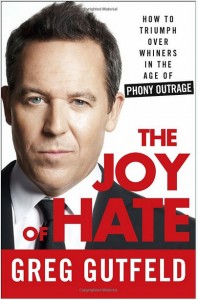
Fullscreen capture 12242012 65525 PM.bmpI am currently reading Greg Gutfeld’s “The Joy of Hate“, a fascinating book from what I’ve read so far. It is perhaps one of the few books I’ve enjoyed while disagreeing with most of what it says. Mr. Gutfeld is a co-host and funnyman on one of my favourite TV shows on Fox News: The Five. He also hosts another nightly show called “Red Eye” (to which I owe much of my sleepless nights in Edwardsville). Where we agree is our inherent rebellious streak: “I became a conservative by hanging out with liberals…and I became a libertarian by hanging out with conservatives“, he says. Watching him duel with his co-hosts on “The Five”, it is hard to disagree. But not all the time. By the time the reader is done reading Greg’s tirade on Sandra Fluke (the young Georgetown law student who became the poster child for the inclusion of contraceptive coverage in insurance policy for women in the US), it would be hard to separate him from a fellow right-wing co-host on the channel, Eric Bolling (and other right-wing ideologue you’ve ever heard from). Time and time again, he attacks Ms. Fluke of wanting “free” stuff from the government, sometimes from “all of us”, without noting if only for once that what the young woman was fighting for wasn’t government handout but an insurance system that treated everyone equally without discriminating against customers purely on the basis of their gender. It always took some stepping back to see from among the odium of Cable News chatter, but it was always clear to all who cared about the issue what Ms. Fluke represented. This particular chapter, since I have not gone too far into the book, has unfortunately cemented the reputation of the book in my head as nothing more than the same old, except this time coming from the mouth of an otherwise smart, funny, and generally perceptive personality.

Everything else is fine, as they should be. Movies are showing “Argo”, “Life of Pi”, “1000 Words”, all of which I’ve now seen, and a few other inconsequential ones. When they bring “Lincoln”, “Django Unchained” or “Zero Dark Thirty”, I will have something to be excited about. The Mayans had predicted an end by December 2012. Here in Lagos, Nigeria, there will probably be no end at all, except to all the fireworks that have now taken over the air to celebrate the season. The harmattan haze will be gone, as will the crazy traffic that has become the lot of roads. People will return to work in January and some measure of sanity will return, if only in the form of broke returnees from holiday travels. Until then, a Merry Christmas to you.

His Remarkable Journey

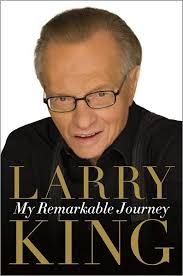
It’s not always a bad thing to live in a town where electricity is barely on for seven hours a day. In two days, I have completed a feat I couldn’t while I was in Edwardsville. Larry King’s autobiography My Remarkable Journey. Covering adventures of the young son of immigrant parents from Europe, the book tells the story of how the Jewish kid Larry Zieger who never went to college made it through the very many interesting historical epochs of America to become the famous Larry King recognized worldwide for his voice, his show and his suspenders.

Like many autobiographies, there is the question of whether Larry the broadcaster was the same as Larry the autobiographer-the-writer who was able not only to remember in great detail many of the remarkable events of his childhood, but was able to write them in very fine prose in the 294 paged book. How much of it is fiction or embellishment of the ghostwriter, and how much is rooted in real facts of the broadcaster’s pen and memory?

He wrote of his first meeting with JFK, (it was a mild car accident in which Larry had run into the future president), he wrote of walking mistakenly into the full glare of cameras in the courtroom during O.J. Simpson’s trial without being a witness, how he won a lottery on just $2, and how he almost bribed the president elect Richard Nixon before the latter assumed the presidency. There are very many tender and happy moments in his life, and he recounts them with nostalgia. His many marriages (he was married eight times to seven women), his arrest and financial troubles at a time, his heart attacks and surgeries, and his relationship with his first son Larry King Jr. who he met when the latter was already thirty-three years old all took pride of place in the book.

For decades, the now seventy-seven year old man had helped people to open up themselves. In this work, he does it himself and does a good job of it. Fans and friends who would like to know his opinion of George W. Bush, Nelson Mandela, Barack Obama, Richard Nixon, Bill Clinton among others would do well to pick up the book. Talking about retirement, he hinted that his contract with CNN would be up by 2011, and he still doesn’t feel the need to retire. Hear him: “If I went off the air, what would it do to the ninety-nine year old woman who credits her longevity to watching my show every night?” That’s Larry King.

I’m now unto V.S Naipaul’s Miguel Street. This time, unlike the man making “a thing with no name”, I’m sure I’ll complete it in record time.