Onward Aké – A Travelogue

by Torinmo Salau


I got to Oshodi few minutes past 7am, my plan was to take off from Lagos before 6:30 Am. Rather I found myself panting under the weight of the Khaki travel bag strapped to my back, frantic to get on the next vehicle en route Kuto, Abẹ́òkuta which finally set out few minutes to 8am.

The grey Sienna car was badly dented and its rear windscreen had a slight crack which ran diagonally across its full length. The vehicle moved swiftly, faster than I even envisaged and within 30 minutes, we were approaching the tollgate. With Ma Lo by Twa Savage and Wizkid playing quietly in the car, I tried to go through the Aké Festival program schedule on my Samsung tablet.

“Are you going to Aké too?” the husky voice who sat beside me asked, jolting me out of the thoughts which clouded my mind.

“Yes”. I wondered why he was smiling sheepishly and from the way the words rolled off his tongue, you could guess his name would either be Emeka or Ifeanyi. But I did not guess right, his name was Chike.

After conversing for some minutes, I discover that Chike is a lawyer but he daylights as a freelance writer and editor.

“Shit I forgot my drugs,” he said midway through the conversation, mumbling words I barely understood.

“I forgot my antidepressants, he continued, sounding more distressed with anxiety ripping slowly through his face. His anxiety was palpable as he shifted from left to right in his seat, visibly shaken from the reality which just dawned on him.

“Are you depressed?”
Then I realized that was a dumb question to ask, if he is not suffering from depression, then why is he is shaking like a crinkled leaf which has lost its moist to the parched harmattan wind.

“Yes, I am depressed. But I will be fine without the drugs, he said shrugging his shoulder limply. Then he turned his back towards me, looking out of the window and staring at lush green vegetation which lined the road.

We were way past Mowe-Ibafo and its environs, I knew this because there was no sight of human habitations along the road again, just signposts after signboards and signages which had rusted and were barely legible to read.

“Sorry to hear, you are suffering from depression.”

I said the word ‘Depression’ almost inaudibly, carefully curating every word I spoke like somebody walking on eggshells, eggshells which can crack just by the slightest omission of a letter.

“Please don’t be, Chike said looking away from the window, smiling, I guess he was trying to hide his disappointment.

“I get a little cranky when I miss my medication but I will be fine, it’s just for two days”.

This was the second time he was saying, “I will be fine” within the space of five minutes.

While he sounded fairly reassuring, I still felt worried. Worried by the fall in his countenance and the dark shadow cast over the bubbly persona he exuded at the onset of the journey. Wondering what the resultant effect of missing a pill or two could be, wondering why he had to repeat himself if he would really be fine?

Then the journalist in me kicked in.

“How long have you been feeling depressed?” I asked with my curiosity etched up, hungry to dig down the layers of this story, hoping it is not what I think it is.

“Two years thereabout”.

“Besides antidepressants medication, why didn’t you explore other means of managing this condition?”

“I did. I tried therapy first but it was quite expensive. Then I switched to a psychiatrist, the doctor placed me on drugs which have been more effective than therapy”.

“But contrary to what I am aware of, therapy works best, better than tying your daily existence to a bottle of pills?”

“Yes it does, for some people. But the antidepressants help to balance my moods, keeps me from bouncing from one end to the other.

“Are there any side effects to antidepressants?”

“Yes of course, especially the withdrawal symptoms which varies among individuals, ranging from anxiety, insomnia, nausea, fatigue amongst others. It can either be mild or severe.

Chike turned his back to me again, but this time, he wasn’t looking out of the window. Rather, just staring at the brown threadbare carpet on the floor of the car, which was caked with red sand. By then the song playing in the car was ‘Joromi’ by Simi, with light chatter from fellow passengers, some talking about the Spanish La Liga while others were lamenting the epileptic power supply across the country. But for few seconds, there was a transient suppression of verbal expression. The gulf of space between us was taken up by silence and it stood there for what seemed like an eternity.

Though I pretended to read a book, Chike’s words kept throbbing my mind. His mental health struggles mirrored exactly what I was going through but what I was also denying and the more I looked in, the more I saw a reflection of myself.

On some days, I am just floating through space, watching my life from a distance as my dreams and ambitions vapourize into thin air, without any drive to rescue them.  Though I feel sparks of euphoria and drift to a different time space with my heart clustered with sugary fantasies tickling my taste buds, it is not for too long. Reality always lingers and thoughts of pulling the trigger moonwalk across my mind often. I want to run away, yet I am too scared to die.

I was excited as the car approached the ‘Welcome to Ogun state’ signboard. I could feel its momentum rising to 120KM/H, as the driver drove past the Governor’s Office which was painted in the colours of the national flag, heading into town.

***
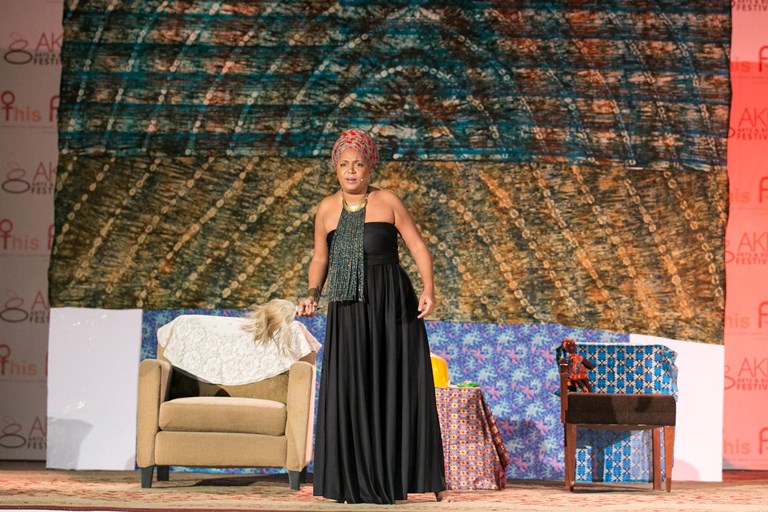
While this was my second visit to Abẹ́òkuta, the city of rocky hills within the space of a decade, it was my first time at the Ake Book and Arts Festival, the fifth edition of AKEFEST. An annual literary, art and cultural event which pools authors, creatives, writers, artists, musicians, activists to share their work and ideas. It is no doubt a booklover’s dream as it offers the opportunity to interact with some of the major voices in the contemporary African literary scene.

I found the theme for the 2017 edition of Ake Festival, ‘This F-Word’ really intriguing, this was undeniably a profound time to have this conversation and stanchly confront the issues revolving around it. But the big cherry on the cake was the headliner for the event, Ama Ata Aidoo. Renowned poet, novelist and feminist. My favourite amongst her books is Anowa, a Ghanaian play about a young girl who rejects suitors proposed by her parents and marries a stranger, Kofi Ako. Kofi is angered by Anowa’s attitude of being a modern women and asks her to leave when she could not conceive a child. But Anowa discovers later that her husband had lost his ability to bear children, so the fault was his not hers. This discovery of the truth forces Kofi to shoot himself while Anowa drowns herself.

The trip ended at Kuto, it lasted for about 90 minutes. As luck would have it, the location of the literary festival, Arts, and Cultural centre was situated right beside the bus park, along Ibrahim Babangida Boulevard, Kuto. Chike and I were the last passengers to highlight from the car, I mumbled a short prayer to the heavens, grateful for the miracle of surviving the road.

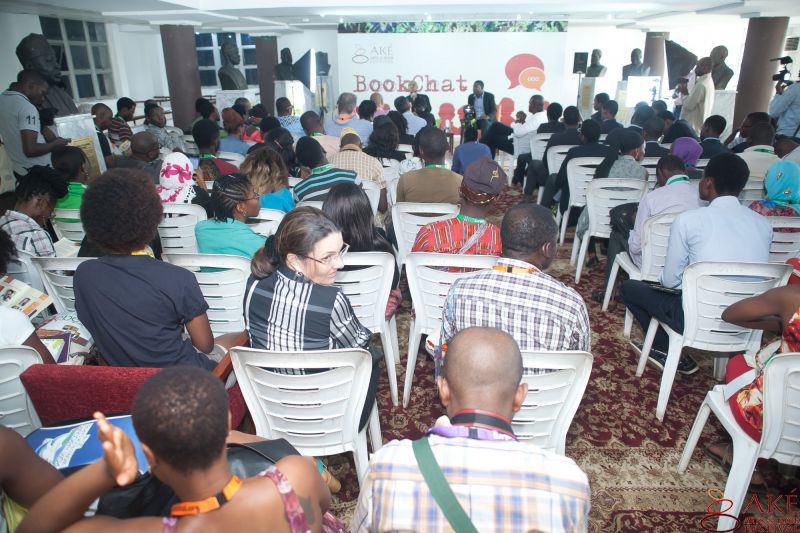
Though the literary festival was a weeklong event, precisely five days from November 14th – 18th, 2017, I arrived at AkeFest on Day 4, Friday, hoping to still maximize the best of the event within the last two days. Chike and I exchange phone number and parted ways, promising to stay in contact with each other. He wanted to hear Toni Kan speak but I ran off to the current session underway, Book Chat with Alexis Okẹ́owó and Dayọ̀ Ọlọ́pàdé.

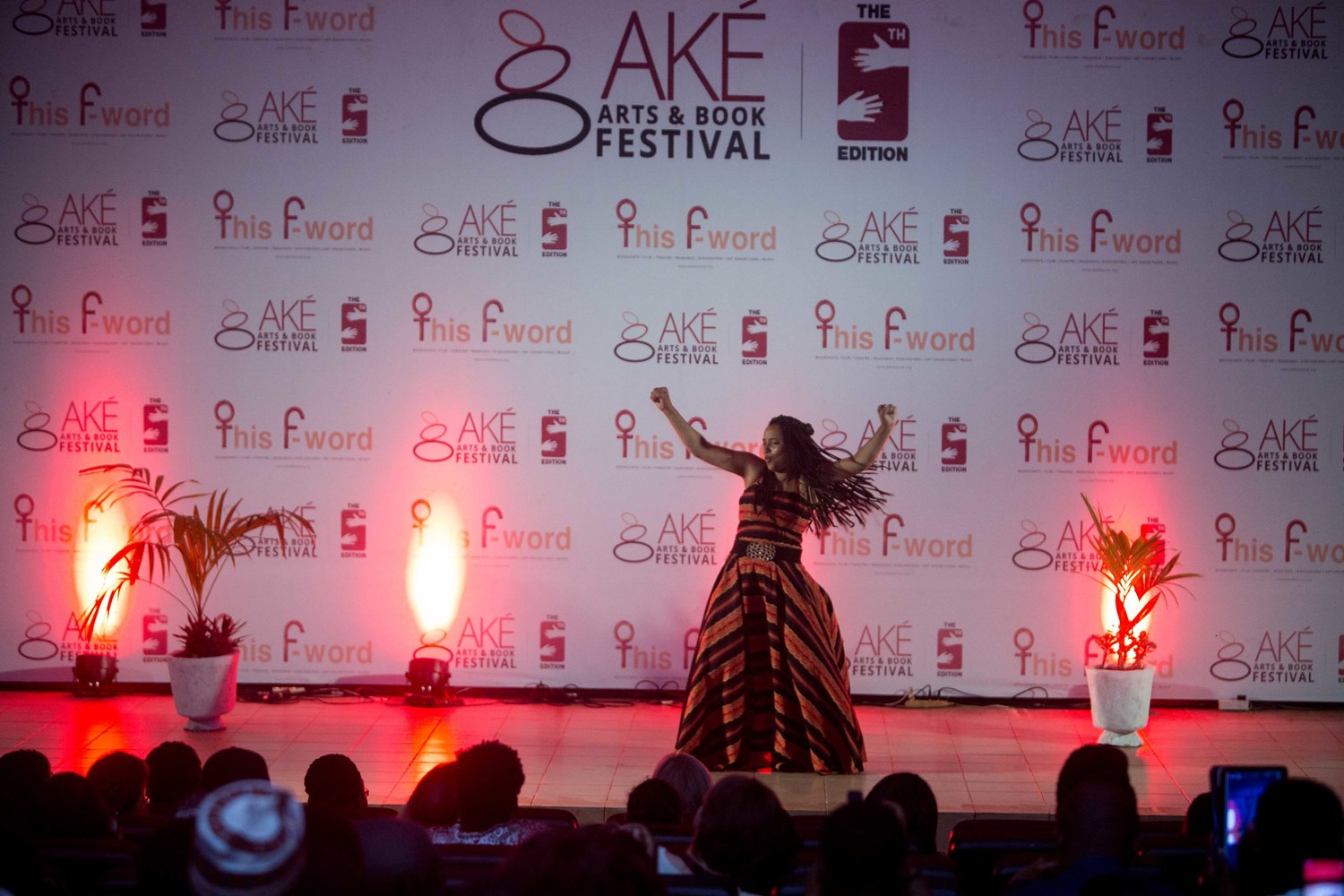
Storytelling with Mara Menzies on The illusion of the Truth was an enthralling moment as she told a Kenyan story of how Gikuyu women were not permitted to eat meat. Mara’s undulating body rhythm and the subtle tenor in her voice added more spice to the story. The fork in the road was one woman’s search for the truth and determination to fight the cultural stereotype which beleaguered women in her community. The day ended with a stage play by Yolanda Mercy on Quarter Life Crisis, a monologue which mixes expressions of spoken word and addictive baselines infused with a side dish of comedy. Most individuals go through a quarter-life crisis, but they don’t know it. Just like Alice, the main character in the story, we are swiping from left to right. Young, exuberant yet confused, not knowing what to do with the blank cheque called life, given to us. Though everyone around her thinks they know where they are going in life, the stage play which shows Alice trying to find ways to cheat growing up ends with a hilarious climax. However it doesn’t end without asking the audience with these two questions, ‘What does it mean to be an adult?’ and ‘When do you become one?’

Dusmar Hotel
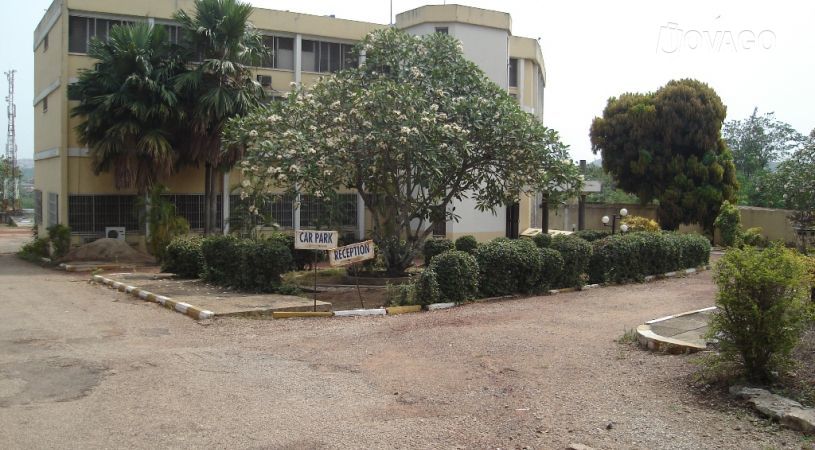
I retired for the night at Dusmar Hotel, situated next to the Art and Cultural centre which saved me an extra cost of commuting within Abeokuta to the literary event. The hotel’s reception struck me with a major throwback to the mid-90s, refreshing fragments of my memory littered here and there. The furniture and furnishings were quite antique. The windows, still the same old model fitted with louvres reminded me of an incident I did not want to remember and I would rather not talk about it. But I found myself wondering why a hotel bore this type of window fittings even in the year 2017, though mildly nostalgic yet largely traumatizing.

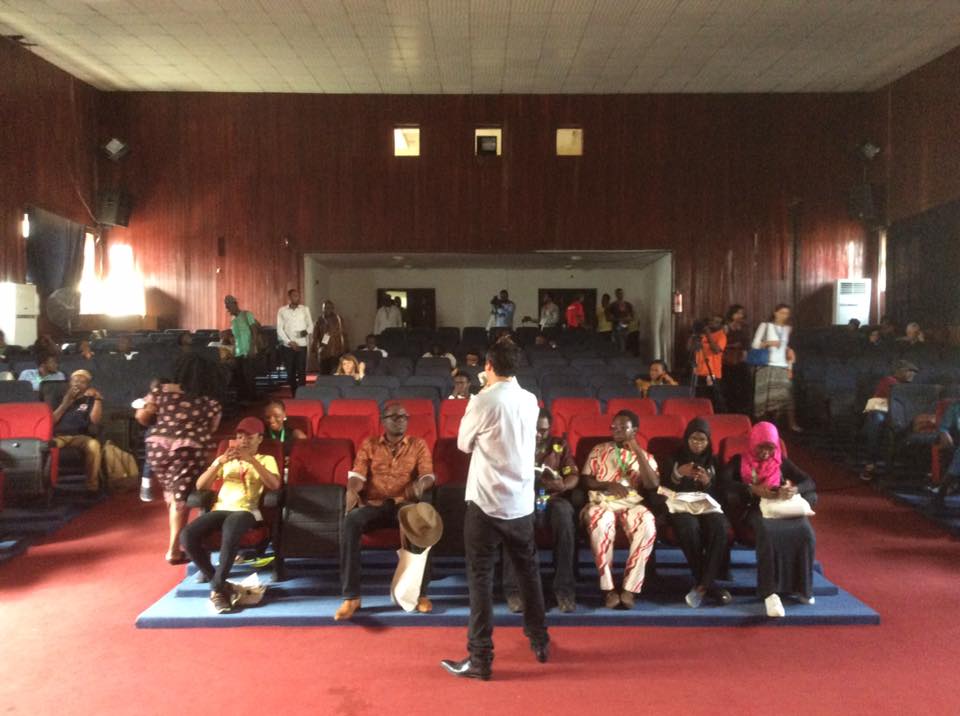
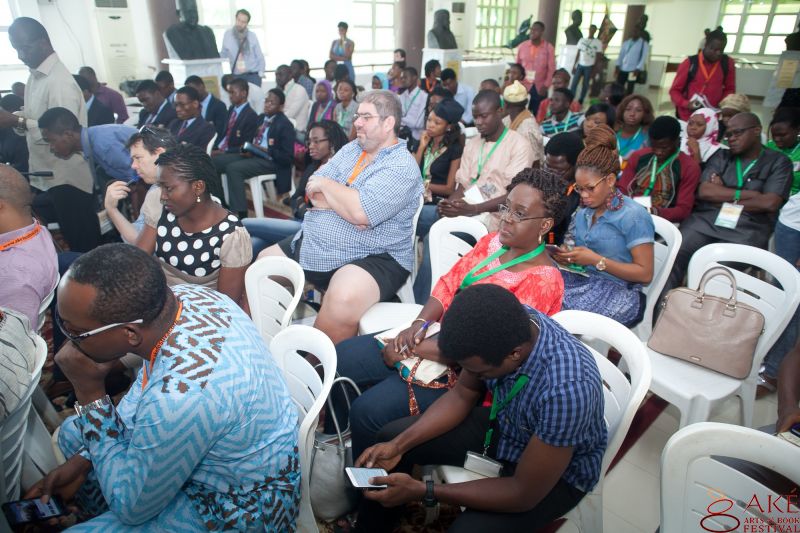
Day 5, Saturday, the event was winding down but more people were still pouring it. As the literary festival teetered towards its climax, everything became fast paced. People frantically buying discounted books and F-Word books from the bookshop. The flashlight of cameras everywhere you turned to, as people tried to seal the memories and friendships formed within the space of five days. There was a book signing spree, authors inking their thoughts on books purchased by readers and their fans which was consummated with the millennials’ trademark autograph, Selfies!

My highlight of the day was the Life and Times session on Ama Ata Aidoo. The renowned author who has been writing for over sixty years spoke liberally about her life, work and feminism. It was an emotionally charged atmosphere for many in the hall as she paid an emotional tribute to Mariama Ba, Flora Nwapa, Buchi Emecheta and other women pioneers of African writing.

“I hope you will extend the love and appreciation, you have shown me to my sister writers – living and past.” But what stuck with is the last line of one of the poems she read, “A girl’s voice doesn’t break, it gets firmer.”

***

I returned to Lagos on Sunday morning with a belly full of feisty aspirations, determined to change my misconceptions about feminism. Also to commit myself to unlearning and relearning, as the words of Mona Elthaway persistently rings in my ears, ‘Fuck the Patriachary’. Part of the main insights gained from the Ake festival is the universality of our experience as women whether black, white, or queer and why it is critical to challenge the elephant in the room, especially peculiar societal norms and beliefs which have repressed us decades.

____________

Torinmo Salau’s work has been published online and offline in literary publications, magazines, and anthologies.
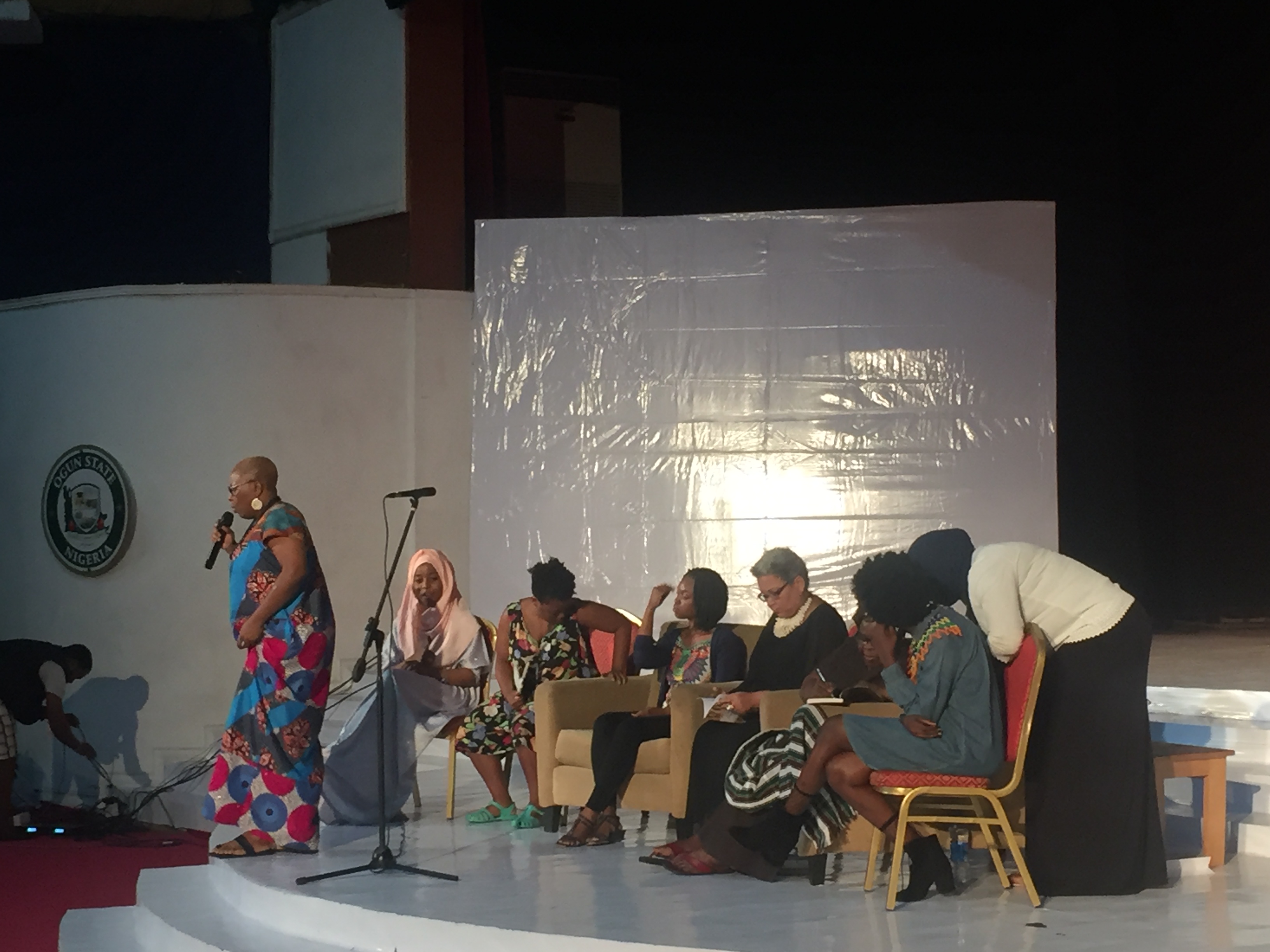
Aké Festival (2017): A Volunteer’s Recap

By Deaduramilade Tawak

I decided to volunteer at Aké for the festival this year because I wanted the experience of what it was like to be on the other side. I am not new to volunteering, whether for events or organisations, but if I was accepted, this would be the first time that I’d be volunteering for an event of this type and scale. I had applied to volunteer last year, but was not selected (I went as a visitor, but only on the last day because my leave wasn’t approved), so I wasn’t very hopeful.

Photo credit: David Adélékè

Three weeks to the festival, I receive an email from Ify (who is the Administrative Manager for the festival) saying I have been selected as a volunteer. In the email is a document with Terms and Conditions to be signed, but I’m still waiting on leave approval. The document also includes the rules and regulations for volunteers: no chewing gum on duty, no smoking on duty, no asking guests for money or favours, no fighting and so on. Finally, two weeks to Aké, and two days before the deadline for accepting the volunteer offer, I receive confirmation of leave approval, so I print, sign, scan and send the document.

Reinhard Bonnke’s farewell rally will be ending on Sunday, the day volunteers are expected to arrive in Abeokuta for the festival. We decide to leave as early as possible to avoid traffic, but not too early that we’d have to wait hours before seeing Ify, who is in charge of volunteers. We being myself, Afọpẹ́fólúwa, and Opẹ́yẹmí (whom I’d found by asking around for volunteers leaving from Lagos). I’d gone to Abẹ́òkuta myself the year before, and although it wasn’t a bad experience, I felt that I’d be more comfortable if I had familiar faces on the journey.

Photo credit: David Adélékè

We leave Lagos shortly after 11am, and I sleep for the entire journey and wake up at the exact moment we arrive at Kuto Park, Abẹ́òkuta, not far from the Cultural Centre where the festival will hold. We take a cab to the centre and meet another volunteer (Ona) waiting. We have 4 hours to kill. Fortunately, I have books, my phone, and three other ladies to keep me company. Slowly, other volunteers begin to arrive. First Yetunde, another first-time volunteer, then Stephanie, another veteran volunteer, and then a stream of young men and women I do not know or recognize.

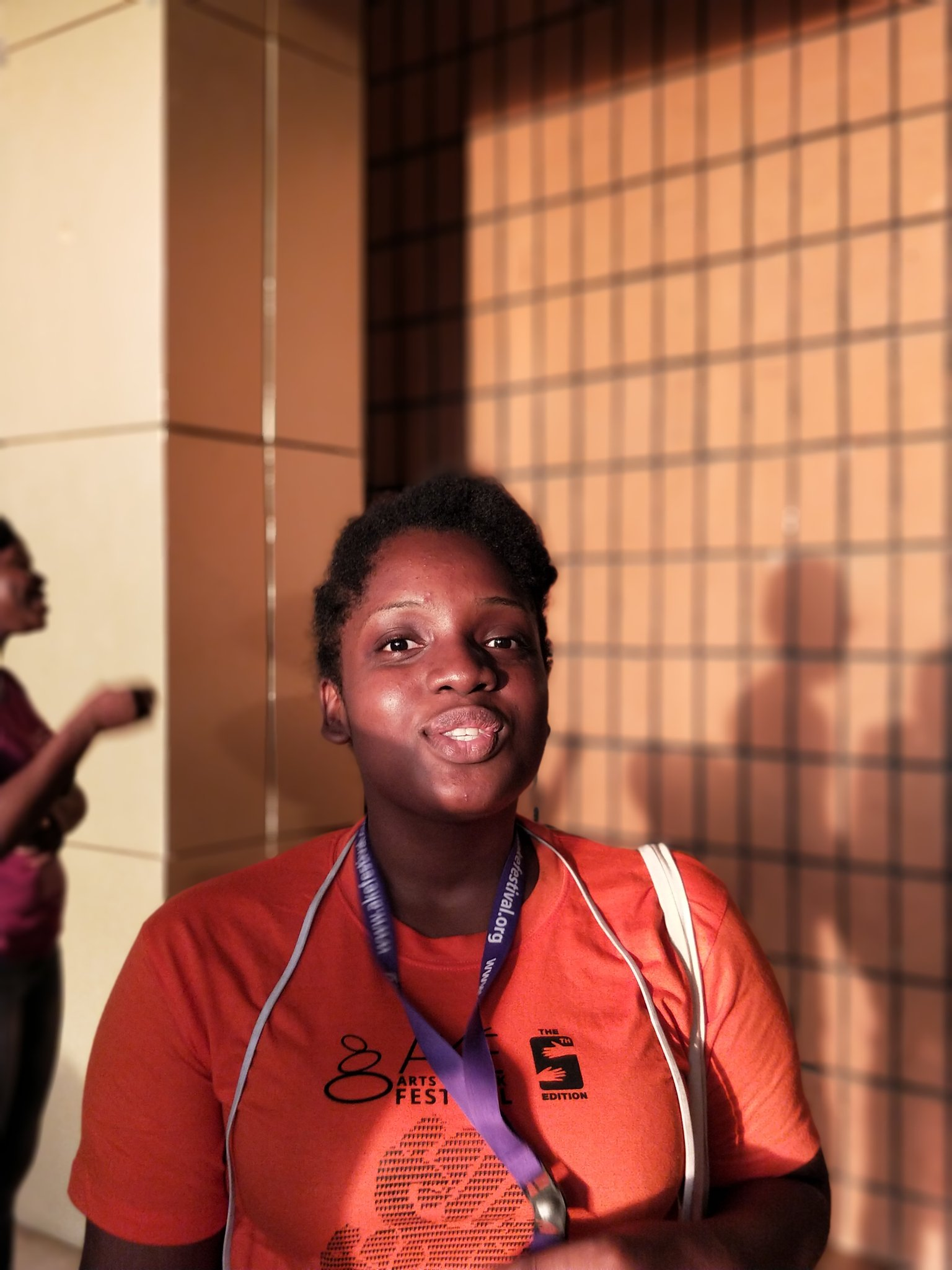
Ify arrives and we have a “family meeting” where we introduce ourselves — most people are from Lagos, many of us are writers — and are given a quick break down of what the week will be like. Lọlá Shónẹ́yìn arrives at some point. The truck with the books and the other things we’re supposed to sort hasn’t arrived, so we headed to our hotel to group ourselves into rooms. I pick Ona as my roommate. Dinner of jollof rice appears soon after, and we rest a bit before heading back to the venue to help offload the truck. When this is done, we’re each given two orange volunteer shirts, then it’s good nights.

On Monday, we’re grouped into teams, and I’m placed at the registration desk. I’ve been warned by my friend, Ọpẹ́, who had volunteered for the past two events to try to avoid that designation. Being at the front desk means that you miss most, if not all, of what happens during the festival. She’s right. I miss out on all the interesting panels, but catch pieces of conversations as people move from one panel session to another. There are five other people with me including Ona, Yétúndé and Stephanie.

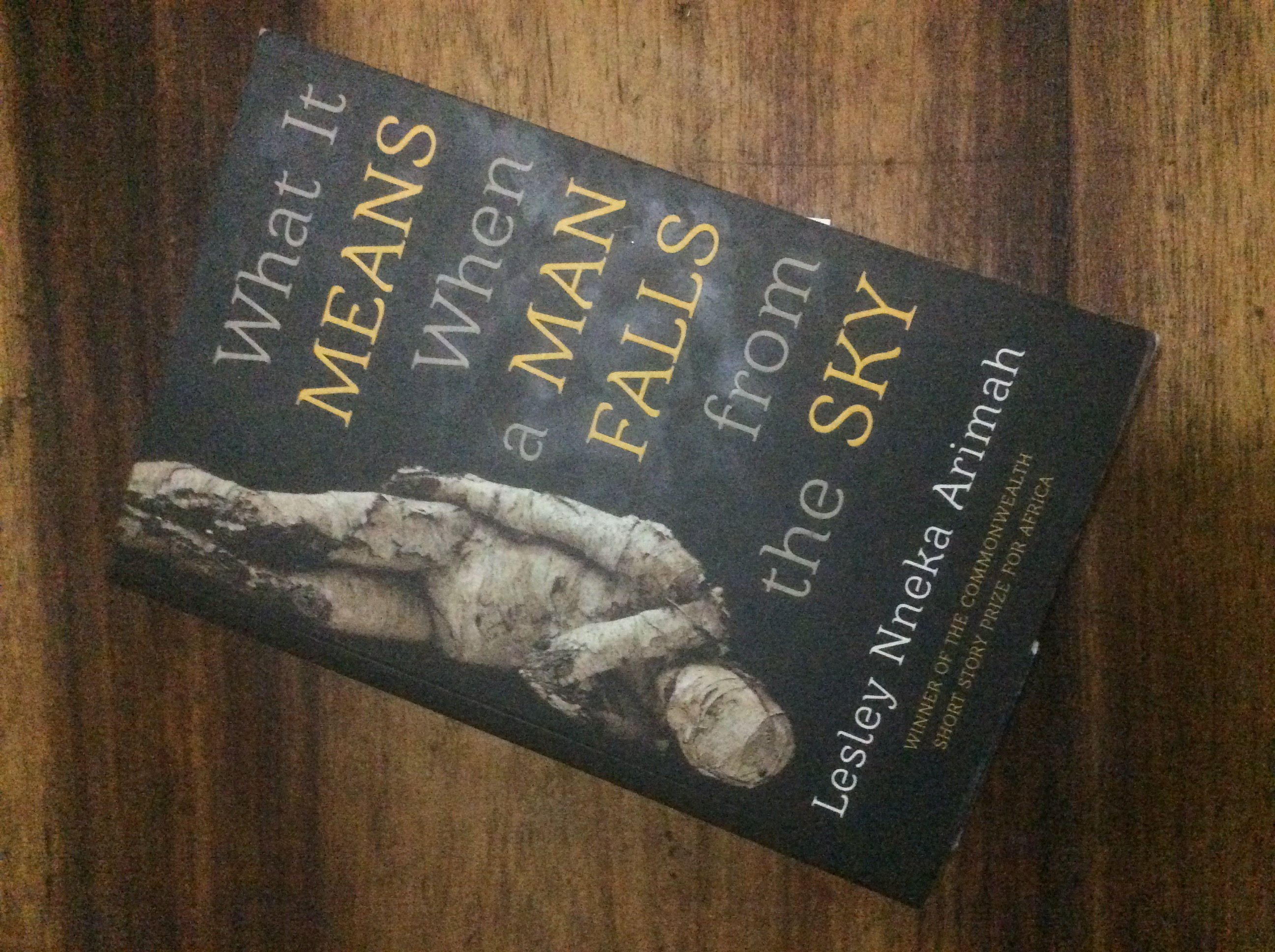
We start with sorting bags and tags for guests, visitors, press, and crew. There’s some downtime, during which I read my copy of What It Means When A Man Falls From The Sky by Leslie Nneka Arimah. There’s more sorting, packing, getting to know each other, setting up, tweeting, chatting, and reading. Somewhere in the middle of all this, there’s a call. I have to leave for Lagos very early the next day. I inform Ify of this development.

I leave for Lagos at 7pm AM, my business takes longer to sort than I expected, so I get back to Abeokuta at about 5pm. I’m told that I haven’t missed much, and registration starts shortly after I arrive. I work out a system to get through registration quickly. We register guests and attendees till around 9pm.

From Wednesday till Saturday, I spend all my time at the registration desk, except for when I go for food breaks or toilet breaks. This is where I get Mona Eltahawy to sign my copy of Headscarves and Hymens. This is where I get to meet Bim Adéwùmí, who is one of the major reasons I decided to attend the festival. This is where I finally put faces to names and Twitter handles. This is where I develop an addiction to kòkòrò. This is where I catch up with people I never see, except at these things. This is where I find out about and enter the Aké Festival giveaway, which I will come to later. Being at the registration desk means that I meet almost everybody who came for the festival. It also means I have to smile a lot, even when I’m tired and hungry, and when I’m upset because almost everybody else who’s supposed to be helping at the registration desk is not.

One of the highlights of my time at Abẹ́òkuta isn’t at the festival, but in a small hotel room party a few minutes away from the hotel where volunteers are lodged. Another highlight is the Palmwine and Poetry night. I caught the tail end of the event, as we closed the registration desk at about that time. I came in in the middle of Poetra’s relatable poem on feminism, and I also heard Koleka Putuma perform a few poems. The brightest highlight is winning the book grant.

At the end of the event, Lọlá Shónẹ́yìn gives a thank you speech, after which I am announced as the winner of the Aké Festival book grant. I have won N25,000 to buy books at the festival bookshop. The night, and the festival, ends with a party.

The next day, we go back to the Cultural Centre to pack up the bookshop, I redeem my books, and combined with books received as late birthday gifts, I leave Aké with 16 nooks, and the stipend volunteers receive at the end of the festival.

Aké is always a delight.

Photo credit: FuadXIV

Even if you’re stuck behind a registration desk for all 4 nights and 3 days of the festival, and have to make do with a barely good DJ (last year’s DJ was great) at the closing party you’d been looking forward to since Day 1. Being surrounded by friends and people you admire, Africa’s best writers, upcoming writers, book lovers, and art aficionados, and managing to listen in on concerts and performances happening close to the front desk make up for it.

Literary festivals are delightful because they are a few days of mingling with people, who for the most part, enjoy the things you enjoy. I have attended Aké as a [one day] visitor, now, a volunteer, and, next year, a full event visitor, or maybe a guest (a girl can dream).

______

Déàdúràmiládé Tawak is a reader, writer, and researcher. She was the second runner-up in the CREETIQ Critic Challenge 2017, and has had her flash fiction, essays, interviews, and reviews published in Brittle Paper, Athena Talks, Africa in Dialogue, and Arts and Africa. She lives in Lagos and tweets from @deaduramilade.

Aké Festival 2016: How History is Made

A festival is just a festival, isn’t it? A gathering of tribes, a place of ideas and relationships, a week-long commingling of the most cerebral kind. But it is also something else: an annual attempt to write the history of the continent’s literary track in the minds of its practitioners and for posterity. This latter purpose is usually the least stated on the invitation brochure.

ake2

Participation in this year’s events, I’ve said elsewhere, is my most memorable, but not for the obvious reason of my meeting (and working with) Ngugi wa Thiong’o who is the guiding light of my work in indigenous language advocacy. Or perhaps that is the reason. It won’t matter anyway. The history of this year’s events is being written in different inks and by different observers towards different but complementary ends.

A while ago, someone wondered whether canons are being built around conversations on African language literature, and I responded that festivals, Facebook conversations, and interactions surrounding relevant seminal works of criticism all contribute, in small ways, to the complete tapestry whose form may not always be evident from the current standpoint of one literary thread. I still believe that. For all the memorability I’ve ascribed to this year’s event, I was not there when this apparently notable conversation took place, and I’m all the poorer for it. But the questions raised by this subsequent review of the event by Mr. Rótińwá, separate from the mass cheering on the spot that may have convinced a casual observer of a different takeaway, will live on. And there are many more of those.

A panel I moderated (video below), set up ostensibly to explore the similar and divergent themes in the memoirs of two important African writers (of different languages), ended up on an even more memorable note: the relevance of archiving and the role of manual writing in the preservation of a writer’s legacy and growth. When I thought of questioning the Congolese writer Alain Mabanckou about what he described as an obsessive write-and-destroy habit that had his travel box littered with disposed writings on paper that he no longer liked, I wanted to satiate my curiosity. But I also thought of the episode as possibly illustrative of the obsessiveness of writers generally during the process of creating. In the end, I – and, as it turned out, the audience – got enlightened by a more substantive conversation around the place of preservation of paper drafts (and archiving in general) in the understanding of the writer’s creative and personal trajectory, thanks to Emma Shercliff, Ngugi wa Thiong’o, and Alain himself.

What the conversation illustrated for me, among others, was a lack of consensus, today, on the “proper” way of creating and shepherding manuscripts. Those of us who grew up in the internet age have taken for granted the benefit of crowd storage and the power of an easy copy/paste/delete on a word processor to care about the true grit of manual writing, crossing out, and re-writing until the draft is perfect, while still keeping the original draft either as a guiding light of the initial intention and insurance against future impulsiveness or as sentimental record of the individual step in the process. But more than that, as Alain and Ngugi pointed out, there is also a financial (as well as archival) incentive for this old-school process: there are scholars, students, and future enthusiasts of the writer’s life and work that will pay a fortune to have access to the initial drafts of whatever eventually becomes a well-accepted work. This helps the culture of criticism and better opens up the writer to perhaps better study.

When he writes on the computer, he said, Alain treats each line of writing as an indelible record that needs special care and preservation. As he puts it, he has different versions of the same work on his computer and would rather create a new one each time than edit the already written one – in spite of the ease given by computers to do so. Isn’t that fascinating? To think that the ubiquity of computers isn’t yet sufficient motivation – in relevant writing quarters – to ditch the drudgery of manual or manual-like documentation. Perhaps not enough has been written about this rebellion and/or the benefit of such active labour in this age of 140-character fickleness. Forget the fight between the Kindle and paperback books. Pen vs Keyboard is where the conversation needs (and will continue) to happen. I will likely forget many of the other questions I asked on that panel but the response to (and conversation around) this one on pen and paper writing and documentation will, and should, live forever.

ake3

The Makerere Conference of 1962 is notable today for a particular conversation on the use of English (and other colonial languages) in African literature. Not much from that conference has lived on in popular lore as that particular debate has. In every edition of the Aké Arts and Book Festival, looking out for such usually short but relevant spark that outlasts a week of commingling has become my yearly obsession. It is to the credit of the organisers that the opportunities are many for such dynamic conversation, debates, arguments, fawning, performance, and even lust (as this report rebelliously recalls). But we remember differently, as it is often said, which is probably for the better. It all comes together eventually. And the culture is richer for it.

Memories from Ake (i): Okey and the Students

Last week, between November 18 and 22, writers and thinkers converged on Abeokuta for the second edition of the Ake Arts and Book Festival. It was also my second time of participating in the event, but the first as a guest. For some reason, the organisers thought it important this year to involve a linguist with but a finger or two in the literary pie in a festival of poets, writers and other makers of creative ideas. (Fake modesty out of the way, it was a beautiful, engaging, and stimulating event of which I was glad and proud to be a part). On Thursday the 20th, I gathered fourteen students from Whitesands School where I currently teach English, along with a colleague and award-winning journalist Bayo Olupohunda, into the school bus and headed to Abeokuta.

IMG_734910443236_885590758127197_8532045416560099830_oIMG_7317IMG_4475The drive to the quiet rockhill town north-east of Lagos has always been a delight, at least the second leg of the journey that begins on the Abeokuta-Owode Road. The Lagos-Ibadan expressway is still under construction and subject to surprises in the form of potholes, narrowed lanes, broken down vehicles, and diversions. For someone meant to host a Book Chat at 10.30 am on that same day, the choices are limited. One either leaves Lagos as early as possible so as to avoid all traffic-related delays, or sleep in Abeokuta in one of the luxurious hotel rooms already booked for guests at the Festival. If one is a teacher in a high school, traveling with students who have been brought to school by their parents and need to be returned to school on the same day; and particularly if one is a husband of a working wife, with a nine-month old baby who one would terribly miss if one were to take the second choice alone, the choices become hard.

We were supposed to head out of the school by 8.am, but by almost nine o’ clock, we were still stuck in Ikoyi traffic. By even the most conservative calculations, we were starting to be late. I began to worry that I might miss my session. The author I would be chatting with, notable columnist, journalist, professor, and novelist, Okey Ndibe, had just returned from the United States a couple of days earlier. How could someone from the US arrive earlier in Abeokuta than someone who lives in Lagos? How disappointing. Lola Shoneyin (poet and author, organiser of the Festival) would be even more disappointed, I thought, as I urged the driver to speed up as much as he could within sensible limits. By 9.30, Lola started tracking me via text messages. I assured her of my location, and pleaded that if I didn’t show up on time, my panel be swapped for someone else’s. She assured that if the worst happens, we’d postpone it for an hour. A few minutes later, a tweet went out that our book chat would begin at 11.30am. That was a relief.

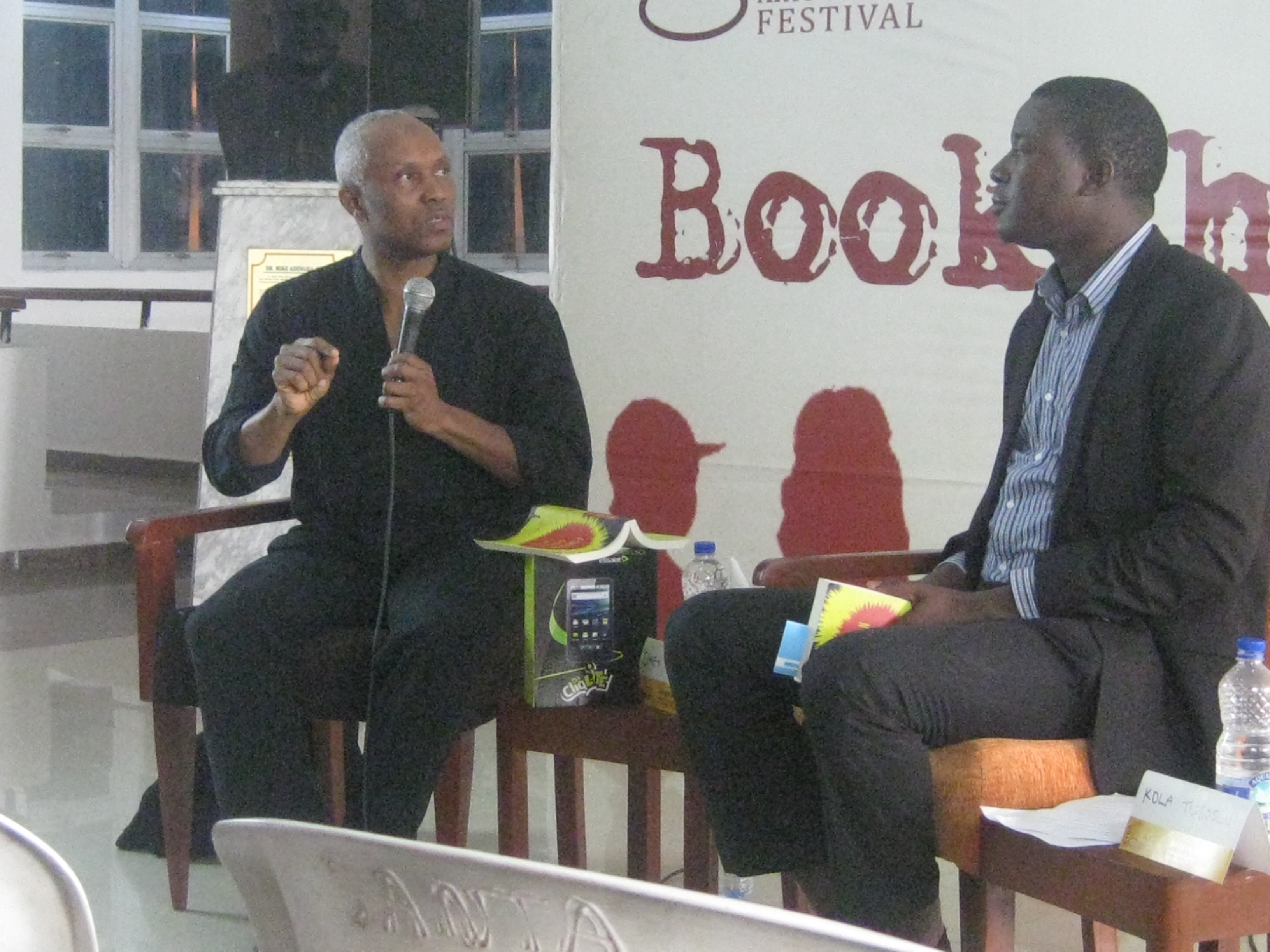
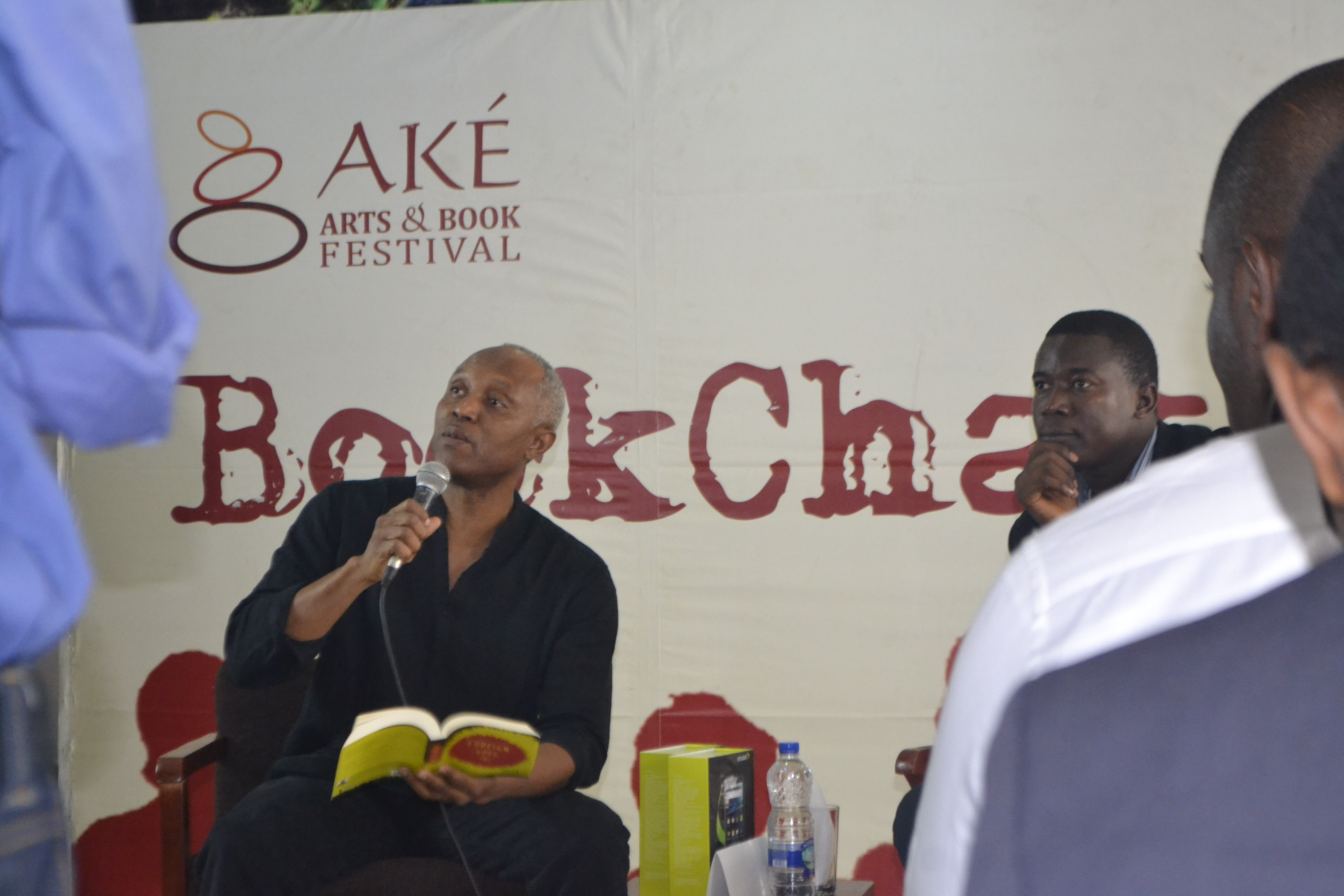
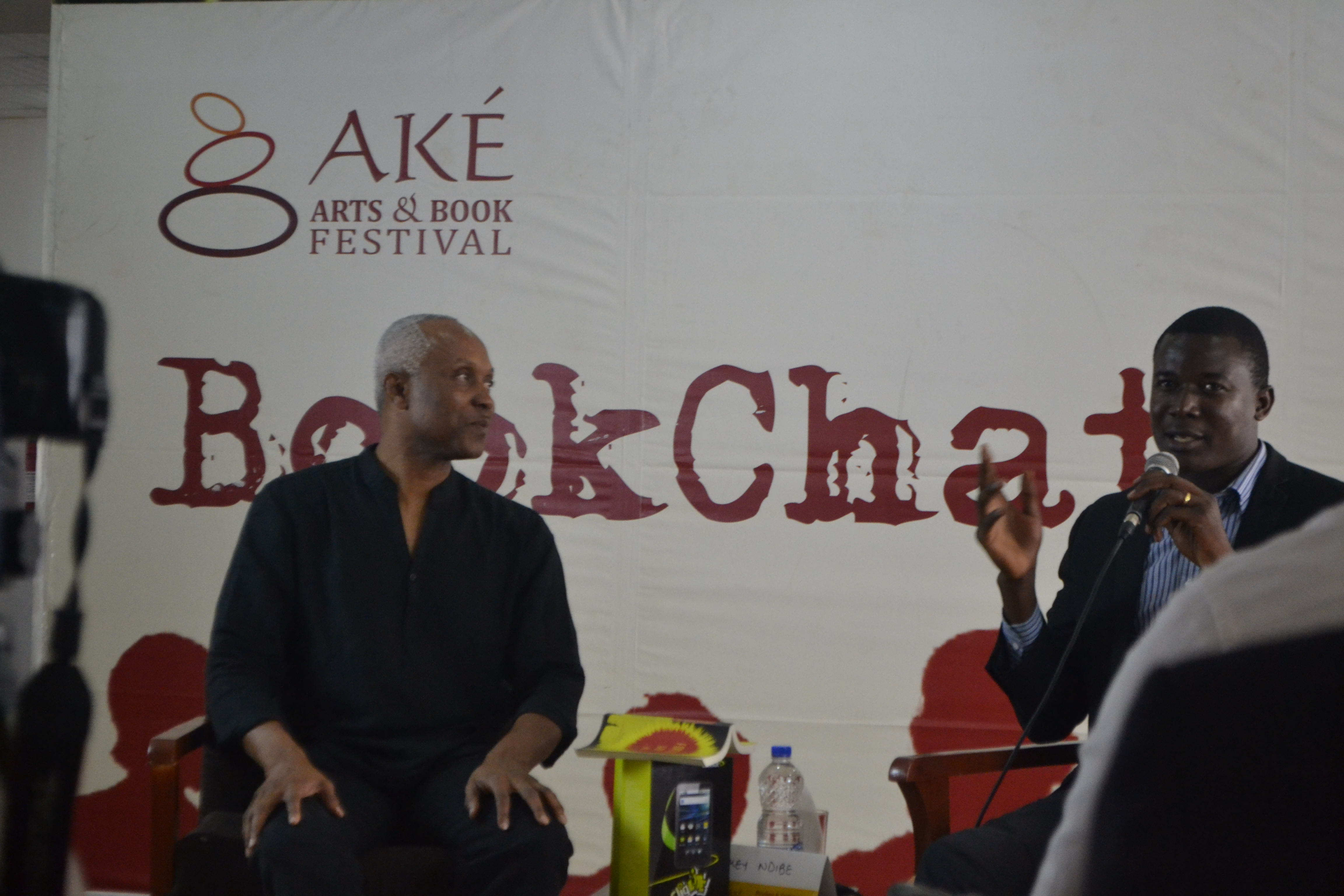
We arrived at the June 12 Cultural Centre, venue of the event, at about a quarter to eleven. Fifteen minutes later, I was in the hall meeting Okey Ndibe for the very first time. Weeks before, I read everything I could find about him on the internet. Some I’d read before, some I was reading for the first time. His life, work, and opinions have made him an interesting person and personality in the Nigerian literary and political space for a very long time. Conversations with other friends and colleagues about him have also guided me into a number of relevant points of inquiry. Our Book Chat was going to be one hour of conversation in front of a room full of writers and festival goers. Okey is a simple but dignified man, as his poise, dressing, and personality immediately showed. While he chatted with a few other folks around the hall, I glanced at a few of the questions I had prepared. His latest book Foreign Gods Inc is a fast-paced thriller of many layers of social and political commentary. I had two copies, one on my kindle, and one hard copy which a couple of my students had developed an attraction for on the way to Abeokuta. On arrival at the venue of the Festival, Lola Shoneyin hinted to the students that two of them would win an electronic tab for thoughtful questions. 

IMG_4527IMG_0774_DSC0131

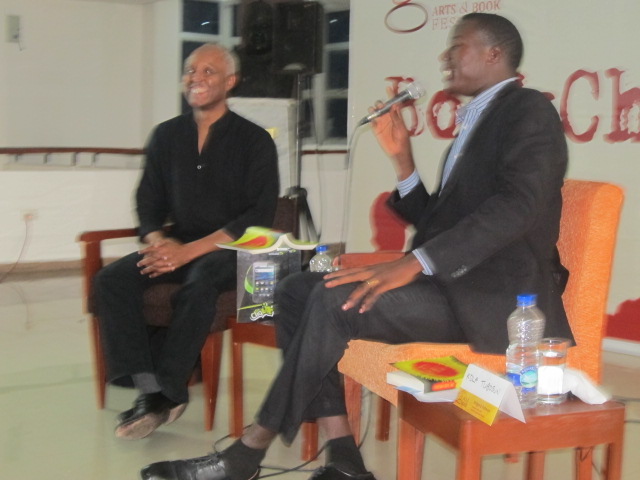
_DSC0121One hour went by like a flash. As I’d been told of him, Okey Ndibe engaged each question with the thoughtfulness and breeziness of a seasoned professor, with humour, friendliness, tact, dynamism and thoughtfulness. Why did he dump on James Hardly Chase so much? What does he mean by Achebe saving him from Chase? How did he meet Chinua Achebe and what was the relationship over the years? What does he mean by Nigeria not having a real national character? What is “an ethnicity of values” anyway? What influenced him to write Foreign Gods Inc.? Any influences from the real life event in Soyinka’s autobiography of having to sneak into Brazil so as to kidnap a supposed stolen god? How would Professor Ndibe like the book read: as an ethnographic material on African people, or as a migrant literature, like Chimamanda Adichie’s Americanah? How has the reception been so far? Would he like to read a part of the novel to the audience? By the time it was over, the seats had been filled, and the applause was genuine. I had a great time, and so did the students. Questions were asked, by the students and by other members of the audience, and we were done. Two students won tablets for their questions (and the rest were mad at me for not calling them when their hands went up. We resolved it on the way back to Lagos).

***

A few other questions went unasked, because of time: What’s the relationship with Christopher Okigbo and his family? He was afterall the keynote speaker at the Ohaneze Ndigbo event in Belgium in honour of that important poet about two years ago. Okey, being a young boy during the Biafran War, remembered a little of it, detailed in his essay My Biafran Eyes, how deep was that experience in shaping his upbringing? What does he think about language use in African literature? As a child of a culture with dying languages all around, how does he think that this can be reversed? Which writer in his generation does he consider an influence? What of older generations? And younger ones? He’s working on “An African Doing Dutch in America” – a memoir. What can he tell us about that? When will it be published? What was his experience as a Fulbright scholar teaching at Unilag? What inspired his first novel Arrows of Rain? He currently teaches fiction and African literature at Trinity College in Hartford, CT. What’s it like there? Has he stopped being harassed by the SSS at the airport?

***

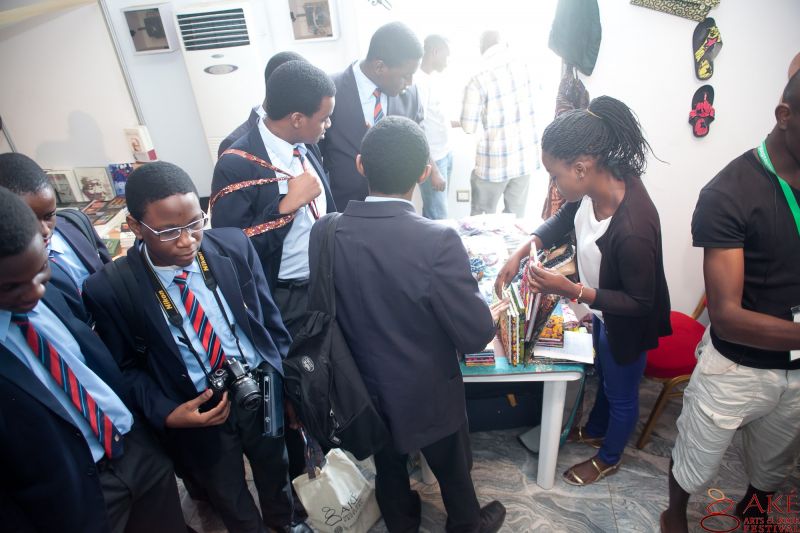
IMG_7331IMG_7271FB_20141129_15_27_57_Saved_PictureThe students split up and attended one more session. In the session involving the president of the Association of Nigerian Authors (ANA) Professor Remi Raji and author Yejide Kilanko, which was well attended, one more student won a tablet for his thoughtful question to the author. He seemed very pleased. Their day being sufficiently made, not only by their winning of electronic tablets but the idea of meeting and chatting with world-famous authors and learning a few things they hadn’t heard about before, they headed to lunch downstairs by the festival bookstore before heading back to Lagos. There a few of the students met with some other writers, chatted them up about stuff, took autographs, bought books, and generally took in the festival air.

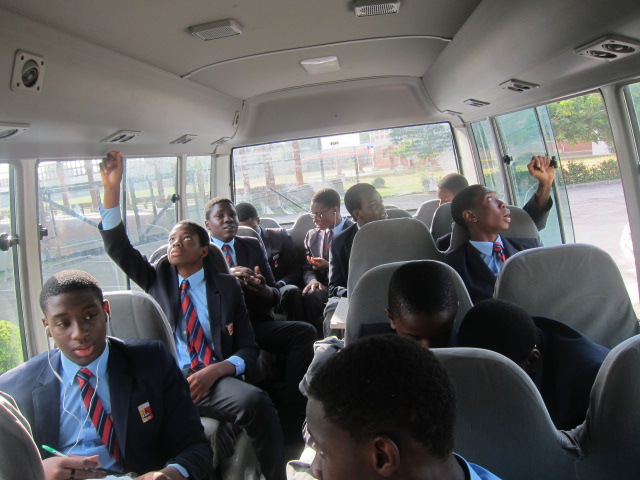
In the bus on the journey back, conversations ranged from the shock of realizing that their English teacher was a relevant enough person to have been invited to take part in a book festival (“You never told us that you were a writer! What book have you written? Aren’t you Mr. Olatubosun? Why does it say Kola Tubosun on the guest list? How did you know Okey Ndibe, Lola Shoneyin, and all these people? Do you know Wole Soyinka too? Where is Wole Soyinka anyway? Why isn’t he ever here when we’re around? among others) to the choice of theme in writing (“I write too, you know, but I never knew that one could be famous by writing African stories”, “Are you serious that people will buy your work if you set it in the Nigerian environment rather than abroad?” “I never knew that. All my characters have English names.” “How do I get published?” “Would you read my work?” “Can I come next year? Alone?” etc).

The most heartwarming comment followed later, halfway into the trip homewards when lethargy and torpor had us all but sprawled around the seats: “If I don’t make it into the final list of students coming here next, or after I leave school a couple of years from now, I’ll try to find my way to the next Ake Festival, or another one in the future.” Seems like a comment that the organisers will thoroughly enjoy. In the end, the decision to bring them along seemed like a great idea.

____________

Photos courtesy of self, Akefestival.org, and Chidera Ezeokeke, and Tamilore Ogunbanjo

Indigenous Language in Literature: What Hip-Hop Can Teach Us

One of the highlights of my participation in the recently concluded Ake Arts and Book Festival was at a panel I moderated titled “Teacher Don’t Teach Me Nonsense: Taming Colonial Tongues”. In that panel were Mukoma wa Ngugi (writer and son of prominent African writer and perennial Nobel favourite Ngugi wa Thiong’o), Kei Miller (a Caribbean novelist and poet), and Eghosa Imasuen (author and publisher from Kachifo Farafina). Our task was to examine the use of languages in contemporary fiction by African writers, perhaps with hopes of prescribing a better dynamic for the future. It was during that panel that this new Mabati-Cornell Kiswahili Prize for African Literature was first announced, a prize that broke new grounds for being the first major prize on the continent that awards literature in indigenous languages.

The discussion on the panel had focused on this issue itself, examining the complexities of contemporary language use and the logic in the argument of those who insist that English has already taken root as one of Africa’s languages. If not the largest, certainly the one with the most reach around the continent. But nagging us back to the importance of using languages native to the continent in literatures documenting hopes, aspirations and experiences on/of the same continent, was the embarrassing lack of a large industry among intellectuals for publishing in the native language. Excepting Miller (who is from Jamaica) whose first and only language is English and its creolized cousin (the Jamaican patois), the argument eventually coalesced into the diametric poles of Ngugi’s description of the use of English in the third world “metaphysical empire” and Eghosa’s acceptance of English (this time of the Nigerian variation) as a first and most intimate language. It’s an old debate, featuring Ngugi wa Thiong’o and Chinua Achebe. I highly recommend this video too, as well as this review by Mukoma’s of the recently published Africa 39, anthology.

Why do Nigerian publishers shy away from publishing in Yoruba, or Igbo, or Hausa, to start with the country’s biggest languages? According to Eghosa, the publisher on the panel, it has to do with the nature of the market. In the Q&A, Bibi Bakare (publisher at Cassava Republic) rejected this premise, citing the case of Onitsha market literature and a number of locally produced literature in northern Nigeria that have sold out in the hundreds of thousands through mostly informal means. Unfortunately, the panel ended too abruptly for the discussion to thrive. The consensus however appeared to have favoured the resurgence of literature in African language through a conscious and concert effort by those concerned. English, after all, isn’t going away anytime soon. It will never have a reason to worry about any threat to its existence. We can’t say the same of the indigenous languages of the continent.

I have just watched a music video by Nigerian hip-hop rave of the moment, Olamide, whose fusion of Yoruba slangs, proverbs, and codes with sparse English and pidgin  English words stands out in a unique genre, made famous by the now late DaGrin a few years ago. What the success of people like DaGrin, Olamide, Olu Maintain, etc teach us with respect to language is that the market for local language in art production is still a booming one. It will only take the courage to take the risk, and the conviction to persist. The market usually responds to novelty and dynamism more than they do compliance and monotony. The inauguration of the Mabati-Cornell Prize is just the start. We need even more of those types of incentives for literature in African languages, for works in translation, for bold new experiment s that reject the bland consensus that English has won. We are richer for more ways of expression, not just in style and content, but also in language. Our literature (and, most importantly, our imagination) and our cultural experiences will be the richer for it.