My Guide Up the Rock

Guest post by Ernest Ògúnyẹmí

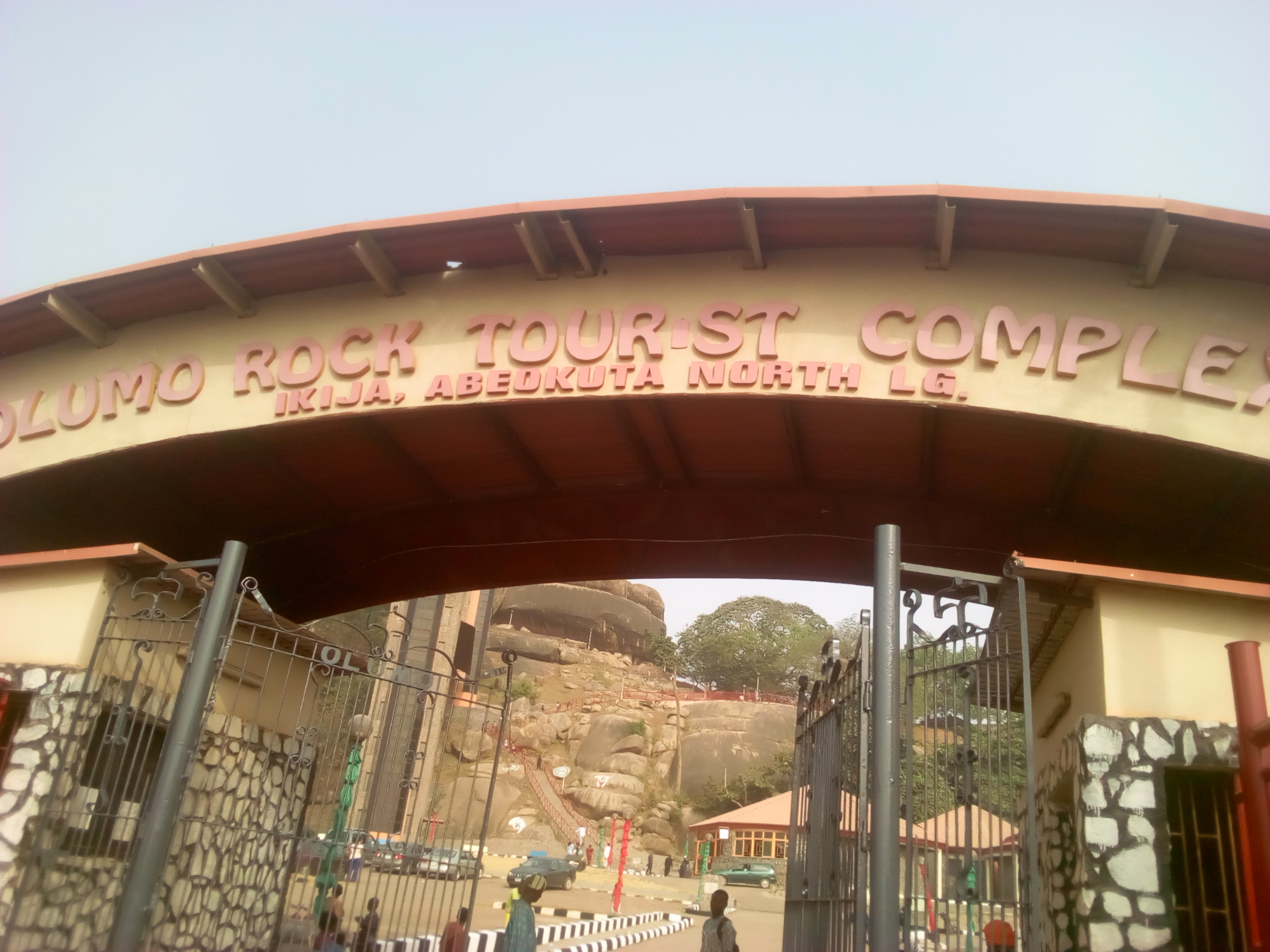
After buying a one-thousand-naira ticket, which I’ll later learn was just to climb the rock, a man walks up to me. He wears a face that looks tense, like cold pap, half-covered in unshaven beard, and is dressed in this Ankara that looks over-washed, and schoolboy sandals.

‘We’—he uses the pronoun that only the God of the Quran uses—‘are the ones that will guide you and tell you the history of this place.’ I’m thinking of some men in Northern Africa who are said to be the custodians of the people’s history. Is this man something like that? Custodian of the history of Olúmo? He brings me back with his voice, harsh but soft-coated. ‘Our own money is just three thousand.’

I watch the way the word just makes it out of his lips: like water making itself out of a tap, hitting the ground. Just. Wait. Is it because I am wearing a white long sleeve shirt that has Noir written on its back in a mad design? Is it because I’m asking why there is a pot of water decorated with cowries here when Abéòkuta is so far from Òsogbo? Is it because I’m taking all these photos? What is the man thinking sef? 
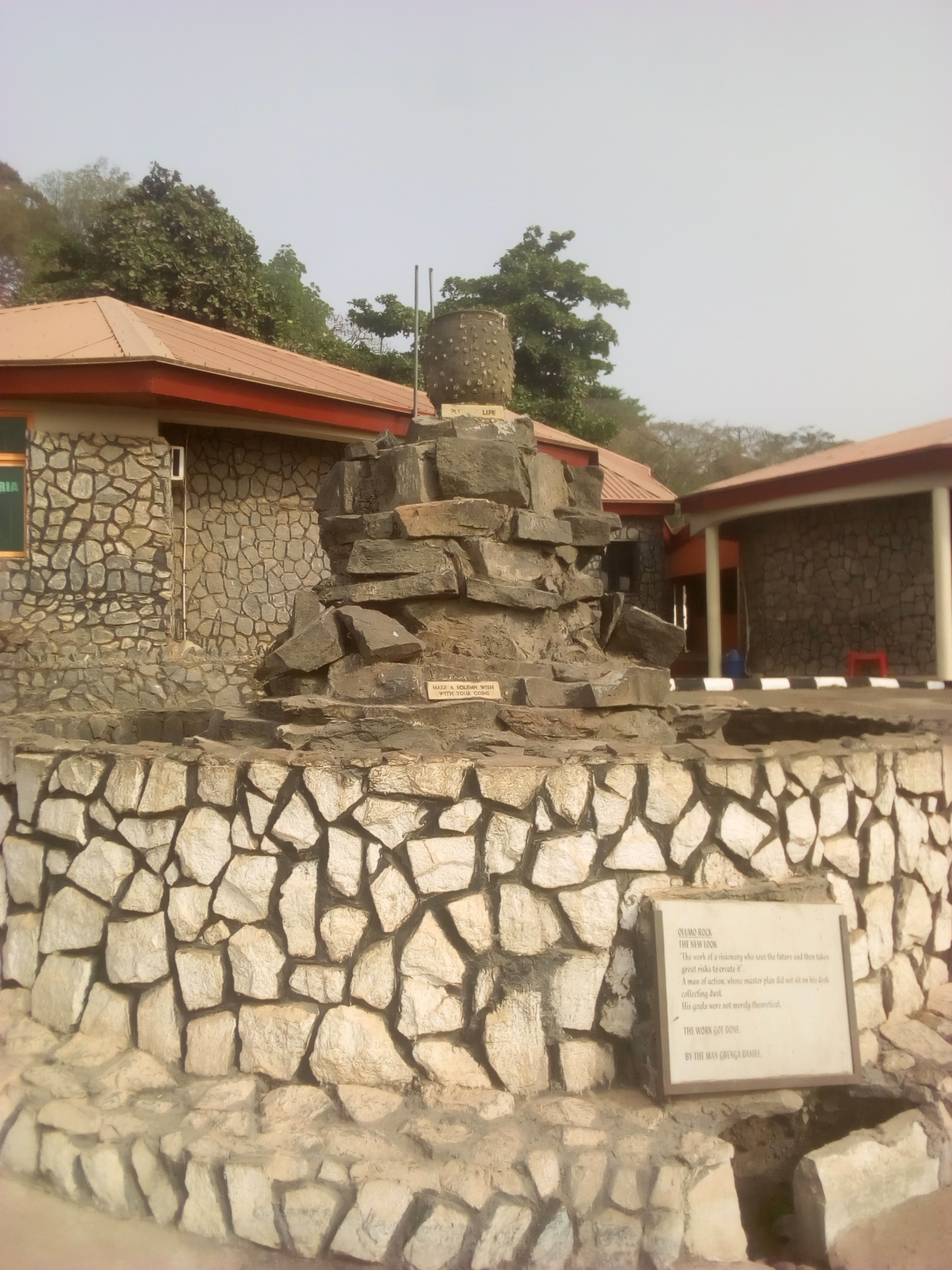
I don’t let the words go cold before I launch mine like a missile. ‘I don’t have three-thousand-naira o.’

He says nothing. He tells me to come, ‘Let me show you the Art Gallery.’

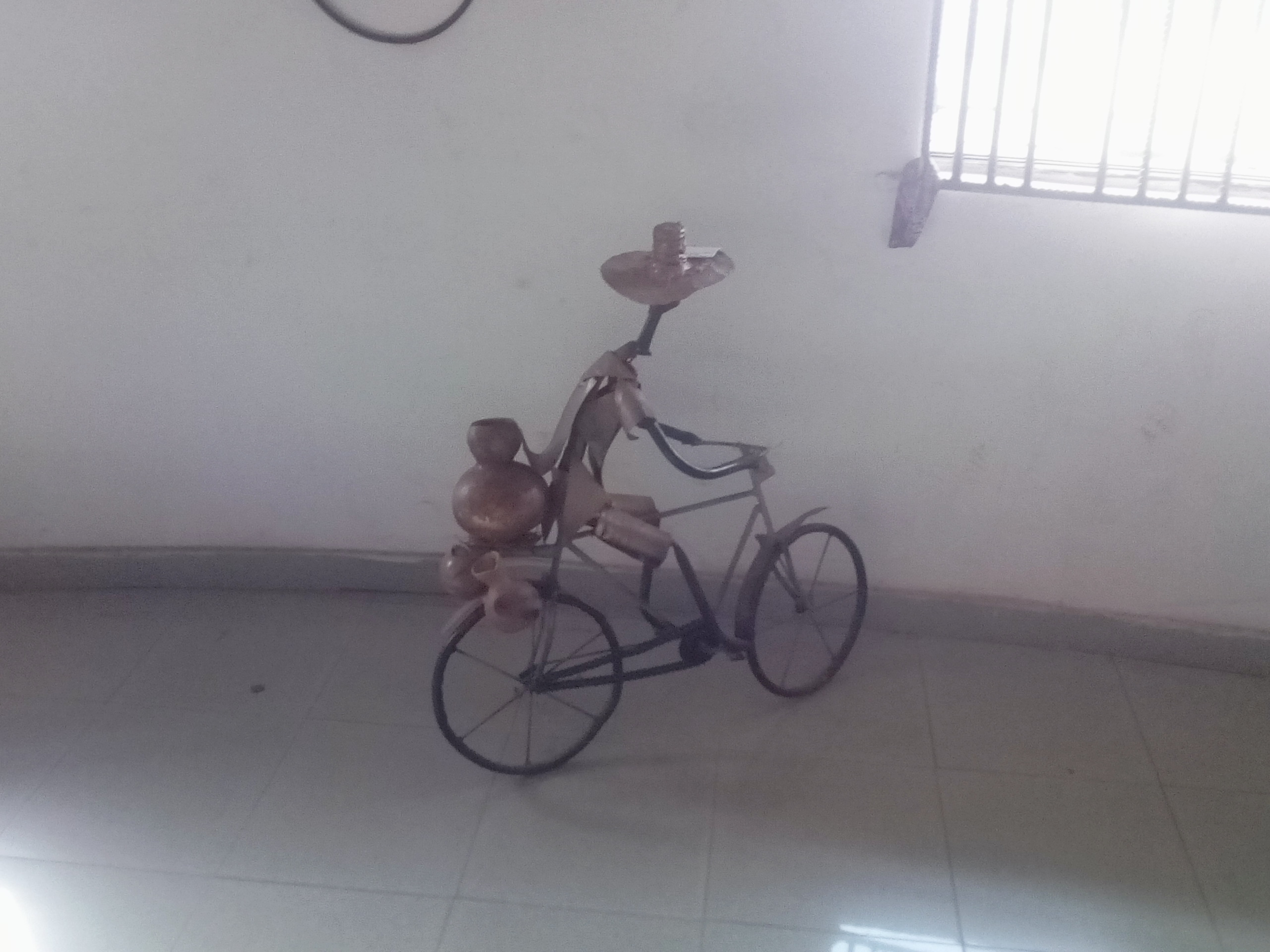
The Art Gallery is one of three buildings that look like Agbolé, a compound of houses, the only difference been that these ones are sort of modern—in the sense of not being made of mud and thatch. It is a large room painted white, with artworks everywhere one looks. There are paintings and woodworks hanging on the walls, metal and bronze works on the tiled floor, and on the far end of the room: well-patterned calabashes and beads. There is also a small shelve of books close to the door. I am familiar with some of the titles: Thirty Things You must do before You’re Thirty, Proverbs and the Yoruba Philosophy, Abẹ́òkuta in History by Àyìnlá Ẹ̀gbá, and others. (I’m not sure I’m correct for all the titles).
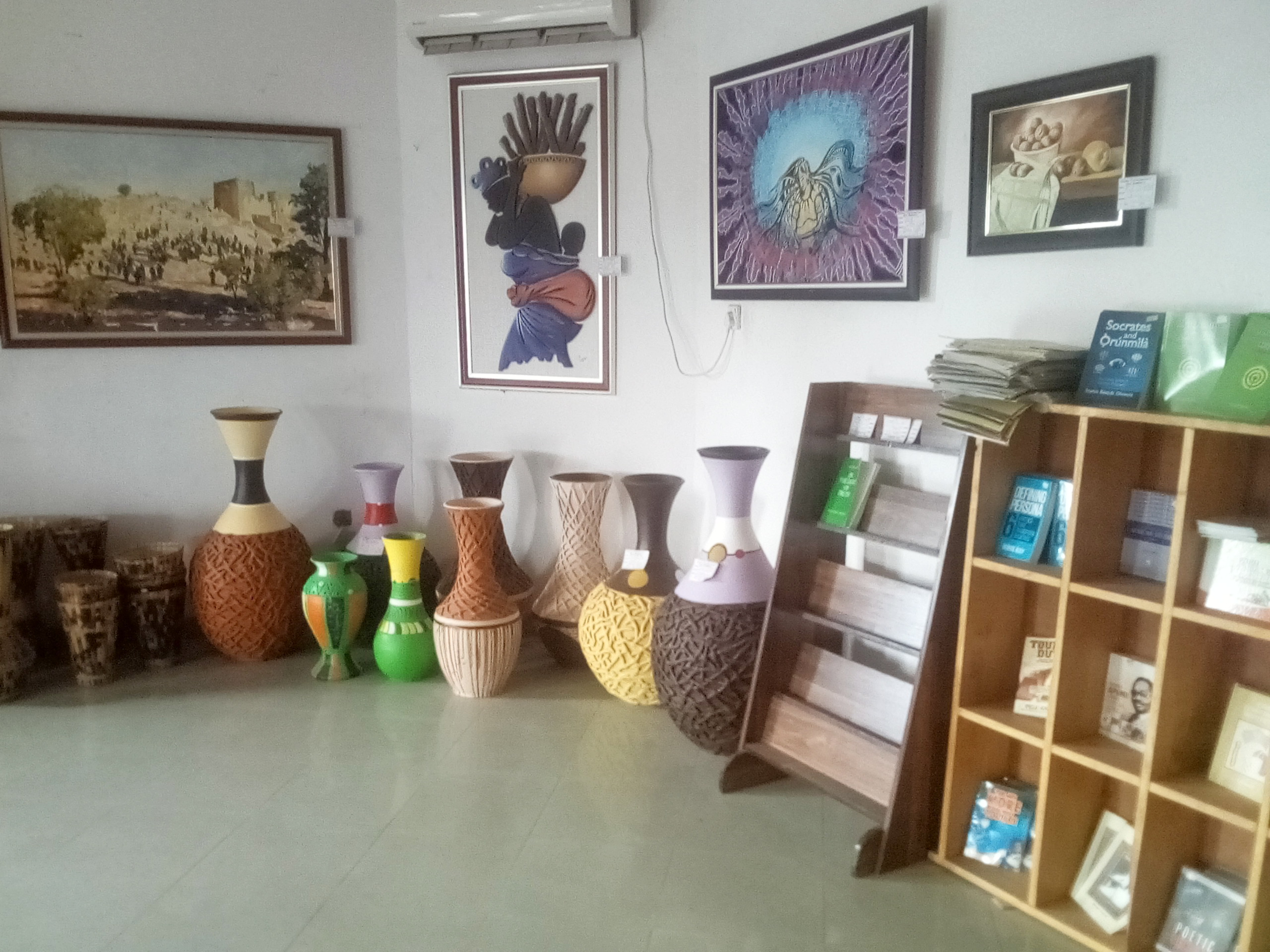
I go on taking photos, even as my guide (that’s what I call him now; we already had an agreement. Didn’t we?) tells me, ‘The man that stays here does not allow people to take pictures of the artworks. But since he is not here, go ahead. Do quick.’ As I take the pictures, he tells me: ‘Where you are standing used to be Agbolé. People used to live here.’ And I’m like: Damn it. I was right.
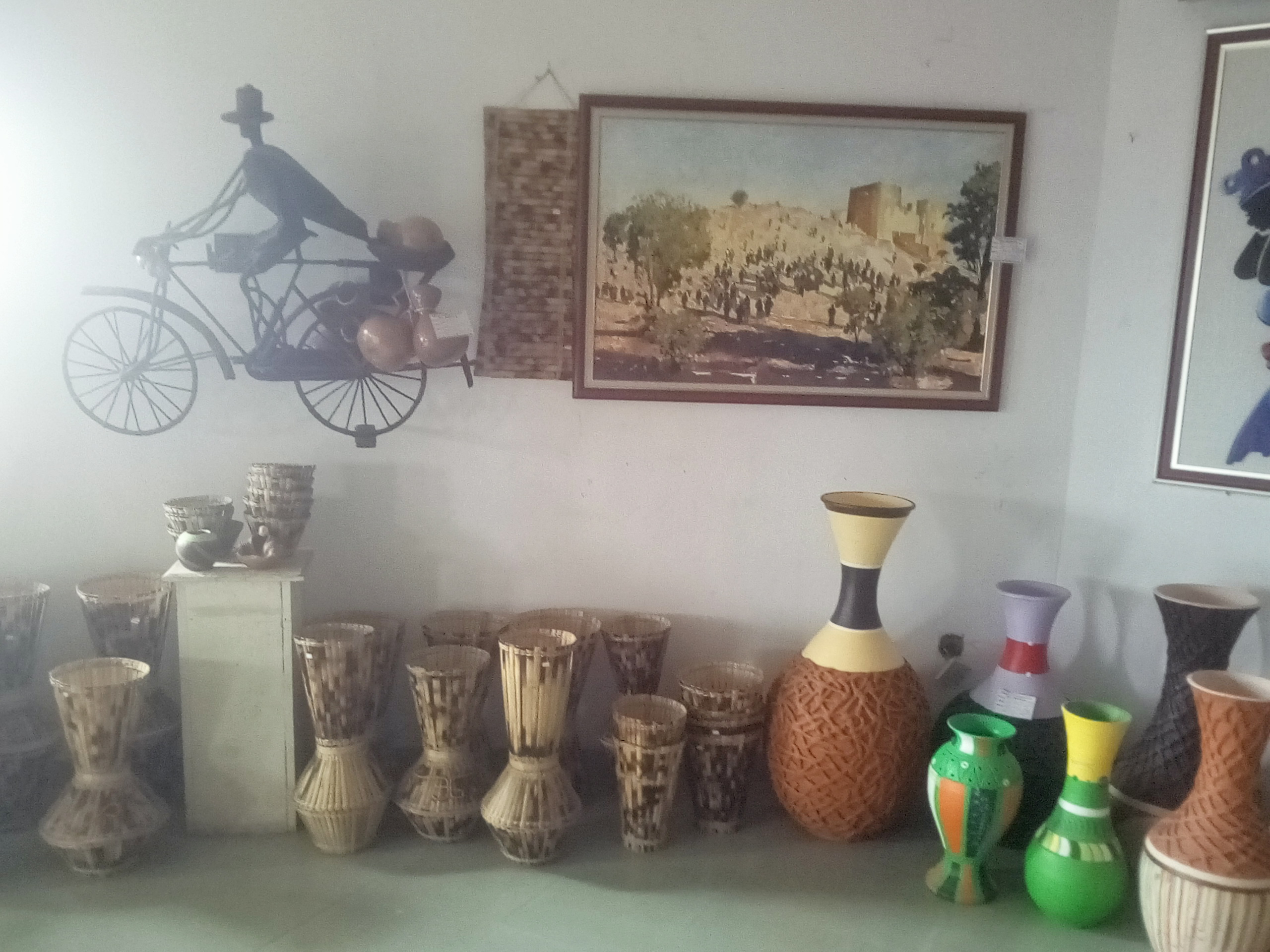
I walk past ‘The man that stays here,’ who is looking into the air, past the walls of the gallery, into something deep, something that might become another gorgeous painting, or woodwork, or bronzework. Or whatever. I walk to the calabash of beads, pick one and ask him for its price.

‘Hundred naira,’ he says.

I pick another one. He says it is five hundred naira. I decide to buy this one, not because I can’t check for better ones, but because I’m already feeling like I am disturbing the flow of inspiration falling upon ‘The man that stays here.’ He takes one hanging from a nail in a flat surface and wears it on my wrist. I hand him a five-hundred-naira note. He pats my back and says ‘Thank you.’
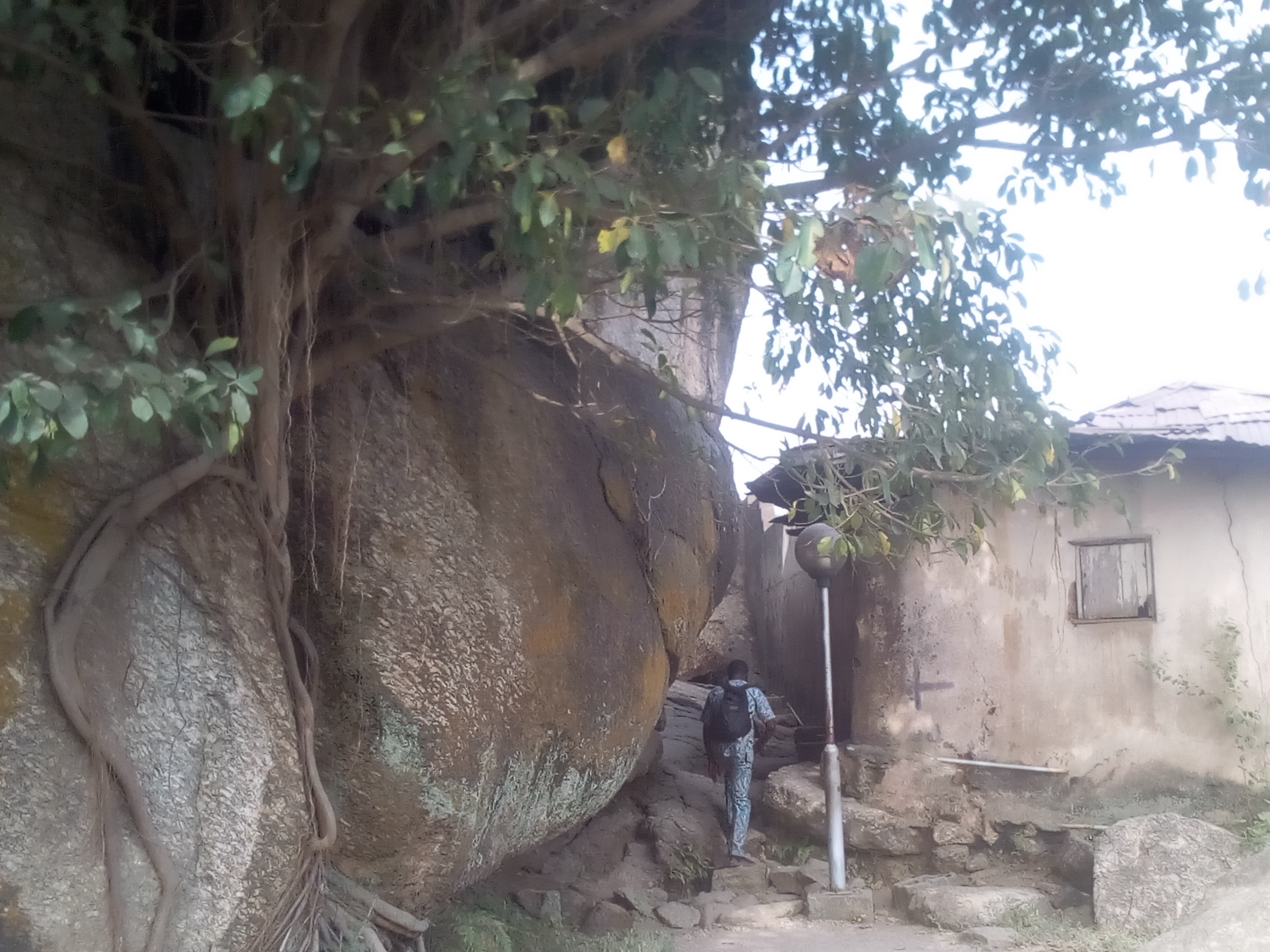
As we walk out of the Art Gallery, a mother and her children and a man (another guide) walk in. We walk through a narrow way between another Art Gallery and a building till we get out to a path that leads one way to the flight of 12o stairs that will later bring us to what my guide calls ‘The first stage’, and one way to I-don’t-know-where. There are a number of trees, under which there are concrete seats. Under one of the trees, on one of the seats, a lady is telling a guy she wants to bite him peacefully, but the guy says never. ‘Ahah. How can you bite a person in peace? You can only bite me when we are quarrelling, not in peace,’ the guy says. ‘Or, brother,’ referring to me, ‘what do you think?’
I smile and take a picture of them. I don’t say what I think because I’m thinking dirty things.

After we climb the 120 steps that lead to the first stage of Olúmo, we arrive a place where there are two women selling palm-wine, and meat and pọ̀mọ́ (cowskin) soaked in stew. These women are seated under the shade of what are three different trees. 
‘This is the Pansẹ́kẹ́ Garden, named after the pansẹ́kẹ́ tree,’ he points at a tree. I think of Pansẹ́kẹ́ bridge, the too long pedestal bridge in Abéòkuta. I think of the man who sells secondhand books in front of Union Bank, behind Catholic Comprehensive. Was there a pansẹ́kẹ́ tree there, too? Is it why they call that place pansẹ́kẹ́? Maybe. My guide goes on: ‘The English people call it “flamboyant tree”. People sit here to catch their breaths and enjoy themselves.’

‘How about these other trees?’ I point to two trees.

‘That is the ọdán tree—the English call it ‘doggedness and resilience tree’—and that is the dogoyaro tree, called the ‘neem tree’ in English,’ he says. ‘It’s botanical name is Azadirachta indica,’ he adds.

I shake my head as I think of how to put ‘neem’ down on paper. After a while I settle for ‘neam’, I’ll make the correction with Google.

*

Now we are before a door that enters a cave in the rock. The door is covered with feathers, mostly white and some brown, and on the lefthand side of the door there are used bottles of Schnapps.

‘This is the shrine,’ my guide says, ‘it is here they make sacrifice to the rock. People also come here to ask for whatever they want, and when they get it they return to give thanks to Olúmo. That is why you are seeing all these feathers.’ He adds that the sacrifice-things are: a black cow, ‘pidgin’ kola, and Schnapps.

 ‘Pigeon kolanut,’ I seek clarification.

‘Pidgin,’ he says. ‘Those birds that fly.’

OK. I get it. The man is Ibo. Or does he just sound Ibo-ish? What does it matter if an Ibo man is a custodian of the history of Olúmo, the most fascinating site in Abeokuta history, and, indeed, one of the most fascinating in Yorùbá history?

I joke about why it is a black cow that is used for the sacrifice and not a black goat, and my guide replies: ‘That is what Ifá said.’ Ifá, the Oracle, voice of Ọ̀rúnmílà the òrìsà of divination. I have never stopped loving the Oracle. I remember having this dream of studying Ifá in an American university, because here our people are ashamed of the earth that gave birth to them.

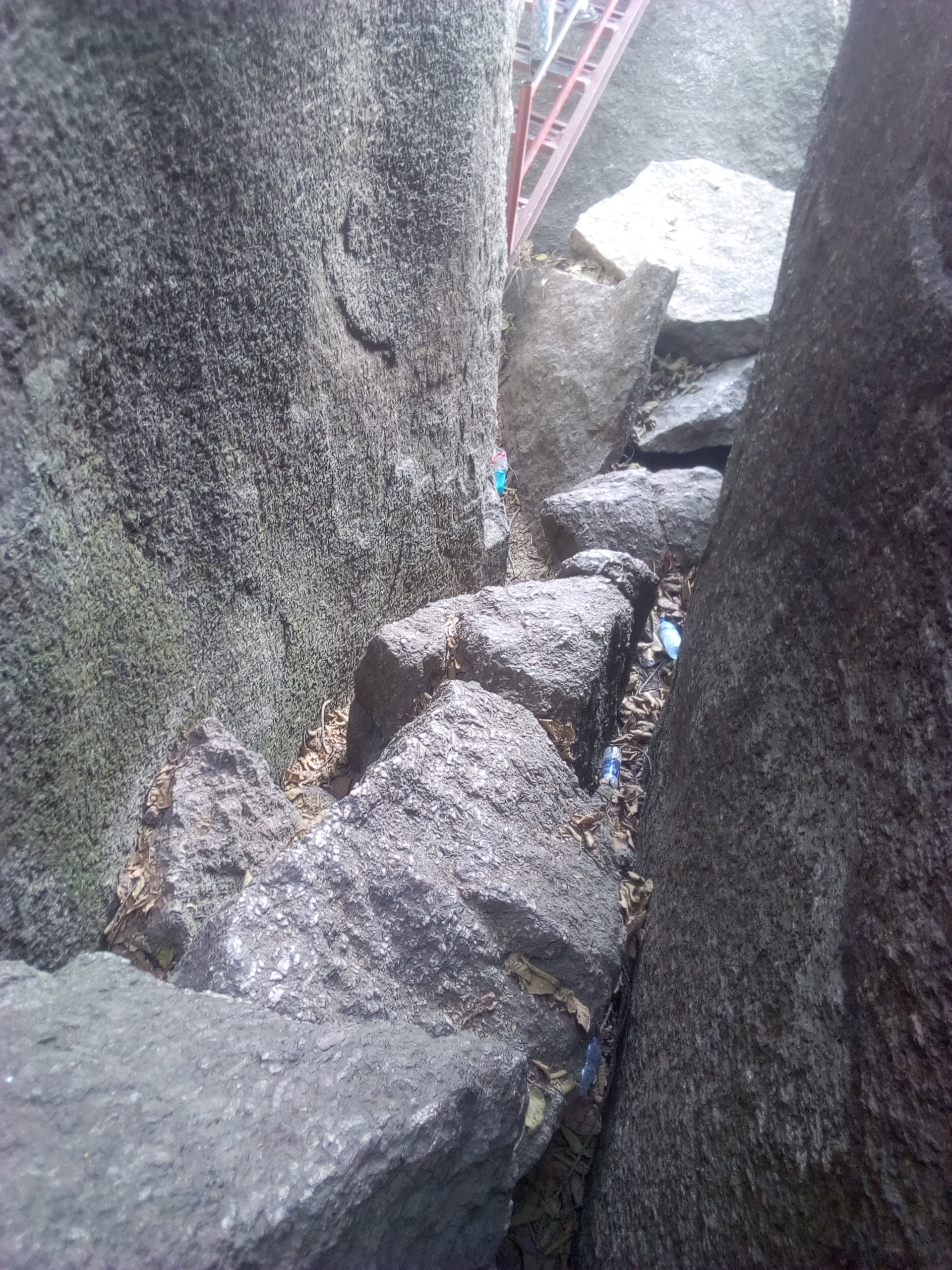
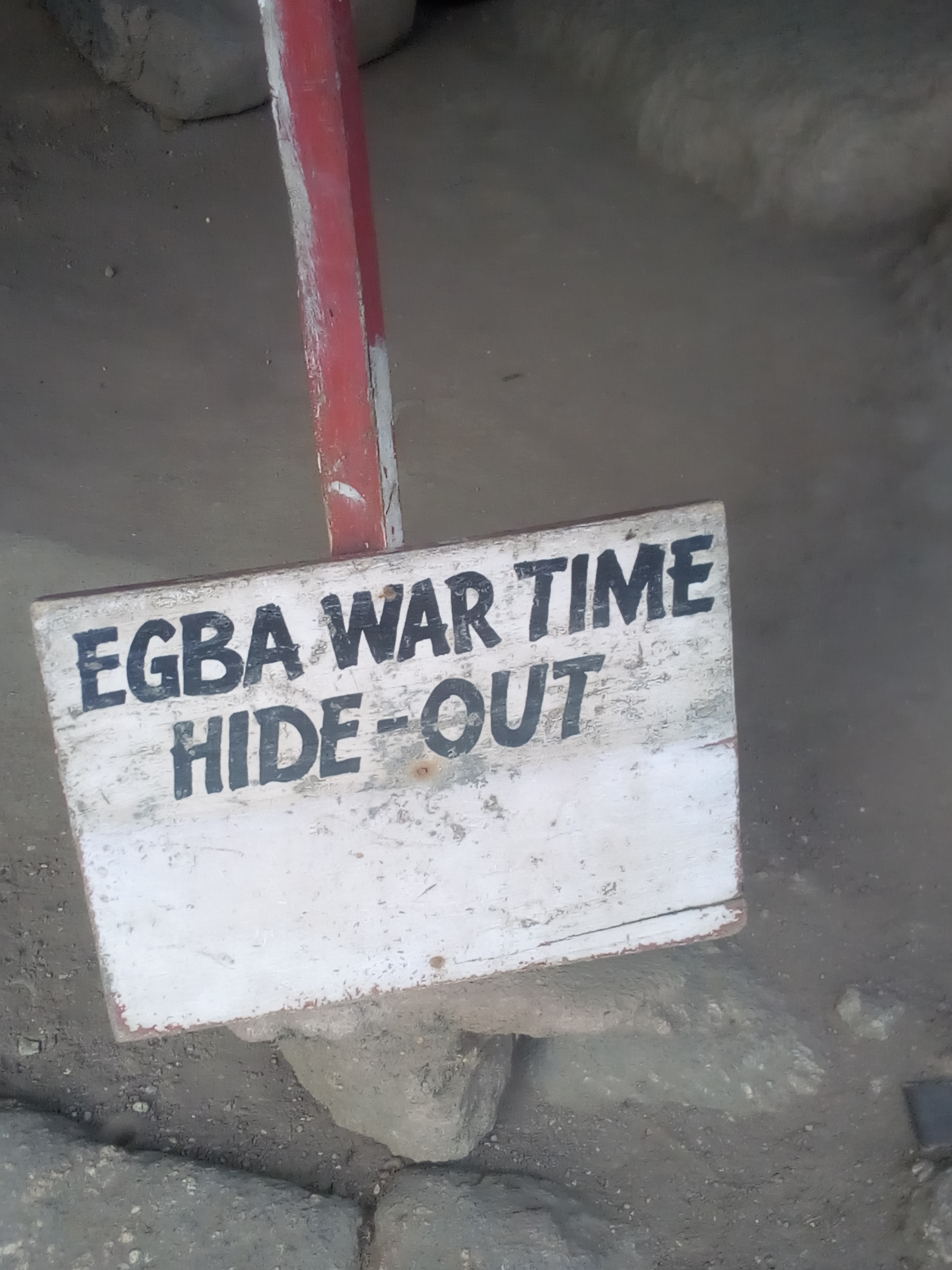
My guide leads me to a side of the rock that has a small signboard that reads: WARTIME HIDE-OUT, printed in black on a white surface, resting on a red pole. I’m not sure they had this in mind when they put that signboard there, but I’m thinking of each colour as message: war on peace, against a backdrop of blood.

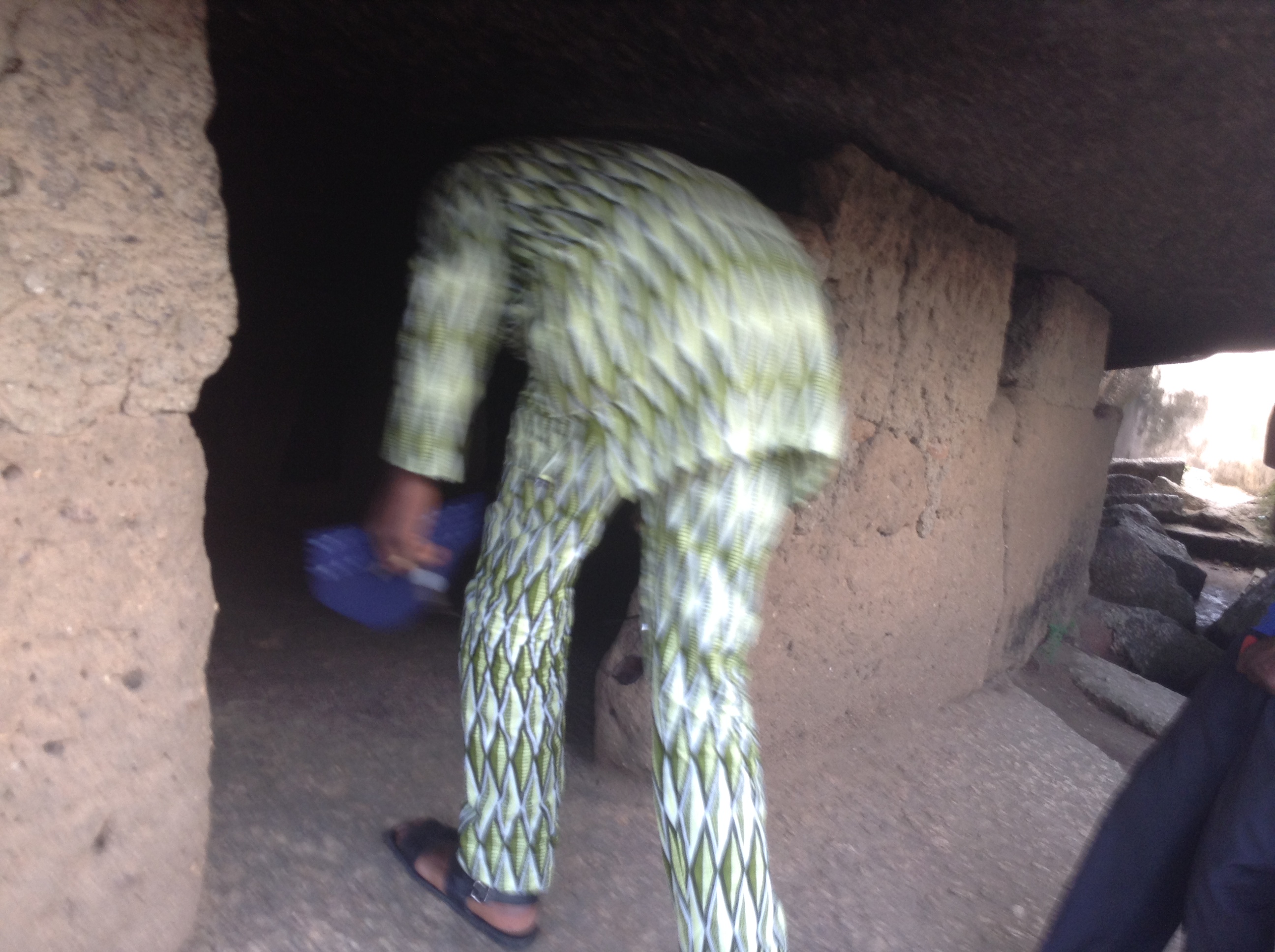
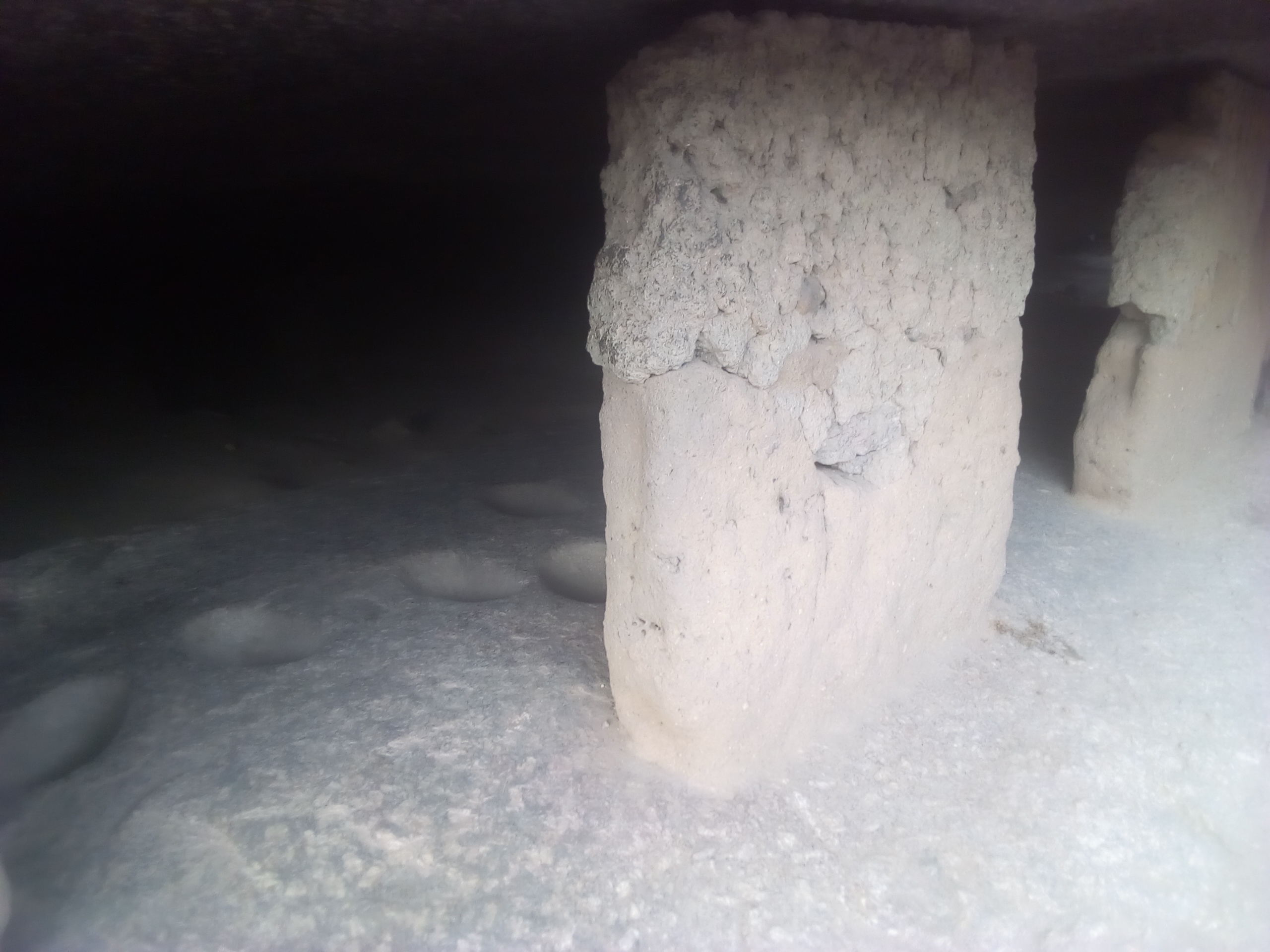
‘This was where the warriors hid themselves during wartime.’ It is a cave that has a door, or something that looks like a door—a way in sha. The cave looks large enough to be the size 2x the parlour of a two-bedroom flat in Shómólú. I enter, bending. ‘There used to be five rooms here, but today only one remains,’ my guide adds. I see the one: it is made of mud and has a small door, and would have house two/three men. In the cave there are some holes that look like bowls made in the rock. ‘That was where the women ground pepper to prepare meals for the warriors,’ he explains.

I walk out of the rock. My guide points to a grave where a chief was buried and talks about the chief being Òsi-Oba in his days. But I’m not really with him. I’m somewhere else in my mind. The images of warriors climbing up here, crawling into this place for safety, making home here pops up in my mind. I can see women, on their knees singing, their hands working stones into these holes to give their men fine soup, their bodies moving in rhythm, even as the roar of their enemies came from down-below. I see the men coming with faces alight with joy, and women welcoming them with songs—joyful songs. And somebody, one of the women, or some of them, giving the rock its name: Olúmo, a compound of three words with one being ellipted—Olúwa ló (ellipted) mọọ́—literally translated as ‘God formed (or made) it,’ or ‘It was formed (or made) by God.’

*

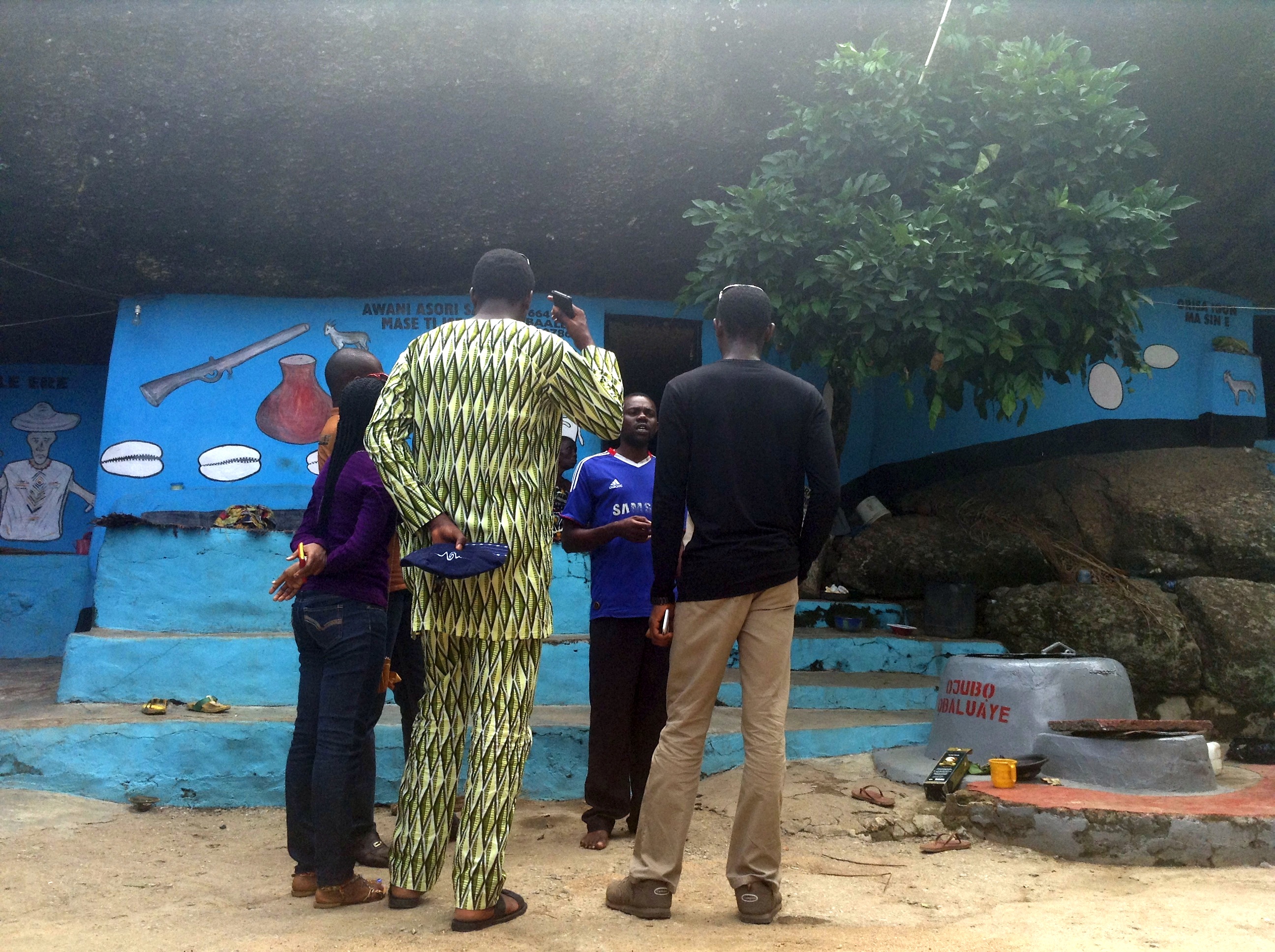
I am standing before some women who have identical Ankara wrappers around their bodies, sitting on a mat, outside a building with paintings of sacrifice-things and idols. On my right is a shrine, the òrìsà Ọbalúayé shrine, a concrete mole having an opening where they pour squashed palm-fruit and oil. A voice that sounds like Barrister’s is coming from the radio the women are listening to. I ask my guide whose voice it is.

‘Àyìnlá,’ he says, unsure. ‘Àbí, who is it?’ he asks the women. ‘Shebí that is Àyìnlá’s voice.’

‘Does this sound like Àyìnlá to you?’ a woman asks.

He says he is not so sure and then joke around with words, until they tell him it is Kollington.
While they talk, there is this smallish woman who just smiles and listens. She has royal beads around her wrist, and some others, not royal, around her neck. My guide tells me she is Ìya-Olúmọ, the Priestess of the rock. ‘She was born in 1884 and she is 134 years,’ he says. ‘Give them whatever you want to give them and let’s go.’ I put my hand in my pocket and give Ìyá-Olúmọ something light.

*

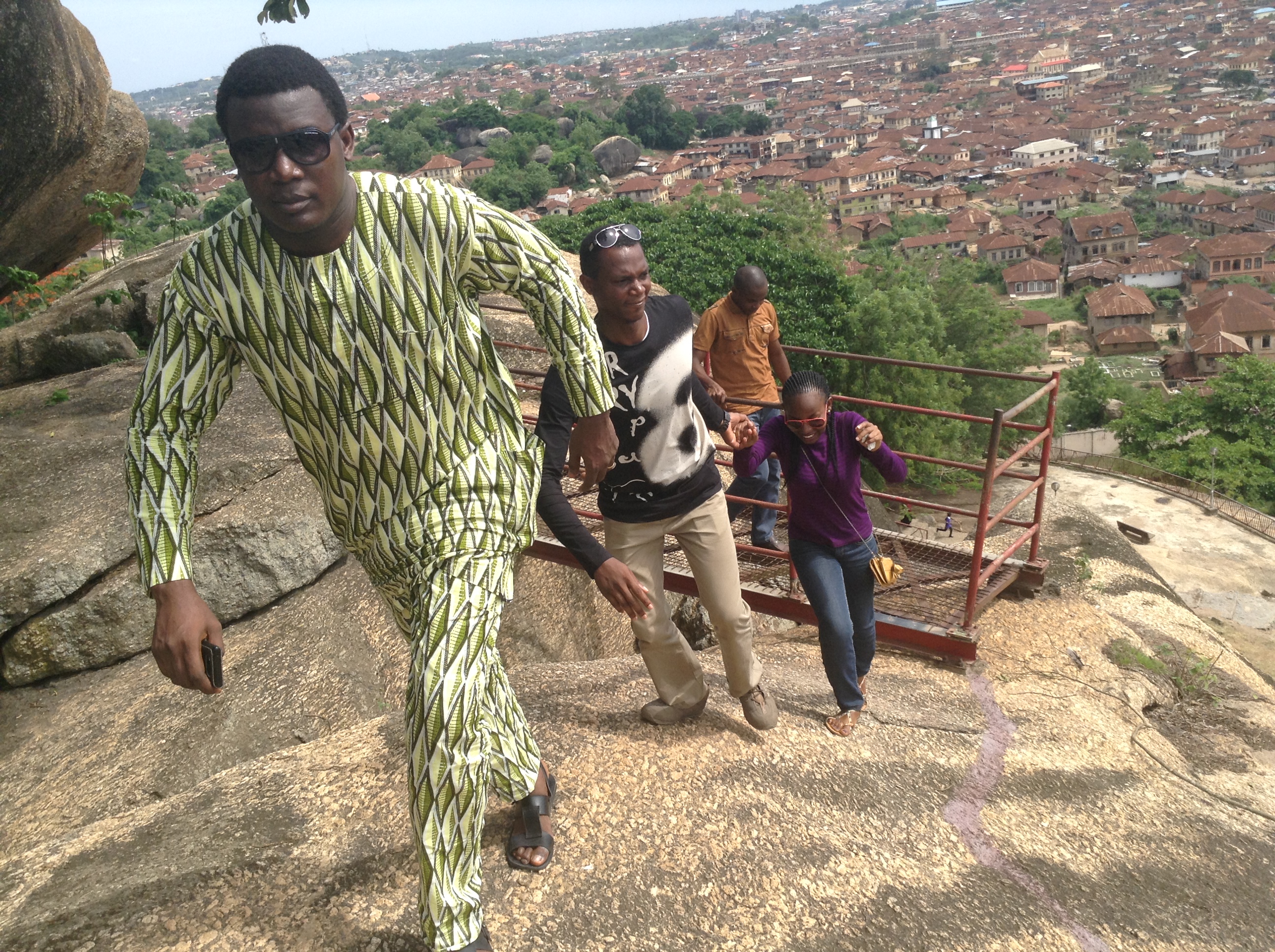
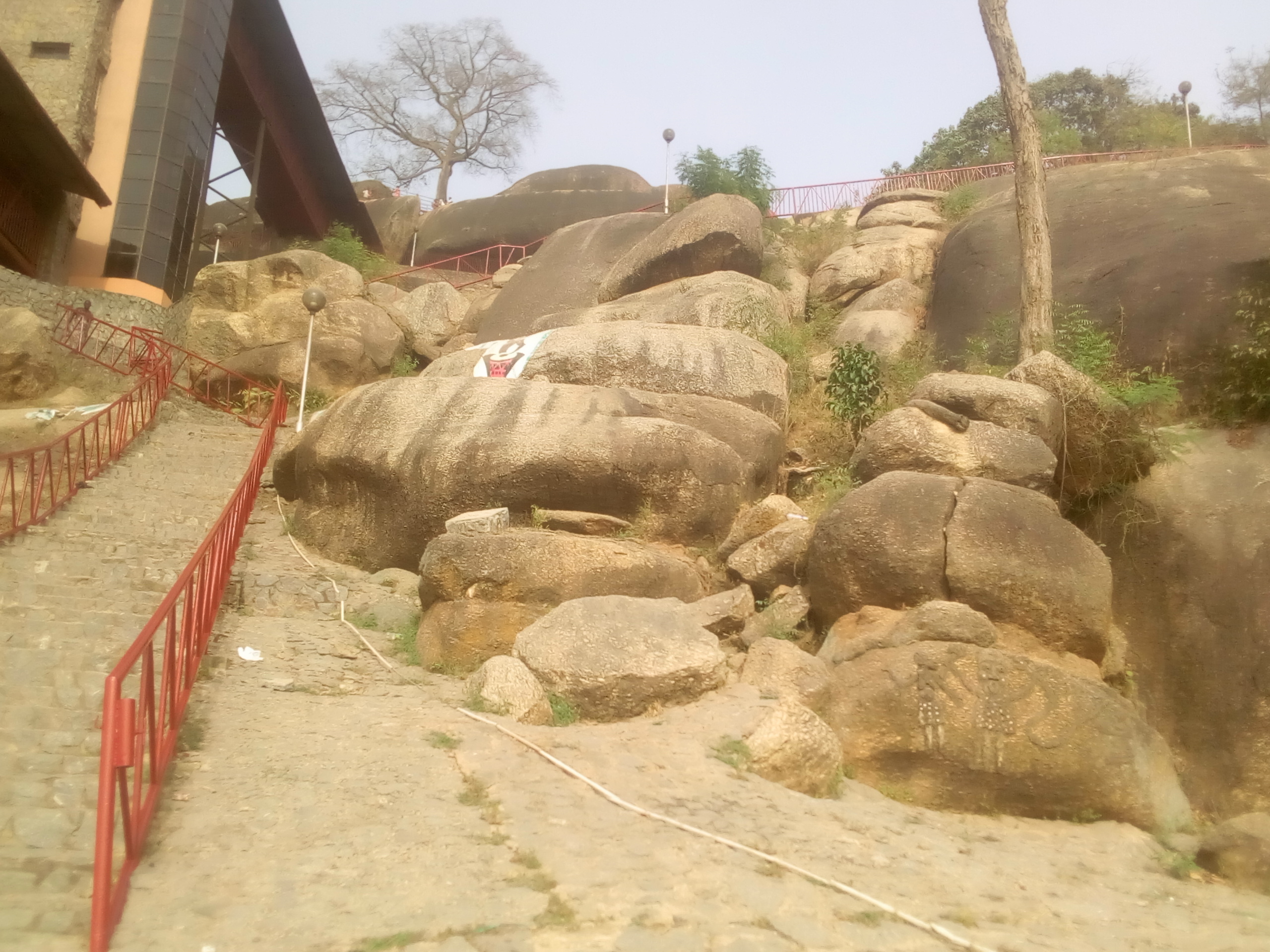
We negotiate a bend before getting to the other side of the rock, where there is a sculpture of the head of Lísàbí, Agbòngbò Àkàlà, the first Balógun of Ẹ̀gbá, and Mrs Ẹfúnroyé Tinúbú, the first Ìyálóde of Ẹ̀gbá. Then I am walking a path of small rocks. My guide calls them ‘The ancient way to the peak of the rock. After saying many no’s, with the help of my guide, I take the ancient way and arrive at the peak of the rock.

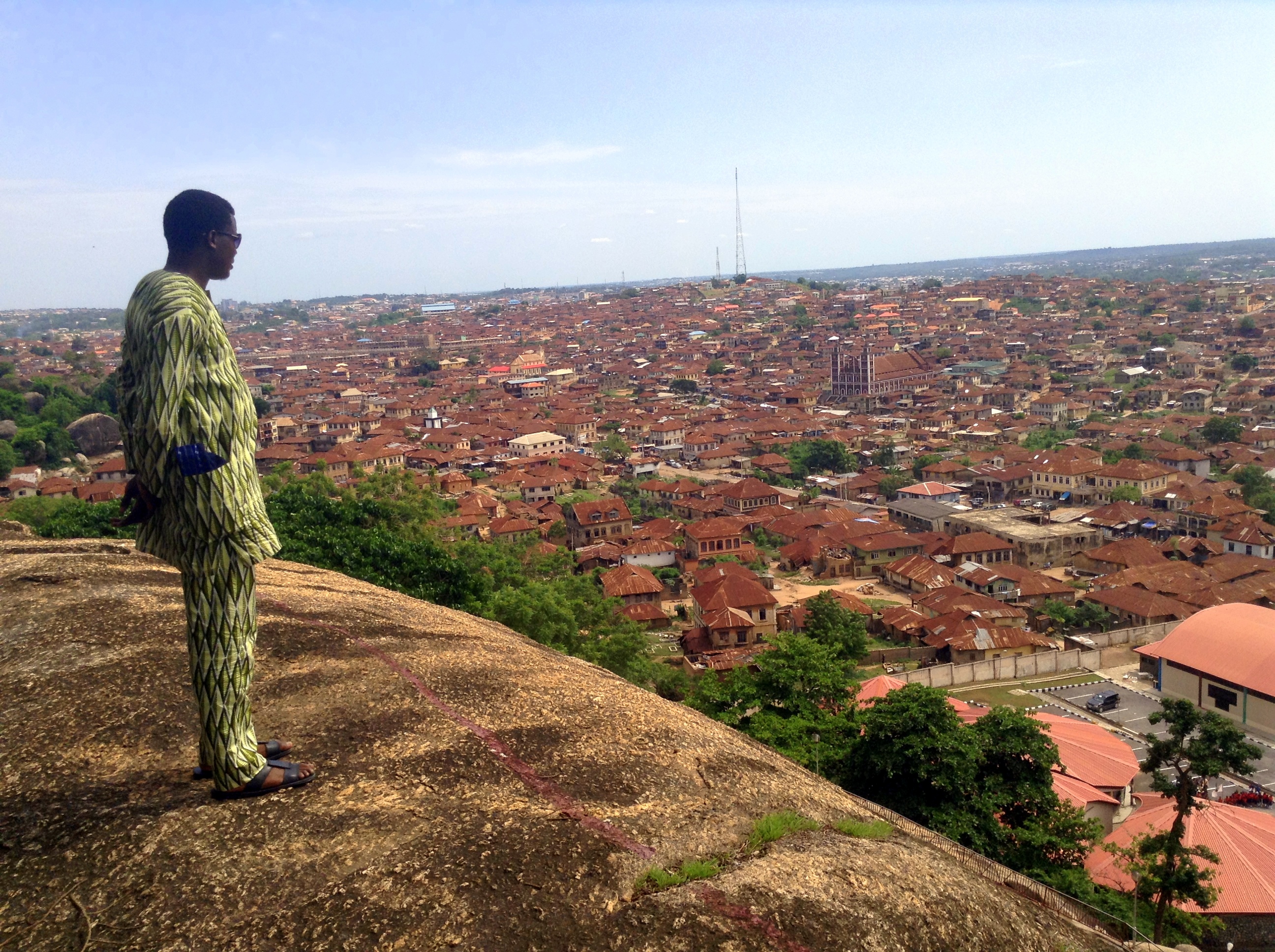
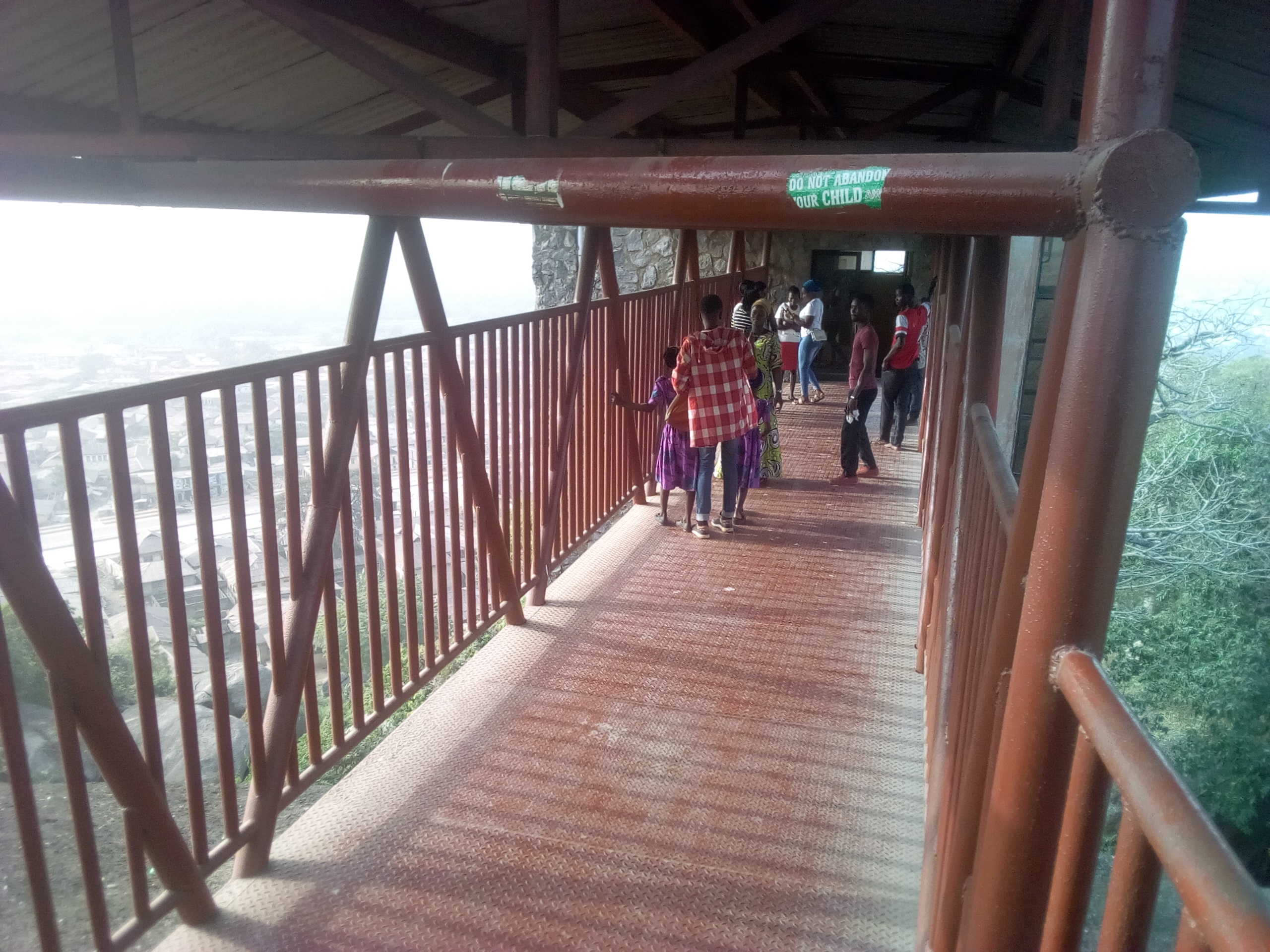
Here there are all these fine people playing happy as if they don’t have worries in the corner of their heads. From here, I can see almost all of Abẹ́òkuta. My guide points to St. Peters, the first church in Abẹ́òkuta; then he points out the first mosque; ‘And that place you see smoke rising,’ he says, points, that is the Ògùn River, from where the state got its name.’ He pauses a bit. ‘The rock sits in the middle, at the centre, of the city.’

Now my guide is poking my inside with his words, making me feel like a sinner, he forming God.

‘I told you I told I don’t have three thousand.’
‘But you would have told me the amount you have, not make me come from that place to this place for nothing now.’

‘But I told you I don’t have three thousand naira.’

He sits back. ‘OK. It is my fault.’

‘No,’ I say. ‘We are both to blame.’

There is silence on both ends. A man selling yoghurts and biscuits and sweets on one side of the peak of the rock, fenced, talks about Olúmọ not being run by the government. He says, ‘In fact, the government does not allocate any fund to this place. It is from the money that they make here that they pay the staff, Olúmọ staff, manage the rock, its buildings, power, and some other things—and from the little that is left, they still have a certain amount they must pay to the government.’

I tell my guide I have just five-hundred naira, and he swears he’ll never walk up here and tell all those stories for five-hundred naira. He puts his hand in his pocket and shows me some money. ‘A man paid me this one,’ he shows me three-thousand naira, ‘and this one,’ two-thousand naira, ‘another man gave me.’ He says something about me being wicked, or being in rank with wicked men. I ask if he is not paid by Olúmo, as one of its staffs, and he tells me: ‘I, and the others, you know we are plenty, pay to work here.’ And he walks away, spends some time chatting with a deaf guy, and then comes back to say, ‘Bring it.’

I tell him I have one-thousand naira. 
He sticks his hand in his pocket and brings out two five hundred naira notes. He hands me one as I give the one-thousand naira note. And he walks away.

For a long time I sit up there and stare at the rust roofings of Abẹ́òkuta’s houses and the people below, who look like down-sized people from up here, while also trying to drink from a translation of Pablo Neruda’s The Captain’s Verses and edit a short story. 

Suddenly, some girls walk up to me and ask what I am doing. The most beautiful among them talks about my writing not being legible. As she walks away, she says I’m most likely writing a project; either that or, I’m one of those guys doing Theatre Arts. A friend of hers says: ‘It is you that will know.’ The lady smiles and says ‘Life has become thin-skinned.’

As I walk down the flight of stairs, the alternative to the ancient way, I hear the harsh voice of my guide who calls me wicked, and the magical voice of that babe who talked about life being thin-skinned. And I smile. 

_____________

Ernest O. Ogunyemi is an eighteen-year-old writer from Nigeria. His stories and poems have appeared in Acumen, Litro, Agbowó, The Rising Phoenix, and many more. He is a product of the recent WriteWithStyle Workshop, and a participant in the Goethe-Institute Afro Young Adult workshop. He dreams of writing: a novel, a story collection, and a collection of essays on love and home and loss.
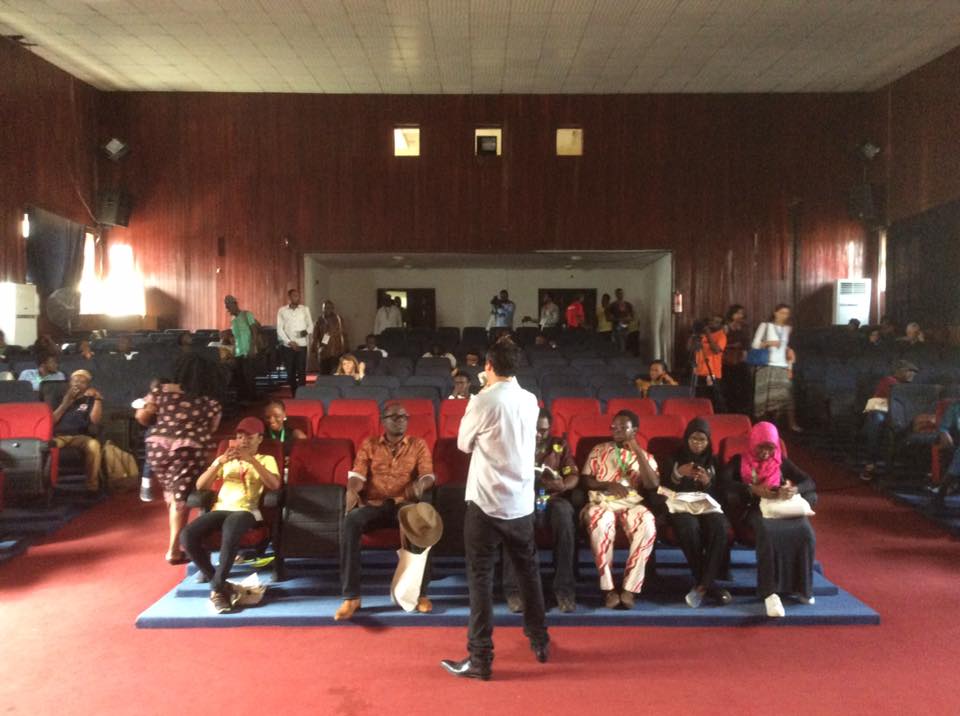
Aké Festival 2016: How History is Made

A festival is just a festival, isn’t it? A gathering of tribes, a place of ideas and relationships, a week-long commingling of the most cerebral kind. But it is also something else: an annual attempt to write the history of the continent’s literary track in the minds of its practitioners and for posterity. This latter purpose is usually the least stated on the invitation brochure.

ake2

Participation in this year’s events, I’ve said elsewhere, is my most memorable, but not for the obvious reason of my meeting (and working with) Ngugi wa Thiong’o who is the guiding light of my work in indigenous language advocacy. Or perhaps that is the reason. It won’t matter anyway. The history of this year’s events is being written in different inks and by different observers towards different but complementary ends.

A while ago, someone wondered whether canons are being built around conversations on African language literature, and I responded that festivals, Facebook conversations, and interactions surrounding relevant seminal works of criticism all contribute, in small ways, to the complete tapestry whose form may not always be evident from the current standpoint of one literary thread. I still believe that. For all the memorability I’ve ascribed to this year’s event, I was not there when this apparently notable conversation took place, and I’m all the poorer for it. But the questions raised by this subsequent review of the event by Mr. Rótińwá, separate from the mass cheering on the spot that may have convinced a casual observer of a different takeaway, will live on. And there are many more of those.

A panel I moderated (video below), set up ostensibly to explore the similar and divergent themes in the memoirs of two important African writers (of different languages), ended up on an even more memorable note: the relevance of archiving and the role of manual writing in the preservation of a writer’s legacy and growth. When I thought of questioning the Congolese writer Alain Mabanckou about what he described as an obsessive write-and-destroy habit that had his travel box littered with disposed writings on paper that he no longer liked, I wanted to satiate my curiosity. But I also thought of the episode as possibly illustrative of the obsessiveness of writers generally during the process of creating. In the end, I – and, as it turned out, the audience – got enlightened by a more substantive conversation around the place of preservation of paper drafts (and archiving in general) in the understanding of the writer’s creative and personal trajectory, thanks to Emma Shercliff, Ngugi wa Thiong’o, and Alain himself.

What the conversation illustrated for me, among others, was a lack of consensus, today, on the “proper” way of creating and shepherding manuscripts. Those of us who grew up in the internet age have taken for granted the benefit of crowd storage and the power of an easy copy/paste/delete on a word processor to care about the true grit of manual writing, crossing out, and re-writing until the draft is perfect, while still keeping the original draft either as a guiding light of the initial intention and insurance against future impulsiveness or as sentimental record of the individual step in the process. But more than that, as Alain and Ngugi pointed out, there is also a financial (as well as archival) incentive for this old-school process: there are scholars, students, and future enthusiasts of the writer’s life and work that will pay a fortune to have access to the initial drafts of whatever eventually becomes a well-accepted work. This helps the culture of criticism and better opens up the writer to perhaps better study.

When he writes on the computer, he said, Alain treats each line of writing as an indelible record that needs special care and preservation. As he puts it, he has different versions of the same work on his computer and would rather create a new one each time than edit the already written one – in spite of the ease given by computers to do so. Isn’t that fascinating? To think that the ubiquity of computers isn’t yet sufficient motivation – in relevant writing quarters – to ditch the drudgery of manual or manual-like documentation. Perhaps not enough has been written about this rebellion and/or the benefit of such active labour in this age of 140-character fickleness. Forget the fight between the Kindle and paperback books. Pen vs Keyboard is where the conversation needs (and will continue) to happen. I will likely forget many of the other questions I asked on that panel but the response to (and conversation around) this one on pen and paper writing and documentation will, and should, live forever.

ake3

The Makerere Conference of 1962 is notable today for a particular conversation on the use of English (and other colonial languages) in African literature. Not much from that conference has lived on in popular lore as that particular debate has. In every edition of the Aké Arts and Book Festival, looking out for such usually short but relevant spark that outlasts a week of commingling has become my yearly obsession. It is to the credit of the organisers that the opportunities are many for such dynamic conversation, debates, arguments, fawning, performance, and even lust (as this report rebelliously recalls). But we remember differently, as it is often said, which is probably for the better. It all comes together eventually. And the culture is richer for it.

Memories from Ake (i): Okey and the Students

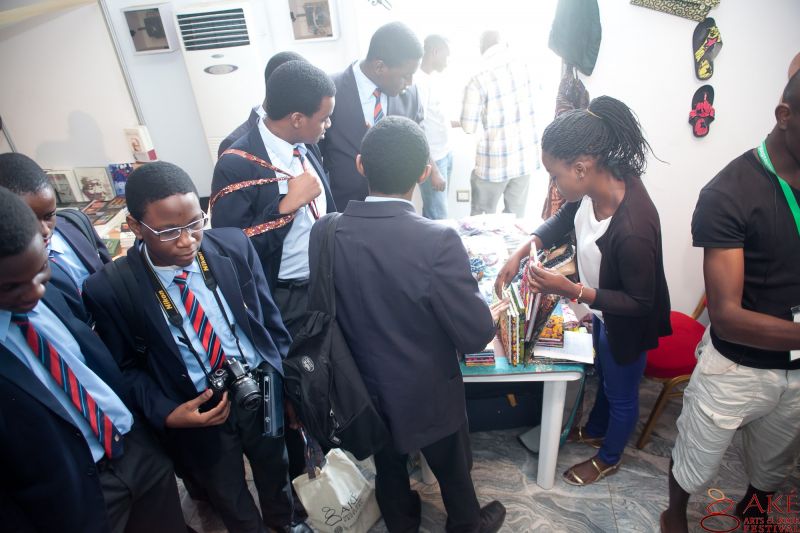
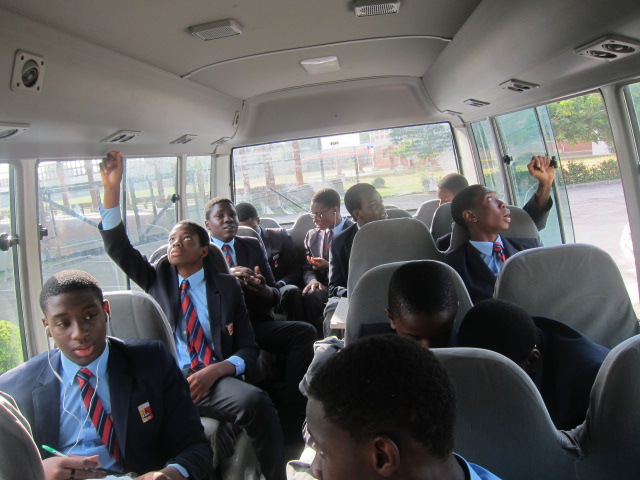
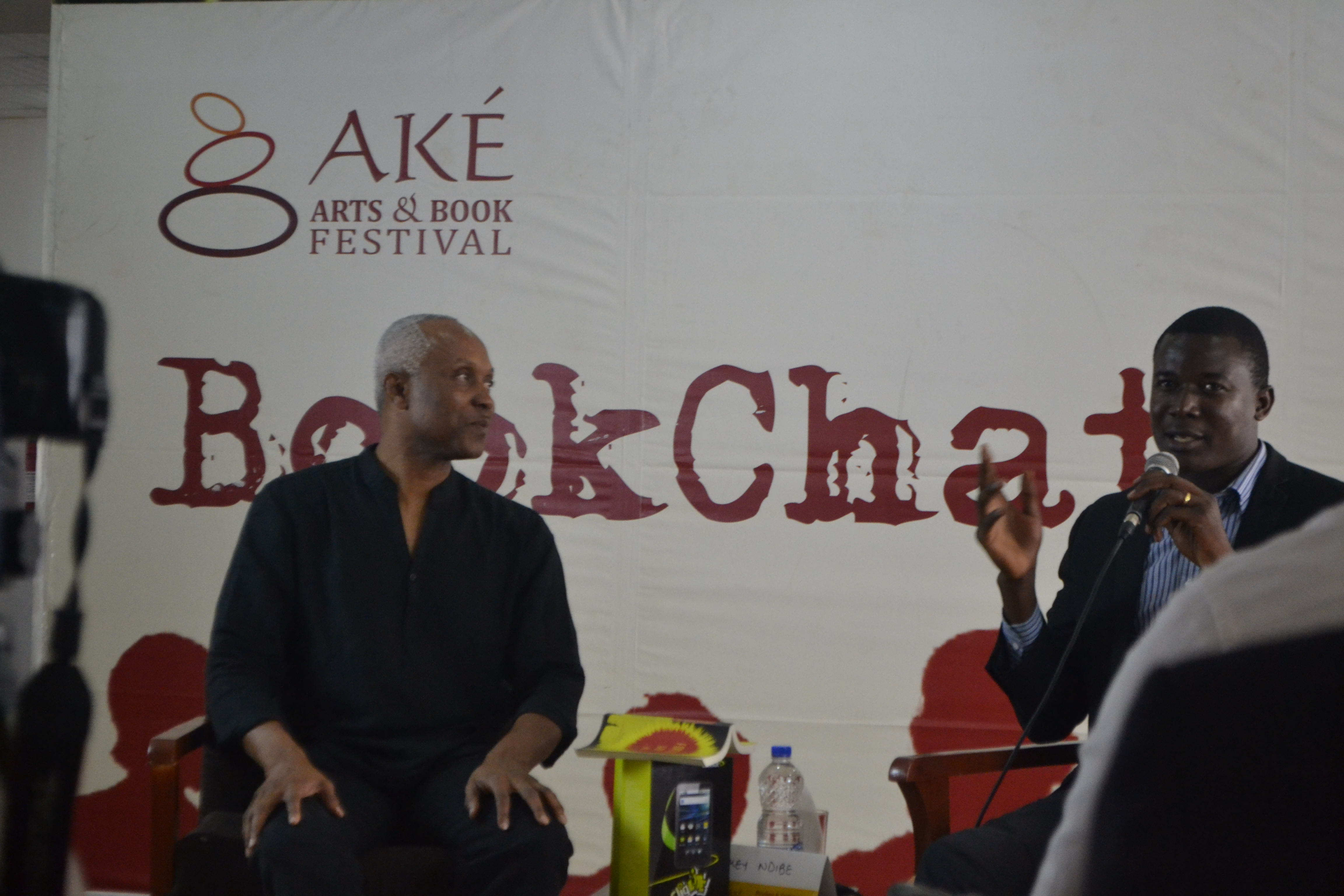
Last week, between November 18 and 22, writers and thinkers converged on Abeokuta for the second edition of the Ake Arts and Book Festival. It was also my second time of participating in the event, but the first as a guest. For some reason, the organisers thought it important this year to involve a linguist with but a finger or two in the literary pie in a festival of poets, writers and other makers of creative ideas. (Fake modesty out of the way, it was a beautiful, engaging, and stimulating event of which I was glad and proud to be a part). On Thursday the 20th, I gathered fourteen students from Whitesands School where I currently teach English, along with a colleague and award-winning journalist Bayo Olupohunda, into the school bus and headed to Abeokuta.

IMG_734910443236_885590758127197_8532045416560099830_oIMG_7317IMG_4475The drive to the quiet rockhill town north-east of Lagos has always been a delight, at least the second leg of the journey that begins on the Abeokuta-Owode Road. The Lagos-Ibadan expressway is still under construction and subject to surprises in the form of potholes, narrowed lanes, broken down vehicles, and diversions. For someone meant to host a Book Chat at 10.30 am on that same day, the choices are limited. One either leaves Lagos as early as possible so as to avoid all traffic-related delays, or sleep in Abeokuta in one of the luxurious hotel rooms already booked for guests at the Festival. If one is a teacher in a high school, traveling with students who have been brought to school by their parents and need to be returned to school on the same day; and particularly if one is a husband of a working wife, with a nine-month old baby who one would terribly miss if one were to take the second choice alone, the choices become hard.

We were supposed to head out of the school by 8.am, but by almost nine o’ clock, we were still stuck in Ikoyi traffic. By even the most conservative calculations, we were starting to be late. I began to worry that I might miss my session. The author I would be chatting with, notable columnist, journalist, professor, and novelist, Okey Ndibe, had just returned from the United States a couple of days earlier. How could someone from the US arrive earlier in Abeokuta than someone who lives in Lagos? How disappointing. Lola Shoneyin (poet and author, organiser of the Festival) would be even more disappointed, I thought, as I urged the driver to speed up as much as he could within sensible limits. By 9.30, Lola started tracking me via text messages. I assured her of my location, and pleaded that if I didn’t show up on time, my panel be swapped for someone else’s. She assured that if the worst happens, we’d postpone it for an hour. A few minutes later, a tweet went out that our book chat would begin at 11.30am. That was a relief.

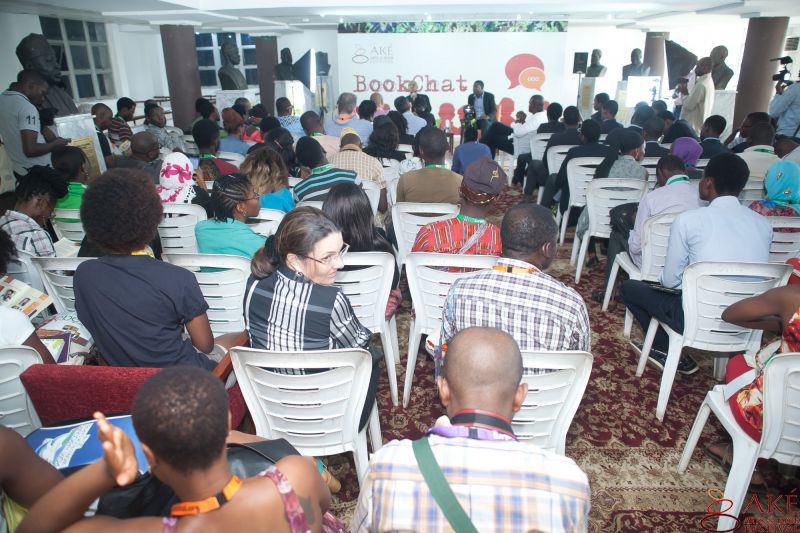
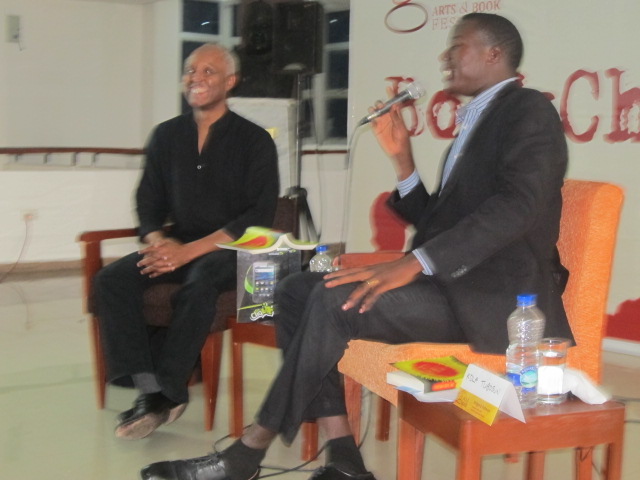
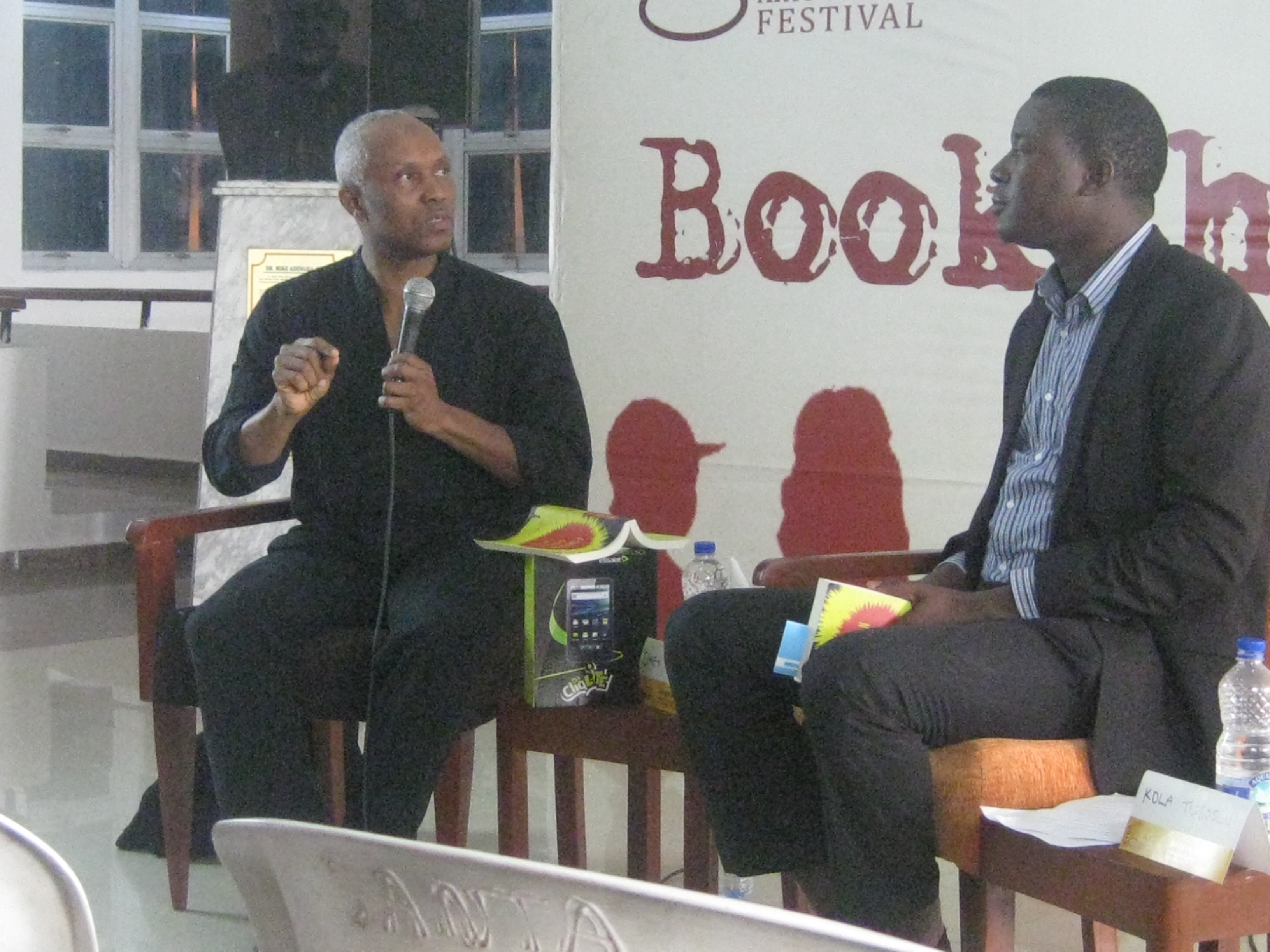
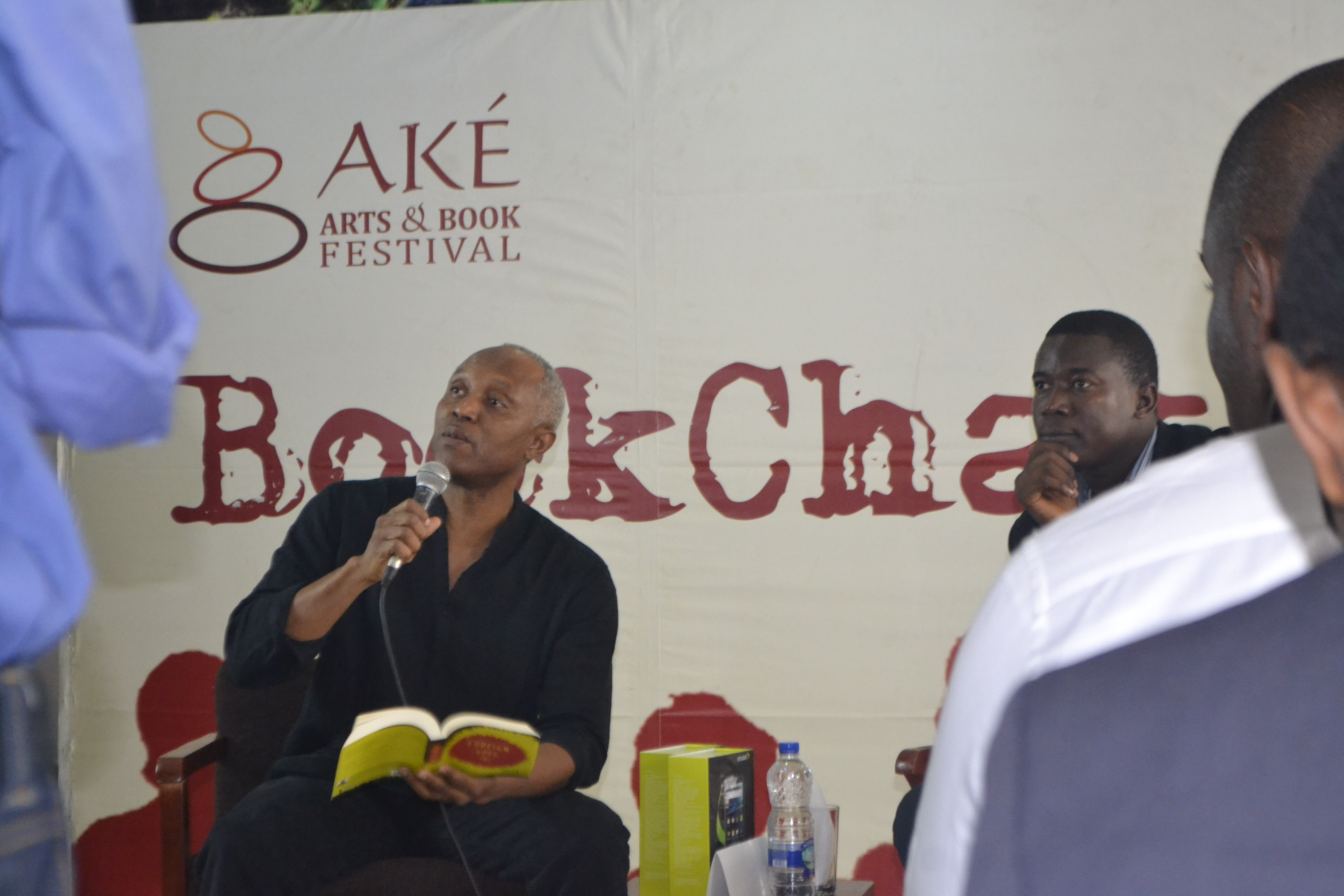
We arrived at the June 12 Cultural Centre, venue of the event, at about a quarter to eleven. Fifteen minutes later, I was in the hall meeting Okey Ndibe for the very first time. Weeks before, I read everything I could find about him on the internet. Some I’d read before, some I was reading for the first time. His life, work, and opinions have made him an interesting person and personality in the Nigerian literary and political space for a very long time. Conversations with other friends and colleagues about him have also guided me into a number of relevant points of inquiry. Our Book Chat was going to be one hour of conversation in front of a room full of writers and festival goers. Okey is a simple but dignified man, as his poise, dressing, and personality immediately showed. While he chatted with a few other folks around the hall, I glanced at a few of the questions I had prepared. His latest book Foreign Gods Inc is a fast-paced thriller of many layers of social and political commentary. I had two copies, one on my kindle, and one hard copy which a couple of my students had developed an attraction for on the way to Abeokuta. On arrival at the venue of the Festival, Lola Shoneyin hinted to the students that two of them would win an electronic tab for thoughtful questions. 

IMG_4527IMG_0774_DSC0131

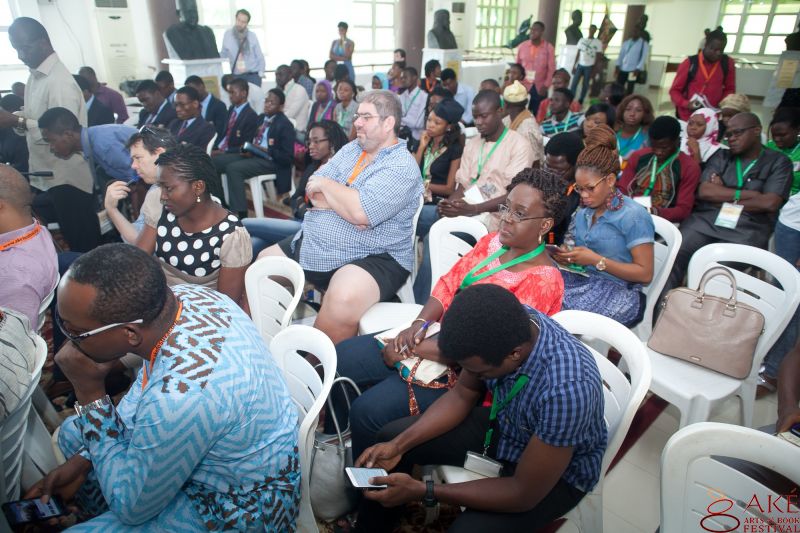
_DSC0121One hour went by like a flash. As I’d been told of him, Okey Ndibe engaged each question with the thoughtfulness and breeziness of a seasoned professor, with humour, friendliness, tact, dynamism and thoughtfulness. Why did he dump on James Hardly Chase so much? What does he mean by Achebe saving him from Chase? How did he meet Chinua Achebe and what was the relationship over the years? What does he mean by Nigeria not having a real national character? What is “an ethnicity of values” anyway? What influenced him to write Foreign Gods Inc.? Any influences from the real life event in Soyinka’s autobiography of having to sneak into Brazil so as to kidnap a supposed stolen god? How would Professor Ndibe like the book read: as an ethnographic material on African people, or as a migrant literature, like Chimamanda Adichie’s Americanah? How has the reception been so far? Would he like to read a part of the novel to the audience? By the time it was over, the seats had been filled, and the applause was genuine. I had a great time, and so did the students. Questions were asked, by the students and by other members of the audience, and we were done. Two students won tablets for their questions (and the rest were mad at me for not calling them when their hands went up. We resolved it on the way back to Lagos).

***

A few other questions went unasked, because of time: What’s the relationship with Christopher Okigbo and his family? He was afterall the keynote speaker at the Ohaneze Ndigbo event in Belgium in honour of that important poet about two years ago. Okey, being a young boy during the Biafran War, remembered a little of it, detailed in his essay My Biafran Eyes, how deep was that experience in shaping his upbringing? What does he think about language use in African literature? As a child of a culture with dying languages all around, how does he think that this can be reversed? Which writer in his generation does he consider an influence? What of older generations? And younger ones? He’s working on “An African Doing Dutch in America” – a memoir. What can he tell us about that? When will it be published? What was his experience as a Fulbright scholar teaching at Unilag? What inspired his first novel Arrows of Rain? He currently teaches fiction and African literature at Trinity College in Hartford, CT. What’s it like there? Has he stopped being harassed by the SSS at the airport?

***

IMG_7331IMG_7271FB_20141129_15_27_57_Saved_PictureThe students split up and attended one more session. In the session involving the president of the Association of Nigerian Authors (ANA) Professor Remi Raji and author Yejide Kilanko, which was well attended, one more student won a tablet for his thoughtful question to the author. He seemed very pleased. Their day being sufficiently made, not only by their winning of electronic tablets but the idea of meeting and chatting with world-famous authors and learning a few things they hadn’t heard about before, they headed to lunch downstairs by the festival bookstore before heading back to Lagos. There a few of the students met with some other writers, chatted them up about stuff, took autographs, bought books, and generally took in the festival air.
In the bus on the journey back, conversations ranged from the shock of realizing that their English teacher was a relevant enough person to have been invited to take part in a book festival (“You never told us that you were a writer! What book have you written? Aren’t you Mr. Olatubosun? Why does it say Kola Tubosun on the guest list? How did you know Okey Ndibe, Lola Shoneyin, and all these people? Do you know Wole Soyinka too? Where is Wole Soyinka anyway? Why isn’t he ever here when we’re around? among others) to the choice of theme in writing (“I write too, you know, but I never knew that one could be famous by writing African stories”, “Are you serious that people will buy your work if you set it in the Nigerian environment rather than abroad?” “I never knew that. All my characters have English names.” “How do I get published?” “Would you read my work?” “Can I come next year? Alone?” etc).

The most heartwarming comment followed later, halfway into the trip homewards when lethargy and torpor had us all but sprawled around the seats: “If I don’t make it into the final list of students coming here next, or after I leave school a couple of years from now, I’ll try to find my way to the next Ake Festival, or another one in the future.” Seems like a comment that the organisers will thoroughly enjoy. In the end, the decision to bring them along seemed like a great idea.

____________

Photos courtesy of self, Akefestival.org, and Chidera Ezeokeke, and Tamilore Ogunbanjo

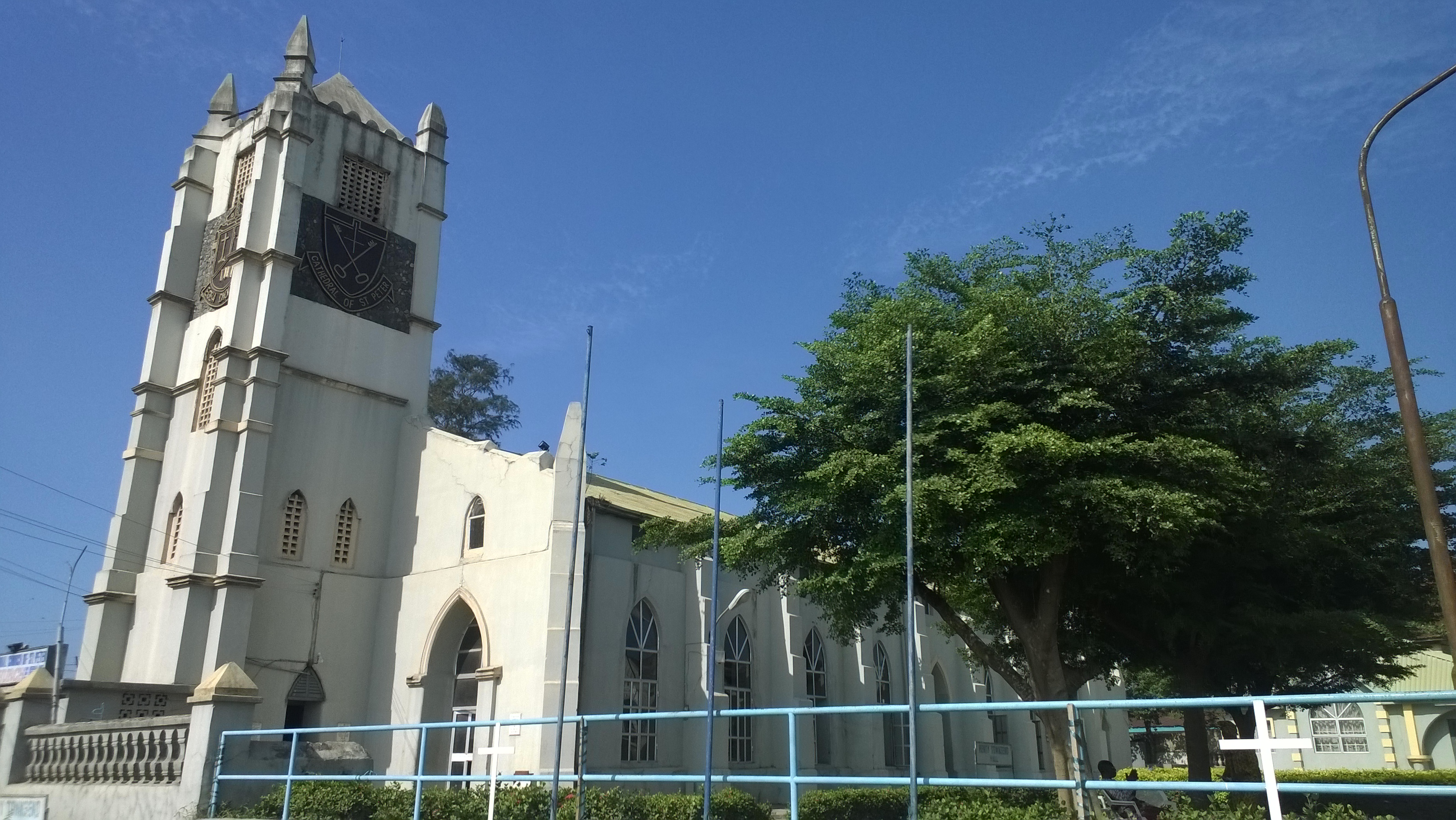
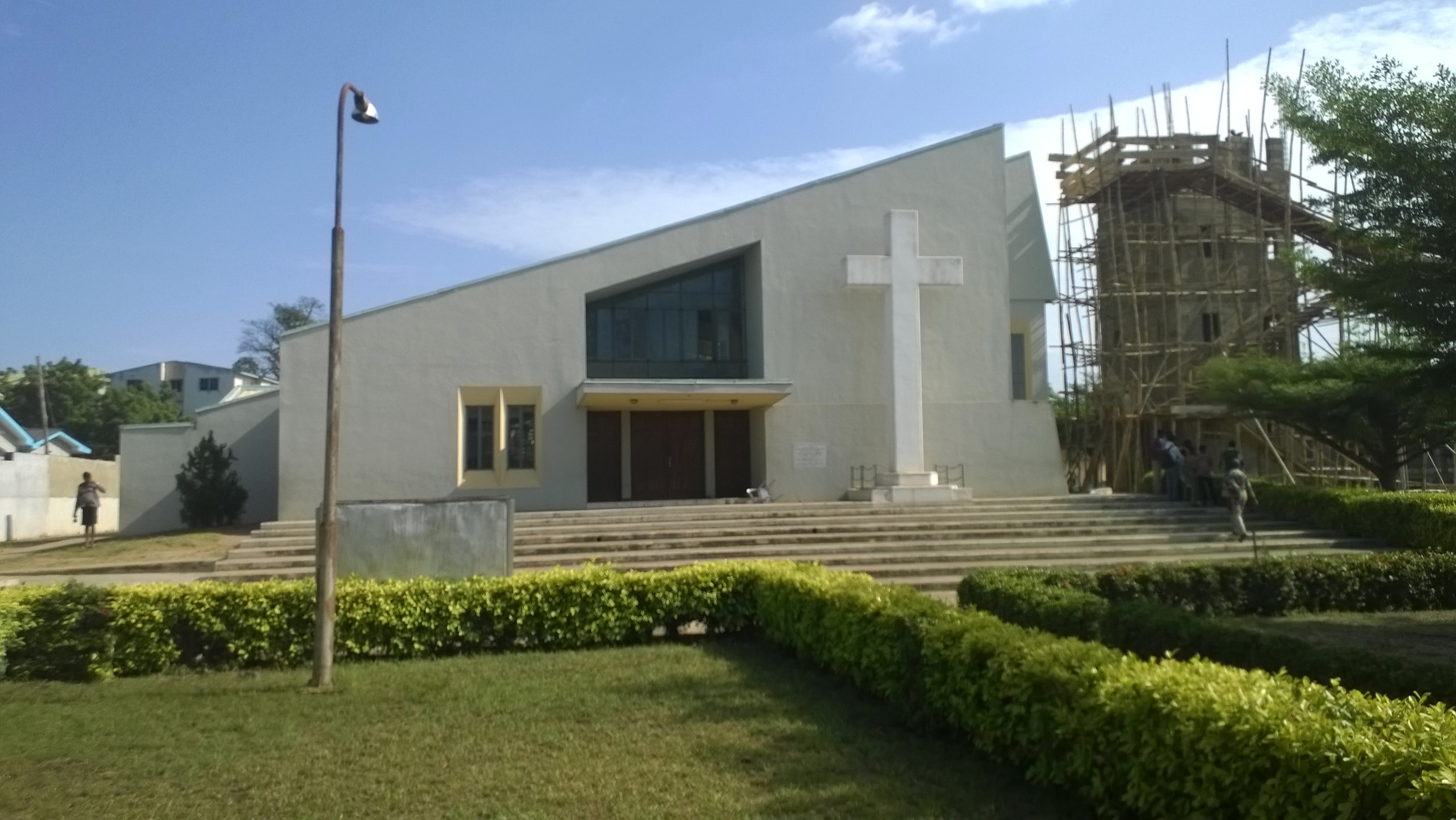
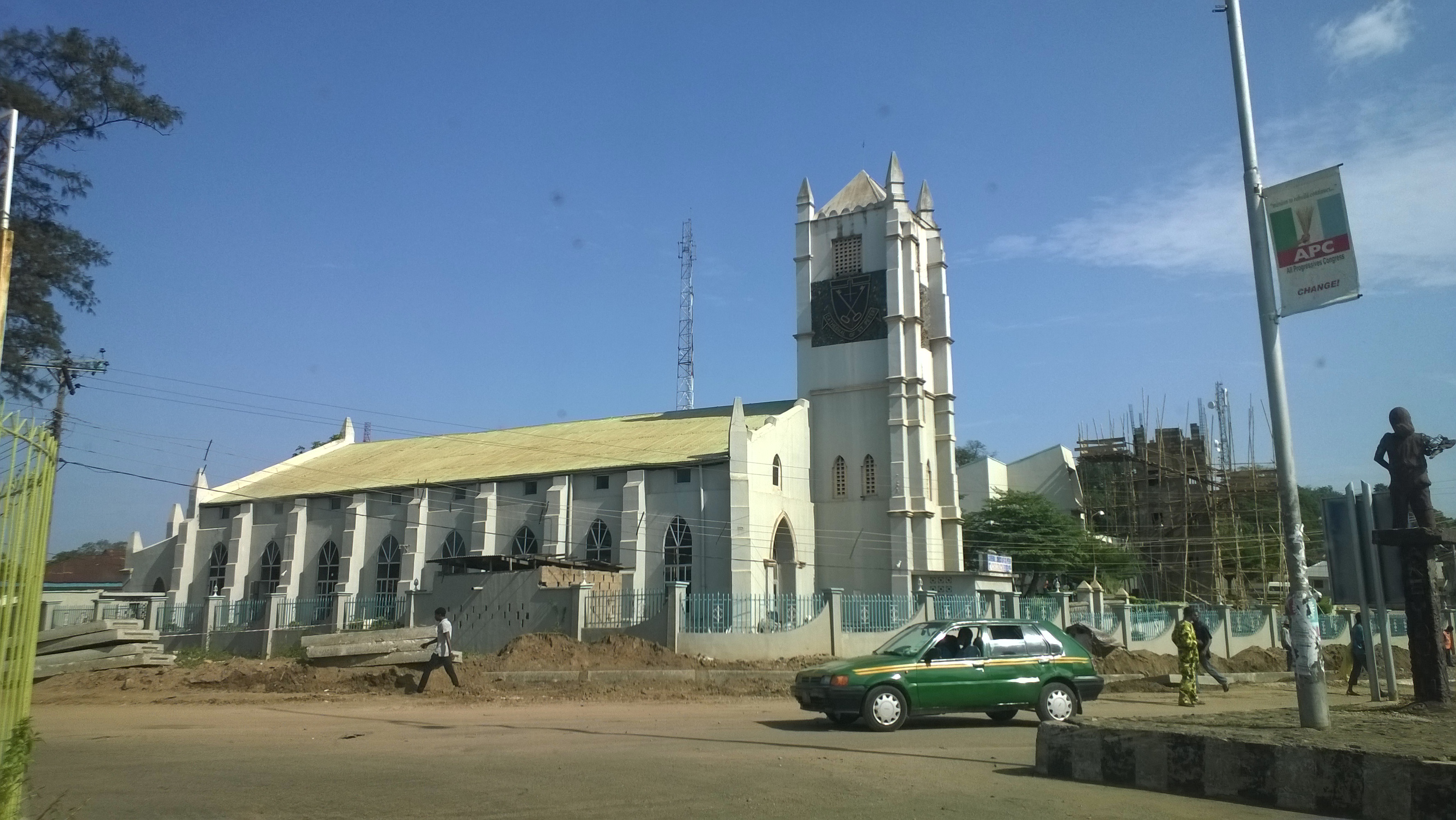
The Church at Abeokuta

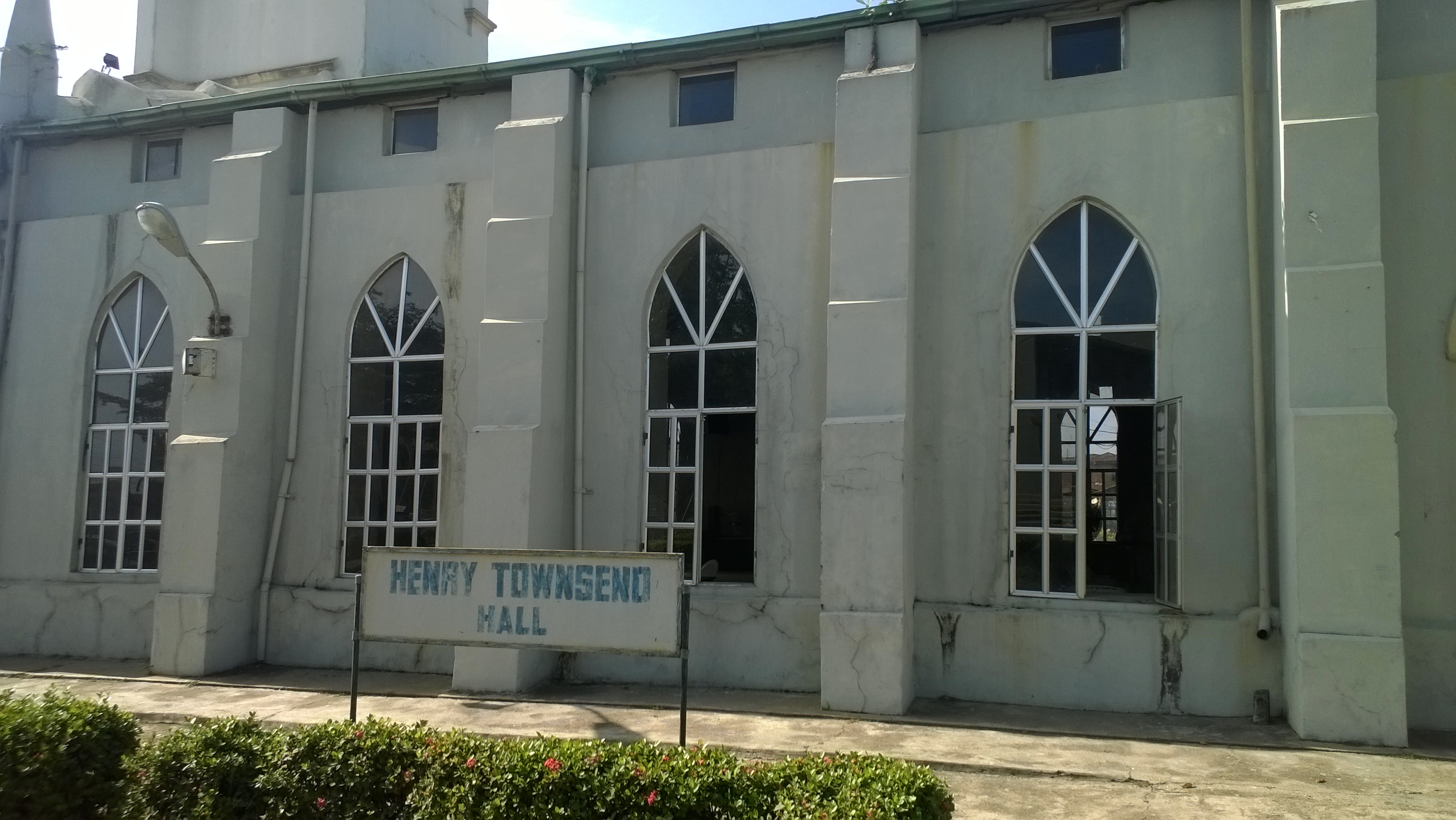
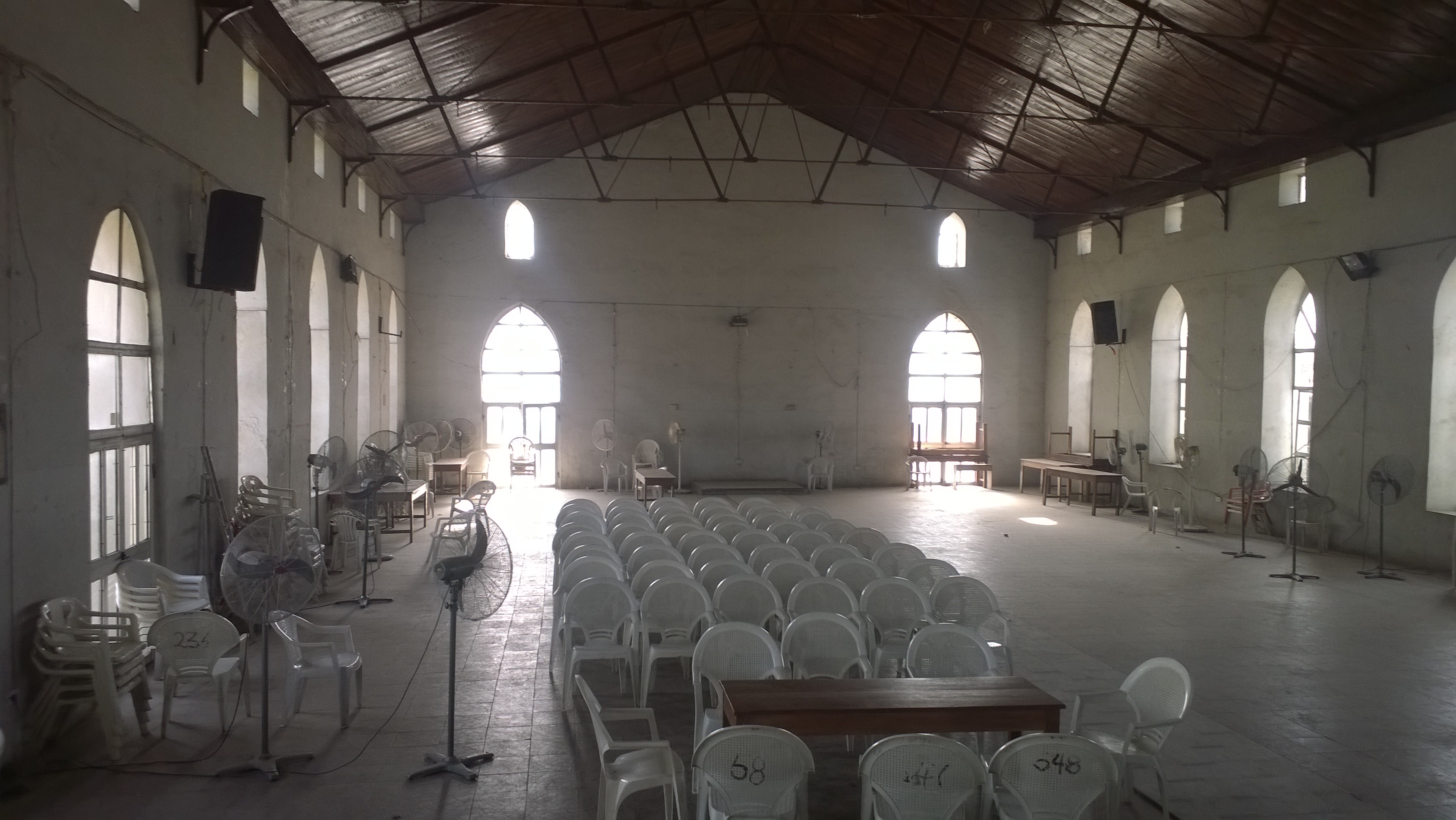
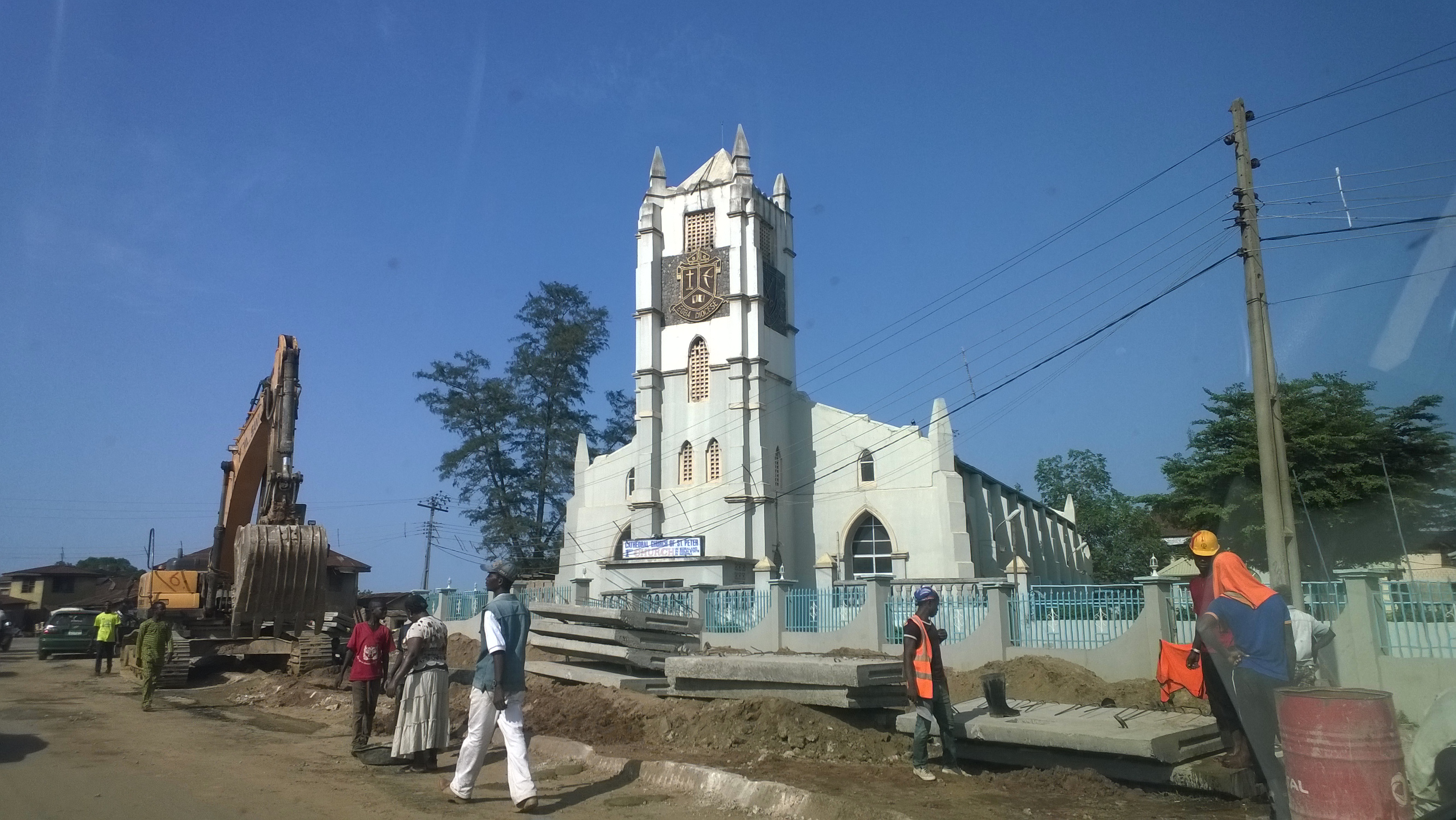
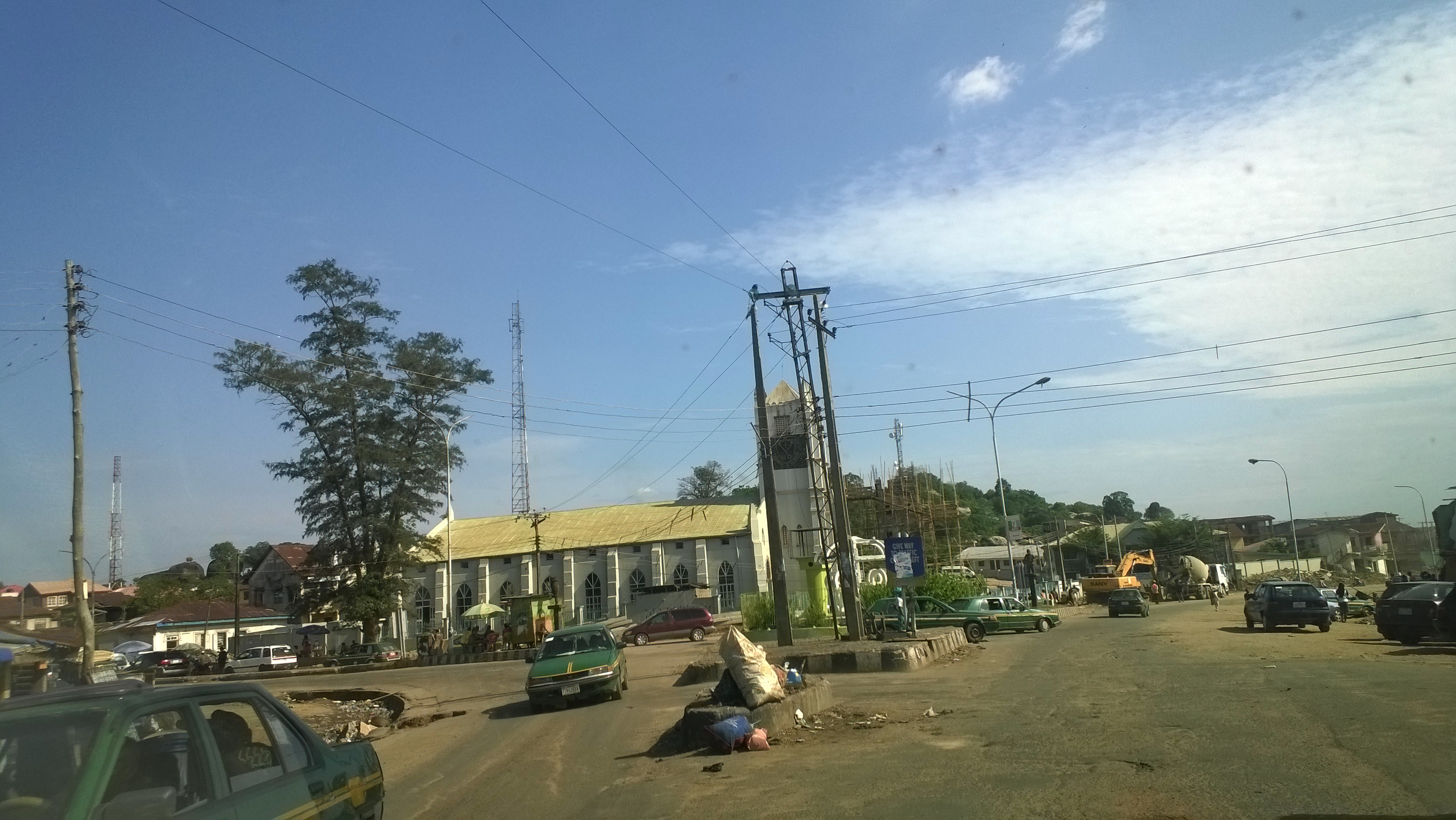
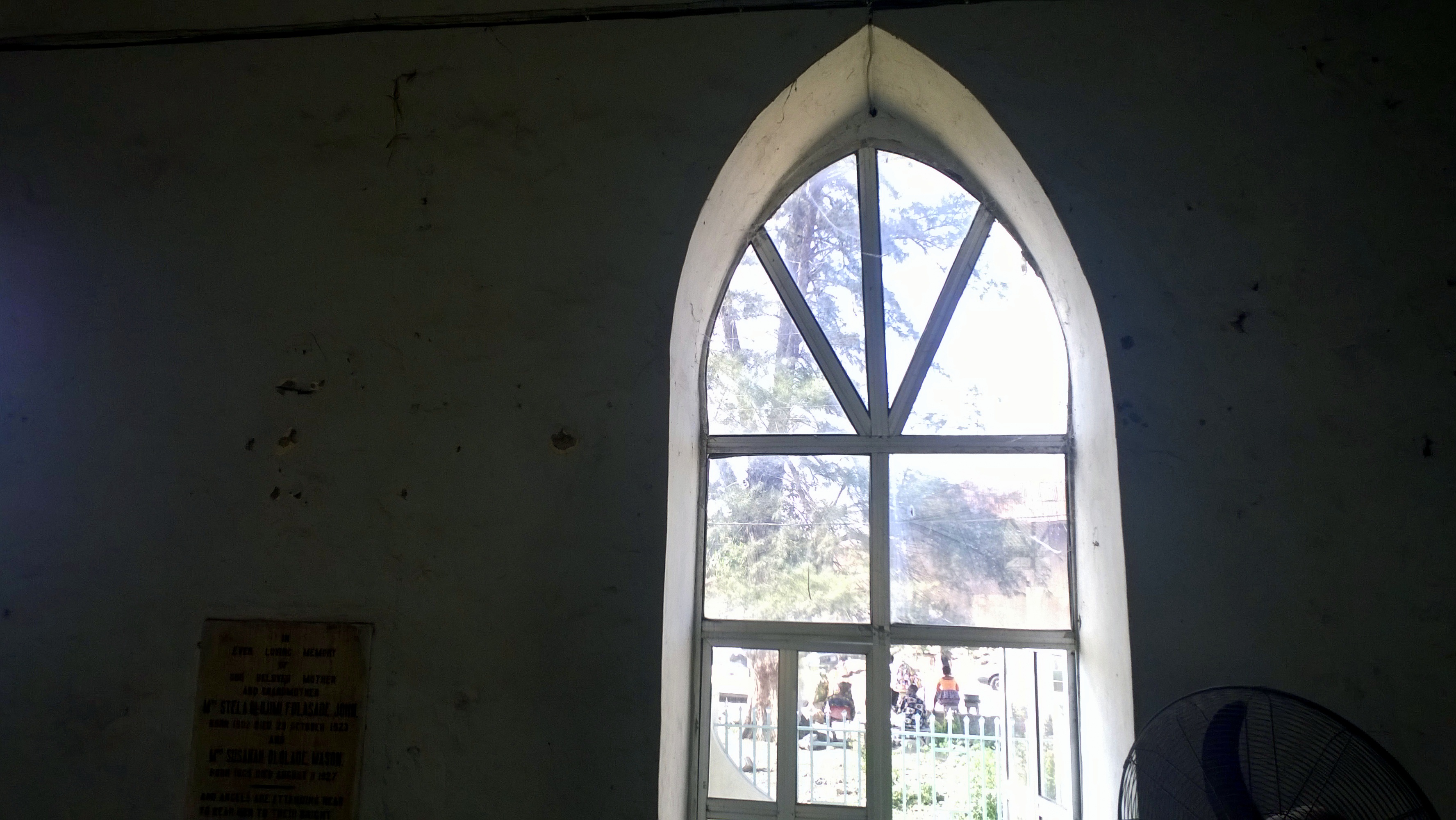
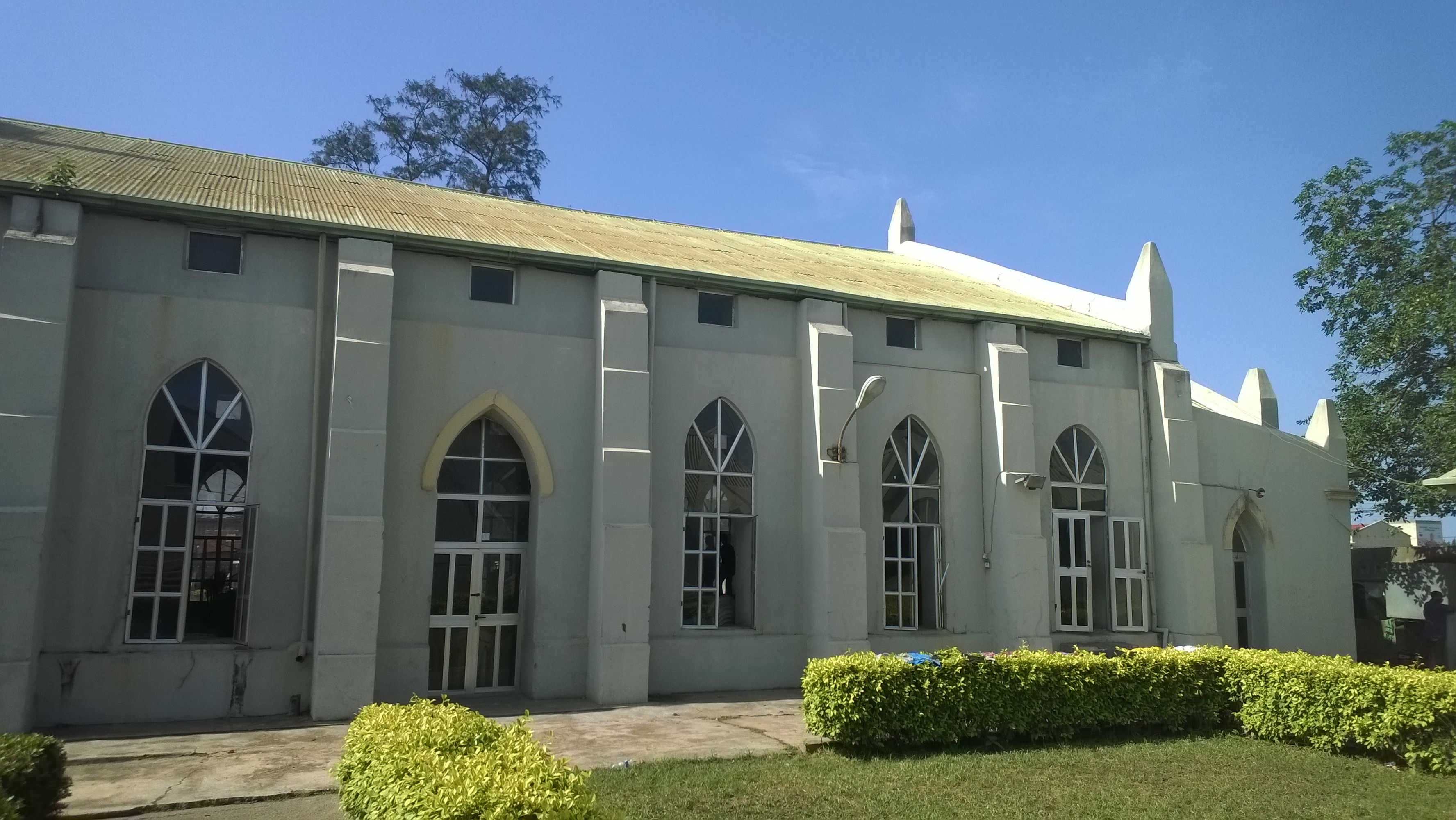
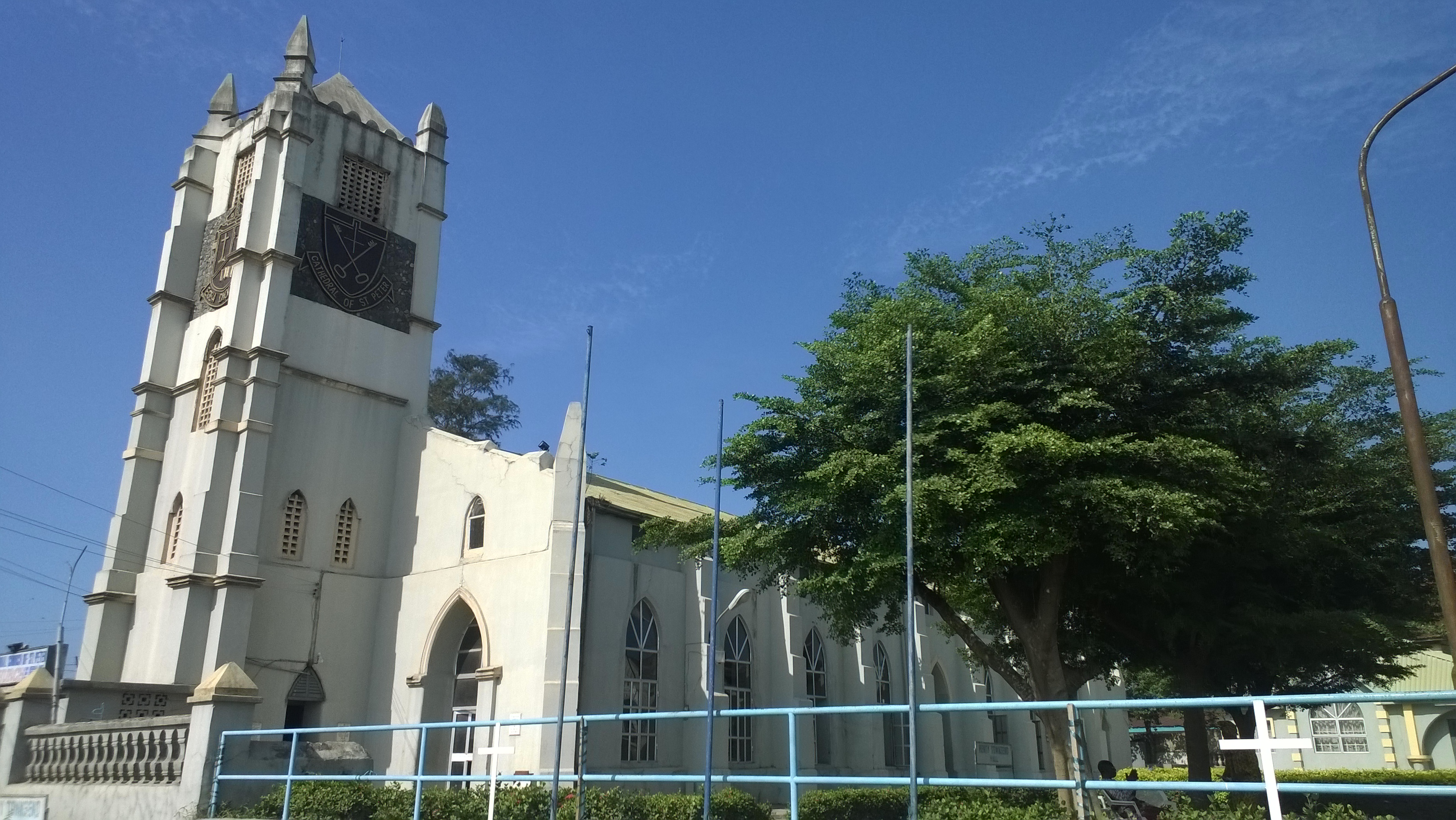
WP_20140410_072WP_20140410_080WP_20140410_069WP_20140410_081WP_20140410_073WP_20140410_079WP_20140410_085WP_20140410_068WP_20140410_076WP_20140410_083The Cathedral of St. Peter at Ake, Abeokuta, is the oldest church in Ake, the oldest church in Abeokuta, the oldest church in Western Nigeria, and – due to the proximity of the town to the Atlantic Ocean and the coming of the first missionaries – the oldest church in all of Nigeria. Built reportedly in 1898, it served as a rallying ground for a number of initial missionaries to Abeokuta many of who played other roles in the government of indirect rule between the Crown in England and the chiefs in Egbaland. The foundation of the church was laid by one Reverend Andrew Desalu Wihelm around 1846, and completed during the time of Henry Townsend.

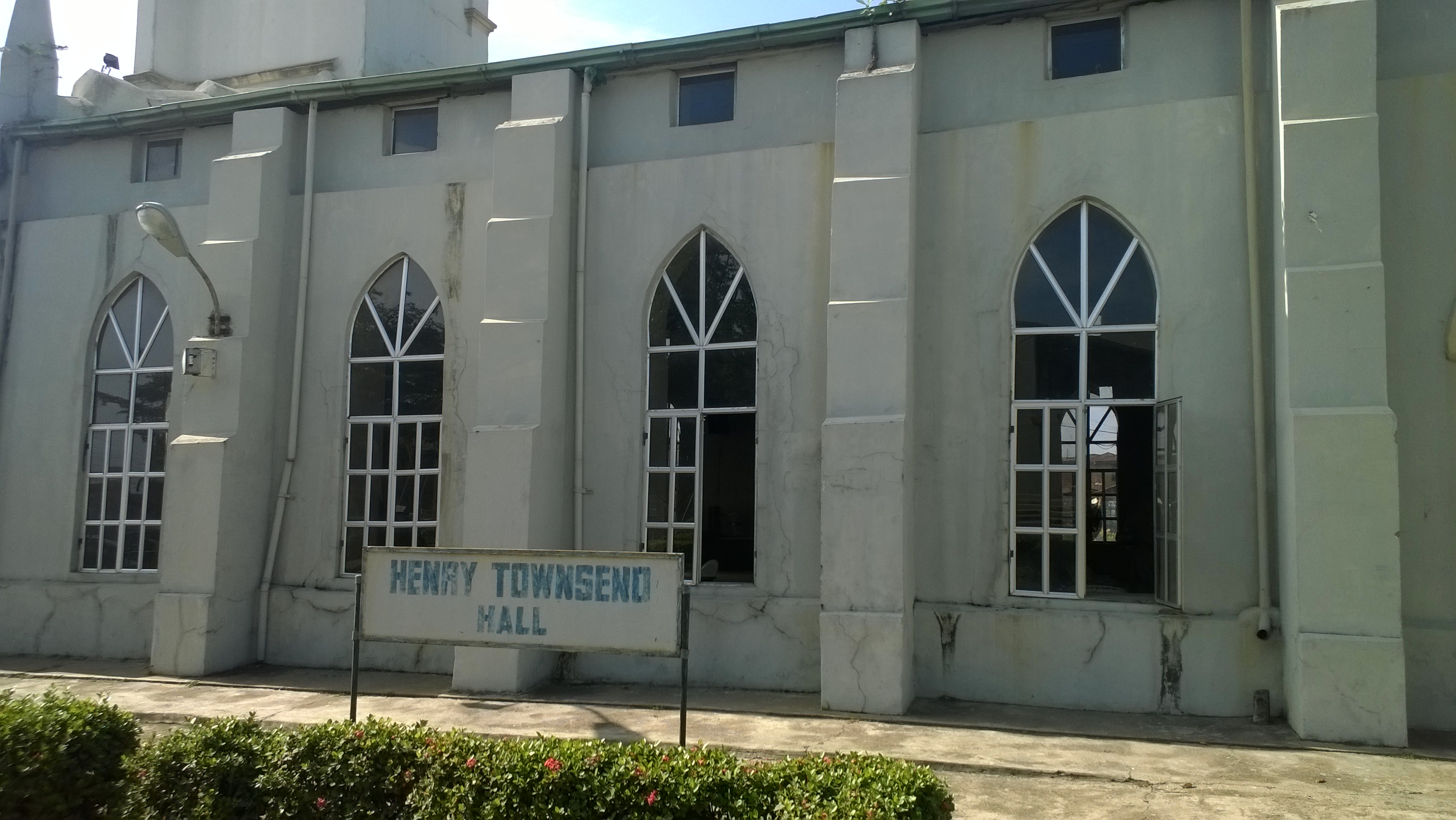
One of the most known pastors of the church include the Reverend Josiah J. Ransome Kuti (also known as the grandfather of Fela Anikulapo Kuti, the inventor of Afrobeat), among many others. A hall in the church premises is named after another famous pastor, the Reverend Henry Townsend.

In some ways, it is the Southern equivalent to the Church in Wusasa – also a first in the north, built in 1902 – whose survival depended very much on the hard work of volunteer priests battling a society that – at the time – very much resisted the change it represented. In the account written in Wole Soyinka’s 1981 Autobiograpy Ake – the Years of Childhood, most of the early missionaries faced life-threatening confrontations with the elders of the town to whom Christianity represented a real and present threat. Many churches fell down after being visited by men from the local cults, sometimes while people worshiped inside. In the case of the Wusasa church, the threat came from the Muslim societies in the north who felt threatened by the new religion. That these structures have lasted so long is homage to maintenance, but more importantly, the cultural place they occupy in the societies that own them.

Visiting Abeokuta

IMG_0326IMG_0342In continuation of earlier curiosities about ancient towns, with a particular interest in tall structures overlooking large expanses of land, and pursuit of childhood towns/homes of famous and notable citizens of the world, I returned to Abeokuta yesterday for a solo exploration. “Return” is an appropriate word only because two earlier attempts have been too brief to have allowed a worthwhile independent expedition. On the last trip, I was the guardian of a group of students attending a literary festival.

By the end of this particular trip, which lasted a few minutes shy of ten hours, what became clear was the limit of even this independent attempt not backed with the luxury of time and patience. Abeokuta city is about two hours drive (127 km) from Lagos. This leaves a very little window left, insufficient, to say the least, for anyone interested in walking around to the right and notable places that define the town in the eyes of the world. It is for this reason that one NEEDS to be back, this time for a number of days and more.

WP_20140410_066WP_20140410_072Not bigger, likely, than Washington DC which I however managed to walk around on foot on one notable occasion in 2009, Abeokuta holds its own mysteries. From being the birthplace and/or childhood town of some of Nigeria’s most notable people (the Kutis, the Soyinkas, the Abiolas, the Obasanjos, etc), and for its role in some of the earliest wars that defined Yoruba land, and for its role in Christianity and colonialism in Nigeria, and especially for its famous Olumo Rock and its famous rustic atmosphere that is always a welcome respite from the bustle of big cities like Lagos, a third and even fourth visit is always going to be worth it. And except for the raging sun that mandates constant re-hydration  at every point in the trip, and may pose a challenge for someone visiting with wife and kid as this next one is intended, another shot at deciphering its ancient puzzles should yield even deeper pleasures.

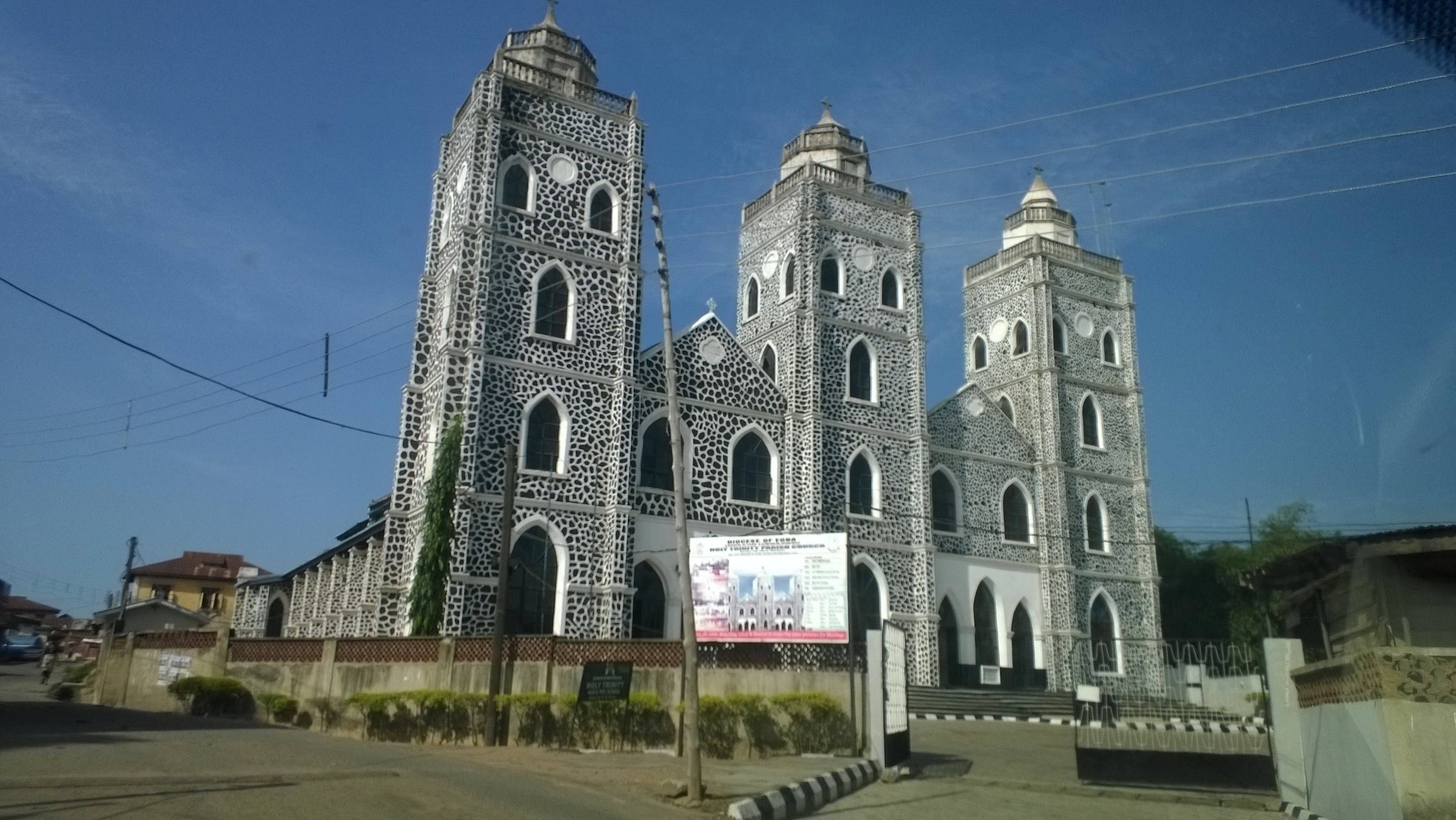
WP_20140410_091WP_20140410_081Notable sites visited this time include the famous Olumo Rock which plays an important role in the founding of the city (more on this later), and in the wars that defined its history; the Centenary hall built in 1930 by the colonial administration; the famous Cathedral of St. Peter’s in Ake (the first missionary church in Nigeria) with a hall named after Henry Townsend; and, finally, the traditional palace of the Alake of Egbaland – a paramount king; among others. From on top of the rock, a number of other sites of attraction can be seen: the family houses of Chief MKO Abiola (winner of Nigeria’s 1993 presidential elections), the first mosque in the city, the River Ogun from where the state got its name, and the first television station in the state.

IMG_0417IMG_0395Much as I tried – and I didn’t try much because of the limits of time – I couldn’t locate Wole Soyinka’s childhood home this time, reputed to be located somewhere close to the St. Peter’s Church. For the next trip, deserving of particular attention to this important landmark, I’m heading back into the first chapters of the writer’s 1981 autobiography in which he described proximate locations around his parents house in Ake. The challenge will be to translate geography embellished in fiction into a real life quest in the “sprawling undulating terrain” of the rustic town. Challenge accepted.

More later. And pictures.