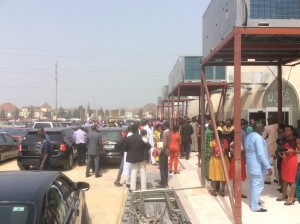
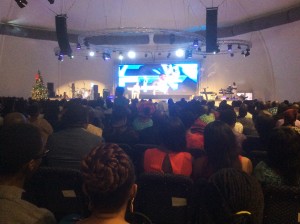
 The interest in (and response to) my last post about the demise of decorum was on my mind as I attended church on Sunday, for the second service, at the church’s new location in Lekki. What I realised, along with the fact that I’d painted Nigerian events with too much of a broad brush, is that Christian (and perhaps most religious) events, along with events organised by/for writers are usually better organised than other public events. Maybe the problem of decorum is actually a problem of organisation. The Aké Arts and Book Festival is certainly one of the better organised events I’ve attended in the country, and it continues to improve every year. It is run by young volunteers who put up a more competent performance than many of our public officials (and even private organisers) who earn way more and deliver less.
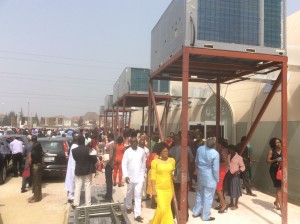
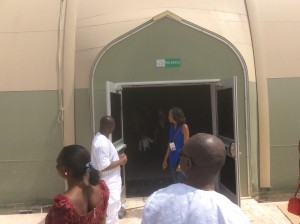
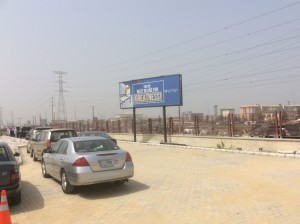
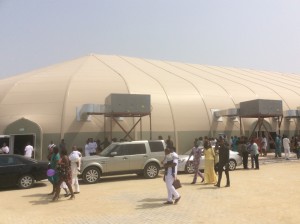
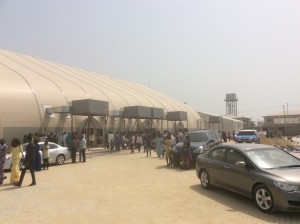
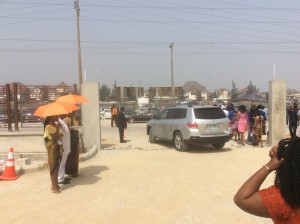
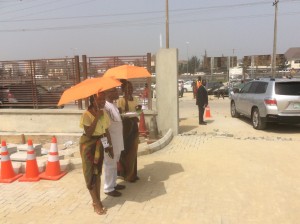
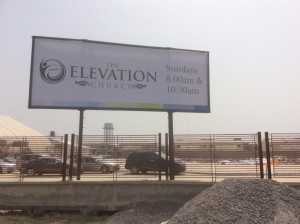
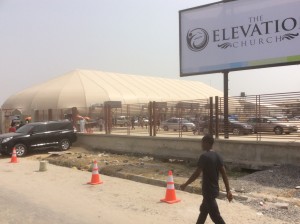
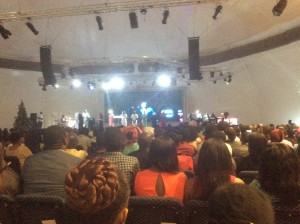
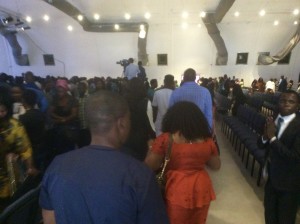
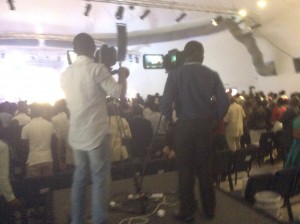
Now, the Elevation Church moved, this Sunday, to its permanent site along the Lekki-Epe Expressway, and held its first two services there to celebrate the occasion. These photos were taken there. The church structure (made in a tent-like form with steel and tarp) sits on a 17,000 square metre area of land purchased and developed over the last three to four years. Not only was the church programme prompt and well organised (as it has always been), the interior design of the new structure shows attention to detail and to the comfort of the worshippers. For someone with long legs and a phobia for sitting in cramped spaces, believe me when I say that the arrangement for coming in and going out were made with deliberate attention to comfort, security, and aesthetics.
What else can I say? It’s a place of worship, so perhaps we’re usually at our best behaviour in such places. But props should go to the hundreds of unpaid volunteers who spend their time and effort to make each Sunday service a breeze. May I also recommend that anyone interested in a family church with deep social consciousness and connectedness to the environment in the Lekki area, and a beautiful environment of worship and fellowship, should check out the Elevation Church. Take it from this recurring Christian agnostic who has found it a worthy venue for nourishing of the soul and the stimulating of conscience and purpose. Do I sound like a preacher already?
This Sunday service featured – among other things – a live performance by Nigeria’s top music producer Cobhams Asuquo who sang a theme song he’d composed for the church, a Christmas carol, and another about Angels All Around. Those who have ever listened to him or seen his work already understand the depth and breath of his talent. Witnessing him lead a congregation in a soulful worship performance is a bonus delight.
So, what am I trying to say anyway? Can’t remember. But do come to church next Sunday!
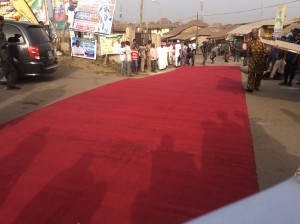 I realised, on my way back from the coronation of the Ọọ̀ni of Ifẹ, last Sunday, that I’ve never attended a properly-planned public event in this country as an adult. Be it a wedding, a naming, or an engagement ceremony, or even an official governmental or artistic event, the evidence from my trip down memory lane has left plenty to be desired, particularly as regards planning and implementation. True a few have come very close to proper organisation, but they have been too far in-between to be the norm. Either we Nigerians are terrible event planners in general or we are just terrible audiences of otherwise well-planned events, both leading to undesirable consequences.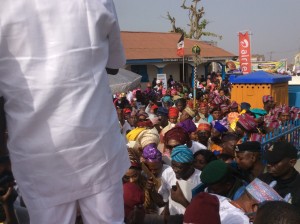
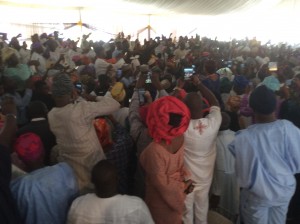
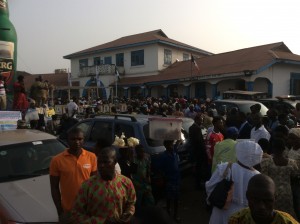
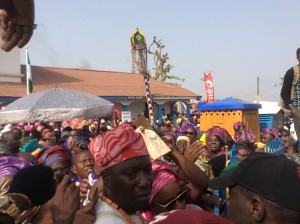 And secondly, an event slated to host royal dignitaries from around the world started almost as a free-for-all as royalty and “common” men jostled together in a crowd to make their way through a narrow gate into the hall. At one point, I spotted the king’s own father himself being pushed and shoved with the crowd, and having to prove himself to be who he is. It was the same situation for the mother of the princess and other numerous otherwise dignified guests who had to fight through what seemed like the eye of a needle, even while holding a VVIP invitation card. At one point in the crowd, one spots the staff of office of the Olúbàdàn of Ibàdàn – an otherwise important instrument of office that should pave way for its bearer without questions. For almost an hour, the staff and its carrier remained nestled within the throng (pictured).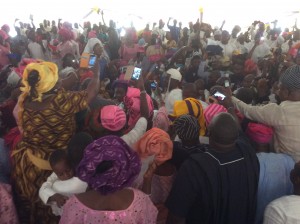
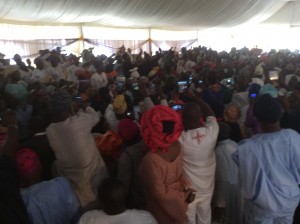
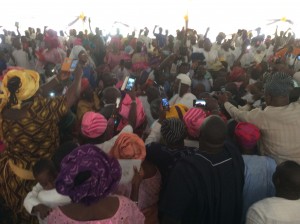
 By the time the Ọọ̀ni made his way into the hall, not only was his path blocked by indecorous photographers, well-wishers and other media practitioners wishing to take his photos, the whole hall seemed, at once, to have turned into a barbarous throng, with everyone standing on their seats with phones and devices at the ready to take photographs. Our modern interpretation of this phenomenon might excuse it as a sign of the king’s importance in our imagination, or our celebration of his ascendance -Fair point? – rather than a more unflattering suggestion: that it is a display of our lack of decorum at such events. One wrong footing and one of these amateur photographers would fall, deservedly, and land either on the king’s head or by his feet. And even without that, the walk from the entrance which should have taken less than a minute took over fifteen minutes: a newly crowned king pacing himself through an artificially-constructed hedge of human nuisance.











 Late Sunday evening (December 6, 2015), after a day of chasing after the new king with known and unknown cues that led us into his new renovated palace at Enuwa, a few minutes drive from the Ilésà Bus Park, I got another tip of his new destination: a location a few minutes’ drive from the Ifẹ̀ toll gate where the construction of the Ifẹ Grand Resorts was about to be flagged off. It is a replica of the Lagos equivalent called



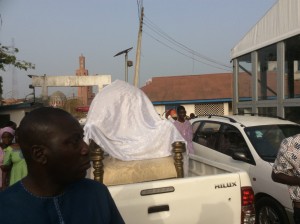

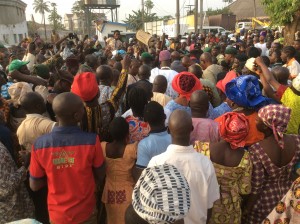
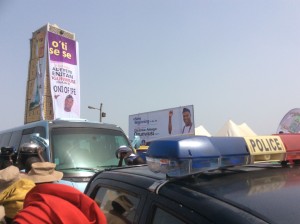
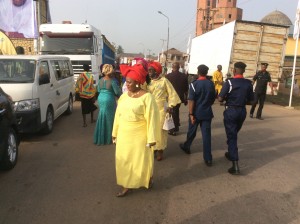
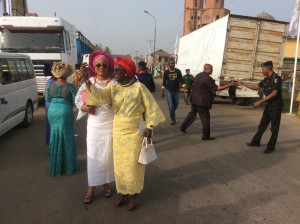
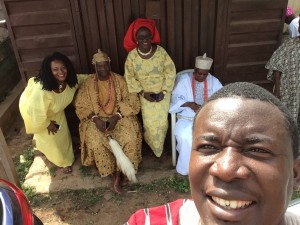
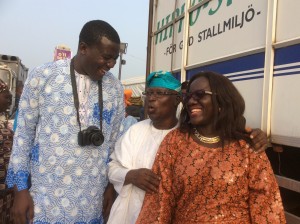
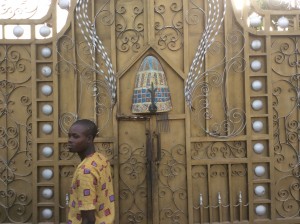 The city of Ifẹ̀ and environs wore a festive look all through the weekend. You couldn’t expect less for the coronation of the Ọọ̀ni, the spiritual head of all Yorùbá, Ọba Adéyẹyè Ẹniìtàn Ògúnwùsì (whom we last met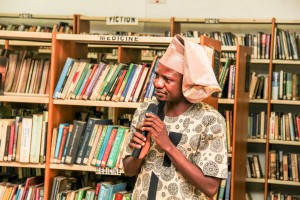
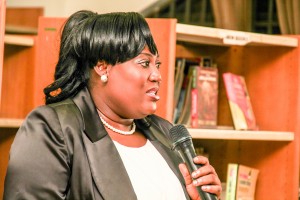 On Friday December 4, 2015, film lovers gathered for the screening of Firm Media Production’s short film The Bargain. The film screening was part of the commemoration of the annual United Nations 16 Days activism against Gender-based Violence. The film screening opened up a well of stories about domestic violence.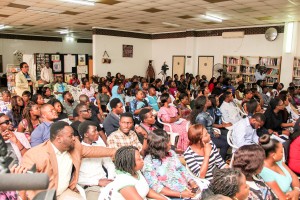
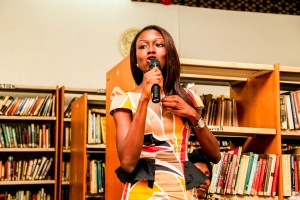
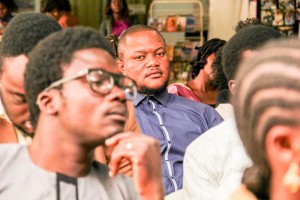
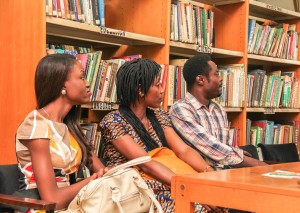 Story Two. The main character in the film, a woman experienced violence from childhood through adulthood. The film is in fact this character’s narration, of her experience, of the different lessons that women should learn. First lesson: as a woman, never respond. Second lesson: never out on a man. Third lesson: as a woman, you never struggle. Take everything lying low. Fourth lesson: As a woman, you should never grow too big. Never let your career grow big enough to shrink your husband’s balls. These lessons are from the book of society.
 “How many of you are willing to be accused of asking a married woman to leave her husband’s house?” She asked as she buttressed her point on the challenge that comes with change.
  Edem Ossai emphasised the role of the society. It is not only in marriages. Teachers are abusing students. House girls are abusing house boys. Fathers are abusing their daughters. Rather than deal with the issues, we blame the victim and ask, in case of sexual abuse: what was she doing there? What was she wearing? Failure of the law at punishing violence in the Nigerian society also makes abuse thrive. “If you have to run to a judge who himself is an abuser, what do you do?” Ossai stressed the importance of parents being more watchful when raising their children; it is important to raise children who respect all human beings, male and female.