In Pursuit of a Canon

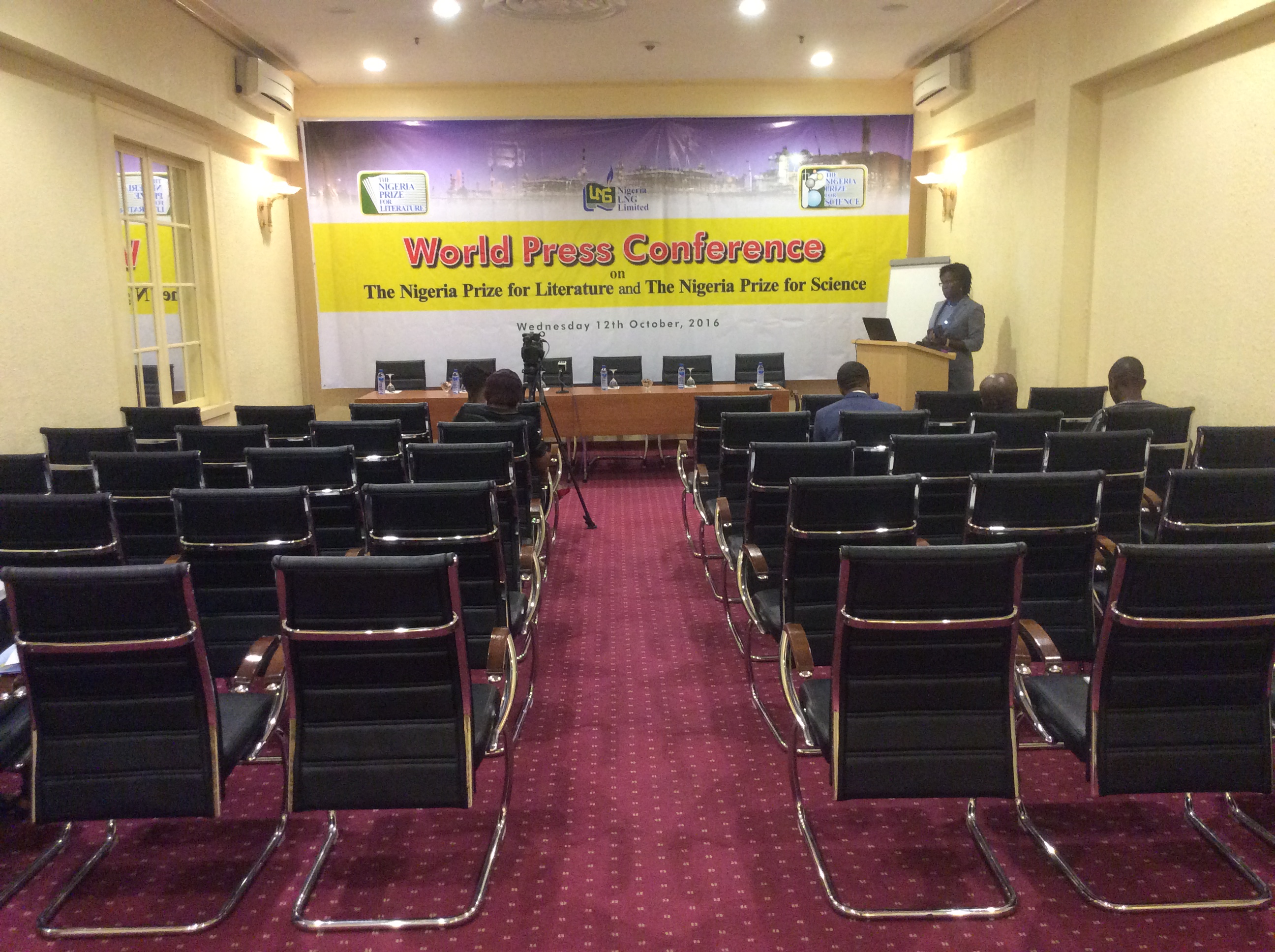
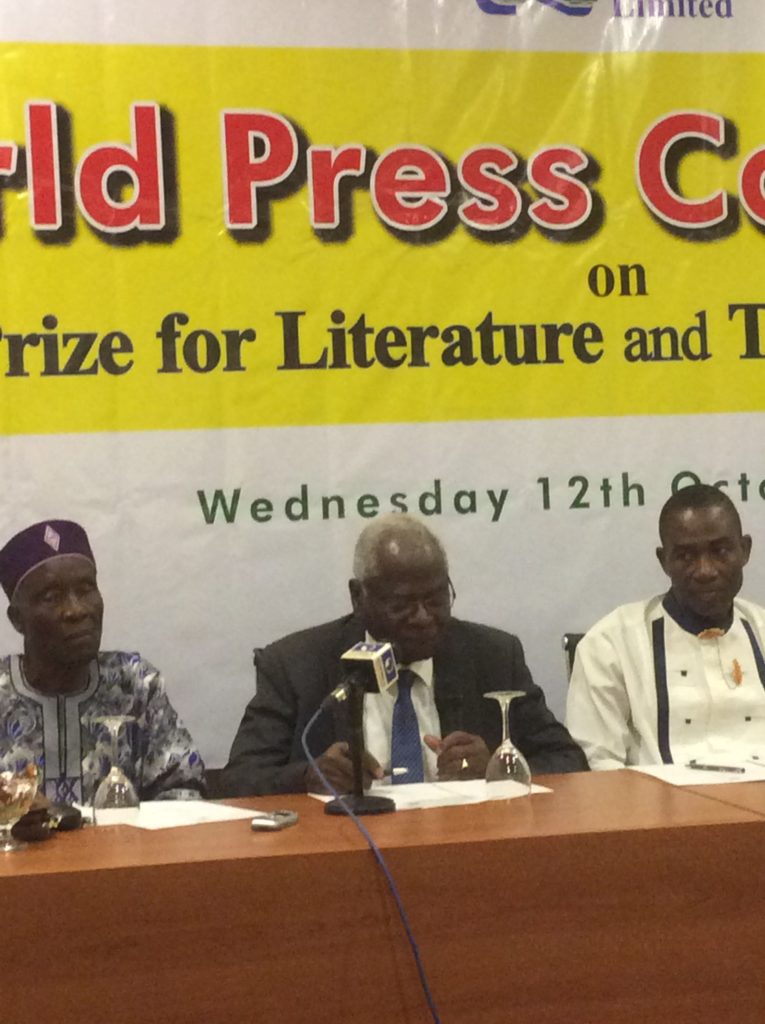
One of the issues that came out of the conversation, yesterday, at the Q&A part of the Press Conference to announce the winner of the Nigeria (LNG) Prize for Literature is whether the judges on the award panel are too old to understand contemporary literature. It was an indirect hit in form of a question from one of the journalists in the room about the currency of the judges’ knowledge about current trends. But the chair of the advisory council, Professor Ayọ̀ Bánjọ, picked up the snark and addressed it fully, defending his team’s savvy and curiosity: “Because we’re old doesn’t mean that we don’t know what is going on. We try to keep up.” Or something to that effect.

But he also went on to suggest that the public make their work easier (if not also superfluous) by generating sufficient debate around each year’s long-listed (and shortlisted) works in order to enrich the canon with smart takes, appraisal, and criticism of each of the work during and after the process of the Prize announcement. He said, and I’m paraphrasing, If you don’t engage the work and create an industry of conversations around them and around the trade, we as judges, may be denied an opportunity to be familiar what is new, and we’d be forced instead to judge the works we are given by the standards with which we are familiar, which may not always be modern. It was both a humble cry for help and a smart take on the state of literary criticism in the country.

Perhaps aware of a criticism of the Prize as being rich in money but not in the elevation of the craft, Professor Bánjọ was throwing the challenge back to the community to not leave the important work of the whole process – criticism, which enhances the value of the work and engages the audience on a second level – to the judges alone. Notable was the fact that no one was rewarded this year with the prize for Literary Criticism which had always been a part of the annual award.

image

He has a point. Many writers who have won the Nigerian Prize – as also pointed out by another questioner – have gone into oblivion with no follow-up work, as if the cash payout of the award had delivered a knockout punch to their creative ability or drive. Certainly, the point can be made that if the work of past winners of such a prestigious prize do not gain more critical interest after such an honour, or increase in sales at the bookstores, or even show up in more quantity on book stands as a result of the award boost, the Prize would have failed in a major way. And what creates this kind of interest is not just the distribution of the books at the award ceremony as the NLNG already does, or a donation of copies to public libraries which is also a good thing, but a critical engagement by other writers and critics of each work as soon as the long list is made, and before/after the award winner is announced.

This is where the indictment of the community is deserved.

The Caine Prize is a much smaller prize in terms of cash reward, but has been deemed way more prestigious across the continent for its sustenance of critical conversation on African literary production though it only rewards writers working in the short story form. There is a couple of reasons for that. The prize has an active online engagement strategy that covers the continent, involves the writing community, and stays connected to the source of important conversations regarding the writers it shortlists. It also has an annual retreat/writer’s workshop in which writers are made to produce works that are then published as an annual anthology. It does this on a budget most likely smaller than that of a prize that awards $100k to an individual every year.

But perhaps more importantly, for the Caine Prize, is that writers and critics also pay attention to each shortlisted story, which are usually carefully reviewed online before the prize announcement. Notable among these annual exercises is the Caine Prize Blogathon founded by Aaron Bady through which interested critics take on each or all of the shortlisted stories each year, and review them individually and as against the criteria of the prize. I have been a part of this exercise since 2013 and enjoyed the process, which brings me much closer to the works than I would ordinarily have. We’d never know how much this annual exercise affects the decision of the judges, but responses to past editions of the Blogathon shows that the large literary community across the continent does pay attention to what is being said and how. It enriches the profession, helps the writers, benefits the readers interested in critical engagement, and makes the prize better.

We need the same for the Nigerian Prize for Literature. All shortlisted books should be made available for free – if possible – to interested reviewers for critical engagement on online and print platforms. Maybe it will make the prize better. But certainly, it will enrich the community of Nigerian readers, and writers.

The Nigerian Prize For Literature 2016: The Judges’ Report

Editor’s note: Today, at Sheraton Hotel, Ikẹjà, Lagos, the winner of the 2016 Nigeria Prize for Literature was announced as Abubakar Adam Ibrahim for his novel Season of Crimson Blossoms (Parressia, 2015) and for the “competent manner in which Ibrahim demonstrated the execution of his work.” Here is the full speech given by Emeritus Professor Ayọ̀ Bánjọ, the Chairman of the Advisory Board for the Prize, on the justification for the prize, and other commentary on the whole judging process.

_____________

image

__________

GENERAL COMMENTS ABOUT THE 2016 COMPETITION BY PROFESSOR AYỌ BÁNJỌ

The Nigeria Prize for Literature is an annual competition which awards annual prizes to winning entries in the literary genres of Prose Fiction, Drama, Poetry and Children’s Literature on a rotational basis.

This year, the genre in focus is Prose Fiction. The following advertised rules were applied during the process of short listing and selecting the winning entry.  

Eligibility: The competition is open to all Nigerians anywhere in the world. This does not mean that writing about other peoples and cultures in a foreign setting is acceptable.

Relevance should be interpreted as consistency with the goals and aspirations of the Nigerian nation and its peoples – specifically, respect for their traditions and their identity as Africans.

Publishing: The prize is meant to encourage local publishing and book distribution, among other goals. Books published outside the country are eligible for entry. Only properly published texts are acceptable. However, efficient editing and good presentation of text are considered essential parts of publishing and are taken into account during the process of evaluation. The quality of the language is important, and errors of style and grammar are  considered major blemishes; these errors may not pass as typographical errors.

Genre: for this year’s competition, a basic distinction is drawn between fiction – that is imaginative prose which may incorporate factual materials and non-fiction like history, biography and sociological tracts which sometimes feature in the submissions for the competition.

This year’s completion has attracted a strong field with such high quality that even without this current shortlist of 3 books there would have still been a winner.

image

COMMENTS ON SHORTLIST OF THREE BOOKS

All the three shortlisted texts cover a wide range of urgent societal and cultural issues such as the status of women in a patriarchal society, the education of youths, the search for identity, the danger of youth unemployment, corruption, insurgency, religious hypocrisy, migration, broken homes and single parenthood and attendant impact on women and children who are usually at the receiving end of most of these problems.

  • Chika Unigwe’s Night Dancer, tells the familiar story of the continuing marginalization of women in Igbo society. The author shows a strong awareness of this context by  the flavoring of the narrative with linguistic and cultural insertions. The novel tells the story of Mma, a young woman’s anguished search for her roots from the opening of the novel when she feels that she has been denied by her mother, until she gradually discovers that her mother had been deeply hurt by both her matrimonial and maiden families. In the course of Mma’s adventures in excavating her identity and her mother’s past, she is predictably confronted by the same cultural inhibitions that her mother had rebelled against. Mma’s own denunciation of those traditions and her belated adulation of a mother she had despised at the beginning of the novel is a slow and painful process of discovering the truth of her family background, and a radical change in her perception and understanding of this background. All this is aimed at validating Unigwe’s passionate call for the extension of the frontiers of women’s space in society.
  • Elnathan John’s Born on a Tuesday is a book about contemporary Northern Nigerian Society as seen through the eyes of a young man. The narrative is told from within a deviant community seen through the first person consciousness of street boys, popularly described as al-majiri. Virtually abandoned by parents and community the  young boy, who tells the story in his own words, finds his survival through a brotherhood of other street boys. Their small outcast community is exploited by politicians and the brutally victimized as scapegoats by law enforcement agencies.  They inevitably patronized and taken over by leaders of religious sects and become a source of recruitment terrorist groups. One of the strong points of the novel is its insight into the social mechanisms that lead to national crisis and terrorism or the social processes that give rise to religious fundamentalism and political hypocrisy, corruption and exploitation.
  • Abubakar Adam Ibrahim’s Season of Crimson Blossoms is a very skillful and sympathetic narrative handling of a most psychologically and emotionally painful between an aging widow, who seeks release from her culturally imposed sexual repression, and a young outcast leader of a group of “weed” – i.e. hard drug – dealers who are ready thugs for politicians. In the background as immediately cause of the widow’s troubles, is the violent history of ethnic hatred and conflicts in Jos, placed within the larger context of contemporary Nigerian history with its complex and sometimes violent intertwining of politics, religion and culture. The novel moves from its evocative and passionate first sentence through a web of anxious moments to a tragic and painful conclusion with hardly a moment of respite.  All through its projects through is main action, the implications of certain key social issues for younger audience – key issues such as early marriage, drug abuse and impact of relationships on human action. It is a novel whose narrow domestic action has wider universal relevance beyond its relevance for its immediate setting.

On behalf of the advisory board of the Nigeria Prize for Literature and of the judges and international consultant, I have the pleasure of announcing as the winner of this year’s entry, Season of Crimson Blossoms by Abubakar Adam Ibrahim.

________

The award ceremony will take place early next year.

Jakande Unclothed

imageDriving by the Jákàńdè area of Lekki (5th roundabout) on Sunday, I noticed a few people with placards at the roundabout standing around with signs like “this is a peaceful protest, leave us alone here” or something to that effect. Behind them was a stretch of destruction that looked like a heavy storm had just passed through. (I’ve been to aftermaths of real life tornadoes, so I know). Behind them lay piles of debris as far as the eyes could see from the roundabout, made of brown roofing sheets and wood.

image

Before now, that area always looked a little too crowded, too dense, too unplanned to have been housing anything legitimately sanctioned by the state. But as we usually do to things that seemed out of place but seemed to satisfy those immediately concerned, we look away and assume that someone somewhere knows what they are doing. It seems, now, that the government has finally come to pay attention to the area. Now, after removing the shanty that had grown out of the space into a community of sex workers, touts, homeless vagrants, and other Lagosians of little means, what emerges is an open land seemingly ripe for some decent development.

image

This is probably the story of much of Lekki, anyway: a stretch of fresh land occupied by small communities of people now suddenly discovered by bigger powers with big equipment and big money ready to expand and develop the area for commercial purposes. The spot where the Jákàndè Circle Mall now stands used to be a shanty as well. Same with Márọ̀kọ́ at Sandfill which has now become a modern plaza with a big hotel. In all cases, after the owners of the land are compensated, a bigger human cost arises in the displacement of hundreds to whom these areas are all is left of home.

imageI wondered while driving through the beach road yesterday what the real cost would end up being. So far, we already have regular cases of carjacking and traffic robbery in early mornings and late evenings. There have also been kidnappings. According to the state government, these shanties are the real causes of such violence as they hide criminals who use them as springboards and hiding places. Demolishing their home and kicking them out would reduce violence and allow free passage of people. There is some allure in that thinking. Past upgrade of hitherto crime-ridden places in the state and the corresponding success in their removal of crime has shown the success of such an endeavour. Plenty spaces under abandoned bridges have been turned into public parks with lighting and security, making them easy to walk under at night without incident. But still, rendering homeless hundreds of residents at just 72 hours’ notice will no doubt have its own consequences. As I tried to read the despondence on the faces of all those I saw sitting around the open spaces, I wondered what those consequences would be in the long run.

imageBut in this case, unlike that of the demolition of the national monument at Lagos Island or other cases still under the outrage of surprised owners angry at the state’s seeming high-handed behaviour in destroying them, there seems to be an overwhelming public interest. But unless something of relevance is erected in this spot, all these gains will be lost soon enough. A sustained involvement in the redevelopment of the now levelled area would be a welcome event indeed.

Across the West African Coast: Ghana

By Yẹmí Adésànyà

It was work that dragged me across the coast of West Africa in delightful week-long bouts of adventure, each country exhuming different parts of me long hidden beneath the lacquer of a time-guzzling occupation. Some ports were more enchanting than others, workload and available time was not equally indulging, and thus my impressions are naturally skewed in favour of cities where my schedule permitted extra-metier experiences.

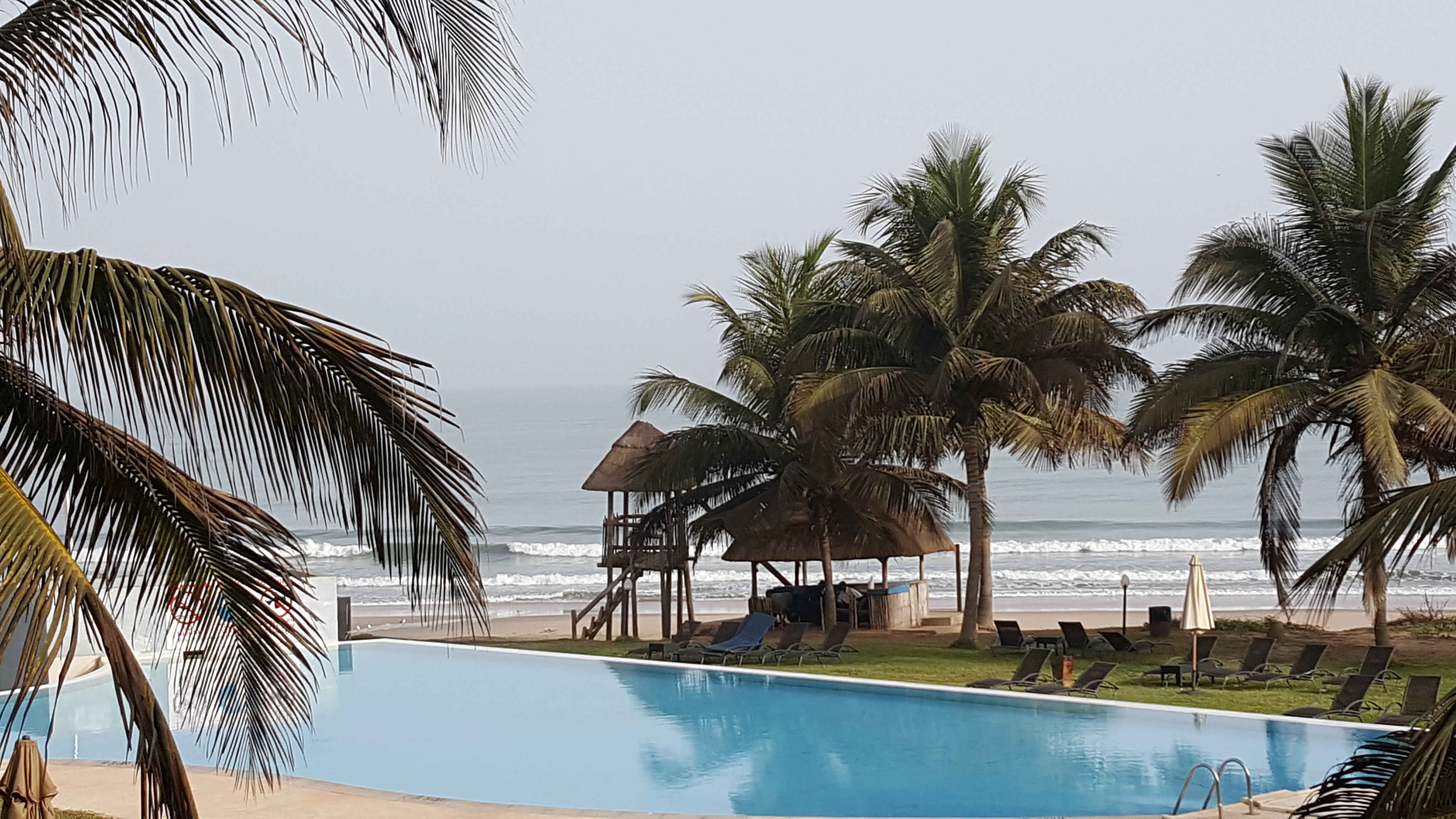
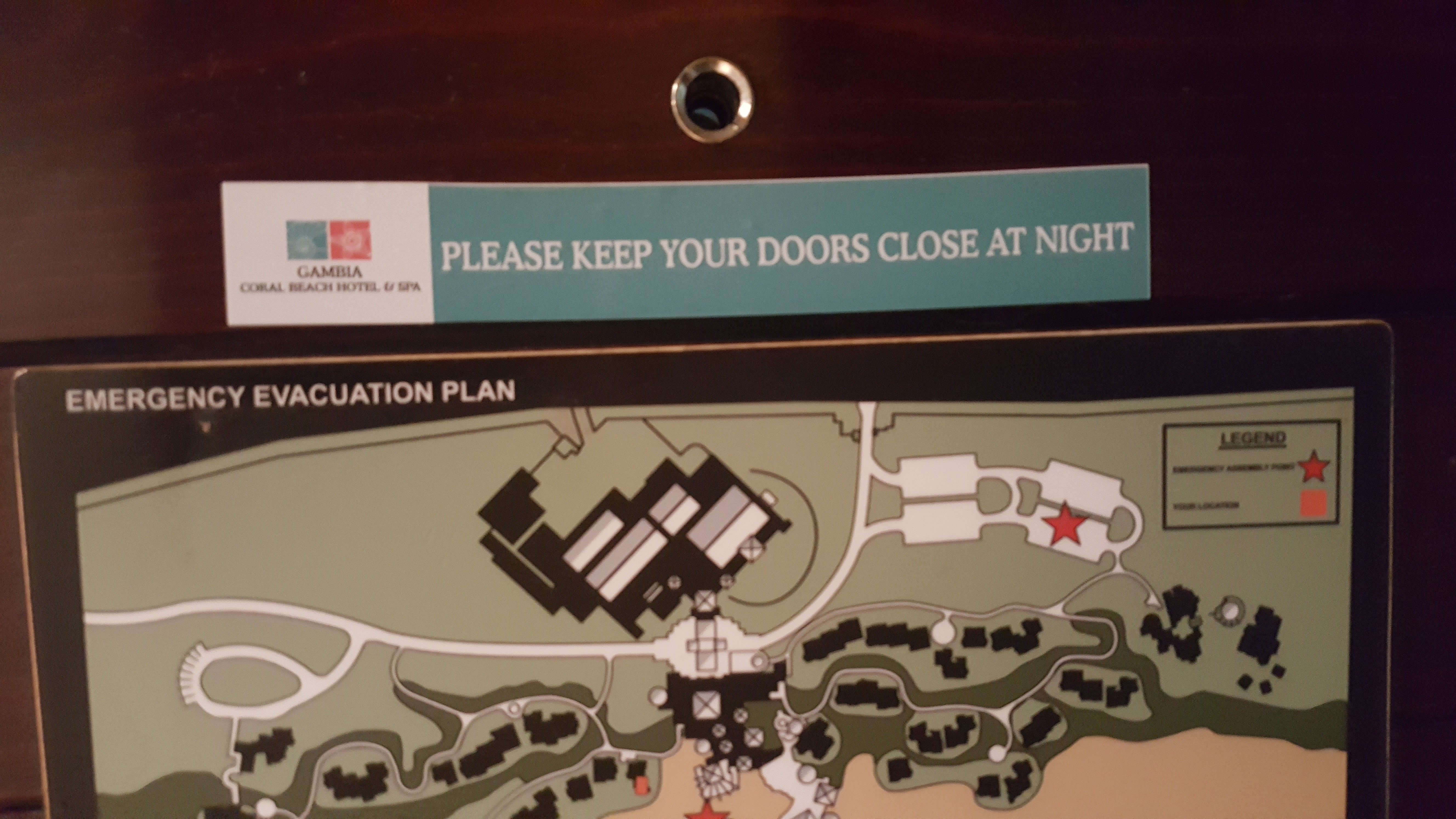
ghana1My journey started with Ghana, a colonial sibling of beloved Nigeria. Accra felt just like home: a buzzing commercial centre, invoking the unfortunately familiar and tiring spirit of boisterous vehicular traffic congestion, co-witnessed by hardworking street hawkers. My hotel was only a stone throw from the office, in Ring Road; there was not much time to play, I therefore did not see much of Accra. Ring Road is largely a business district, but my daily commute offered a view of the residence of one of the top opposition politicians, with campaign banners and billboards clearly marking his territory. So one might say the area is partly residential too.

20160429_144618Any city that reminds me of Lagos meets with a kind of languid resignation and apathy, the kind in which I steeped for the duration of my visit.  I got a lousy shot of the state house (although my driver was not sure it was safe to take these photographs) and a stationary armored tank, but no other sense of adventure or curiosity was piqued in me. I made a mental note to opt for a hotel in a different part of town when next I visit, as I prefer relatively less densely populated spaces, with minimal noise.  I was later rewarded on one of these trips with two West African cities that felt like heaven to my Lagos-suffused soul.

20160429_164403An interest that seemed of inexplicable significance, to my lunch buddy anyway, was a matter of immense national pride which I had made a mental note of witnessing, and documenting my observation and verdict. Many Nigerians have taken part in at least one light-hearted debate on the staple continental dish – Jollof Rice – and I had too, before my trip to Accra. I thought the Nigerian Jollof was better, just because, of course, but I had no objective evidence in favour of my bias. I had ample experience with the Nigerian flavor, and wanted to taste the Ghanaian, to have some closure. Well, I achieved that.

20160425_080640During my week-long desk-bound sojourn in the city, I was condemned to a food-evader’s utopia of monotonous lunch at the Swiss School, chiefly because it was close to the office, plus time did not permit any exploration anyway. I ate Jollof Rice in Ghana, and it was flat, and unlike the pill Posner took in Ibiza, no high followed. It was the second most unjollofesque rice I have ever eaten. Almost completely tasteless, inadequately seasoned, and what it lacked in tomatoes and salt, it made up for in excess pepper. As if that was not enough disappointment, the Zobo drink I enjoyed with my first lunch had taken on a more pungent taste by day two. Zobo the popular drink made by boiling dried calyxes of the hibiscus plant floweris big in Ghana, I was told by my colleague. What he forgot to mention was that it is not always harmless. The variant I was served on the second day shocked my palate to astringent displeasure and reminded me of the need to pay a closer attention to food labels in the future. Spicy ginger does not belong in Zobo drink!

20160425_130806I left Accra with a memento from the Ghana Art Centre market; a Djembe drum, delightful to my little music maker, and a regular reminder that one can sometimes find pleasure in interruption.

A Failure All Around

This is the concluding portion of a five-part report on the demolition of Ìlọ́jọ̀ Bar. The story began here.

_____________

One wonders how monuments are made in other places. Are they merely declared into existence or is active work usually done to make sure that the structures fulfil the physical role into which they have been designated? In the United States, when a building or structure is declared a “National Historic Landmark”, it is handed over to the National Park Service who then maintains it from then on, in perpetuity. About half of the historic landmarks in the US are still privately owned while under maintenance by the Park Service. In the case of Ilọ́jọ̀ Bar, one more thing that has boggled the mind is how – in spite of how high the stakes were for its survival – no one deemed it fit to insure it against accidental or deliberate demolition. Notwithstanding what has now happened, one wonders how things would have been different if either the Federal Government (through NCMM), the state government (through relevant ministries), the Brazilian consulate which had put premium on it over the years, and private stakeholders (Legacy Group, family members), etc, had taken out a joint insurance policy over the building to the cost of its current market value pending the determination of its fate.

img_7521

Ilọ́jọ̀ Bar in 1954. Source: family

Asked and Unanswered

Who applied for the demolition permit? Mr. Daniel Adébọ̀wálé didn’t say. How much was paid for the demolition itself? He didn’t know either. But approval was received from LASPPA. Why was that decision taken to pull down the structure? I asked my host. “We had to,” he said. “As a free citizen of this country, we have the right to buy, sell, or hold onto our property however we want. And as you can see in the documents yourself, we had pretty much no choice. They want to paint us as criminals and it’s unfair. We were afraid that the threats that Fáshọlá’s letter implied will come to pass if we didn’t do anything. But we couldn’t do it without permission. We applied to the appropriate authority, and got permission to proceed.” And why were the contravention notices not shown to the NCMM for immediate action? “We showed them all of these letters,” he said. “You want to know why the NCMM didn’t confront the state about these? You’ll have to ask them.”

The NCMM had, it turned out, written to LABCA after all. In a letter dated June 7, 2013 (seen here) and signed by Mrs. E.O. Ekuke (Curator), the agency intimates the state about the status of the building as a monument. It also informs LABCA that “there is an on-going high powered collaborative effort to carry out a full restoration of the building by… Lagos State Government, the NCMM, the Ọláìyá family, the Brazilian Embassy, and the Legacy 95 Group (as restoration architects).” It further states that the status quo be maintained and that “the building should not be demolished nor its prominent features altered as a national monument.” Since LABCA isn’t talking, I have sent an email to the director of NCMM, Mr. Yusuf Abdallah Usman, whose recent statement “ordered” the restoration of the demolished building. Did LABCA respond to this letter from his office? He or his office has not responded. I also wanted to know how much the Commission had spent on that building since it was acquired* in 1956. The statement put out however presented an indirect indictment on several government agencies involved. It seemed, in short, like finger pointing in four pages.

While I talked with him on Sunday, Mr. Daniel Adébọ̀wálé had started working with the family lawyer to put out a press release in order to counter the current negative narrative about his family. This has now been published in The Nation on September 28, 2016. He read a few lines to me in his house in which he defended the decision of the family and laid the blames squarely at the feet of all the government agencies concerned, particularly LABCA. And to prove the family’s long-term open line of communication with LABCA over the years, he also brought out two complimentary cards from officials of the Agency with whom he had been in contact on the matter over the years. “If they hadn’t talked to us, like they claim”, he said, “where did I get these from?” One was from an Engineer Kúnlé Làmídì (MNSE) and another from someone called “Bldr.” T.A. Adéoyè. (“Bldr” probably stands for “builder”). I asked Mr. Daniel Adébọ̀wálé why he thinks the Agency had so far denied any knowledge of the demolition or of any permit asking the family to “remove” the building. “I don’t know,” he said. You will have to ask them that too. “I will,” I replied. “I’ve tried.”

The Other Descendants

On the afternoon of Monday, September 26, 2016, in the office of the curator at the National Museum, Oníkan, I met with Mr. Eric Adéremí Awóbuyìdé. He is the third son of Deborah Ọláyẹmí Awóbuyìde (nee Ọláìyá), who was one of the original twenty-one surviving children of the Patriarch Ọmọlọ́nà. Deborah, who grew up at Ìlọ́jọ̀ Bar before leaving to marry into the Awóbuyìdé family, died in 1994, survived by seven children one of who was Eric. He was the third child. This makes him a cousin to Daniel Adébọ̀wálé and a nephew to Victor Abímbọ́lá. But they are not on speaking terms. Mr. Daniel, on Sunday, had said that Eric was the one who separated himself, along with his children, from the rest of the main family. To Eric, the Ọláìyá boys were the ones who had deliberately kept him out of the loop so they could benefit from the property alone. But he benefited himself too. He had an office in the property, which he was free to use as he saw fit. One of his daughters, according to Daniel Adébọ̀wálé, also operated a public toilet in the monument, which upset many members of the family.

img_7501

Mr. Eric Adérẹ̀mí Awóbuyìdé at the National Museum. Face and form disguised at his request.

Now at 73 years old, Eric Adérẹ̀mí stands at about five feet and nine inches, a sharp contrast to his Ìkòròdú cousin who stood at six-two. The mental acuity of both men struck me as being quite impressive in spite of health challenges they both faced in their advanced age. Daniel Adébọ̀wálé had acknowledged that symptoms of arthritis in his limbs kept him from going out much these days. His cousin, without having to say it, exhibited some form of hearing impairment that made me have to repeat questions a number of times before they were comprehended. We were meeting for the first time, yet they had both spoken to me like a long lost friend, openly and without preconditions.

Eric had an earnest tone of voice that suggested that he also wanted his side of the story widely told. He has some free time now, he said, having retired in 2004 as a Principal Registrar of the Lagos State High Court. His son, Ọláṣùpọ̀, who operated a lottery centre in the building before it was demolished, had spoken to me for my last report, and facilitated this connection. “My father knows everything,” he had said. “Ask him.” In Eric’s hand was a leather folder containing sheaves of documents he had brought for my sake. “This” referring to the folder, “is my office now,” he said, “Since they demolished the office I had at Ìlọ́jọ̀ Bar, I have had to carry this with me.”

Audible in the earnest firmness of his voice was a huge sense of loss at the fate of his grandfather’s house and their childhood home. He had created an office for himself in the building specifically to be able to keep an eye on the property. This, he said, had been helpful a number of times when the demolition would have taken place except for his timely intervention by confronting the invading developers and sometimes calling the police. He it was who first alerted the National Commission on Museums and Monuments of the existence of an existential threat to their grandfather’s property by some invading developers who he suspected had taken their orders from other members of his family too ashamed of their role to show their face at the demolition site. Mr. Daniel Adébọ̀wálé had acknowledged that on Sunday as well, disapprovingly. Eric’s role was also referenced in the statement by Yusuf Abdallah Usman, the Director General of the National Commission for Museums and Monuments, dated September 11, 2016.

Approvals and Reversals

As we spoke, Eric brought out a series of documents each looking almost as new as when they were printed. Some of them I had seen before at his cousin’s Ìkòròdú home, like the contravention notices and the Demolition Permit approval. Some I was seeing for the first time, like the reversal of the demolition permit issued earlier in the year. This I had not prepared for. There was a reversal of the Demolition Permit!? Yes! The letter, dated July 19, 2016 and signed by one “Tpl.” Badéjọ H.O., expressed “regret” for having approved the earlier permit that gave a go-ahead to the demolition request by the family. It acknowledged that the building was indeed a federally designated monument and blamed the confusion that caused the initial permit to be issued on not being informed by whoever had applied for the demolition permit that the building was indeed a monument. All emphasis mine!

A second letter came on August 30th, 2016, this time from the governor’s office, signed by Agboolá Dábírí (the Special Adviser on Central Business Districts) and Fọ́lọ́runshọ́ Fọlárìn-Coker (Commissioner for Tourism, Arts & Culture). The letter, originally addressed to the Special Adviser, Urban Development, Ministry of Physical Planning and Urban Development, requested that the Demolition Permit already in circulation, in the hands of the elders of the Ọláìyá family, be withdrawn. It also requested that “a public announcement” be made by the ministry “to the effect that the property is a national monument and is to be preserved as such.”

A third and most earnestly written letter was addressed to the newly-elected governor of the state, Mr. Akínwùnmí Ambọ̀dé. Signed by the same two state officials already mentioned above, and also dated August 30th, 2016, it detailed the status of the structure as a national monument, alerted him to the presence of a wrongly-given Demolition Permit already in circulation, and of the existence of “a portion of the Ọláìyá family… intent on redeveloping the property for commercial reasons”. The letter implored the governor to “consider the purchase of the property from the Ọláìyá family for overriding public interest”, immediately revoke the outstanding permit for demolition, and begin “maintenance works “to restore the property for conservation purposes.”

[soundcloud url=”https://api.soundcloud.com/tracks/284924874″ params=”auto_play=false&hide_related=false&show_comments=true&show_user=true&show_reposts=false&visual=true” width=”100%” height=”450″ iframe=”true” /]

Eric, on getting the letters became slightly less worried, but not any less wary. Whoever would apply for a demolition permit under the name of his dead grandfather was up to no good, he thought. So he made copies of the new letters and the demolition permit reversal order, enlarged them, and pasted them all around the property to deter all intruders. To forestall a surprise attack, he also started arriving at his office at five-thirty in the morning and leaving as late as possible after surveying the area for signs of any demolition equipment. Nevertheless, during the last year, there were at least three near successful attempts to tear down the building. One of them occurred under the protection of military men of the Nigerian Armed Forces (photos below) and ended with one of the arches of the structure broken by the caterpillar’s hydraulic extractor arm. The attack was, still, successfully stalled by the help of the resident crowd and the Nigerian Police Area A Command Center at Lion Building nearby. But Eric Adérẹ̀mí Awóbuyìdé’s worry doubled. The distance to the police station on a day of clear traffic is about six minutes. But on most days when the Island was busy and full, it could take twenty minutes or more. Plenty could go wrong in that time. Still, he hoped that the new governor would heed the call of the letter, and relieve him of his worries. That never happened.

One of the earlier attempts at demolishing the building was captured by a passerby. The soldiers seen here had come to protect those intending to demolish the building. They were repelled in the end by a crowd of concerned residents led by Eric Awóbuyìdé and eventually the Nigerian Police. Photo source: Eric Awóbuyìdé.

One of the earlier attempts at demolishing the building was captured by a passerby. The soldiers seen here had come to protect those intending to demolish the building. They were repelled in the end by a crowd of concerned residents led by Eric Awóbuyìdé and eventually the Nigerian Police. Photo source: Eric Awóbuyìdé.

The conversation, over an hour long, went into many tangents many for which I already had corroboration. When we were done, I asked him what he would want now, going forward. What would he want to happen? He looked wistful. “I’m Awóbuyìdé”, he said. “The male children of Ọláìyá and their sons have decided how they want the family to be run, and it is unfortunate. I’ve told Victor Ọláìyá to back off. He is a trumpeter. What does a trumpeter know about law and real estate?” He seemed really peeved by what he thought was a betrayal by his famous uncle. “When my grandfather looks back at us, he would see that I tried my best to protect his property! I can’t say the same for his children,” he said, and continued: “What I would hope for is that whoever did this should be shamed and prosecuted. The governor is culpable. We have to prosecute him too. I blame him for everything. He knows something. He could have stopped this if he wanted to. He wanted this to happen. Please print this on the front pages, with a good picture of my grandfather’s house. I want Buhari to see it. I want the whole world to read about it.”

Another photo from the earlier invasion feauting the same caterpiller and armed soldiers. Source: Eric Awóbuyìdé

Another photo from the earlier demolition attempt featuring the same caterpillar that eventually pulled it down. On this day, Eric said, a part of the building was damaged before the invasion was rebuffed. Source: Eric Awóbuyìdé

He continued, “I would also wish that nobody else be allowed to build anything else on that spot. Turning it into a public recreation park would be more acceptable to me than a stupid plaza,” he concluded.

The Last Days of Ilọ́jọ̀ Bar

When the building, once known as Casa do Fernandez, was bought in 1933 by Alfred Ọmọlọ́nà Ọláìyá, it cost £2500. By 1956 when, as Ìlọ́jọ̀ Bar, it was “acquired”* by the Colonial Government as a national monument, it must have cost perhaps double that value. Three and a half weeks ago, while it still stood in its home spot, anything from 50 million (£122,695) to 200 million naira (£490,780) would have been needed just to restore the structure back to a decent habitable state, which is close enough to the current value of the piece of land of that size alone in Lagos Island.

an-old-picture-of-the-building

Ilọ́jọ̀ Bar, left, in its heyday. Source: Asiri Magazine

At some point in the past when the conversations among the stakeholders (State Government, NCMM, Brazilian Embassy, Legacy Group, and the Ọláìyá Family) went well, a sum of thirty million naira (£73,346) of the targeted fundraising was proposed as payment to the Oláìyá family as a token for their gifting of the structure to a national/artistic/cultural purpose. That money was never raised, of course. The gala planned to facilitate the it never took place. Perhaps because of the transition from one state administration to another, perhaps because of a lack of interest in the value of history, perhaps because of a terrible misunderstanding between agents of government, perhaps because of an administration’s interest in the cosmetics of new real estate projects than the value of old ones, or perhaps because of an incompetence or malice that reaches to the high levels of our government, the story ends in a tragedy.

In real figures, a structure as this which marked the history of more than just an extended family of a rich businessman, but that of a city and a country, is invaluable. It had more than money could buy. By the end of Sunday, September 11th, 2016, a permanent scar was created, not just on the soil, but on the soul of a country, leaving a putrid trail of shame in the hands of more than just a handful of people and government agencies. An officer of the National Museum, on being alerted that the demolition was about to start that Sunday morning, began calling the police officers who had, on other occasions, come promptly and stopped the intruders before damage was done. On this day however they had other things to do unless material incentive was provided. “We asked them to come and at least stop the intruders first, and ask for money later, but we were not successful”, he told me, choosing to remain anonymous. “It was too late… and we don’t have the power to forcefully summon the police to our use – as much as that would have helped.”

A diesel-operated CAT 320 caterpillar with a hydraulic extractor arm had arrived at Number 2, Bámgbóṣe Street since the day dawned. That morning, as daylight began, while Lagos Island stayed calm, enjoying a well-deserved holiday, the menacing machine roared to life.

_______________

* It turns out that Ìlọ́jọ̀ Bar may not have been properly acquired as a monument either. According to Mr. Daniel Adérẹ̀mi Ọláìyá, the structure was “acquired” in mouth only, with no material compensation to the occupants nor a mutual agreement on resettlement options. This, he said, nullified such an acquisition by the British Colonial Administration, and subsequent civilian and military administrators of the country who had laid claim to the structure over the years.

When I inquired about this from the Legacy Group, who has now started an online petition to have the building built back to exact dimensions (they have the drawings, after all), the response was “Yes… [the family] should have been compensated outright, or with a share of profits made from the proposed tourism function of the building.” It would be helpful to get clarification from officials of the National Commission on Museums and Monuments about just what responsibility that agency had and how it fulfilled it over the years, to Ìlọ́jọ̀ Bar, its owners, the state government on whose land the property stood, and to the country at large.

Officials from LABCA or LASPPPA never did respond to any of my requests. Neither did I hear back from the director of NCMM.

Update: (October 4, 2016) In a call to me on October 4, the officials of LABCA/LASPPPA who I’d spoken with on my visit to the agency complained that I’d painted them in my writing as being “uncooperative” when, according to them, they had been sufficiently helpful by telling me to “hold on” while the issue was “being investigated”. I responded, as I do now, that public interest wasn’t been served by their obvious stonewalling. I do not hold them, these public relations officials, responsible for anything here other than failing to connect me with their bosses and failing to have official on-the-record responses. They were quite friendly and helpful otherwise, and I thank them for talking to me. But the record showed that their bosses who were clearly aware of the role of their agencies in the matter chose silence and obfuscation when a public statement would have helped. 

Update: (October 19, 2016) The Commissioner for Culture and Tourism, Mr Fọ́lọ́runshọ́ Fọlárin-Coker has been removed from office. As at this moment, I don’t know if it has anything to do with the demolition of Ìlọ́jọ̀ Bar. However, when I requested an interview with him or an on-the-record statement on the demolition, Mr. Fọlárìn-Coker declined, saying “No point. It will offend the system.”

_______________

Postscript

By Mr. Daniel Adébọ̀wálé Ọláìyá (two tracks):

[soundcloud url=”https://api.soundcloud.com/playlists/264143509″ params=”auto_play=false&hide_related=false&show_comments=true&show_user=true&show_reposts=false&visual=true” width=”100%” height=”450″ iframe=”true” /]

******

******

By Eric Adérẹ̀mí Awóbuyìdé:

[soundcloud url=”https://api.soundcloud.com/tracks/284924868″ params=”auto_play=false&hide_related=false&show_comments=true&show_user=true&show_reposts=false&visual=true” width=”100%” height=”450″ iframe=”true” /]

******

******

Appreciation

I’m grateful to Ìbíwùnmí Ọláìyá and Ọláṣùpọ̀ Awóbuyìdé for facilitating the interview with their uncle and father respectively; to Mr. Daniel Adébọ̀wálé Ọláìyá and Mr. Eric Adérẹ̀mí Awóbuyìdé for entrusting me with their stories; to Abby Ògúnsànyà for connecting me to Ìbíwùnmí; to Jahman Aníkúlápó and Yẹmí Adésànyà for editing suggestions; to the Ọlọ́ládé Bámidélé and Àlàbí Williams/Abraham Ogbodo of Premium Times and The Guardian respectively for the syndication opportunity; to Oluwalóní for support and patience; and finally to all anonymous sources quoted on this report.