Onion-Sage Stuffed Goose Recipe

As culled (or stolen) from Clarissa’s blog, by Paul C. I wonder why I didn’t think of this since a long time ago. Better late than never, right?
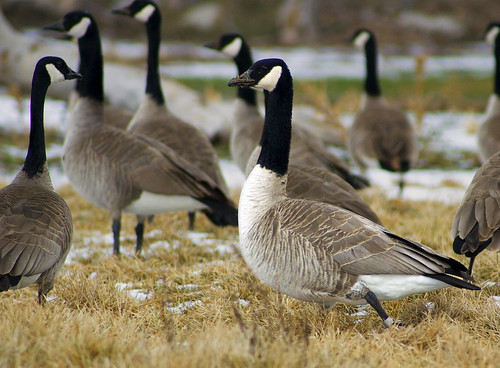

Before

Ingredients:

3 lbs of onions.
½ cup of butter.
½ cup of celery, chopped with leaves.
6 cups of soft breadcrumbs.
1 tablespoon of salt.
½ tablespoon of freshly ground black pepper.
1 tablespoon of dried sage.
1 teaspoon of dried savory.
½ teaspoon of dried marjoram.
¼ teaspoon of ground nutmeg.
1 goose, about 11 lb.
1 tablespoon of fresh lemon juice.
Salt and pepper.
2 chicken bouillon cubes.
Boiling water.


Directions:

  • Peel and cut the onions into quarters, then put them in a large saucepan, and add just enough boiling water to cover, and simmer, covered, for about 15 minutes or until just tender.
  • Drain, cool, and coarsely chop the onions.
  • In a large heavy skillet, melt the butter.
  • Add the chopped celery and gently sauté for about 3 minutes, stirring frequently.
    After

  • Add half the breadcrumbs and cook gently until lightly browned, stirring frequently to combine.
  • Place the remaining breadcrumbs in a large mixing bowl.
  • Add the salt, pepper, sage, savory, marjoram and nutmeg. Toss to combine the ingredients.
  • Add the prepared onions and the sautéed celery and breadcrumb mixture to the bowl and toss again to combine.
  • Allow to cool before stuffing the goose.
  • Preheat your oven to 400°F (205°C) degrees.
  • Rub the goose inside and out with lemon juice.
  • Generously sprinkle the inside of the goose with salt and pepper.
  • Stuff the neck cavity with some of the prepared stuffing and fasten the neck skin to the body of the goose with a skewer.
  • Stuff the body of the goose with the remaining stuffing, skewering and lacing the end closed.
  • Tie the legs and the wings to the body with butcher’s twine.
  • Prick the skin of the goose all over, to let the fat escape while roasting.
  • Place the goose, breast side, down on the rack of a large roasting pan.
  • Add the chicken bouillon cubes to the two cups boiling water and stir until dissolved, then pour the mixture over the goose.
  • Roast for 60 minutes, uncovered.
  • Pour off half the drippings and discard.
  • Turn the goose over and pour two cups of boiling water over the bird.
  • Continue roasting for another 60 minutes.
  • Pour off the drippings from the pan, again.
  • Prick the skin of the goose all over and continue roasting for about 90 minutes more, or until tender.
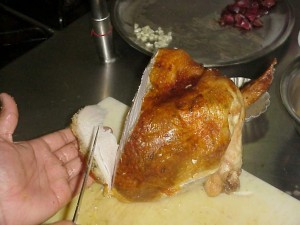
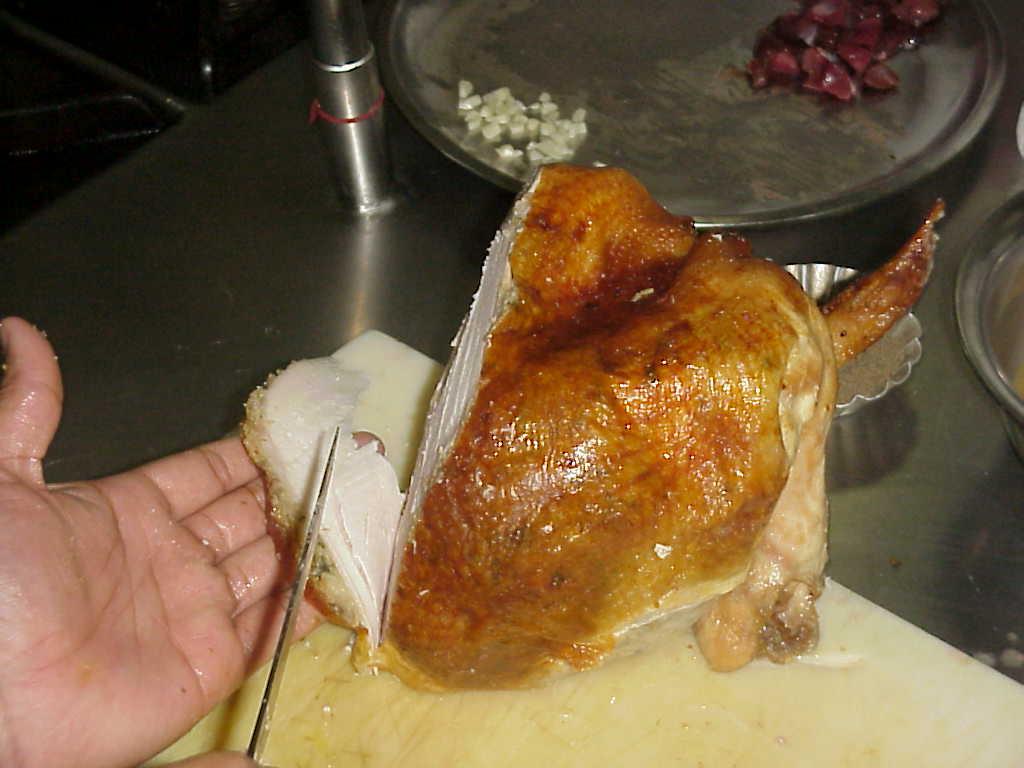
  • To serve, place the goose on a large platter; remove the twine and skewers to carve.
_________________

Pictures from:

http://farm1.static.flickr.com/35/92769658_1f6fab7580.jpg

http://www.ifood.tv/recipe/roasted_turkey_stuffed_with_sage_and_onion
Tattoos

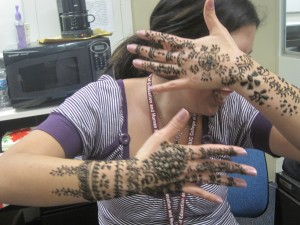
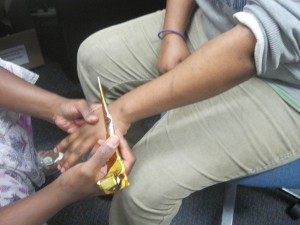
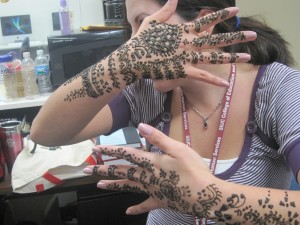
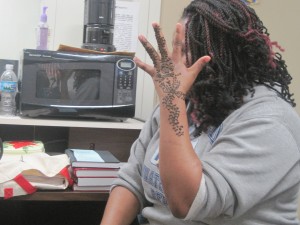
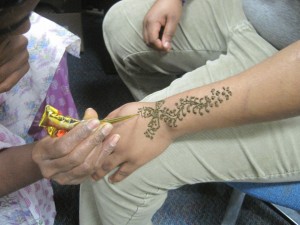
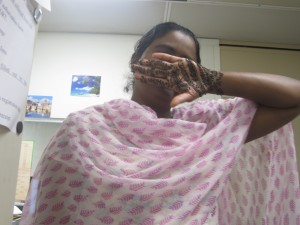
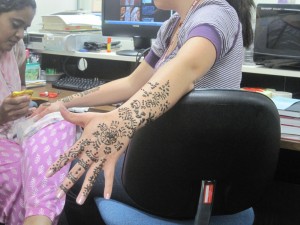
I walked into a body art session in my department on Friday and this was what I witnessed: the process of making temporary tattoos called the henna.
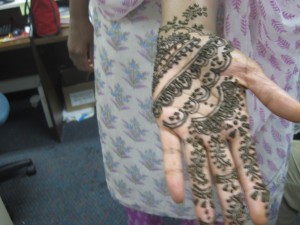
As opposed to permanent tattoos found now on bodies of very many Americans following the hip-hop trend of today, the designs here made from henna – the dye from a particular flowering plant – lasts for a couple of days, maybe even weeks, before going off by itself after constant washing. One thing for sure is that it looks beautiful, especially when well designed like these ones. And it didn’t take long to make.

The artist was none other than Catherine, the Indian Graduate Assistant, and friend, who works at the Foreign Language computer lab. Wouldn’t you want to get something as beautiful as this? I did get her to write my name on my left arm, but it didn’t turn out as beautiful as these, maybe because I didn’t have a fair skin.

Laugh in Nigerian English

I found these on YouTube today

Laugh with me, and watch some of the other skits by this British comedian.

Apparently, Nigerian traffic wardens in Britain speak in unnecessarily grand English while at work.

Questions and Answers

Q: When exactly in May do you leave for Nigeria, and what is your flight itinerary?

A: I don’t know. When that day comes, a helicopter from the White House is going to land near the KTravulake, commando style, and smuggle me out before anyone knows, and drop me right at the base of the Statue of Liberty in NY where a boat will ferry me to the JFK airport. From then the Air Force Ten will pick me up and drop me into France since all commercial airplanes are no longer flying in there because of the volcanic ash clouds. After a few hours in the streets of France speaking poor French and confirming to myself once and for all that all the French I claim to speak is nothing but trash African Vernacular French, I will hop onto the Air France Concorde plane brought back from retirement just for my sake, and fly home into Lagos’s unsuspecting but hot embrace. French expressions learnt so far: “Voulez-vous coucher avec moi?”, “Je t’aime”, “Tu est belle.” and “Merde!” Why none of these have to do with getting directions, finding the nearest restaurant, or getting out of trouble is beyond me. My French friends are the most mischievous kind. From the sound of them, I know I’ll be getting into trouble. Ah, wish me luck. I’m gonna need it. 🙂

Q: What is the ONE experience that you will miss the most about the United States. I’d like to know.

A: Beside access to fast and stable internet and electricity access, it must be the opportunity to ride my bike every day on the bike trails around Edwardsville. Somehow, I wish I could change that about Nigeria’s high dependence on fuel and motorized vehicles. If we could only develop the bicycle transport system and make laws to construct paths for bicycle users. The sad fact is that there are no good roads for vehicles either, so bicycles are not a priority. And that is sad, considering how much we pay for fuel, and how much of the environment is destroyed by continues gas emissions, and how more affordable, and more sustainable a bicycle is as a means of transportation. The groups http://www.bicycles-for-humanity.org and http://bikesfortheworld.org are currently involved in securing used and unused bikes from people in developed countries, and sending them to developing countries. How could one claim such for the many thousands of elderly, poor or simply interested people in Nigeria who could have otherwise benefited from the programme if the environment in which they live does not even support a safe use of such a simple and yet effective means of transportation? Sad.

Here’s an article on cycling in berlin (thanks to Loomnie.com)

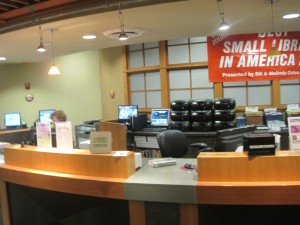
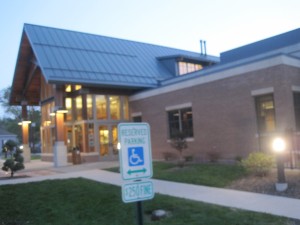
The Glen Carbon Centennial Library

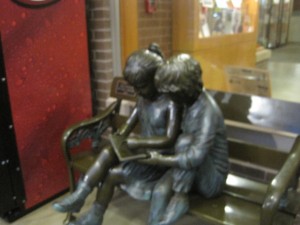
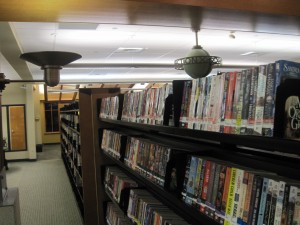
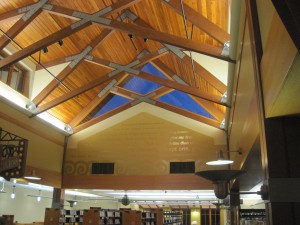
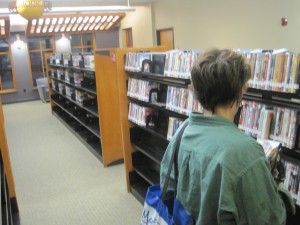
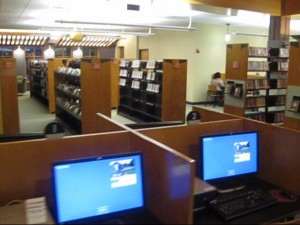
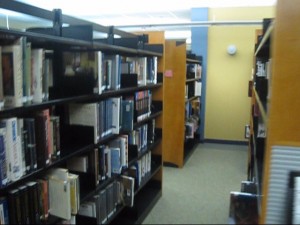
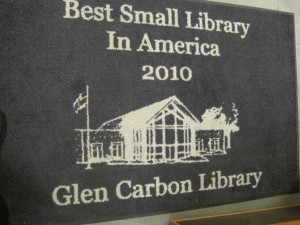
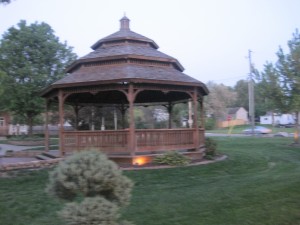
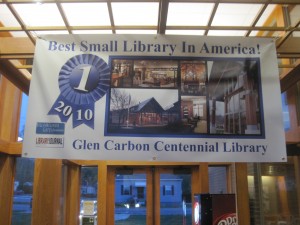
Pictures from the Glen Carbon Centennial Library, voted the best small library in America by the Bill and Belinda Gates Foundation for 2010.

I was there yesterday. See this YouTube video of my tour of the Library, and a newspaper article I wrote about the library.